EXAM 1 BIOCHEM 528
 Call Kai
 Learn
Learn Practice Test
 Spaced Repetition
 Match
Match Flashcards
 Knowt Play
1/93

There's no tags or description
Looks like no tags are added yet.
Name | Mastery | Learn | Test | Matching | Spaced | Call with Kai | Chat |
|---|
No analytics yet
Send a link to your students to track their progress
94 Terms
True or False: A piece of dsDNA with a sequence consisting of 10% A, 35% C, 20% T and 35% G violates Chargaff's rule.
true
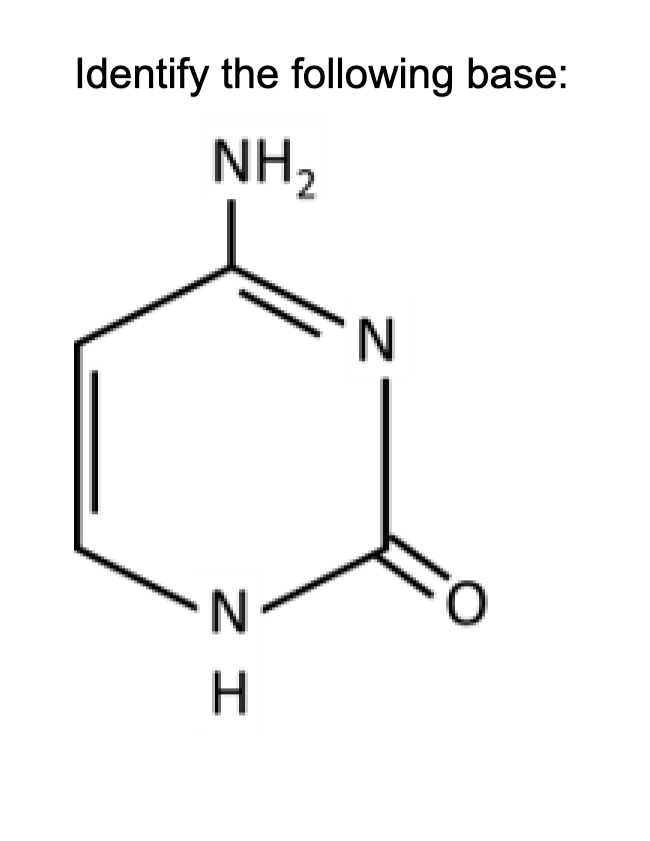
cytosine
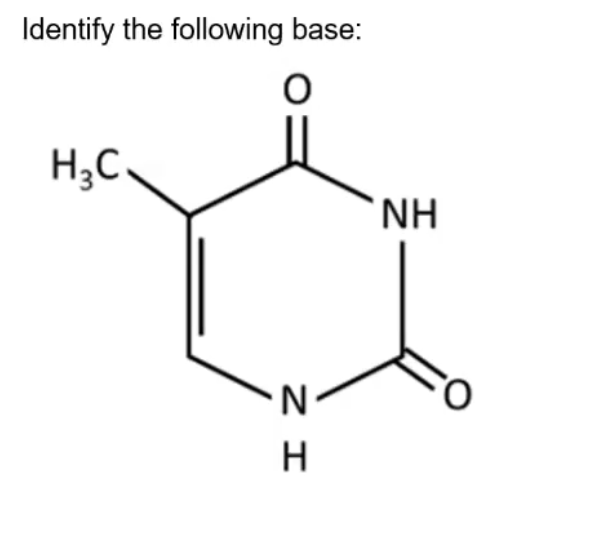
thymine
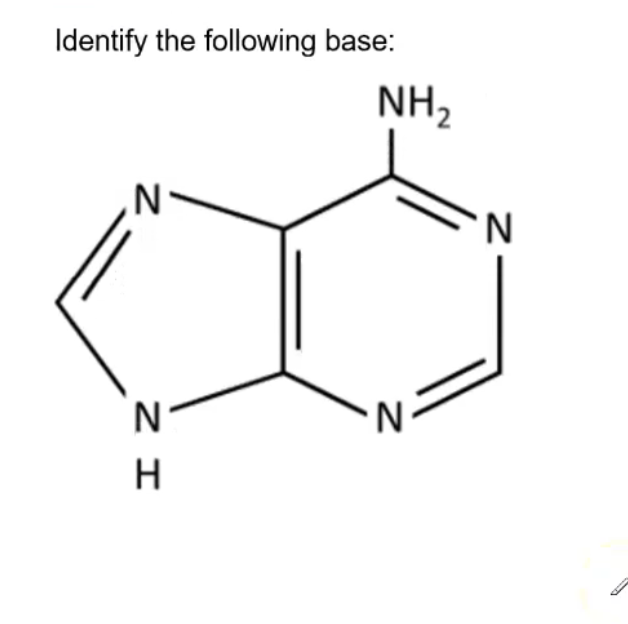
adenine
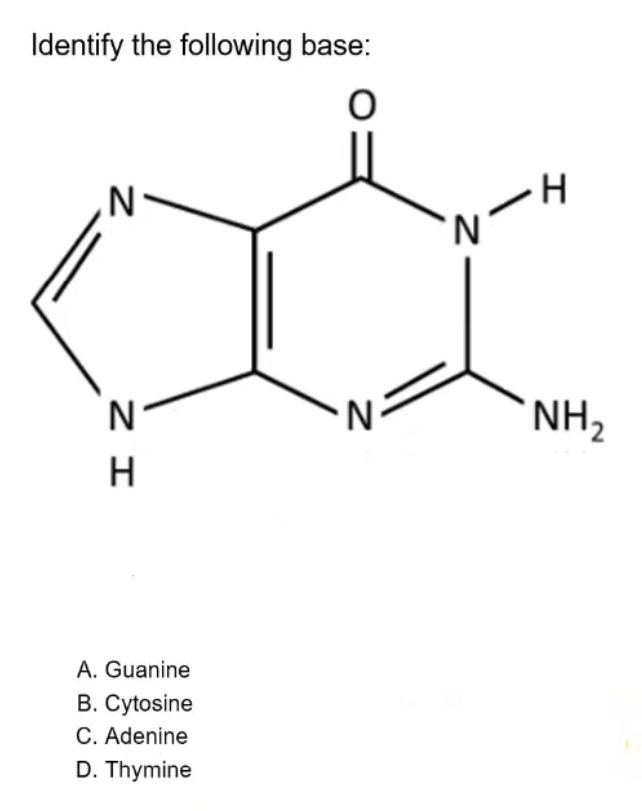
guanine
In a nucleoside, the nitrogenous base is connected to the pentose sugar by what type of linkage/bond?
Glycosidic
A phosphodiester bond connects:
A. The 1' carbon of a nucleotide sugar to the base of that nucleotide
B. The 2' OH group of RNA to another RNA molecule
C. The 5' OH group of a nucleotide to the base of that nucleotide
D. The 3' OH group of one nucleotide sugar to the 5' carbon of another
nucleotide sugar via a phosphate group
D. The 3' OH group of one nucleotide sugar to the 5' carbon of another
nucleotide sugar via a phosphate group
Across two anti-parallell DNA strands, what type of bonding connects the two
strands?
A. Covalent bonds
B. Phosphodiester bonds
C. Hydrogen bonds
D. Glycosidic bonds
C. Hydrogen bonds
The biologically predominant form of DNA is:
A. A-DNA
B. B-DNA
C. Z-DNA
D. None of the above
B-DNA
The pitch of the DNA helix (how far the helix rises up with every full
turn of the helix) is 34 angstroms. How far does the helix rise with every
nucleotide base?
A. 3.0 angstroms
B. 3.4 angstroms
C. 6 angstroms
D. 6.8 angstroms
B. 3.4 angstroms
Select the option that best fits the following sentence:
The function of histones is to ___________?
A. condense DNA
B. degrade DNA
C. synthesize DNA
D. perform transcription
A. condense DNA
DNA strands can reanneal (come back together) after being denatured by heat?
A. True
B. False
true
Which of the following statements is not true about the differences between DNA
and RNA?
A. DNA contains 2-deoxyribose while RNA contains ribose
B. DNA is usually double stranded while RNA is single stranded
C. DNA contains thymine while RNA contains Uracil
D. DNA exists in the nucleus and cytoplasm while RNA is only in the nucleus
D. DNA exists in the nucleus and cytoplasm while RNA is only in the nucleus
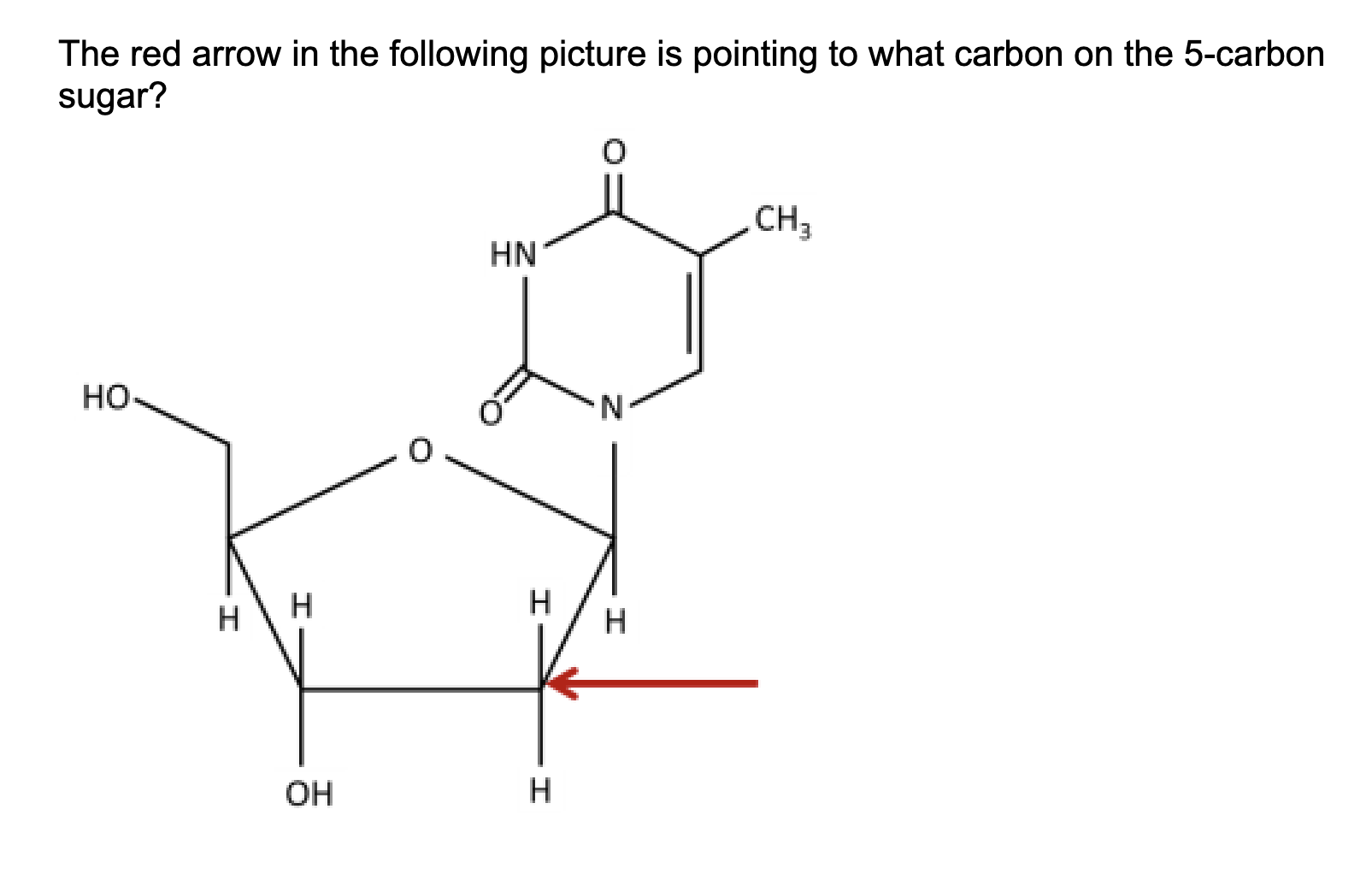
2’
A strand of mRNA contains 20% A, 20% C, 30% T and 30% G. True or false: this
would violate Chargaff's rule?
A. True
B. False
false
Select the answer that fits the following sentence:
Base stacking is a __________ interaction crucial for the stability of the DNA
double helix
A. hydrophobic
B. hydrophilic
C. covalent
D. hydrogen bonding
A. hydrophobic
You work for a large pharmaceutical company and are part of a team developing a new
an anti-cancer drug. The groups hypothesis is that cancer cells abberantly overexpress
many genes compared to normal cells, and if you can inhibit the excessive gene
expression you can inhibit the growth of the cancer cells. Based on this information which
of the following options would be a good mechanism of action for your drug?
A. Inhibit DNA polymerase
B. Inhibit DNA Ligase
C. Inhibit histone methylation
D. Promotes histone methylation
C. Inhibit histone methylation
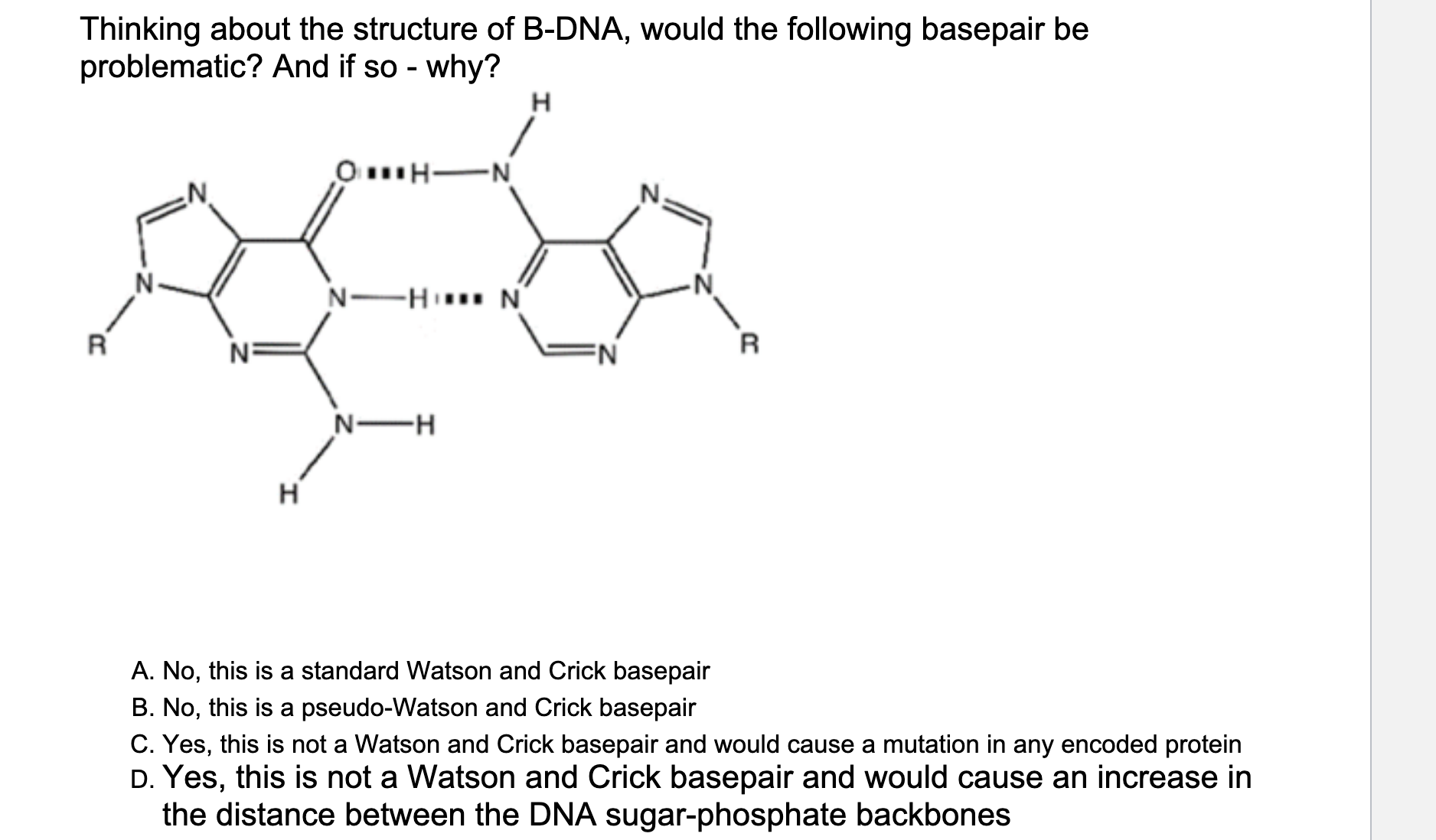
D
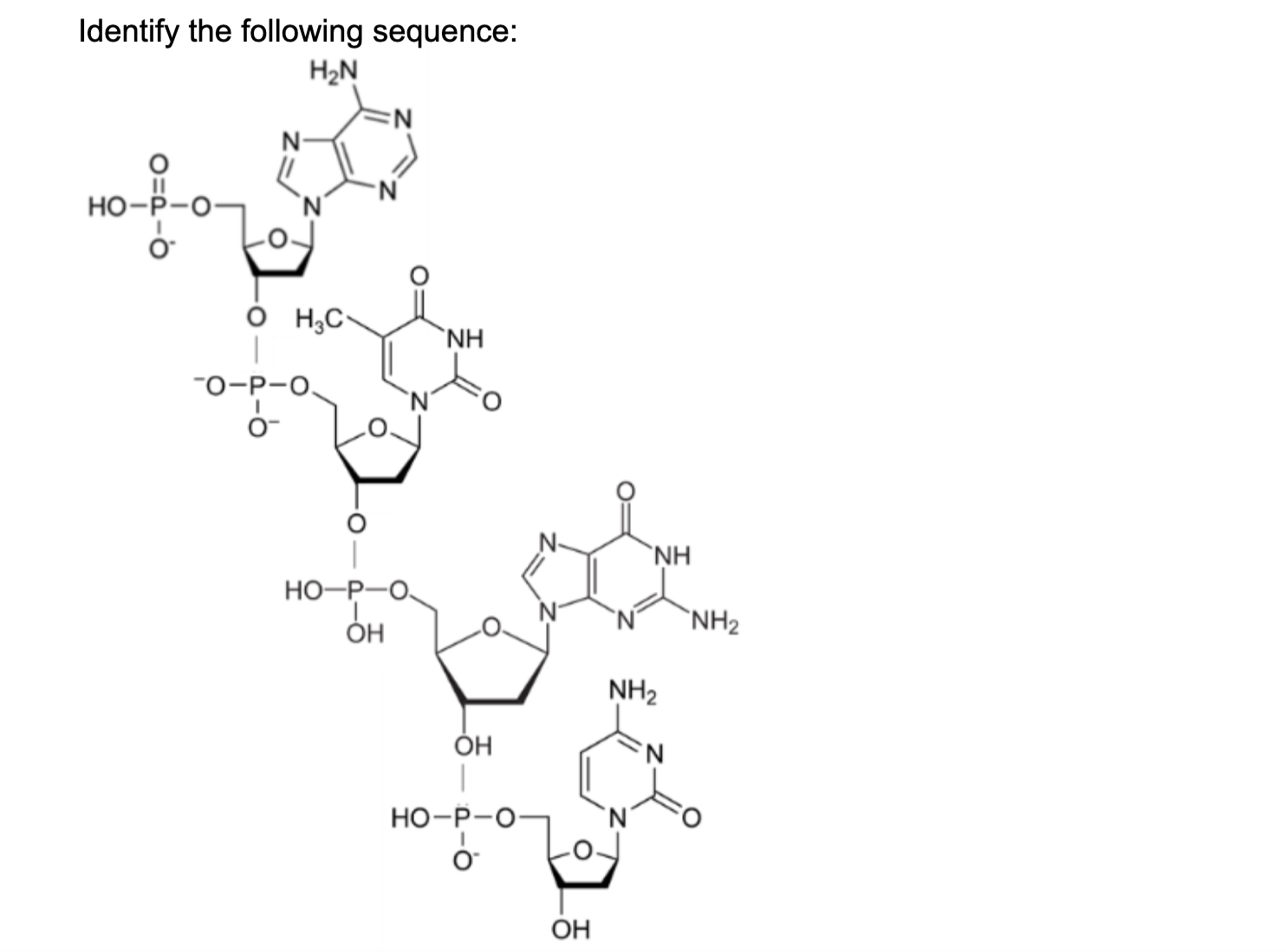
ATGC
You are studying an enzyme that when expressed in cells, increases the amount
of euchromatin observed. Of the following options, which could be a possible
function for the enzyme?
A. Histone acetyltransferase (HATs)
B. Histone deacetylase (HDAC)
C. DNA polymerase
D. Topoisomerase
A. Histone acetyltransferase (HATs)
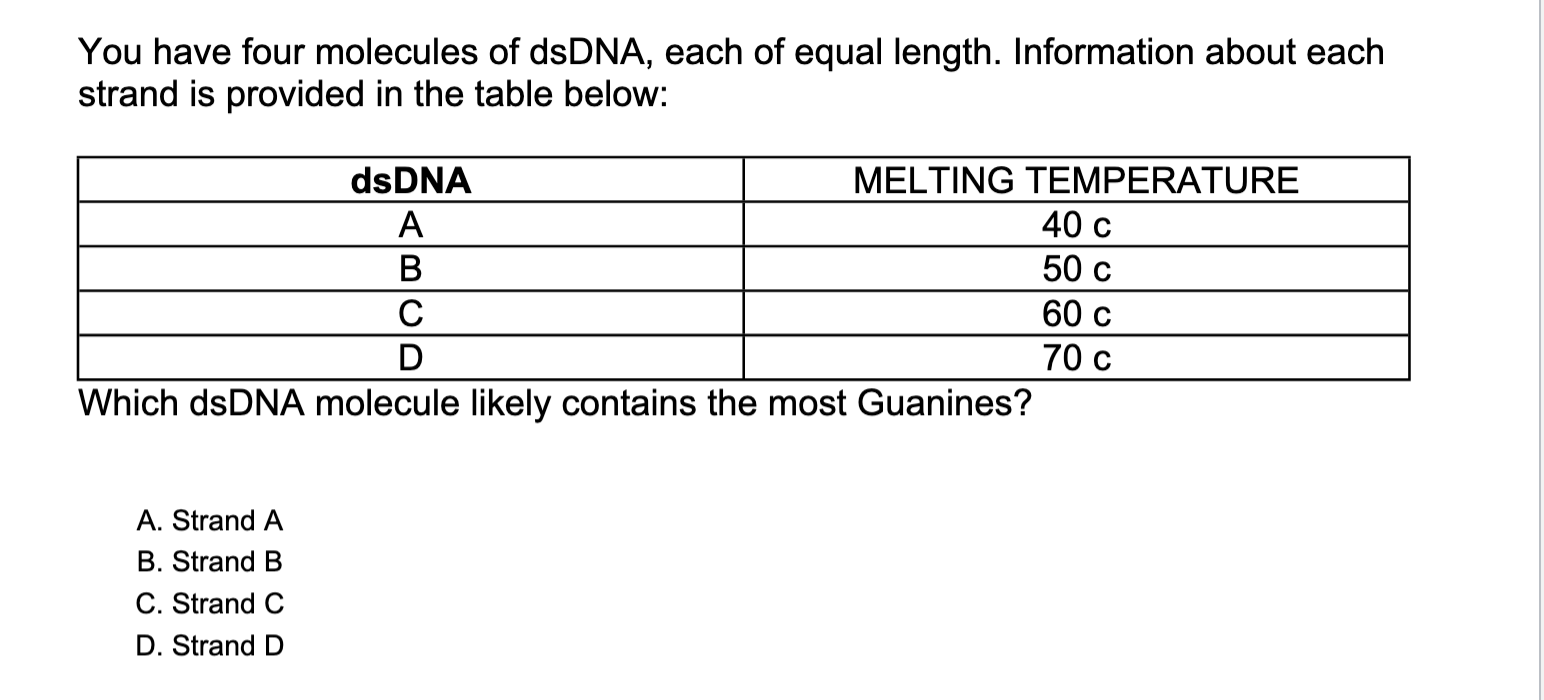
strand D
Which of the following enzymes is not involved in DNA replication?
A. Primase
B. DNA Ligase
C. Telomerase
D. RNA Polymerase
D. RNA Polymerase
The role of ssDNA binding proteins during DNA replication is to:
A. unwind DNA
B. protect DNA and stop single strands from reannealing
C. help DNA polymerase identify the leading and laggin strand
D. ligate Okazaki fragments together
B. protect DNA and stop single strands from reannealing
During DNA replication, DNA polymerase reads the sequence of the template for
the lagging strand in a:
A. random order
B. 5' to 3' direction
C. 3' to 5' direction
D. direction toward the replication fork
C. 3' to 5' direction
Divalent cations are important for the activity of which of the following enzymes?
A. Helicase
B. Primase
C. DNA Polymerase
D. Alkyltransferase
C. DNA Polymerase
The action of helicase unwinding DNA can cause
A. double strand DNA damage
B. methylation of guanine
C. single stand DNA damage
D. supercoiling of DNA
D. supercoiling of DNA
Which of the following is a mechanism to ensure DNA relication only occurs once
per Ori site in eukaryotes?
A. An inactive helicase enzyme is loaded onto each Ori site during G1 phase of the cell cycle and
only activated during S phase
B. A single Ori site is present per chromosome
C. DNA ligase only works once before being degraded
D. Only one DNA polymerase enzyme is active per chromosome
A. An inactive helicase enzyme is loaded onto each Ori site during G1 phase of the cell cycle and
only activated during S phase
A protein complex you are studying binds DNA at short, A-T rich DNA sequences.
Which of the following options best describes what this protein complex might be?
A. ssDNA binding proteins
B. DNA Ligase
C. Topoisomerase
D. ORC
D. ORC
Scientists are studying a protein that exists in the nucleus of
human cells. They observe that the protein binds to DNA, and
does so in a cooperative manner. Which of the following
proteins that you know of has similar properties?
A. ssDNA Binding Proteins
B. DNA Polymerase
C. DNA Ligase
D. Topoisomerase
A. ssDNA Binding Proteins
Supercoiling of DNA during replication is resovled by what enzyme?
A. DNA ligase
B. DNA Polymerase
C. Helicase
D. Topoisomerase
D. Topoisomerase
Which of the following is true about topoisomerase enzymes?
A. Topoisomerase nicks DNA and binds to free phosphate group in DNA backbone via tyrosine in
the enzyme active site
B. Topoisomerase remains bound to the immobilized DNA strand while the other end rotates
C. OH on the open end of DNA attacks the phosphate group on the topoisomerase tyrosine to close
the nick
D. All of the above
D. All of the above
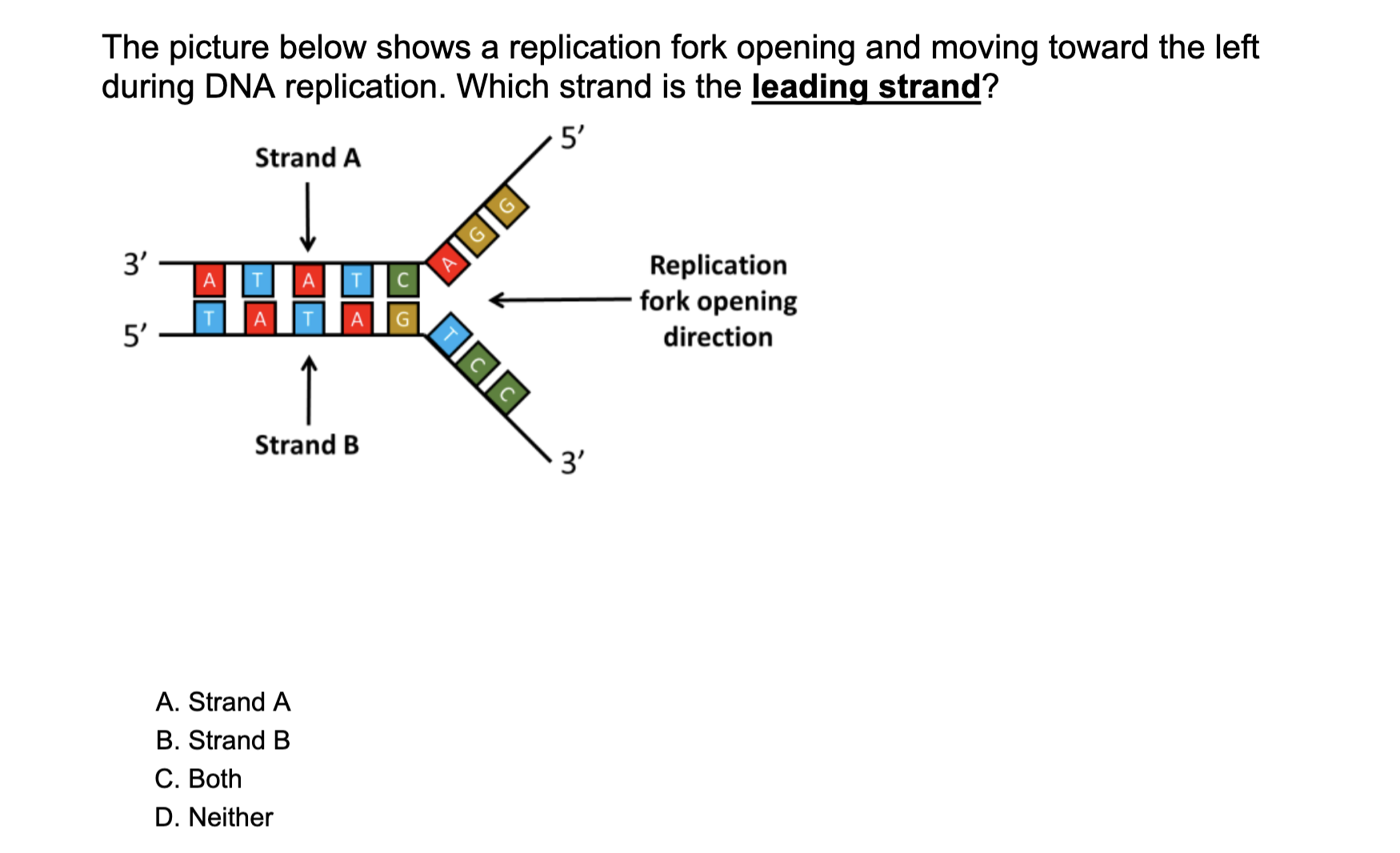
Strand B
You have discovered a new protein that exclusively binds to the following DNA
sequence:
5' - AGCATGGG - 3'
Where within the secondary structure of DNA is this protein most likely to bind?
A. Double strand DNA breaks
B. Single strand DNA breaks
C. Major groove of DNA double helix
D. Minor groove of DNA double helix
C. Major groove of DNA double helix
The 3' OH group of a growing strand of DNA is crucial to what process?
A. Nucleophilic attack on incoming nucleoside triphosphates facilitated by DNA polymerase
B. Demthylation of methylguanine by alkyltransferases
C. Hydrolysis of glycosidic bonds by Uracil DNA glycosylase
D. All of the above
A. Nucleophilic attack on incoming nucleoside triphosphates facilitated by DNA polymerase
You design an experiment to prove that DNA replicates in a semi-conservative
manner. You plan to label DNA with an isotope while doing experiments to follow
DNA replication in bacteria. Which of the following elements will use use an
isotope of?
A. Sulfur
B. Magnesium
C. Zinc
D. Nitrogen
D. Nitrogen
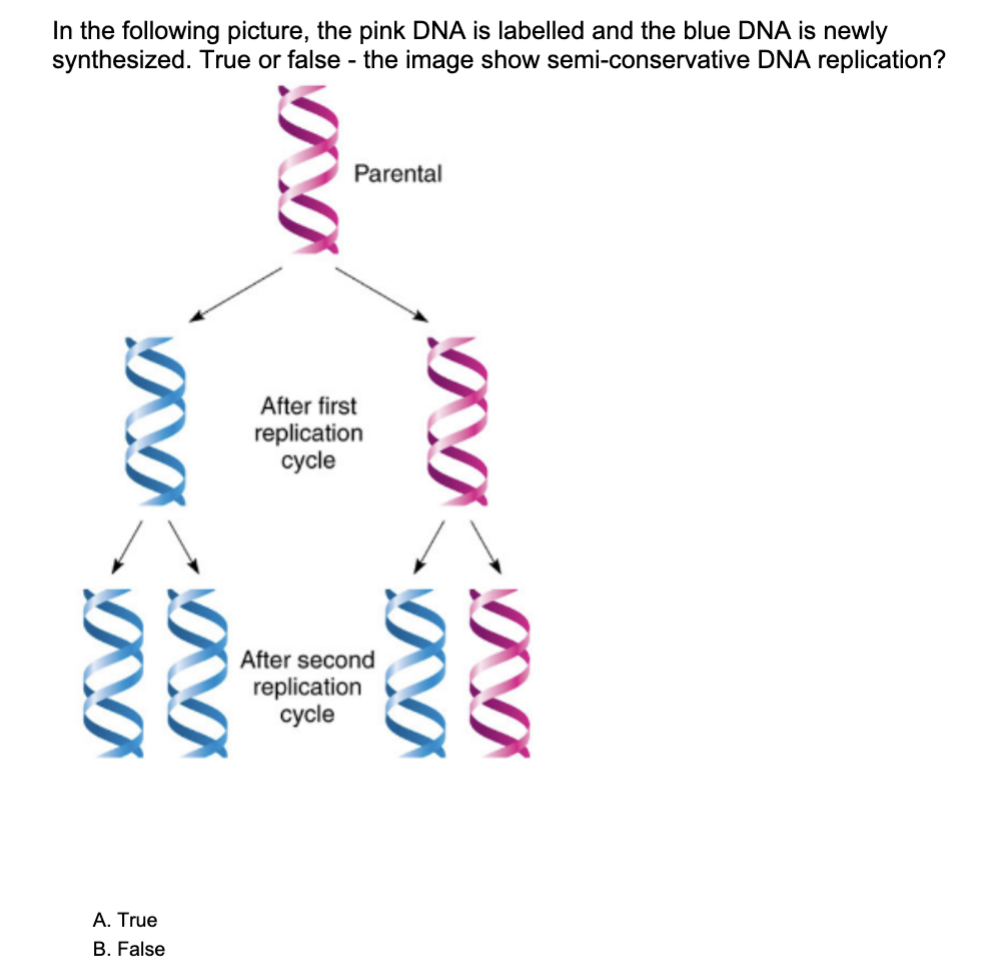
false
You set up a DNA polymerase reaction in a test tube. In the tube you have DNA
polymerase, a single stranded DNA template, RNA primers and deoxynuleoside
triphosphates. The reaction does not proceed. Which of the following options may
best explain why?
A. Missing DNA ligase
B. Missing alkyltransferases
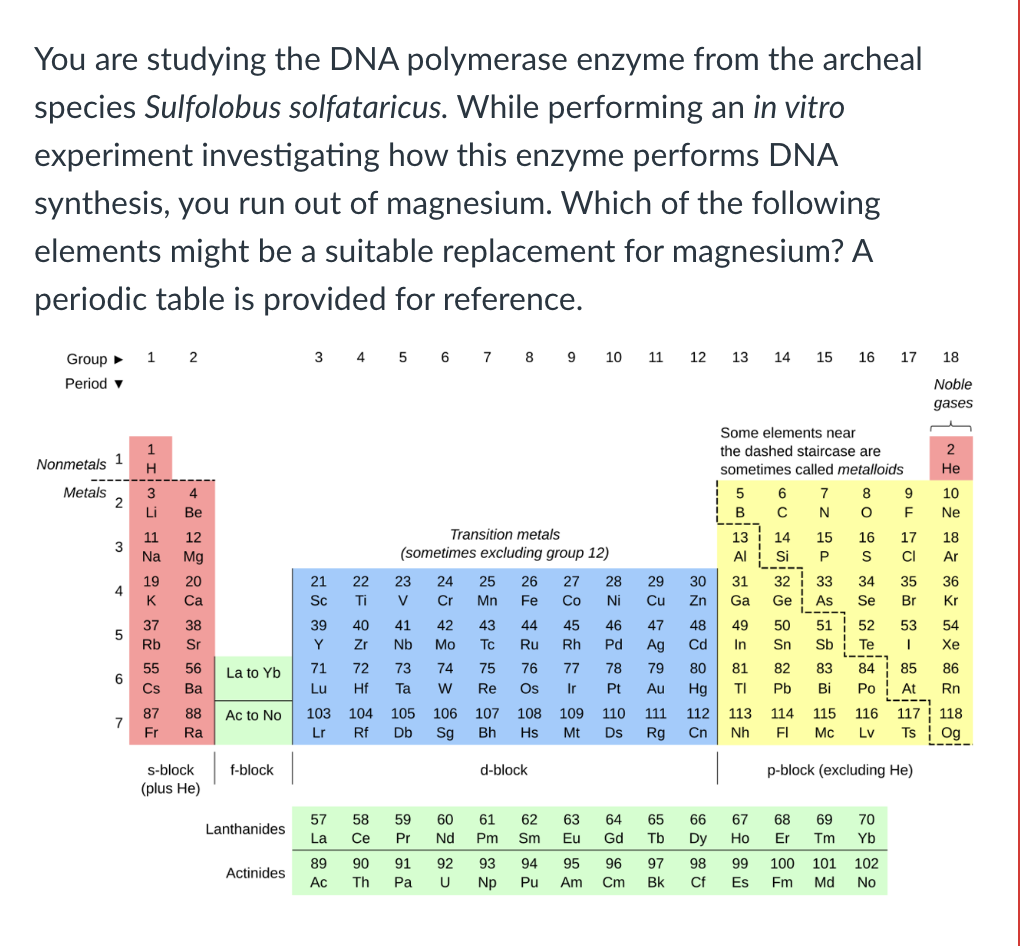
C. Missing Mg2+ ions
D. Missing mRNA
C. Missing Mg2+ ions
You are studying an enzyme. When you overexpress the enzyme in human cells, you observe an increase in the amount of euchromatin observed. Of the following options, which could be a possible function for the enzyme?
Histone methyltransferase
The syn and anti conformations of nucleotides refers to rotation around what bond?
A. Phosphodiester
B. Glycosidic
C. Phosphoester
D. Phosphoanhydride
B. Glycosidic
A researcher is studying a gene that is normally expressed at low levels in hepatocytes. In one experimental condition, the DNA sequence of the gene is unchanged, but transcription of the gene is dramatically increased. Which of the following options may explain why transcription is increased in this situation?
A. Increased methylation of histone H3 on lysine 4 near the gene’s promoter
B. Base pair mismatches in the regulatory regions of the gene
C. Strong methylation of cysteine in promoters
D. Insertion of a strong promoter regulating the gene
A. Increased methylation of histone H3 on lysine 4 near the gene’s promoter
A researcher isolates chromatin from human cells and treats it with an enzyme that digests exposed linker DNA but leaves DNA protected by nucleosomes intact. Describe the protein component of the intact nucleosomes
A. One copy each of H2A, H2B, H3, and H4
B. Two copies each of H2A, H2B, H3, and H4
C. Two copies each of H1, H2, H3, and H4
D. Two copies each of H2A, H2B, H3, and H4, with H3 methylated on Lysine 4
B. Two copies each of H2A, H2B, H3, and H4
Alkyltransferase enzymes function as part of direct DNA repair by doing what?
A. making an incision in the phosphodiester bond
B. transfering a methyl group from damaged bases to a cysteine residue in the enzyme active site
C. hydrolysing cytosine into uracil
D. cleaving the glycosidic bond between a base and the ribose sugar
B. transfering a methyl group from damaged bases to a cysteine residue in the enzyme active site
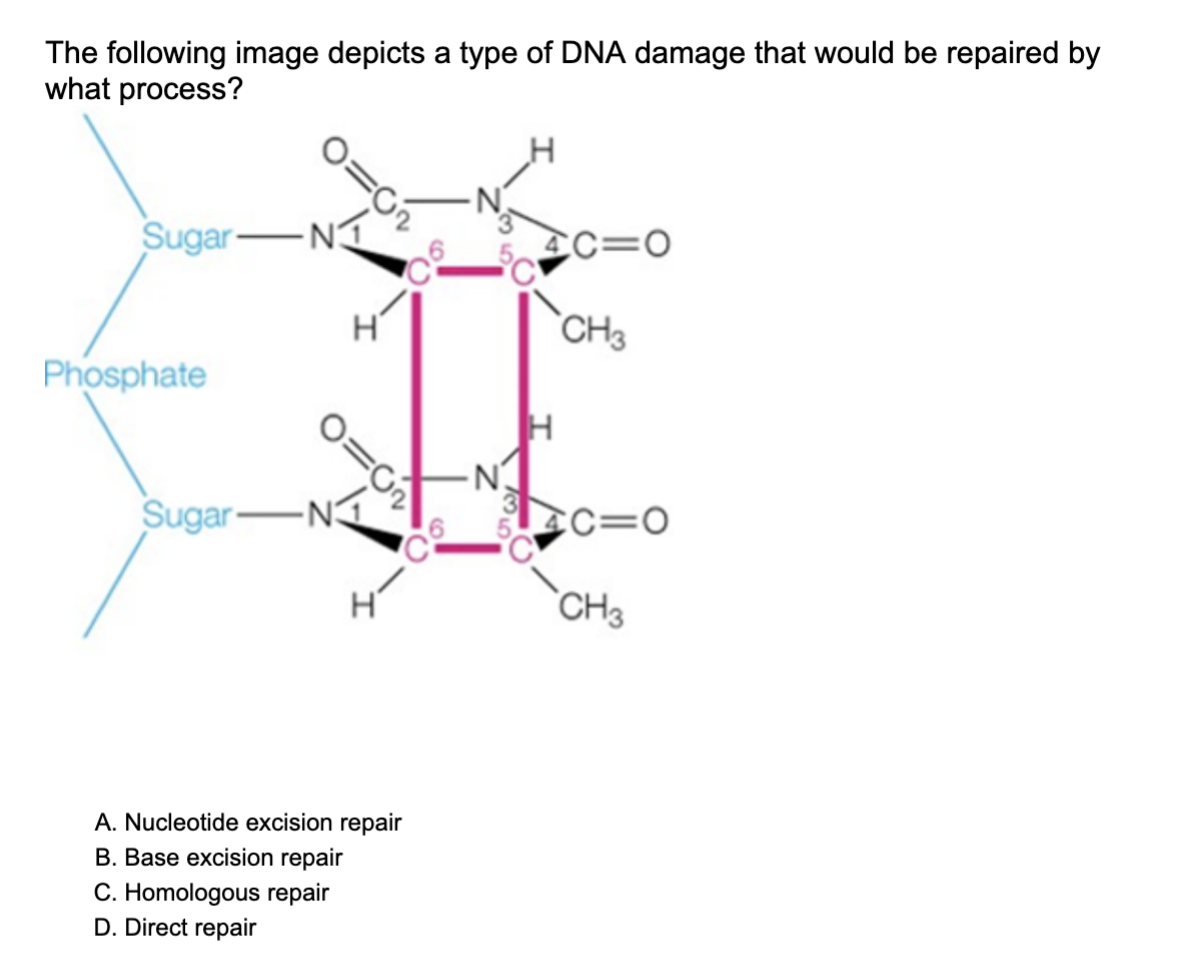
A. Nucleotide excision repair
Which of the following is true about Nucleotide excision repair?
A. NER directly repairs damaged bases
B. NER cleaves only damaged nucleotides from the DNA
C. NER cleaves multiple nucleotides both upstream and downstream of the DNA damage site
D. All of the above
C. NER cleaves multiple nucleotides both upstream and downstream of the DNA damage site
DNA glycosylase enzymes cleave which types of bond?
A. Phosphodiester bonds
B. Hydrogen bonds
C. Glycosidic bonds
D. Ester bonds
C. Glycosidic bonds
The DNA double helix has a sugar phosphate backbone with base pairing inside
the helix. A team of scientists are studying an enzyme that binds DNA and flips
bases to the outside of the double helix. The enzyme is involved in DNA damage
repair mechanisms. Which process does the enzyme likely participate in?
A. Base excision repair
B. Nucleotide excision repair
C. Mismatch repair
D. Double strand break repair
A. Base excision repair
Rad51 is a tumor supressor protein. When Rad51 is mutated, it becomes non-
functional which can allow for the development of numerous types of cancer. The
normal function of Rad51 is to bind ssDNA and perform strand invasion to find
sequences of DNA complementary to the bound ssDNA. What process is Rad51
part of?
A. DNA replication
B. Homologous recombination
C. Nucleotide excision repair
D. Mismatch repair
B. Homologous recombination
Deamination of cytosine is repaired by what DNA repair mechanism?
A. Mismatch repair
B. Nucletotide excision repair
C. Direct repair
D. Base excision repair
D. Base excision repair
You have discovered a new enzyme that you name Barryzyme. In a test tube, you
have purified DNA alone. You expose it to UV radiation. When you add Barryzyme
into the tube, it performs NER on all damaged DNA sites. However, in living cells
you observe that Barryzyme doesn't repair every damaged DNA site. Instead, in
cells Barryzyme only repairs DNA damage within euchromatin. What process is
Barryzyme likely participating in?
A. TC-NER
B. GG-NER
C. MMR
D. Double strand break repair
A. TC-NER
You are studying a protein that binds DNA immediately following DNA replication.
The protein functions to identify epigenetic marks on template strands of DNA.
What process does this protein take part in?
A. DNA replication
B. Transcription
C. Transcription coupled nucleotide excision repair
D. Mismatch repair
D. Mismatch repair
An endonuclease cleaves what type of bond?
A. A glycosidic bond in the middle of a nucleic acid
B. A phosphodiester bond in the middle of a nucleic acid
C. A glycosidic bond at the end of a nucleic acid
D. A phosphodiester bond at the end of a nucleic acid
B. A phosphodiester bond in the middle of a nucleic acid
Select the option that best applies.
Alkylation of guanine to O6-methylguanine results in non-Watson and Crick basepairing because:
A. O6-methylguanine can form 4 H bonds instead of 3
B. O6-methylguanine can form 2 H bonds instead of 3
C. O6-methylguanine can form only 1 H bond instead of 3
D. O6-methylguanine covalently binds to cytosines
B. O6-methylguanine can form 2 H bonds instead of 3
Select the option that best applies.
Homologous recombination only occurs in the S or G2 phase of the cell cycle
because:
A. a duplicated, undamaged chromosome is required to serve as a template during repair of a
double strand break
B. a duplicated, undamaged chromosome can donate homologous regions of DNA to the damaged
chromosome
C. at this stage of the cell cycle, cyclin dependent kinases activate helicase to repair the dsDNA
break
D. alkyltransferase enzymes are activated during this phase of the cell cycle
A. a duplicated, undamaged chromosome is required to serve as a template during repair of a
double strand break
Depurination, deamination and base oxidation are all repaired by what DNA
damage repair mechanism?
A. Nucleotide excision repiar
B. Mismatch repair
C. Direct repair
D. Base excision repair
D. Base excision repair
A thymine dimer can be best decribed as:
A. an interstrand crosslink between two thymine bases
B. an intrastrand crossline between two thymine bases
C. the addition of a new thymine reside to a DNA strand
D. a dimer between thymine and adenine
B. an intrastrand crossline between two thymine bases
An exonuclease cleaves what type of bond?
A. A glycosidic bond in the middle of a nucleic acid
B. A phosphodiester bond in the middle of a nucleic acid
C. A glycosidic bond at the end of a nucleic acid
D. A phosphodiester bond at the end of a nucleic acid
D. A phosphodiester bond at the end of a nucleic acid
XPC-RAD23B is a protein complex that participates in nucleotide excision repair
(NER). The role of XPC-RAD23B is to first identify that the DNA is damaged (first
step of NER). How does XPC-RAD23B identfy damaged DNA?
A. Scans the DNA for epigenetic marks
B. Identifies DNA helicies distorted by as much as 30º
C. Flips bases out of the inside of the DNA double helix
D. Demethylates bases by becoming methylated itself
B. Identifies DNA helicies distorted by as much as 30º
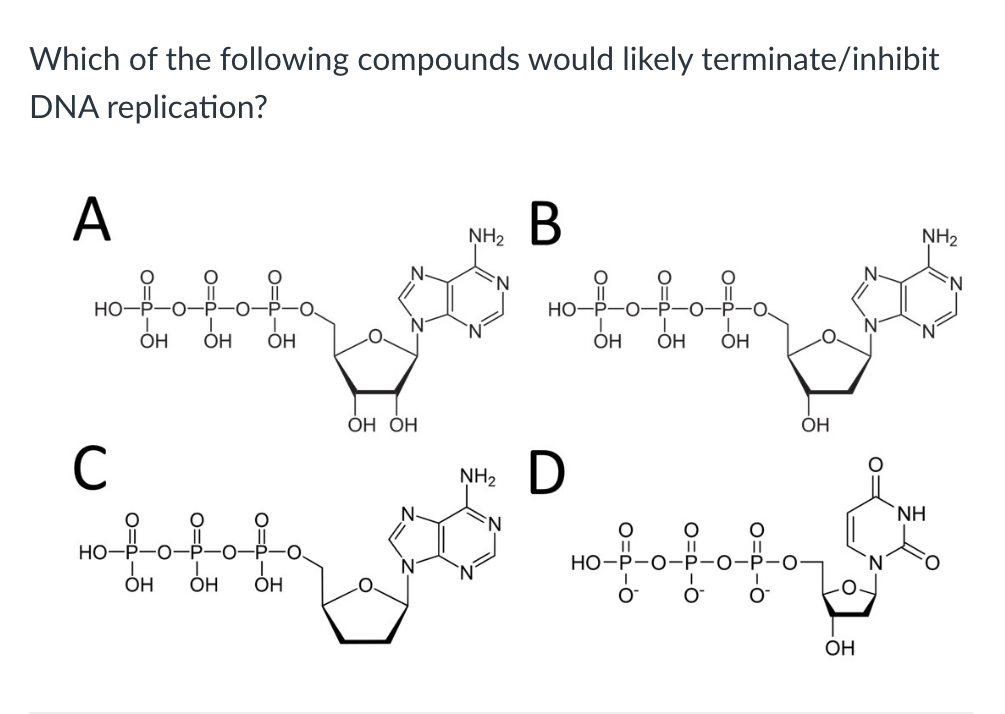
C
Ca
True or False?
DNA polymerase enzymes have 5' to 3' exonuclease activity.
false
During DNA replication, DNA polymerase reads the sequence of the template for the lagging strand in a:
A. random order
B. 5' to 3' direction
C. 3' to 5' direction
D. direction toward the replication fork
C. 3' to 5' direction
You are working on a drug development project with the aim of generating small molecule inhibitors of DNA ligase. You have designed an experiment to determine how effective your new DNA ligase inhibitors are, that works as follows:
You perform DNA replication in two test tubes
In one tube (tube 1) you place all the material needed for DNA replication to occur
In the another tube (tube 2) you place all the material needed for DNA replication to occur plus your DNA ligase inhibitor
You let DNA replication proceed for a few hours, then you measure the amount of Okazaki fragments present in each tube by agarose gel electrophoresis
In what tube would you expect to see the fewest Okazaki fragments?
tube 1
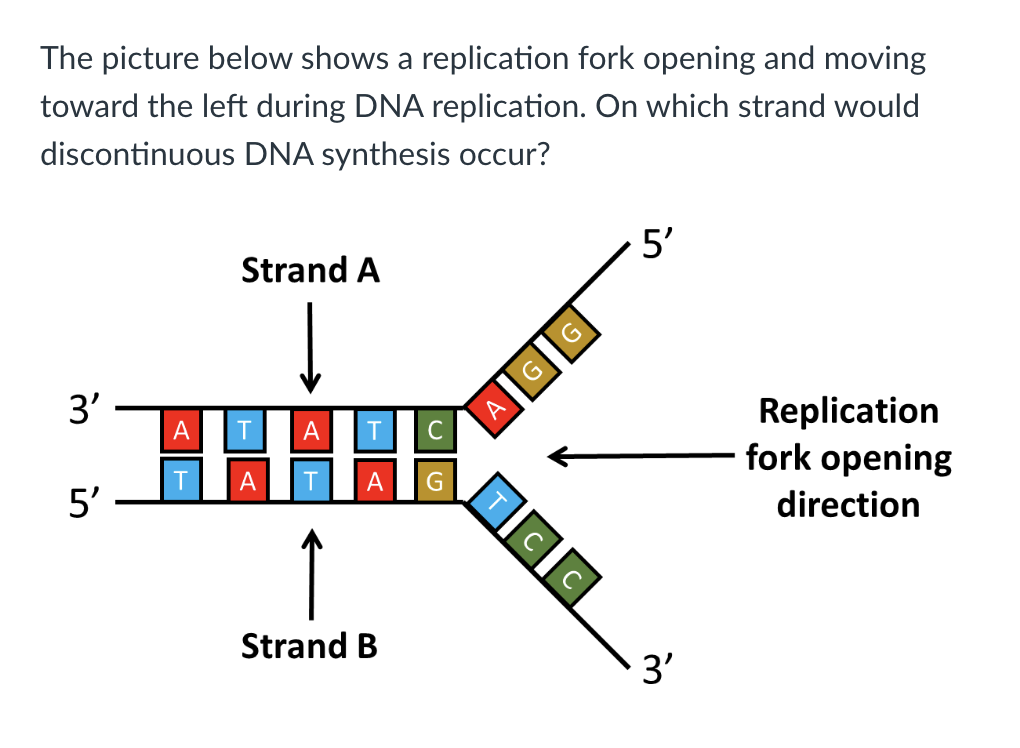
strand A
A double strand DNA break is repaired during the G1 stage of the cell cycle by what DNA repair process? (Select all that apply)
A. Non-homologous end joining
B. Homologous recombination
C. Direct reversal
D. Global genomic nucleotide excision repair
A. Non-homologous end joining
XPC-RAD23B is a protein complex involved in the first step of nucleotide excision repair (NER). XPC-RAD23B is infact a complex consisting of the XPC protein bound to RAD23B. A model for how the XPC-RAD23B complex detects damaged DNA has been proposed to involve the following steps:
First the XPC-RAD23B complex spans both strands of DNA, "riding the rails" of the structure searching for damage
When the complex finds a damaged site, something forces to complex to dissociate, leaving the XPC protein bound to DNA to begin recruiting other NER enzymes to the site of DNA damage
Which of the following answers would best describe the "something" that forces the XPC-RAD23B complex to dissociate and initiate NER?
A. Methylation of a guanine at the DNA damage site
B. Distortion of the DNA helical structure caused by a thymine dimer
C.Deamination of a cytosine at the DNA damage site
D.None of the above
B. Distortion of the DNA helical structure caused by a thymine dimer
Which of the following is true about topoisomerase enzymes?
A. Topoisomerase nicks DNA and binds to free phosphate group in DNA backbone via tyrosine in the enzyme active site
B. Topoisomerase remains bound to the immobilized DNA strand while the other end rotates
C. OH on the open end of DNA attacks the phosphate group on the topoisomerase tyrosine to close the nick
D. All of the above
D. All of the above
An enzyme that adds a methyl group to DNA is a:
A. Histone methyltransferase
B. Histone deacetlyase
C. DNA methyltransferase
D. DNA helicase
C. DNA methyltransferase
You are studying two individual dsDNA sequences. You determine experimentally that the first sequence, called DNA N, has a melting temperature of 48.5°C. The second sequence, called DNA O, has a melting temperature of 52.3ºC. A colleague of yours suggests two possible explanations for this:
Explanation 1 - DNA N has a lower GC content than DNA O
Explanation 2 - DNA O is significantly longer than DNA N (e.g. if DNA N is 10 basepairs, then DNA O is at least 20 basepairs)
Which of the explanations could be correct?
A. Only Explantion 1 can be correct
B. Only Explanation 2 can be correct
C. Both Explanation 1 and Explanation 2 could be correct
D. Neither Explanation 1 nor Explanation 2 are correct
Both Explanation 1 and Explanation 2 could be correct
RNA Polymerase synthesizes RNA in what direction?
A. 3' to 5'
B. 5' to 3'
C. Both 3' to 5' &5' to 3'
D. None of the above
B. 5' to 3'
The product of RNA polymerase during transcription is what?
A. pre-mRNA
B. mature mRNA
C. tRNA
D. rRNA
A. pre-mRNA
"High levels" of histone deacetylase (HDAC) expression in cells might have which
of the following effects on transcription?
A. Promote transcription
B. Inhibit transcription
C. Inhibit DNA polymerase
D. Inhibit DNA ligase
B. Inhibit transcription
Which of the following best descirbes a Promoter?
A. A specific sequence of DNA 5' to a gene that participates in regulating gene expression
B. A specific sequence of DNA 3' to a gene that participates in regulating gene expression
C. A protein that binds to DNA that participates in regulating gene expression
D. A protein that binds to RNA that participates in regulating gene expression
A. A specific sequence of DNA 5' to a gene that participates in regulating gene expression
In transcription, which of the following options best describes the anti-sense
strand?
A. The strand of RNA produced by RNA polymerase
B. The strand of DNA identical to the mRNA produced
C. The strand of DNA read by RNA polymerase
D. The strand of DNA donated to daughter cells
C. The strand of DNA read by RNA polymerase
Elongation of transcription requires which ofthe following events?
A. Modification (phosphorylation) of RNA polymerase/transcription factor components
B. Hydrolysis of glycosidic bonds
C. A duplicated sister chromatid
D. None of the above
A. Modification (phosphorylation) of RNA polymerase/transcription factor components
Ternimation of transcription involves which of the following?
A. Transcription terminator sequences in DNA
B. Endoribonucleolytic enzymes to cleave the nascent mRNA strand from RNA polymerase
C. Release of mRNA from RNA polymerase
D. All of the above
D. All of the above
Transcription factors bind to which of the following?
A. Promoter sequences
B. Enhancer sequences
C. Terminator sequences
D. None of the above
A. Promoter sequences
Rifampicin is an ihibitor of bacterial RNA polymerase (RNAP). Which subunit of
RNAP does rifampicin bind to?
A. Alpha
B. Beta
C. Sigma
D. Omega
B. Beta
Alpha amanitin inhibits which RNA polymerase?
A. RNA Pol I
B. RNA Pol II
C. RNA Pol III
D. RNAP
B. RNA Pol II
Eukaryotic RNA Pol II synthesizes which of the following RNA molecules?
A. tRNA
B. rRNA
C. mRNA
D. None of the above
C. mRNA
True or False?
DNA polymerase has 3' to 5' exonuclease activity.
true
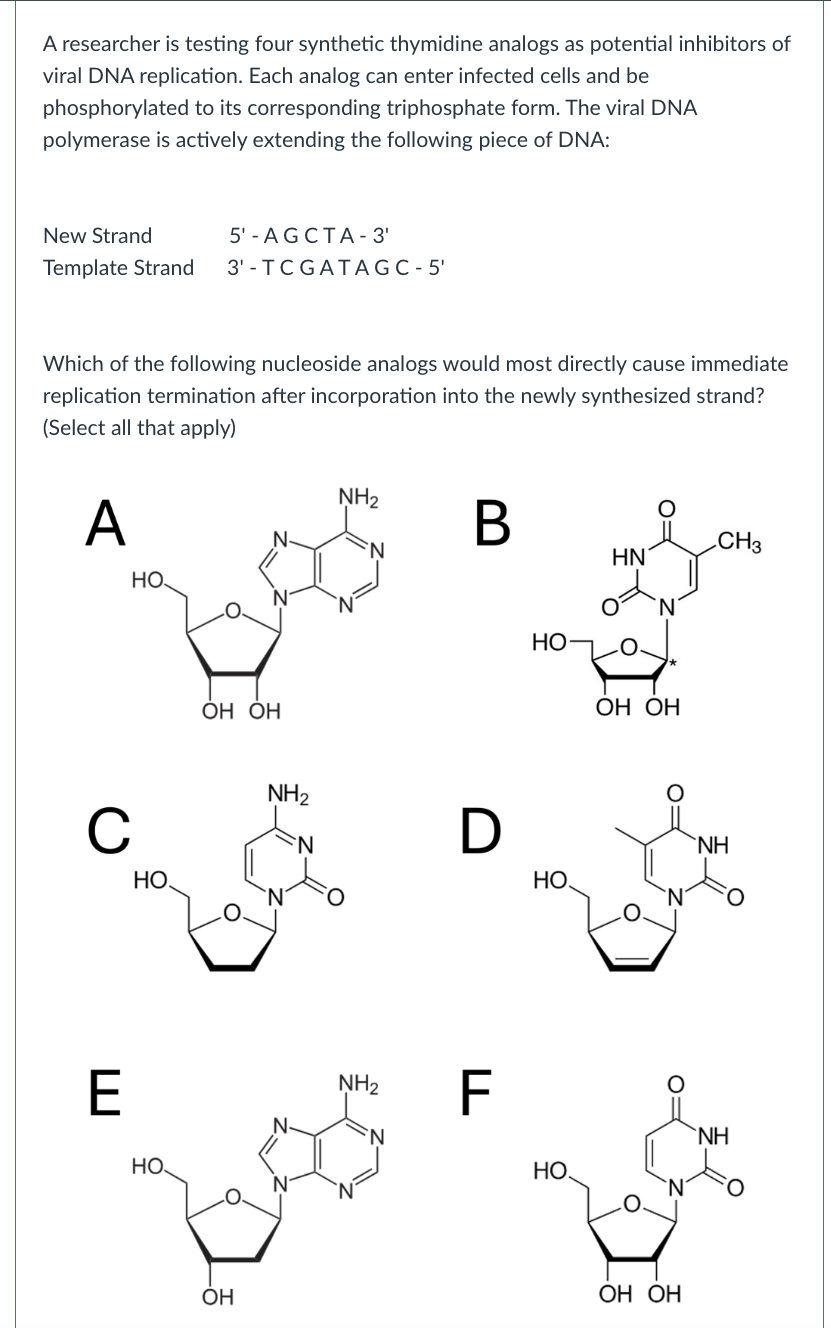
compound D
A double strand DNA break is repaired during the G1 stage of the cell cycle by what DNA repair process?
A. Homologous recombination
B. Direct reversal
C. Global genomic nucleotide excision repair
D. Non-homologous end joining
D. Non-homologous end joining
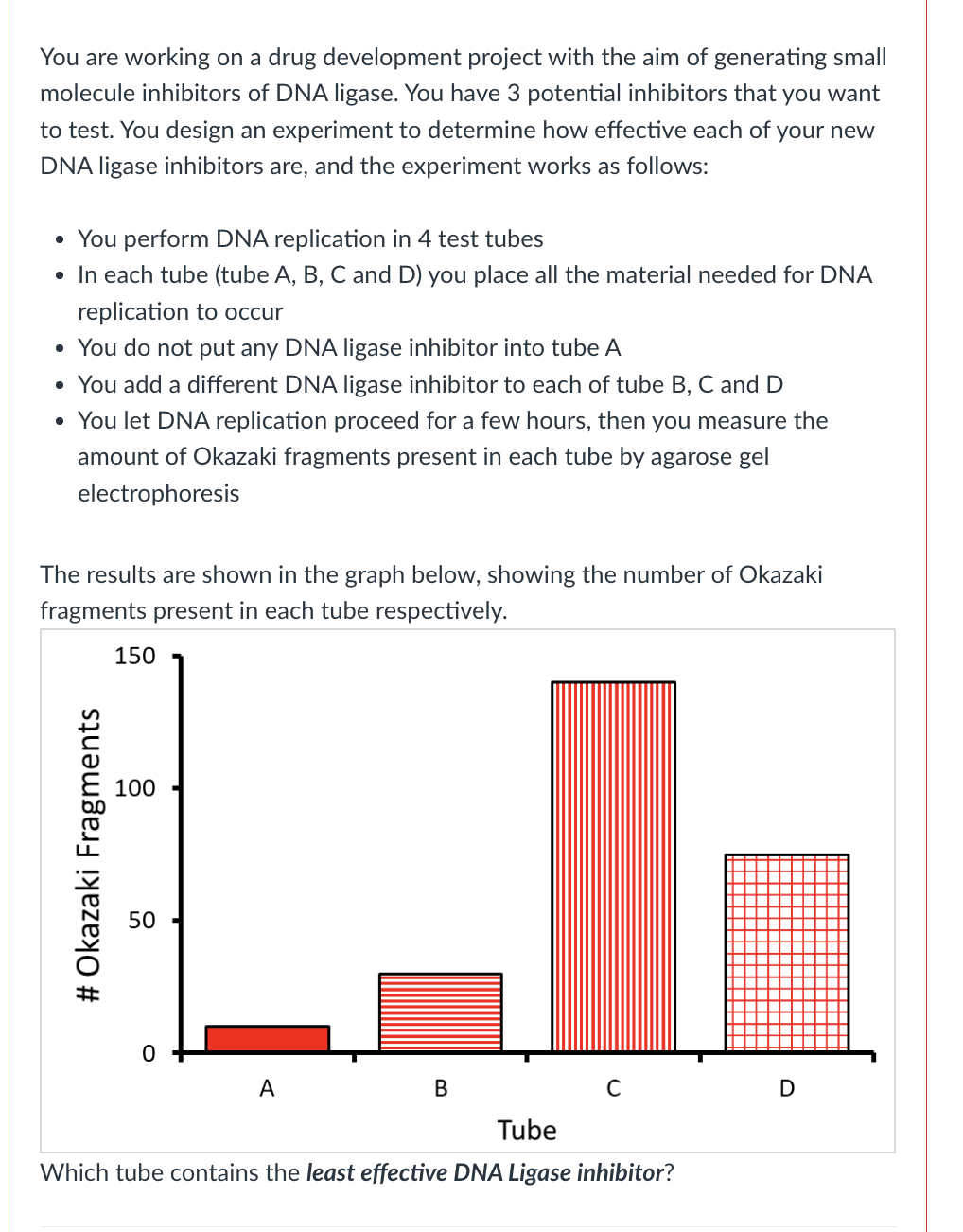
tube B
You work in a lab studying the expression of the gene HOXA9, a gene for which high levels of expression are crucial during embryonic development. You notice that in embryonic cells HOXA9 expression is very high, while in fully differentiated keratinocytes HOXA9 expression is very low.
You suspect that in embryonic cells, Histone methyl-transferase activity at the HOXA9 chromosomal locus may be higher in than in keratinocytes. Which of the following findings would support this hypothesis?
A. Higher levels of histone methylation in keratinocytes
B. Higher levels of DNA methylation in embryonic cells
C. Higher levels of histone methylation in embryonic cells
D. Higher levels of positively charged histones in embryonic cells
E. Mutated histones in keratinocytes
C. Higher levels of histone methylation in embryonic cells
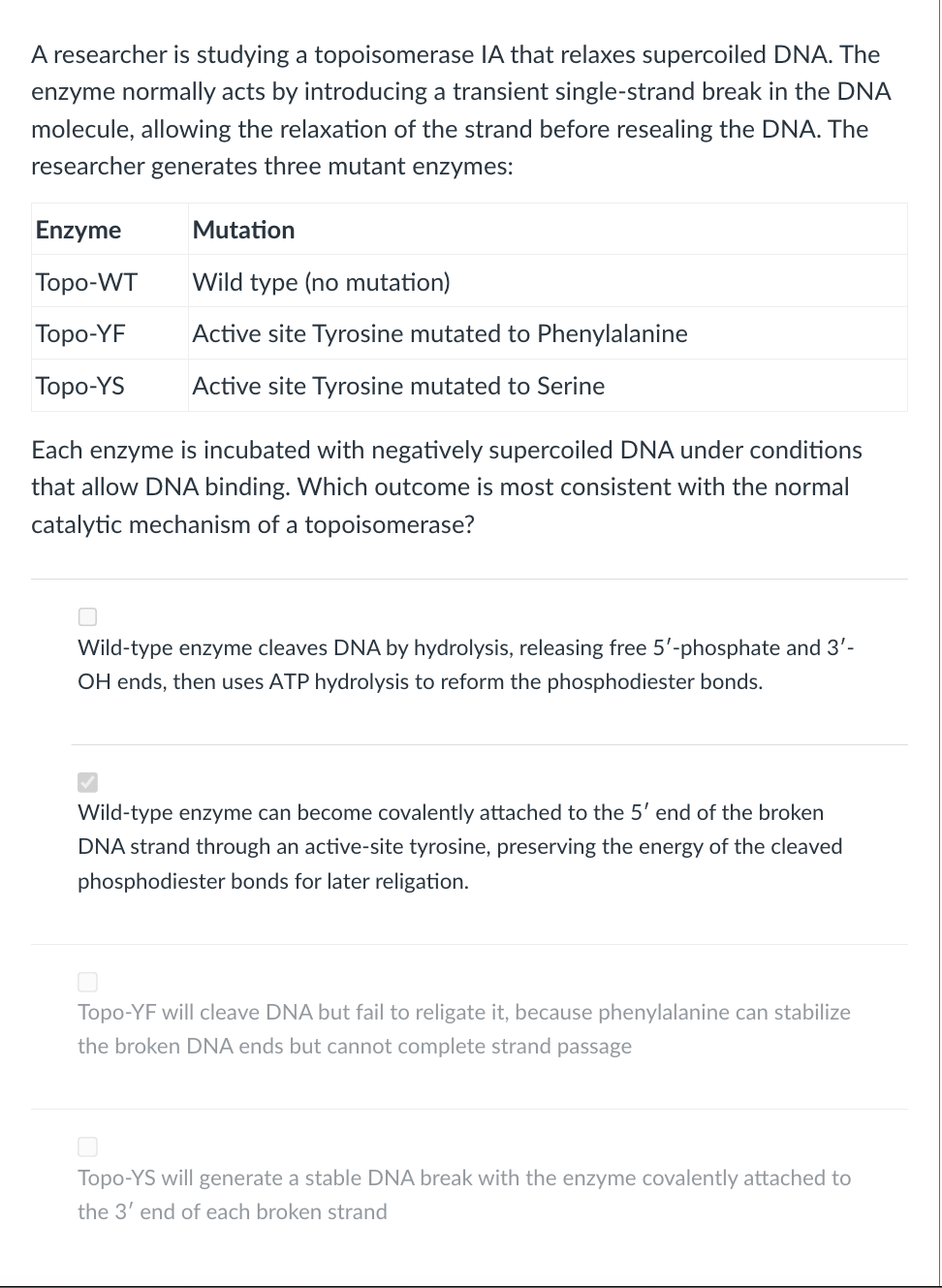
Wild-type enzyme can become covalently attached to the 5' end of the broken DNA strand through an active-site tyrosine, preserving the energy of the cleaved phosphodiester bonds for later
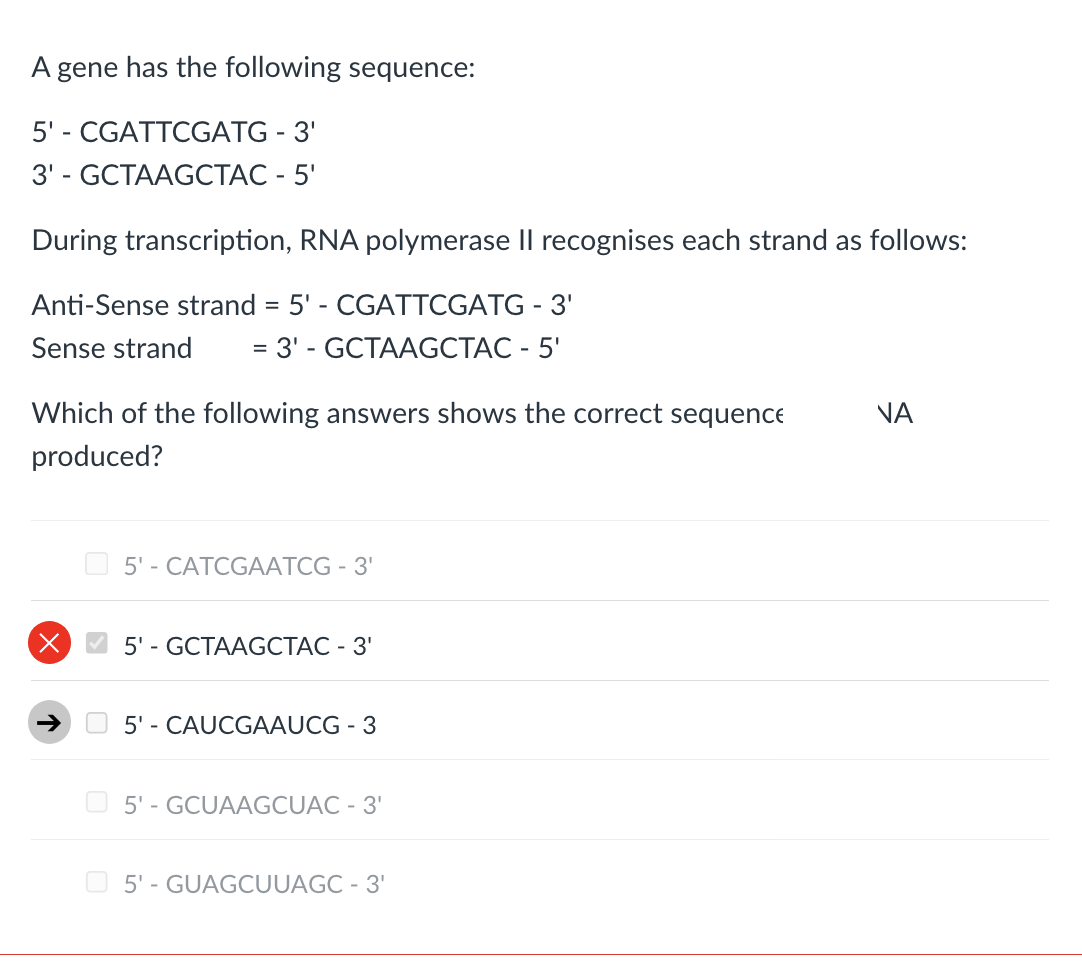
5' - CAUCGAAUCG - 3
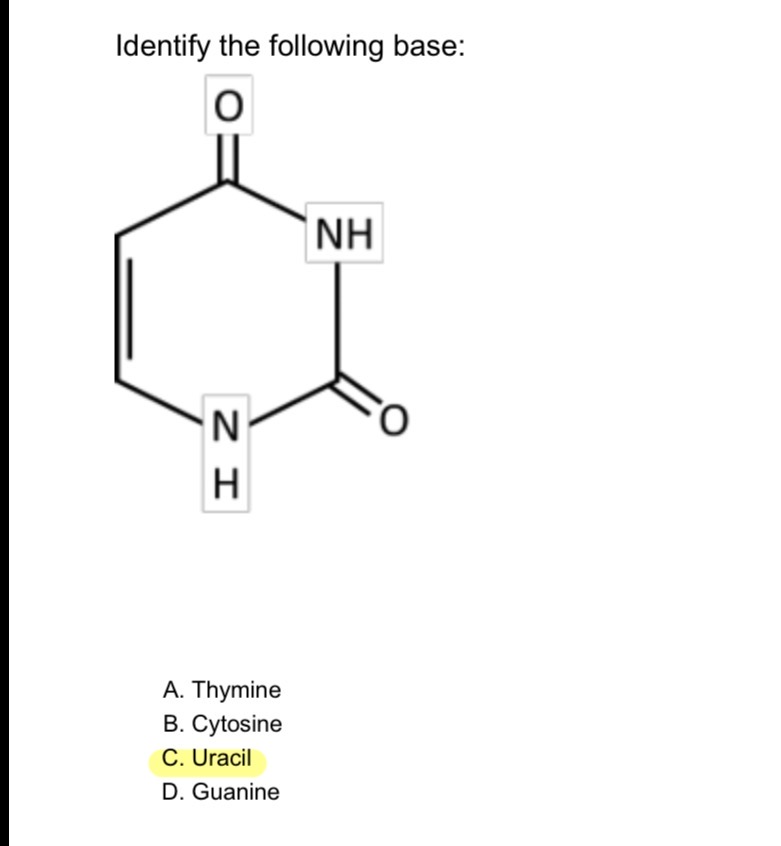
Uracil
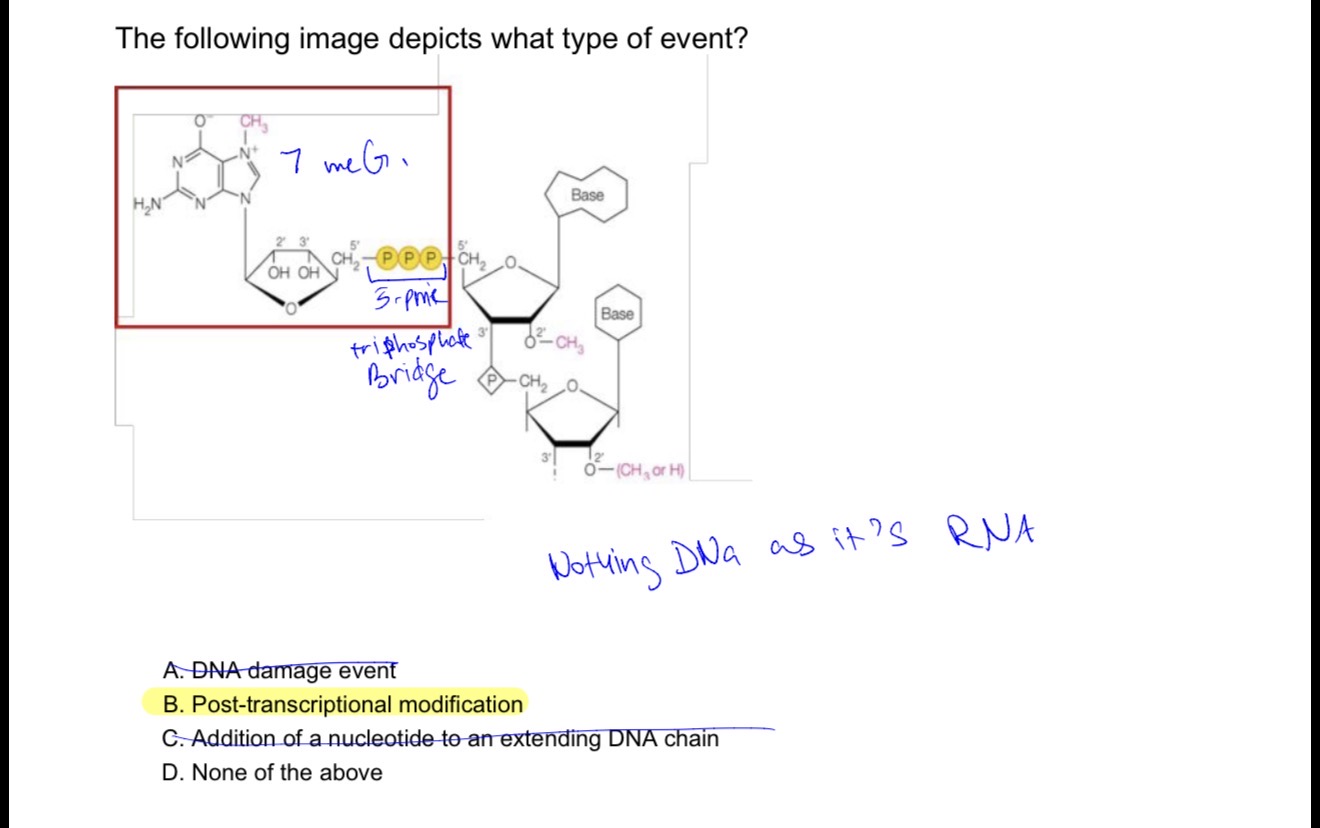
Post-transcriptional modification
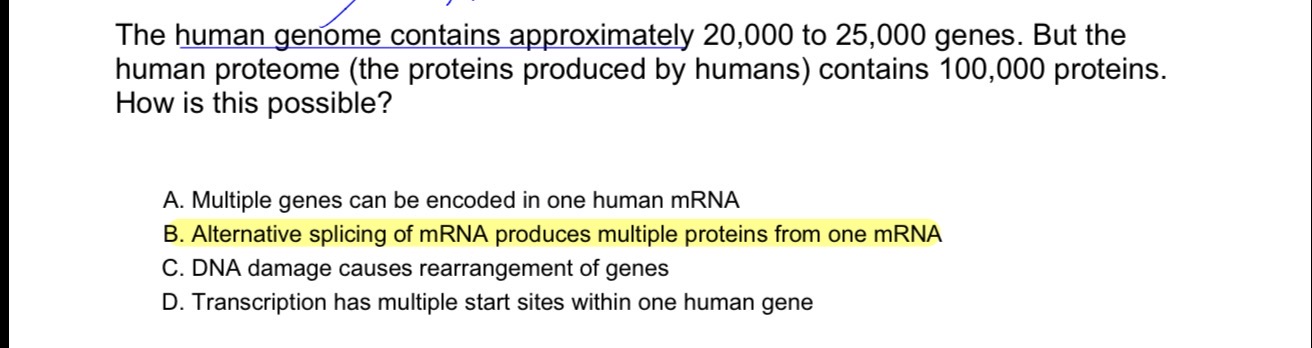
Alternative splicing of mRNA produces multiple proteins from one mRNA
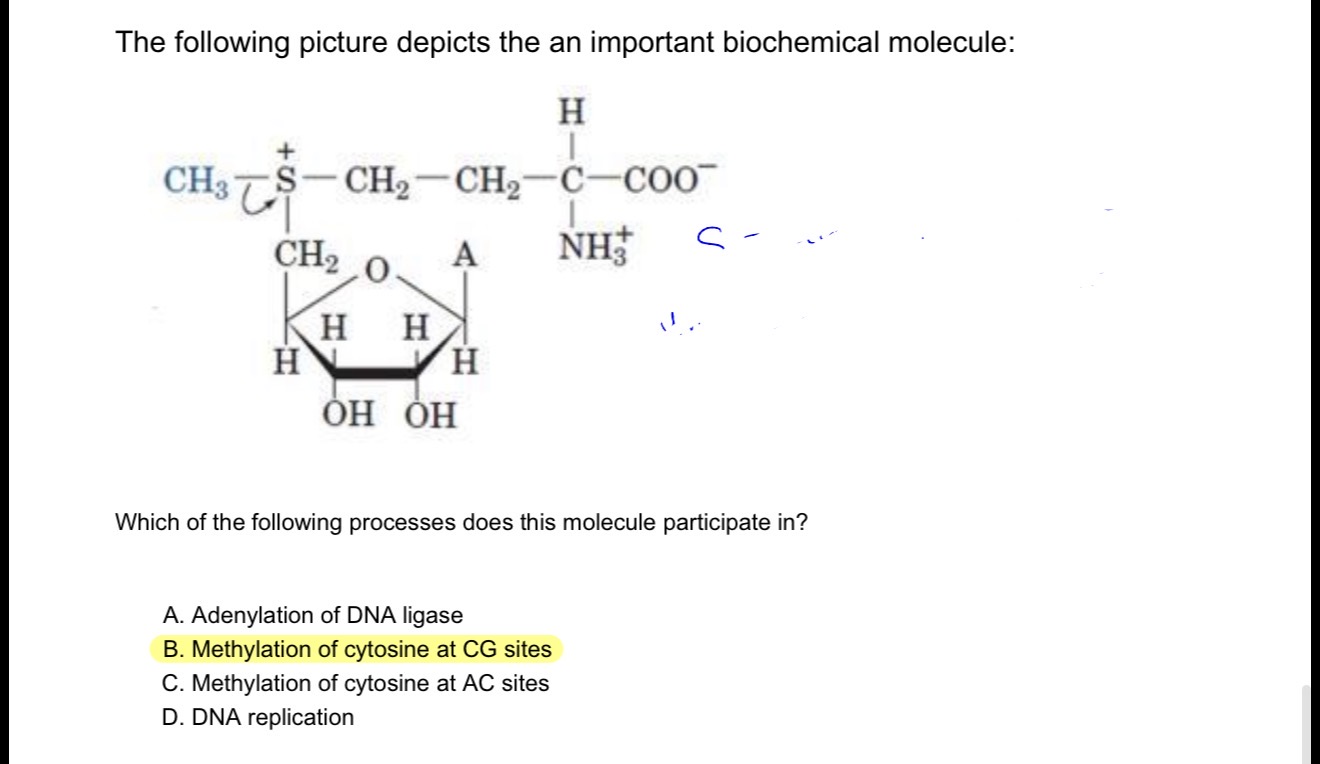
Methylation of cytosine at CG sites
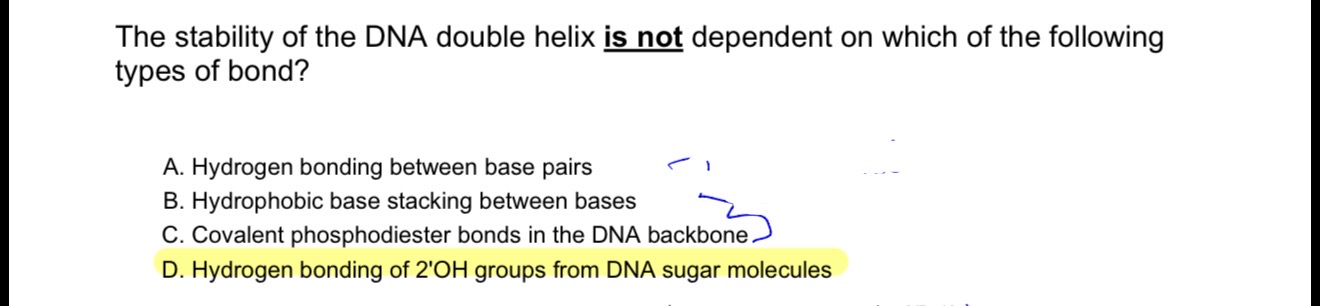
Hydrogen bonding of 2'OH groups from DNA sugar molecules
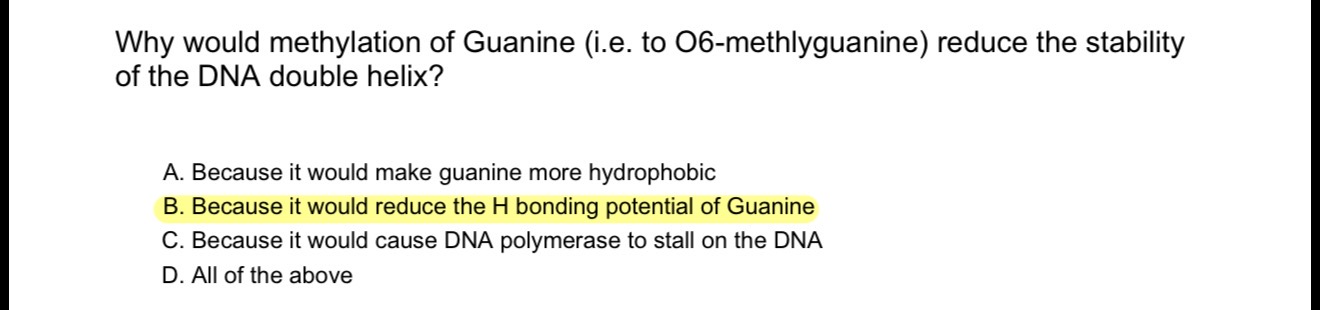
Because it would reduce the H bonding potential of Guanine
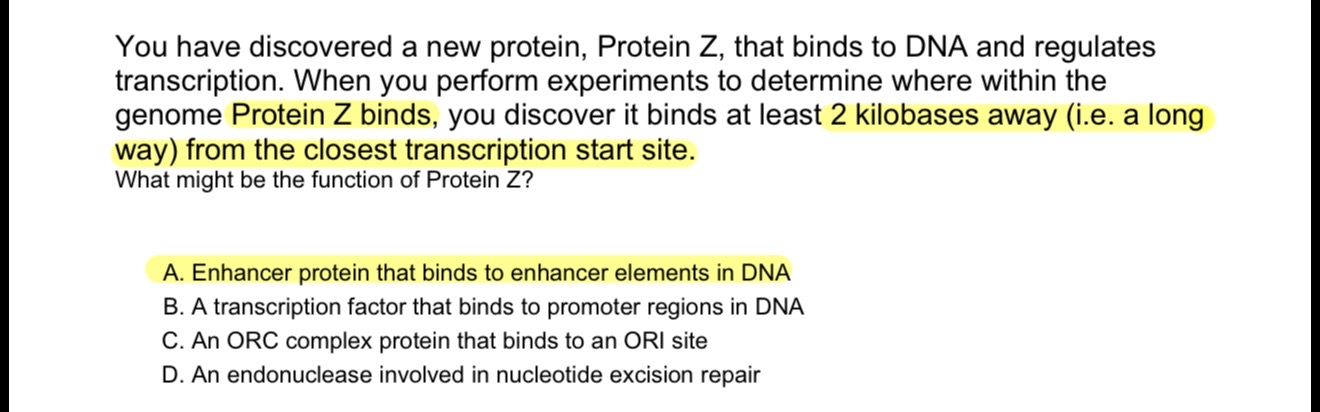
Enhancer protein that binds to enhancer elements in DNA
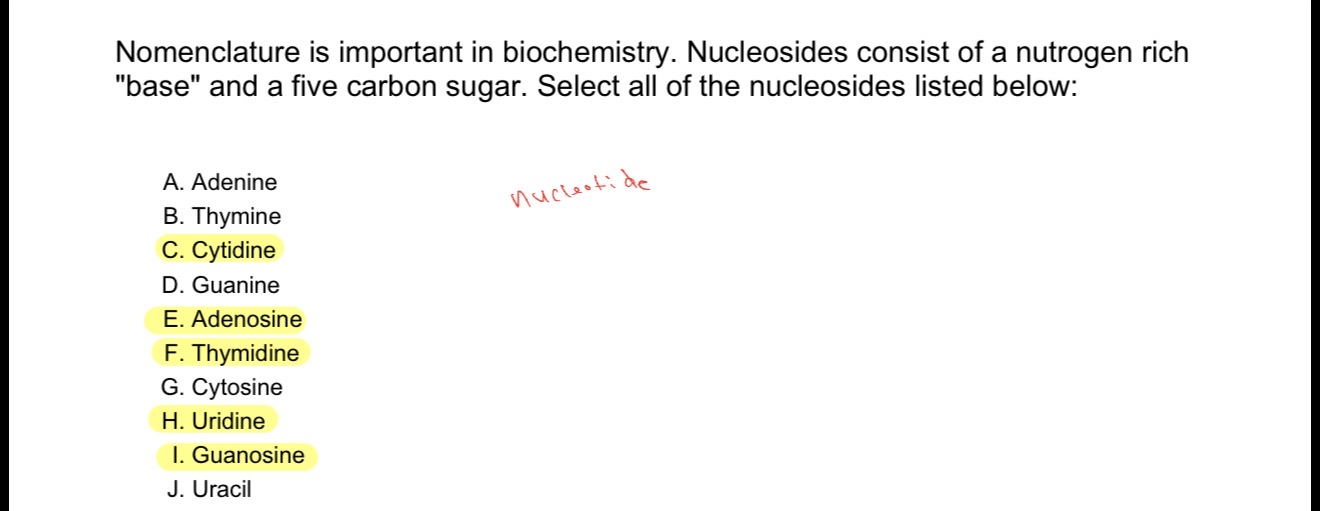
cytidine
Adenosine
Thymidine
Uridine
Guanosine