Health Assessment Exam 1
 Call Kai
 Learn
Learn Practice Test
 Spaced Repetition
 Match
Match Flashcards
 Knowt Play
1/22

There's no tags or description
Looks like no tags are added yet.
Name | Mastery | Learn | Test | Matching | Spaced | Call with Kai | Chat |
|---|
No analytics yet
Send a link to your students to track their progress
23 Terms
Which musculoskeletal disorder is characterized by joint stiffness that is worse in the morning but improves as the day progresses?
Rheumatoid arthritis
Which musculoskeletal condition is characterized by a enlarged, swollen, hot, red metatarsophalangeal joint?
Gouty arthritis
Which musculoskeletal condition is characterized by sharp pain and a grating feeling when making overhead movements, but no limited abduction, atrophy, or weakness?
Rotator cuff tendonitis
Which musculoskeletal condition is characterized by painful and limited abduction of the shoulder, muscle weakness and atrophy?
Rotator cuff tear
Which musculoskeletal disorder is characterized by increasing joint pain as the day progresses?
Osteoarthritis
Which musculoskeletal disorder is characterized by pain with chewing, but no facial/scalp tenderness?
Temporomandibular joint disorder (TMJ)
Which condition is associated with inability to shrug shoulders against resistance?
Lesion of CN XI
What does a Glasgow Score of 13-15 indicate?
Mild TBI/concussion
What does a Glasgow Score of 10 or under indicate?
Emergency attention is needed
What is the spinothalamic tract responsible for transmitting?
pain, temp, crude touch sensations
What are the posterior columns responsible for transmitting?
vibration, FINE touch signals
What is the corticospinal tract responsible for conducting?
impulses related to VOLUNTARY movements, requiring skill & purpose
What is the extrapyramidal tract responsible for conducting?
impulses related to INVOLUNTARY movements/body control, muscle tone maintenance

What is this gait pattern called?
Cerebellar Ataxia

What can cause this gait pattern?
Cerebellar diseases
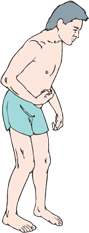
What is this gait pattern called?
Parkinsonian
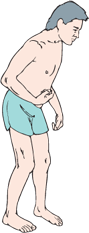
What can cause this gait pattern?
Parkinson’s
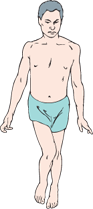
What is this gait pattern called?
Scissors Gait
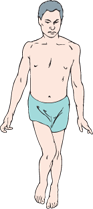
What can cause this gait pattern?
Partial leg paralysis

What is this gait pattern called?
Spastic Hemiparesis

What can cause this gait pattern?
Lesions of upper motor neurons in cortical spinal tract (stroke, etc.)
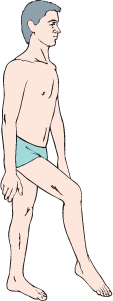
What is this gait pattern called?
Footdrop

What can cause this gait pattern?
Diseases of the lower motor neurons