RMUP EOR Exam
 Call Kai
 Learn
Learn Practice Test
 Spaced Repetition
 Match
Match Flashcards
 Knowt Play
1/1160

There's no tags or description
Looks like no tags are added yet.
Name | Mastery | Learn | Test | Matching | Spaced | Call with Kai | Chat |
|---|
No analytics yet
Send a link to your students to track their progress
1161 Terms
Chief Complaint (CC)
History of Present Illness (HPI)
Past Medical History (PMH)
Past Surgical History (PSH)
Medications
Allergies
Family History
Social History (tobacco, alcohol, drugs, occupation, etc.)
Review of Systems (ROS)
recommended order of history
General Appearance/Vital Signs
HEENT
Neck
Cardiovascular
Respiratory
Abdomen
Genitourinary (if applicable)
Musculoskeletal
Skin
Neurological
Psychiatric
recommended order of physical exam
shoulder abduction (deltoid); Sensory - lateral upper arm
C5 motor and sensory functions
elbow flexion/wrist extension; Sensory - lateral forearm, thumb
C6 motor and sensory functions
elbow extension/wrist flexion; Sensory - middle finger
C7 motor and sensory functions
Motor - finger flexion/grip; Sensory - medial forearm, 4th-5th fingers
C8 motor and sensory functinos
Motor - finger abduction/adduction; Sensory - medial arm
T1 motor and sensory functions
Motor - hip flexion; Sensory - anterior thigh
L2 motor and sensory functions
Motor - knee extension; Sensory - anterior thigh/knee
L3 motor and sensory functions
Motor - ankle dorsiflexion; Sensory - medial leg/ankle
L4 motor and sensory functions
Motor - great toe extension (EHL); Sensory - lateral leg, dorsum of foot
l5 motor and sensory functions
Motor - plantarflexion; Sensory - posterior leg, lateral foot
S1 motor and sensory functions
Motor - anal sphincter; Sensory - perianal area (saddle anesthesia in cauda equina/conus medullaris)
S2-4 motor and sensory ffunctions
tested by : Pupillary reflex, extraocular movements
function:Most eye muscles, pupil constriction
tests and functions of CN III
tests: Eye movement (look down/in)
innervation: superior oblique m.
CN IV tests and functions
Sensation face, muscles of mastication
innervation of CN V
test lateral gaze
innervates lateral rectus
CN VI tests and function
test: Smile, puff cheeks, taste anterior 2/3 tongue
innervation: Muscles of facial expression, lacrimation, taste
CN VII test and innervation
test: Gag reflex, taste posterior 1/3 tongue
function: Swallowing, taste, parotid secretion
CN IX tests and inervation
tests: Palate elevation, gag reflex, voice
function: Swallowing, palate, larynx, parasympathetics
tests for and funcction of CN X
tests: shoudler shrug, head turn
innervation: SCM, traapezius
tests for and function of CN XI
test: tongue protusion
innevates tongue muscles
tests for and innervatin of CN XII
C5-6
biceps brachii reflex tests what nerve roots?
C5-6
brachioradialis reflex tests what nerve roots?
C6-C7 (mainly C7)
tricceps reflex tests what nerve rootss?
nerve roots: L2-4
muscle: quadriceps femoris
patellar reflex tests what nerve roots and whata muscle?
nerve roots: S1 (±S2)
muscles: gastrocnemius, soleus
achilles refflex tests what nerve roots and what muscle?
0 No contraction
1 Flicker/trace contraction but no movement
2 Active movement possible with gravity eliminated
3 Active movement against gravity only
4 Active movement against gravity and some resistance
5 Normal strength, active movement against full resistance
define the grades of strength testing
Eye response (1-4)
Verbal response (1-5)
Motor response (1-6)
what are the 3 categories of GCS testing?
4 = Opens spontaneously
3 = Opens to speech
2 = Opens to pain
1 = No eye opening
define the scoring of eye response in calculaation of GCS
5 = Oriented, converses normally
4 = Confused conversation, disoriented
3 = Inappropriate words
2 = Incomprehensible sounds
1 = No verbal response
define the scoring of verbal response in calcullation of GCS
6 = Obeys commands
5 = Localizes painful stimulus
4 = Withdraws from pain
3 = Abnormal flexion (decorticate)
2 = Abnormal extension (decerebrate)
1 = No motor response
define the scoring of motor response in calculating GCS
3-8
GCS score range indicating severe TBI
9-12
GCS score range indicating moderate TBI
13-15
GCS score range indicating mild TBI
back off head (occiput)
C2 dermatome
neck (posterior, high cervical)
C3 dermatome
Shoulder region, clavicle
C4 dermatome
medial upper arm
T1 dermatome
nipple lline
T4 ddermatome
xiphoid process
T6 dermatome
umbiilcus
T10 dermatome
pubic symphysis
T12 dermatome
inguinal region
L1 dermatome
anterior thigh
L2 dermatome
medial knee
L3 dermatome
medial ankle/great toe
L4 dermatome
dorsum of foot/middle toes
L5 dermatome
lateral foot/sole
S1 dermatome
posterior thigh
S2 dermatome
Perianal region (saddle anesthesia)
S3-5 dermatome
Diabetic ketoacidosis (DKA), isopropyl alcohol ingestion
DDx of a pt with a fruity/acetone odor
Advanced uremia (renal failure)
DDx of a pt with ammonia lilke odor
Liver failure (fetor hepaticus)
ddx of a pt with sweet, musty odor
pseudomonas
ddx of pt with a sweet, grame like smell on woundd
resonant
low pitched, hollow sound
resonant
normal lung percussive sounds
Hyperresonant
Very loud, lower-pitched, booming
Pneumothorax, emphysema (hyperinflated lung)
DDx of hyperresonant lung sounsd
tympanic
Loud, high-pitched, drum-like soundd
gastric air bubble, bowel
normal location of tympanic percussion sound
dull
Soft, moderate-high pitch, thud-like sound
liver, spleen, consolidated lung
normal location of dull percuuussion
Pneumonia, tumor, organ enlargement
DDx of dull percussion
fflat
very soft, high pitchhed sound
Large pleural effusion, massive consolidation
DDx of flat percussion
standard Ophthalmoscope
what type of opthalmoscope?
Small field of view (~5°).
Requires close positioning to patient's eye.
More challenging for novice users.
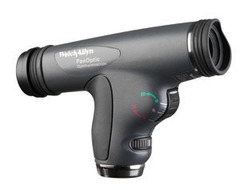
panoptic ophthalmoscope
what type of ophthalmoscope?
Wider field of view (~25°).
Easier to visualize retina, optic disc, vessels, and pathology.
More expensive but often preferred in primary care for teaching and efficiency.
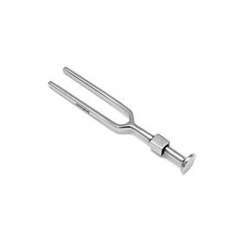
512 Hz tuning fork
what Hz tuning fork?
used most often for hearing assessment. (weber and rinne)
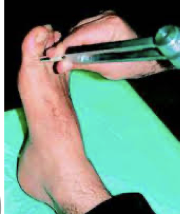
128 Hz tuning fork
what Hz tuning fork?
used for vibration sense in neurologic exam (e.g., diabetic neuropathy screening).
Executive function, planning, judgment, problem-solving, voluntary motor control (precentral gyrus), speech production (Broca's area - dominant hemisphere)
primary functions of frontal cortex
Somatosensory processing (postcentral gyrus), spatial orientation, body awareness, integration of sensory input
primary functions of parietal lobe?
Auditory processing, memory (hippocampus), language comprehension (Wernicke's area - dominant hemisphere), emotion (amygdala)
primary functions of the temporal lobe?
Taste, visceral sensation, autonomic functions, pain perception
main functions of insular cortex
emotion, memory, motivation
main functions Limbic system (cingulate gyrus, hippocampus, amygdala)
parkinsonism
Mask-like facies, decreased blink rate.
myxedema (hypothyroidism)
Puffy face, periorbital edema, coarse features, dry skin.
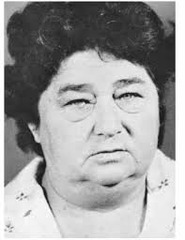
Williams sysndrome
Elfin facies" - broad forehead, short nose, wide mouth.
Benign, cyclic mastalgia, nodularity, fluctuates with menses.
PE findings of fibrocystic changes of the breast
fibroadenoma
Mobile, firm, rubbery, well-circumscribed mass on breast, common in young women.
breast cyst
Fluctuant, tender, often associated with fibrocystic changes.
fat necrosis
Firm, irregular mass on breast, often after trauma; can mimic malignancy.
Hard, immobile, irregular borders; peau d'orange skin changes; nipple retraction.
breast exam findings associated with breast carcinoma
Axillary tail of spence
superior lateral corner of breast tissue, projects up and laterally into axilla
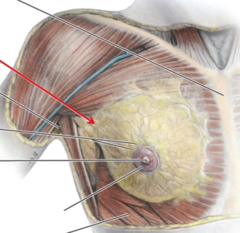
Axillary lymph nodes (≈75%) → especially anterior (pectoral) nodes.
primary lymphatic drainage of the breast
Most breast cancers metastasize first to axillary lymph nodes
why is axillary node exam necessary in breast exam?
fibrocystic changes
Most common benign condition.
Cyclical breast pain, nodularity, tender before menses.
Often bilateral, lumpy "rope-like" texture.
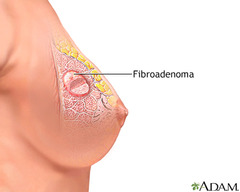
fibroadenoma
Benign tumor of stromal/epithelial tissue.
Well-circumscribed, rubbery, firm, mobile ("slips under fingers").
Common in women
malignancy if new onset.
nipple retraction or inversion is suspicious for
intraductal papilloma, carcinoma.
serous/bloody nipple discharge is concerning for
prolactinoma, hypothyroidism, meds
DDX of milky nipple discharge
Paget's disease of breast (underlying ductal carcinoma)
eczema like changes of areola
Prevents disease before it occurs by reducing risk factors or increasing resistance
define primary prevention
Vaccinations, lifestyle counseling (smoking cessation, exercise), fluoridated water
examples of primary prevention
Detects disease early in an asymptomatic stage to allow prompt intervention
define secondary prevention
Screening tests (Pap smear, mammogram, colonoscopy, blood pressure checks)
examples of secondary prevention
Limits disability and complications after disease is established; focuses on rehabilitation
define tertiary prevention
Cardiac rehab after MI, physical therapy post-stroke, insulin use in diabetes
examples of tertiary prevention
Prevents overmedicalization, protects patients from unnecessary interventions
define quaternary prevention
Avoiding unnecessary antibiotics, deprescribing inappropriate medications
examples of quaternary prevention