Vertebrate Zoology Practical 1 - Body types / locomotion / hunting styles / scale types
 Studied by 0 people
 Call Kai
 Learn
Learn Practice Test
 Spaced Repetition
 Match
Match Flashcards
 Knowt Play
1/38

There's no tags or description
Looks like no tags are added yet.
Name | Mastery | Learn | Test | Matching | Spaced | Call with Kai |
|---|
No analytics yet
Send a link to your students to track their progress
39 Terms
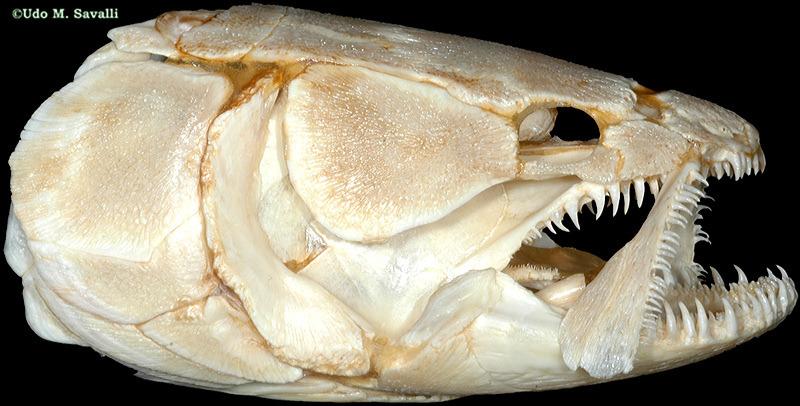
Piscivorous teeth
Long, slender, and curved teeth
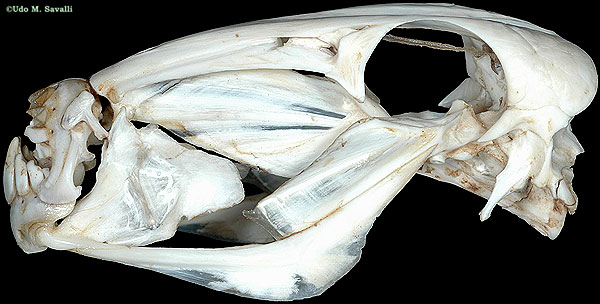
Durophagy-style teeth
Short, thick, and rounded meant for crushing hard-shelled prey
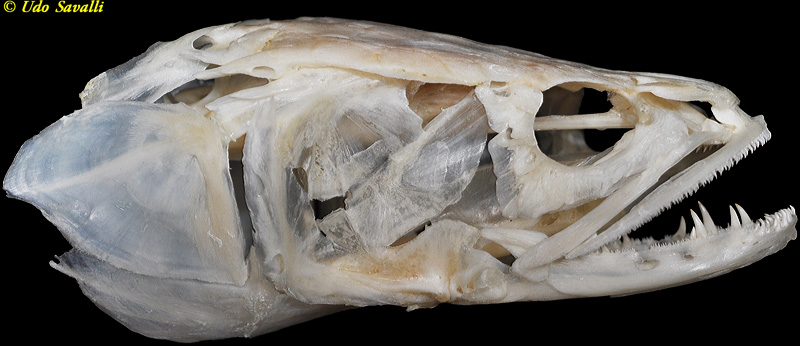
Small, delicate teeth
Meant for eating small or soft prey
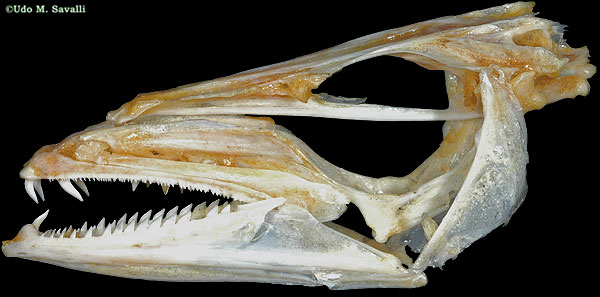
Triangular, serrated teeth
Meant for eating and tearing flesh of larger vertebrate prey
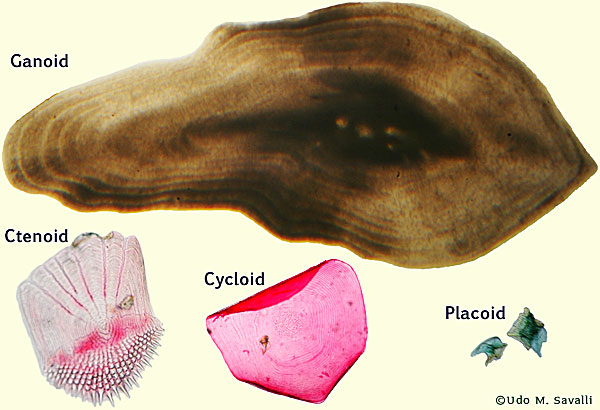
Ganoid scales
Two layers of bone and covered by enamel
Large and thick
Found in primitive ray-finned fishes such as bichirs and gars
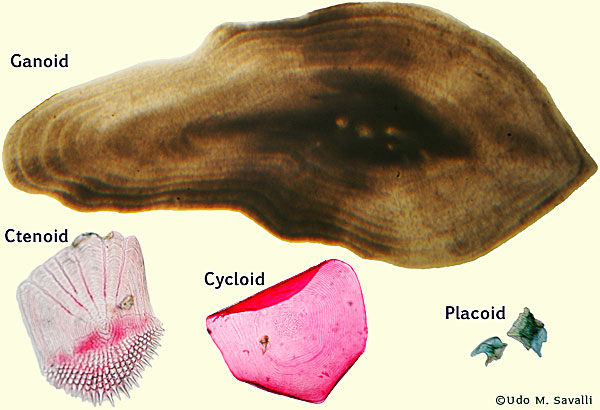
Cycloid scales
Synapomorphy of the teleosts
Growth rings
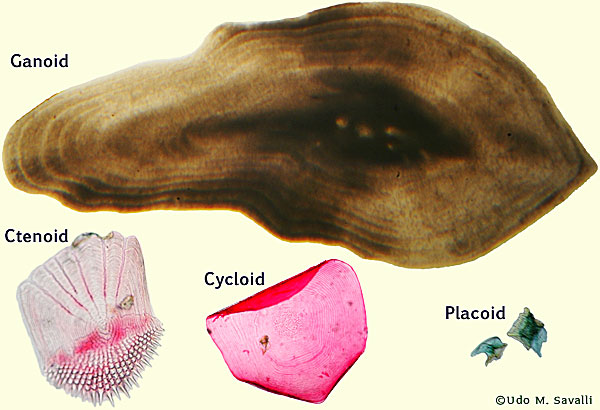
Ctenoid scales
A specialized, derived form of cycloid scales
Fringe projections along the posterior margin

Fusiform
Torpedo shaped bodies (tapered at both ends)
Typical fish shape
Oval cross section
Associated with active swimmers
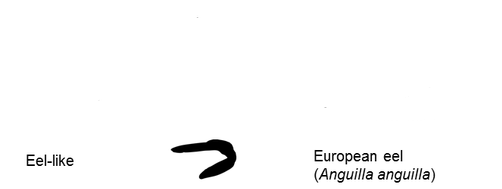
Anguilliform
Elongate and flexible bodies
Eel or snake-like
Dorsal fin extends along most of body
Adapted for hiding in crevices and small spaces
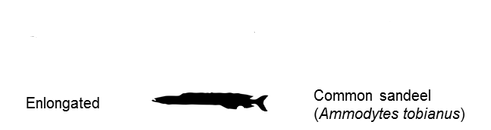
Elongated
Long but fairly rigid bodies to provide rapid acceleration
Slender jaws to snap at prey quickly
Seen in gars and sturgeons
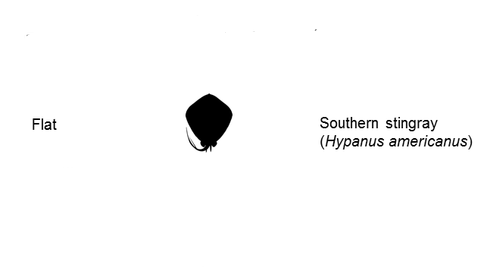
Flattened
Dorso-ventrally flattened bodies
Associated with benthic lifestyle
Rays, flatfishes, and hillstream loaches are associated
Deep-bodied
Laterally compressed bodies
Thin from head-on and disk like from above
Allows for sharp turns and quick bursts of speed
Pelvic fins are positioned forward and pectoral fins are high on the body
Dorsal and anal fins are long

Globular and boxy bodies
Slow-swimming fishes
Very large and box like bodies
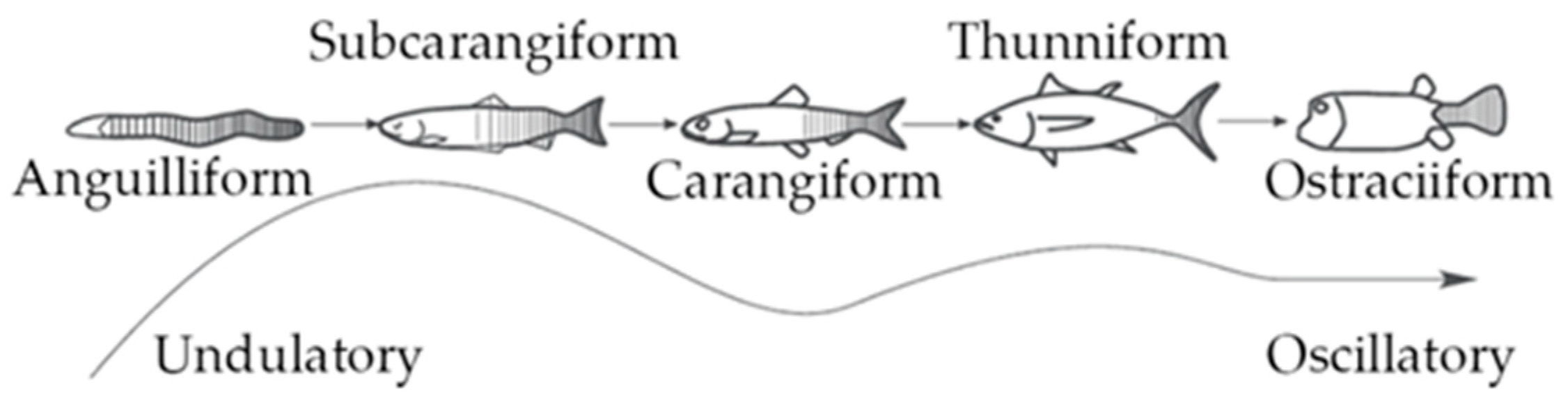
Carangiform swimming
Flexion restricted to posterior half of body and tail
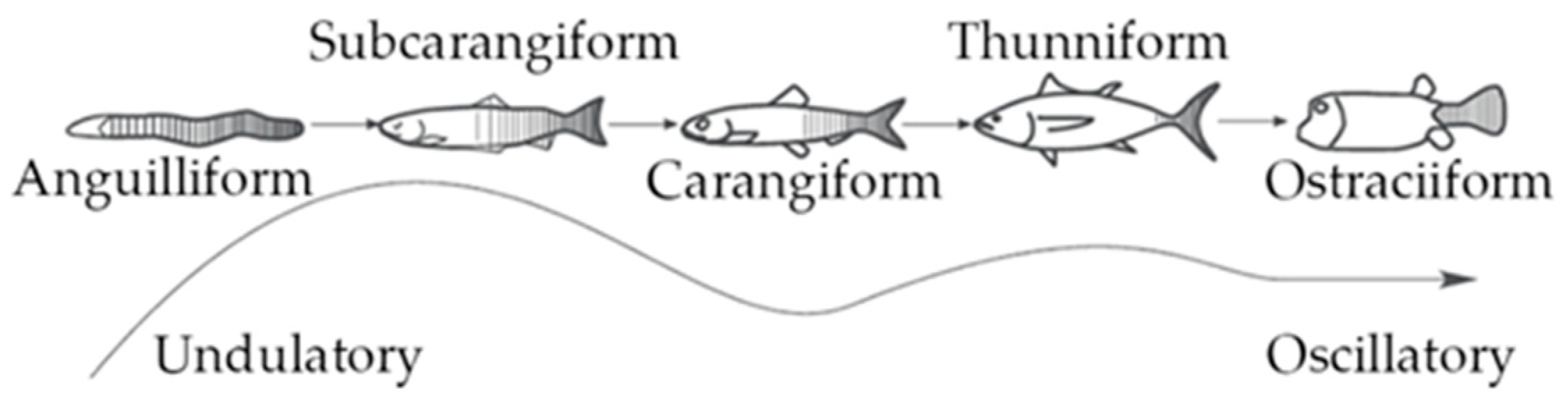
Thunniform swimming
High-speed version of carangiform swimming
flexing is restricted to the narrow caudal peduncle and crescent-shaped caudal fin
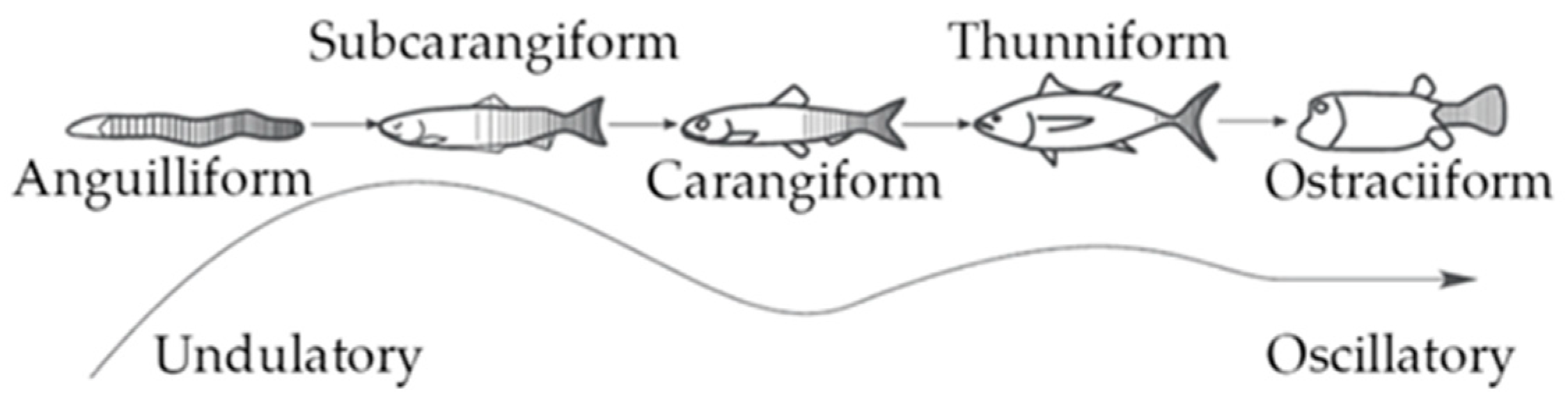
Ostraciform swimming
Body is inflexible and motion is restricted to the caudal fin
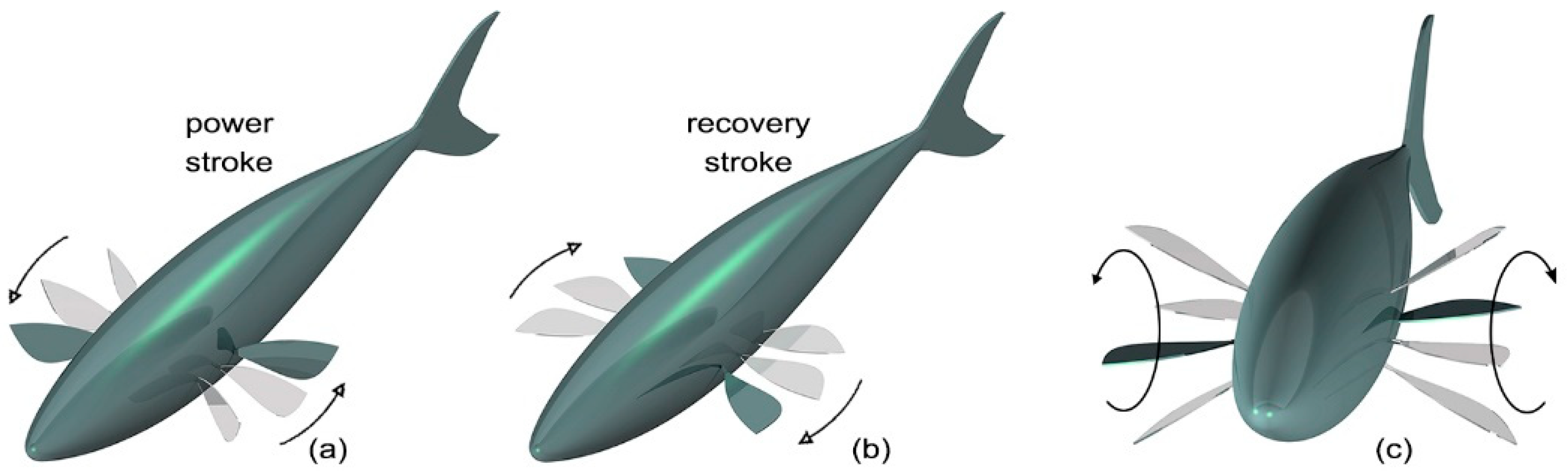
Labriform swimming
Oscillatory swimming using the paired fins, especially pectoral
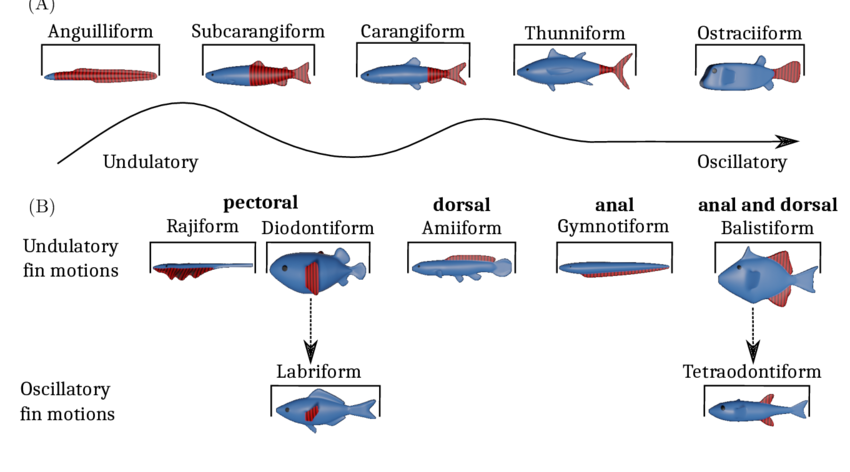
Rajiform swimming
Wave-like swimming by undulating the whole length of the fin
seen in rays and flatfish
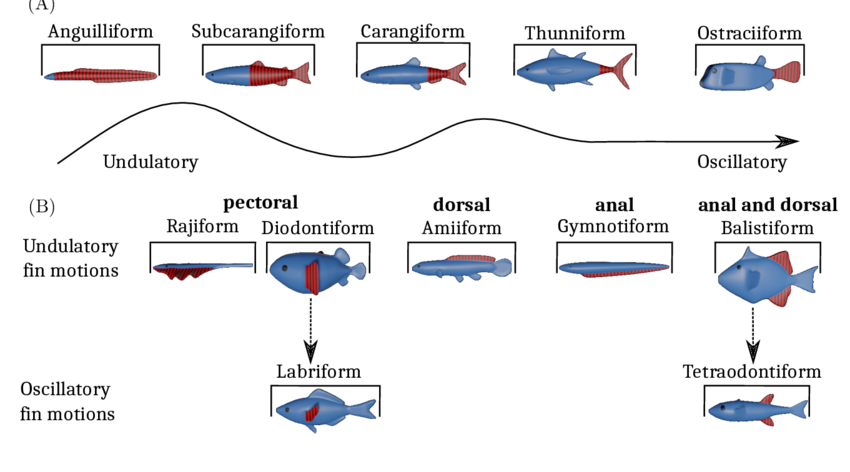
Amiiform swimming
Undulations of the elongated dorsal fin
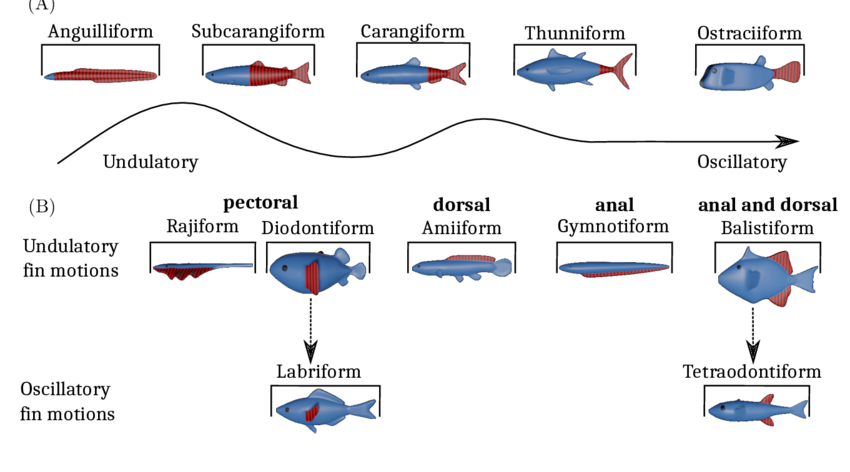
Gymnotiform
Undulations of the elongated an4l fin
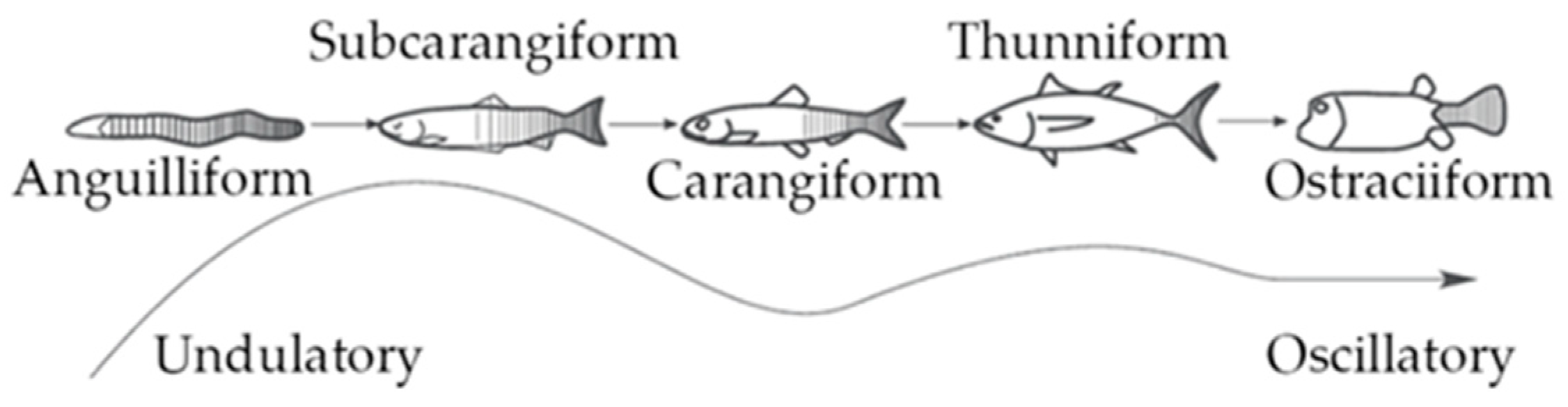
Anguilliform swimming
Most of the body flexes to move
Highly maneuverable
Elongated body with reduced pectoral and pelvic fins
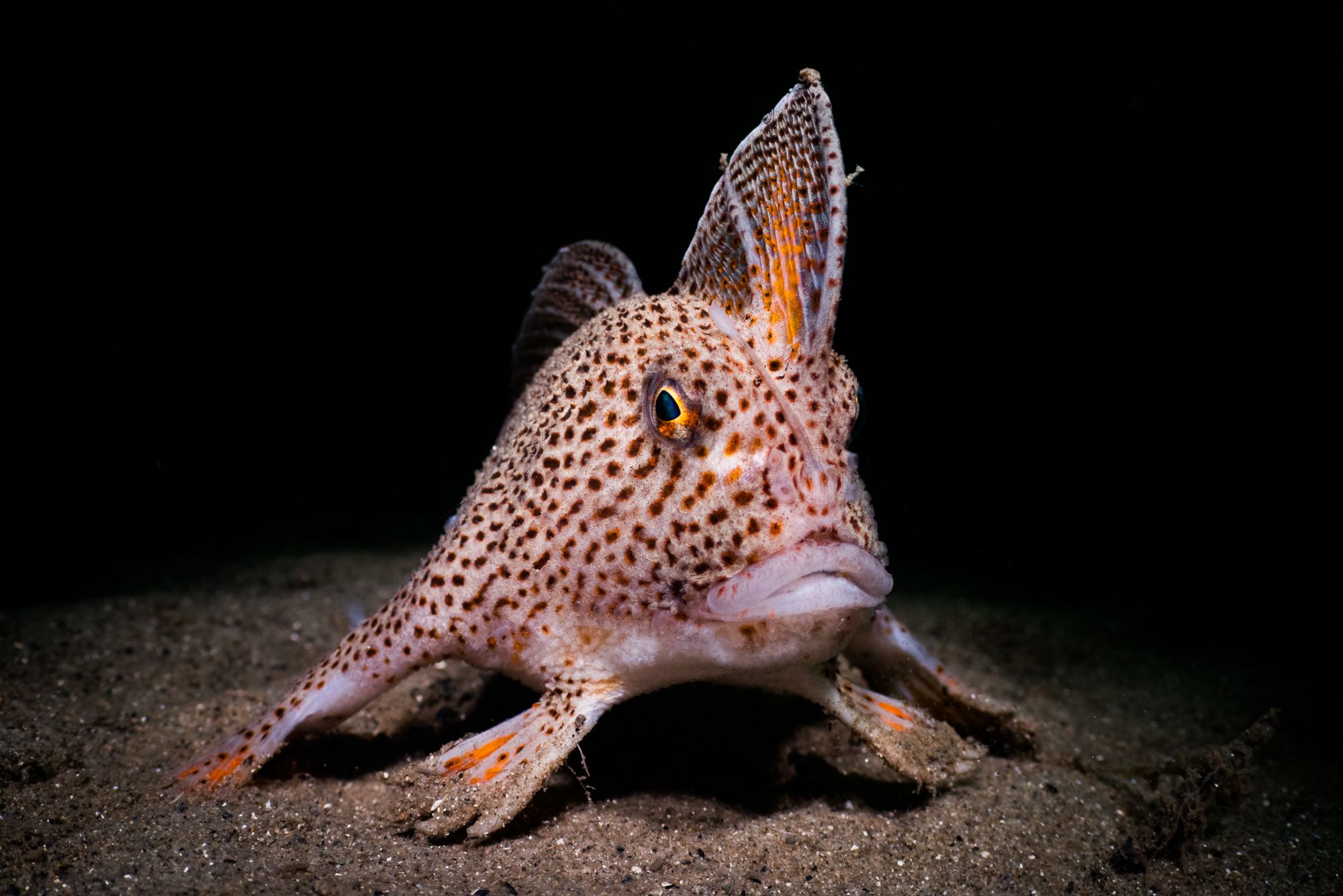
Walking locomotion
Use of large, specially jointed pectoral fins to walk across the bottom rather than swim
Rover predator
Fusiform, streamlined bodies with evenly distributed fins
“terminal” mouth located at forward most point of the head
Ambush predator
Lie-in-wait for prey to approach
Use burst forward
Elongated, but straight streamlined bodies
Large mouths and obvious teeth
Seen in gars, barracudas
Surface-feeding
Mouth faces upward and their upper surface, especially the head, is flattened in profile
Bottom-feeding
Downward facing mouths towards the underside of the head
Ventral surface is flat in profile and often somewhat flattened in shape
Sensory barbels around their mouth
Benthic sit-and-wait predator
Stocky, cryptic fish
Large fins to adhere to the bottom
Large mouths to suck in passing fish
May look like rocks
Semiaquatic jumpers
Streamlined bodies with long hind legs
Live at edge of water to rapidly leap to safety
Bullfrogs are an example
Terrestrial hoppers
Shorter legs of more equal length
Short hops
Warty skin
Seen in toads
Terrestrial walkers
Slender, ground-dwelling frogs
Moderately long legs of equal length
seen in poison dart frogs
Burrowers
Specialized for extensive burrowing
Compact bodies
Can have spades on hind feet or pointed snout
Seen in spadefoots
Sit-and-wait predators
Compact body with large head
Seen in pacman frog/horned frog
Climbers
Slender bodies
long limbs
expanded toe pads
Seen in tree frogs
Parachuting
Elongated, webbed toes
Aquatic swimmers
Flattened, streamlined bodies
Long hind legs with webbed feet for swimming
Hiding defense
Used by fish that hide in sand
Typically flattened
Cryptic coloration and shape defense
Use of irregular shapes and colors to break up outline
Can blend into bottom of habitat (like sand or rocks) or blend into open sea (silver)
Disruptive coloration defense
Contrasting stripes and bars to break up outline
Physical Protection
Bony dermal armor, spines, hard-to-swallow shapes

