Women's Health: Postpartum Care
 Call Kai
 Learn
Learn Practice Test
 Spaced Repetition
 Match
Match Flashcards
 Knowt Play
1/66

There's no tags or description
Looks like no tags are added yet.
Name | Mastery | Learn | Test | Matching | Spaced | Call with Kai | Chat |
|---|
No analytics yet
Send a link to your students to track their progress
67 Terms
Amniotic Fluid Embolism
Postpartum emergency due to an immune-mediated reaction that is triggered by exposure to fetal antigens entering maternal circulation, causing mast cell degranulation, biphasic hemodynamic collapse, and consumptive coagulopathy
-Presentation: hypotension/CV collapse, respiratory distress/hypoxia, DIC, AMS within 30 minutes of placental delivery
-Dx: diagnosis of exclusion
-Tx: CPR, vasopressors, inotropes, pulmonary vasodilators, transfusion, TXA
APGAR
Comprehensive screening tool used to assess newborns at birth and can assist in identifying the need for any immediate attention/intervention that baby needs
-Appearance, Pulse, Grimace, Activity, Respiration (0, 1, or 2)
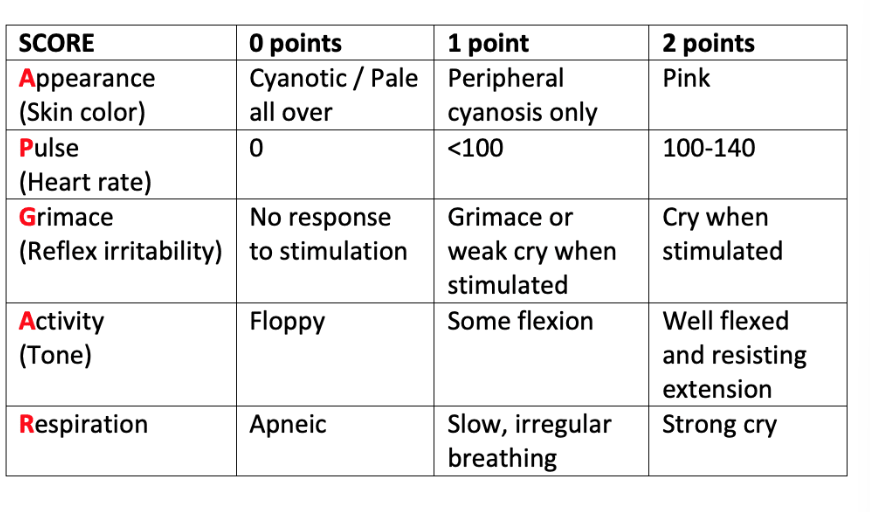
1, 5
At how many minutes should the APGAR be calculated?
7-10
What is the normal APGAR score range?
4-6
What range of APGAR score is moderately abnormal?
0-3
What range of APGAR score is abnormal?
0
What score would the infant get for Appearance?
-Cyanotic / pale all over
1
What score would the infant get for Appearance?
-Peripheral cyanosis only
2
What score would the infant get for Appearance?
-Pink skin
0
What score would the infant get for Pulse?
-0
1
What score would the infant get for Pulse?
-<100
2
What score would the infant get for Pulse?
100-140
0
What score would the infant get for Grimace?
-No response to stimulation
1
What score would the infant get for Grimace?
-Grimace or weak cry when stimulated
2
What score would the infant get for Grimace?
-Cry when stimulated
0
What score would the infant get for Activity?
-Floppy
1
What score would the infant get for Activity?
-Some flexion
2
What score would the infant get for Activity?
-Well flexed and resisting extension
0
What score would the infant get for Respiration?
-Apneic
1
What score would the infant get for Respiration?
-Slow, irregular breathing
2
What score would the infant get for Respiration?
-Strong cry
Endometritis
Infection of the decidua, which is the MC postpartum infection and related to Group A and B strep
-Presentation: fever, uterine tenderness, tachycardia that parallels rise in temp, midline lower abdominal pain. May have vaginal bleeding or discharge that is foul smelling.
-Red Flags: fever > 103, Hr > 110, RR > 20, BP < 90/60, and elevated lactic acid
-Dx: clinical
-Tx: Clindamycin + Gentamicin, add ampicillin or augmentin if GBS
C-section
What is the biggest risk factor for endometritis?
Cefazolin
What agent is given during c-section to reduce the incidence of endometritis?
Clindamycin + Gentamicin
What two antibiotics are given in endometritis?
-IV, after being admitted
Septic Pelvic Thrombophlebitis
Rare complication of endometritis that occurs when a thrombus occurs in a pelvic vein and becomes infected, can be ovarian vein or deep spontaneous
-Presentation: abdominal pain, fever, uterine tenderness, does not improve after antibiotics. Palpable cord-like mass on exam
-Dx: CT or MRI of pelvis
-Tx: Gentamicin + Clindamycin, anticoagulation
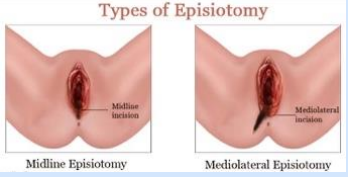
Episiotomy
Purposeful laceration of the vaginal opening to facilitate delivery by enlarging the vaginal outlet
-Can be midline (MC, easier to repair) or mediolateral (away from anus). ACOG recommends against routine use of episiotomy due to risk of perineal laceration
-Complications: infection, hematoma, cellulitis, dehiscence, abscess, dyspareunia, altered sexual function, perineal pain, incontinence, fistula, pudendal nerve conduction, necrotizing fasciitis
1st Degree
Perineal laceration limited to the perineal skin
2nd Degree
Perineal laceration involving muscles but not the anal sphincter
3rd Degree
Perineal laceration involving the anal sphincter complex
-Requires absorbable sutures and single dose of cefoxitin
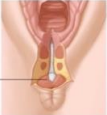
4th Degree
Perineal laceration involving both the internal and external anal sphincter and the anal epithelium
-Requires absorbable sutures and single dose of cefoxitin
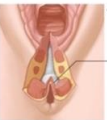
Postpartum Hemorrhage
Bleeding > 500mL (vaginal) or > 1000mL (c-section), requiring transfusion or a 10% decrease in hematocrit
-3rd leading cause of maternal death in the US
-Etiologies: tone (atony), tissue (retained placenta), trauma, thrombin
-Presentation: prolonged bleeding, hypovolemic shock, oliguria, coma, death. Soft, flaccid, boggy uterus on physical exam
-Dx: CBC, US
-Tx: fluid resuscitation, uterine massage, oxytocin, suction and curettage if retained products
Uterine Massage and compression
What is the first line treatment for postpartum hemorrhage, due to uterine atony?
Oxytocin
What uterotonic agent is used in postpartum hemorrhage in order to increase uterine contractions?
Sheehan Syndrome
Rare complication of postpartum hemorrhage
-Patho: pituitary gland infarction due to ischemia, impacting the secretion of one or more pituitary hormones
-Presentation: failure to lactate and amenorrhea or oligomenorrhea, hypotension, hyponatremia, and hypothyroidism
-Tx: steroids for adrenal insufficiency
Puerperium
6-8 week period following birth in which the reproductive tract, as well as the rest of the body, returns to the nonpregnant state
Involution of Uterus
Immediate size reduction of the uterus after delivery
-Further involution is caused by autolysis of intracellular myometrial protein, which results in a decrease in cell size but not number
-Uterine homeostasis is maintained by contraction of the smooth muscle of the arterial walls and compression of the vasculature by the uterine musculature
Lochia
Discharge that is fairly heavy at first and rapidly decreases in amount over the first 2-3 days postpartum
-Due to the decidua differentiating into a superficial layer, which becomes necrotic and sloughs, and a basal layer that is the source of the new endometrium. Blood clots from the uterus are expelled and the placental bed thrombi undergo organization
-Resolves more quickly in women who breastfeed
Lochia Rubra
Menses-like bleeding in the first several days postpartum, consisting mainly of blood and necrotic decidual tissue
Lochia Serosa
Lighter discharge with considerably less blood in the next few days of postpartum
Lochia Alba
Whitish discharge that may persist for several weeks postpartum, which may be misunderstood as a yeast infection or illness
1cm
Within several hours of delivery, the cervix has reformed. By about 1 week postpartum, how big in diameter is the cervix?
Dilation
The round-shaped nulliparous cervix is permanently replaced by a transverse, fish mouth-shaped external os as a result of what during delivery?
Suppressed
If a woman breastfeeds, vaginal epithelium reflects a hypoestrogenic state because ovarian function is what during breastfeeding?
Suppressed
Lactation leads to an increase in prolactin levels, which has what effect on ovulation?
-Will remain elevated for 6 weeks
Striae Gravidarum
Silvery stretch marks seen on the skin during pregnancy
Diastasis Recti
Separation of the rectus muscles and fascia, which resolves over time
2-3 weeks
How long does it take for pregnancy related cardiovascular changes to return to normal after delivery?
1000 mL
Immediately after delivery, plasma volume is reduced by what?
Leukocytosis
What seen during labor persists into the early puerperium for several days, thus minimizing the usefulness of identifying early postpartum infection by laboratory evidence of a mild-to-moderate elevation in the white cell count?
-Some autotransfusion of red cells into the intravascular space after delivery
Increased
Kidney function remains elevated in the first few weeks postpartum before returning to normal. Should doses of renal excreted drugs be increased or decreased?
Urinary Retention
What is a result of edema around the urethra after vaginal delivery?
Prolactin
What hormone produces milk?
Oxytocin
What hormone releases milk?
Progesterone
What hormone falls after delivery, allowing prolactin to stimulate milk production?
Colostrum
First milk produced
-Yellow, thick and high in protein
-Produced for first 2-4 days postpartum
6 months
How long does ACOG suggest exclusive breastfeeding?
12 months
In addition to complementary foods, ACOG suggests that a patient continues breastfeeding for at least how long?
Engorgement
Bilateral, firm, tender breasts around postpartum days 3-5
-Afebrile patients
-Continue breastfeeding, warm compresses before feeds, NSAIDs, and frequent emptying
Lanolin
Cracked nipples, which are usually due to poor latch, can be treated with topical what?
-Prescribe after fixing the infant’s latch
Plugged Milk Duct
Localized, tender lump in a breastfeeding patient
-No fever or systemic symptoms
HIV, TB
In addition to illicit drug use, chemotherapy, and radioactive isotopes, what are the absolute contraindications to breastfeeding?
Amiodarone, Lithium
What antiarrhythmic and behavioral health medications should be avoided in breastfeeding mothers?
Amniotic Fluid Embolism
What is the most likely diagnosis?
-A healthy patient suddenly develops shortness of breath, hypoxia, and hypotension, then has a seizure and cardiovascular collapse. Moments later, she begins bleeding heavily from her IV and gums.
Colostrum
First milk, thick and rich in immunoglobulin A and immune factors
-Mature milk comes in around 2-5 days
8-12
How many times should newborns feed per day?
Galactosemia
What in an infant is a contraindication for breastfeeding?