archaea
 Call Kai
 Learn
Learn Practice Test
 Spaced Repetition
 Match
Match Flashcards
 Knowt Play
1/34

There's no tags or description
Looks like no tags are added yet.
Name | Mastery | Learn | Test | Matching | Spaced | Call with Kai | Chat |
|---|
No analytics yet
Send a link to your students to track their progress
35 Terms
horizontal gene mechanisms
significant impact on microbial evolution
involve mobile genetic elements that promote their own dissemination (selfish-genes)
generated issues associated with phenotyping of microbes
lactose catabolism genes can be carried on plasmids
16s rRNA & other chromosomal based markers with low mutation rates are needed for positive identification
molecular markers
genes, portions of genes or other genetic sequence used to identify and taxonomically categorize organisms and viruses
exceptions such as prion, which are infectious proteins and require amino acid sequence instead
phylogenetic analysis
16s rRNA sequence is always used for those organisms that have 70s ribosomes (not viruses)
in addition to other markers
16s rRNA sequence can be compared with millions of other sequences using BLAST software
BLAST database generates a list of those sequences that are most similar to the sequence in question
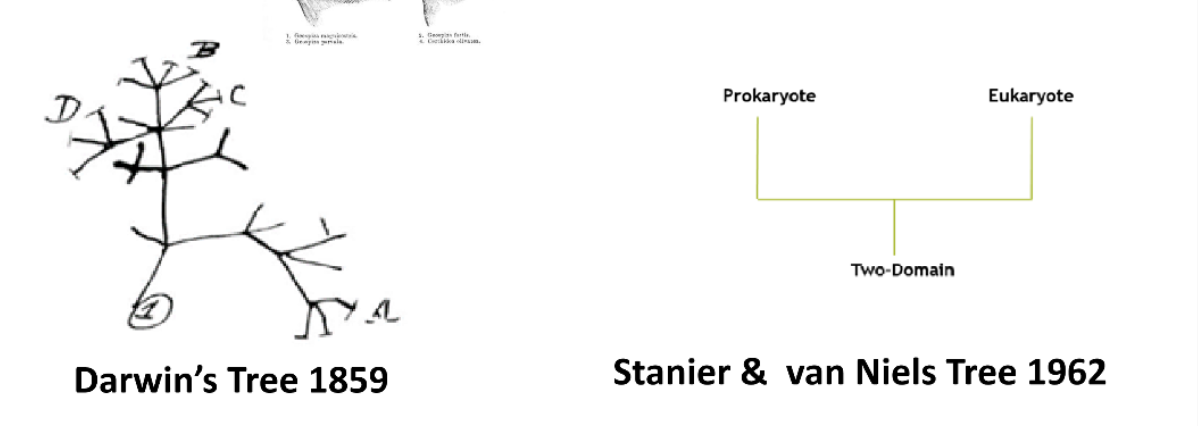
the originals did not use 16s rRNA
Darwin’s tree 1859: based on his observation of adaptation in the beaks of finches on the Galapagos island
Stanier & van Niels tree 1962: based on the absence or lack of certain characteristics in prokaryotes relative to eukaryotes
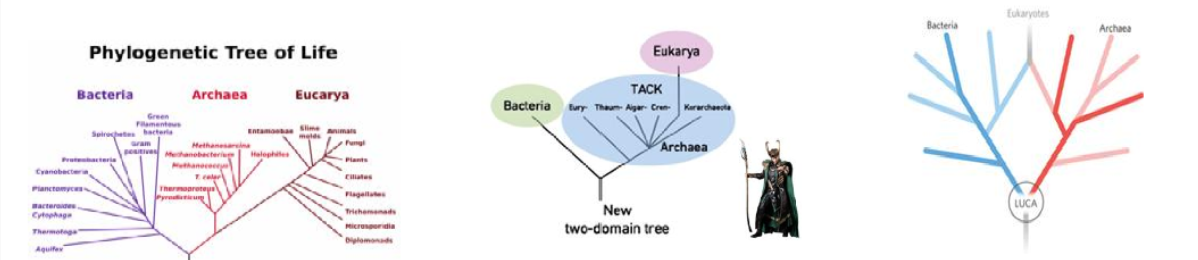
archaea & evolution of the molecular tree of life
Woese’s tree based on 16s rRNA sequence data of archaea 1990
Loki’s tree based on 16s rRNA and conserved eukaryotic gene markers 2017
NASA fusion tree based on Loki’s tree and chemical composition of cell membrane 2018
archaea present a mystery to the taxonomic organization of life
at present, the archaea are considered to be prokaryotes, but are not bacteria
archaea
shares features with bacteria and eukaryotes
extremely diverse
physiologically and morphologically
many but not all are extremophiles
thermophiles: hot springs
hyperthermophiles: oceanic volcanic vents
barophiles: bottom of the ocean
mesophiles: human gut
archaea cell walls
chemical composition differs from that of bacteria or eukaryotes with cell walls
key component: pseudomurein
do not have peptidoglycan
not affected by enzymes that break down peptidoglycan or antibiotics that target the synthesis of peptidoglycan
lysozyme (tears, saliva, food) breaks down peptidoglycan
antibiotics that interfere with peptidoglycan synthesis have no effect
gram stain means nothing → no peptidoglycan
peptidoglycan
bacteria
pseudopeptidoglycan
archaea
membrane lipids of bacteria and eukaryotes
straight chain fatty acids attached to glycerol by ester linkages
membrane lipids of archaea
hydrocarbons attached to glycerol by ether linkages
ether linkages are stronger so perform well in extreme environments
no fatty acids instead have phytanyl chains that can cyclize and make the cell walls more resistant to harsh conditions in extreme environments
archaea membranes
generic phospholipid found in eukaryotes & bacteria → ester bond
have an ETHER bond between glycerol and hydrocarbon tails
extremophiles have hydrocarbon tails with side branches that can cyclize
ether bonding and hydrocarbon tails, and ring formation prevent leakage at high temperatures
archaeal membranes can be bilayers or monolayers
monolayer membranes are more rigid and better able to resist harsh environments
also prevent membranes from leaking
membrane adaptation
when faced with environmental changes, they can modify their membranes
membrane more open at lower temperatures or higher pressures or higher pH
membrane less open at higher temperatures or under lower pressure or lower pH
archaea similarities with bacteria
circular double stranded DNA genome and haploid
polycistronic
horizontal gene transfer, binary fission
highly diverse metabolic pathways for energy production
archaea similarities with eukaryotes
more than one origin of replication, similar replication proteins
histones and nucleosome like structures
introns
many RNA polymerases (no sigma factors)
many translation factors, some shared ribosome proteins
two most well described phyla in archaea
crenarchaeota
euryarchaeota
crenarchaeota
extreme environments
thermophiles
psychrophiles
acidophiles
S0 oxidizers and reducers
euryarchaeota
most diverse
thermophiles, methanogens, acidophiles, halophiles
extremophiles
sulfate reducers
crenarchaeota: thermophilic or hyperthermophylic
geothermally heated water or soils that contain elemental sulfur
EX: yellowstone
crenarchaeota: sulfolobus and thermoproteus
symbiotic relationship in hot acidic microbial mats
thermophilic and acidophilic, require sulfur
sulfolobus: thermoacidophiles (80-80C, pH 2-3)
aerobic heterotroph: grows in hot acidic sulfurous springs
oxidized sulfur: S0 to H2SO4
thermoproteus: thermoacidophiles
anaerobic autotroph: grows in hot acidic sulfurous springs
reduce sulfur: S0 to H2S and fix carbon
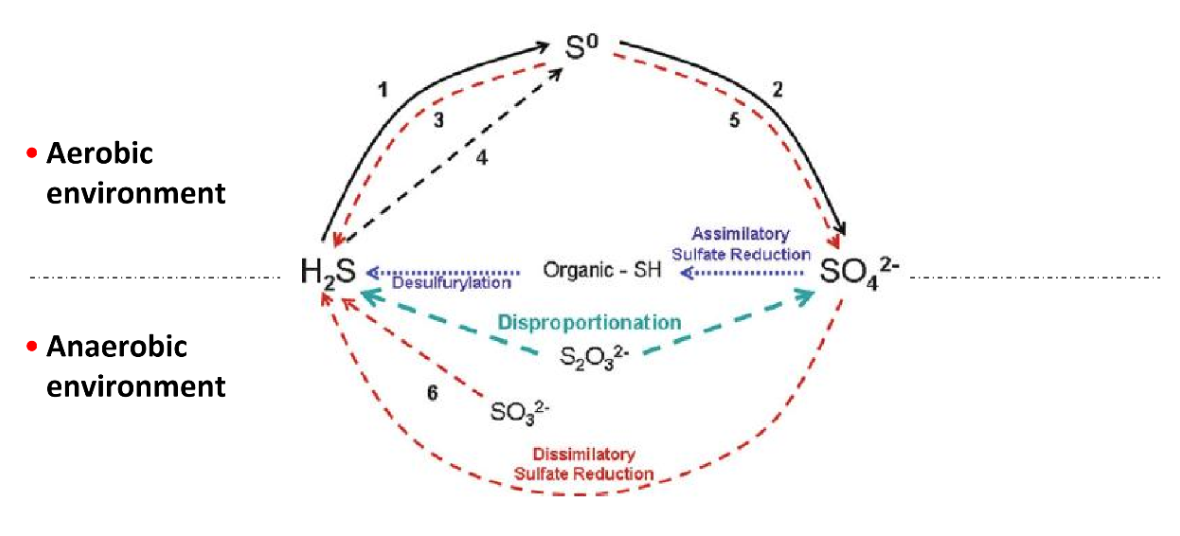
sulfolobus and thermoproteus
sulfolobus aerobic heterotoph
thermoproteus anaerobic autotroph
euryarchaeota
five major groups: more diverse than crenarchaeota
methanogens
halobacteria
thermoplasms
hyperthermophiles
methanogens
strict (obligate) anaerobes
cellulolytic (can break down cellulose)
widespread in nature
habitat: environments rich in organic matter
animal remains
human intestines
anaerobic sludge digesters
freshwater and marine sediments
swamps, marshes, hot springs
anaerobic protozoa
ecological importance of methanogens
important in wastewater treatment
dangerous in landfills
produce significant amounts of methane
protons pumped during generation of methane
potential fuel and energy source
a greenhouse gas, may contribute to global warming
human health aspect
higher amounts of methanogens in the intestines correlates with the inability to lose weight
intestinal methane production is associated with a higher body mass index
methane venting
below:
PVC pipes are used to vent methane
methane venting from ocean floor
methane venting during processing of petroleum
marsh gas on fire
harvesting methane (natural gas)
hydrogen production by steam-methane reforming
methanogens: animals like cows
anthropogenic: produced by human activity
halobacteria
no cell walls, cell membrane is covered with tough S-layers
extreme halophiles: require salt or will die by lysis
the cytoplasm of H. salinarum contains > 4M potassium chloride (KCl)
aerobic respiration
pigments and high salt provide radiation protection
> 20 genome copies per cell allows for robust DNA recombinational repair from UV damage
halobacteria and rhodopsins
rhodopsins: functions
humans: eyes
archaea: use this molecule for “other” functions
bacteriorhodopsin: visual purple
generates ATP from light energy
purple membrane: aggregation of bacteriorhodopsin
halorhodopsin: maintains intracellular connections of salts
sensory rhodopsins: photoreceptors
control flagella → phototaxis
thermoplasma
no cell walls
extremely tough plasma membranes
tough external S-layers
hot acidic springs
sulfur: 55-60 C, pH 1-2
picophilus has an optima of pH 0.7
hyperthermophiles: thermococcus kodakarensis
hyperthermophilic anaerobe from deep sea volcanic vents
S0 to H2S
growth temp 88C to 102C → can grow above boiling
has a reverse gyrase, which induces positive supercoiling in DNA and makes DNA more resistance to thermal denaturing
high transformation ability
hyperthermophiles: pyrococcus furiosus
rushing fireball
hyperthermophilic anaerobe from deep sea volcanic vents
like many volcanic vent microbes reduce sulfur
optimum growth temperature 88 C to 110 C
has a reverse gyrase which makes DNA more resistant to thermal denaturing
high transformation ability
hyperthermophile: archaeoglobus fulgidus
ancient sphere → it shines under UV fluorescent light at 420nm
deep sea volcanic vents, high temp oil deposits and hot springs
optimum growth at 83 C
reverse gyrase responsible for positive supercoiling of DNA making it more resistant to thermal denaturization
no cell wall, instead have a crystalline S-layer arranged in an hexagonal array (like a tight mesh)
lokiarchaeota: prokaryote to eukaryote
new genetic analysis of many molecular markers places the deep sea benthic group lokiarchaeota with eukarya
discovered at “loki’s castle” in volcanic vents in the north sea off of norway
named lokiarchaeota after “loki” the norse mythology shape shifiting diety
evolution of the eukaryotic cell
theory proposes that different prototypes of primitive cells arose about 4 billion years ago
these cells would later split in two groups with one group leading to the bacteria and the other to the archaea and eukaryotes
later a fusion of bacteria and archaea began the evolution of the eukaryotic cell
eukaryotic cells and bacteria cells have bilayer membranes
have fatty acids with ester linkages
archaea and eukaryotes have similar molecular mechanisms
then two other fusions would take place at a later date generating ancient eukaryotic cells with:
mitochondria: created by 1st fusion
chloroplasts: created by 2nd fusion