Unit 8: Evolution
 Call Kai
 Learn
Learn Practice Test
 Spaced Repetition
 Match
Match Flashcards
1/24

There's no tags or description
Looks like no tags are added yet.
Name | Mastery | Learn | Test | Matching | Spaced | Call with Kai | Chat |
|---|
No analytics yet
Send a link to your students to track their progress
25 Terms
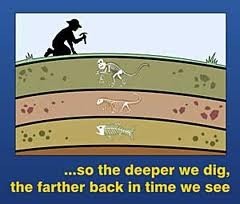
Relative Dating
Gives an idea of where something falls in the general timeline of events based upon SUPERPOSITION.
Absolute Dating
Gives an idea of when a given event took placed based on decay of naturally occurring radioactive elements.
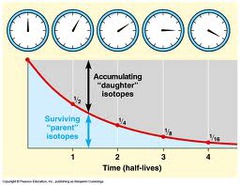
Half-Life
The amount of time it takes for half of a radioactive element to decay.
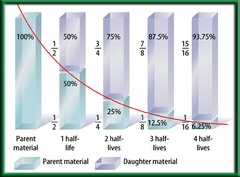
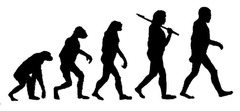
Evolution
Changes over time.
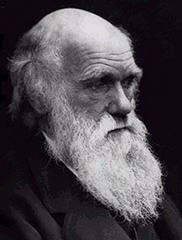
Charles Darwin
Person most associated with the concept of evolution.
Wrote: "On the Origins of Species"
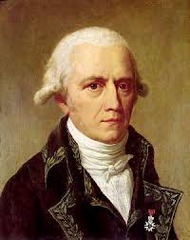
Jean Baptiste Lamarck
Developed the theory of "Use & Disuse" to explain evolution.
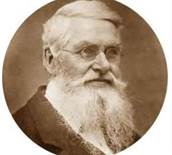
Alfred Wallace
A fellow naturalist who had the same ideas as Darwin. He persuaded Darwin to publish his findings.
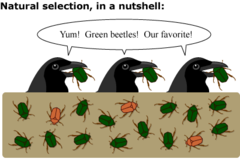
Natural Selection
The environment selects the favorable characteristics in a population that benefits survival.
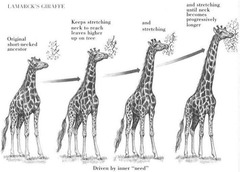
Theory of Use & Disuse
The reasoning that we certain things become developed as a result of overuse, those characteristics are passed to future generations.
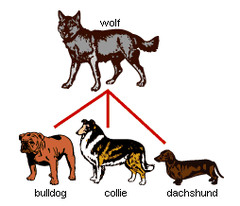
Artificial Selection
Humans choose the desirable traits for different organisms.
Ex: all domesticated plants and animals.
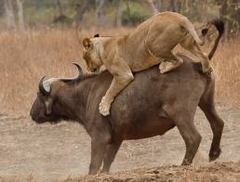
Fitness
Having favorable characteristics which allows them to be passed on.
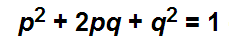
Hardy Weinberg Equilibrium
Two scientists that together developed a theory of population equilibrium.
There theory is based on 4 assumptions. If all of these 4 assumptions are met, then a population will experience gene frequencies remaining constant from generation to generation.
1. There is NO Natural Selection.
2. Random mating exists.
3. No migration.
4. No significant mutations.
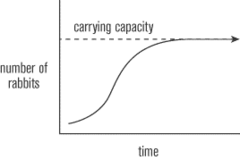
Carrying Capacity
Populations reproduce until they reach the maximum amount that society can contain.
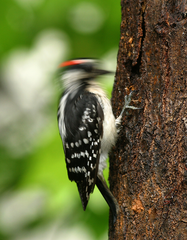
Niche
The way in which an organism fits into an ecological community or ecosystem
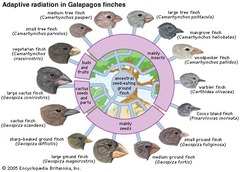
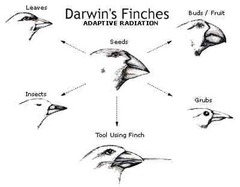
Adaptive Radiation
The concept of members of the SAME species evolving to occupy different niches within the same environment.
Gene Pool
The combined genetic makeup of all the members of a population.
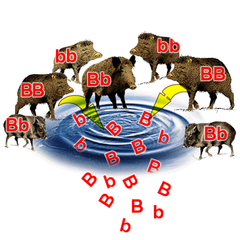
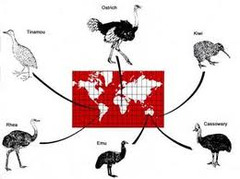
Geographic Isolation
Happens when members of the same species become separated and change independent of each other eventually becoming different species based upon WHERE they are geographically located.
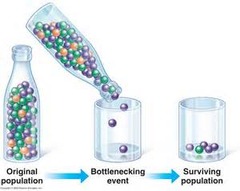
Genetic Bottleneck
An evolutionary event that kills a significant percent of a population.
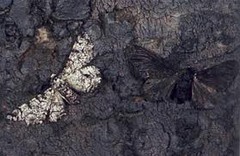
Industrial Melanism
The adaption of an organism in the response to the Industrial Revolution.
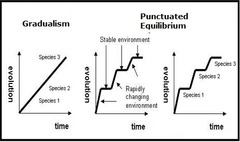
Punctuated Equilibrium
A theory stating that organisms are relatively unchanging, they experience little natural selections.
When changes occur, they happen suddenly.
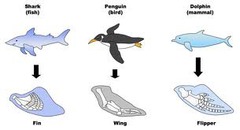
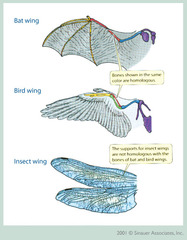
Analogous Structures
Same function/purpose but different structure.
Ex: a birds wing and a bats wing. Serves the same purpose (ie: helps them fly) however they are structurally different.
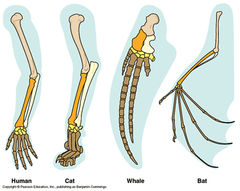
Homologous Structures
Different function/purpose but structurally the same.
Ex: human arm and a horse leg. Structurally the same but used differently.
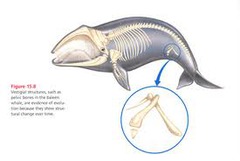
Vestigial Structures
Remnants from evolutionary past. Serves no function.
Ex: the human appendix or the hip bone of a whale.
Divergent Evolution
Organisms of the SAME species adapts to different environments.
Ex: Darwins finches
Convergent Evolution
Organisms of DIFFERENT species adapting to the same environment.
Ex: Sharks and Dolphins