Urinary Tract Pathogens
 Call Kai
 Learn
Learn Practice Test
 Spaced Repetition
 Match
Match Flashcards
 Knowt Play
1/19

Earn XP
Description and Tags
M.7R, W.2, L.1
Name | Mastery | Learn | Test | Matching | Spaced | Call with Kai | Chat |
|---|
No analytics yet
Send a link to your students to track their progress
20 Terms
List three lower UT infections
Kidney - Pyelonephritis
Bladder - Cystitis
Urethra - Urethritis

List the main UTI pathogens (7)
E.coli
Klebsiella
Enterococcus
Proteus
Pseudomonas
Staphylococcus
Corynebacterium
Which UTI pathogens come from the gut?
E.coli
Klebsiella
Enterococcus

Explain why sex anatomical differences impact UTI risk.
Female - shorter distances between anus and urethra makes infection from gut commensals easier
Male - longer urethra makes bladder harder to reach for pathogens

What is a gram-negative bacteria
Single-celled microorganisms that have:
double membrane: inner cell membrane and outer lipid membrane
thin peptidoglycan layer (sits between the two membranes)
endotoxins: outer membrane contains lipopolysaccharides (toxic molecules that trigger severe immune response)

Describe Uropathogenic E.coli (UPEC) (pos or neg, and characteristics)
Main UTI cause
gram-negative
have UT-specific fimbriae
express cytotoxic factors
(hemolysin - breaks down RBCs)
iron uptake systems (to help grow)
no urease activity
intracellular infections
What are fimbriae and list their function
hair-like structures
used to stick to surfaces like the epithelium in the UT

What does UPEC gain from being cytotoxic?
The environment is not rich in nutrients, since UPEC can’t digest urea
cytotoxic factors break cells open of the epithelium in order to get nutrients out
Describe Klebsiella spp. (pos or neg, shape, characteristics, motile?, resistant?)
Gram-negative
rod-shaped
fimbriae
non-motile
capsule (mainly in UT)
intrinsically resistant to B-lactam antibiotics

Describe Enterococcus spp. (pos or neg, shape, motile?, characteristics, associated to?)
Gram-positive
round-shaped (splits in middle)
non-motile
strong biofilm formers
often associated to catheters
CAUTI (catheter associated UTI)

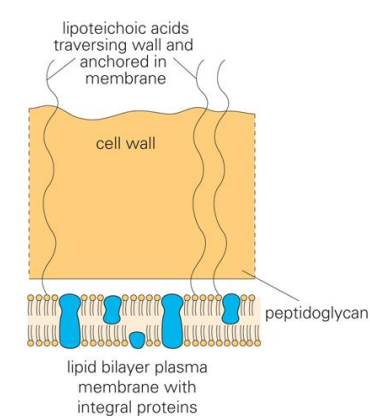
What is a gram-positive bacteria?
Microorganism that has:
thick peptidoglycan cell wall layer
No outer membrane
Techoic acids (in cell wall; helps transport nutrients)
Describe Proteus spp. (pos or neg, pattern on petri dish, shape, characteristics)
Gram-negative
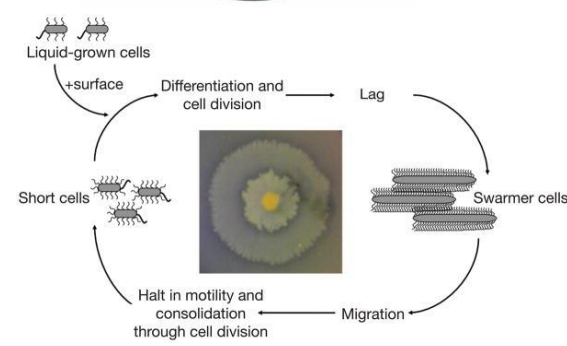
concentric rings on petri dish
rod-shaped
flagella
have signal-receptor system
used to recognize themselves

What happens when the signal-receptor system doesn’t work?
they start killing each other (because they don’t recognize themselves)
Describe the key behavior pattern of Proteus cells
short cells → differentiation and cell division → lag → Swarmer cells → migration → halt motility and consolidation through cell division → short cells
Describe the most important characteristic of Proteus spp.
Proteus releases urease
urease breaks urea in the urine into CO2 & ammonia
ammonia reacts with H2O →
raises pH to create alkaline environment
ions solidify into crystals: struvite & apatite
List the main factors of Proteus UTI
Swarming (ascending infections)
Fimbriae
Toxins (hemolysin)
Urease
Describe Pseudomonas spp. (pos or neg, shape, motility, petri dish appearance, resistance)
gram-negative
rod-shaped
motile
makes pigment to scavenge iron (green petri dish)
intrinsically resistant to several antibiotics

Describe Staphylococcus spp. (pos or neg, shape, motility, produce what?)
Gram-positive
round-shaped
non-motile
strong biofilm formers
produce urease (stones formation)
produce coagulase (clots formation)

Describe Corynebacterium spp. (pos or neg, shape, motility, produce what, growth rate)
Gram-positive
rod-shaped
non motile
urease producers (can lead to stones)
biofilm forming
fastidious, slow growers
makes them multi-drug resistant

List diagnostics for a UTI
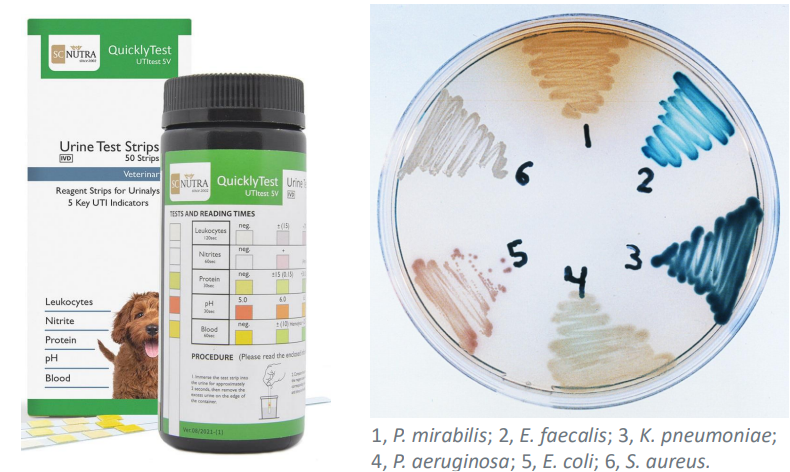
quick: urine strip test
laboratory diagnostics (chromogenic agar)