RCIS Board Exam Study notes based on Glowacki and Sommers MP3
 Call Kai
 Learn
Learn Practice Test
 Spaced Repetition
 Match
Match Flashcards
 Knowt Play
1/554

There's no tags or description
Looks like no tags are added yet.
Name | Mastery | Learn | Test | Matching | Spaced | Call with Kai | Chat |
|---|
No analytics yet
Send a link to your students to track their progress
555 Terms
What is the pressure as blood enters the right atrium?
5mmHg
What organ system in the body acts on the blood in the vessels to make a pressure of 5mmHg?
Deep skeletal muscle pump system
What pressure is the blood under as it goes from the RA through the tricuspid valve?
5mmHg
The bigger the diameter of the valve the __________ pressure is needed to move blood across it.
Less
The smaller the diameter of the valve the _________ pressure is needed to move blood across it.
more
What is the largest valve in the heart?
tricuspid valve
What is the normal right ventricular systolic pressure?
25mmHg
How much smaller is the pulmonic valve than the tricuspid valve?
5x smaller. It takes 5mmHg to get across the tricuspid valve and 25mmHg to get across the pulmonic valve.
Which valve has a bigger diameter, the tricuspid or pulmonic valve?
Tricuspid
Which valve requires more pressure to move across it, the tricuspid or the pulmonic?
pulmonic
Valve A requires 5mmHg to move blood and valve B requires 30mmHg. Which valve has a smaller diameter?
Valve B
What is the right ventricular diastolic pressure?
5mmHg
What is the RV EDP?
5mmHg
Why is the RV EDP not zero?
Because some blood is not ejected out. The heart is not a perfectly efficient pump.
What is a normal RV ejection fraction?
55-60%
What is EDP?
End Diastolic Pressure. An efficient heart has an ejection fraction of 55-60%, this leftover blood in the ventricle is under a resting (diastolic) pressure.
What is a normal diastolic pressure in the pulmonary artery?
7-12mmHg
What is the normal left atrial pressure?
7-12mmHg
What is the normal O2 concentration of a RBC leaving the lungs?
98%
What is the normal O2 concentration of a RBC when it returns to the RA?
70%
How much O2 is a RBC able to give up to the organs?
30% of its O2
True/False: If someone has a higher EDP there is less damage to the heart.
False, the higher the EDP the more damage. More blood is being left and not pumped out.
What is a normal wedge pressure?
7-12mmHg
If the RBCs go through the lungs faster than 7-12mmHg what happens?
The RBCs have less time to get the O2 needed to fill them up fully.
True or False: The higher the wedge pressure the faster the RBCs go through the lungs and the less O2 they are able to acquire.
True.
COPD is elevated wedge pressure. True or False
True. 30-40mmHg is not unusual. RBCs move so fast that they come out of the lungs with much less than 98% O2.
COPD O2 sats can be in the low to mid 80's. True or false
True.
Why is the wedge pressure indicative of the LA pressure?
Because there are no valves in between, just the lung system. Since no valves the pressure in the LA should be the same. When the leaflets open up on the mitral valve it is possible to see into the left ventricle.
When the mitral valve leaflets open up and the wedge catheter is able to see into the LV what is the pressure that it sees?
LV EDP
What is a normal LV EDP?
7-12mmHg
If the LV EDP goes up and the LA pressure goes up, what other pressure would you expect to rise?
The wedge pressure
What would increase your right atrial pressure?
tricuspid stenosis
Where would you see a high RA pressure demonstrated on a patient?
Jugular vein distention
If a person has an RV MI will the RV systolic pressure be affected?
No matter how big the MI the systolic pressure will not change. The RV EDP will increase as the RV is not as able to push the blood out as effectively as before the MI.
Would an RV MI affect the diameter of the pulmonic valve or the diameter of the pulmonic arteries?
No
If a person has an RV MI would the RV EDP be affected?
Yes. If the muscle fibers are dead the heart's ability to squeeze is impacted so more blood is left behind.
What would cause the LV systolic pressure to increase?
Aortic stenosis. (What would prevent a RBC from moving forward from the RV?)
What would cause your LVEDP to increase but not increase your LV systolic pressure?
LV MI would increase the LV EDP because the heart is less effective as a pump. As the LV is able to eject less blood, the end diastolic pressure gets higher.
The systolic pressure does not need to increase because that is the pressure to get the blood past the aortic valve.
As the EF (ejection fraction) goes down the EDP (end diastolic pressure) _________ ___________.
Goes up
What is the RV systolic pressure of pulmonic stenosis?
Any pressure higher than 25mmHg is pulmonic stenosis. The narrower the valve the ore pressure is needed to move across it. The muscle fibers need to generate more pressure to get RBCs past the stenotic valve.
What happens to the pressure in the RA in the case of tricuspid regurgitation?
The RA pressure increases.
Blood likes the path of less pressure. It will go back across the tricuspid valve when there is less pressure due to regurgitation. This causes the RA to carry more blood because it continues to fill with blood from the IVC and SVC in addition to the blood flowing back from the RV through tricuspid regurgitation.
What is the PA pressure in COPD?
Wedge pressure is elevated in COPD and this causes a backflow of pressure to the PA.
What is the special protective factor of the LA?
The LA has a protein that senses volume. If the volume increases because of MS or MR then the LA will sense that and allow the muscle fibers to get longer in the LA. The LA gets bigger to hold the volume and to prevent the pressure from rising in the lungs.
What is the PA pressure in someone with mitral stenosis?
The pulmonary artery pressure will eventually increase because the pressure in the LA will increase, which will cause the wedge pressure to increase, which will ultimately lead to an increas in the pulmonary arteries
What is the pulmonary artery pressure in someone with mitral regurgitation?
This increases the volume of blood in the LA which increases the pressure there. The LA is unique and protective, but eventually this will lead to an increase in pulmonary artery pressure.
Which chamber of the heart is larger LV or RV?
The chamber of the RV is larger because the LV has more muscle to push past the aortic valve to the body.
Can your PA pressure ever be greater than your RV systolic pressure?
No. The pulmonary artery pressure cannot be greater because the RV would have to increase to allow the blood to flow to the PA. Blood cannot flow up a gradient.
What is the PCWP of mitral regurgitation?
In a chronic situation, because the LA is protective, the PCWP will be elevated above the normal.
What is the PCWP of mitral stenosis?
In a chronic situation, because the LA is protective, the PCWP will elevate.
What is the PCWP of an LV MI?
The EDP goes up, the LA pressure will go up. This will cause the PCWP to increase.
What is a normal RVEDP?
5mmHg
What is a normal LVEDP?
7-12mmHg
EDP represents ________?
The amount of blood left after systole
When we measure CO in a patient, which ventricle are we measuring it out of?
The Right Ventricle. It is assumed to be the same as the LV.
True or False: The RV and LV have the same number of muscle fibers, but the LV works harder and therefore gets bigger in diameter.
True
What is a normal RV systolic pressure?
25mmHg
What is the normal systolic LV pressure?
120mmHg
Is the LVEF the same as the RVEF?
Yes. The LVEF and the RVEF are the same
Is the stroke volume in the RV the same as the LV?
yes. They are the same.
Is the CO the same in the LV and RV?
Yes. They are the same.
Why is the RVEDP different from the LVEDP?
As the LV muscle fibers get bigger there is less room in the left chamber for blood. The EDP is different in the LV and the RV because the RV has much more room for the blood left than the LV because it is full of dilated muscle fibers. This is the increase in pressure.
The muscle fibers of the coronary arteries run circular to the artery. True or False
False. They run longitudinal (the length) of the artery. If they wrapped around the coronary artery then the blood would be squeezed/compressed but not move. The contraction of arteries is done is a systematic way.
The intima of an artery is covered in what kind of cells?
Endothelium.
What is a major issue with endothelium in the arteries?
The endothelium do no stick to the muscle fibers of the media very well. They are washed away easily by turbulent flow.
What are the four main jobs of the endothelium?
1. Create a slippery environment for blood flow
2. Reproduce quickly to replace any lost endothelial cells.
3. Make nitric oxide to dialate the arteries and make easier flow.
4. Act as a magnet for bad cholesterol.
What is the media part of an artery?
The muscle layer
What is the adventia layer of an artery?
It is the outside layer of the coronary artery. It allows O2 to come in to give the muscle fibers that they need to do their job.
What is the pressure of the arterioles delivering O2 to a the adventia of an artery?
7-12mmHg
When you inflate a balloon into an artery and the balloon is on healthy parts of the artery, it causes muscle damage and injures the capillaries. True or False
True. This causes internal injury by the balloon. The ballon cracks the plaque, and the muscle fibers and the capillaries under the plaque are also injured.
T/F a lesion in a coronary artery exerts pressure to the cell wall causing the arterioles not to be able to deliver O2, causing the muscle fibers to start to die, and making the artery less able to expand and contract.
True
True or False: When we expand a balloon we are resetting the muscle fiber memory so that it believes that the over expansion is normal.
True
How long does it generally take for a coronary artery to "remember" their old muscle fiber memory and try to go back to it's regular size?
31-180 days
Why were stents invented?
To prevent coronary artery muscle fibers from returning to their old muscle fiber size between 31-180 days
What starts the clotting cascade in coronary arteries?
When endothelial cells are knocked off and the muscle fiber is exposed.
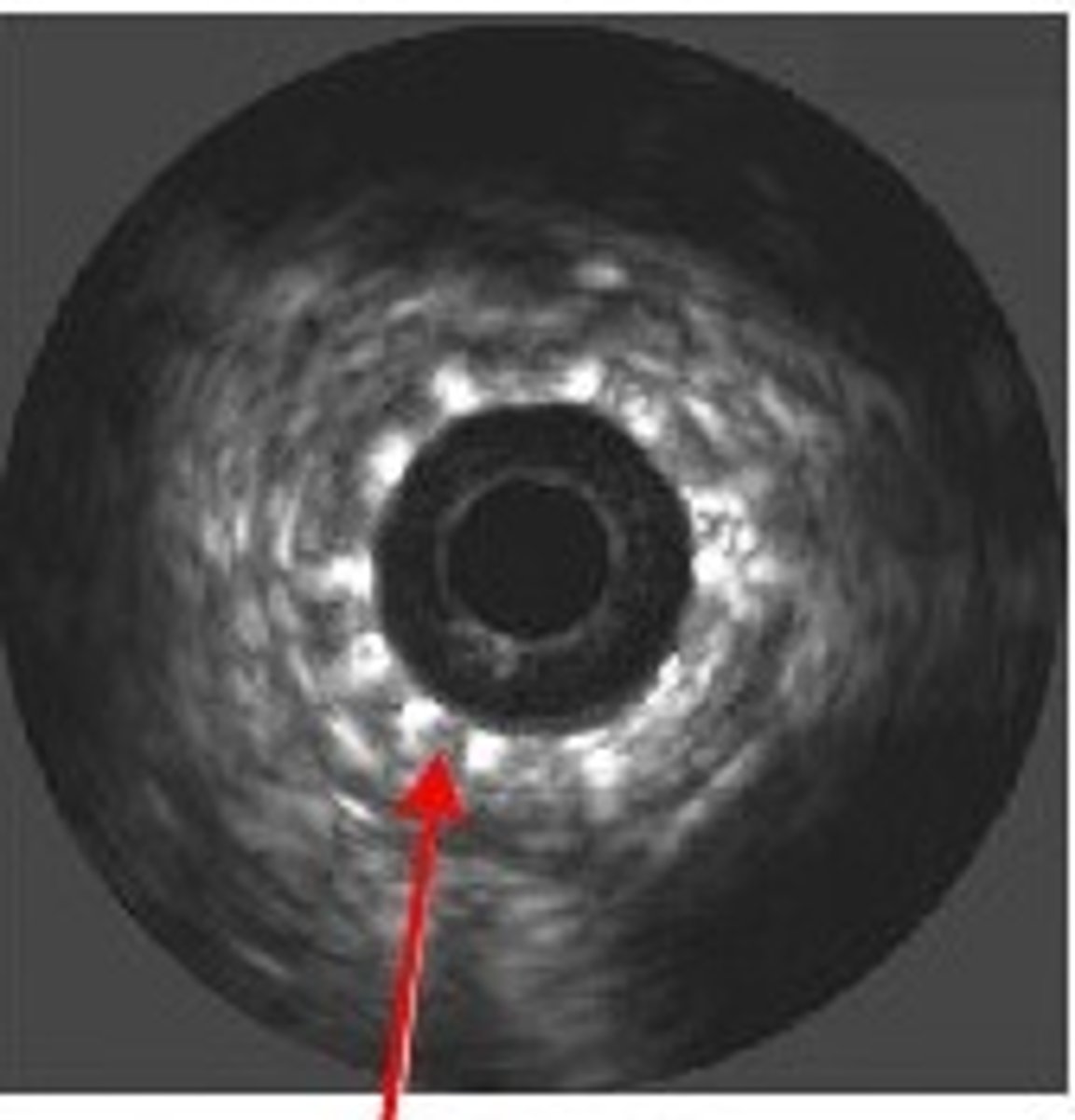
Is this stent full apposed?
This stent is fully apposed
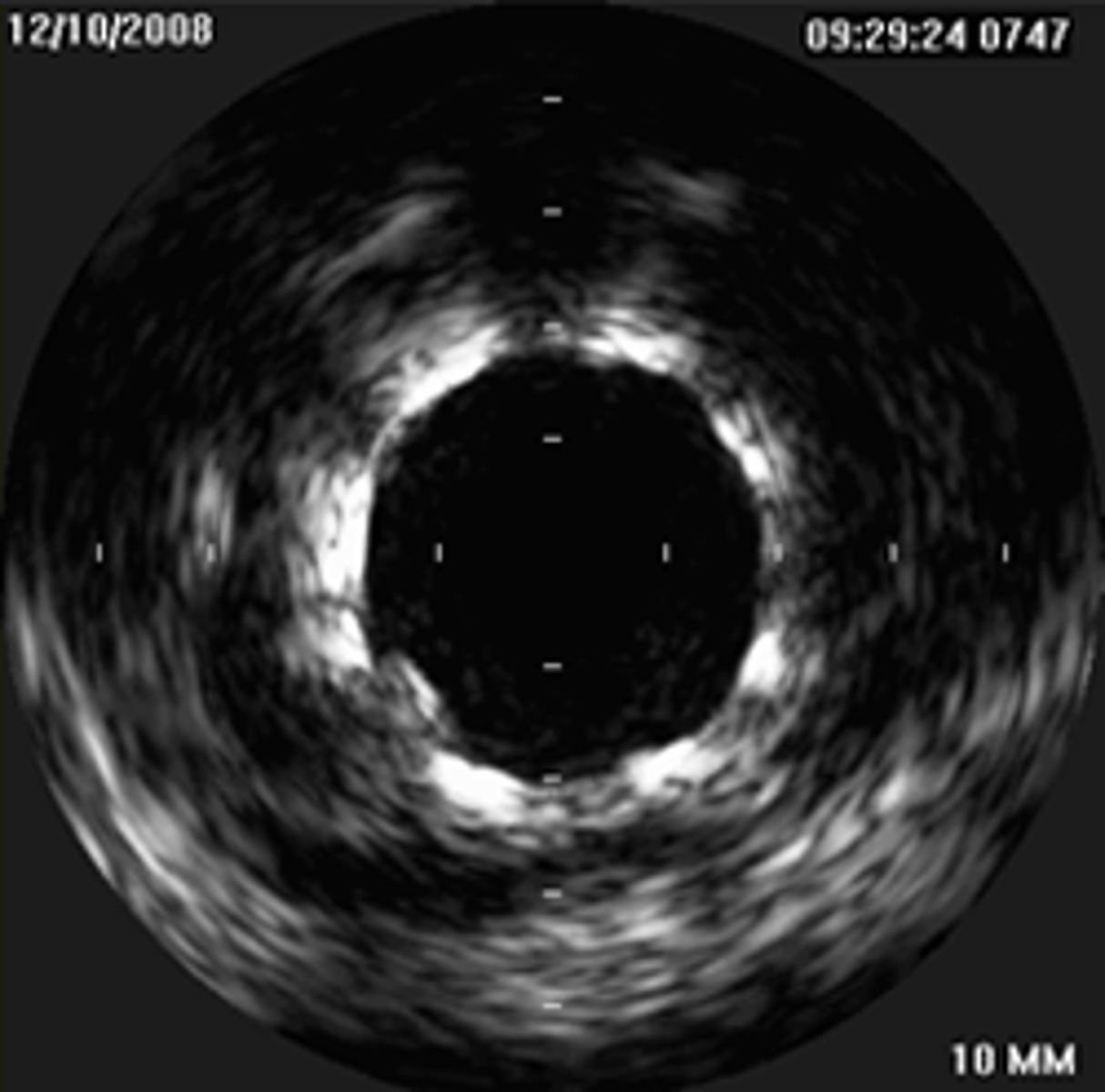
Is this stent full apposed?
This stent is not fully apposed
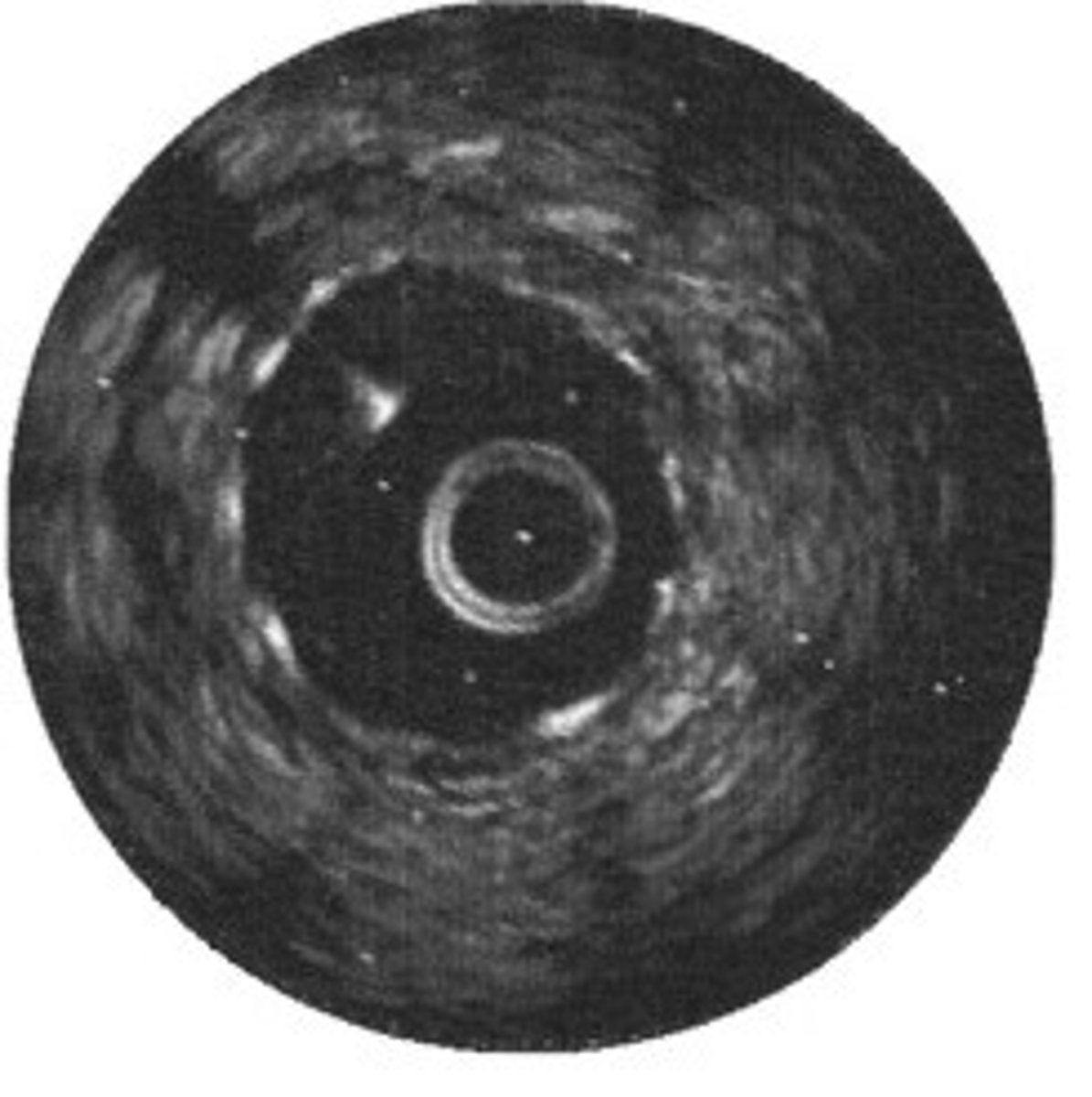
Is this stent full apposed?
This stent is not fully apposed
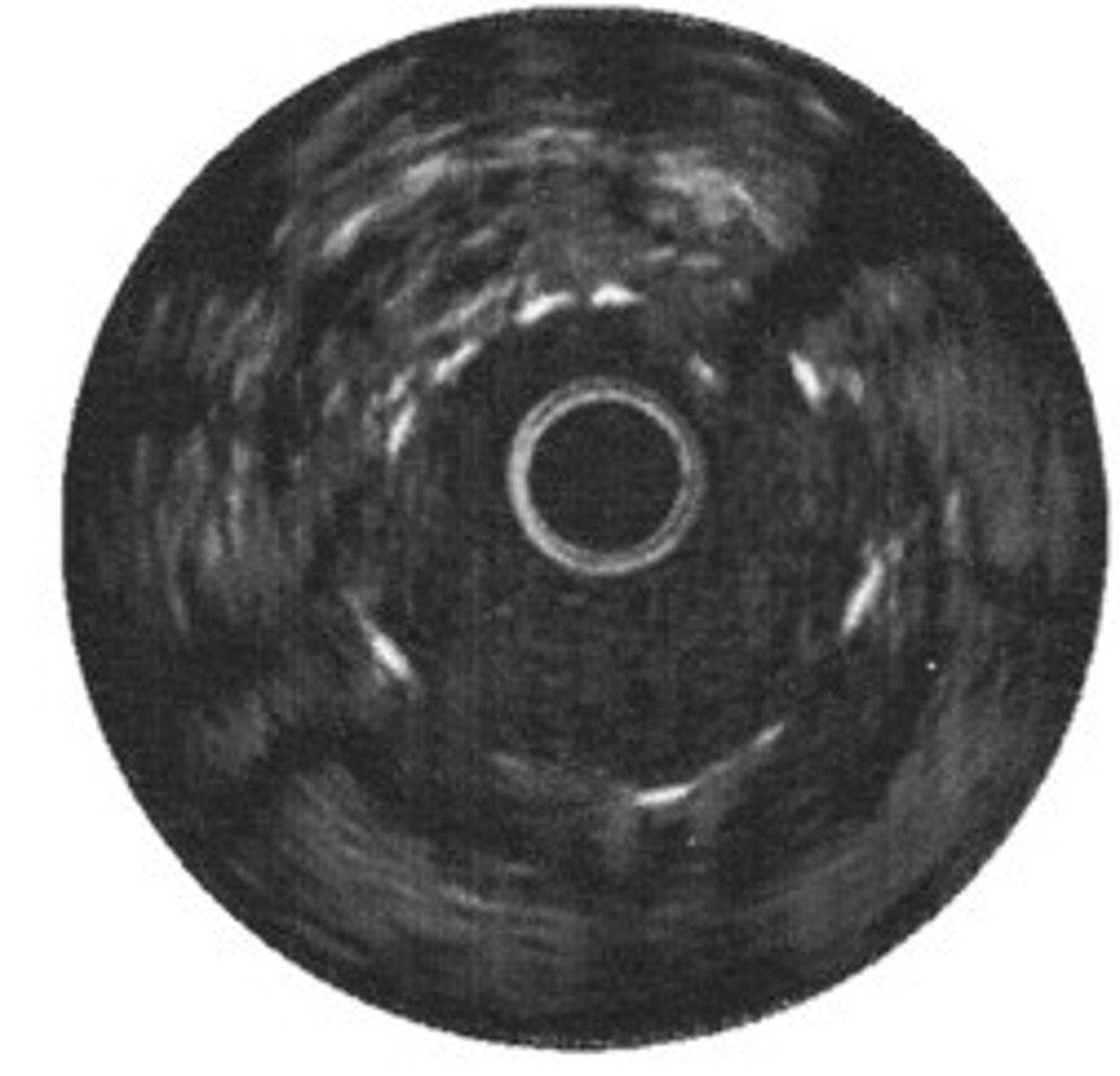
Is this stent full apposed?
This stent is not fully apposed
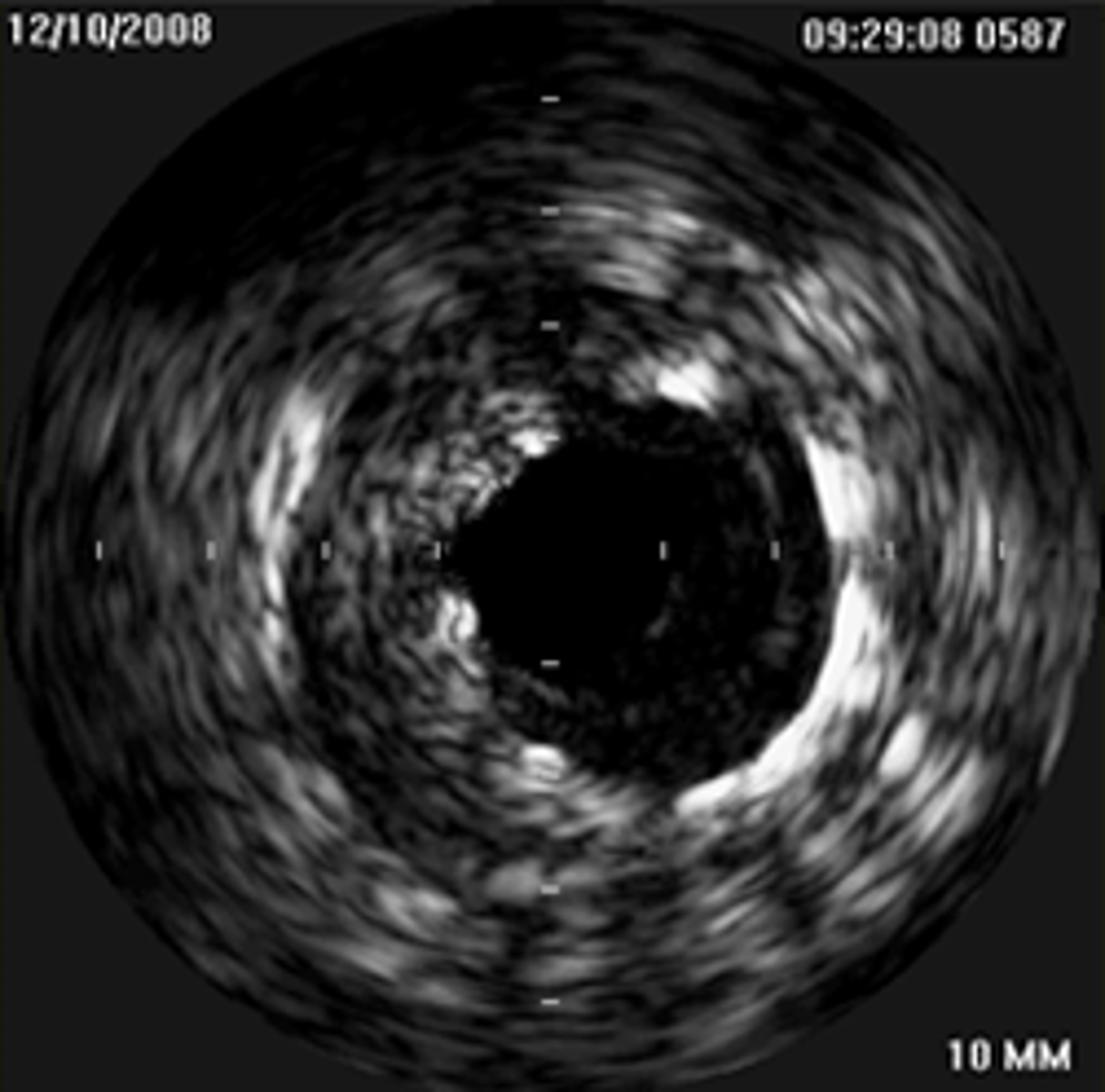
Is this stent full apposed?
This stent is fully apposed
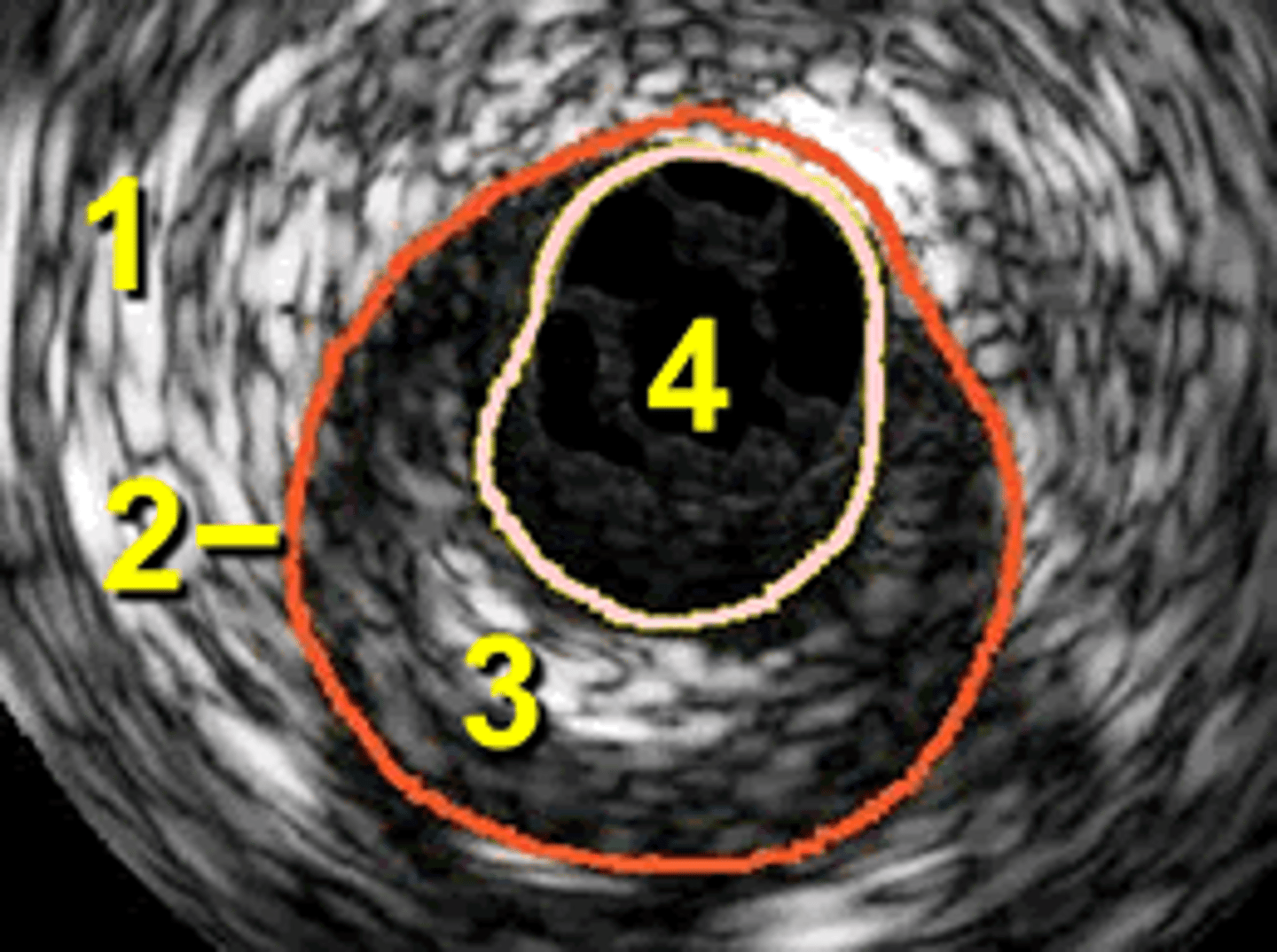
What is layer 1 on this image?
Adventitia
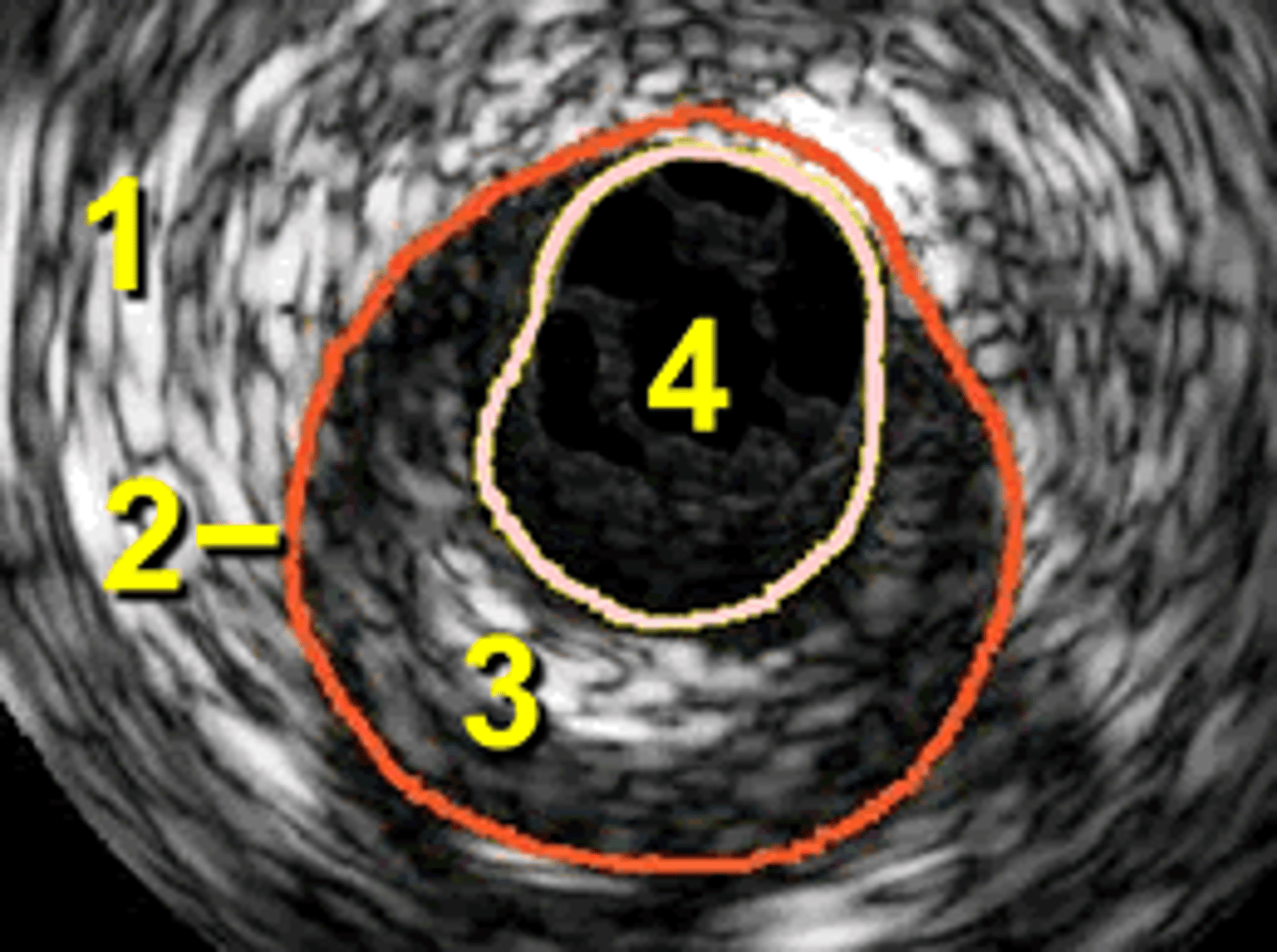
What is layer 2 on this image?
Media
What is layer 3 on this image?
Intima
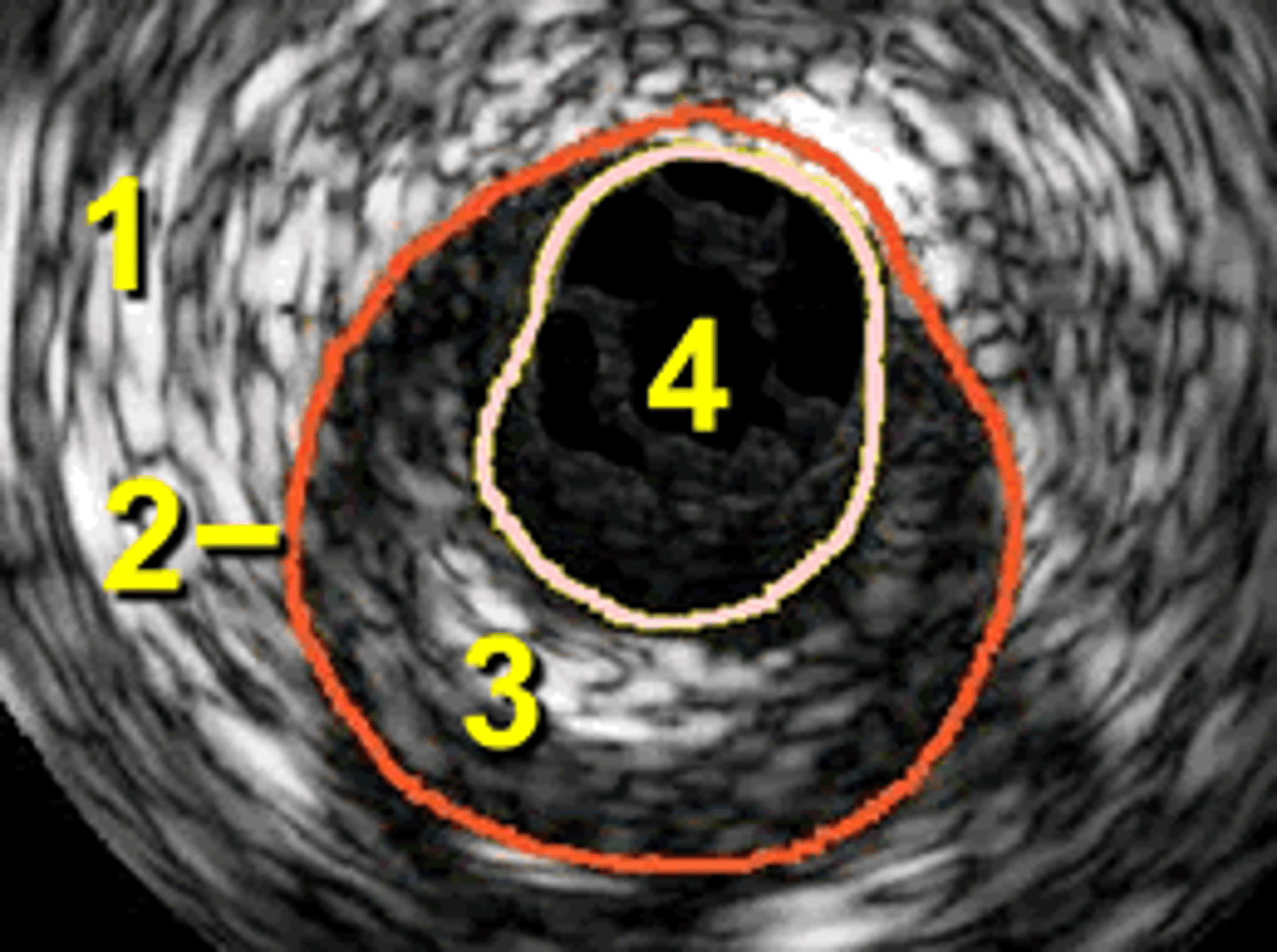
What is layer 4 on this image?
lumen
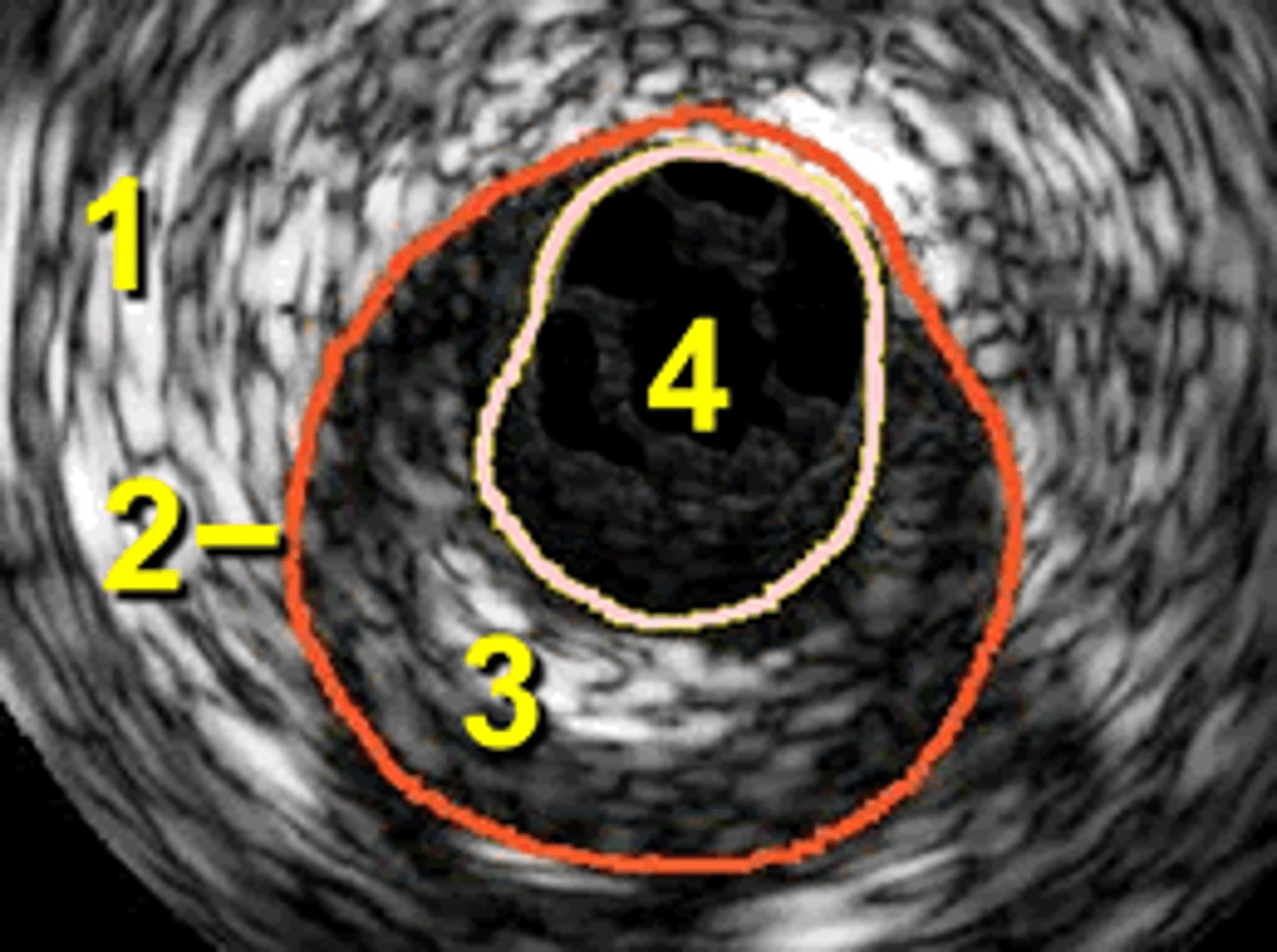
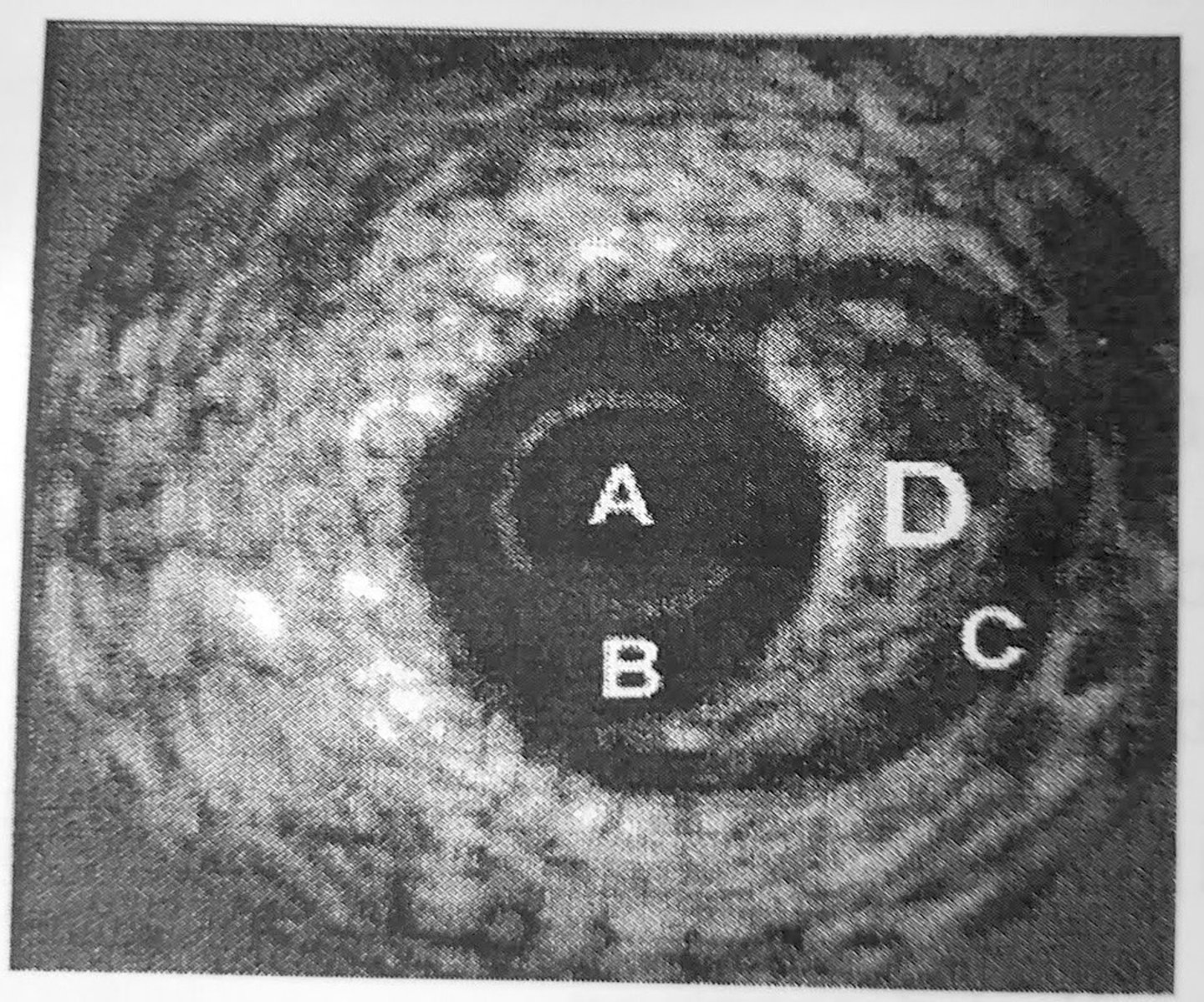
Identify the structures on this IVUS image from left to right.
adventitia, media, intima, and catheter.
What is "A" in this IVUS image?
Catheter
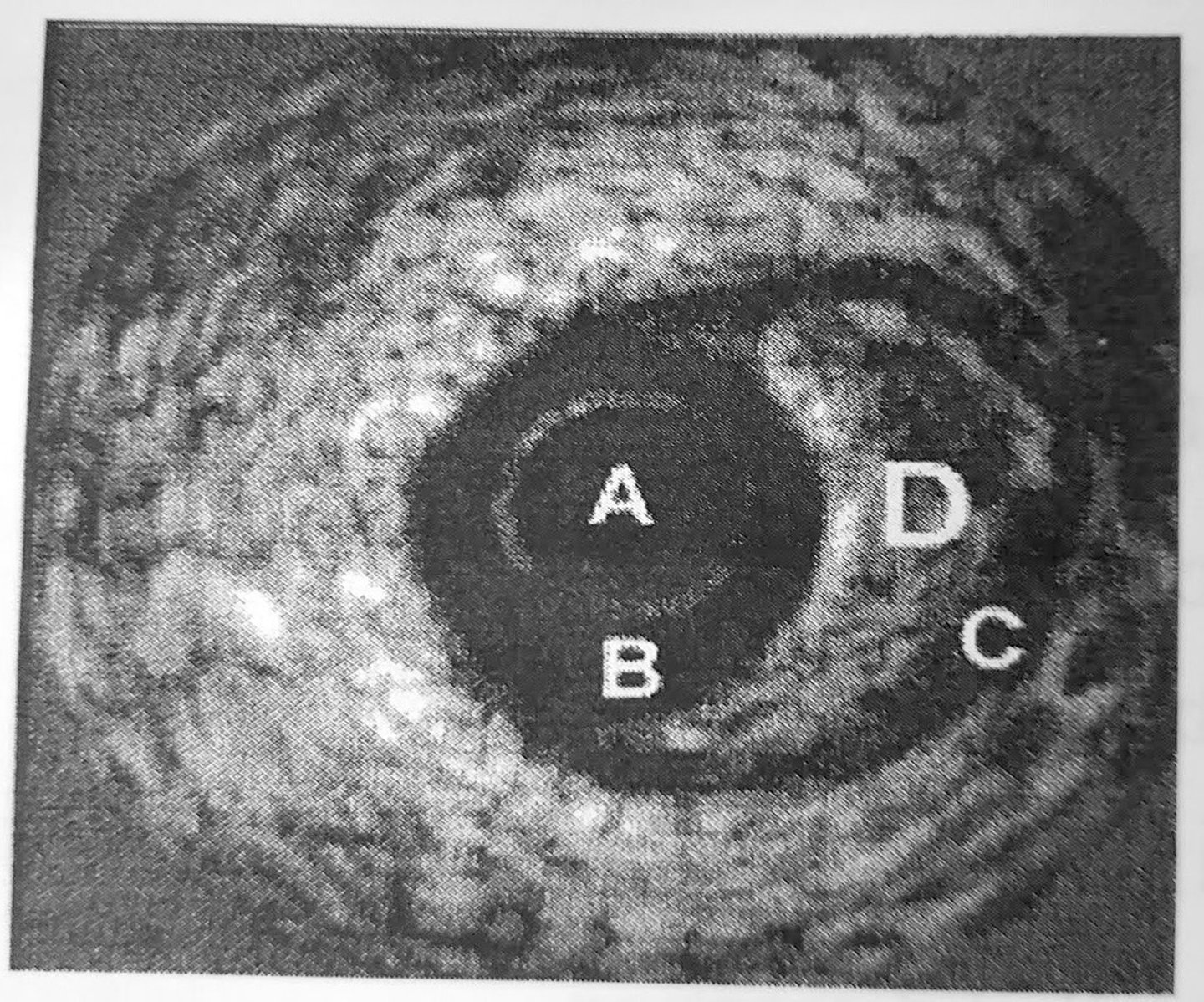
What is "B" in this IVUS image?
Intima or true lumen
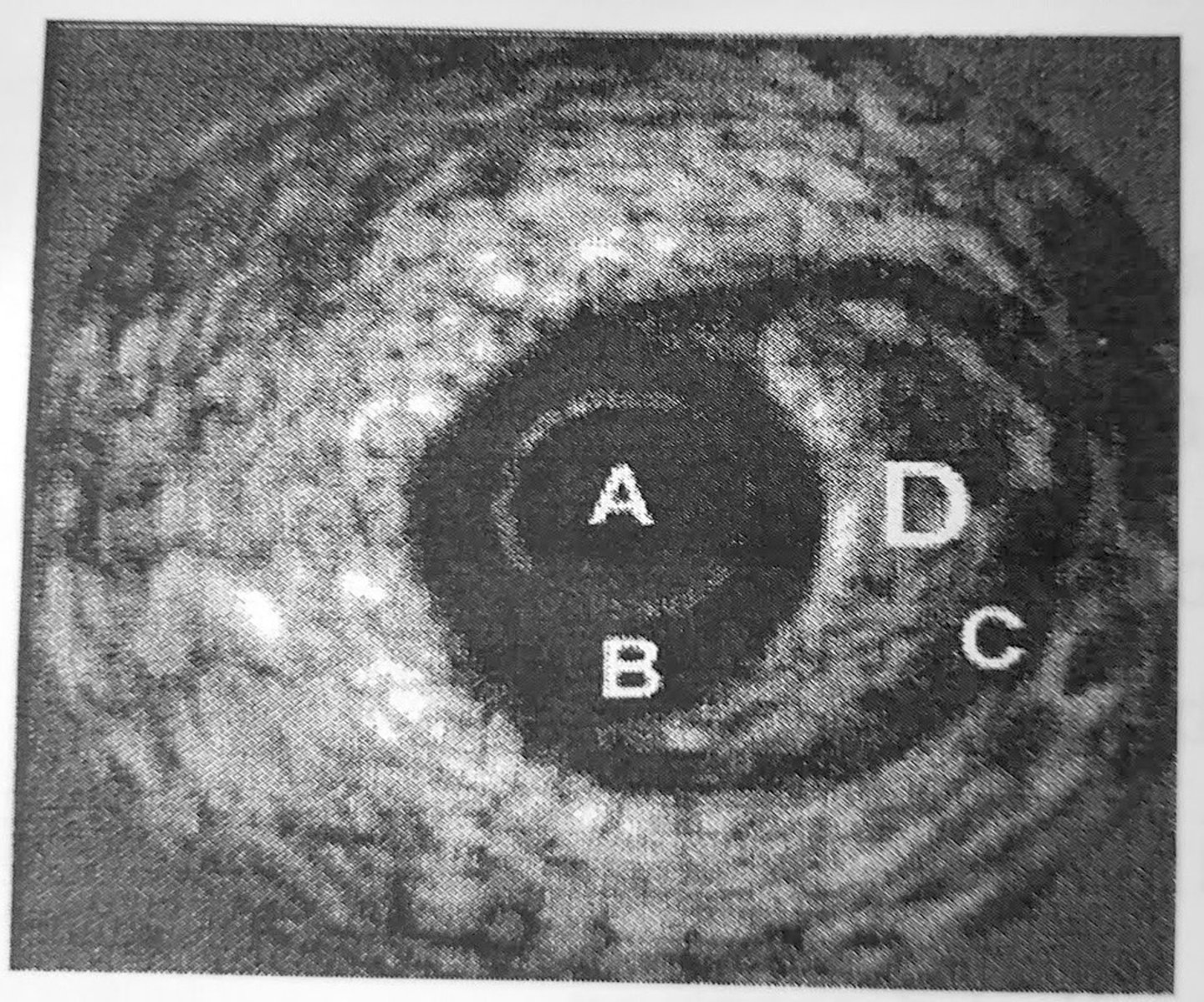
What is "C" in this image?
Thrombus/ blood behind the flap
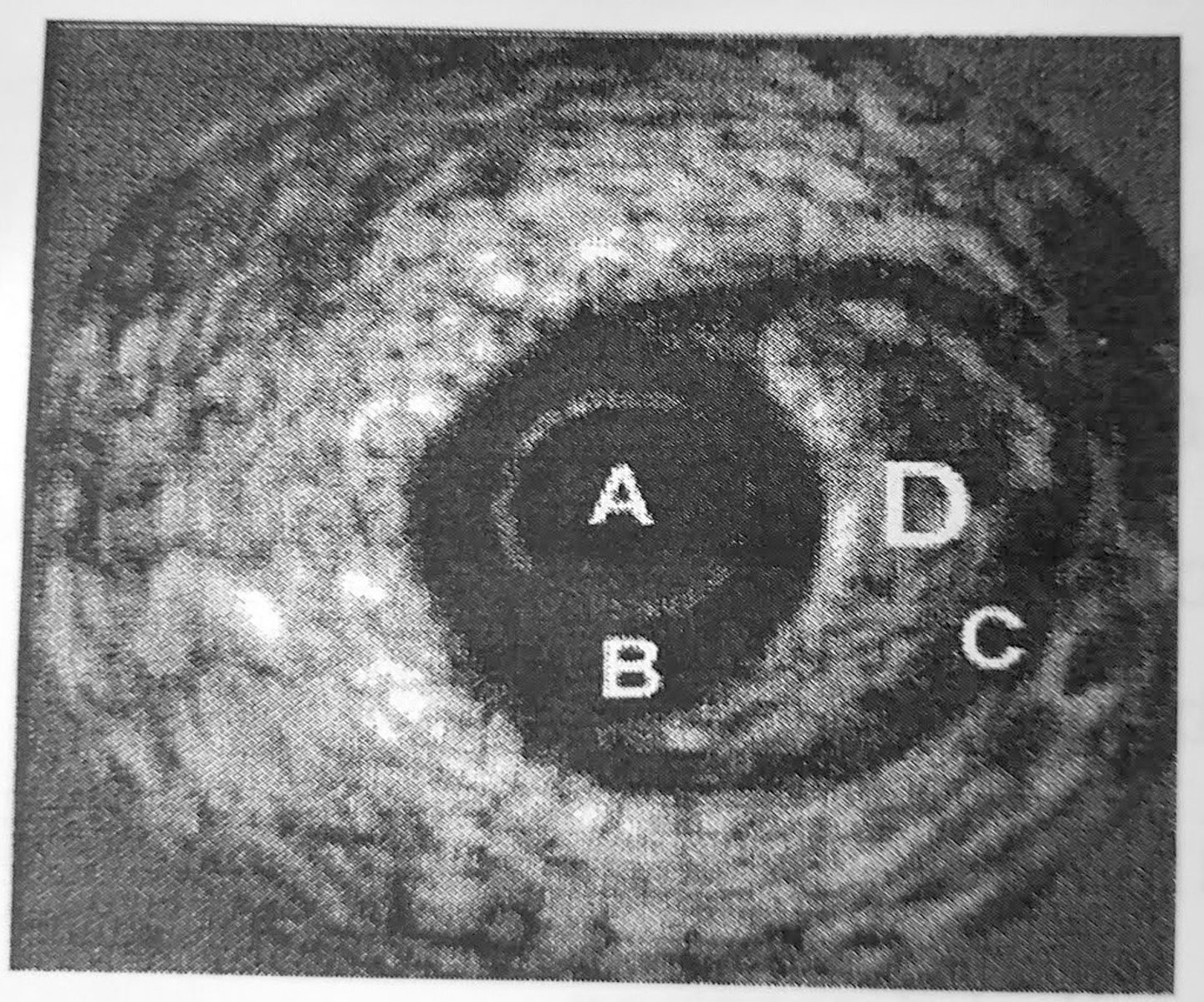
What is "D" in this image?
D is the flap or dissection.
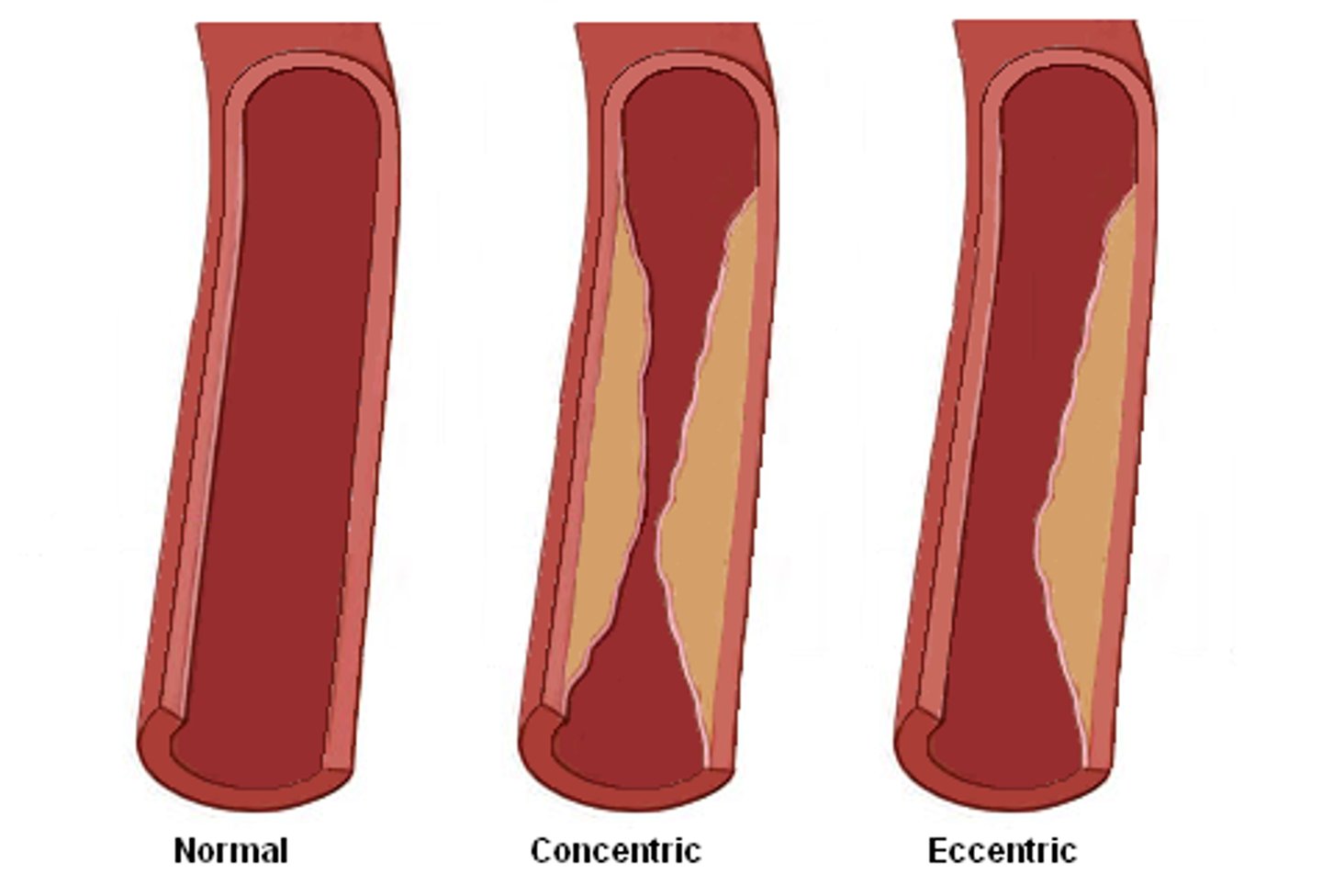
What is an eccentric plaque?
Plaque that only covers part of the diameter of the artery.
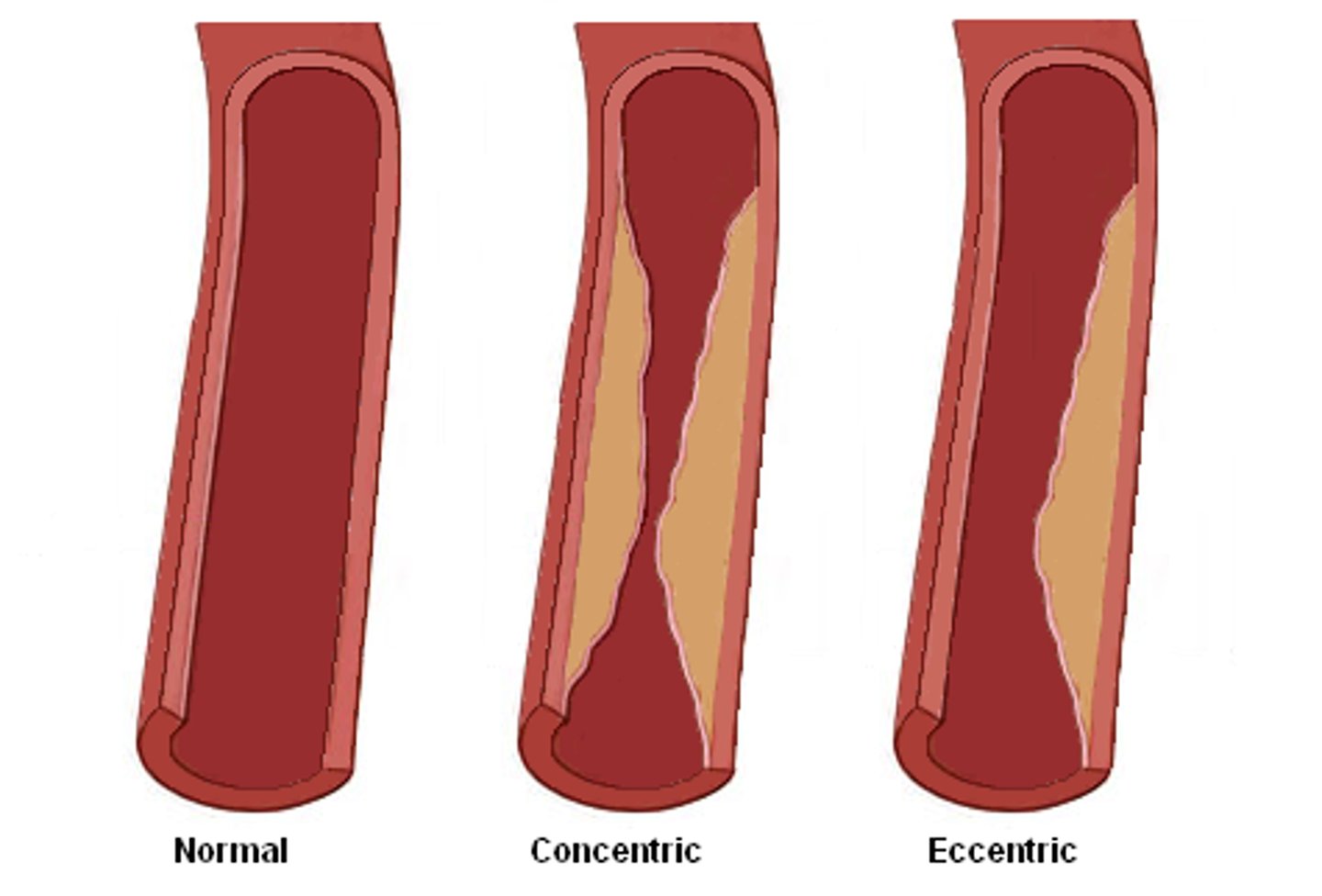
What is concentric plaque?
Plaque that covers all the way around the artery.
What is the clotting cascade?
Series of chemical reactions involving 12 plasma clotting factors that lead to final conversion of fibrinogen into a stabilized fibrin mesh with the purpose of controlling bleeding.
How are platelets activated?
Platelets are not activated until they stick to the collagen on the muscle fiber of the coronary artery. This sends a message to the liver to release the first clotting factor.
What does the 1st factor, Von Willebrand factor do in the clotting cascade? Where is it release?
VWF is released by the liver. It's job is to make sure that the platelets sticks to the muscle fiber.
What is released right after the Von Willebrand factor? What is its purpose?
Factor VIII. it's job is to make sure that the platelets stick even better than VWF, but it cannot be released by the liver until after the VWF.
After VWF, and factor VIII are released, what is released next?
The body will release calcium, and the liver will release arachidonic acid.
What does arachidonic acid do?
Goes to the platelets allowing it to stick even more tightly. Cannot be released until after VIII.
Why do patients take aspirin (ASA) during a heart attack?
It blocks the action of arachidonic acid. The platelets are not able to stick to the muscle fibers. As a person is having a heart attack they can continue to make clots. The ASA will continue to prevent the action of arachidonic acid and help prevent the formation of more clots.
Typically we tell patients that it makes the platelets less sticky.
After the action of arachidonic acid is reported back to the liver, what does the liver release?
ADP Adenosine diphosphate
What does ADP (Adenosine diphosphate) do?
ADP prepares the IIb/IIIa sites. If we think of a platelet as looking like a stop sign, the ADP prepares each corner so that it can stick to the corner of another platelet. ADP prepares the corners of the IIb/IIIa sites for fibrin.
Where does Plavix work in the clotting cascade?
It blocks the action of ADP. It prevents it from going to the platelet plug and therefore prevents it's action of preparing the IIb/IIIa sites for fibrin.