POLYMERS
 Studied by 0 people
 Call Kai
 Learn
Learn Practice Test
 Spaced Repetition
 Match
Match Flashcards
 Knowt Play
1/30

There's no tags or description
Looks like no tags are added yet.
Name | Mastery | Learn | Test | Matching | Spaced | Call with Kai |
|---|
No analytics yet
Send a link to your students to track their progress
31 Terms
Thermoplastics
can be repeatedly softened by heating and hardened by cooling
acrylic
LDPE
HDPE
PET
PVC
uPVC
PP
ABS
Acrylic
tough
lightweight
good chemcial resistance
used for car lights, cnc laser cut items, lighting units, lighting covers and baths
LDPE
very tough
good chemical resistance
weather proof
low level of rigidity
used for squeezy detergent bottles, toys, carrier bags, bin lines, general packaging, food wrap film, food trays
HDPE
weatherproof
tough
good chemical resistance
used for chemical drums, toys, household and kitchenware, long life carrier bags, buckets, bowls
PET
tough
flexible
hard
lightweight
used for packaging, clothes,drink bottles, food packaging, detergent bottles and shampoo bottles
PVC
tough
rigid
good weather and chemical resistance
flexible
used for pipes, electrical insulation
uPVC
rigid
opaque
tough
hard
good weather, chemical resistance
used for window frames, external doors, guttering and downpipes, water service pipes, bank cards
PP
tough
flexible
good fatigure resistance
resistant to chemicals
used for food packaging, medical equipment, rope, folders
ABS
tough
hard
good impact strength
used for saftey helments, suitcases, computer housing, handles
Thermosetting
can only be heated and shaped once
Epoxy resin
UF
Polyester resin
Epoxy resin
tough
rigid
hard
good chemical resistance
encapsulating electrical components, adhesives, surface coating, pacemakers, aerospace applications
UF
good electrical insulation
hard
heat resistance
resistant to deformation
used for electrical casings, sockets, switches
Polyester resin
resistant to water, heat, and chemicals
ridid
brittle
used for bath tubs, boat hulls, chair seats, boat hulls
Vaccum Forming Method
materials used: HIPS, Polyester, ABS, Acrylic
used for plastic yogurt, pots, bath tubs
the mould is created from mdf/plywood
The mould is placed into vacuum former
plastic sheet placed into vacuum former and heated until pliable
mould is raised up into the sheet and air is removed to seal it
plastic takes shape of mould and allowed to cool
remove mould once cooled
Injection Moulding Method
Materials - ABS, Acrylic, PVC
Beads, pellets, granites are placed into hopper
they are fed through and archimedes screw drag granules through melting it
once pass through heater and become liquid, hydraulic piston forces it into mould
plastic cools and takes shape of mould
removes mould using ejector pins
Blow Moulding method
Materials - HDPE, PP, LDPE, PET
water bottles, toys, bins
plastic is heated and extruded to create a piston
piston is placed in the mould, which closes on it and pinches the end of plastic
heated compressed air is blown into piston
plastic fills in the mould with hollow interior
plastic is cooled using water
once cooled, remove mould and trim excess plastic
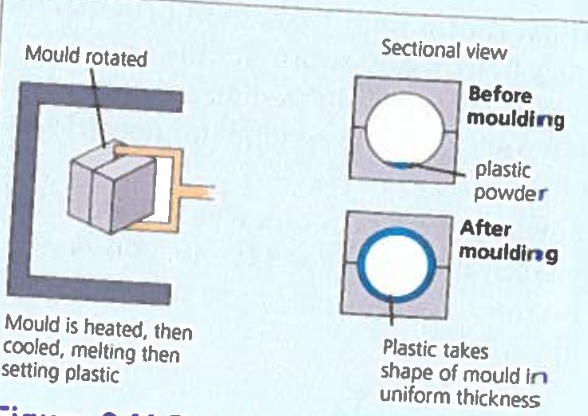
Rotational moulding method
Materials - HDPE, PP
plastic is weighed depending on desired thickness and put into mould
mould is placed on rig in huge oven and heated
as its heated it is rotated on 2 axes to allow polymer coat evenly
once desired thickness reached mould is cooled
remove from mould
Line Bending method
materials - Acrylic
mark out line that requires bending
preheat the strip heater to right temperature
add the plastics in heater on marked out line
once heated bend plastic to desired angle
Elastomer
materials which at room temp can be deformed under pressure and then upon release of the pressure return to their original shape
Natural rubber
high tensile strength
low elongation
good hardness
tough
electrical insulator
good cold resistance
used for automotive industry, tires, tubes, hoses, gaskets, belts, balloons, toys, footwear
Neoprene
good thermal resistance
toughness
good oil and chemical resistance
excellent weather resistance
good abrasion resistance
electrical insulator
used wet suits, laptop cases, industiral wire insulation, automotive applications
Polymers
made via fractional distillation of crude oil
takes hundreds of years to degrade
polymers are self finishing.
Resin casting method
Pour the polymer resin into a pre-made mould and then allow the resin to set into shape
The mould is then gently vibrated to expel any air bubbles from the casting
this is done at room temperature, where the moulds are made using mdg
materials - acrylic, polyester, epoxy
products - toys, jewellery, prototype models, dentistry
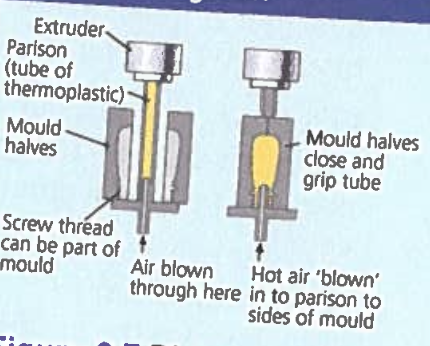
Blow moulding process
used for drink bottles, shampoo, detergent
heated plastic is extruded into parison tube
mould closes, parison is gripped in place
compressed air blown into parison tube which inflates
parison fills
screw threat in the neck of the bottle is formed during the process
mould cools
product trimmed
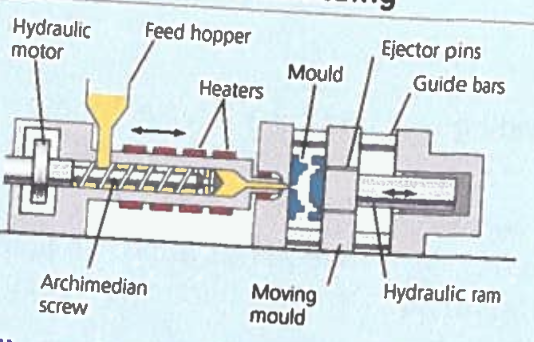
Injection moulding
used for electrical casings
thermoplastic granules are fed into a hopper
hopper feeds an archimedes screw that drags the granules past a heater where they are plasticized
when the soft, pliable plastic reaches the end of the screw a hydraulic piston forces it into the mould
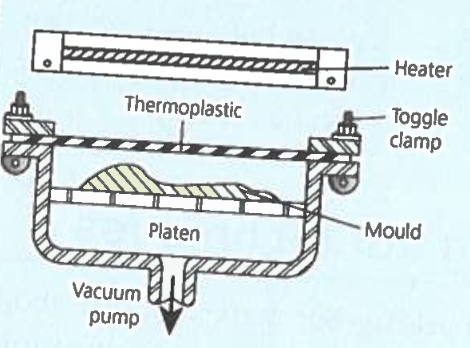
Vacuum forming
used for lightweight trays, box inserts and liners, takeaway coffee cups, yogurt pots
mould created out of mdf
mould Is placed into a vacuum former
plastic sheet placed into vacuum former and heated until bendable
mould is raised up to the sheet and air is removed to seal it
plastic takes shape of mould and allowed to cool
remove mould once cooled
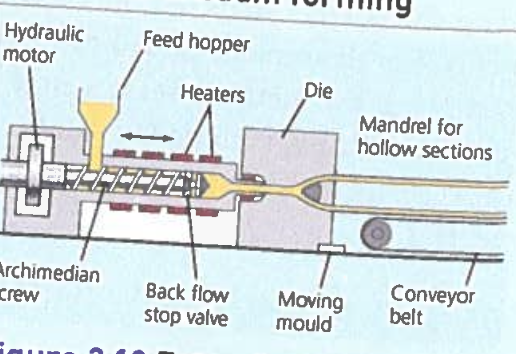
Extrusion
similar to injection moulding but the polymer is forced through a die at the end
used for solid rods, angle section, curtain track
Rotational moulding method
used for traffic cones, kayaks, water tankes, childrens play equiprment
polymer granules or powder weighed depending on wall thinking and put into mould
mould placed on rig in a huge oven and heated
as it heats its rotated slowly in two axes allowing the polymer to coat the inside of the mould evenly
once desired thickness reached mould is cooled
Blow moulding features
for making hollow thin walled components
high inital tooling cost
used for continous production
Injection moulding features
complex 3D shapes made quickly, easily
fast industrial production method
high inital tooling cost
used for large scale mass or continous
Rotational moulding features
produces seamless hollow components with large wall thickness
used in large-scale batch or mass production
 Note
Note  Flashcards (22)