INFORMATICS LAB
 Call Kai
 Learn
Learn Practice Test
 Spaced Repetition
 Match
Match Flashcards
 Knowt Play
1/63

There's no tags or description
Looks like no tags are added yet.
Name | Mastery | Learn | Test | Matching | Spaced | Call with Kai | Chat |
|---|
No analytics yet
Send a link to your students to track their progress
64 Terms
The primary symptom, pain, or reason that prompted the patient to seek medical attention or treatment, usually stated in the patient's own words.
Chief Complaint (CC)
A detailed, chronological description of the development of the patient's current illness from the first sign or symptom to the present.
History of Present Illness (HPI)
A comprehensive record of the patient's past illnesses, surgeries, injuries, chronic conditions, and previous treatments.
Past Medical History (PMH)
A review of medical conditions and genetic predispositions among the patient's close biological relatives to assess hereditary health risks.
Family History (FH)
An overview of the patient's lifestyle choices, including occupation, living situation, travel history, and use of tobacco, alcohol, or illicit substances.
Social History (SH)
A critical log of the patient's known hypersensitivities to specific drugs, foods, environmental factors, or materials (e.g., latex), along with the type of reaction caused.
Allergies (ALL)
A systematic, head-to-toe inquiry about symptoms across all major organ systems to uncover any unrecognized problems or related clinical clues.
Review of Systems (ROS)
The objective process by which a healthcare provider examines the patient's body (using inspection, palpation, percussion, and auscultation) to discover physical signs of illness.
Physical Examination (PE)
The formal identification of the nature of an illness, disease, or condition, determined after evaluating the patient's history, physical exam, and diagnostic test results.
Diagnosis (Dx)
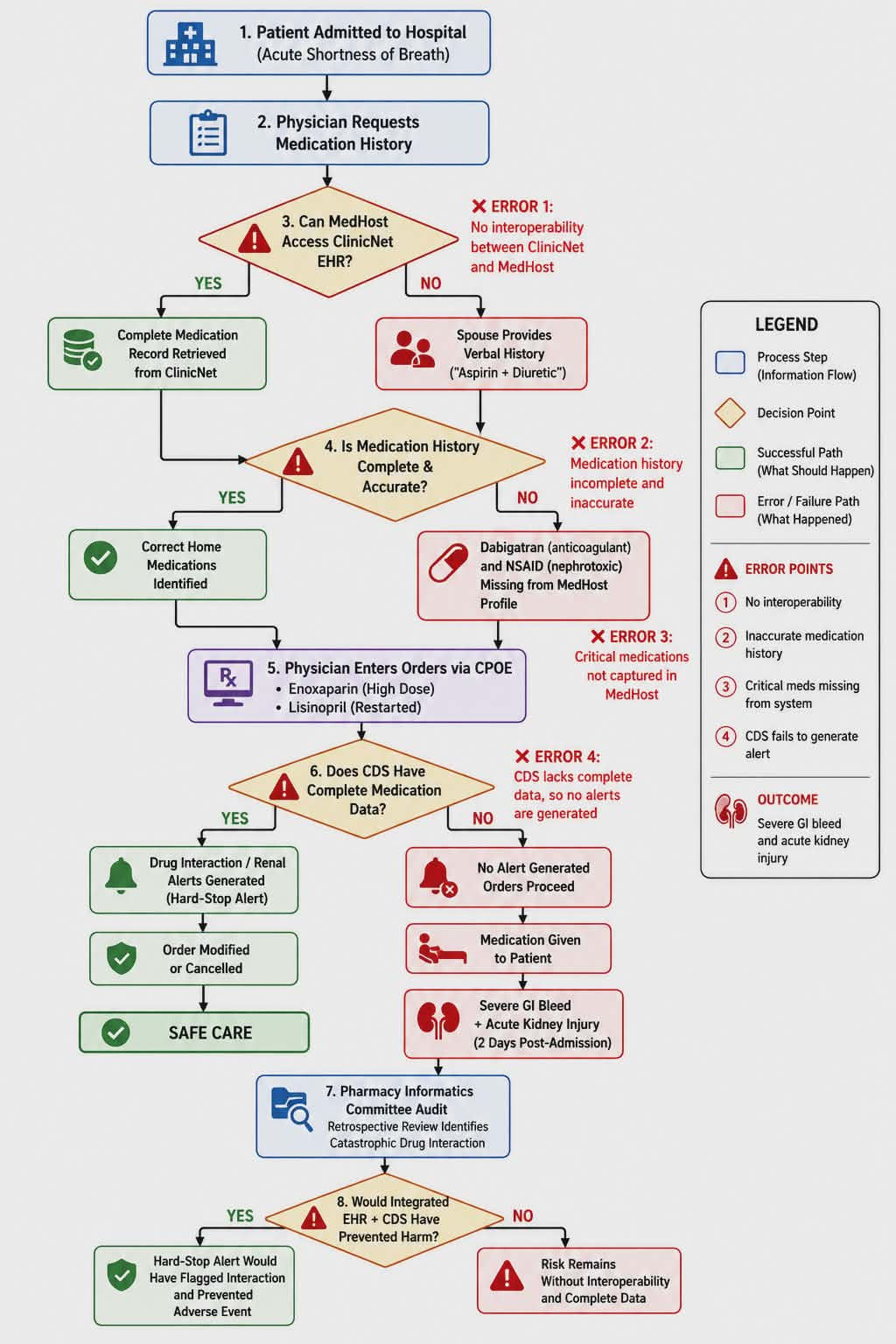
A digital, comprehensive, and longitudinal collection of a patient’s health information compiled from multiple healthcare providers, clinics, and hospitals. It is designed to share information across different healthcare organizations.
EHR (electronic hospital records)
Allows pharmacists to see a patient’s complete medical history, including lab results, diagnoses, and prescriptions written by external specialists. This broad view helps prevent duplication of therapy and ensures overall patient safety.
EHR (electronic hospital records)
A digital version of a patient’s chart used within a single healthcare organization or practice (e.g., one specific hospital or clinic). It does not easily travel outside that specific facility.
EMR (electronic medical records)
Used by hospital pharmacists to review the current inpatient chart, check daily provider progress notes, monitor internal lab values, and verify active medication orders within that facility.
EMR (electronic medical records)
A system that allows healthcare providers to enter medical orders including medication, laboratory, and radiology orders directly into a computer system rather than writing them on paper.
CPOE (computerized provider order entry)
Eliminates the need for pharmacists to decipher messy handwriting. It transmits clean, standardized medication orders directly to the pharmacy system, drastically reducing transcription errors.
CPOE (computerized provider order entry)
The digital transmission of a prescription from a prescriber’s office directly to a community or retail pharmacy, utilizing a secure electronic network.
eRX (electronic prescribing)
Allows community pharmacies to receive, process, and fill outpatient prescriptions before the patient even arrives at the pharmacy counter, streamlining workflow and improving safety.
eRX (electronic prescribing)
An interactive software tool integrated into health information systems that provides clinicians with person specific information, filtered or presented at appropriate times, to enhance healthcare decisions.
CDSS (clinical decision support system)
Automatically alerts the pharmacist during the verification process about potential drug-drug interactions, patient allergies, therapeutic duplications, or incorrect dosing based on the patient's age and kidney function.
CDSS (clinical decision support system)
A digital logbook used to document the exact medications prescribed for a patient, along with the precise times they are scheduled to be given and when they were actually administered by the nursing staff.
eMAR (electronic medication administration record)
Pharmacists review this to track patient adherence to scheduled doses, monitor the timing of specialized medications (like antibiotics or anticoagulants), and investigate missed doses.
eMAR (electronic medication administration records)
An inventory and administration safety system that utilizes barcodes on patient ID bands and medication packaging, requiring a nurse to scan both before giving a drug.
BCMA (barcode medication administration)
Ensures the "Five Rights" of medication administration are met at the bedside (___). The pharmacy team is responsible for ensuring every single unit-dose medication is properly barcoded and logged in the system database for successful scanning.
BCMA (barcode medication administration)
Right Patient, Right Drug, Right Dose, Right Route, Right Time
An intravenous (IV) infusion pump equipped with built-in medication safety software, commonly referred to as a ___.
Smart Pump Technology aka Dose Error Reduction System (DERS)
Pharmacists program and maintain the pump’s "Drug Library," which sets strict upper and lower limits (hard and soft limits) for IV infusion concentrations and rates. This prevents accidental, life threatening overdoses of high-alert medications like insulin or heparin during bedside administration.
Smart Pump Technology
Case analysis
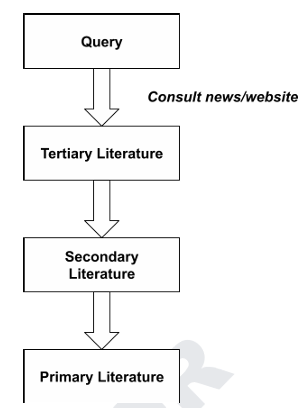
Medical and pharmaceutical data are organized into a strict structural hierarchy known as
Triad of Medical Literature
consists of original, unfiltered research studies, clinical trials, case reports, and dissertations published in peer-reviewed journals.
Primary literature
systems that index or abstract primary literature, serving as a gateway to help clinicians locate original research.
Secondary literatures
synthesized and condensed data compiled from primary and secondary sources.
tertiary literatures
For any given query, the pharmacist MUST:
● Prioritized resources available
● Know the content of the source
● Proficient in search information
General Stepwise Approach in Search for Information
FDA-approved for the treatment of ADHD in adults and children 6 years and older. Off-label uses include cancer-related fatigue, refractory depression in older adults, apathy in patients with Alzheimer disease, and cognitive enhancement (eg, memory improvement); the efficacy for these conditions is moderate at best
MethylPhenidate SR
methylphenidate serves as a second-line therapy for ___ in adults.
narcolepsy
HMG-CoA reductase inhibitor (statins). lipid-lowering medications used in the primary and secondary prevention of coronary heart disease with elevated LDL
Simvastatin
___decrease plasma lipid concentrations by competitively inhibiting HMG-CoA reductase, the rate-limiting enzyme in ___ synthesis, which triggers an up-regulation of surface LDL receptors that clear circulating ___ and ___ particles from the bloodstream. Beyond lipid lowering, they exert vital cardiovascular protective (___) effects by inhibiting the production of ___ proteins. This inhibition directly improves endothelial function via ___, reduces inflammation and thrombogenicity, and stabilizes ___ to prevent rupture.
Statins
hepatic cholesterol
LDL
VLDL
pleiotropic
prenylated
vasodilation
atherosclerotic plaques
over-the-counter (OTC) medicine you can use to treat mild itchiness (___), pain and discomfort caused by bug bites, chickenpox, poisonous plants and more. It contains the active ingredients ___ and ___.
Calamine lotion
pruritus
zinc oxide
0.5% iron oxide
What gives the calamine its characteristic pink color?
iron oxide
a thrombolytic medication that dissolves blood clots indirectly. Because it is a bacterial protein and lacks enzymatic activity of its own, it must first bind with ___ to form an active complex. This complex then acts as a catalyst to convert other free plasminogen molecules into ___, the enzyme that cuts up the ___ holding the clot together. Because it functions throughout the entire circulatory system rather than just targeting the clot site, it depletes global clotting factors and increases bleeding risks; its bacterial origin also introduces a risk of allergic reactions.
Streptokinase
circulating plasminogen
plasmin
fibrin mesh
Is used to manage depressive symptoms primarily due to its chemical components, ___ and ___. Tertiary resources confirm that these constituents exert an antidepressant effect by acting as ___. They increase the synaptic concentrations of essential mood-regulating neurotransmitters, namely serotonin, norepinephrine, and dopamine—within the central nervous system
St. John's Wort (Hypericum perforatum)
hypericin
hyperforin
non-specific monoamine reuptake inhibitors
active ingredients are mixed with the melted waxes and base. components with higher melting points (such as ___) are melted together over a water bath. The remaining components and heat-stable active pharmaceutical ingredients (APIs) are subsequently incorporated into the liquefied base with continuous mixing as the mixture cools to a ___ state
Fusion Method
beeswax, paraffin, or solid fatty acids
semisolid
universal recipients because their plasma lacks both anti-A and anti-B antibodies (___). The ___ gene dictates the expression of codominant A and B glycosyltransferase enzymes, resulting in the presentation of both A and B carbohydrate antigens on the red blood cell membrane surface. Because the immune system recognizes both antigens as "self," it does not form preformed ___ antibodies against them. Consequently, when type AB individuals receive a red blood cell transfusion of any ABO blood type (A, B, AB, or O), there are no circulating antibodies in their plasma to bind, agglutinate, or cause acute intravascular hemolysis of the donor cells.
type AB
isoagglutinins
ABO
IgM or IgG
proliferation of unchecked data has precipitated the phenomenon often characterized as?
infodemic
In order to perform rigorous, objective appraisals of digital health platforms, pharmacy informatics specialists utilize validated evaluative frameworks. Among the most prominent standards are
JAMA Benchmarks aka Silberg Standards
Who established JAMA Benchmarks aka Silberg Standards to scrutinize four fundamental criteria?
Journal of the American Medical Association
Are the authors and their credentials clearly stated?
Authorship
Are the references and sources explicitly cited?
Attribution
Are website ownership, sponsorships and potential conflicts of interest transparently disclosed?
Disclosure
Is the content dated, and has it been updated recently?
Currency
sites coming from well-recognized and reputable sponsors such as governmental agencies, news services, academic institutions and known health organizations
High Quality Score 16 - 20
Sites that have content considered as generally accurate and consumer-friendly but may be commercialized, simplified, or lack deep clinical citations (e.g., MIMS, WebMD, Medscape, Mayo Clinic, etc.)
Medium Quality 11-15
Sites that have lacked scientific backing, relies heavily on anecdotes, promotes commercial products (e.g., supplement sales), lacks author credentials, or features outdated information.
Low Quality 4-10
MEAL framework stands for?
monitoring, evaluation, accountability, learning
highly integrated environment where pharmacists retrieve, synthesize and distribute complex clinical evidence.
Drug Information Service (DIS)
Ethical violations in DIS often cross into legal negligence if four criteria are met:
1. A duty of care is owed, that duty is breached (by providing incorrect, delayed, or incomplete information)
2. A patient suffers actual harm
3. The breach is the direct cause of that harm.
A U.S. federal law mandating the protection of Protected Health Information (PHI). It applies strictly to healthcare providers, health plans, and their associated vendors.
HIPAA (Health Insurance Portability and Accountability Act)
refers to the Philippines' general data protection law (or a "Data Processing Agreement" globally).
DPA (Data Privacy Act)
The ethical principle that respects a person's right to make informed decisions about their own healthcare without coercion.
Autonomy
The duty of healthcare professionals to act in the patient's best interest by promoting good and improving their well-being.
Beneficence
The obligation to avoid causing harm to patients. Often summarized as "First, do no harm."
Non-maleficence
A patient's voluntary agreement to a medical treatment or procedure after receiving sufficient information about its risks, benefits, and alternatives.
Consent
The responsibility to protect a patient's private health information and disclose it only with permission or when legally required.
Confidentiality
The ethical obligation to tell the truth and provide accurate, honest information to patients so they can make informed decisions.
Veracity
Philippine Code of Ethics for Pharmacists
Pharmacy Resolution No. 23, s 2021 Resolution Promulgating and Prescribing the Code of Ethics of the Pharmacy Profession