BIO: UN1 Macromolecules
 Call Kai
 Learn
Learn Practice Test
 Spaced Repetition
 Match
Match Flashcards
 Knowt Play
1/51

There's no tags or description
Looks like no tags are added yet.
Name | Mastery | Learn | Test | Matching | Spaced | Call with Kai | Chat |
|---|
No analytics yet
Send a link to your students to track their progress
52 Terms
Organic compounds
Compounds that contain carbon element (non-carbon compounds=inorganic)
Why is Carbon so important/common?
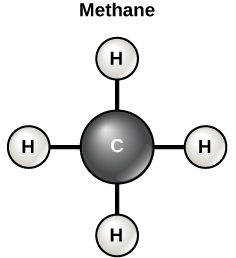
Carbon has 4 outer electrons, so it can form up to 4 covalent bonds with many elements (typically carbon, hydrogen, oxygen, and nitrogen)
Macromolecule (polymer)
Large ORGANIC molecules made up of the building block, monomers
Carbohydrate’s Main function
Break down to store energy
Polymers → Monomers
Hydro (water) lysis (break down): Water molecules are bonded to break down a polymer into monomers
Monomers → Polymer
Dehydration (remove water) synthesis (together/make): Water molecules are removed to form monomers into a polymer
Carbohydrates’ building blocks:
Mono (1) saccharides (sugar)
Main types of Carbohydrates
Monosaccharides, disaccharides (2), and polysaccharides (many)
Building blocks of Monosaccharides:
Carbon : Hydrogen : Oxygen (1:2:1 ratio typically)
Main Polysaccharides for Plants
Plants) Starches - Large branches of joined glucose for energy storage
Cellulose) Structural Support (cell wall) & too complex to break down for humans
Main Polysaccharide for Humans/Animals
Glycogen - Large groups of glucose joined together straightly for energy storage
Glucose
A monosaccharide (simple sugar) made up of 6 carbon units, 12 hydrogen units, and 6 oxygen units.
Lipids
Fats
Building Blocks of Lipids
Glycerol & Fatty Acids made of Carbon, Hydrogen, and o2 (there are typically more C.H. molecules)
Unique Characteristic of Lipids
They are NON-SOLUBLE (unable to be dissolved by water), because they are non-polar. [non-polar can not mix with polar, like oil + water]
Two Common Types of Lipids:
Triglycerides (Fats+Oils)- 1 glycerol + 3 fatty acids
Phospholipids- 1 glycerol + 2 fatty acids
What are the two kinds of Fatty Acids?
Saturated- (‘bad’), solid at room temp and are NOT double bonded
Unsaturated- (‘good’), liquid at room temp and ARE double bonded
Main 5 Functions of Lipids
Long term energy storage
Retention of heat (insulation) + water (acts as barrier around polar water)
Chemical messengers (hormones)
Major component of membranes (like cell membrane) [phospholipids]
Building Blocks of Nucleic Acids
Nucleotides- made of C. H. o2. N. and Phosphorus
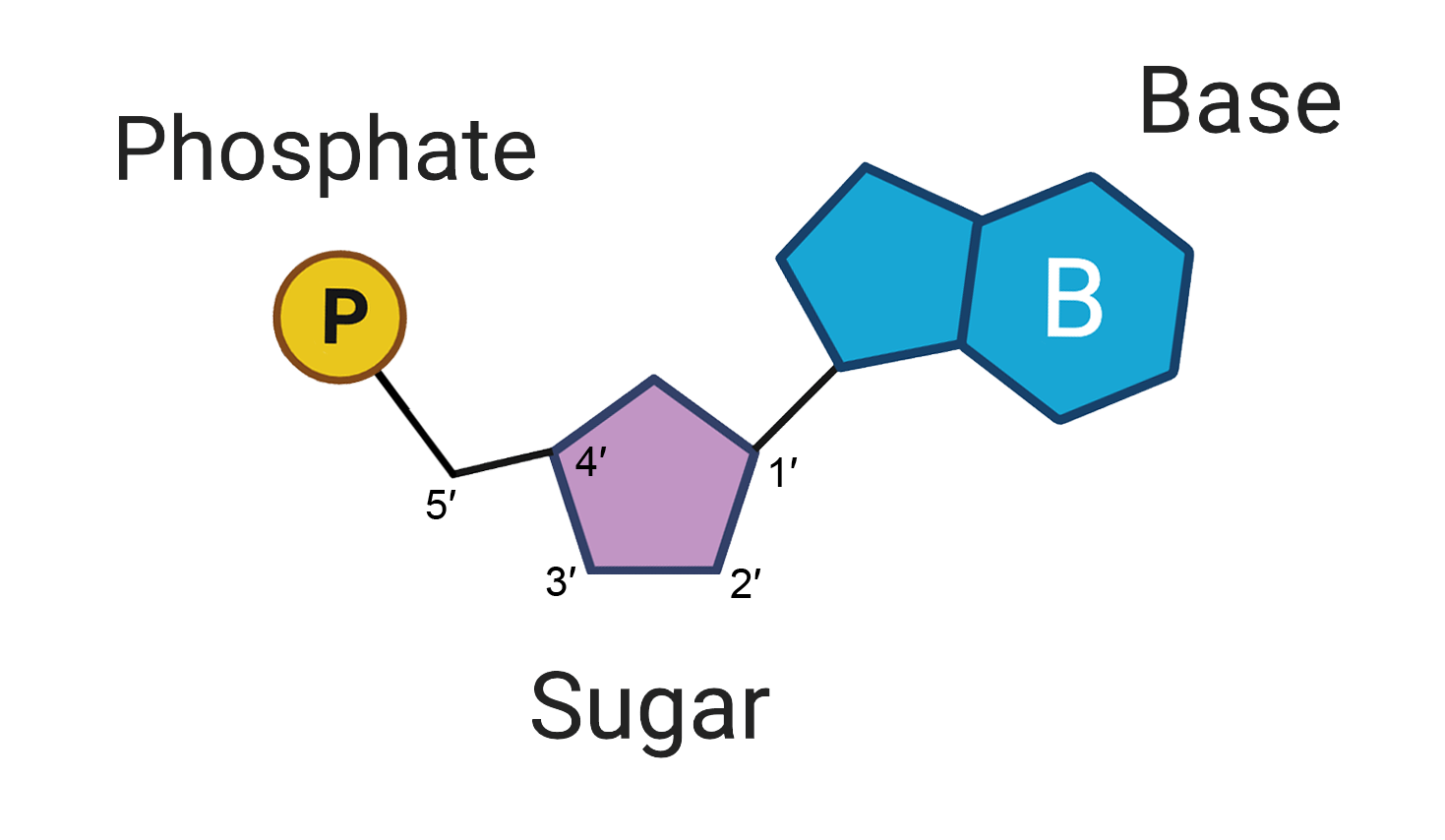
What are the 3 major components of a Nucleotide?
Phosphate, 5 carbonSugar (Deoxyribose or ribose), Nitrogen Base (GCAT or GCAU)
DNA v.s. RNA
DNA- double stranded, uses deoxyribose sugar & GCAT bases, stores genetic information
RNA- single stranded, uses ribose sugar & GCAU bases, responsible for protein synthesis
Building blocks of Proteins
Amino Acids (C.H.O.N.S sometimes sulfur)
How many Amino Acids are there?
There are 20 total; the human body produces 12, and receives the other 8 through food.
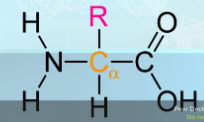
Foundation of Amino Acids
Carboxyl group, carbon group, amine group, hydrogen group, and R-GROUP (separates the 20 different Amino Acids)
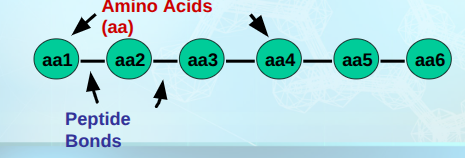
Primary Structure of Protein
Long chain of Amino Acids connected with PEPTIDE BONDS
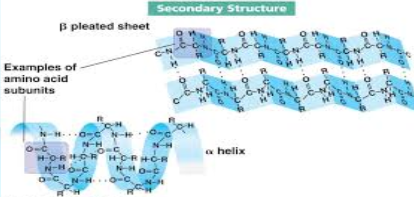
Secondary Structure of Protein
The R-groups start to interact, folding the structure into a corkscrew/fan shape
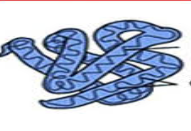
Tertiary Structure of Protein
The R-groups interact until the structure folds into a 3D shape (POLYPEPTIDE CHAIN)
Quaternary Structure of Protein (not 100%)
2+ Polypeptide chains join together
5 main FUNCTIONS of Protein
Structural - Building block of nails, cells, hair (keratin, collagen)
Movement- Muscles
Regulatory - Hormones (building block of hormones that regulate our body functions/contribute to homeostasis)
Enzyme - Cellular Reactions (speeds up reactions like metabolism)
Storage - Albumin (egg whites)
Disaccharides
Table Sugars
Monosaccharides
Simple Sugars
Importance of Enzymes
All chemical reactions in living organisms require enzymes & enzymes speed up reactions by lowering activation energy (energy necessary) for reactions
Parts of Enzyme
Enzyme- helper protein molecule
Substrate- molecules that enzymes bond w/
Product- what enzymes help produce
Active Site- part that substrate molecules fit into
Lifespan of Enzymes
All Enzymes are reusable and can be reused for the same reaction w/different substrates
What Affects Enzyme Activity?
Temperature (especially extreme; high temps unfold enzyme)
PH (has to be neutral 6-8)
Concentration (more enzymes= faster reactions)
Types of Enzymes
The enzymes (END IN -ASE) are named after their substrates:
Sucrase→sucrose, Proteases → proteins, Lipases → Lipids, DNA Polymerase BUILDS → DNA
Inhibitor
Molecules that binds to enzyme, arranging shape & decreasing activity
Inhibitors KInds
Two Kinds: competitive- similar to substrate and binds to active site, blocking enzymes, slowing down enzyme activity & incompetitive/allosteric- binds to allosteric site and changes the active site shape of the enzyme, preventing substrates from binding
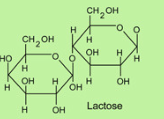
WHat kind of Macromolecule is this?
Carbohydrate

What is this?
Glucose (c6h12o6)

What Macromolecule is this?
Lipids

What kinds of fat are they?
Saturated (no double bonds)
Unsaturated (double bonds= liquid)
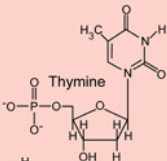
What kind of Macromolecule is this?
Nucleotide
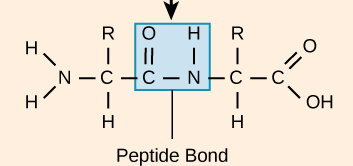
What kind of macromolecule is this?
Protein
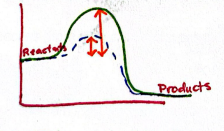
Label this graph:
Activation energy w/ & w/o enzymes:
Green Line= reaction w/o enzyme, Blue line= reaction w/ enzyme, orange arrows= activation energy
What is a type of Monosaccharide?
Glucose, fructose, galactose
What is a type of Disaccharide?
Sucrose, lactose, maltose
What is a type of Polysaccharide?
Starches, glycogen, cellulose
Examples of Carbs
Pasta, bread, sugar
Type of Lipids
Fats, butter, oil, steroids
Types of protein
Enzymes: catalase, lipase, lactase
Types of Nucleic acids
DNA, RNA, ATP