TEAS Practice Exam - Science Portion: Review
 Call Kai
 Learn
Learn Practice Test
 Spaced Repetition
 Match
Match Flashcards
 Knowt Play
1/80

Earn XP
Description and Tags
Things I got wrong and the correct answers for them
Name | Mastery | Learn | Test | Matching | Spaced | Call with Kai | Chat |
|---|
No analytics yet
Send a link to your students to track their progress
81 Terms
B
Which of these is a function of a ribosome?
A) Ribosomes carry the codons required for protein synthesis.
B) Ribosomes can decode mRNA and assemble amino acids for protein synthesis.
C) Ribosomes move along the length of the amino acid chain to introduce peptide bonds in between them.
D) Ribosomes transfer mRNA from the nucleus to the cytoplasm.
glycerol
A lipid or fat molecule can be broken down into fatty acids and _______
C
Which of the following prefixes would likely be the most appropriate for measuring the weight of a 2,500 g kitten?
A) Pico
B) Giga
C) Kilo
D) Nano
B, C, D, F
Which of the following statements about diffusion is true?
Please select all that apply.
A) Diffusion is the net movement of molecules or atoms from a region of lower concentration to a region of higher concentration.
B) Gas exchange in tissues is an example of diffusion.
C) Osmosis is an example of diffusion.
D) Diffusion is the net movement of molecules or atoms from a region of higher concentration to a region of lower concentration.
E) Diffusion is an active process.
F) Diffusion is a passive process
D
Which of the following hormones is not increased in response to dehydration?
A) Antidiuretic hormone
B) Renin
C) Aldosterone
D) Erythropoietin
C
In which segment of the nephron is glucose reabsorbed?
A) Distal convoluted tubule
B) Collecting duct
C) Loop of henle
D) Proximal convoluted tubule
Nasal cavity, Pharynx, Larynx, Trachea, Bronchi, Bronchioles
What is the correct sequence in which inhaled air passes through the respiratory tract? Put in order
Nasal cavity
Bronchioles
Bronchi
Larynx
Pharynx
Trachea
A
Which of the following is a hypothesis?
A) If a student gets more sleep, they will get a higher test score.
B) One liter of water was added to a reaction.
C) When I added fertilizer to my plants, they grew more quickly.
D) Five different breeds of dogs are at the dog park.
C
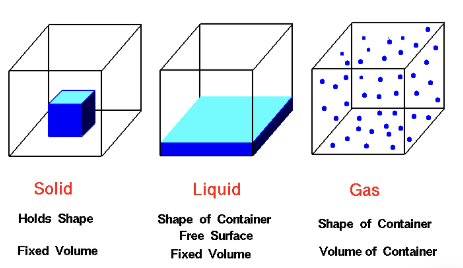
Which of the following descriptions is correct?
A) Solid: no constant volume and no constant shape
B) Gas: constant volume and a definite shape
C) Gas: no definite volume and no definite shape
D) Liquid: no definite volume and constant shape
pulmonary artery
The _________________ is the blood vessel that carries oxygen-depleted blood away from the heart.
B
Which of the following structures is correctly paired with its function?
A) Colon- formation of chyme
B) Mouth- mechanical digestion
C) Small intestine- formation of feces
D) Stomach- absorption of nutrients
B
The respiratory system is composed of organs that facilitate gas exchange between the blood and the external environment. Which of the following describes the group of organs that function during gas exchange?
A) Tissue
B) Organ System
C) Organ
D) Organelle
A
Which of the following is the process by which gametes divide and produce half the number of chromosomes found in a somatic cell?
A) Meiosis
B) Fertilization
C) Zygote
D) Gametes
A
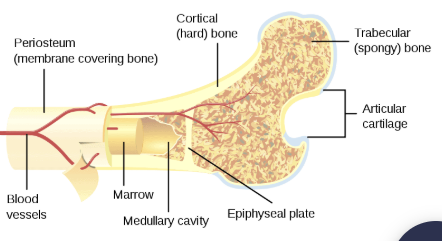
Which of the following correctly describes the difference between compact bone and spongy bone?
A) Spongy bone is lighter than compact bone
B) Compact bone has trabeculae that support the bone marrow
C) Compact bone is located more interior than spongy bone
D) Spongy bone has more osteons than compact bone
B
Which of the following is a substance that the kidneys remove from the blood during filtration?
A) Red Blood Cells
B) Salts
C) Carbon Dioxide
D) Oxygen
C
Which of the following does not describe the dermis?
A) The layer of the skin that contains the network of capillaries necessary for thermoregulation
B) A vascular layer of the skin
C) The thickest layer of the skin
D) The layer of the skin where cells containing the pigment melanin are found
D
Which of the following is not true about thermoregulation?
A) Shivering generates heat through muscle contractions to warm the body.
B) Cutaneous vasoconstriction warms the body by restricting blood flow in the skin.
C) Cutaneous vasodilation cools the body by allowing heat to be released through skin.
D) Contraction of arrector pili muscles facilitates vasodilation.
A, B, E, F
Which of the following is correct about muscle contraction?
A) Sarcomere shorten during contraction.
B) Muscle contraction requires ATP.
C) Myosin filaments shorten during contraction.
D) Actin filaments shorten during contraction.
E) Neurotransmitters stimulate muscle contraction.
F) Actin and myosin filaments slide past each other.
C
Which of the following is not true about reproductive hormones?
A) FSH (follicle-stimulating hormone) stimulates maturation of sperm and ovum.
B) LH (luteinizing hormone) stimulates ovulation and production of testosterone.
C) LH (luteinizing hormone) is produced by the posterior pituitary gland.
D) FSH (follicle-stimulating hormone) is produced by the anterior pituitary gland.
B
Which of the following comparisons between arteries and veins is true?
A) Veins have thick, muscular walls, while arteries have thin, more compliant walls.
B) Veins have valves, and arteries do not.
C) Veins have a smaller diameter than arteries.
D) Veins carry freshly oxygenated blood from tissue back to the heart, while arteries carry oxygen-depleted blood away from the heart.
C
Melatonin is the hormone that regulates sleep-and-wake rhythm. Which of the following endocrine glands is responsible for producing melatonin?
A) Adrenal
B) Pituitary
C) Pineal
D) Hypothalamus
C
Which of the following substances would not dissolve in water?
A) NaCl
B) CH3OH
C) C3H6
D) CH3CH2OH
A, B, E
Which of the following is true of insulin and glucagon?
Please select all that apply.
A) Insulin and glucagon regulate the level of glucose in the blood.
B) The pancreas secretes insulin and glucagon.
C) Insulin and glucagon have opposite effects on blood calcium levels but work together to maintain homeostasis.
D) Secretion of insulin and glucagon is regulated by the pituitary gland.
E) Insulin and glucagon have opposite effects on blood glucose but work together to maintain homeostasis.
Small intestine
The majority of nutrient absorption occurs in the _________________.
C
Which of the following antigen-specific immune cells produce cytokines, which facilitate various immune reactions?
A) B-cell
B) Cytotoxic T-cell
C) Helper T-cell
D) Macrophage cell
B, E, F
Which of the following is a function of the epidermis?
A) It stores fat
B) It protects underlying tissues from abrasions.
C) It functions as a major component of the adaptive immune system
D) It contains many blood vessels that can constrict or dilate for thermoregulation
E) It protects underlying tissue from chemicals.
F) It functions as a major component of the innate immunity
D
Movement of molecules in a substance depends on _______ energy.
A) UV
B) X-ray
C) Gamma ray
D) heat
A
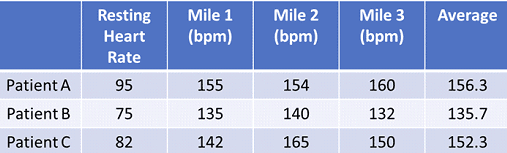
Patients were tasked with running 1 mile every day for three days in the presence of the scientists. They were required to run the entire mile and were not allowed to walk. At the end of each mile run, the scientists measured the heart rates of the patients. Which of the following conclusions can be drawn from this data? (READ QUESTION CAREFULLY)
A) Running increased the heart rates of the patients
B) Patients that ran the mile faster had higher heart rates
C) The patients ran Mile 3 faster than Mile 1
D) The patients became fitter with each mile run
A
Which of the following statements is true about hydrogen bonds?
A) They form between a partial positively charged region on one molecule and the partial negatively charged region on another molecule
B) They result from the attraction between ions that have no charge
C) They don’t affect the properties of water in any way
D) They are considered strong attractive forces
B
Which would be the approximate mass of a car?
A) 180 kg
B) 1,800 kg
C) 180,000 kg
D) 18 kg
D
The same single-replacement reaction is run in two different beakers. The beakers are labeled as Beaker A and B and are heated to 75oC and 100oC, respectively. If the reactions are run for 15 minutes each, which of the following results would you expect to observe?
A) Beaker A produces more product than Beaker B
B) The two beakers produce the same amount of product
C) No products are produced in either beaker
D) Beaker B produces more product than Beaker A
C
Why are control groups used in experiments?
A) To ensure the accuracy of measurements
B) To help scientists quickly perform experiments
C) To minimize the effect of variables
D) To increase the amount of data collected
A
Which of the following is a primary function of the skeletal system?
A) Storing minerals
B) Producing hormones
C) Regulating body temperature
D) Transporting oxygen
C
Which of the following accurately describes the path of blood through the heart?
A. Blood enters the heart through the pulmonary vein, into the right atrium, through the tricupsid valve to the right ventricle
B. Once the right ventricle is full, blood exits into the pulmonary artery and then empties into the left ventricle
C. After traveling through the lungs, oxygenated blood enters into the left atrium, then through the mitral valve (bicupsid valve) to the left ventricle
D. Once the left ventricle is full, the left tricupsid valve shuts, the ventricle contracts, and blood exits through the aorta
B and D
Which of the statements below accurately list a component along with its function? Select all that apply.
A. Collagen is a fatty compound that creates a padding between bones and other structures
B. Hemoglobin is a protein in the blood that facilitates the carrying of oxygen
C. Lymph is a tissue that forms into nodes through which blood is filtered and cleaned
D. An antigen is a substance that stimulates the production of antibodies
A, C, D
Which of the statements below list the correct function of the digestive system organ? (Select all that apply)
A. The large intestine reabsorbs water into the body to form solid waste
B. The duodenum is the part of the small intestine in which acids, fat, and sugar are absorbed
C. The liver produces bile, which aids digestion by emulsifying fats after they have passed thru the stomach
D. The ileum functions to recover vitamins, salts, and nutrients from the chyme before it passes into the large intestine
e. The jejunum receives chyme from the stomach and is the site where most chemical digestion occurs
f. The gallbladder produces insulin to assist in the transport of sugars from the blood to the organs
B
How do DNA and RNA function together as part of the human genome?
A. DNA carries genetic info from RNA to the cell cytoplasm
B. RNA carries genetic info from DNA to the cell cytoplasm
C. DNA and RNA carry genetic info from the cell nucleus to the cell cytoplasm
D. DNA and RNA do not interact within the cell
D
Enzymes are ________ molecules that serve as ______ for certain biological reactions
A. complex; suppressors
B. Acidic; triggers
C. Small; targets
D. Large; catalysts
A
An atom has 5 protons, 5 neutrons, and 6 electrons. What is the electric charge of this atom?
A. Positive
B. Neutral
C. Negative
D. Undetermined
C
How many different types of tissue are there in the human body?
A. 4
B. 6
C. 8
D. 10
C
A substance is only considered acidic if it has a pH less than what?
A. 12
B. 9
C. 7
D. 4
A
Two nursing students will be completing a scientific experiment measuring the mass of chewed gum after one minute chewing increments. Which lab equipment will the students most likely use?
A. Triple - beam balance
B. Anemometer
C. Hot plate
D. Microscope
C
Which of the following best describes one of the roles of RNA?
A. Manufacturing the proteins needed for DNA
B. Creating the bonds between the elements that compose DNA
C. Sending messages about the correct sequence of proteins in DNA
D. Forming the identifiable double helix shape of DNA
C
Which of the following substances is NOT a product of respiration?
A. Carbon dioxide
B. Water
C. Oxygen
D. ATP
D
Which of the following statements correctly describes the function of a physiological structure?
A. The trachea connects the throat and the stomach, encouraging food to follow this path through contractions
B. The esophagus is the cylindrical portion of the respiratory tract that joins the larynx with the lungs
C. The diaphragm is a muscle that controls the height of the thoracic cavity, decreasing the height on contraction and increasing the height on relaxation, causing expiration
D. The epiglottis covers the trachea during swallowing, preventing food from entering the airway
B
Which statement below correctly describes the movement of molecules in the body and/or in relation to the external environment?
A. Osmosis is the movement of a solution from an area of low solute concentration to an area of high solute concentration
B. Diffusion is the process in the lungs by which oxygen is transported from the air to the blood
C. Dissipation is the transport of molecules across a semipermeable membrane from an area of low concentration to high concentration, requiring energy
D. Reverse osmosis is the movement of molecules in a solution from an area of high concentration to an area of lower concentration
A, D, E
Which of the following activities are consistent with the scientific method? (select all that apply)
A. Observe the data, noting potential outliers, and then analyze the results
B. Research to make sure no one else has ever experimented based on the same hypothesis
C. Conduct an experiment and then formulate a hypothesis that fits the results
D. Communicate the results of an experiment that did not confirm the hypothesis
E. Develop a new hypothesis based on a conclusion from a previous experiment
C, D, E
Which of the following are examples of homeostatic mechanisms? (select all that apply)
A. consuming excess calories to gain weight
B. Lifting weights to increase muscle mass
C. Shivering when the body temperature falls
D. Secreting insulin to decrease blood sugar concentration
E. Increasing heart rate when blood pressure is low
B
Where is the gastrocnemius vein in relation to the femoral vein?
A. Lateral
B. Distal
C. Superior
D. Ventral
A
Which is NOT a type of protein?
A. Fibrous
B. Membrane
C. Globular
D. Unsaturated
D
Which of the following is an example of a chemical change?
A. Releasing compressed gas to launch a bottle rocket
B. Adding water to clay to make slip
C. Crystalizing honey to make candy
D. Including baking soda in a recipe to make it less sour
D
What is most likely the pH of a solution containing many hydroxide ions (OH-) and few hydrogen ions (H+)?
A) 2
B) 6
C) 7
D) 9
C
How many layers of tissue does the uterus have?
A. One
B. Two
C. Three
D. Four
D
Which of the following orbitals is the last to fill?
A. 1s
B. 3s
C. 4p
D. 6s
B
Which of these body parts does NOT produce melanin?
A. Hair
B. Cartilage
C. Skin
D. Iris
A
Which of the following is a carbohydrate?
A. Cellulose
B. Hemoglobin
C. Estrogen
D. ATP
C
In general, where in the periodic table of elements are the elements with the largest atomic radii located?
A. Upper right corner
B. Upper left corner
C. Bottom left corner
D. Bottom right corner
D
Which of the following are formed when the plasma membrane surrounds a particle outside of the cell?
A. Golgi bodies
B. Rough ER
C. Secretory vesicles
D. Endocytic vesicles
A
Which of the following does NOT obey the law of independent assortment?
A. Two genes next to each other on a chromosome
B. Two genes on opposite ends of a chromosome
C. Two genes located on different chromosomes
D. Two genes located on homologous chromosomes
B
Which section of the digestive system is responsible for receiving chyme via the pyloric sphincter and further digesting it?
A. The large intestine
B. The duodenum
C. The jejunum
D. The gallbladder
D
What type of mutation is represented by the following sequence?
Original: 1 2 3 4 5 6
Mutated: 1 5 4 3 2 6
A. Duplication
B. Deletion
C. Insertion
D. Inversion
D
You are examining three houseflies under a microscope and find that they are all between 6 and 8 units long. Which of the following units of measurement is most likely being used?
A. Centimeters
B. Nanometers
C. Micrometers
D. Millimeters
D
Which of the following statements concerning the states of matter is NOT true?
A. Plasmas are high-temperature collections of ions and free electrons
B. Solids are the least compressible due to the more rigid positions of the particles
C. Gases have no definite volume and expand to fill their contains
D. Liquids have no definite shape and no definite volume
D
Which of the following is NOT a characteristic of enzymes?
A. They change shape when they bind their substrates
B. They can catalyze reactions in both forward and reverse directions
C. Their activity is sensitive to changes in temp.
D. They are usually active on more than one kind of substrate
B
Identify the location where neurotransmitters are stored immediately prior to use.
A. Area A
B. Area B
C. Area C
D. Area D
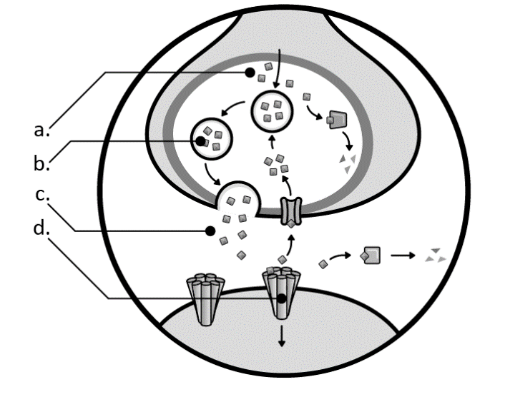
C
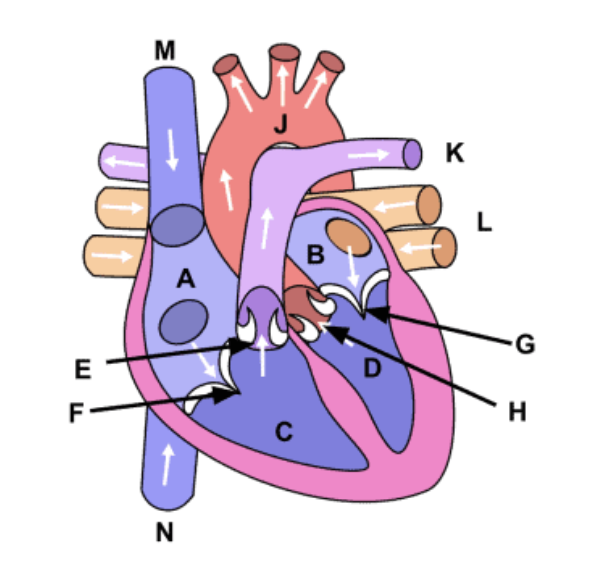
Which of the heart chambers is the largest and strongest?
A. Left atrium
B. Right atrium
C. Left ventricle
D. Right ventricle
B
Which of the following is NOT true concerning correlation?
A. Correlation can show the relationship between variables
B. Correlation can show cause and effect
C. Correlation can show linear relationships
D. Correlation can be positive or negative
B
Where are the parathyroid glands located?
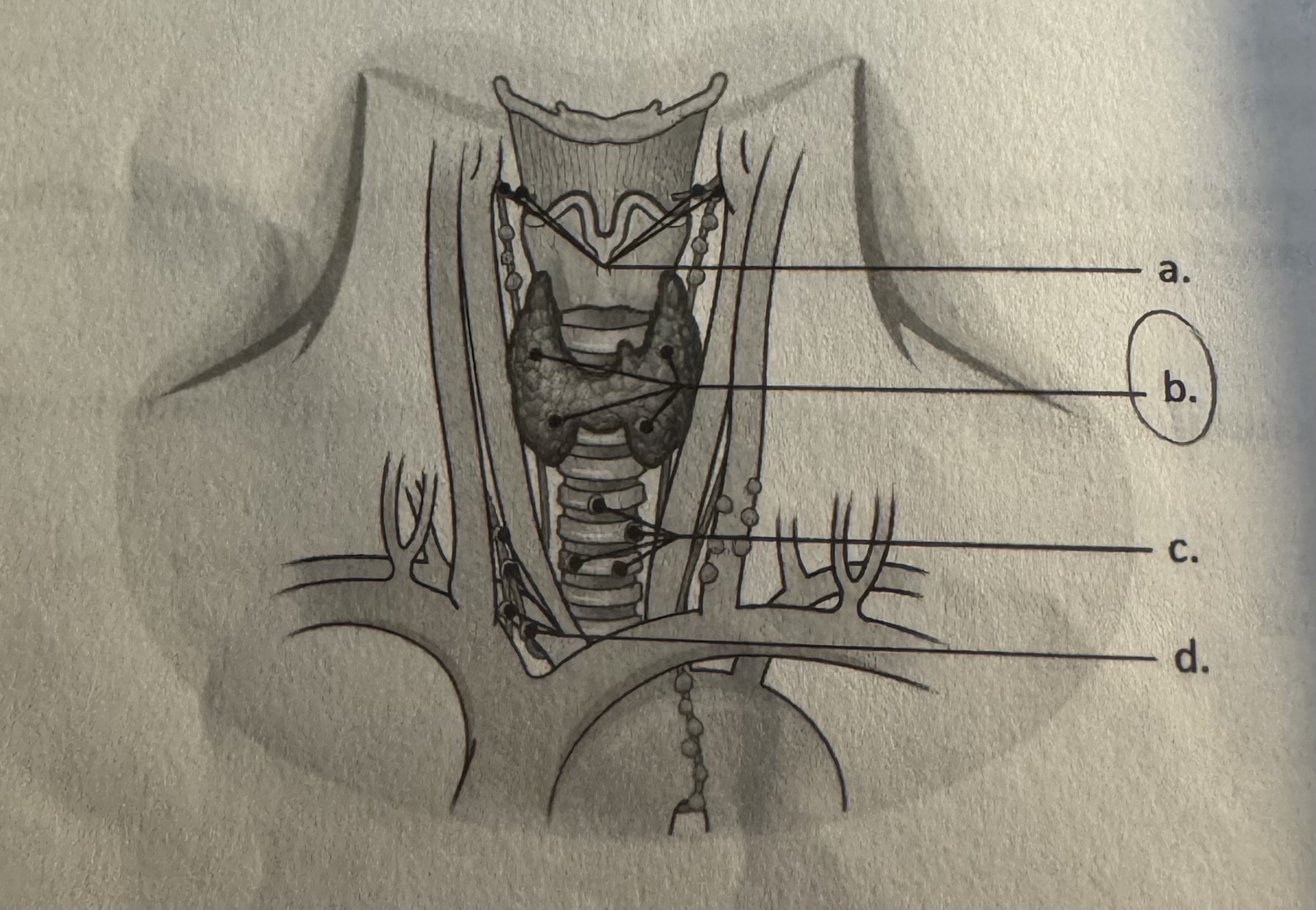
Right atrium
Label A
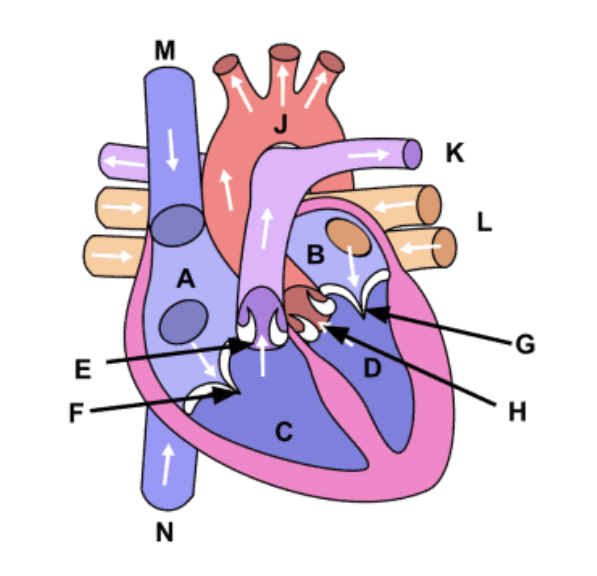
Left atrium
Label B
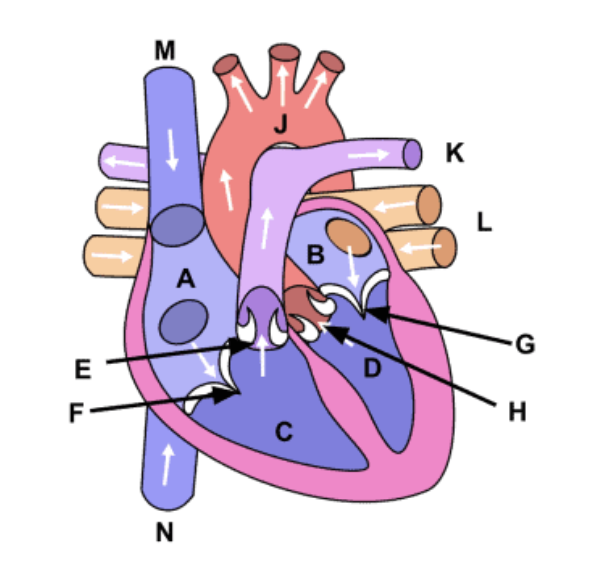
Right ventricle
Label C
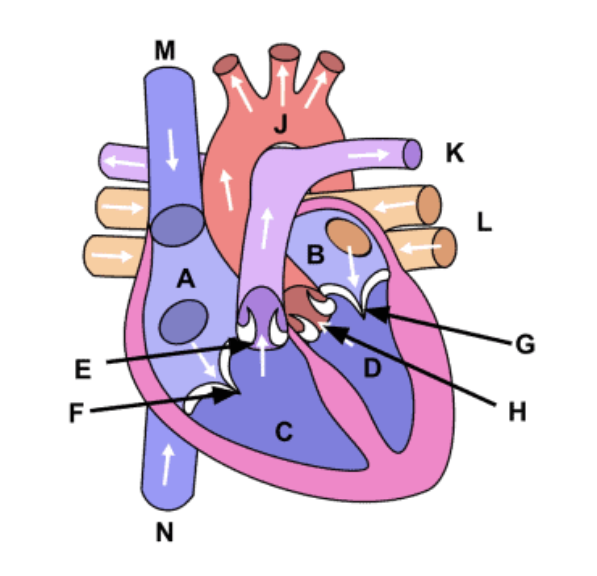
Left ventricle
Label D
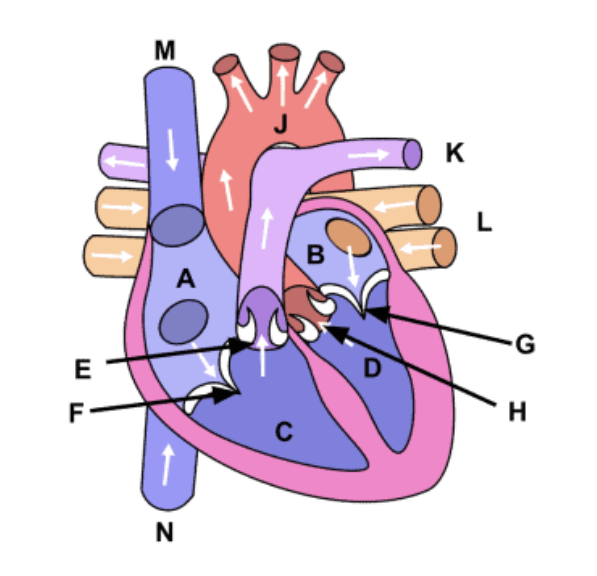
Pulmonary valve
Label E
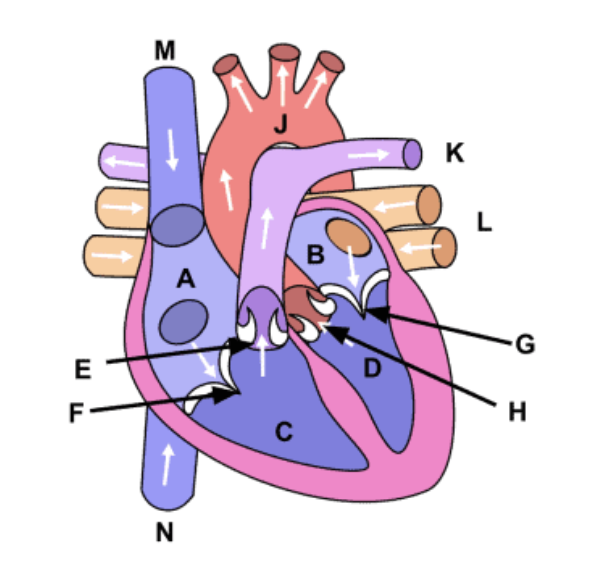
Tricupsid valve
Label F
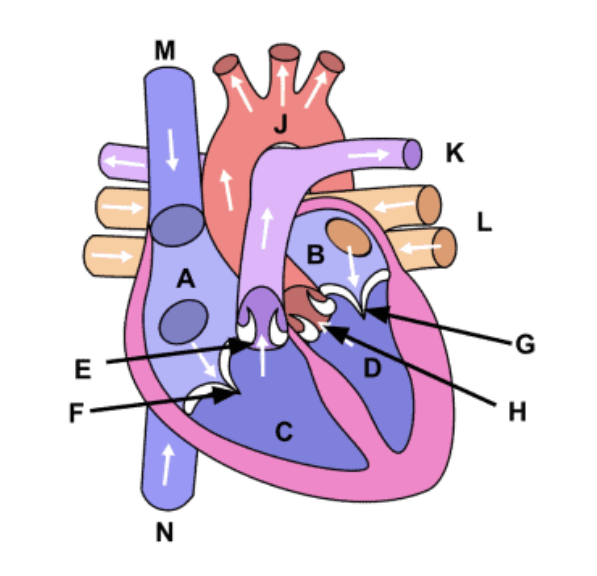
Mitral valve (bicupsid)
Label G
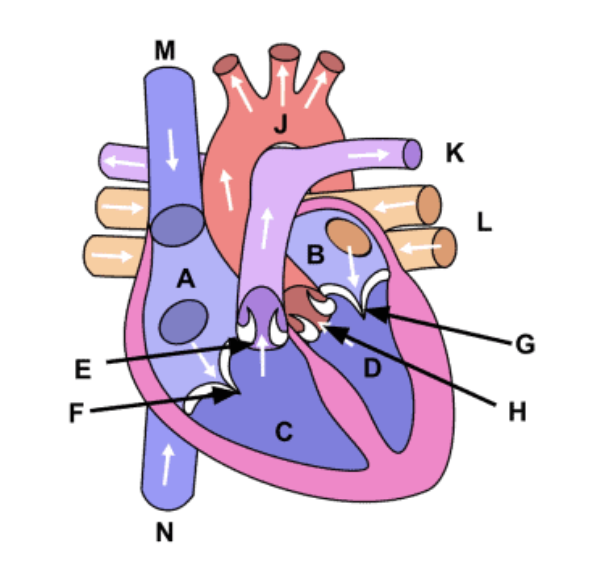
Aortic valve
Label H
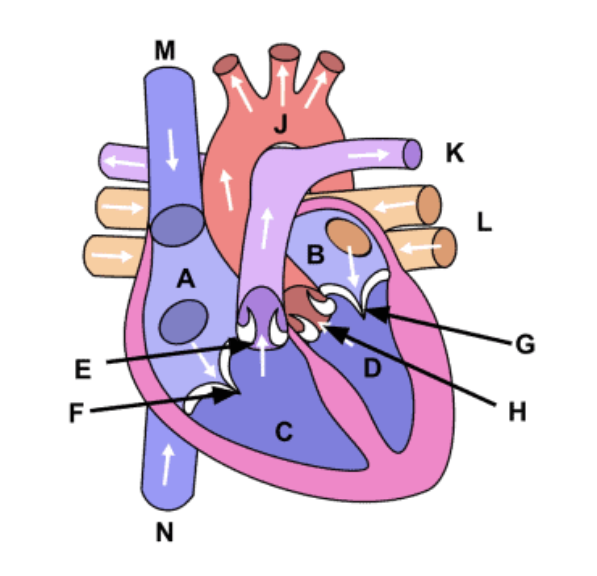
Aorta
Label J
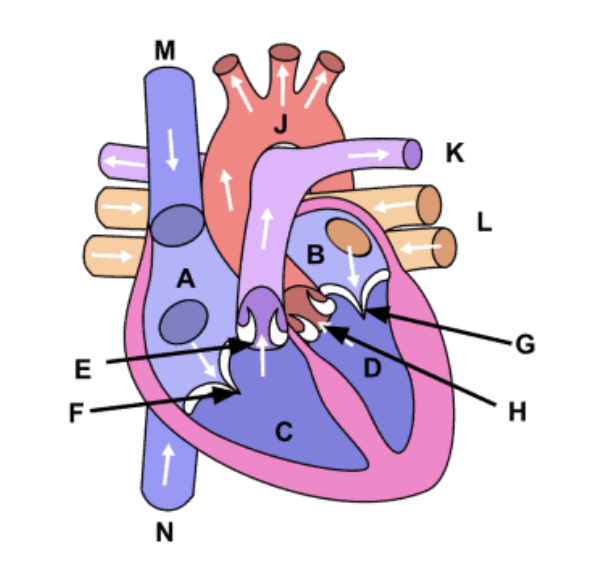
Pulmonary artery
Label K
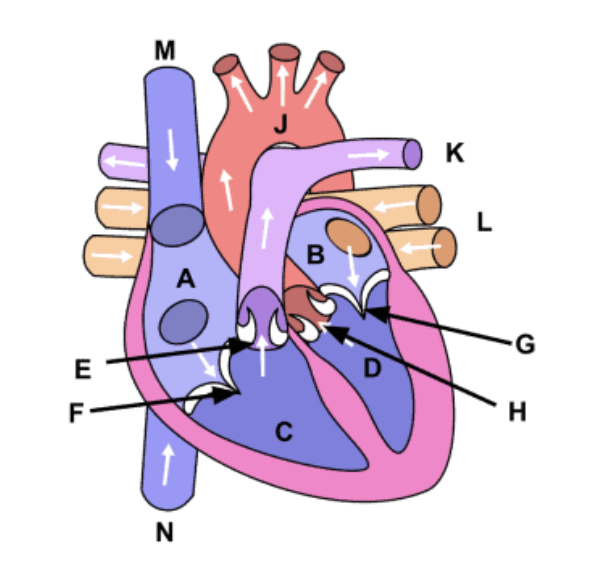
Pulmonary vein
Label L
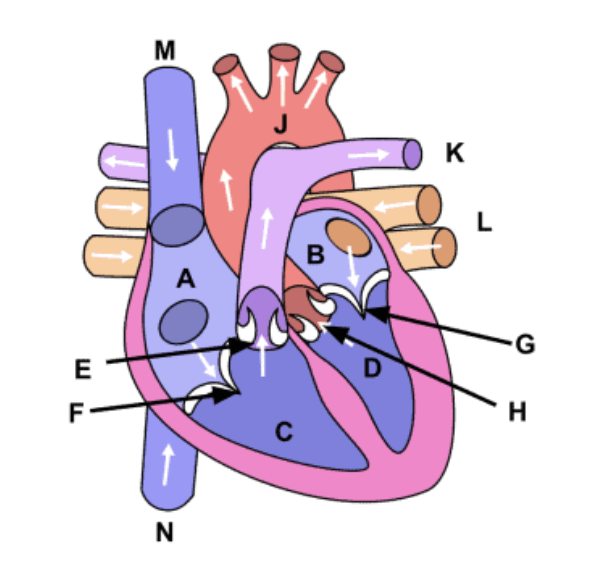
Superior vena cava
Label M
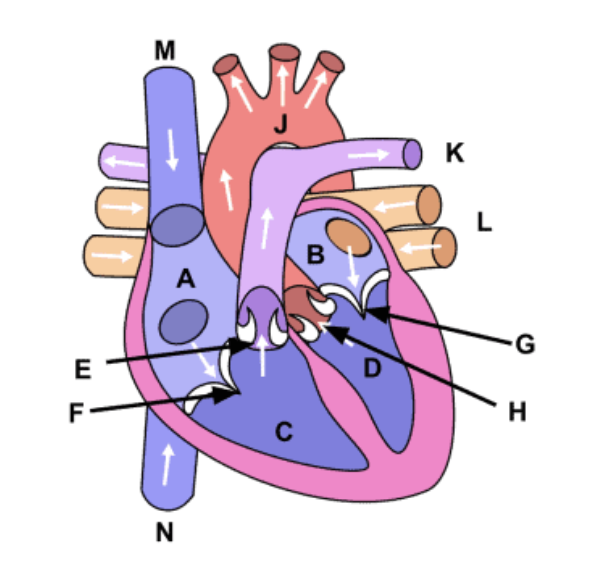
Inferior vena cava
Label N