Comprehensive Chemistry and Molecular Biology: Atoms, Bonds, Water, and Macromolecules Study Guide
 Call Kai
 Learn
Learn Practice Test
 Spaced Repetition
 Match
Match Flashcards
 Knowt Play
1/58

There's no tags or description
Looks like no tags are added yet.
Name | Mastery | Learn | Test | Matching | Spaced | Call with Kai | Chat |
|---|
No analytics yet
Send a link to your students to track their progress
59 Terms
What is chemistry?
The science that deals with the structure of matter, including the structure of atoms and how they combine to form complex structures.
Define a molecule.
A molecule is two or more atoms joined by strong bonds.
What is a compound?
A compound is two or more atoms of different elements joined by strong or weak bonds.
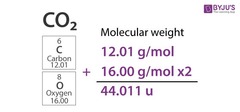
What is molecular weight?
The sum of the atomic weights of the atoms in a molecule or compound.
What do numerical subscripts in chemical notation indicate?
They indicate the number of atoms of that element in a molecule.
What are reactants in a chemical reaction?
The participants at the start of the reaction.
What are products in a chemical reaction?
The substances generated by the reaction.
What does a balanced chemical equation indicate?
It indicates that the number of atoms of each element is the same on both sides of the equation.
What is an ion?
An ion is an atom with an electric charge, either cation (positive) or anion (negative).

What is the difference between cations and anions?
Cations are positively charged ions that lose electrons, while anions are negatively charged ions that gain electrons.
What are ionic bonds?
Ionic bonds are attractions between cations and anions.

What are covalent bonds?
Strong bonds involving shared electrons between atoms.

What is a nonpolar covalent bond?
A bond where electrons are shared equally between atoms with similar electronegativities.
What is a polar covalent bond?
A bond with unequal sharing of electrons, resulting in a molecule with a slight charge difference.

What are hydrogen bonds?
Weak polar bonds between adjacent molecules based on electrical attractions.
What is activation energy?
The amount of energy needed to start a chemical reaction.

What role do enzymes play in biochemical reactions?
Enzymes are protein catalysts that lower the activation energy of reactions.

What are nutrients?
Essential molecules obtained from food.
What are metabolites?
Molecules made or broken down in the body.
What are inorganic compounds?
Compounds that include carbon dioxide, oxygen, water, and inorganic acids, bases, and salts.
What are organic compounds?
Molecules containing carbon and hydrogen, such as carbohydrates, proteins, lipids, and nucleic acids.
What is the significance of water in biological systems?
Water accounts for up to two-thirds of total body weight and acts as a solvent, reactant, and lubricant.
What is meant by water being a universal solvent?
Many molecules are soluble in water, allowing for various biochemical reactions.
What is ionization in water?
The dissociation of molecules into ions in water.

What is a hydration sphere?
A structure formed when water molecules surround solutes, keeping them in solution.

What is the heat capacity of water?
The heat required to raise the temperature of a unit mass of water by 1ºC.
How do hydrogen bonds contribute to water's properties?
They create surface tension and affect water's boiling and freezing points.
What forms around an organic molecule containing polar covalent bonds?
Hydration spheres
What happens to glucose when it binds water strongly?
It dissolves in solution.
What are electrolytes?
Inorganic ions that conduct electricity in solution.
What can result from electrolyte imbalance?
It can seriously disturb vital body functions.
What does 'hydrophilic' mean?
Water-loving; includes ions and polar molecules that interact with water.
What does 'hydrophobic' mean?
Fear of water; includes nonpolar molecules, fats, and oils that do not interact with water.
What is a colloid?
A solution containing dispersed proteins or large molecules, like blood plasma.
What is a suspension?
Contains large particles that settle out of solution, such as whole blood.
What is pH?
The negative logarithm of the hydrogen ion concentration of a solution in moles per liter.
What is the pH of pure water?
7.0 (neutral pH).
What characterizes an acidic pH?
A high concentration of H+ ions and a low concentration of OH- ions.
What characterizes a basic (alkaline) pH?
A low concentration of H+ ions and a high concentration of OH- ions.
What is the normal pH range of human blood?
7.35 to 7.45.
What is an acid?
A solute that adds hydrogen ions to a solution.
What is a base?
A solute that removes hydrogen ions from a solution.
What is a salt in chemistry?
A solute that dissociates into cations and anions other than hydrogen and hydroxide ions.
What is the role of buffers in pH control?
They stabilize the pH of solutions, often involving a weak acid and its related salt.
What are monomers?
Molecules that join together to form polymers.
What do carbohydrates contain?
Carbon, hydrogen, and oxygen, usually in a 1:2:1 ratio.
What are monosaccharides?
Simple sugars with three to seven carbon atoms, such as glucose and fructose.
What are disaccharides?
Two monosaccharides condensed by dehydration synthesis, like sucrose and maltose.
What are polysaccharides?
Polymers of many sugars condensed by dehydration synthesis, such as glycogen and starch.
What are lipids primarily made of?
Hydrophobic molecules, mainly carbon and hydrogen.
What are fatty acids?
Long chains of carbon and hydrogen with a carboxyl group at one end.
What are triglycerides?
Glycerol plus three fatty acids, serving as energy sources, insulation, and protection.
What are steroids?
Four-ringed carbon structures with various functional groups, such as cholesterol and sex hormones.
What are proteins made of?
Long chains of amino acids, containing carbon, hydrogen, oxygen, and nitrogen.
What is a peptide bond?
A bond formed between the amino group of one amino acid and the carboxyl group of another.
What are the four levels of protein structure?
Primary, secondary, tertiary, and quaternary structures.
What is the function of enzymes?
They act as catalysts, not changed or used up in reactions.
What are cofactors?
Ions or molecules that bind to enzymes before substrates can bind.
What is denaturation?
A change in shape and loss of function of a protein due to heat or pH.