Chapter 4 - Product and Service Design
 Call Kai
 Learn
Learn Practice Test
 Spaced Repetition
 Match
Match Flashcards
 Knowt Play
1/32

There's no tags or description
Looks like no tags are added yet.
Name | Mastery | Learn | Test | Matching | Spaced | Call with Kai | Chat |
|---|
No analytics yet
Send a link to your students to track their progress
33 Terms
What does product & service design do?

What questions are asked about product & service design
Is there a demand for it?
Can we do it?
What level of quality is appropriate?
Does it make sense from an economic standpoint?
Is there a demand for it?
Market size/ demand profile
Can we do it?
Manufacturability and serviceability
Manufacturability
The capability of an organization to produce an item at an acceptable profit
Serviceability
The capability of an organization to provide a service at an acceptable cost or profit
What level of quality is appropriate?
Customer expectations, competitor quality, fit with current offering
Does it make sense from an economic standpoint?
Liability issues, ethical considerations, sustainability issues, costs and profits
Reason to design or redesign
The driving forces for product and service design or redesign are market opportunities or threats
Supply-Chain Based Idea Generation
Ideas can come from anywhere in the supply chain (customers, suppliers, distributors, employees, maintenance and repair personnel)
Commpetitor Based Idea Generation
By studying how a competitor operates and its products and services, many useful ideas can be generated (sometimes done via reverse engineering)
Researched Based Idea Generation
Divided into serveral different groups, R&D, Basic Research, Applied Research, Development
Basic Research
Has the objective of advancing the state of knowledge about a subject without any near-term expectation of commercial applications
Applied Research
Has the objective of achieving commercial applications
Development
Converts the results of applied research into useful commercial applications
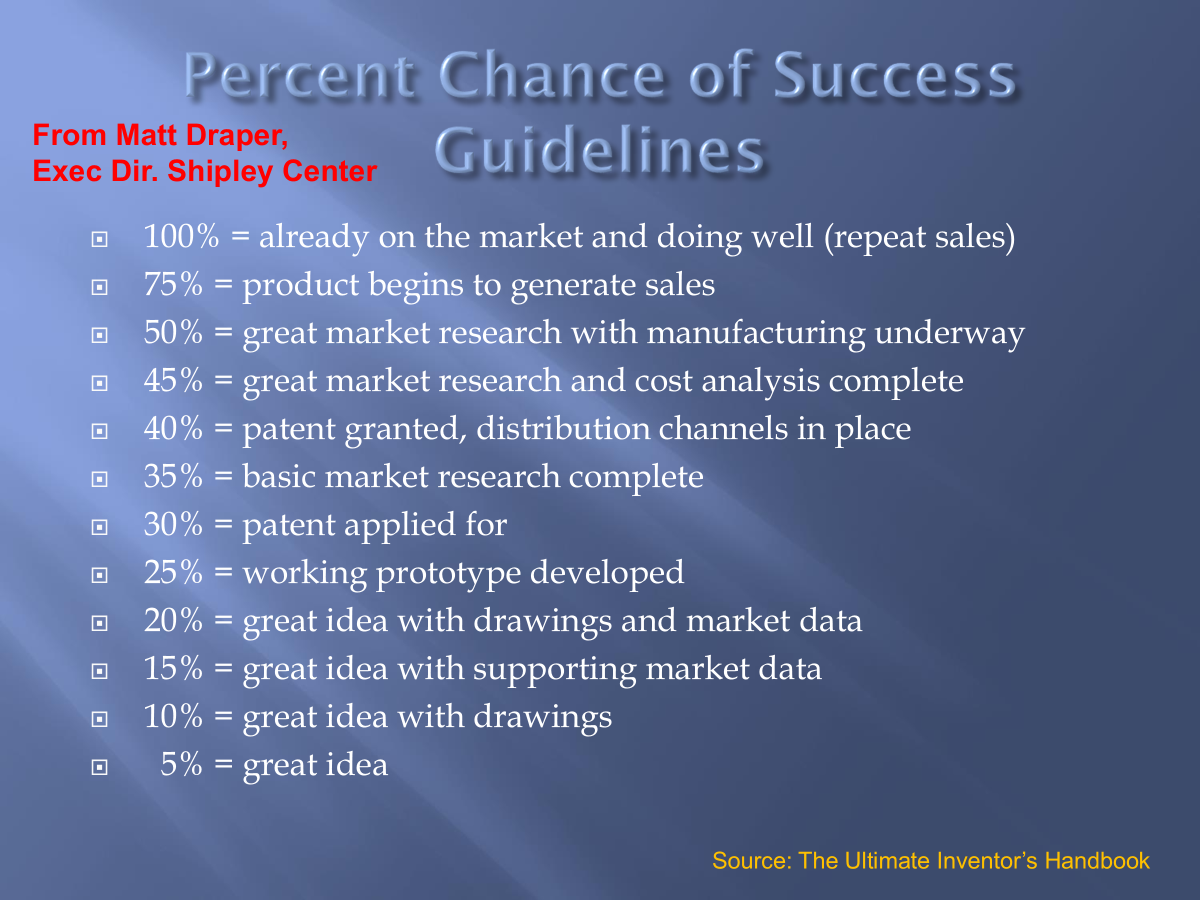
Percent Chance of Success
Legal Considerations
Product Liability and Uniform Commercial Code
Ethical Considerations
Designers are often under pressure to speed up the design process and cut costs, and these pressures force trade-off decisions
Other Considerations
Human, cultural, and global design factors
Sustainability
Using resources in ways that do not harm ecological systems that support human existence
Key aspeccts when designing w/ sustainabiilty
Life cycle analysis, end of life programs, the 3 Rs (reduction of costs and materials used, reuse parts of returned products, recycling)
Cradle to Grave Assessment (aka life cycle analysis)
The assessment of the environmental impact of a product or service throughout its useful life
Remanufacturing
Refurbishing used products by replacing worn - out or defective components
products can be sold for about 50% of the cost of a new product
process requires mostly unskilled and semi-skilled workers
Design for disassembly (DFD)
Designing a product to that used products can be easily taken apart
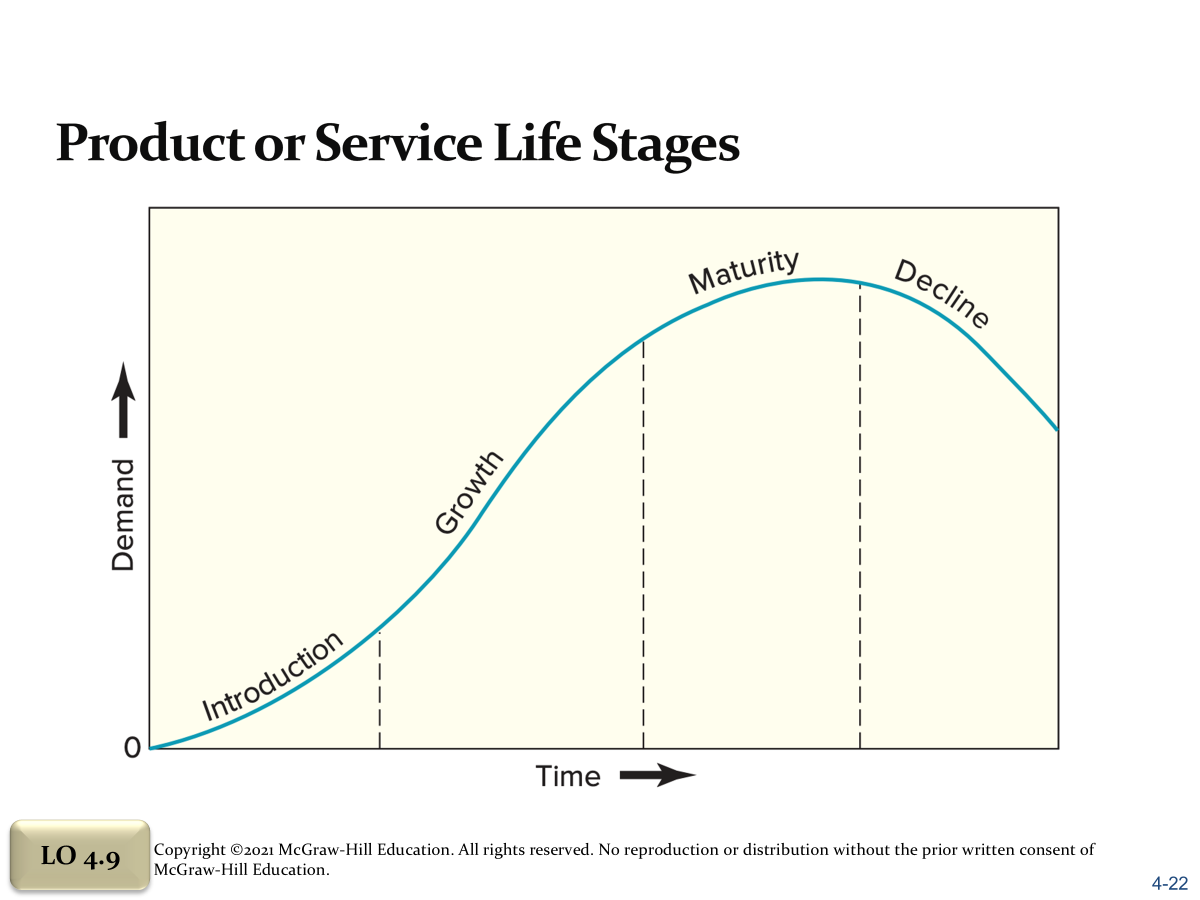
Product or service life stages
Standardization
Extend to which there is an absence of variety in a product, service, or process
Advantages of standardization
Fewer parts to deal with, reduced training costs and time, more routine purchasing handling and inspection, etc
Disadvantages to Standarization
Designs may be frozen too early, high cost of design changes and decreased product variety
Delayed Differentiation
Process of producing a product or service but not quite completing production until customer preferences are known
Modular Design
A form of standardization in which component parts are grouped into modules that are easily replaced or interchanged
CAD (Comp aided design)
Product design using computer graphics
helps with productivity, creates databases, and provides the possibility of engineering and cost analysis of proposed designs
CAD that includes finite element analysis (FEA) can significantly reduce time to market
Service Design
Begins with a choice of service strat which determines the nature and focus of the service and target market
degree of variation in service requirements can be challenge
degree of customer contact and involvement can be challenge