1.4 Fundamental PK Calculations
 Call Kai
 Learn
Learn Practice Test
 Spaced Repetition
 Match
Match Flashcards
 Knowt Play
1/17

There's no tags or description
Looks like no tags are added yet.
Name | Mastery | Learn | Test | Matching | Spaced | Call with Kai | Chat |
|---|
No analytics yet
Send a link to your students to track their progress
18 Terms
dose →
absorption → central compartment → metabolism (liver) or excretion (kidney)
metabolism & excretion

1o order kinetics
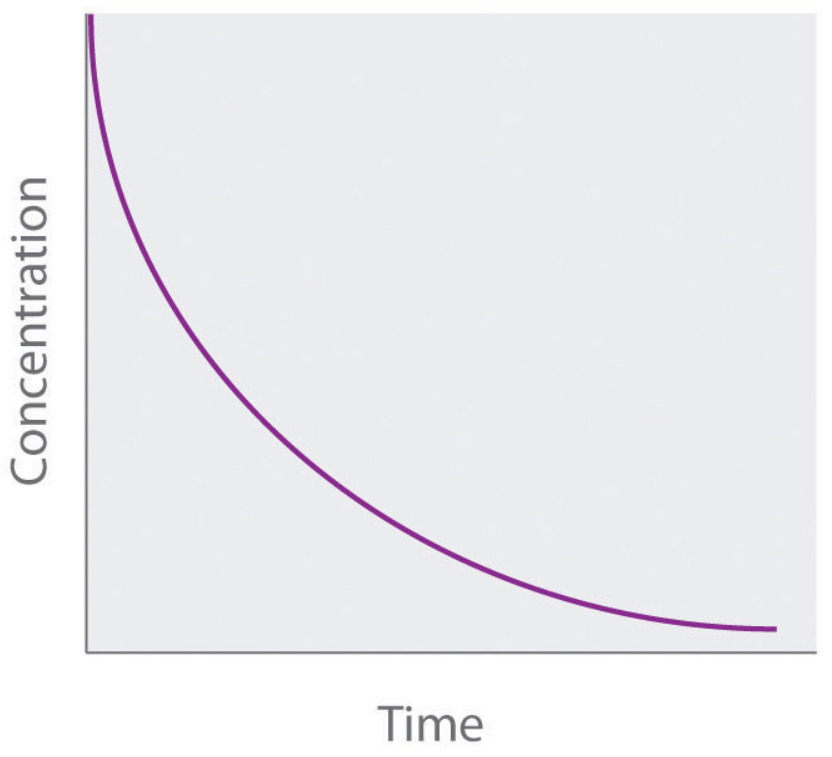
zero order kinetics

enterohepatic recycling
drug → stomach → portal vein → liver → kidney (excretion) or bile system
renal filtration
glomerular filtration, tubular secretion, tubular reabsorption

bioavailability
fraction of an administered drug dose that reaches the systemic circulation unchanged
-significant in clinical assessment of dosing and establishes equivalence of products
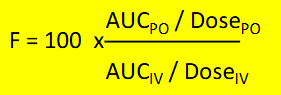
bioavailability calculation
calculated by comparing AUCs of drug administered by a route of interest to a reference AUC
absolute BA
reference AUC is IV
relative BA
reference BA is another dosage form or route of administration
trapezoidal rule
area of segment = ((h1 + h2)/2) x length = ((c1 + c2)/2) x (t2 - t1)

clearance
rate of drug removal
-measurement of volume of plasma from which a drug is completely removed per unit time
-perfusion ↑, clearance ↑
first order disappearance of drug (bolus)
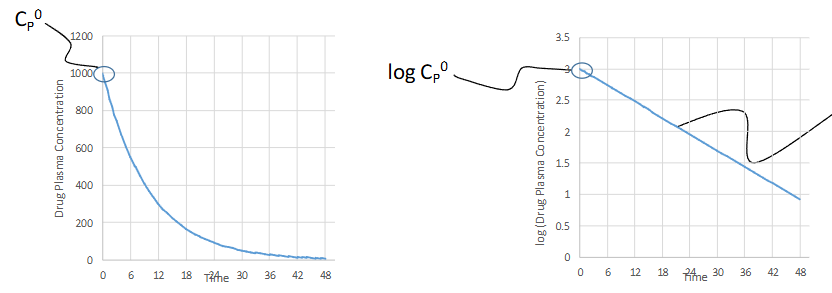
apparent volume of distribution (VD)
VD = D/CP0
total clearance
ClT = k * VD; k is time-1
noncompartmental: ClT = dose/AUC (mass/vol*time)
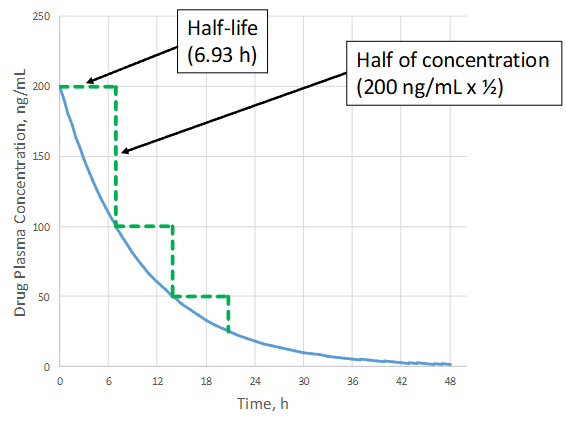
half life
time it takes for plasma concentration to decrease by half
t1/2 = 0.693/k
Cmax and Tmax
maximum plasma concentration and time to reach maximum plasma conc
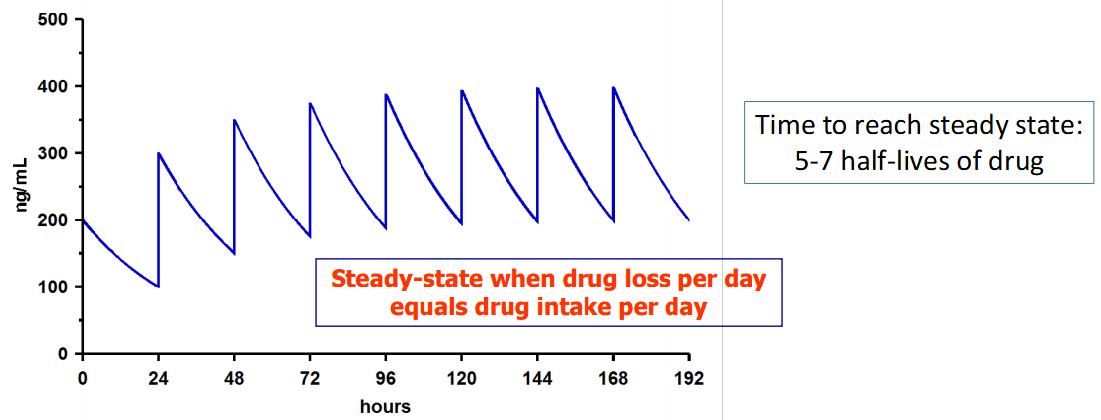
steady state
when drug loss per day = drug intake per day