Lab Quiz 2 (Knee Joint and Muscles of Hip and Thigh)
 Call Kai
 Learn
Learn Practice Test
 Spaced Repetition
 Match
Match Flashcards
 Knowt Play
1/34

Earn XP
Description and Tags
This quiz will cover the following items from the Practical 1 Structures List: Knee Joint Structures (Page 3). Muscles of the Abdomen, Hip, Thigh (Page 3).
Name | Mastery | Learn | Test | Matching | Spaced | Call with Kai | Chat |
|---|
No analytics yet
Send a link to your students to track their progress
35 Terms
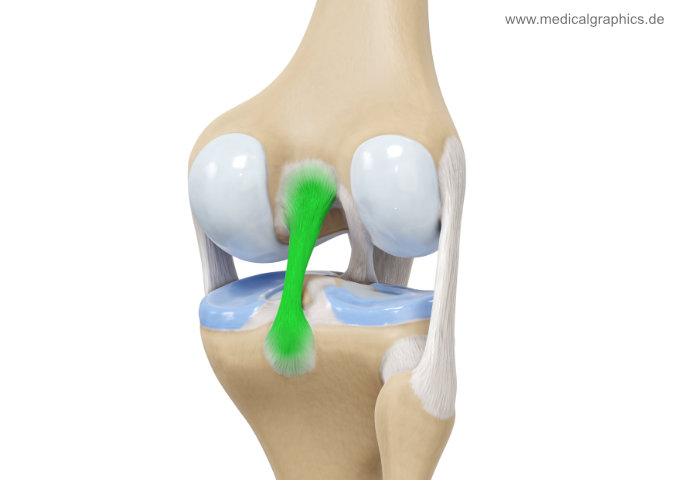
anterior cruciate ligament
A key ligament in the knee that connects the femur to the tibia, providing stability and preventing excessive forward movement of the tibia. ON THE ANTERIOR SIDE

posterior cruciate ligament
A key ligament in the knee that connects the femur to the tibia, stabilizing the joint and preventing excessive backward movement of the tibia. ON THE POSTERIOR SIDE
tibial (medial) collateral ligament
A ligament located on the inner side of the knee that connects the femur to the tibia, providing stability and preventing excessive side-to-side movement of the knee.

fibular (lateral) collateral ligament
A ligament located on the outer side of the knee that connects the femur to the fibula, providing stability and preventing excessive side-to-side movement of the knee.

medial meniscus
A C-shaped cartilage in the knee that acts as a cushion between the femur and tibia, providing stability and absorbing shock during movement.

lateral meniscus
A C-shaped cartilage in the knee located on the outer side, functioning to cushion between the femur and tibia while providing stability and absorbing shock during movement.

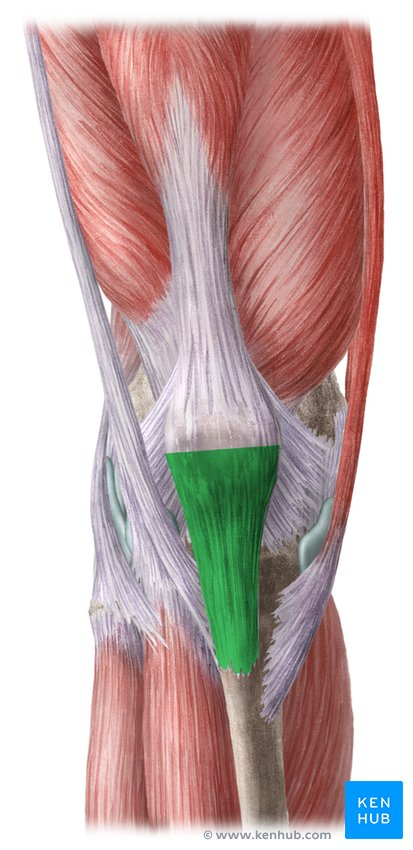
patellar ligament
A strong band of connective tissue that connects the patella (kneecap) to the tibia, playing a crucial role in knee stability and movement.
quadriceps femoris tendon
The tendon that connects the quadriceps muscle group to the patella, contributing to knee extension and stability.

patella
The kneecap, a small flat bone that protects the knee joint and facilitates movement by acting as a pulley for the quadriceps femoris muscle.

rectus abdominis
A long, flat muscle located in the front of the abdomen that helps flex the vertebral column and supports trunk stability

external abdominal oblique
A muscle on the side of the abdomen that aids in trunk rotation and lateral flexion, playing a key role in core stability.

internal abdominal oblique
A muscle located beneath the external abdominal oblique that assists in trunk rotation and lateral flexion, contributing to overall core stability.

transversus abdominis
A deep abdominal muscle that plays a crucial role in stabilizing the pelvis and lower back, compressing the abdominal contents during movement.

linea alba
A fibrous structure that runs vertically down the midline of the abdomen, acting as an attachment point for the abdominal muscles.

rectus abdominis primary action
flexes torso/compress abdomen
external abdominal oblique primary action
flexes torso/compress abdomen
internal abdominal oblique primary action
flexes torso/compress abdomen
transversus abdominis primary action
flexes torso/compress abdomen
linea alba primary action
fibrous strip that connect left and right rectus sheaths
gluteus maximus
The largest muscle in the buttock, responsible for the extension of hip

gluteus medius
A muscle located on the outer surface of the pelvis, primarily responsible for hip abduction and stabilization.
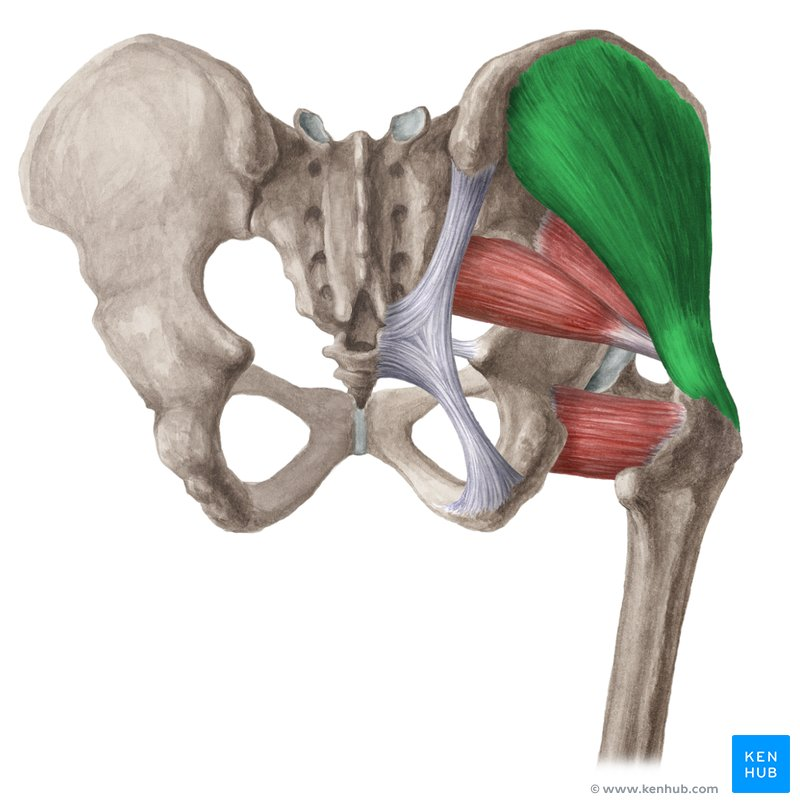
gluteus minimus
A small muscle located beneath the gluteus medius, involved in hip abduction and internal rotation.

piriformis
under gluteus minimus, small

gemellus superior
muscle under above the piriformis, assisting in hip lateral rotation and abduction.

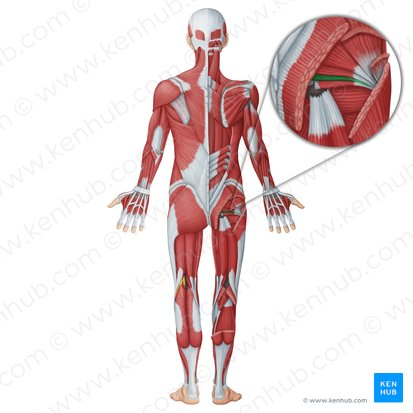
obturator internus
muscle located under to the gemellus superior, responsible for hip lateral rotation.
gemellus inferior
muscle located below the obturator internus, assists in hip lateral rotation.


quadratus femoris
muscle located below the gemellus inferior, involved in hip lateral rotation.
gluteus maxmius primary action
extends hip
gluteus medius primary action
abducts hip
gluteus minimus primary action
abducts hip
piriformis primary action
lateral rotation of hip
gemellus superior primary action
lateral rotation of hip
obturator internus primary action
lateral rotation of hip
gemellus inferior primary action
lateral rotation of hip
quadratus femoris primary action
lateral rotation of hip