Person-Environment-Occupation Performance PEOP MOP
 Call Kai
 Learn
Learn Practice Test
 Spaced Repetition
 Match
Match Flashcards
 Knowt Play
1/9

There's no tags or description
Looks like no tags are added yet.
Name | Mastery | Learn | Test | Matching | Spaced | Call with Kai | Chat |
|---|
No analytics yet
Send a link to your students to track their progress
10 Terms
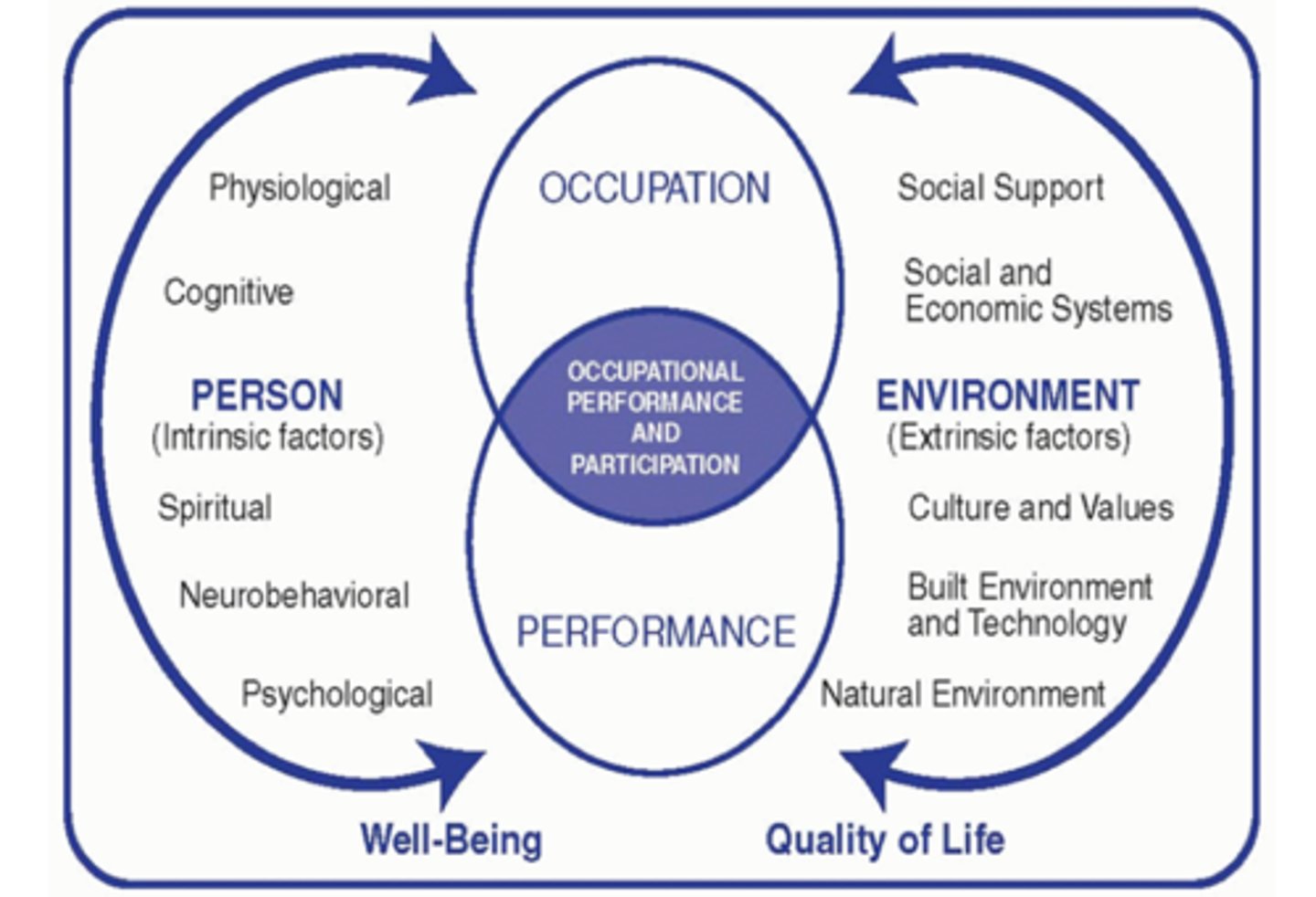
PEOP
Person-Environment-Occupation-Performance Model
focuses on relationship between person and their environment
factors influencing occupational performance
occupations, occupational performance, person factors, environmental factors, narrative
OT's role in PEOP
to take the different factors of a person's occupational
performance into consideration when creating a
therapy plan, and to influence decision making
healthy functioning
when the person's desires or level of competency match the demand to perform and master occupations
dysfunction in PEOP
when a person's occupational performance is limited and restricted
causes for dysfunction
deficits in health, barriers in environment, lack of resources in environment
motivation (PEOP)
People have an innate desire to master their
environment and are more likely to persist through
challenges if they perceive the outcome to be
meaningful and of personal value
practitioner should match client's intrinsic values to see factors for activity demand
Assessment in PEOP
Assessment begins with narrative phase, which helps
the OT understand the client's viewpoint of
themselves, occupations, and environmental factors
that influence their occupational desires, values, and
performance
Intervention: PEOP
Should aim to increase occupational performance competency, develop life-long skills, and increase one's sense of health and well-being
goal of PEOP
optimize occupational performance and participation by improving fit between person, their environment, and the occupations they want or need to do