AP 1 Lecture Exam 4
 Call Kai
 Learn
Learn Practice Test
 Spaced Repetition
 Match
Match Flashcards
 Knowt Play
1/98

There's no tags or description
Looks like no tags are added yet.
Name | Mastery | Learn | Test | Matching | Spaced | Call with Kai | Chat |
|---|
No analytics yet
Send a link to your students to track their progress
99 Terms
cells of the nervous system
neuroglial cells
neurons
hippocampus
forms longterm memories
where neurogenesis occurs
amygdaloid body
emotional response
aspects of emotion
reponse to fear
CSF formation
blood plasma is filtered from the blood capillaries across capillary wall and pia mater
its composition is modified by the ependymal cell as it moves through these cells
fluid is released into a ventricle and now referred to as CSF
types of neurons
sensory
motor
interneurons
types of neuroglial cells (of the CNS)
astrocytes
ependymal cells
microglial cells
oligodendrocytes
types of neuroglial cells (of the PNS)
satellite cells
neurolemmocytes
what does the CNS consist of
brain
spinal cord
what does the PNS consist of
nerves
ganglia
structure of cranial nerves (number of pairs)
structure of spinal nerves (number of pairs)
extend from brain (12 pairs)
extend from spinal cord (31 pairs)
functional classification of neurons
sensory neurons: contain sensory neurons sending sensory input from somatic or visceral receptor signals to CNS
motor neurons: contain motor neurons sending output from CNS to the somatic and autonomic (visceral) effectors
interneurons (association neurons): located in CNS receive sensory input from sensory neurons and inititates motor output to motor neurons
what is the structural unit of the nervous system
neuron is the unit
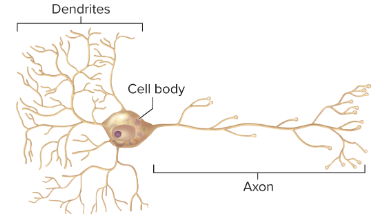
multipolar neurons
all motor neurons
*most interneurons
*multiple processes extend directly from the cell body; many dendrites and 1 axon; most common type of neuron
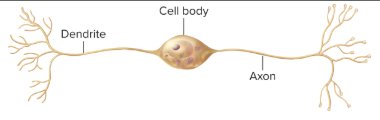
bioplar neurons
some sensory neurons
*2 processes extend directly from the cell body; 1 dendrite and 1 axon; relatively limited in where they are located
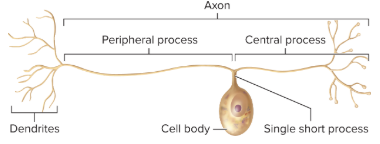
unipolar neurons
most sensory neurons
*single short process extends from cell body and looks like a T as a result of the fusion of two processes into 1 long axon
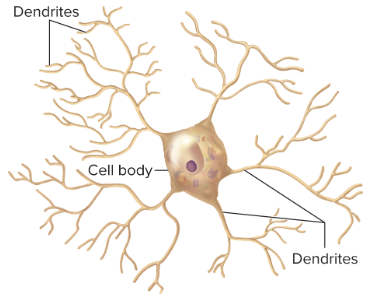
anaxonic neurons
interneurons
*only dendrites
*no axons
astrocyte function (CNS)
helps BBB
regulates interstitial fluid consumption
provides structural support and organization to the CNS
*assists with neuronal development
*alters synaptic activity
*replicates to occupy space of dying neurons
brings blood and oxygen to BBB
enpendymal cell function (CNS)
lines ventricles of brain and central canal of spinal cord
assists in production and circulation of the CSF
microglial cell function (CNS)
immunity cell (wandering)
*phagocytizes substances in the CNS
*protects the CNS by engulfing infectious agents and other potentially harmful substances
oligodendrocyte function (CNS)
myelinates and insulates CNS axons
*allows for faster action potential propogation along axons in the CNS
satellite cell function (PNS)
electrically insulates PNS cell bodies
regulates nutrient and waste exchange for cell bodies in ganglia
neurolemmocyte function (PNS)
myelinates and insulates PNS axons
allows faster action potential propogration along an axon in the PNS
neuronal pools
groups of neurons arranged in specific patterns
4 types of circuits
converging
diverging
reverberating
parallel-after-discharge
what happens in a coverging circuit
inputs converge at a signle postsynaptic neuron
*receives input from several presynaptic neurons
*ex: sights, sounds, smells of cooking → salivation
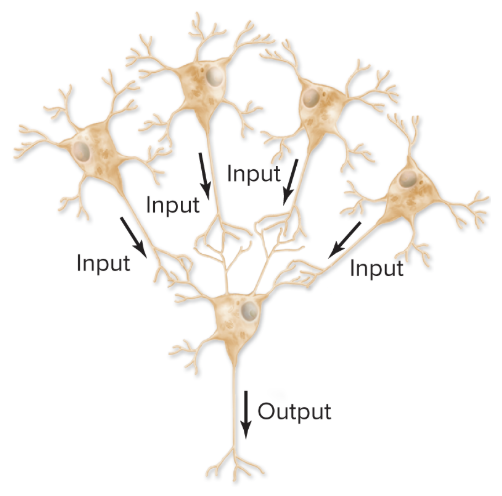
what happens in a diverging circuit
spreads information from one presynaptic neron to several postsynaptic neurons
*ex: walking, proper balance, posture, and motion
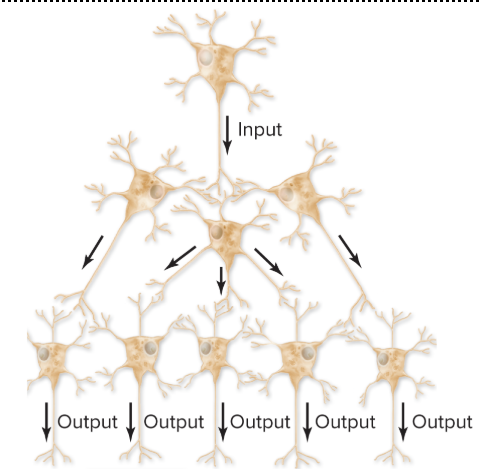
what happens in a reverberating circuit
use feedback to produce repeated, cyclical activity
*ex: breathing regularly while we sleep
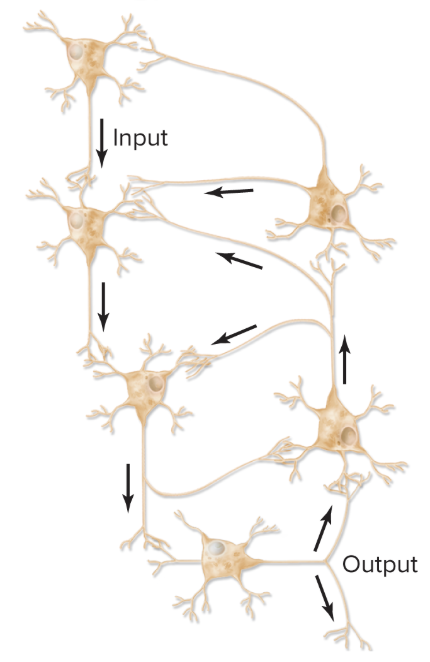
what happens in parallel-after-discharge circuit
input transmitted simultaneously along several paths to a postsynaptic cell
*ex: involved in higher order thinking
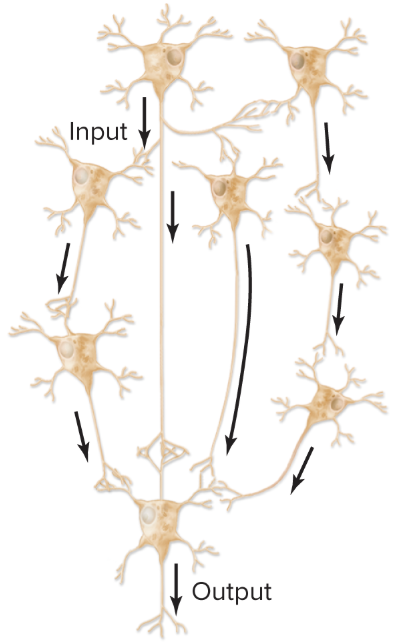
what are neurotransmitters (4 steps in neurotransmission)
synthesized by neurons and stored within vesicles in synaptic knobs
released from vesicles when action potential triggers calcium entry into synaptic knob
binds to a receptor in a target cell
triggers a physiologic response in the target cell
4 classes of neurotransmitters
acetylcholine
biogenic amines (monoamines)
amino acids
neuropeptides
what are biogenic amines
what are the 2 types
amino acids that are slightly modified to synthesize the transmitter
catecholamines
ex: dopamine → tyrosine (amino acid)
indolamines
ex: seritonin → histodine and tryptophan
what is the sensory nervous system (afferent) responsible for
detecting stimuli by receptors and relaying information from the receptor to the CNS (ascending)
what is the sensory nervous system subdivided into
somatic sensory
*consicious perception (five senses and proprioreceptors)
visceral sensory
*subconcious perception (internal organs and blood vessels)
what is the motor nervous system (efferent) used for
controls effectors and is responsible for initating and transmitting information from the CNS to the effectors (descending)
what is the motor nervous system subdivded into
somatic motor
*initiates and transmits motor output from the CNS to the only type of effector that can be voluntarily controlled (skeletal muscles)
autonomic motor
*innvervates and regulates the other types of effectors that are involuntarily controlled (cardiac muscle, smooth muscle, and glands)
what is the stimulus/receptor (receptive segment) part of a neuron
dendrites and cell body
*binding of neurotransmitter released from presynaptic neurons; production of graded potentials
what is the control center (initial segment) of the neuron
axon hillock
*summation of graded potentials; initiation of action potential
what is the signal propagation (conductive segment) part of the neuron
axon
*propagation of action potential or sending end
what is the effector (transmissive segment) part of the neuron
synaptic bulb
*action potential causes release of neurotransmitter
function of myelin
faster propagation and efficeincy of action potentials along axons
acts as electrical insulation
current flow under myelin is very fast
what does action potentials involve and what law do they obey
action potential involves depoalrization (Na in) and repolarization (K out) and is propagated along the axon
they obey the all-or-none law because any voltage sufficient to open the voltage-gated channels initiates an action potential
what are graded (local) potentials
occur in neurons receptive region due to ion flow through chemically gated channels
can be positive or negative changes in charge
*have larger potential change to strong sitmulus
what is the nerve impulse in a neuron
action potential in a neuron
what is frequency in hearing
rate of vibrations (measured in Hz)
what is pitch in hearing
frequency of vibrating object
what are chemoreceptors
detect chemicals dissolved in fluid
*smell of food
*blood pH
what are proprioreceptors
detect stimuli within skeletal muscles, tendons, and joints that monitor body movement
*6th sense
what are baroreceptors
example of a mechanoreceptor that are within blood vessel walls and heart
*mechanoreceptor: detect physical deformation of the plasma membrance due to touch, pressure, vibration and stretch
what are rods
more numerous than cones
primarily located within peripheral retina
specialized in dim light, night vision
cannot distinguish color, lacks sharpness of vision
what are cones
less numerous than rods
primarily located within fovea centralis
respond to stimulation by bright light
specialized for color and recognition and sharpness of vision
subdivided into blue, green, and red cones
what is the general difference between sympathetic and parasympathetic
parasympathetic:
craniosacral, brings body to homeostasis in conditions of “rest-and-digest” and conserves energy and replenishes nutrient stores
*long preganglionic axon/short postganglionic axon
sympathetic division:
thoracolumbar, brings body to homeostasis in conditions of “fight-or-flight” and increases alertness and metabolic activities
*short preganglionic axon/long postganglionic axon
what are the sympathetic trunks
extends lateral to the vertebral column
appearance of pearl necklace
strings are bundles of axons, where pearls are sympathetic trunk ganglia which house cell bodies of sympathetic ganglionic neurons
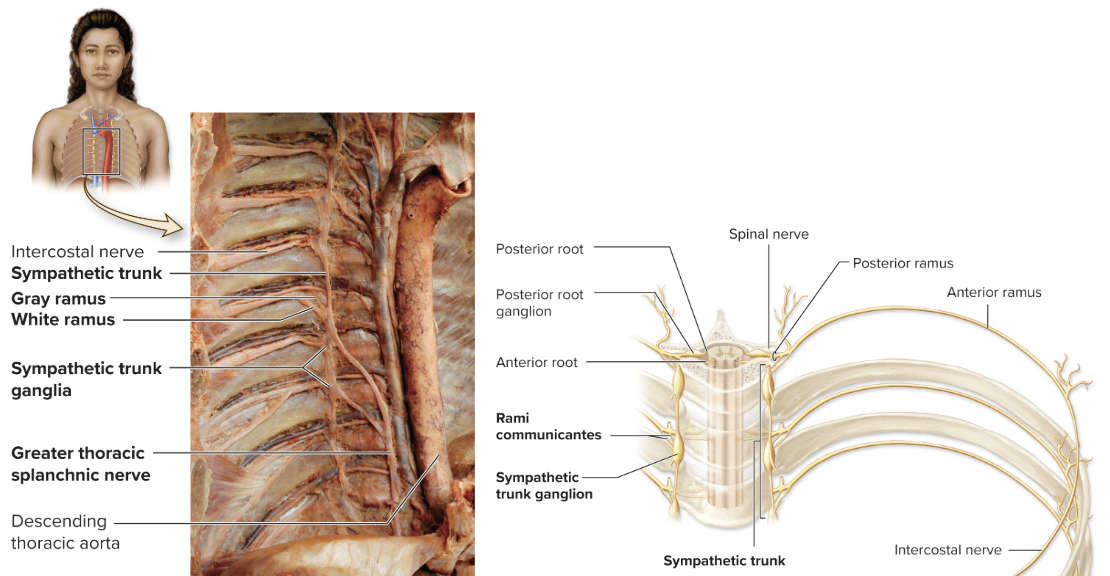
what are white and gray rami communicantes
white and gray rami connect spinal nerves to trunk
white rami: entrance ramps for spinal nerves to trunk (myelinated preganglionic sympathetic axons)
gray rami: exit ramps from trunk to spinal nerves (unmyelinated postganglionic sympathetic axons)
what is the sensory pathway for 1st order neurons
extends form the sensory receptor to the CNS (brain or spinal cord) where it synapses with a secondary neuron
what is the sensory pathway for 2nd order neurons
interneuron that extends from the primary neuron to tertiary neuron or cerebellum
what is the sensory pathway for 3rd order neurons
interneuron that extends from the secondary neuron to the cerebellum (primary somatosensory cortex of parietal lobe)
*pathways to cerebellum do not have tertiary neuron
where is the upper motor neurons getting information from
in cerebral cortex, cerebral nuclei or brainstem nucleus
*direct (to lower motor neurons) or indirect pathways (interneurons then lower motor neurons)
where is ther lower motor neuron getting information from
in cranial nerve nucleus or spinal cord anterior horn or upper motor neruon
what are upper motor neurons able to do
excite or inhibit activity of lower motor neurons
what are lower motor neurons able to do
always excites skeletal muscle fibers to contract
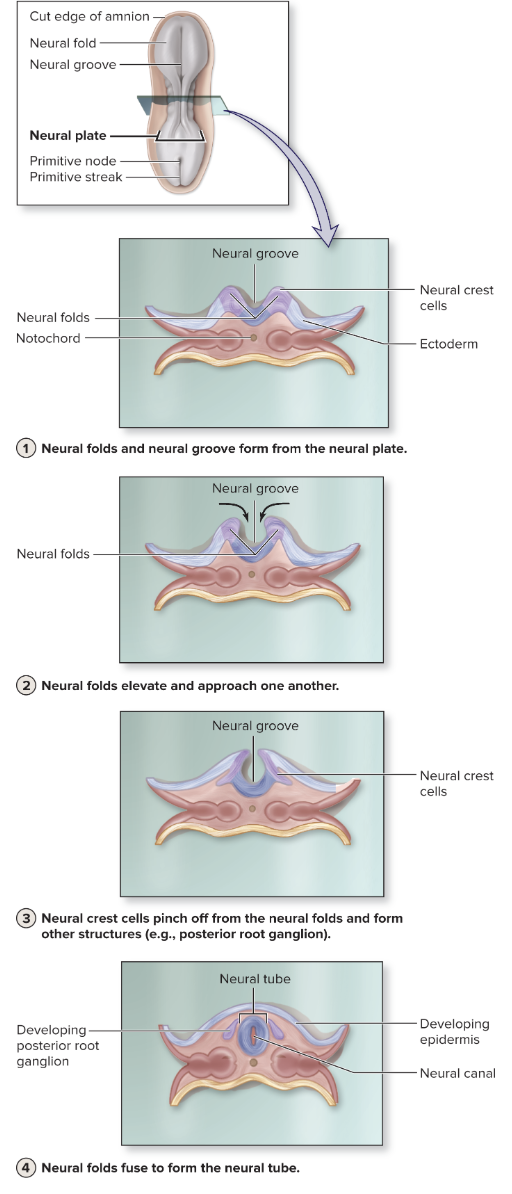
development of neural tissue
neural plate develops neural groove
neural groove deepends as folds rise and approach one another
neural crest cells separate from neural folds
by end of 3rd week, folds meet and form neural tube surrounding neural canal
*thickening of a portion of the ectoderm (neural plate)
what is dual innervation
organ receives input from both the sympathetic and parasympathetic divisions
*have antagonistic or cooperative effects
where are sensory pathways coming from and where are they going
sensory neurons that relay sensory input from sensory receptors to the brain
where are motor pathways coming from and where are they going
series of motor neurons that relay motor output from brain to effectors
what is nearsightedness (myopia)
can see nearby objects but far objects are blurry
eyeball too long
what is farsightedness (hyperopia)
can see far objects but nearby objects are blurry
eyeball too short
what are the 4 higher order functions of the cortex of the cerebrum
intelligence and reasoning
thought, memory, and judgement
voluntary control of skeletal muscle
conscious perception of senses
what is the general process of reflex arcs
stimulus activates receptor
nerve signal is propogated through sensory neuron to the spinal cord
nerve signal is processed in the integration center by interneurons (this is a polysynaptic reflex)
nerve signal propogated by motor neuron to effector
effector responds
what is micturition
mechanism leading to urine emptying from the bladder
*mechanoreceptors detect stretching of bladder wall when urine fills the bladder, then initiate signals that are relayed along sensory neurons to the spinal cord, sensory input inhibits sympathetic output and activates parasympathetic output along motor neurons that innervate the bladder, reflec results in contraction of smooth muscle in bladder wall and relaxationg of urinary sphincters and urination occurs
what is the brachial plexus organization
*from anterior rami of C5-T1
composed in order of: roots (anterior rami), trunks, divisions, cords
what is the diencephalon
from prosencephalon
forms the thalamus, hypothalamus, and epithalamus
3rd ventricle
what is it called when there are functional differences between 2 brain hemispheres
cerebral lateralization
what does CSF fomation, circulation, reabsorption, and removal consist of
produced by choroid plexus (composed of blood capillaries, pia mater, ependymal cells) in the ventricles
CSF flows from lateral ventricles through interventricular foramen into the 3rd ventricle and then through cerebral aqueduct into 4th ventricle
CSF in 4th ventricle passes through the paired lateral apertures or the single median aperture and into the subarachnoid space as well as the central canal of the spinal cord
as CSF flows through the subarachnoid space it provides buoyancy to support the brain
CSF flows into arachnoid villi then drains into the dural venous sinuses
what are the different tastes
sweet
salt: ions
sour: acids
bitter
umami: amino acids
*water
what is the vasomotor center (what does it do with blood vessels)
controls contraction and relaxation of smooth muscle within walls of the smallest arteries to alter vessels’ diameter
what does the vasomotor center do with regulation of blood pressure in relation to the brain
both cardiac output and blood vessel diameter influence blood pressure which is controlled by the medulla oblongata
what is the realtionship between the limbic system and the prefrontal cortex
the relationship is the prefrontal cortex reasons through emoitions, manages impulse control, and conveys expressed emotions from the limbic system
what is memory in the brain
processing system of receiving, storing, and retrieving information
CN I
olfactory nerve
smell
CN II
optic nerve
vision
CN V
trigeminal
general sensory from anterior scalp, nasal cavity, nasopharynx, entire face, most of oral cavity, teeth, anterior 2/3s of tongue; part of auricle of ear; meninges
CN VII
facial
taste from anterior 2/3s of tongue
CN VIII
vestibulocholear
hearing; equilibrium
CN IX
glossopharyngeal
taste and general sensation from posterior 1/3 of tongue; general sensory from part of pharyx, visceral sensory from carotid bodies
CN X
vagus
visceral sensory information from thoracic organs and most abdominal organs
general sensory information from external acoustic meatus, tympanic membrane, part of pharynx, laryngopharynx and larynx
what is the reticular activating system
sensory component of the reticular formation responsible for altering the cerebrum to incoming sensory information
what is the structure of the reticular activating system
within the reticular formation: loosely organized gray matter of brainstem
RAS contains sensory axons that project to the cerebral cortex
what is are the 2 functions of the reticular activating system
processes visual, auditory, and touch stimuli and uses this information to keep us in a state of mental alertness
wakes us up from sleep
*highest state of consciousness is alertness
what is resting potential in neurons
there is an electrical charge difference across the plasma membrane (-70mV)
ion concentration gradients exist for K, Na, and Cl across plasma membrane
Ca concentration exists at synaptic knob
gated channels are closed
primary motor cortex (somatic motor area)
located in precentral gyrus
controls skeletal muscle activity on oppostie side of body
primary somatosensory cortex
located in postcentral gyrus
proprioreceptors, touch, pressure, pain, temperature receptors
prefrontal cortex
located rostral to premotor cortex
complex thought, judgment, personality, planning, deciding
*develops in adolescence
wernicke area
located in left hemisphere
involved in language comprehension
thalamus
information filter
focus on sound
hypothalamus
master control of autonomic nervous system
control of endocrine system
regulation of body temperature
food intake
water intake
sleep-wake rhythms
emotional behavior
pons
sensory and motor tracts are located here
medulla oblongata
rhythmicity centers: cardiovascular center and respiratory center
cerebellum
coordinates and “fine-tunes” movements
motor speech (broca) area
initiates speech motor program