Biomedical Terminology: Unit 3: Chapter 15
 Studied by 0 people
 Call Kai
 Learn
Learn Practice Test
 Spaced Repetition
 Match
Match Flashcards
 Knowt Play
1/163

There's no tags or description
Looks like no tags are added yet.
Name | Mastery | Learn | Test | Matching | Spaced | Call with Kai |
|---|
No study sessions yet.
164 Terms
Ortho
Short for Orthopedics
OT
Occupational Therapy Abbreviation
PT
Physical Therapy Abbreviation
RA
Rheumatoid Arthritis Abbreviation
Acetabulum
Rounded depression in the pelvis that joins the femur, forming the hip joint
Acromion
Outward extension of shoulder blade forming the point of the shoulder
Gouty Arthritis
Uric acid crystals forming between joints (due to excessive uric acid in body)
Articular Cartilage
Thin layer of smooth glistening white tissue covering the surface of the bone in the joint space
Osteoarthritis
Loss of articular cartilage and formation of bone spurs at articular surfaces
Rheumatoid arthritis
Autoimmune reaction against joint tissue (synovial membrane)
Bone process
Enlarged area that extends from bones as an attachment for muscles, tendons, and ligaments
Bunion
Swelling of medial aspect of joint between big toe and first metatarsal bone
Ganglion
A fluid filled cyst arising from the joint capsule or a tendon in the wrist
Cancellous Bone
Spongy porous bone tissue in inner part of bone
Carpal Tunnel Syndrome
transverse Ligament presses on median nerve in the carpal bones (ligament is cut to relieve pain)
Cartilage
flexible rubbery connective tissue
Herniation of an intervertebral disk
Abnormal protrusion of the disk into the neural canal or against spinal nerves; “slipped disk” locking against a nerve
Systemic Lupus Erythematosus
Inflammation and eating away of tissue (joint tissue, heart, kidney) and butterfly rash is a symptom
Lyme Disease
Comes from a tick bite; causes hearing loss and paralysis of face (a symptom)
Sprain
Trauma to joint with pain, swelling and injury to ligaments without rupture
Dislocation
Displacement of bone from joint
Compact Bone
Hard dense bone tissue usually found around the outer portion of bones
Muscular dystrophy
weakness and degeneration of bone tissue due to a genetic disorder
Polymyositis
Chronic inflammatory myopathy, may be an autoimmune disorder
Diaphysis
Shaft, or mid portion of a long bone
Disk
Flat, round platelike structure
Epiphysis
End of a long bone (area beyond the epiphyseal plate)
Frontanelle
Soft spot between the skull bones of an infant
Foramen Magnum
Opening of the occipital bone through which the spinal cord passes
Haversian Canals
Minute spaces filled with blood vessels, found in compact bone
Ligament
Fibrous tissue connecting bones to other bones
Malleolus
Round process on both sides of the ankle joint
Metaphysis
Region of a long bone located between the Epiphysis and the Diaphysis
Ossification
Replacement of cartilage with bone
Osteocyte
Nourishes and maintains bone
Osteoblast
Produce immature bony tissue that replaces cartilage
Osteoclast
reabsorbs or digests bone
Calcium, Phosphorus, Vitamin D
The proper formation of bone depends on 3 sources:
Yellow Marrow
Chiefly fat
Red Bone Marrow
Rich with blood vessels and immature and mature blood cells, and later in life replaced with yellow marrow; found in cancellous bone
Hematopoiesis
Formation of all types of blood cells in the bone marrow
Ewing’s Sarcoma
A type of bone or soft tissue cancer that primarily occurs in children and young adults
Osteogenic Sarcoma
Bone cancer that arises from osteoblasts; It is a malignant (cancerous) tumor that produces immature bone tissue (osteoid)
Exostosis
Bony growth on the surface of a bone
Osteomyelitis
A serious infection that happens when bacteria or fungi infect your bone marrow
Talipes
Also known as a Club Foot, it is a congenital foot deformity where the foot turns inwards and downwards, making it appear as if it is upside down
Osteomalacia
A condition where bones become soft and weak due to insufficient mineralization
Osteoporosis
A disease that weakens bones, making them more likely to break
Scoliosis
A condition where the spine curves sideways, often resembling an "S" or "C" shape
Kyphosis
A condition characterized by an excessive outward curvature of the spine, causing the upper back to round or hunch over. It's often referred to as "roundback" or "hunchback
Lordosis
An exaggerated inward curve of the spine, particularly in the lower back or neck.
Joint
Coming together of two or more bones
Suture Joints
Immovable joints (ex: Skull)
Synovial Joints
Freely movable joints (Ex: hips, shoulders, etc)
Articular Cartilage
Covers bones
Meniscus
Crescent shaped fibrocartilaginous structure that partly divides a join cavity and acts as a protective cushion in the knee
Synovial Membrane
Lies under capsule and lines synovial cavity, filled with synovial fluid
Tendon
connects muscle to bone
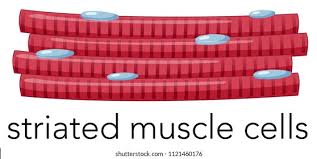
Striated
Muscles under voluntary control, moving all the bones as well as face and eyes
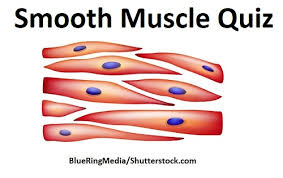
Smooth
Muscles whose control is involuntary, moving internal organs, digestive tract, blood vessels, and ducts of glands
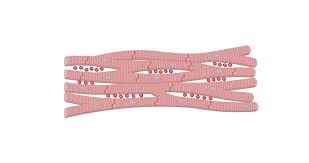
Cardiac
Muscles not consciously controlled and found exclusively in the heart
Flexion
Decreasing the angle between two bones at a joint.
Example: Bending your elbow (bringing your hand toward your shoulder).
Extension
Increasing the angle between two bones (straightening a joint).
Example: Straightening Arm after bicep curl
Abduction
Moving a limb away from the midline of the body.
Example: Lifting your arm or leg sideways away from your torso.
Adduction
Moving a limb toward the body’s midline.
Example: Bringing your arm down to your side.
Rotation
Moving a bone around its longitudinal axis.
Example: Turning your head side to side
Circumduction
Circular motion of a limb combining flexion, extension, abduction, and adduction.
Example: Drawing a circle in the air with your arm.
Protentation
Rotating the forearm so the palm faces downward.
Example: Typing on a keyboard.
Supination
Rotating the forearm so the palm faces upward.
Example: Holding a bowl of soup ("soup-ination" = palm up).
Dosification
Lifting the foot so the toes point upward.
Example: Walking on your heels.
Plantar Flexion
Pointing the toes downward.
Example: Standing on tiptoes.
Manubrium
Upper portion of the sternum
Masoid Process
Round projection on the temporal bone behind the ear
Medullary cavity
Central hollowed out area in the shaft of a long bone
Olecranon
Large process on the proximal end of the ulna
orthopedist
Medical doctor who specializes in bone, joint, and muscle conditions
Periosteum
Membrane surrounding bones, rich in blood vessels and nerve tissue
Physiatrist
Medical doctor who specializes in rehabilitation
Pubic Symphysis
Area of confluence of the two pubic bones in the pelvis
7, 8-10, 11 and 12
Ribs: the true ribs are the first , then the false ribs are pairs , and the floating ribs are pairs __.
Sinus
Hollow air cavity within a bone
Sella turcica
Depression in the sphenoid bone where the pituitary gland is located
Styloid Process
Pole like process extending downward from the temporal bone on each side of the skull
Temporomandibular joint
Connection on either side of the head between the temporal bone of the skull and the mandibular bone of the jaw
Trabeculae
Supporting bundles of bony fibers in cancellous bone
Vertebra
Individual segment of the spine composed of the vertebral body, arch, spinous process, transverse process and lamina
xiphoid process
Long narrow portion of the sternum
Yellow bone marroq
Fatty tissue found in the medullary cavity of most adult long bones
Calc/o cali/o
Calcium (root) (2)
Kyph/o
posterior curvature in the thoracic region (root)
Lamin/o
Lamina (root)
Lord/o
Curve (root)
Lumb/o
Loins, lower back (root)
Myel/o
Bone marrow (root)
Orth/o
Straight (root)
oset/o
bone (root)
Scoli/o
crooked (root)
spondyl/o vertebr/o
Vertebra (root) (2)
-blast
Embryonic Cell (suffix)
-clast
to break (suffix)