infection control 1
 Call Kai
 Learn
Learn Practice Test
 Spaced Repetition
 Match
Match Flashcards
 Knowt Play
1/50

There's no tags or description
Looks like no tags are added yet.
Name | Mastery | Learn | Test | Matching | Spaced | Call with Kai | Chat |
|---|
No analytics yet
Send a link to your students to track their progress
51 Terms
The CDC estimates that over x people a year die from x?
90,000 hospital acquired infections
about x hospital based infections are acquired each year
1.7 million
types of Microorganisms
Bacteria
Viruses
Protozoa
Prions
Fungi
microorganisms are either…
normal microbial flora or pathogens

typical bacterium
bacteria characteristics
A very small, single celled organisms
has a cell wall
atypical nucleus that lacks a membrane
bacteria can..
grow independently and can replicate without a host cell.
what can some bacteria do?
can form endospores
(resistant form that is produced when the environment is
unfavorable. When conditions improve, they can germinate and
come back.)
examples of bacteria
tuberculosis,
streptococcal pharyngitis,
necrotizing fasciitis,
E. coli.
Rickettsia characteristics
Considered a bacterium, but are atypical
Smaller and just barely visible under microscope
Only grow inside animal cells, do not survive in the environment
Rickettsia are spread by
transmitted by infected arthropod vector bits (ticks, lice, fleas, and mites).
rickettsia can cause?
Rocky Mountain spotted fever and typhus fever
Viruses characteristics
Subcellular organisms only visible using an electron microscope
Viruses cannot survive independently;
they must invade a host cell to stimulate it to forming more virus particles.
Viron
fully developed viral particle,
made up by genetic material, DNA or RNA
protected by an outer coating called the capsid
virus cure
Only a few antiviral agents exist, and viruses can mutate rapidly
to become drug resistant

virus
Fungi characteristics
Single celled yeasts
or
long branched structures called mold that are multi-celled
yeast reproduces by
forming buds
mold reproduces by
spore formation
prions characteristics
The smallest and least understood of all microbes.
Infectious proteins that are capable of automatically transforming healthy proteins in nerve cells into more prions.
Resistant to the body’s natural defenses and can cause irreversible neurologic damage.
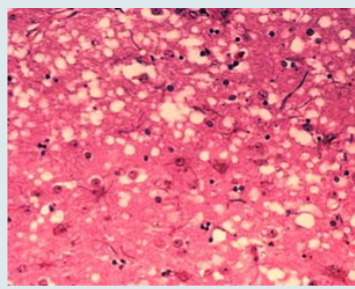
prions
Protozoa characteristics
Complex single celled animals that exist as free-living organisms
Few are parasitic and live in the human body.
They can be motile or nonmotile
protozoa can infect..
GI system,
genitourinary,
respiratory,
circulatory systems
protozoa common diseases
Amebiasis,
giardiasis,
trichomoniasis,
toxoplasmosis
nosocomial
healthcare associated infections
occur more than 48 hours of being at hospital

fungi
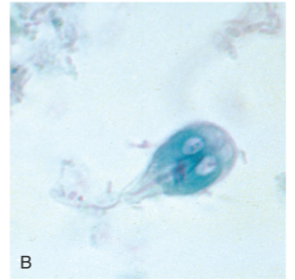
protozoa
about x patients die a year from nosocomial infections
90,000
sources of nosocomial infection
contaminated hands of workers
contaminated instruments
urinary catheters
invasive procedures
cycle of infection
Infectious organisms
Reservoir of infection
Portal of Exit
susceptible host
Portal of Entry
Infectious organisms
pathogenic organisms or pathogens
Virulence factors
factors that
enable them to destroy or damage host cells
resist destruction by host’s defenses
destruction of cells that organisms do allows
them to grow (stealing nutrients from cells)
cause signs & symptoms of disease
Reservoir of infection
any place pathogens can thrive to pose a threat such as
human body(moisture, nutrients, and suitable temp)
Damp warm places not regularly cleaned, animals, soil, water
Carriers
healthy individuals serving as reservoir without realizing
Portal of Exit
route that pathogens leave such as
Blood, body fluids, secretions
respiratory, urinary,
gastrointestinal,
infected wounds,
bloodstream
Susceptible host
frequently patients with reduced resistance to infection
Nosocomial infection
patients that get hospital acquired infections
Occupational infections
avoid by being healthy, well-rested and standard precautions
Portal of Entry
route which microorganisms gain access into susceptible host
portal of entry examples
respiratory system
urinary, GI tract,
open wounds, skin breaks, bloodstream,
mucous membranes (eyes, mouth, nose)
six routes of transmission
direct contact
fomite
vector
vehicle
airborne contamination
droplet contamination
direct contact
host is touched by infected person and organisms are placed in direct contact with susceptible tissue
fomite
object that has been in contact with pathogenic organism
examples of fomite
X-ray table, IRs, positioning sponges, urinary catheters
vector
arthropods like mosquitoes or ticks that transport diseases
Vehicle
any medium transporting microorganisms
example of vehicles
contaminated food, water, drugs, or blood
Airborne contamination:
occurs by either dust that contains spores or by droplet nuclei (5 microns or smaller)
then inhaled by susceptible host
Droplet contamination
occurs when an infected individual coughs, sneezes, speaks, or sings near a susceptible host
examples of droplet contamination
Involves contact with mucous membranes of the eyes, nose, or mouth of susceptible persons with large droplets (greater than 5 microns)
Usually travel 3 feet or less but can live on objects