Week 2 ,, Yeast
 Call Kai
 Learn
Learn Practice Test
 Spaced Repetition
 Match
Match Flashcards
 Knowt Play
1/45

There's no tags or description
Looks like no tags are added yet.
Name | Mastery | Learn | Test | Matching | Spaced | Call with Kai | Chat |
|---|
No analytics yet
Send a link to your students to track their progress
46 Terms
Where is Candida found?
Normal flora of the skin, mouth, vagina, and stool, along with the environment (leaves, flowers, water, and soil)
Fluconazole Prophylaxis
An anti-fungal medication that can cause patients to be more susceptible to fluconazole-resistant C. krusei and C. glabrata
Which is the most abundant and significant species of Candida?
C. albican
Disseminated
Having spread throughout an organ or body
What do C. albicans produce?
Secretory aspartyl proteases and phospholipase enzymes
Endogenous Infection of Candisiasis
From the overgrowth of the fungus inhabiting the normal flora
Exogenous Infection of Candisiasis
From catheters, prosthetic devices, or person-to-person transmission
Cornmeal Agar-Tween 80 (Dalmau Plate)
A nutrient poor medium used to identify yeast species (specifically C. albicans)
Sabouraud Dextrose Agar (SDA)
An acidic medium containing peptones and dextrose used for clinical yeast and mold isolation.
Germ Tube Test
A fast screening method used to presumptively identify C. albicans and C. dubliniensis from yeast colonies
Carbohydrate Assimilation Test
Measures a microorganism’s ability to use a specific sugar or carbon source for growth
Macroscopic Morphology of C. albicans
Cream to white, soft, smooth to wrinkled ,, grows at 42C and on cycloheximide
Macroscopic Morphology of C. glabrata
White, smaller, smooth, glistening ,, grows at 42C but fails on cycloheximide
Macroscopic Morphology of Rhodotorula Species
Rapid growing ,, smooth, glistening or dull, cream to pink, coral red, orange, or yellow ,, fails to grow on cycloheximide
Macroscopic Morphology of C. neoformans
Slower growing ,, soft, smooth, mucoid, cream to pink, or yellowish brown ,, grows at 37C but fails on cycloheximide
Microscopic Morphology (Cornmeal Agar) of C. albicans
Pseudohyphae and true hyphae with blastoconidia in grape-like clusters; terminal chlamydoconidia
Microscopic Morphology (Cornmeal Agar) of C. glabrata
Only small blasto-conidia ,, completely lacks hyphae and pseudohyphae
Microscopic Morphology (Cornmeal Agar) of Rhodotorula Species
Unicellular globose to elongate blastoconidia (may be encapsulated) ,, hyphae and pseudohyphae are absent/rudimentary
Microscopic Morphology (Cornmeal Agar) of C. neoformans
Round, budding yeast cells surround a polysaccharide capsule ,, no true hyphae and pseudohyphae is absent/rudimentary
Biochemical/Diagnostic Tests for C. albicans
Germ tube positive ,, API 20C
Biochemical/Diagnostic Tests for C. glabrata
Germ tube negative ,, API 20
Biochemical/Diagnostic Tests for Rhodotorula Species
Urease positive ,, fails to ferment carbohydrates
Biochemical/Diagnostic Tests for C. neoformans
Urease positive ,, phenoloxidase positive ,, india ink visible ,, latex aggulation positive
Which yeast species appears black/brown on bird seed/caffeic acid agar?
C. neoformans
Clinical Significance of C. albicans
Most common cause of opportunistic mycoses worldwide ,, highly pathogenic
Clinical Significance of C. glabrata
Decreased susceptibility to azoles ,, high risk in fluconazole prophylaxis ,, contributes to 21% pediatirc bloodstream mortality
Clinical Significance of Rhodotorula Species
Common environmental contaminant (soil, dairy, water) ,, rarely infects highly vulnerable hosts via catheters
Clinical Significance of C. neoformans
Causative agent of meningoencephalitis ,, contracted by inhalation (pigeon droppings/eucalyptus)
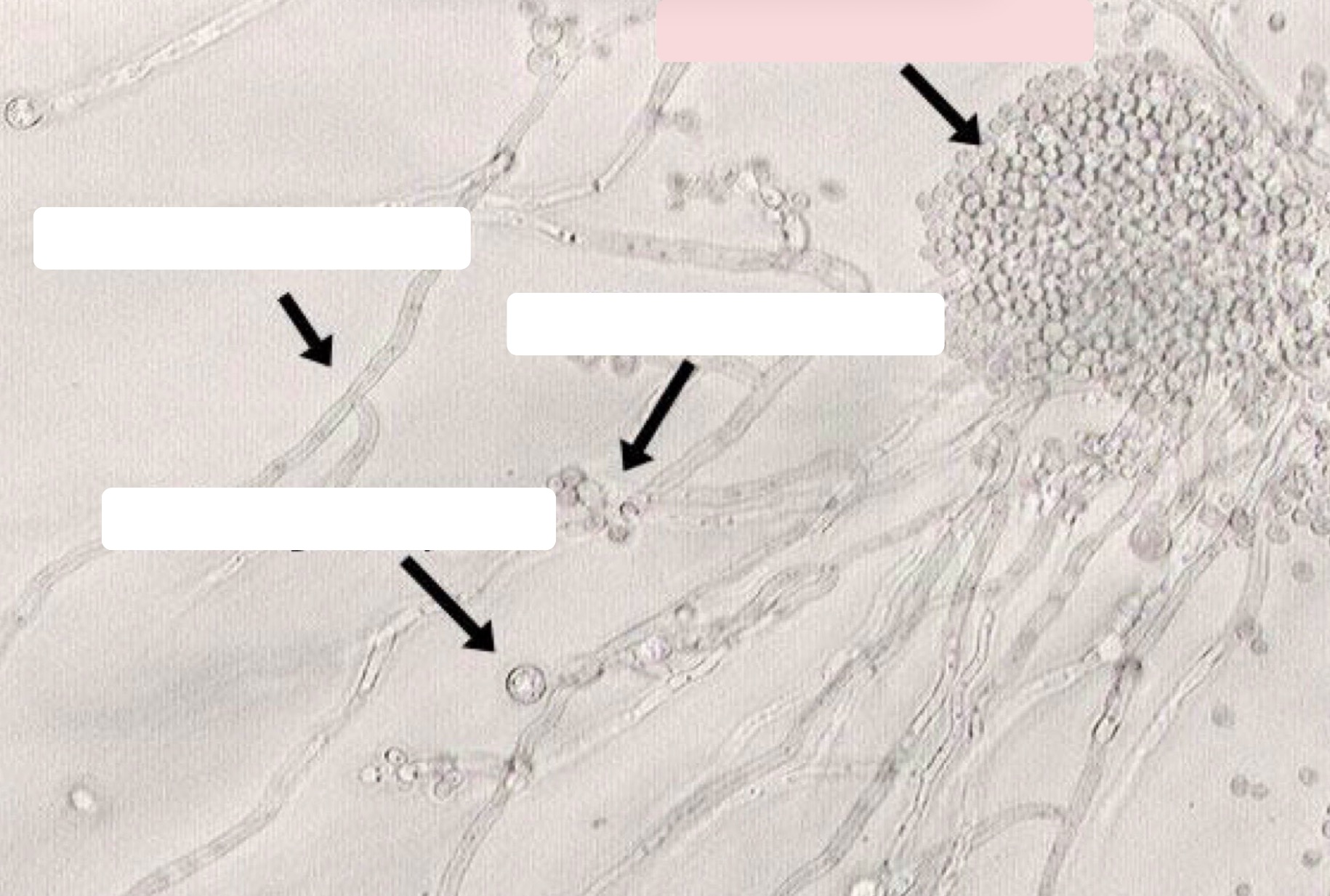
Identify the C. albican Structure
Yeast-like cells

Identify the C. albican Structure
Pseudohypha

Identify the C. albican Structure
Blastspore
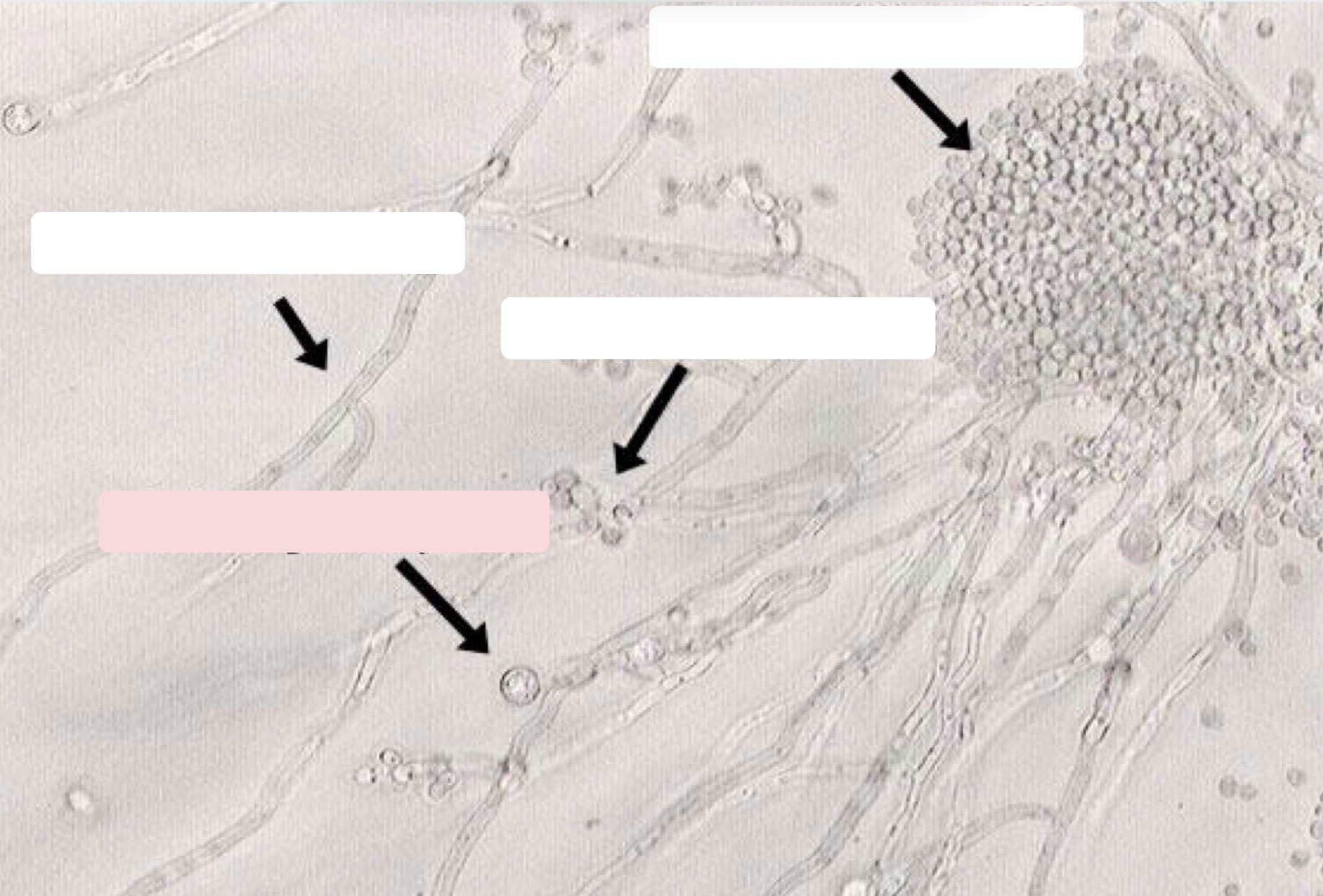
Identify the C. albican Structure
Chlamydospore
C. glabrata on Cornmeal
Following a 72-hour incubation at 25C, only blastoconidia are observed
Rhodotorula spp.
Rarely isolated as causative agents of opportunistic mycoses in vulnerable hosts, such as patients with AIDS or acute leukemia

Identify the Infectious Yeast
Rhodotorula
Cryprococcus spp. Serotypes A and D
Included in var. neoformans ,, grow in pigeon droppings
Cryprococcus spp. Serotypes B and C
Included in var. gattii,, grow in eucalyptus tree wood
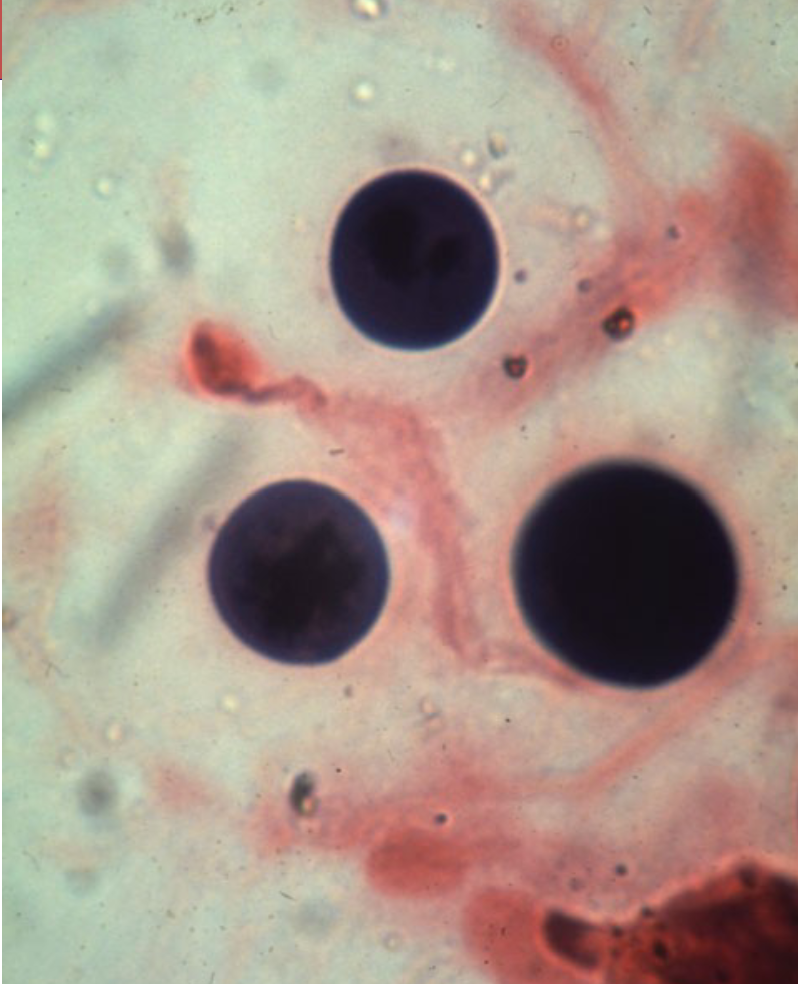
Identify the Infectious Yeast
C. neoforman
Which infectious yeast has a polysaccharide capsule?
C. neoformans
Which infectious yeast contains a phenol oxidase that produces melanin?
C. neoforman
What does the production of melanin do?
Prevents the formation of toxic hydroxyl radicals (oxidative stress)
Does Cryptococcus grow faster or slower than Candidia?
Slower
C. neoforman Microscopic Features
On cornmeal Tween 80 agar following a 72-hr incubation at 25C, produces round, budding yeast cells ,, capsule is best visible in india ink preparations

Identify the Infectious Yeast
C. neoformans
Antigen Latex Agglutination Test
A sensitive test system that can be used on serum and CSF ,, if present, the beads will clump