Exam 2 Terms - Atoms, Electronic Structure, Bonding
 Call Kai
 Learn
Learn Practice Test
 Spaced Repetition
 Match
Match Flashcards
 Knowt Play
1/21

There's no tags or description
Looks like no tags are added yet.
Name | Mastery | Learn | Test | Matching | Spaced | Call with Kai | Chat |
|---|
No analytics yet
Send a link to your students to track their progress
22 Terms
Electrons contribute what to a solid?
bonding, electronic properties, optical properties, magnetic properties
Valence Shells
the outermost shell; determines much of the bonding
Orbital Filling
order in which bonding occurs
Orbital Bonding
order in which orbitals are filled
What are the d-shells and f-shells good for?
magnetic behavior (permanent magnets), fluorescene, and phosphorescence
Fluorescence
immediate effect
Phosphorescence
last longer
Electronegativity
ability to pull in an electron
Ionic Bonds
electron(s) are transferred between atoms, forming ions; bonding results in a cation attracting an anion (Coulombic Attraction)
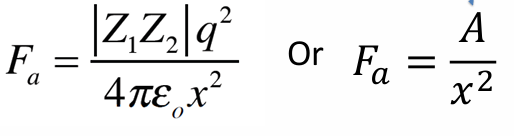
What formula(s) is this?
Force of Coulombic Attraction
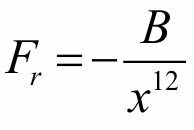
What formula is this?
Repulsive Force
Pauli Exclusion
each electron in an atom must have a unique combination of quantum numbers; an orbital can contain a max of two electrons only and they must have opposite spins.
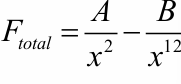
Sum of Force
the net force of the attractive and repulsive forces; equilibrium bond length is where the forces equal each other and the bond is stable

Bonding Energy (U)
how much energy the ionic bond has at a particular separation distance; U = potential energy
Why is the potential energy negative/ decreasing
as the distance between ions decrease, they release potential energy
Bond Enegy
minimum bond energy, the point of equilibrium
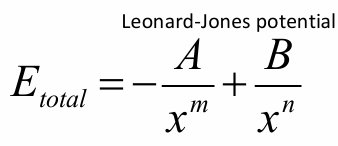
Generalized Bonding Energies
describes how energy decreased when two ions bond
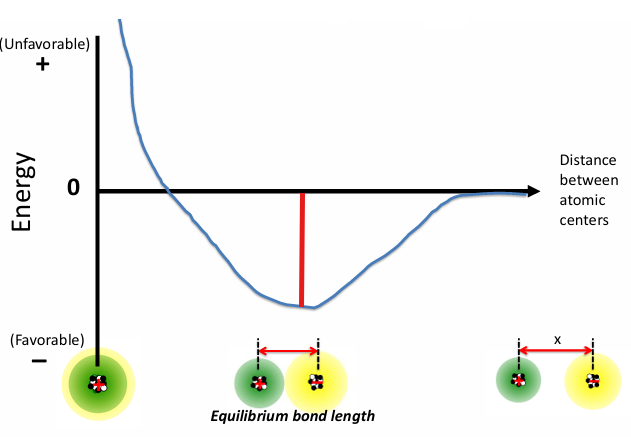
What does the red line represent?
Bond Energy
What does the red line represent?
Equilibrium Bond Length
Ionic Directionality
ionic bonds are non-directional; bond energy is independent of orientation
Ionic Fracture
atoms with repulsive forces align, leading to fracture; plastically deforming an ionic solid;