NMAT Chem | Bonding
 Call Kai
 Learn
Learn Practice Test
 Spaced Repetition
 Match
Match Flashcards
 Knowt Play
1/20

There's no tags or description
Looks like no tags are added yet.
Name | Mastery | Learn | Test | Matching | Spaced | Call with Kai | Chat |
|---|
No analytics yet
Send a link to your students to track their progress
21 Terms
Octet Rule
Atoms are like people trying to complete a team of 8
Atoms are the happiest with 8 valence electrons
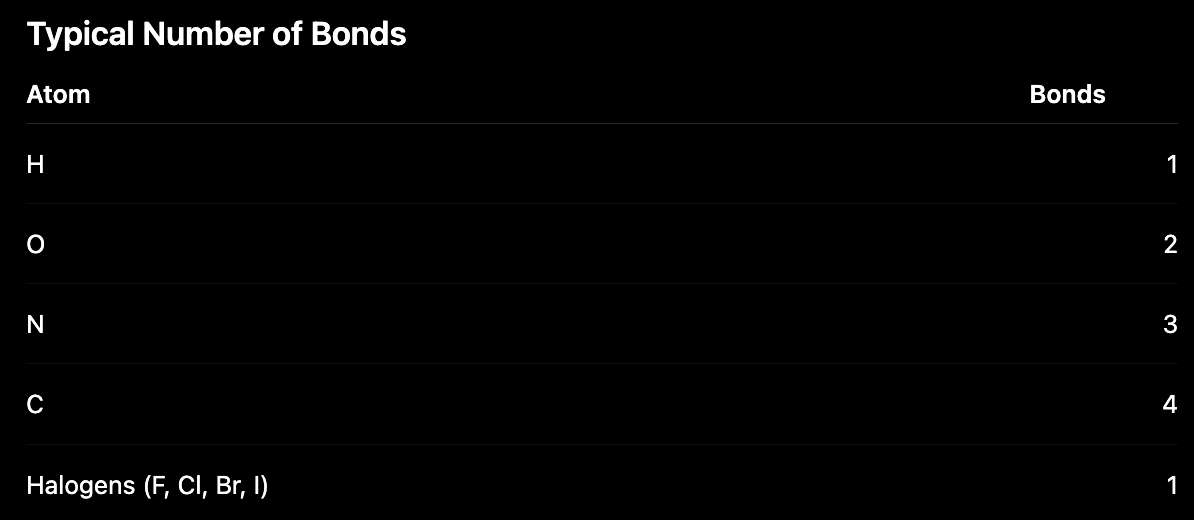
Expanded Octet
Elements in period 3 and others that can hold more than 8 electrons
ex: PCl₅, SF₆ SO₄²⁻
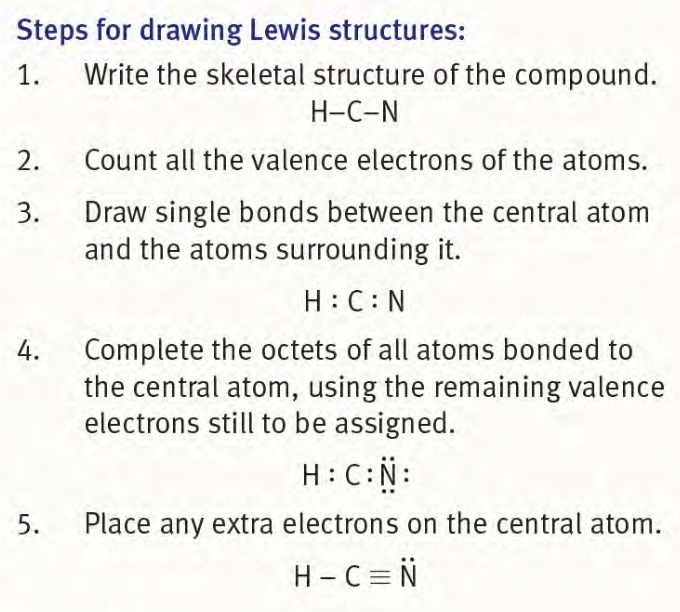
Lewis structure
Chemical symbol of an element surrounded by dots
usually representing one of the s or p valence electrons of the atom
Formal charge
Tells whether a Lewis structure is the most reasonable arrangement of electrons
Polar bond
Electrons are shared unequally
ex: HF - Fluorine is more electronegative
electrons would spend more time near fluorine
Nonpolar bond
Electrons are shared equally
ex: H2
Same atom with the same pull
Polar molecules
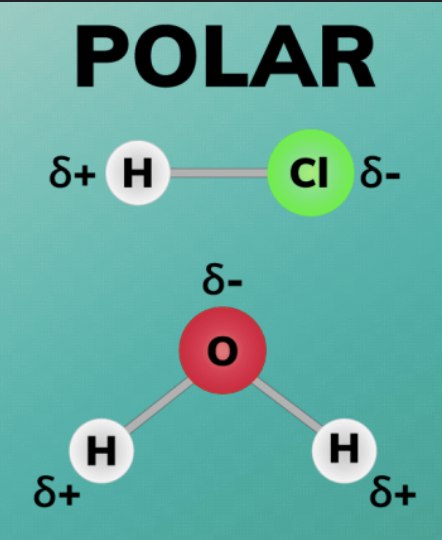
Asymmetrical molecules where the pulls don’t cancel
You can usually tell from the bent shape
ex: bent and trigonal pyramidal
Nonpolar molecules
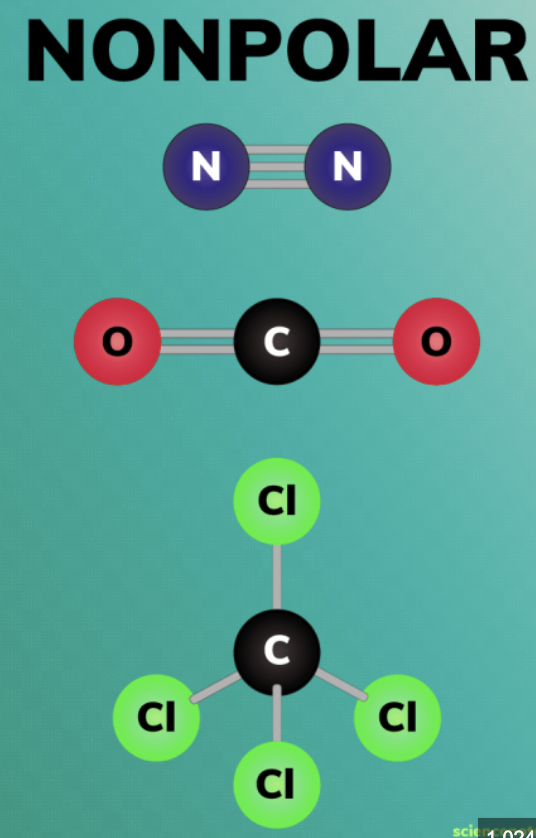
Symmetrical pull from atoms
The pulls will cancel
ex: Linear, Tetrahedral, Trigonal planar, Tetrahedral
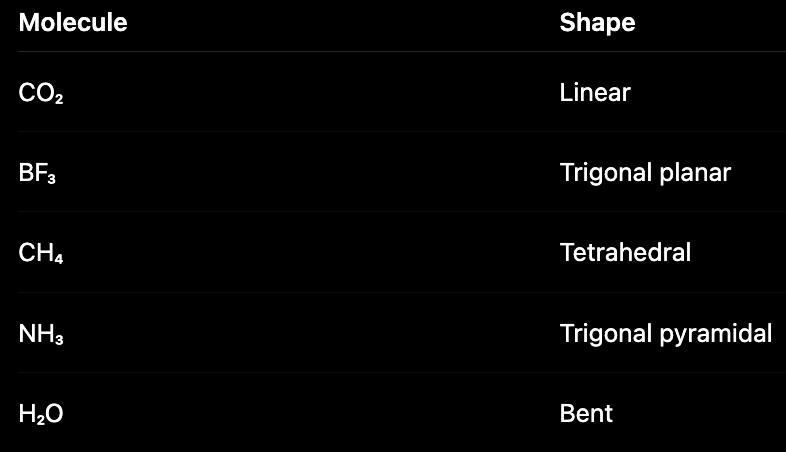
VSEPR
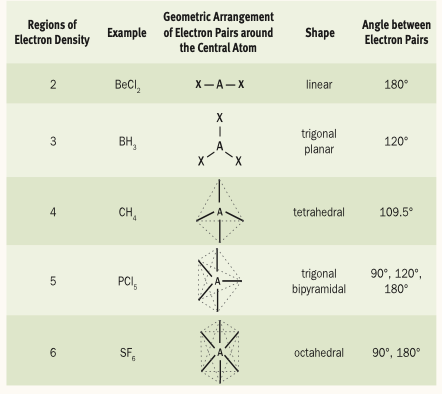
Shape of CO₂ BF₃ CH₄ NH₃ H₂O
Covalent bond
Each atom contributes one electron
Complex Ion
A central metal ion surrounded by molecules or ions called ligands
Ligands
Atoms that attach to metals
ex: Water, NH3, Cl-, CN-
All of them have a lone pair of electrons
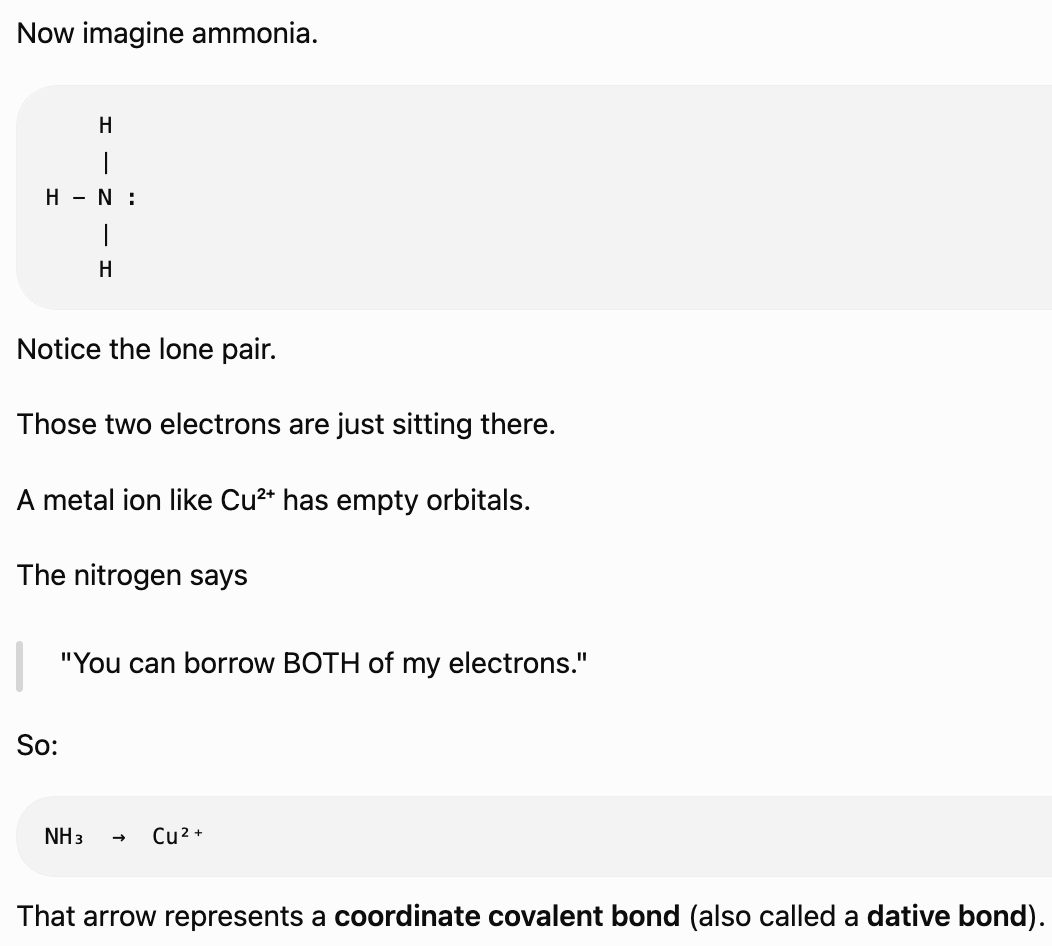
Coordinate covalent
One atom gives BOTH electrons
still a covalent bond
ex: N giving H both bonding electrons
Chelation
Ligands grab the metal they attach to in multiple places; they wrap around it like a claw
ex: Hemoglobin is a large ring-shaped ligand; Vitamin B12 contains a cobalt coordination complex
Intermolecular Forces
Forces between molecules
IMF Strength tier (weakest → strongest)
Dispersion → Dipole-dipole → Hydrogen bond
Dispersion forces
Every molecule has this because electrons are constantly moving
Like kids running around all the time
One side becomes slightly negative then positive for short moments; temporary imbalance attracts neighboring molecules → Temporary (instantaneous) dipole
Dipole-Dipole Forces
Only happens with polar molecules
ex: HF; fluorine pulls harder and if there’s 2 HF molecules, H is attracted to negative F
Hydrogen bonding
Dipole-dipole but on the next tier
only happens if H is attached to F, O, or N
Why is H2O special in H bonds?
It’s made up of it
Because of H bonds it has:
High boiling point
surface tension
capillary action
Ice floating