009 Glasses for Kids and Amblyopia Treatment
 Call Kai
 Learn
Learn Practice Test
 Spaced Repetition
 Match
Match Flashcards
 Knowt Play
1/41

There's no tags or description
Looks like no tags are added yet.
Name | Mastery | Learn | Test | Matching | Spaced | Call with Kai | Chat |
|---|
No analytics yet
Send a link to your students to track their progress
42 Terms
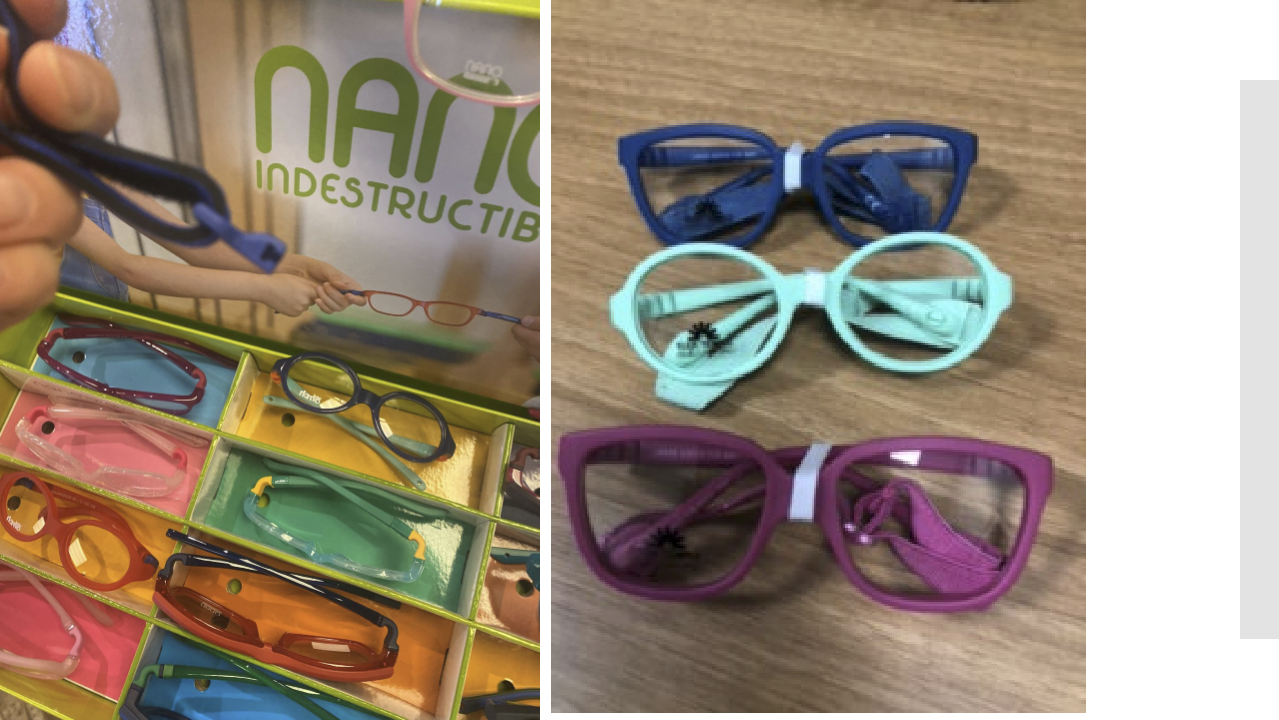
What frame features are recommended for infants and toddlers, and why?
Use hinge-free, durable frames (e.g., Nano "Indestructible," Dilli Dalli, ZooBug). These frames often include a retaining strap and reduce the risk of injury because young children frequently chew on and pull off their glasses.
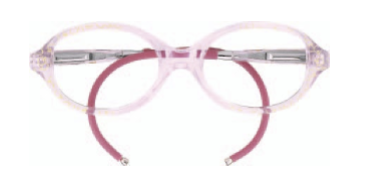
What temple design is often preferred for toddlers and preschool-aged children?
Cable temples (one-piece curved temples) because they are harder to remove and help glasses stay on during active play. The curved portion should not be detachable.
What additional frame options can improve functionality and retention in young children?
Magnetized sun clips and interchangeable temples/bands allow easy switching between different retention systems while maintaining a secure fit.
What characteristics should eyeglass frames have for school-aged children?
Frames should be durable and flexible, ideally with flexible materials and spring hinges to withstand daily wear and activity.
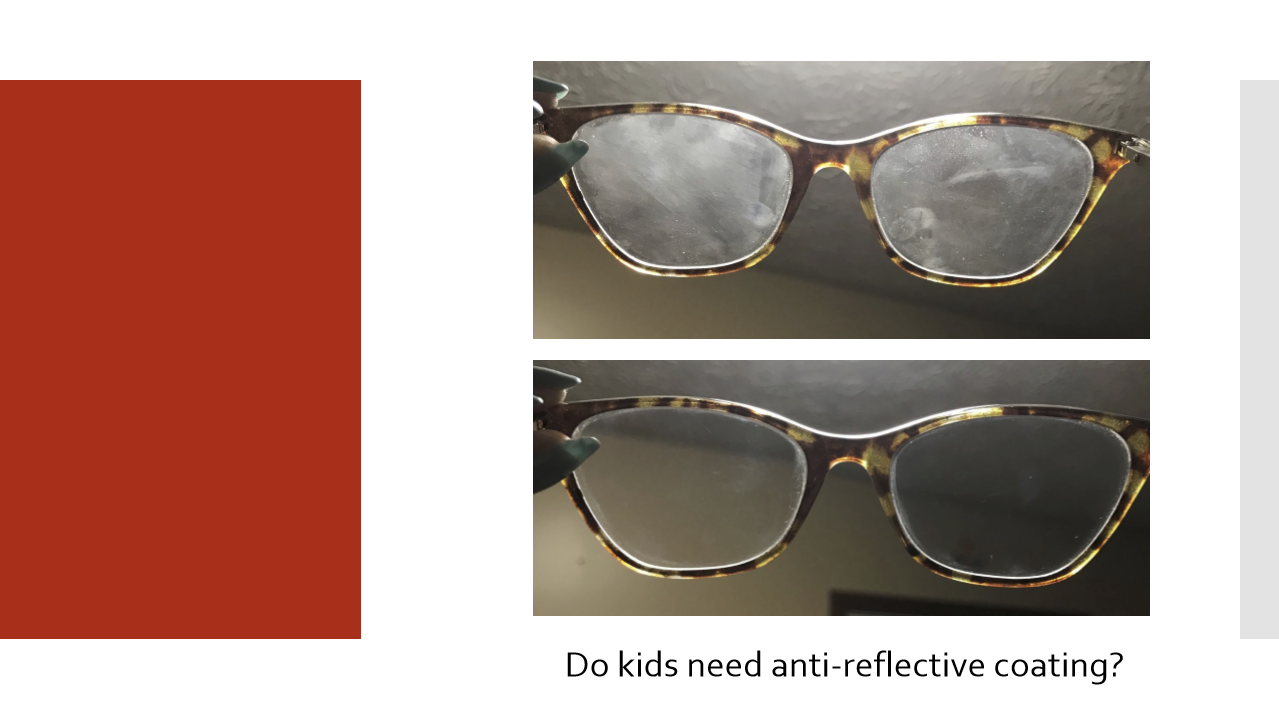
Do kids need anti-reflective coating?
No. Their lenses get dirty and smeared, making the anti-reflective coating pointless.
Why are regular eyeglasses a concern during sports participation in children?
Glasses can become a safety hazard during sports because frames may break and nose pads or frame components can cause eye injury during impact.
What vision correction options should be recommended for children who play sports?
Sports goggles are the preferred option for protection; contact lenses may also be considered when appropriate.
What lens materials are recommended for pediatric eyewear and why?
Polycarbonate or Trivex lenses because they provide excellent impact resistance and improved safety for active children.
What type of bifocal is typically recommended when prescribing a child's first bifocal?
A flat-top bifocal is preferred for the initial prescription.
Why are progressive addition lenses (PALs) often not ideal for children with accommodative strabismus?
Children may not reliably seek the appropriate near-power zone through blur cues like adults do, making PALs less effective for ensuring consistent near vision correction.
How should bifocal segment height be fit in children, and why?
The top of the bifocal segment should bisect the pupil (higher than in adults). This positioning encourages the child to use the bifocal portion during near tasks.
What sign indicates a child is properly using their bifocal segment?
During near work, the child should adopt a posture that allows viewing through the bifocal segment, demonstrating use of the near add power.
How do myopic children typically adapt to a new glasses prescription?
Adaptation is usually not a problem. Myopic children often want to wear their glasses because they immediately notice improved distance vision.
How do hyperopic children typically respond to a new glasses prescription?
Hyperopic children may initially resist or object to wearing their glasses because they are accustomed to accommodating to overcome some of their blur.
Why might hyperopic children have difficulty accepting glasses when they first pick them up?
The prescription is often determined under cycloplegia, but the child is typically not cyclopleged when receiving the glasses, making the visual experience initially feel different.
What happens after hyperopic children adapt to their glasses?
Once adapted, they often wear them consistently, even to the point of falling asleep with their glasses on, indicating good acceptance of the visual benefit.
What nonvisual factor commonly affects glasses compliance in hyperopic children?
Cosmesis/appearance. Even when vision improves, children may dislike how the glasses look, so frame selection should consider the child's preferences to improve wear compliance.
What appearance-related counseling should be provided to parents and children before dispensing glasses?
Set expectations about potential lens magnification/minification effects and cosmetic differences, especially in patients with significant refractive error.
Why can anisometropia affect the appearance and adaptation to glasses?
Different lens powers between the two eyes can cause unequal image or eye-size appearance (anisometropic spectacle effects), which may be cosmetically noticeable and require counseling before dispensing.
What strategies can improve glasses compliance in hyperopic children who resist wearing spectacles?
Temporary use of cycloplegic drops may help because the child can no longer accommodate through the hyperopia, making the visual benefit of glasses more apparent.
What is a useful technique for introducing glasses to infants and toddlers?
Put the glasses on while the child is asleep. Upon waking, they are less likely to associate the glasses with a new object they should remove.
What behavioral techniques can help prevent infants and toddlers from removing their glasses?
Temporary use of arm floaties placed above the elbows can limit elbow flexion and make it harder for the child to repeatedly remove the glasses.
What method is often effective for improving glasses wear in older children?
Use a reward or positive reinforcement system to encourage consistent spectacle wear.
What are the main methods of occlusion therapy for amblyopia?
Occlusion can be achieved with:
Cloth patch attached to glasses
Adhesive skin patch
Bangerter filters
1% atropine penalization (selected cases)
How do Bangerter filters and atropine differ from traditional patching?
Rather than completely covering the eye, they penalize the better-seeing eye by reducing visual acuity, encouraging use of the amblyopic eye.
How should a cloth patch be attached to glasses to prevent peeking?
Cut a slit on the nasal side so the patch fits securely around the bridge area and prevents the child from looking around the patch.
Why are slits cut on the temporal side of a cloth patch?
To allow the temple arm to pass through, securing the patch while minimizing gaps that create a "peeking area."
What is the major disadvantage of poorly fitted cloth patches?
The child may peek around the patch, reducing the effectiveness of amblyopia therapy.
What size adhesive patch should be used for amblyopia treatment?
Use the smallest patch that completely occludes the eye.
What should be checked when using adhesive patches?
Ensure the child cannot see through ventilation holes or edge perforations that may function as pinholes.
What options exist for children with latex sensitivity?
Latex-free adhesive patches are available.
How can skin irritation from adhesive patches be minimized?
Press the patch on their own skin first to reduce adhesiveness.
Apply moisturizers or whipped petroleum jelly after patch removal to reduce redness and irritation.
What are the advantages of Bangerter filters compared with traditional patching for amblyopia?
Bangerter filters are less cosmetically noticeable, do not completely block peripheral vision, and can improve compliance while still penalizing the better-seeing eye.
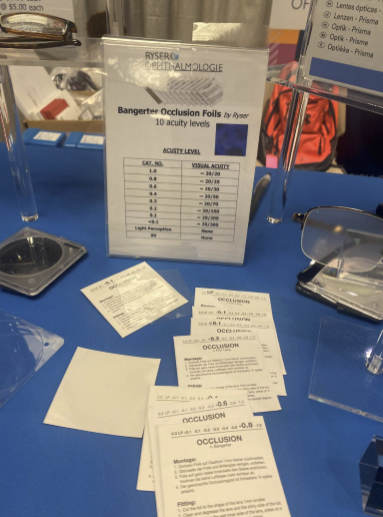
How are Bangerter filters applied and adjusted?
They are cut to fit the spectacle lens, applied to the glasses (often using water), and are removable.
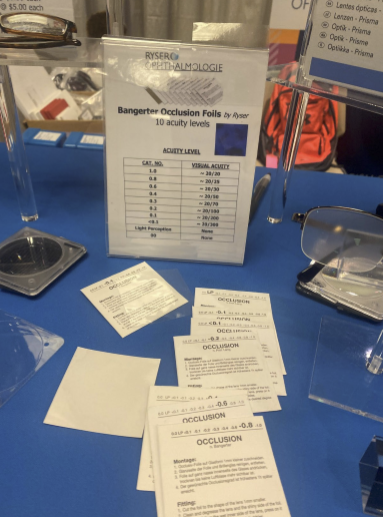
How is the strength of a Bangerter filter selected?
Different filters produce different amounts of blur. The goal is to choose a filter that makes the good eye's vision worse than the amblyopic eye's vision.
What is the key clinical check after applying a Bangerter filter?
Always measure VA with the filter over the good eye to confirm that vision in the good eye is reduced below the amblyopic eye's acuity.
How does atropine work as amblyopia treatment?
1% atropine penalizes the better-seeing eye by cyclopleging accommodation, forcing greater use of the amblyopic eye.
Why doesn't atropine work for all children with amblyopia?
Its effectiveness depends on the child's refractive status. Some children may not experience sufficient blur in the sound eye for effective penalization.
What special consideration is required when using atropine in hyperopic children?
Verify that atropine creates enough blur in the good eye so that vision becomes worse than the amblyopic eye, particularly if the child is not fully corrected for hyperopia.
What is the key principle of atropine penalization?
The treatment is only effective if the better eye becomes functionally worse than the amblyopic eye, encouraging use of the weaker eye.
Why are cosmetic "pirate patches" generally not recommended for amblyopia treatment?
Pirate patches often allow peeking around the edges and may not completely occlude vision, making treatment ineffective.
Compare the major amblyopia treatment options besides adhesive patching.
Cloth patch: Must be fitted to prevent peeking.
Bangerter filter: Blurs the good eye through the spectacle lens; maintain peripheral vision and better cosmesis.
1% atropine: Pharmacologic penalization; verify blur is sufficient in the good eye.