Microbial Identification Techniques: Phenotypic, Immunologic, and Genotypic Methods
 Call Kai
 Learn
Learn Practice Test
 Spaced Repetition
 Match
Match Flashcards
 Knowt Play
1/126

There's no tags or description
Looks like no tags are added yet.
Name | Mastery | Learn | Test | Matching | Spaced | Call with Kai | Chat |
|---|
No analytics yet
Send a link to your students to track their progress
127 Terms
What are the three major categories of microbial identification techniques?
Phenotypic, Immunologic, and Genotypic.
What does the phenotypic method of microbial identification consider?
Macroscopic and microscopic morphology, physiology, and biochemistry.
What is the focus of immunologic methods in microbial identification?
Serological analysis to test for specific antibodies to suspected pathogens.
What advantage do genotypic methods have over phenotypic methods?
They do not always require culturing microorganisms and can provide rapid, precise results.

What is a viable nonculturable (VNC) microbe?
Microbes that cannot be grown in the laboratory but can be identified by genotypic methods.
What is the importance of specimen collection in microbial identification?
Success depends on how specimens are collected, handled, stored, and cultured.
What is a 'clean catch' urine sample?
Urine collected midstream after washing the external urethra to avoid contamination.
What is the purpose of using sterile sample containers?
To prevent contamination from the environment or the patient during specimen collection.
What is a Gram stain used for?
To identify bacteria based on their cell wall characteristics.
What are the two major drawbacks of phenotypic testing methods?
They require culturing the pathogen, which can be time-consuming and may not detect viable nonculturable organisms.
What is the role of biochemical testing in microbial identification?
To observe physiological reactions of bacteria to nutrients and substrates, providing evidence of enzyme systems.
What is selective media used for?
To encourage the growth of only the suspected pathogen in nonsterile specimens.
What does differential media help identify?
Definitive characteristics and fermentation patterns of bacteria.
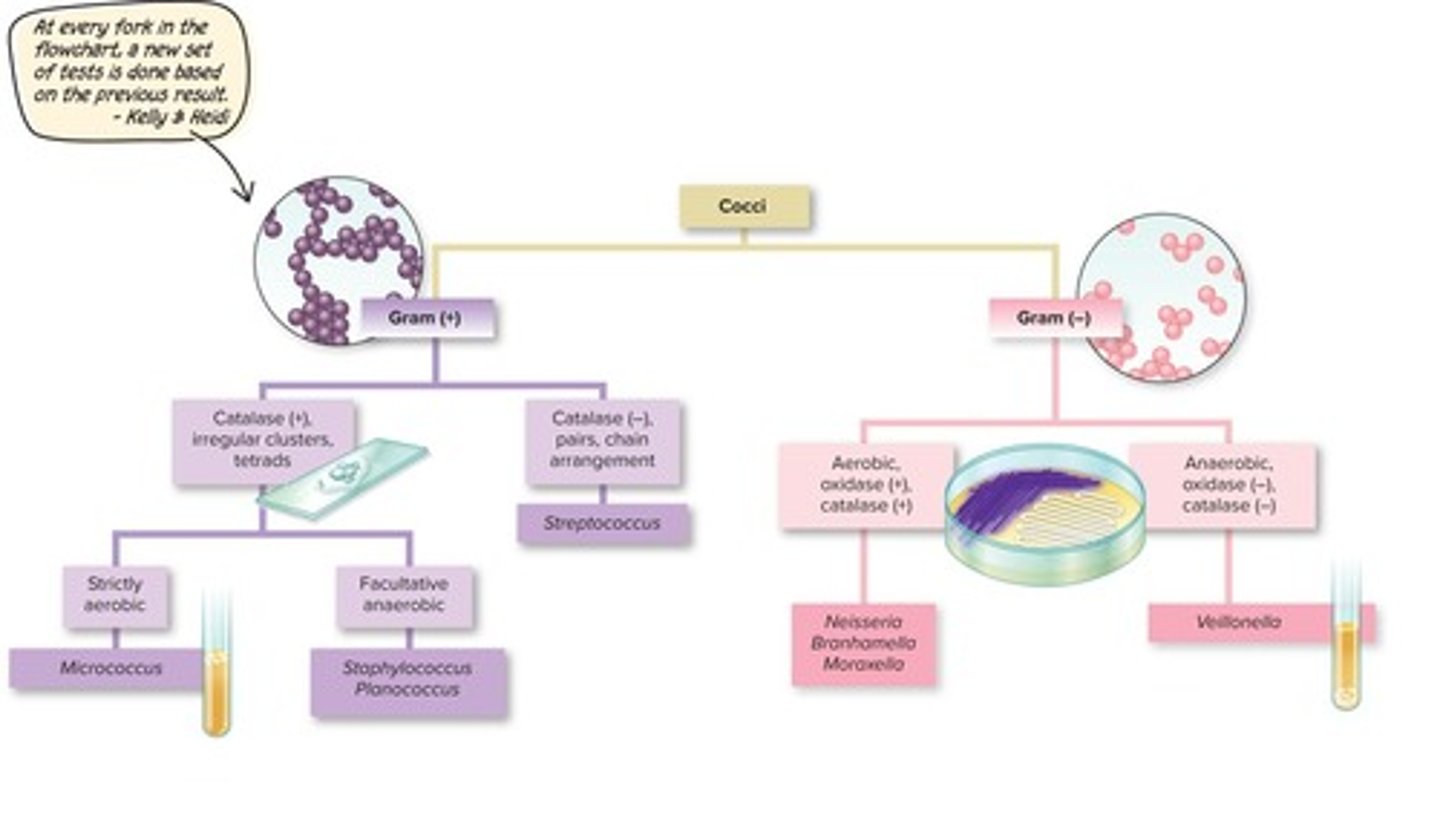
What is the purpose of a dichotomous key in microbial identification?
To separate primary genera of various cocci using Gram staining and growth on differential media.
What is the significance of antibody response in immunologic methods?
It is exploited for diagnostic purposes to test for specific antibodies to pathogens.
What is the first step in identifying an infectious agent from a patient sample?
Proper specimen collection using aseptic techniques.
How can contamination be avoided when taking samples from a patient?
By using sterile techniques and avoiding contact with normal microbiota.
What is the main principle behind biochemical testing?
It visualizes enzyme-mediated metabolic reactions through color changes in culture media.
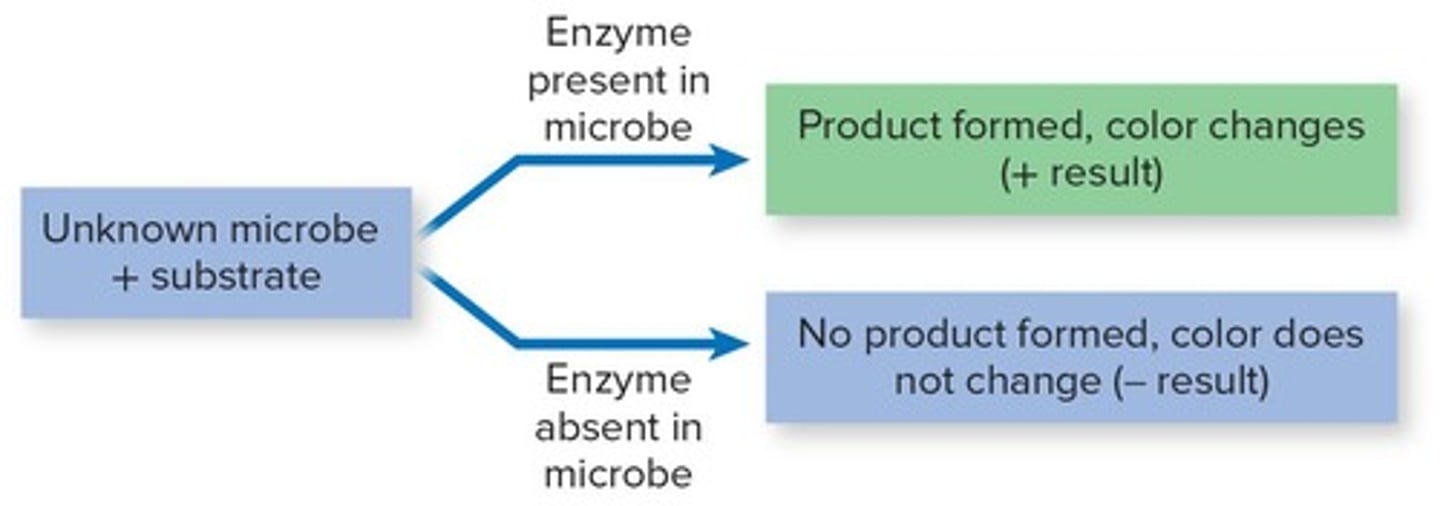
What are rapid biochemical tests used for?
To quickly identify microbial species based on physiological reactions.
What is the role of computerized tomography (CT) in diagnosis?
It assists in diagnosing infections by providing detailed imaging.
What is the purpose of magnetic resonance imaging (MRI) in microbial identification?
To provide detailed images of soft tissues that may be infected.
What does positron emission tomography (PET) help identify?
It helps in diagnosing infections by detecting metabolic activity in tissues.
What should be avoided when collecting sputum samples?
Contamination with saliva, as it contains many bacteria.
What is the importance of labeling and identifying specimens?
It is crucial for obtaining timely and accurate results in microbial identification.
What is the significance of analyzing patient signs like fever and wound exudate?
They are indicators of microbial infection that guide diagnosis.
What is the role of a scalpel in skin sample collection?
To scrape or swab deeper layers of skin for microbial analysis.
What does the MGIT system detect?
The growth of slow-growing Mycobacterium tuberculosis.
How does the MGIT system monitor oxygen levels?
Using a silicon chip impregnated with a fluorescent substance that fluoresces as oxygen levels decrease.
Why is antimicrobial susceptibility testing important?
To determine which drugs will be effective for treatment, especially in the context of rising antimicrobial resistance.
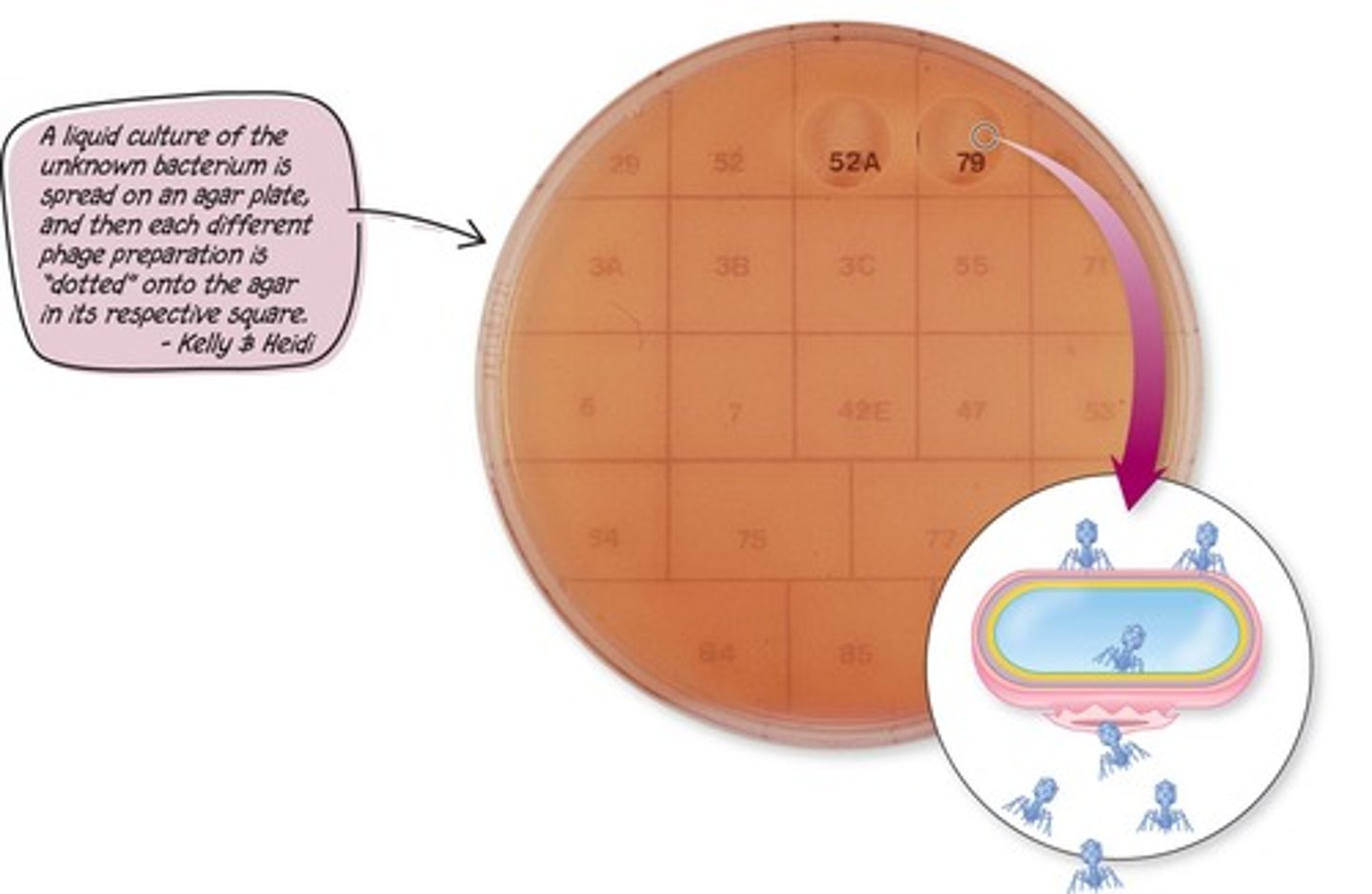
What is phage typing used for?
To identify bacteria based on their susceptibility to specific bacteriophages.
How can the clinical significance of cultures be determined?
By assessing the quantity and type of microorganisms present in a specimen.
What is a potential drawback of phenotypic methods?
Culturing microbes can take 18 to 24 hours or longer, and some infectious agents may be nonculturable.
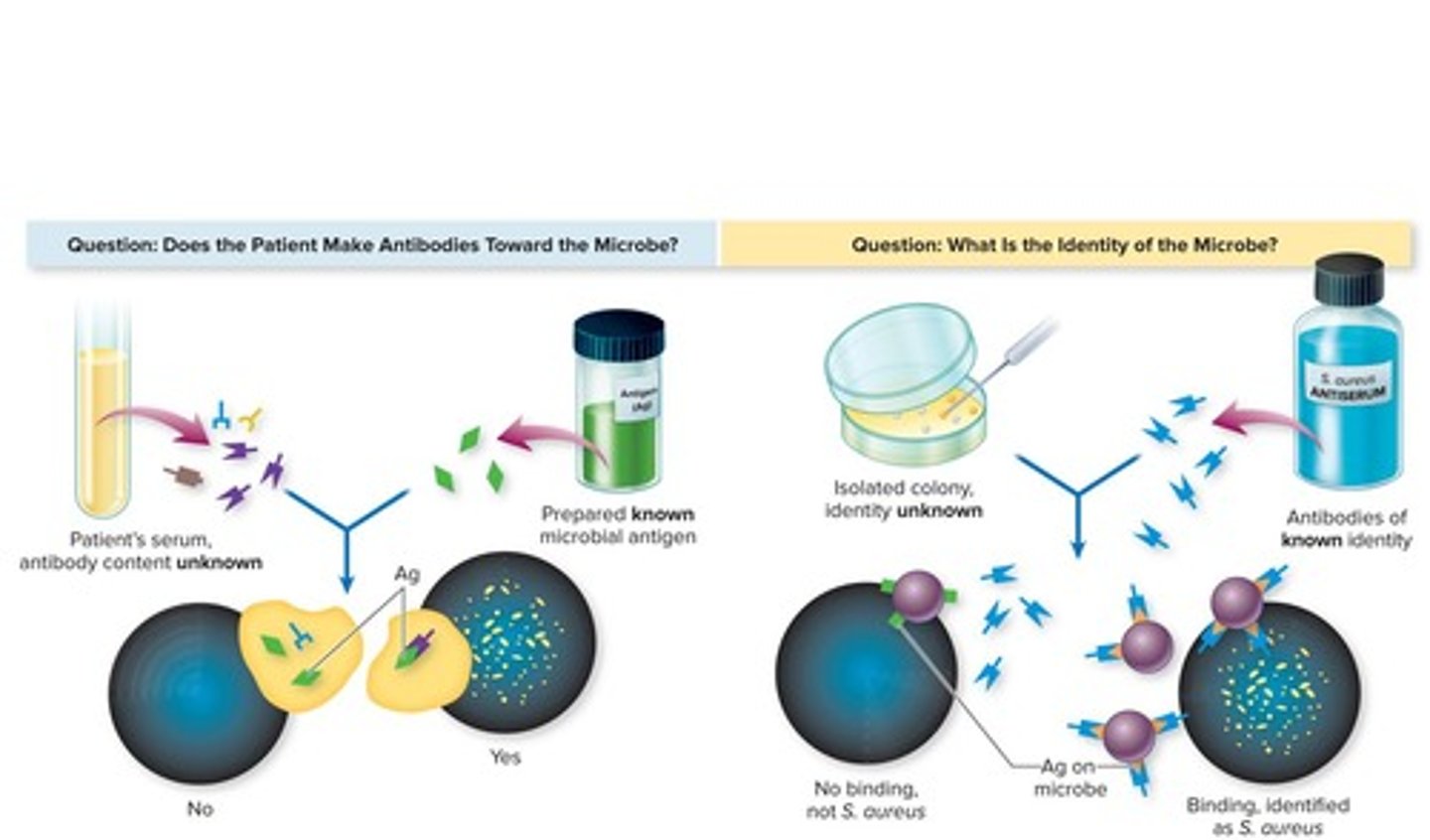
What is serology?
The in vitro testing of bodily fluids for specific antibodies to determine a patient's immune status.
What principle underlies serological tests?
Antibodies have extreme specificity for antigens, revealing a patient's history of exposure.
What are two immunological diagnostic techniques that rely on a secondary antibody?
Enzyme-linked immunosorbent assay (ELISA) and Western blotting.
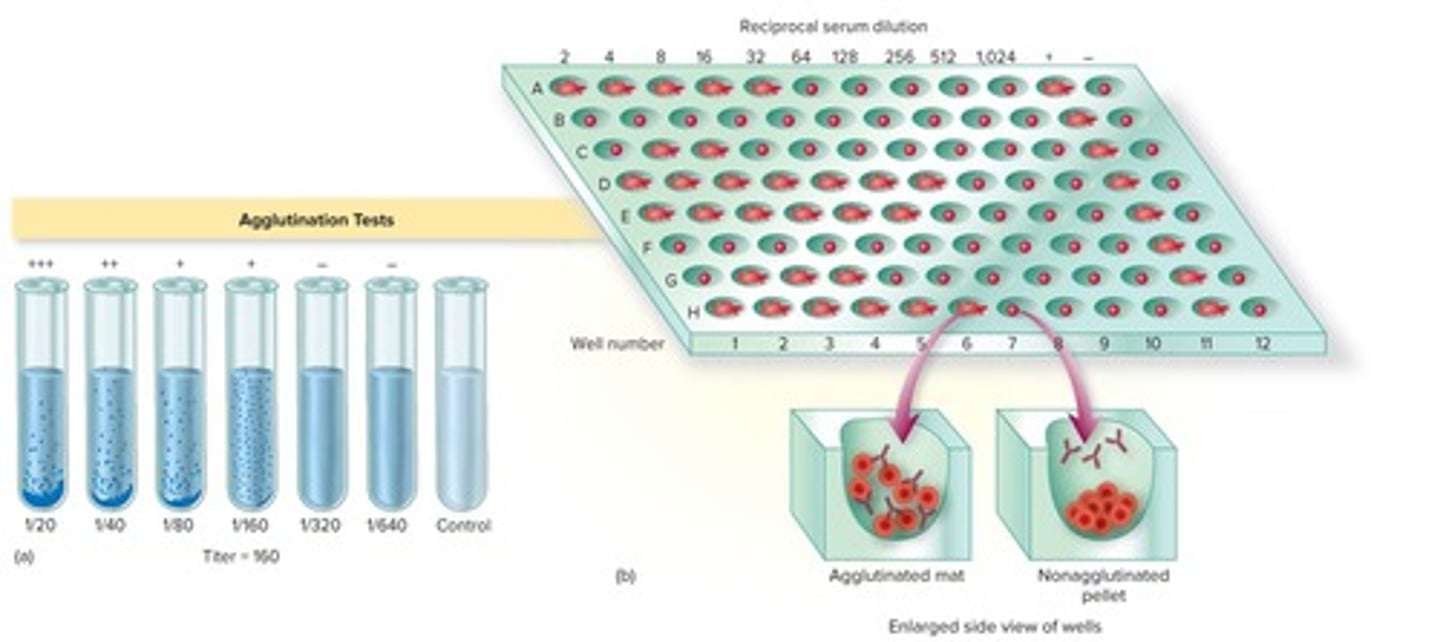
What is the basis of agglutination reactions?
The interlinking of antigens by multiple antibodies to form visible aggregates.
What does the Weil-Felix reaction diagnose?
Rickettsial infections.
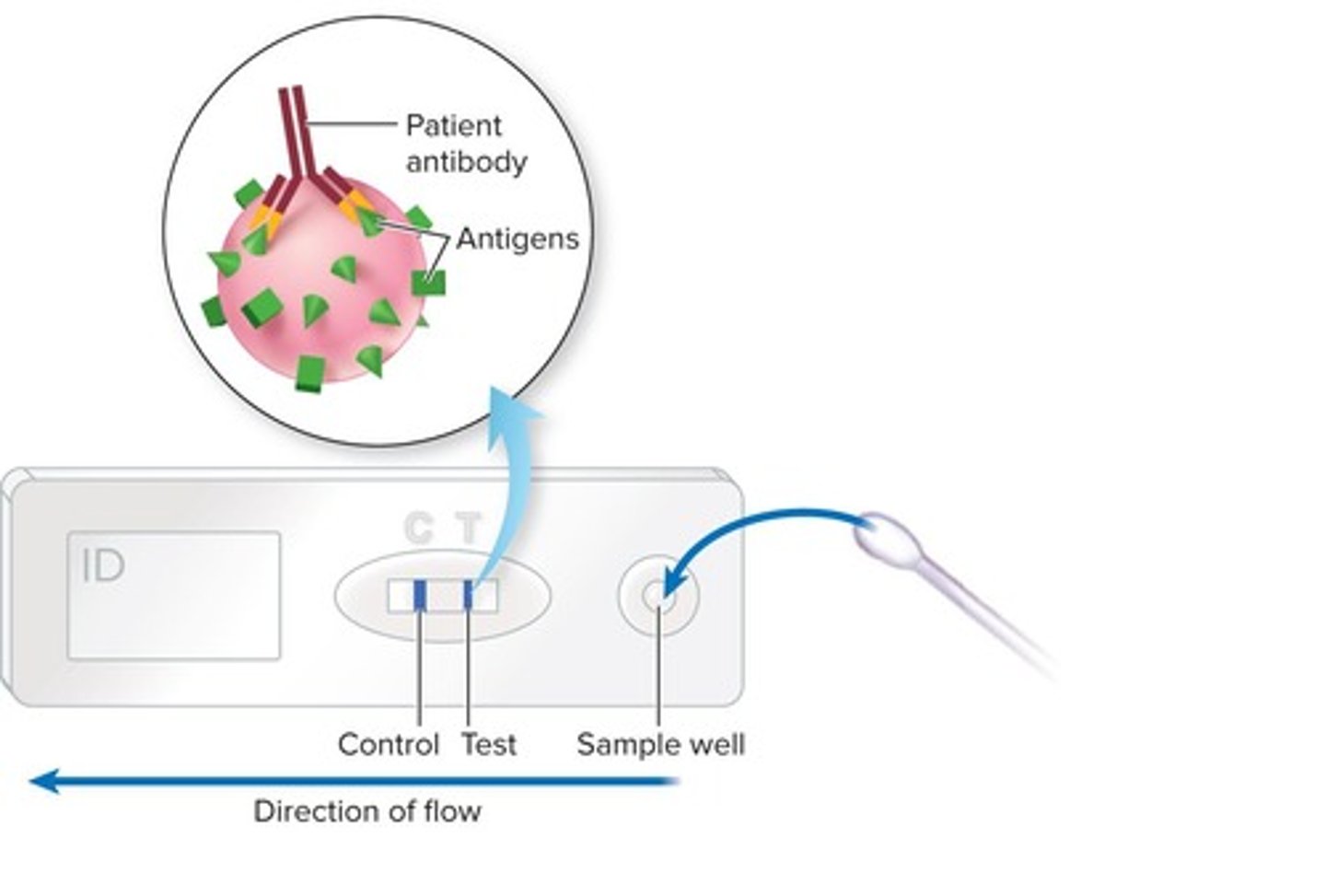
What is the purpose of immunochromatography?
To visually detect the presence of antigens in a sample, such as in pregnancy tests.
What does an antibody titer indicate?
The concentration of antibodies in a serum sample, reflecting the highest dilution that still produces a reaction.
What is serotyping used for?
To identify and classify bacteria into serotypes based on their antigens.
What is the first step in the Western blot procedure?
Proteins within cell lysates are separated by electrical charge in a gel.
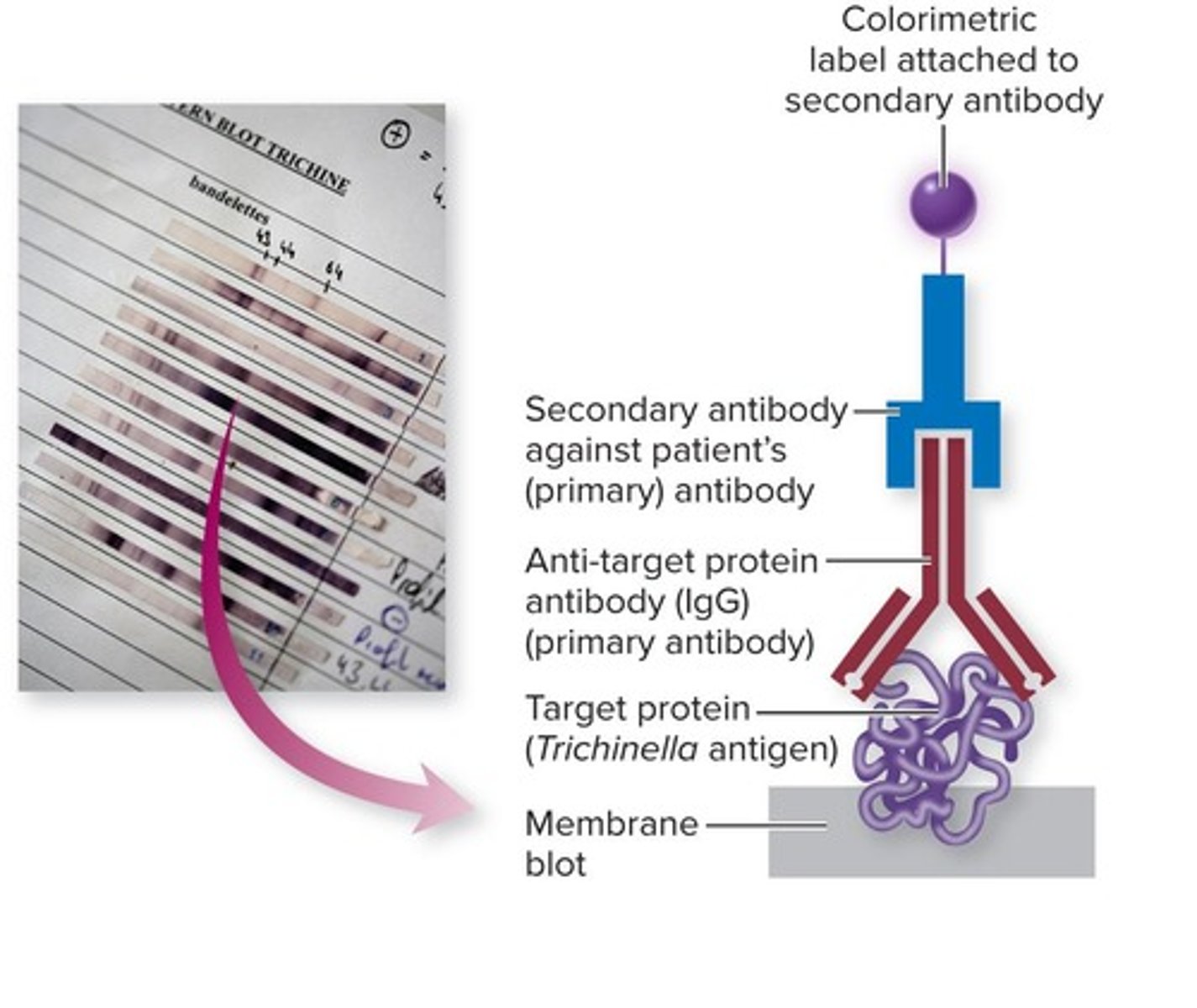
How are proteins transferred in the Western blot test?
Proteins are transferred to a special filter after gel separation.
What do visible bands in a Western blot indicate?
Specific antigen-antibody binding, compared to known controls.
What is the significance of a single colony of Mycobacterium tuberculosis in a sputum culture?
It is highly suggestive of disease.
What type of media would be used to grow a suspected pathogen from a fecal sample?
Selective media.
What is the role of antibodies in serological testing?
To bind specifically to antigens, allowing for detection and quantification.
What is the difference between agglutination and precipitation reactions?
Agglutination involves whole cells, while precipitation involves soluble molecules.
What is the purpose of using antisera in serotyping?
To identify specific cell antigens of bacteria.
What is the role of a third molecule in immunochromatography?
To bind antigen-antibody complexes and produce a visible color change.
Why is it important to identify the correct pathogen in a clinical sample?
To ensure appropriate and effective treatment is administered.
What does a positive agglutination test indicate?
The presence of specific antigens in the sample.
How can repeated isolation of a microorganism indicate disease?
It suggests that the microorganism is not merely a contaminant but potentially pathogenic.
What are fluorescent antibodies (FAbs)?
Monoclonal antibodies labeled by a fluorescent dye.
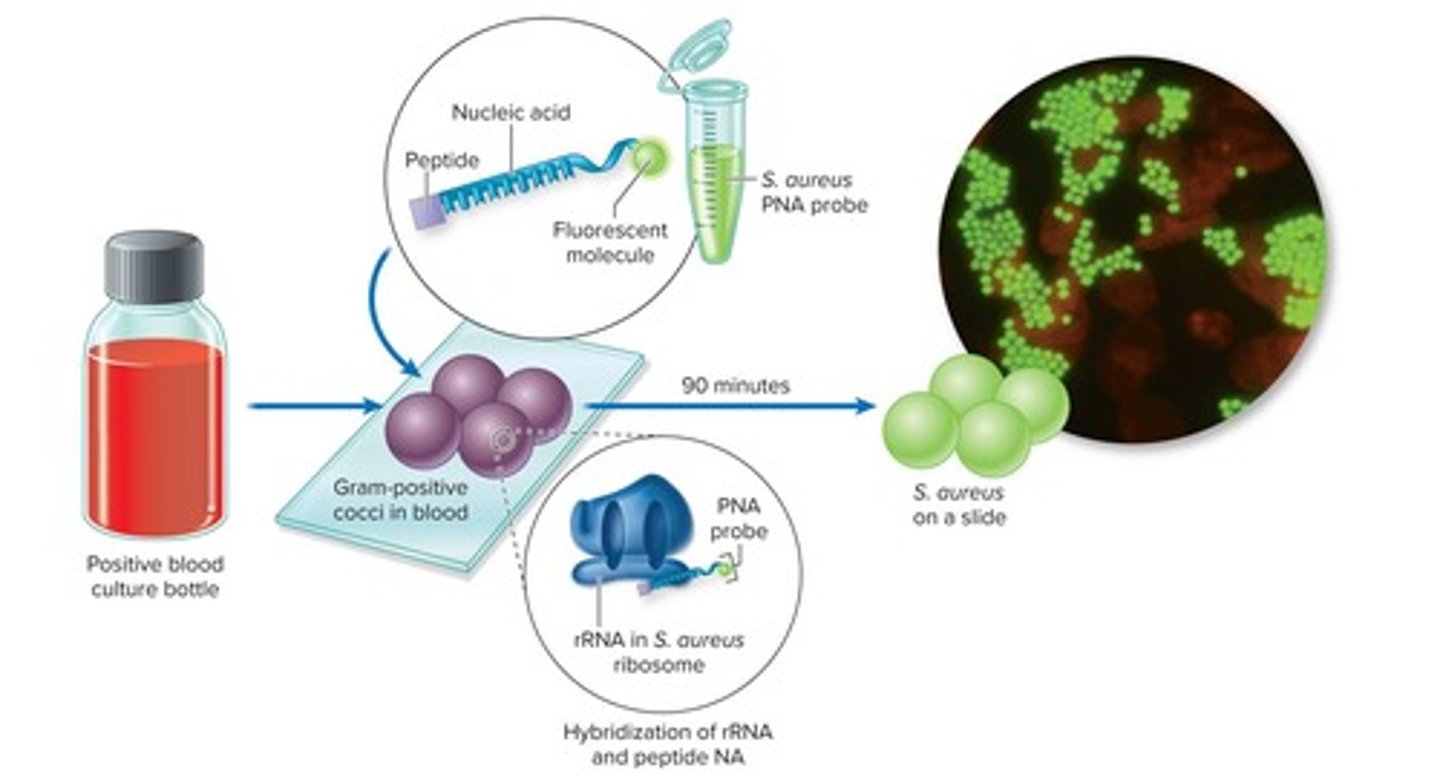
What is the purpose of direct immunofluorescence testing?
To identify and locate microbial antigens on cell surfaces or tissues.
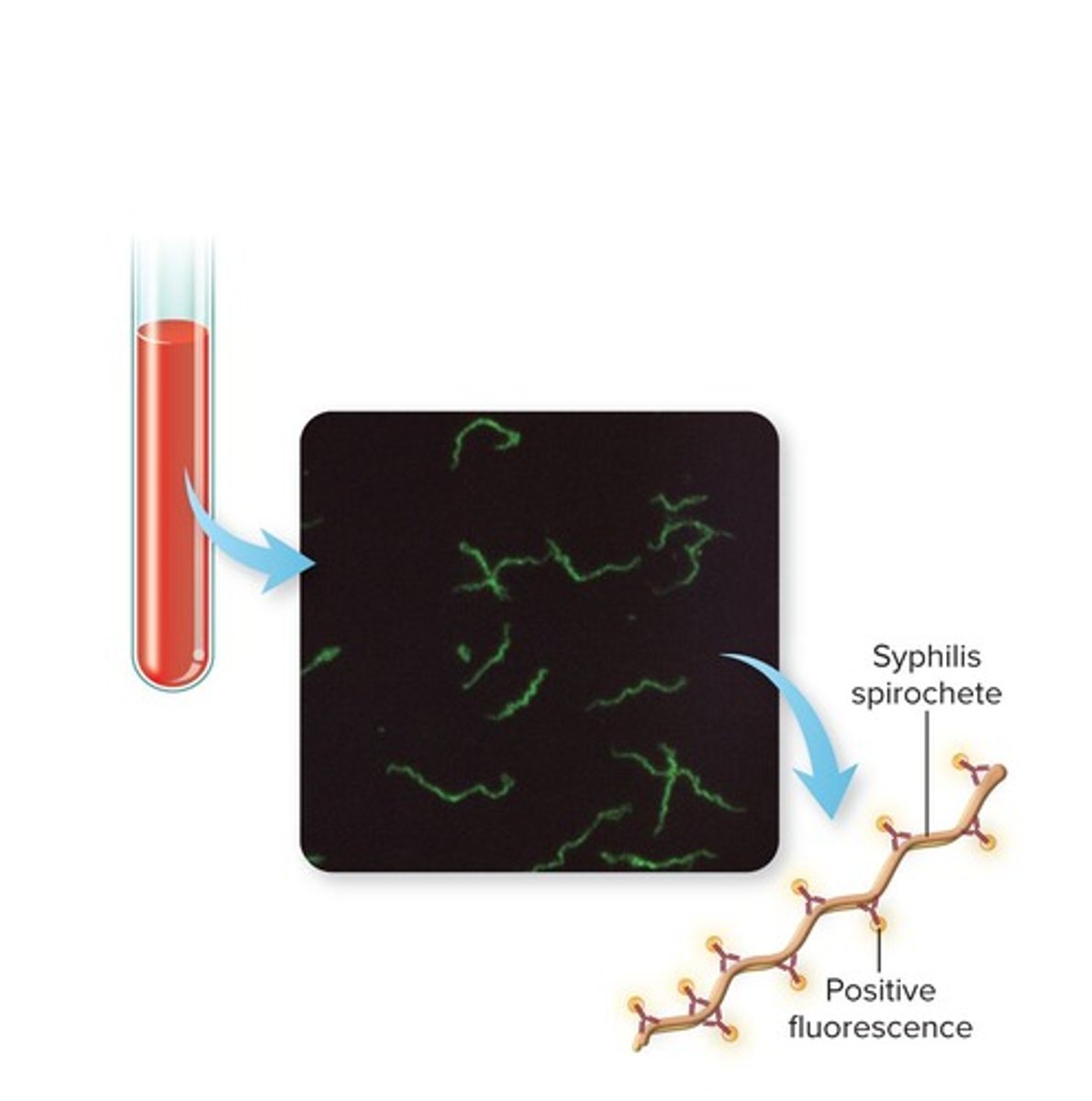
How does direct immunofluorescence testing work?
An unknown test specimen is fixed to a slide and exposed to a FAb solution; if antigen-antibody complexes form, they are visualized by fluorescence microscopy.
What conditions can be diagnosed using direct immunofluorescence testing?
Syphilis, gonorrhea, and meningitis.
What is the difference between direct and indirect immunofluorescence testing?
Direct testing uses a FAb solution on a fixed specimen, while indirect testing uses FAbs to recognize antibodies in patient sera.
What does indirect immunofluorescence testing indicate?
Fluorescing aggregates or cells indicate that FAbs have complexed with microbe-specific antibodies.
What is the Enzyme-Linked Immunosorbent Assay (ELISA)?
A test that uses an enzyme-linked indicator antibody to visualize antigen-antibody reactions.
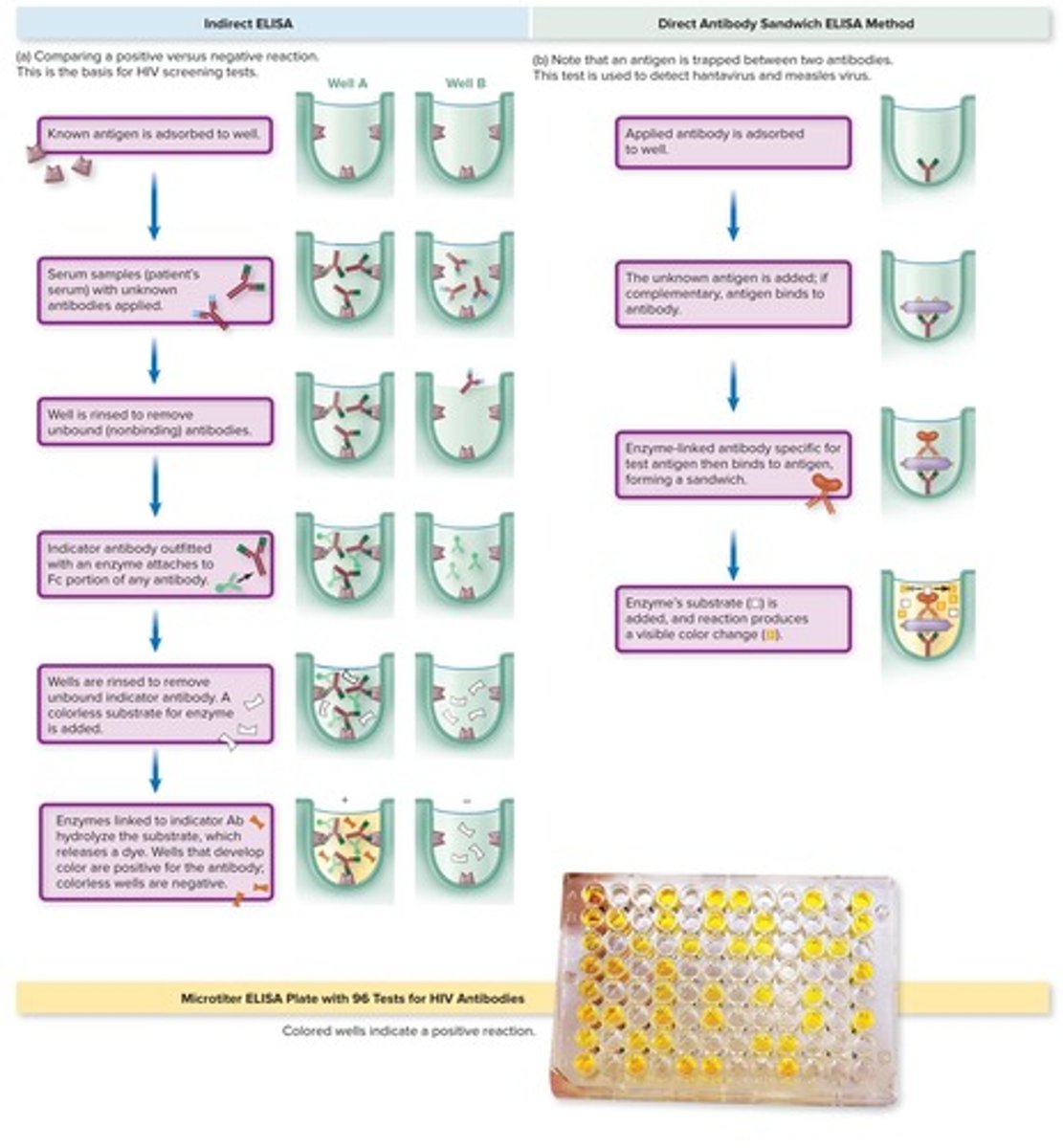
What is the purpose of indirect ELISA?
To detect microbe-specific antibodies in patient sera.
How does indirect ELISA work?
Known antigen is adsorbed to a well, mixed with unknown antibody; if complexes form, an indicator antibody produces a color change.
What are common uses for indirect ELISA?
Antibody screening for HIV, rickettsial species, hepatitis A and C, and Helicobacter.
What is direct ELISA used for?
To detect antibodies to hantavirus, rubella virus, and Toxoplasma.
What is the tuberculin reaction?
A small amount of purified protein derivative from Mycobacterium tuberculosis is injected into the skin to test for previous exposure.
What does specificity in immune testing refer to?
The ability of a test to focus only on a certain antibody or antigen without reacting with unrelated antigens.
What does sensitivity in immune testing refer to?
The detection of even minute quantities of antibodies or antigens in a specimen.
What is the role of Polymerase Chain Reaction (PCR) in genotypic methods?
PCR amplifies DNA or RNA molecules, allowing for the detection of minute quantities in a sample.
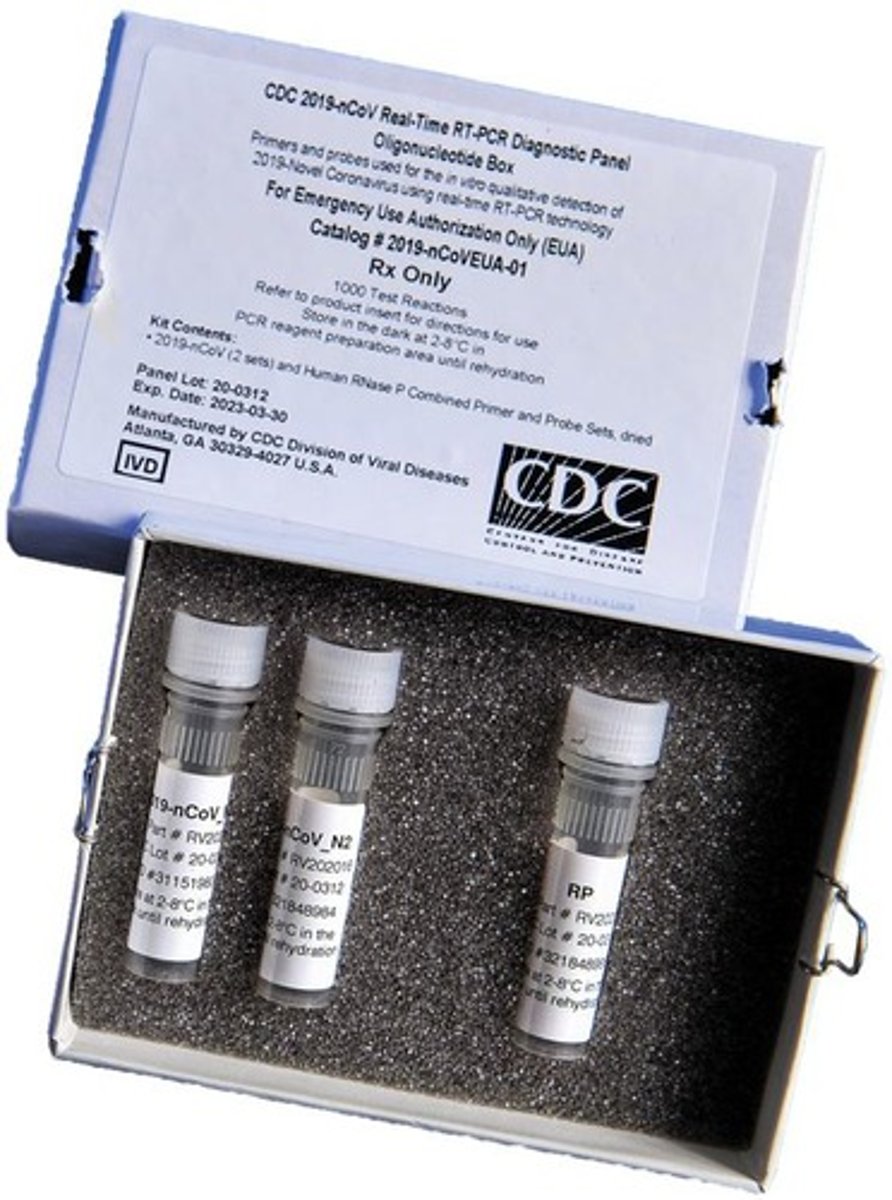
What is Real-Time PCR (qPCR)?
A PCR method that uses fluorescent labeling to measure fluorescence in real time during amplification.
What is multiplex PCR?
A PCR that contains primers for multiple organisms for differential diagnosis.
What is hybridization in microbial identification?
A technique that analyzes segments of genetic material to identify microbes using complementary probes.
What is Fluorescent in situ hybridization (FISH)?
A method that uses fluorescently labeled probes to identify microbes in patient specimens or environmental samples.
What are microarrays in infectious disease testing?
Chips containing gene sequences from various infectious agents that can hybridize with matching sequences.
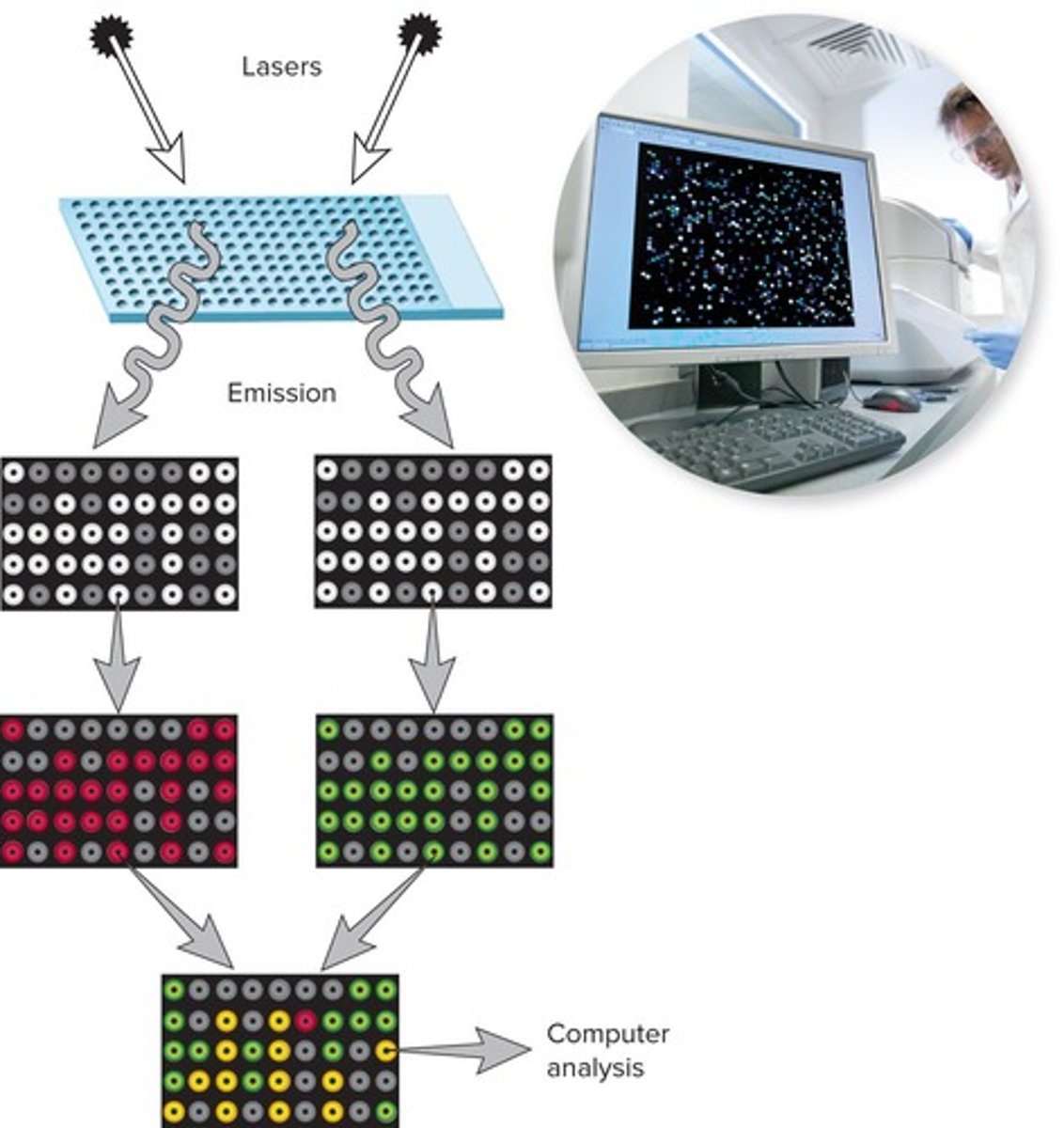
What is whole-genome sequencing used for?
Rapid analysis of outbreaks and drug-resistant organisms by scanning and analyzing genomes.
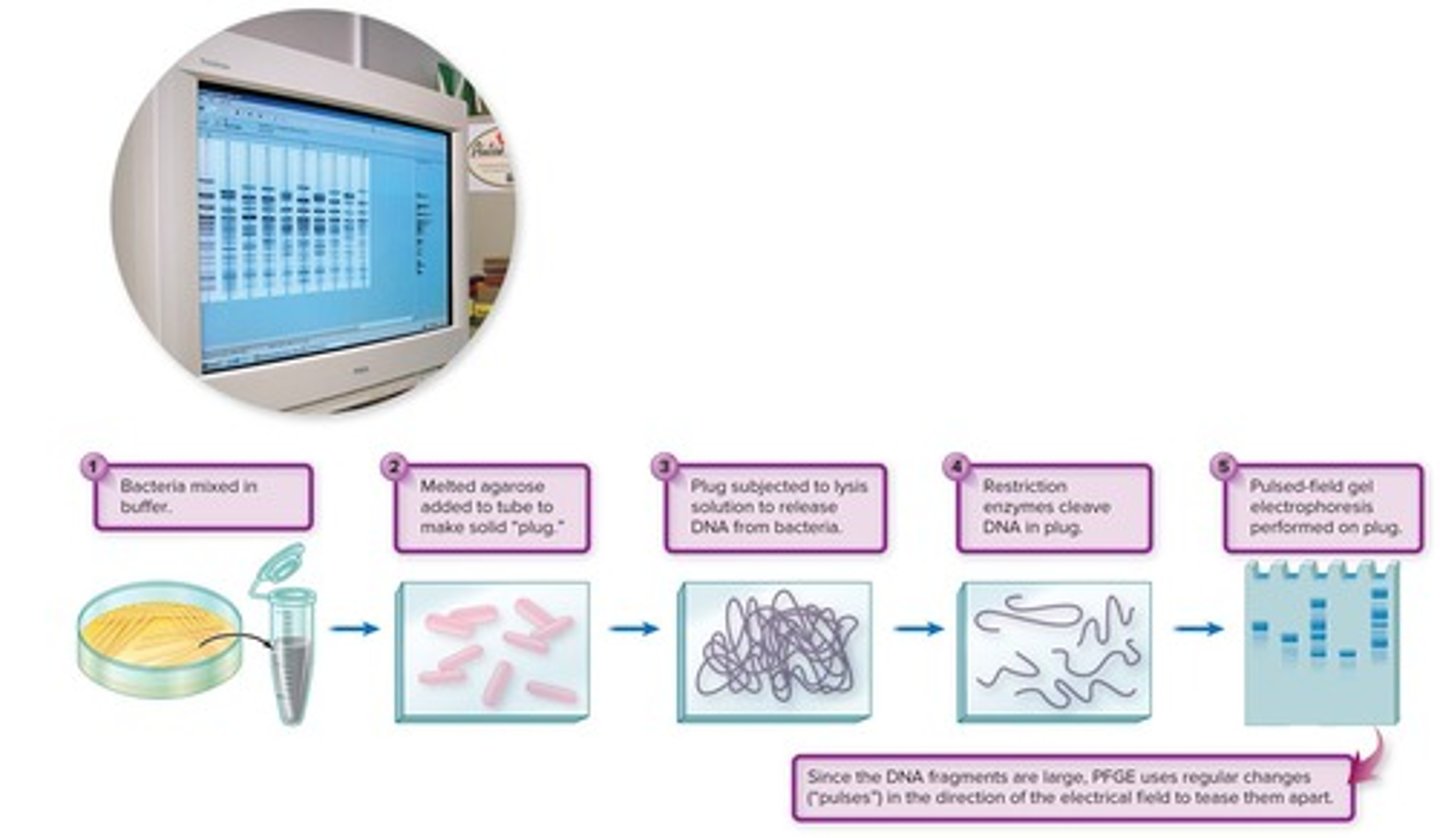
What is pulsed-field gel electrophoresis?
A method for separating large DNA fragments that allows for genetic fingerprinting of microbes.
What is Pulsed-Field Gel Electrophoresis (PFGE)?
A technique used to create microbial fingerprints for identifying foodborne pathogens.
What program did the CDC establish to assist in investigating disease outbreaks?
PulseNet
How quickly can outbreaks be identified using PulseNet?
Within hours versus days or weeks.
What is the CDC transitioning PulseNet to use?
Whole-genome sequencing.
What does Fluorescent in situ hybridization (FISH) require?
A pure culture of organisms obtained from a patient sample.
What are 'lab on a chip' technologies?
Miniaturized genetic tests placed on chips that are easy to use and require few supplies.
What is one major benefit of 'lab on a chip' technologies?
They have a significant impact in developing countries where diagnosis is often not possible.
What is Mass Spectrometry also known as?
MALDI-TOF.
What is the primary use of Mass Spectrometry in diagnostics?
Rapid and highly accurate microbial identification.
How does Mass Spectrometry identify samples?
By analyzing a protein fingerprint and measuring mass-to-charge ratios.
What imaging techniques are used for diagnosing infections?
X-rays, MRI, CT scans, and PET scans.
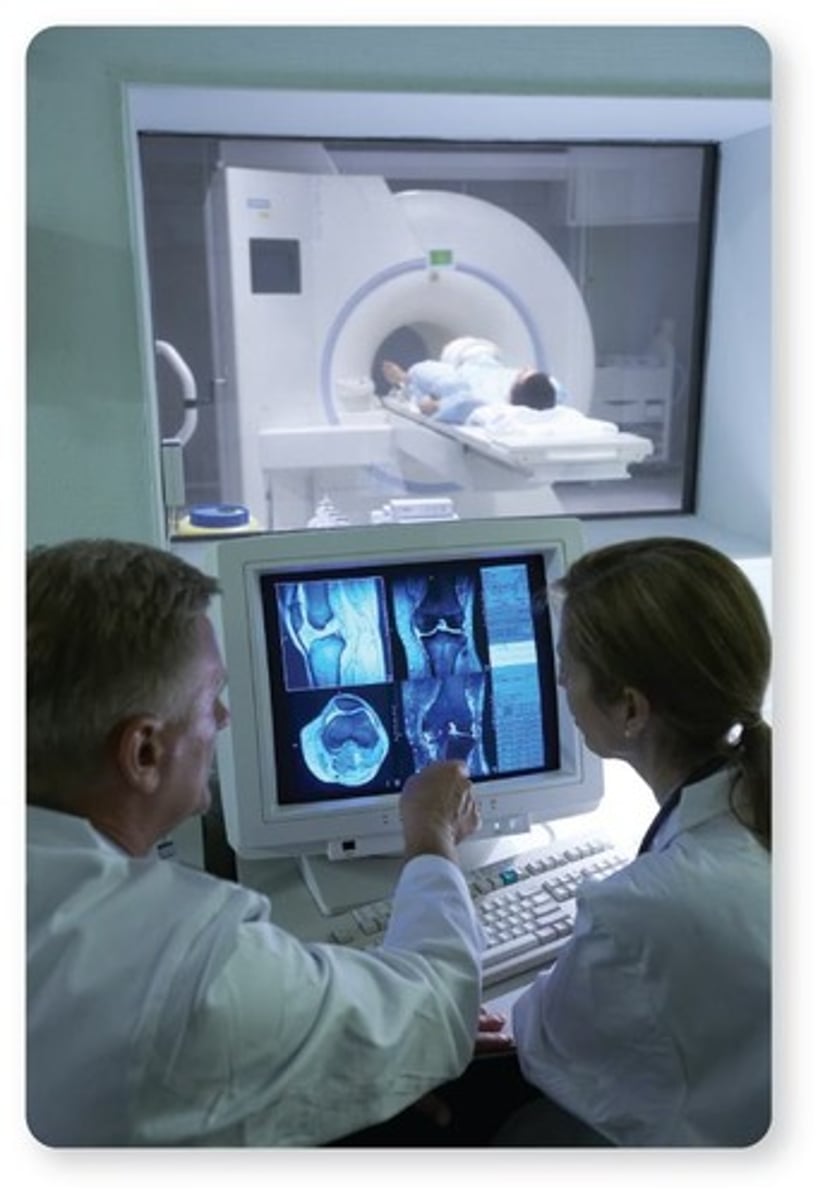
What is a key advantage of imaging techniques in diagnostics?
They can save patients from invasive biopsies.
What does the new diagnostic strategy using patient blood check for?
The presence of seven genes expressed in response to bacterial infections.
What happens if the seven genes are active in the new blood test?
The prescriber knows to prescribe an antibiotic.
What is the significance of the new blood test developed at Stanford University?
It aims to quickly determine if an infection is bacterial or viral.
Which technology detects microbes via their protein fingerprints?
Mass Spectrometry.
What types of samples can be analyzed using Mass Spectrometry?
Pure culture isolates or directly from patient specimens.
What is the role of imaging techniques in diagnosing localized infections?
To find areas of infection in deep tissue.
What are some common methods of specimen collection mentioned?
Saliva, sputum, swabs, spinal tap, feces, urine, and blood.
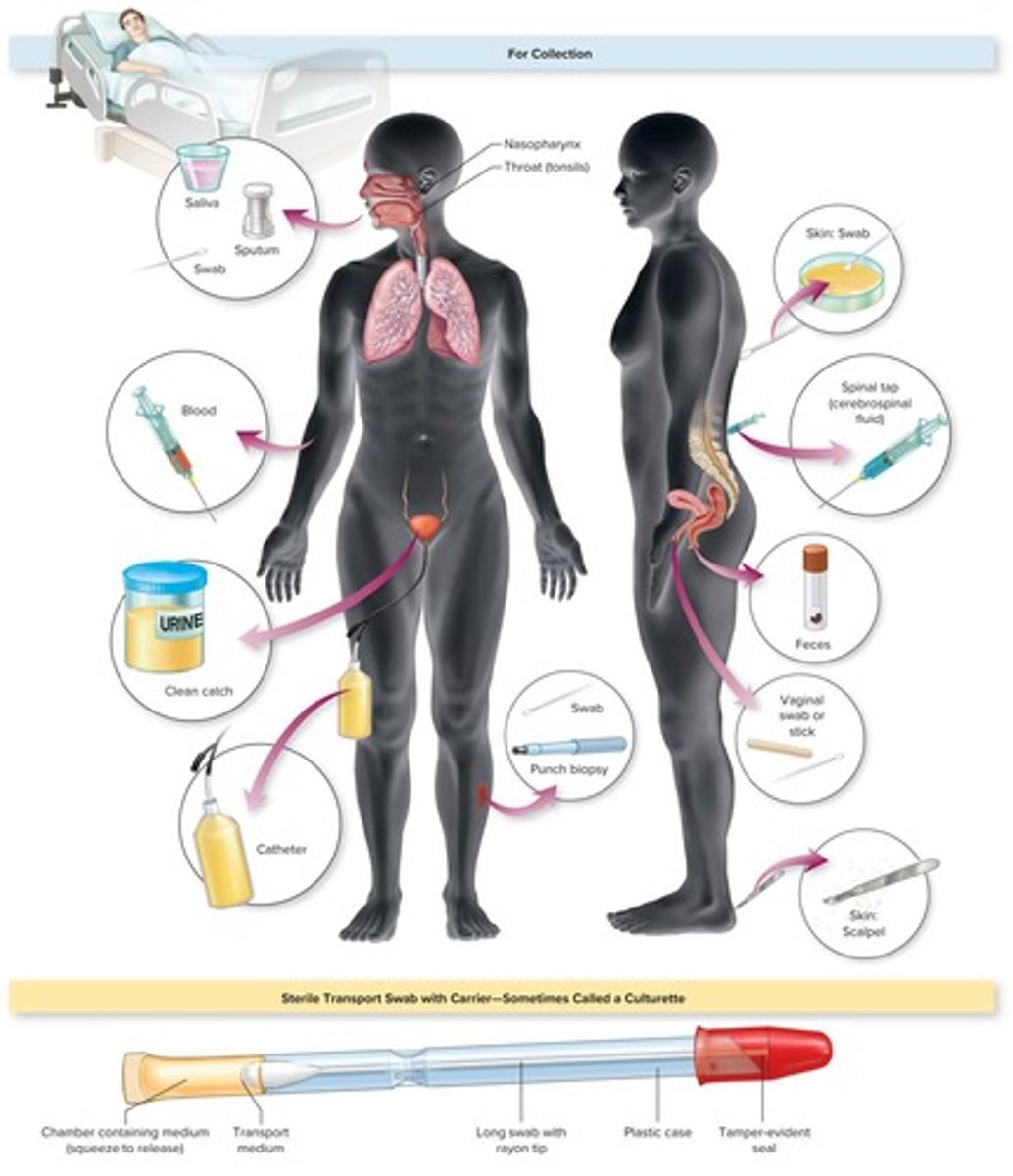
What is the purpose of a sterile transport swab?
To hold transport medium and a swab for specimen collection.
What is the significance of antibiotic susceptibility detection in Mass Spectrometry?
It can simultaneously detect antibiotic susceptibilities.
What does the concept check regarding FISH state?
It requires a pure culture of organisms.
What is the main advantage of using 'lab on a chip' technologies?
They simplify the diagnostic process and reduce the need for extensive training.
What are the benefits of using imaging techniques in diagnostics?
They help visualize infections without invasive procedures.
What does the term 'entirely new diagnostic strategies' refer to?
Innovative methods that improve the accuracy of diagnosing infections.
What is the purpose of the patient blood test developed by researchers?
To differentiate between bacterial and viral infections.