Cellular Adaptation/Injury/Death
 Call Kai
 Learn
Learn Practice Test
 Spaced Repetition
 Match
Match Flashcards
 Knowt Play
1/15

There's no tags or description
Looks like no tags are added yet.
Name | Mastery | Learn | Test | Matching | Spaced | Call with Kai | Chat |
|---|
No analytics yet
Send a link to your students to track their progress
16 Terms
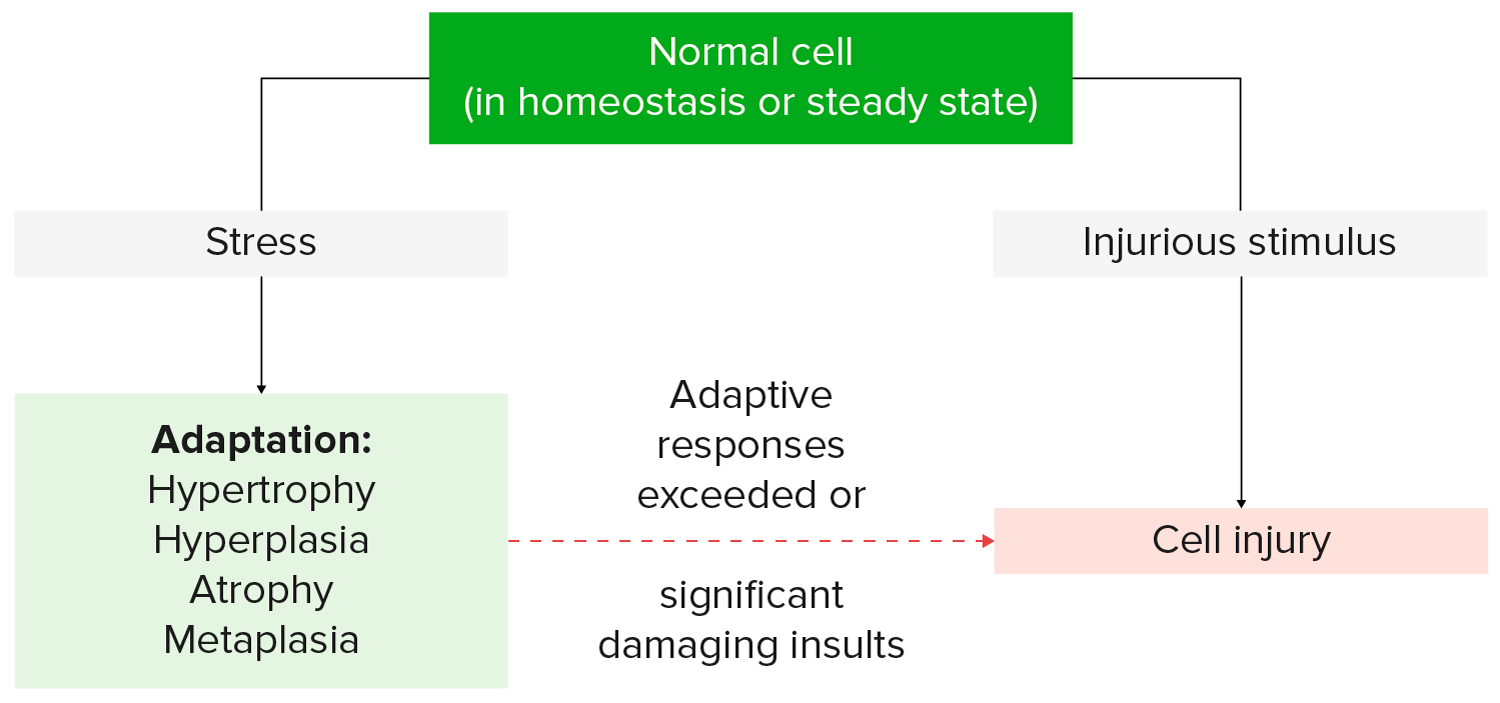
Cellular Adaptation
cell adapts to maintain homeostasis to it’s best ability
failure to adapt→cellular injury+death
adaptation types:
size
number
type
cellular adaptation: size changes
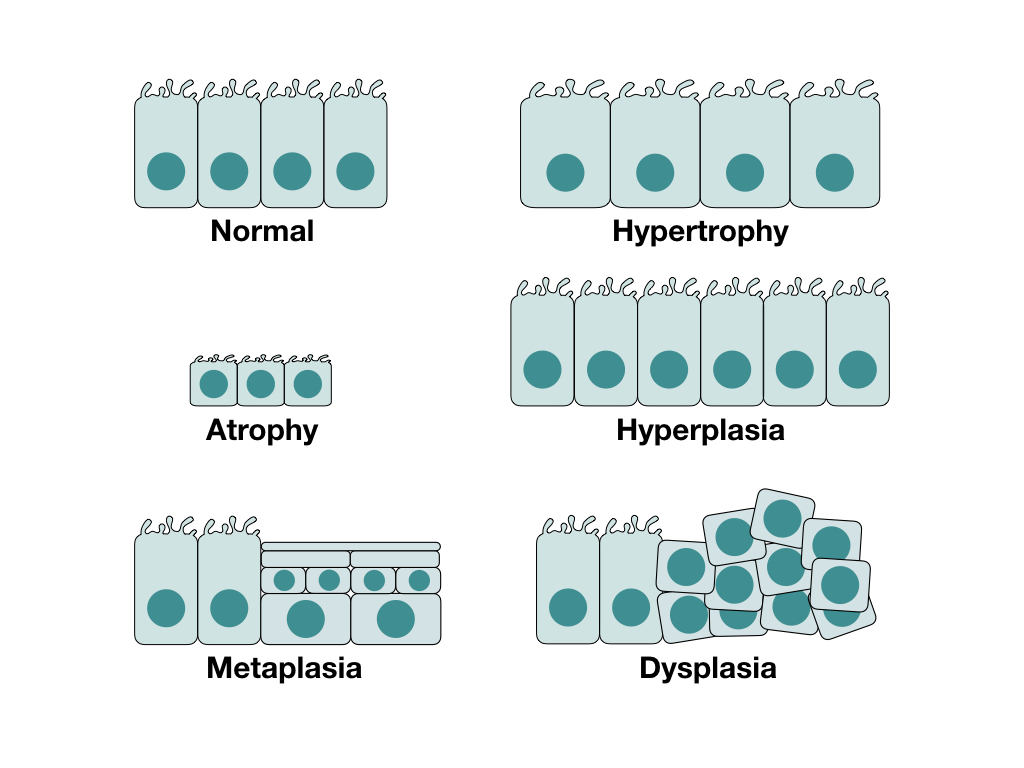
Atrophy: decreased workload/adverse environmental factor→smaller size→more efficient
hypertrophy: increased workload→larger size+increased tissue mass→more efficient
cellular adaptation: number changes
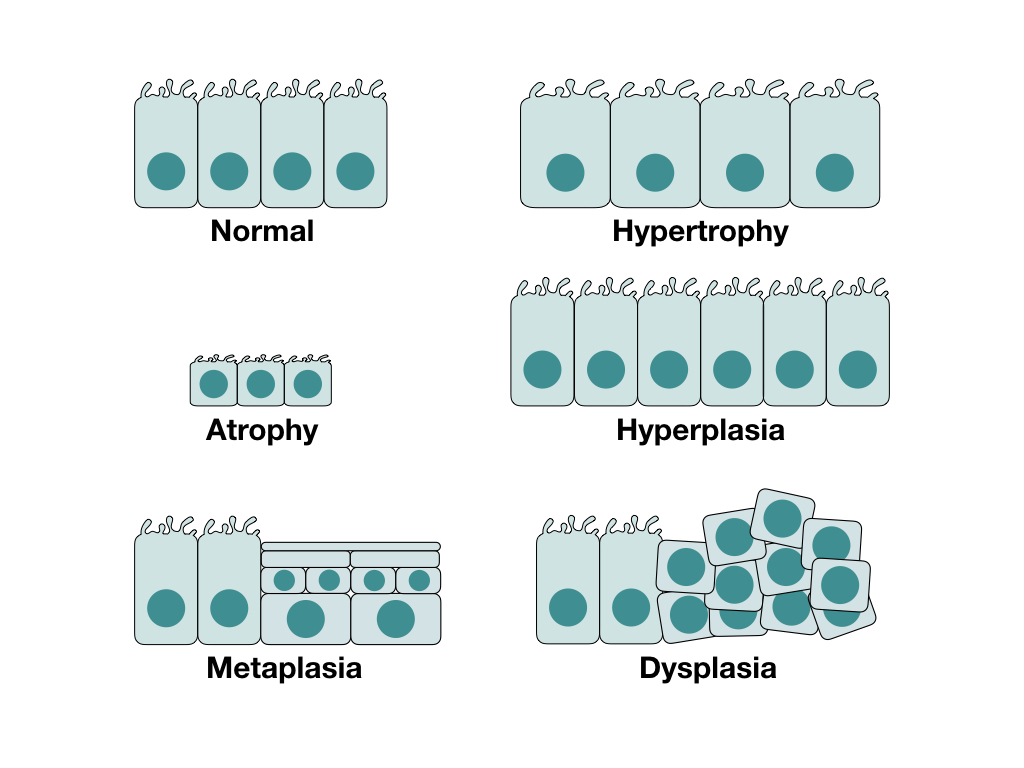
hyperplasia: increased number of cells
only in cells capable of mitosis
metaplasia: chronic irritation/inflammation→one cell type replaces another
reversible
maybe precancerous
dysplasia: deranged cell growth→varied size/shape/organization
maybe reversible
strong precursor to cancer
normal→hyperplasia→dysplasia→cancer
cellular injury causes
physical agents:
injury/trauma
extreme temperature
electrical forces
radiation injury:
ionizing
ultraviolet (UV)
non-ionizing
chemical injury:
drugs
lead
mercury
biological agents:
viruses
parasites
bacteria
nutritional imbalances: excess and deficiencies
cellular injury classes
reversible: stressor removed→damage mild→cells survive
irreversible→cell death
apoptosis: normal
ex: menses
aging
necrosis: digestive enzymes remove dead cells after dead organism
pathological necrosis: cell death in an organ/tissue in a living organism
unregulated enzymatic destruction→loss of cell membrane integrity→inflammatory response
Intracellular Accumulations (General)
buildup of substances that the cell cannot immediately use or eliminate
usually in
cytoplasm
-lysosomesnucleus
abnormal substances
-endogenous
-exogenous
transient or permanent/toxic or harmless
water accumulation
mechanism: ATP/pump/electrolyte issue→water moves into the cell
result:
cytoplasm degeneration
organ swelling
reversible or sublethal
manifestation:
fever
hypokalemia
infection
lipid accumulation
mechanism: metabolic disorders (obesity/diabetes)
protein malnutrition
toxins
anoxia (no O2 in tissues)
result: lipids accumulate in spleen/liver/CNS
manifestation:
CNS: neurologic deficits
intellectual impairment (Tay-Sach’s)
liver: steatosis (fatty liver)
protein accumulation
mechanism: genetic mutation
result: intracellular accumulation→release of enzymes/crowding of organelles→cell damage
manifestation: kidneys
plasma cells in immune system
pigment accumulation
mechanism:
endogenous:
melanin
hemoglobin
exogenous:
coal dust
tattoo dye
result: UV→stimulates synthesis of melanin+traps free radicals
manifestation:
melanoma
skin moles
albinism (absence of melanin)
calcium accumulation
mechanism: mitochondria+endoplasmic reticulum release calcium
result:
membrane damage
cytoskeleton damage
chromatin damage
phosphorylation damage
chromatin fragmentation
manifestation: cellular calcification
urate accumulation
mechanism: elevated serum urate levels
result: sodium urate crystals accumulate in tissues
manifestation: gout
cellular injury systemic manifestations
fatigue
malaise
loss of well-being
altered appetite
fever
leukocytosis (increase in WBC)
increased heart rate
pain
etc.
necrosis vs. apoptosis
necrosis:
induced by injury
surrounding inflammatory response
large areas of contiguous cells
pathological cellular response
apoptosis:
genetically triggered
little/no inflammation
only a few scattered cells involved
part of normal cellular relations
necrosis types
caseous:
E: tuberculosis pulmonary infection
coagulative+liquefactive necrosis combination
walled off cheese-looking substance
fat: action of lipases
E: breast
pancreas
other abdominal structures
gangrenous:
clinical term
dry vs. wet vs. gas gangrene
coagulative: protein denaturation+changes protein albumin
E: kidneys
heart
adrenal glands
liquefactive: hydrolytic enzymes→liquid-filled cysts/pus
E: neurons
glial cells
apoptosis
programmed cellular death
active process of cellular destruction
can be normal or pathologic
dysregulated apoptosis:
insufficient (too little) or excessive (too much)
P: cancer
autoimmune disorders
neurodegenerative disease
ischemic injury