ch 16 disaster mgmt
 Call Kai
 Learn
Learn Practice Test
 Spaced Repetition
 Match
Match Flashcards
 Knowt Play
1/42

There's no tags or description
Looks like no tags are added yet.
Name | Mastery | Learn | Test | Matching | Spaced | Call with Kai |
|---|
No analytics yet
Send a link to your students to track their progress
43 Terms
disaster
as a serious disruption to a community or society that goes beyond the affected community's ability to cope using its own resources
any natural or human-made incident that causes disruption, destruction, or devastation requiring external assistance
natural disaster
earthquakes, volcanoes, floods, deadly storms, infectious diseases [bubonic plague by yersinia pestis, COVID-19, ebola pandemic
ex texas flooding 2025, fire los angeles 2025
man-made disaster
bombing, chemical/biological warfare, mass casualty event
ex vegas shooting 2017
heat exhaustion
move to cooler area
loosen clothes
seek medical attention if symptoms don’t improve
symptoms: dizziness, thirst, sweating, nausea, weakness
heat stroke
move person to cooler area asap
loosen clothing
cool w/ water/ice
CALL 911
symptoms: confusion, dizziness, loss of consciousness
protect yourself from heat/sun
water
sunscreen
avoid alc
bevs with electrolytes
light loose clothing
breaks in shade
trend of global disaster/economic loss
on a steady rise since 1980
711 events in 1970 → 3,500 in 2000s
climate related disasters → doubled since previous two decades
intensity/frequency/duration of droughts → doubled over the past 5 years
global losses from natural disasters average $250 to $300 billion annually and are expected to rise further by 2030
what people do disasters impact?
disasters disproportionately strike at-risk individuals, including the poor, elderly, women, children, and ethnic minorities in developing communities
role of nursing in disaster mgmt
disaster care is often unexpected and not something providers choose, except for those on specialized teams (e.g., dmat or who emergency medical teams)
because disasters are unpredictable, any healthcare provider may be involved
all healthcare workers need basic knowledge of disaster medicine
nurses play a major role as the largest part of the healthcare team
duties in disaster
all nurses can be called upon when disaster occurs (typically public health and ED nurses)
many have volunteered from far away to respond
florence nightingale
disaster nurse during crimean war
took 38 nurses w/ her to turkey
assumed responsibility in barracks hospital
clara barton
worked during u.s. civil war to provide care to soldiers
founded american red cross in 1881
“angel of battlefield”
disaster cycle
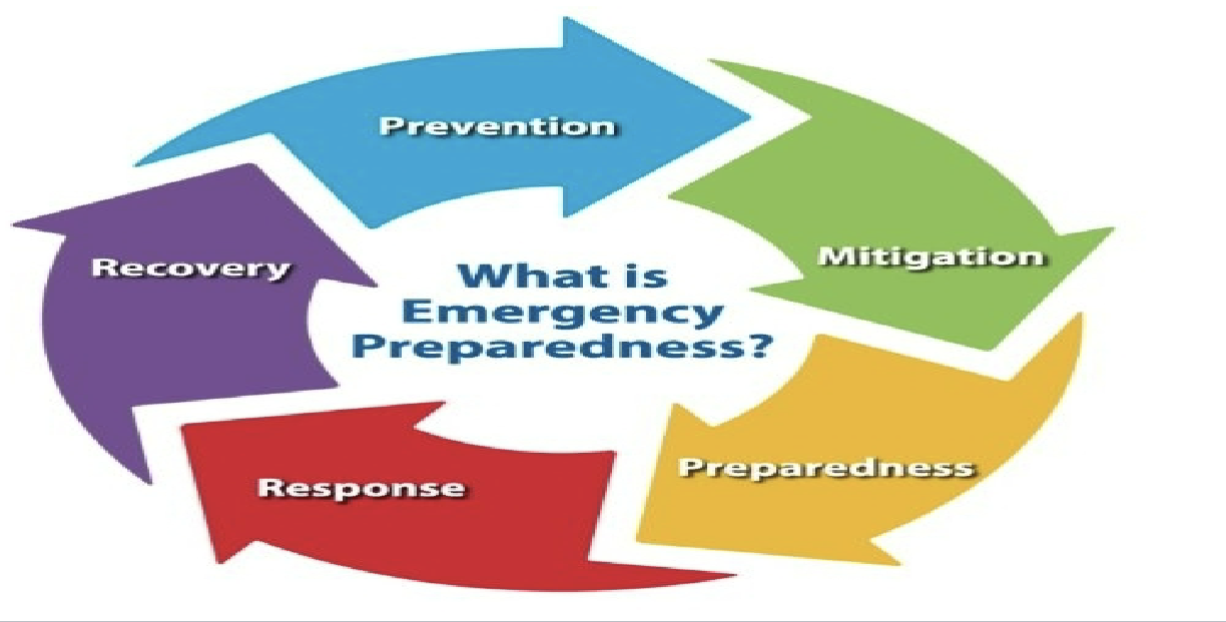
prevention
mitigation
preparedness
response
recovery
prevention
physical planning: reduce risk through land use control, infrastructure design, and managing population density
economic measures: support stability with diversification, incentives, and insurance
societal measures: educate the public, promote awareness, and involve communities with training and drills
management/institutional: strengthen systems through training, research, expertise, and local capacity building
engineering/construction: build safer structures and hazard-resistant infrastructure
HSEEP: planning and drills strategies to mitigate disaster impact and enhance community resilience
mitigation
mitigation focuses on assessing risks and reducing the chance of disasters
uses hazard vulnerability analysis (hva) to evaluate risks and update disaster plans regularly
requires an interdisciplinary approach to understand system strengths and limits
emphasizes hygiene and vaccinations to prevent disease outbreaks
nurses play a key role in prevention, education, and community training
preparedness
during preparedness, nurses should be involved as key team members and subject matter experts in disaster planning
they play an essential role in both planning and carrying out drills
nurses are critical to effective disaster response due to their frontline role
self-preparedness
develop a personal and family preparedness plan, as nurses may be away for an unknown time
be mentally prepared for separation from family during disasters
do not self-deploy to disasters
volunteer through official organizations that verify credentials
response
“all disasters are local” means communities respond first using local people and resources
neighbors and local responders provide initial help before outside aid arrives
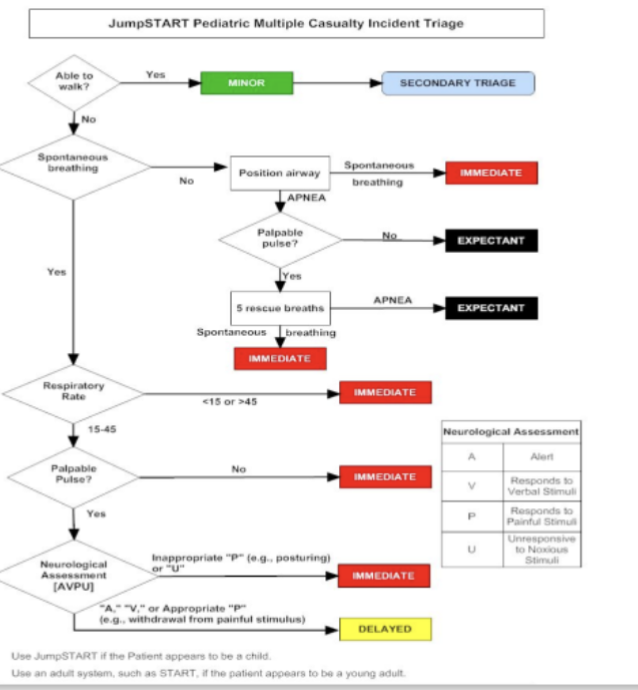
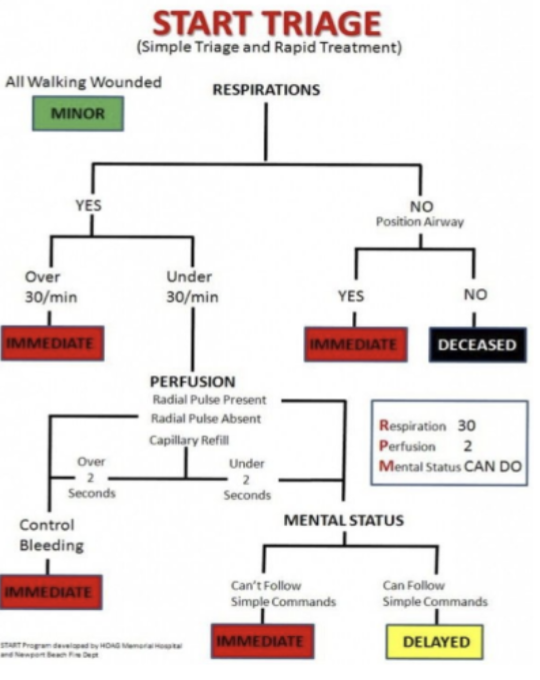
START triage, JumpSTART triage (for peds)
nursing in sheltering are ideal due to skills in emotional support
“red cross ready” and go bag
families should store at least 3 days of nonperishable food and water (1 gallon per person per day), a radio, a flashlight, and extra batteries.
in addition to standard items, nurses should include an identification badge, proof of licensure, stethoscope, BP cuff, PPE, and record-keeping materials.
triage
disaster triage is sorting patients by priority for treatment and transport
focuses on doing the greatest good for the greatest number
red: immediate care (life-threatening)
yellow: delayed care (serious but not immediate)
green: minor injuries (can wait)
black: expectant/deceased (unlikely to survive with available resources)
key international triage systems
start: simple triage and rapid treatment, commonly used in mass casualty events
jumpstart: pediatric version of start for children
salt triage: sort, assess, lifesaving interventions, treatment/transport
careflight: rapid triage system using color tagging
START triage steps
role of nurses in triage
perform rapid assessments under pressure
work as part of multidisciplinary teams
handle communication and documentation
take on leadership and coordination roles
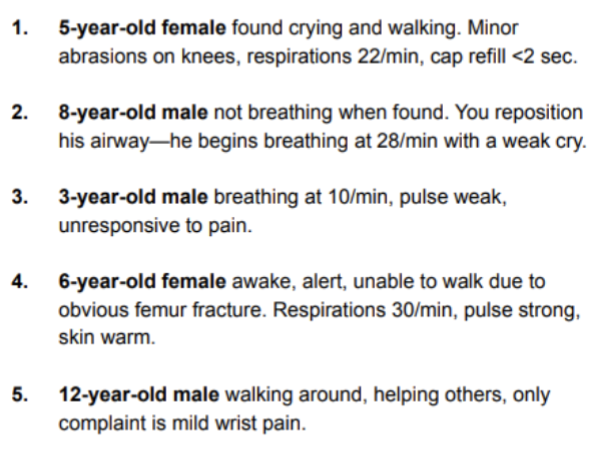
triage scenarios pt.1
5-year-old → green (minor)
8-year-old → red (immediate)
3-year-old → red (immediate)
6-year-old → yellow (delayed)
12-year-old → green (minor)
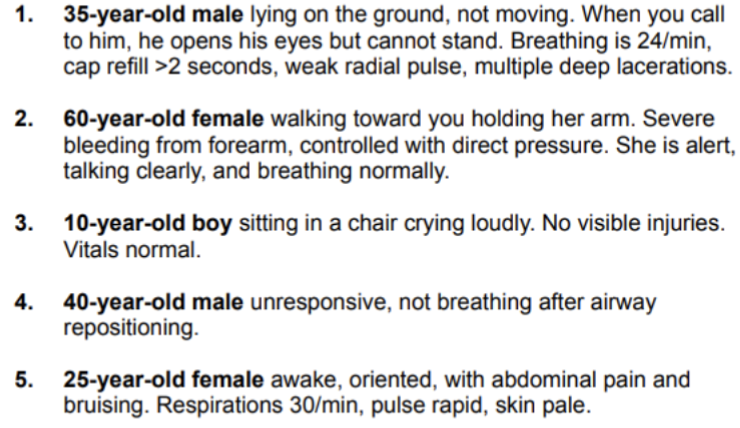
triage scenarios pt.2
35-year-old male → red (immediate)
60-year-old female → yellow (delayed)
10-year-old boy → green (minimal)
40-year-old male → black (expectant/deceased)
25-year-old female → red (immediate)
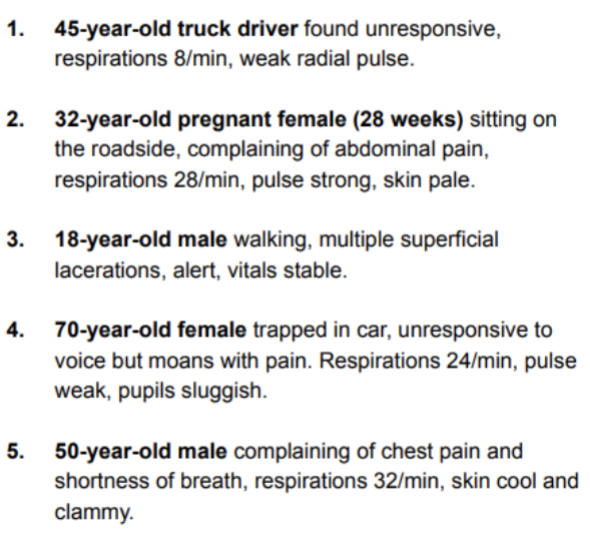
triage scenarios pt.3
45-year-old truck driver → red (immediate)
32-year-old pregnant female → yellow (urgent)
18-year-old male → green (delayed)
70-year-old female → red (immediate)
50-year-old male → red (immediate)
stop the bleed
“stop the bleed” teaches that anyone nearby can act immediately to save lives before help arrives
developed after the 2012 sandy hook tragedy, where many victims died from preventable blood loss
the 2013 hartford consensus (acs, fbi, trauma experts) created national strategies to reduce bleeding deaths
emphasizes rapid hemorrhage control by bystanders (direct pressure, tourniquets, dressings)
promotes widespread availability of bleeding control kits
encourages coordination with ems and law enforcement response
key actions: apply direct pressure, use a tourniquet if needed, and call 911
ethical/psych considerations
moral distress during resource scarcity
balancing fairness and urgency
cultural considerations in prioritization
levels of disaster response
disaster response occurs at three levels: local, regional, and international
local responders provide immediate care and are the first line of response
outside help (regional/international) may take days to arrive
all healthcare workers need basic disaster knowledge to respond effectively
coordination across healthcare and other disciplines is essential
teams for response
local: mrc (medical reserve corps)
regional: dmat (disaster medical assistance team)
national: ndms (national disaster medical system), usphs (u.s. public health service)
international: médecins sans frontières, imc
nurses must understand disaster plans, where to report, and their role in the response system
dmat teams
dmat teams are part of ndms under dhhs and provide medical care and triage during disasters
teams include a wide range of professionals (nurses, physicians, emts, pharmacists, etc.) and are deployed to federal disaster sites
they work in difficult, high-stress environments and are identified by region/state
role: support overwhelmed hospitals by providing care onsite or in alternative locations
early phase: treat acute injuries (lacerations, fractures, trauma, cardiac events, strokes, respiratory issues)
later phase: manage chronic conditions (diabetes, renal failure, chf, copd, asthma, hypertension)
other orgs that aid in disasters
red cross
salvation army
CERTs
citizen’s corps
intraoperability of civilians and military
military nursing involves extensive training in trauma care (burns, blasts, penetrating injuries) along with ongoing drills and hospital-based experience
civilian-military coordination requires healthcare providers to work within larger, multidisciplinary response systems
disaster care often occurs in resource-limited environments
interoperability means both systems must work together effectively during disaster response
available resources in the community
blood bank
pharmacy stockpiles
alternate care sites
shelters
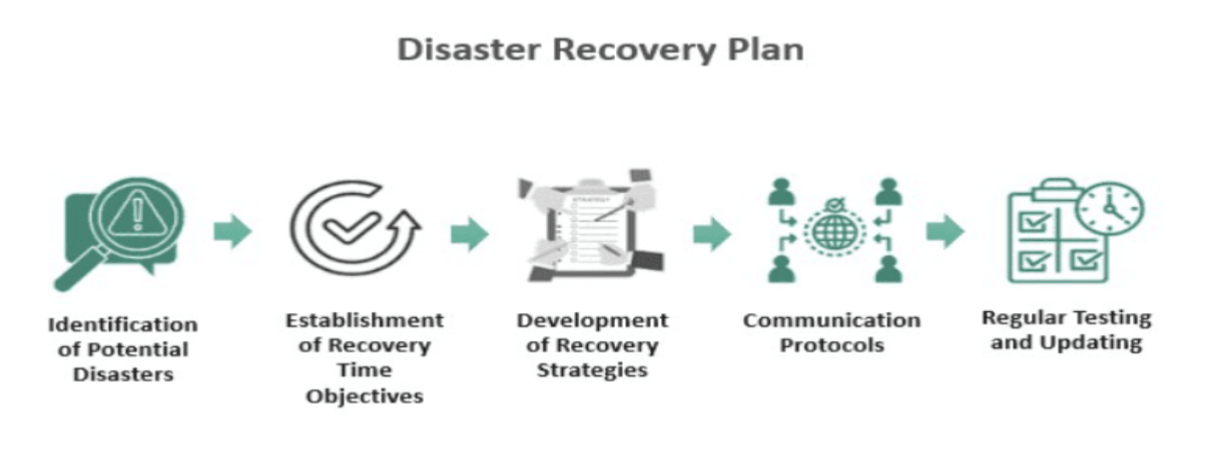
recovery
after a disaster, communities work to return to normal both physically and emotionally
nurses monitor and support mental, emotional, and physical recovery of the community
healthcare workers must also address their own stress and recovery
nurses help create after-action reports to evaluate response efforts
lessons learned are used to improve future disaster preparedness and response
stress reactions and phases
heroic phase: intense drive to help, often ignoring personal needs
honeymoon phase: relief and strong community bonding among survivors
disillusionment phase: frustration, burnout, and disappointment as support declines
reconstruction phase: long-term rebuilding and return to a new norma
psychological stress of disaster nurses
risk factors: chaotic environments, long hours, constant changes, and neglect of self-care
symptoms of stress: irritability, fatigue, headaches, tremors, nausea, and poor focus
delayed reactions: exhaustion and difficulty adjusting after the disaster ends
coping strategies: debrief with mental health support and prioritize rest, nutrition, and family connection
basics
national response framework (nrf): guides how the u.s. responds to all disasters using a flexible, coordinated approach based on nims
incident command system (ics): organizes disaster response into five areas—command, planning, logistics, operations, and finance/administration
both systems improve coordination, organization, and interoperability during emergencies
ics and heics principles
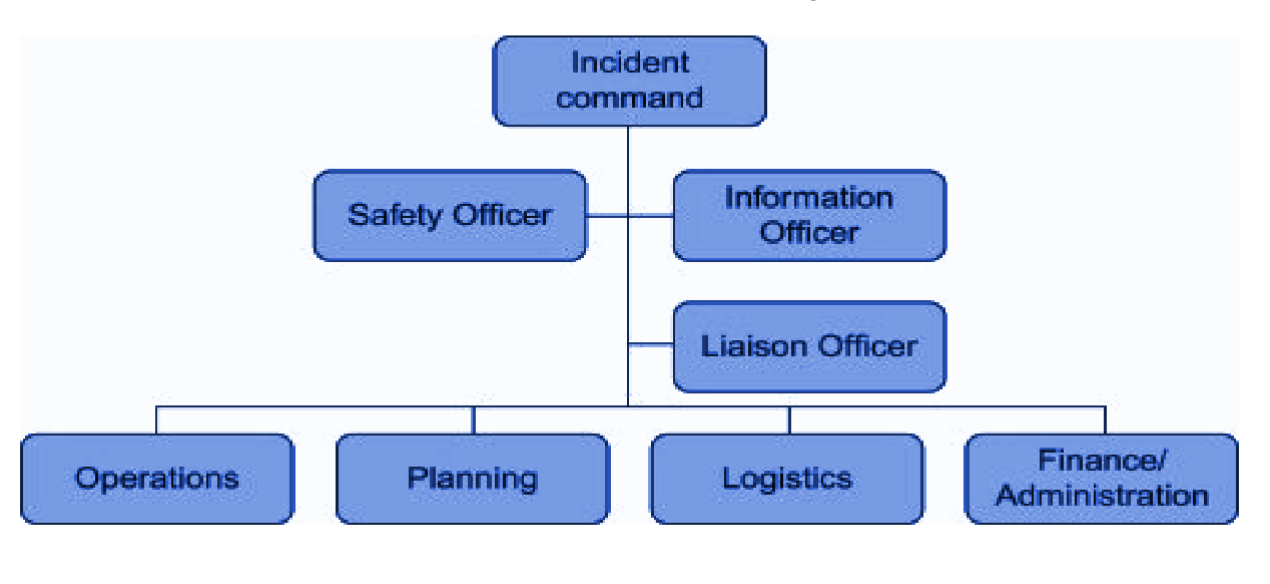
incident command is the overall leader of the response
command staff includes safety officer, information officer, and liaison officer
operations: carries out the response actions
planning: develops plans and tracks information
logistics: provides supplies, staff, and resources
finance/administration: manages costs, records, and administrative tasks
nrda
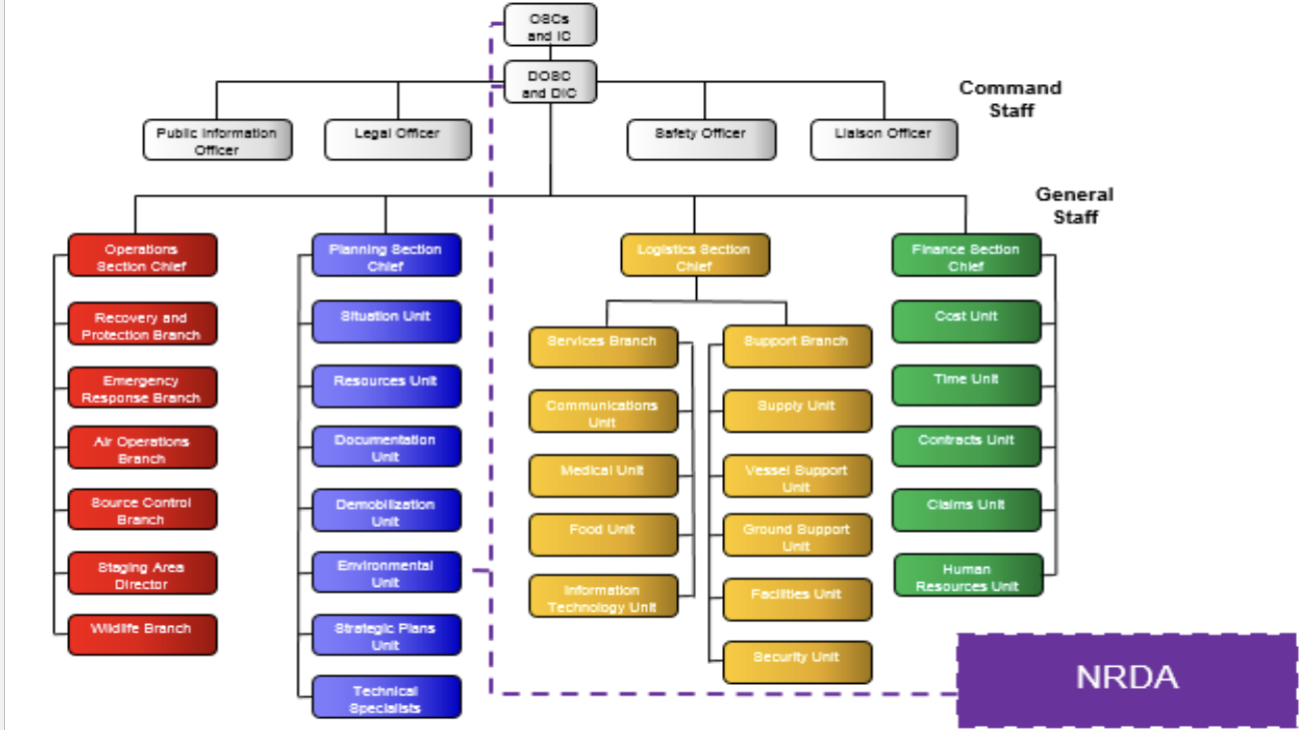
beyond the basics
nurses need understanding of disaster plans and injury/disease processes they may encounter
responsibilities include patient care, managing patient flow, and handling surge capacity
disaster triage is a simplified system focused on prioritizing by acuity
goal is to use limited resources efficiently and save the greatest number of patients
our profession however has limited opportunities for developing this expertise
training for disaster
training healthcare workers for disaster response is a major priority but standardized programs are still limited
icn and who developed a framework of nursing competencies to guide disaster training
there is a strong need to build nursing skills to reduce injuries and deaths
global challenges like epidemics, pandemics, and violence highlight the importance of this training
countries can use these frameworks to address their own disaster preparedness needs
nurses in crisis leadership
nurses in leadership roles help design disaster response plans and drive improvements
disaster nursing leadership models continue to evolve for future challenges
planning often overlooks how to recruit, screen, and mobilize nurses during disasters