HEATING, VENTILATION, AND AIR-CONDITIONING (HVAC)
 Call Kai
 Learn
Learn Practice Test
 Spaced Repetition
 Match
Match Flashcards
 Knowt Play
1/127

There's no tags or description
Looks like no tags are added yet.
Name | Mastery | Learn | Test | Matching | Spaced | Call with Kai | Chat |
|---|
No analytics yet
Send a link to your students to track their progress
128 Terms
Freon
a normal gas at normal temperature and pressure.
Freon
It is first subjected to high pressure
in a compressor which raises its boiling point and temperature.
Freon2
an aerosol propellant, refrigerant, or organic solvent consisting of one or more of a group of chlorofluorocarbons and related compounds.
Piston Type or Reciprocating Compressors
for tonnages up to 100 tons, Usually, draw power from a diesel
engine. This can be by way of a direct- drive or a belt-drive system.

Centrifugal Compressors
these are quitter, have fewer vibration problems, require less maintenance, and with better operating control.

Screw-type Compressors
use two “screws” to compress refrigerant.
Air-cooled Condensers
– used in unit and packaged-typed air conditioners
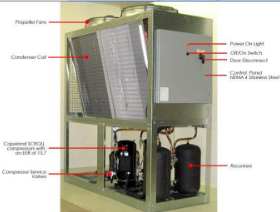
Shell and Tube Heat Exchanger
The refrigerant is expanded into a shell enclosing the tube through which the water flows.
Direct Expansion Coils
(coils containing the refrigerant itself) –This may either be installed in the spray chamber so that water sprayed into the air comes into contact with the cooling coils or the air itself comes into direct contact with the cooling coils, as in the window type unit.
Tempering Coils
contain steam and are used to heat the air i.e., pre-heaters and re-heaters.
Water Heaters
– used for heating the water which will be used in the spray chamber to add heat and humidity to the air.
Dry Filters
consist of wireframes enclosing felt, cotton, or sponge through
which the air is screened.

Viscous Filters
– consist of metal deflecting plates or screens coated with viscous oil.

Eliminator Plates
consist of corrugated galvanized iron sheets placed 1-1/8” apart
which deflect the airflow about 30 deg catching the wet dust on the surfaces.

Ducts
are usually of galvanized sheet metal, or aluminum sheers, usually rectangular in section, depending on the aspect ratio

Aspect Ratio
The ratio of width and height of the duct.
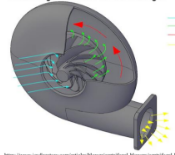
Centrifugal fans (radial fans)
these are intended for moving air at comparatively high pressures and are commonly used in duct systems.
Propeller or axial fans
commonly used for wall exhaust

Air -outlets
these are made for two locations: wall and ceiling.
Wall Vent

Perforated Grills
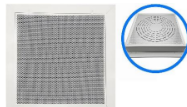
Plaques

Perforated Panel
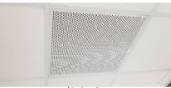
Perforated Ceiling Diffuser

Humidistat
or Hygrostat is a controller, sensitive to the amount of humidity in the air.
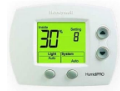
Thermostat
a controller which responds to changes in
temperature.
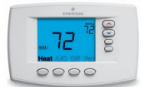
Pressure Regulators
are instruments sensitive to changes in pressure. They may control a single pressure or a differential between two pressures.

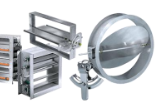
Dampers
these control the flow of air and are in the form of louvers.
Control Valves
these are valves with variable orifices which are moved by motors to present smaller or larger openings as directed by a thermostat.
Relays
devices that use electrical energy to amplify or convert the power of a thermostat or other controllers so that the resultant force will be sufficient and adaptable to operate a valve or damper.
ACCIDENTAL CONTACT
Any inadvertent physical contact with power transmission equipment, prime movers, machines, or machine parts that could result from slipping, falling, sliding, tripping, or any other unplanned action or movement.
AIR CONDITIONING
The process of treating the air to control simultaneously its temperature, humidity, cleanliness, and distribution to meet the requirements of the conditioned space.
BOILER
A closed vessel for heating water or for the application of heat to generate steam or other vapor to be used externally or to itself.
CAPACITY OF WORKS, PROJECT, OR PLANT
The total horsepower of all engines, motors, turbines, or other prime movers installed, whether in operation or not
COMPRESSOR
A vessel or arrangement of pipes or tubing in which vaporized refrigerant is liquefied by the removal of heat.
CONDEMNED BOILER OR UNFIRED PRESSURE VESSEL
A boiler or unified pressure vessel that has been inspected by the building official and declared unsafe or is qualified and power stamped or marked designating its rejection.
CRANE
This means a machine for lifting or lowering load and moving horizontally, hosting the hoisting mechanism being an integral part of the machine.
DUCT
Means a machine for lifting or lowering a load and moving it horizontally, the hoisting mechanism being an integral part of the machine.
ENCLOSED
This means that the moving parts of the machine are guarded by the physical that physical contact by any part of the human body is precluded or prevented. This does not however prohibit the use of hinged, sliding, or otherwise removable doors or sections to permit inspection, lubrication, or proper maintenance.
EVAPORATION
That part of the AC/refrigerator system in which liquid refrigerant is vaporized to produce refrigeration.
EXTERNAL INSPECTION
An inspection was made on the boiler during the operation.
GUARDED
Shielded, fenced, or otherwise protected using suitable enclosure guards, covers, or standard railings, to preclude the possibility of accidental contact or dangerous approach to person or objects.
INTERNAL INSPECTION
An inspection made when a boiler is shut down, with hand holes, manholes, or other openings opened or removed to permit inspection of the interior.
LIQUID RECEIVER
A vessel permanently connected to a system by inlet and outlet pipes for storage of a liquid refrigerant.
LOCOMOTIVE BOILER
boiler mounted on a self-propelled track locomotive used to furnish motivating power for traveling on rails.
LOW-PRESSURE HEATING BOILER
boiler operated at pressures not exceeding 1.05 kgs/sqm with steam or water temperature not exceeding 250°F.
MACHINE
The driven unit of equipment.
MACHINE HOUSE
An enclosure for housing the hoisting mechanism and power plant.
MACHINE PARTS
Any or all moving parts of a machine.
MECHANICAL WORKS, PLANT
Includes steam plants, internal combustion engine plants, hydraulic power plants, pumping plants, refrigerating plants, air conditioning plants, mill shops, factories, foundries, shipyards, etc. containing any mechanical equipment, machinery or process, driven by steam, internal or external combustion fuel, electricity, gas, air, water, heat, chemicals or other prime movers.
POINT OF OPERATION
That part of a machine that operates on the stock or material and/or that place or location where stock or material is fed to the machine. A machine may have more than one point of operation.
PORTABLE BOILER
An internally fired boiler that is self-contained, primarily intended for a temporary location.
PRIME MOVER
An engine or motor operated by steam, gas, air, electricity, or liquid. Or gaseous fuels, liquids in motion, or other forms of energy whose main function is to drive or operate, either directly or indirectly, other mechanical equipment.
PROCESS MACHINE
Equipment designed and operated for a specific purpose.
REFRIGERANT
substance that produces a refrigerating effect by its absorption of heat while expanding or evaporating.
TON OF REFRIGERATION
The useful refrigerating effect is equal to 12,000 BTU/hour; 200 BTU/min.
UNFIRED PRESSURE VESSEL
vessel in which pressure is obtained from an external source or an indirect application of heat.
VENTILATION
Process of supplying or removing air by natural or mechanical means to or from any space.
Boilers may be located inside buildings
provided that the boiler room is of reinforced concrete or masonry and that the boiler room shall not be used for any purpose. Where shoul the Boilers be located
outside the building at a distance of not less than 3.00 m from the outside wall of the main building
In case the main building is not made up of fire resistive material, boilers shall be located ___________________________________________________ and the building housing the boiler shall be made up of fire resistive materials.
one meter
No part of the boiler shall be closer than ______ from any wall.
175 km per hour, 5.00m, 50m
Smokestacks whether self-supporting or guyed, shall be of sufficient capacity to handle fuel gasses, shall be able to withstand a wind load of _________ and shall rise at least ______above the eaves of any building within a radius of ___.
46 sqm
Boilers with more than _____ of heating surface shall each be provided with two means of feeding water, one steam driven and one electrically driven, one pump, and one injector.
Two
How many check valves shall be provided between any feed pump and the boiler in addition to the regular shut-off valve?
2
Boiler rooms shall have at least ___ separate exits.
1, 2
Each boiler shall have at least ___ safety valve. For boilers having more than 46 sqm pressure of water heating surface or a generating capacity exceeding 907 kg per hour, ____ or more safety valves shall be required.
68-74°F (20°-23.33°C)
The temperature and humidity of the air to be used for comfortable cooling shall be maintained at____________ effective temperature at an air movement from 4.57 to 7.60 MPM within the living zone.
0.4536 kg
At least one gallon of water shall be
provided for every _____________ of ammonia in the system.
2.3 m
Refrigerant piping crossing a passageway in any building shall not be less than ____ above the floor.
2.10m
Window-type ACs installed on the ground floors of buildings shall not be less than_______ from the ground.
2.10 m
Window-type ACs installed along corridors/hallways/above the first floor shall not be less than ______ above the floor level
100mm
Piping _______ in diameter and above shall be flanged.
Galvanized
___________piping shall not be used for steam.
Blue (Freshwater, low pressure, high pressure)
Green (Saltwater piping)
Water division color
Brass or Bronze (Delivery)
Yellow (Discharge)
Oil Division color
Gray
Pneumatic Division color
Black
Gas Division pipe color
Black
Fuel Oil Division pipe color
Black (Pipes)
Black (Fittings)
Refrigerating Division pipe color
Heat Transfer Surface Plan

Expose radiator

Recessed Radiator

Enclosed Radiator Flush
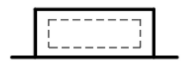
Recessed Radiator

Unit heating (propeller), plan

Unit Heater (Centrifugal) plan
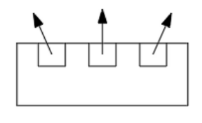
Unit Ventilator Plan

Heat Transfer Surface Plan

Blast Thermostatic Trap

Flow Meter, Venturi

Strainer, Duplex

Reducing Pressure Valve
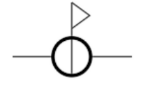
Air Live Valve

Lock Shield Valve

Diaphragm Valve

Air Eliminator Valve

Strainer

Thermometer

Hoistway Door
a door between a hoistway and an elevator landing, normally closed except when an elevator car is stopped at the landing.
Landing
the portion of a floor adjacent to an elevator hoistway, used for receiving and discharging passengers or freight.