Lecture 8: Introduction to Fungicides
 Call Kai
 Learn
Learn Practice Test
 Spaced Repetition
 Match
Match Flashcards
 Knowt Play
1/30

There's no tags or description
Looks like no tags are added yet.
Name | Mastery | Learn | Test | Matching | Spaced | Call with Kai | Chat |
|---|
No analytics yet
Send a link to your students to track their progress
31 Terms
Approximately how many fungicidal materials are there?
~150
Most fungicidal protectants are used as “_____________”
protectants
A fungicide is something that controls fungal disease by _________/_______ the causal organism.
inhibiting/killing
First fungicides were _______ & ________ based
sulfur & copper
________ fungicides work if applied prior to infection
Contact
In the 1940s and 50s, ________ and _______ were introduced
Captan® and Maneb®
What kind of fungicides are Captan® and Maneb®? Contact or systemic?
Contact
____ fungicides have improved performance (systemic and therapeutic properties), prone to resistance.
QoI
3 reasons fungicides are used
To control a disease during the establishment and development of a crop
To increase productivity of a crop and to reduce blemishes
To improve the storage life and quality of harvested plants and produce
Some of crops’ greatest losses occur ____-_______
post-harvest
For IPM, fungicides can be a vital part of disease management if: they ________ diseases satisfactorily,
control
For IPM, fungicides can be a vital part of disease management if: _______ practices do not provide adequate disease control
cultural
For IPM, fungicides can be a vital part of disease management if: _______ cultivars are not available or not accepted in the marketplace
resistant
For IPM, fungicides can be a vital part of disease management if: certain high value crops have an extremely low _______ for disease symptoms
tolerance
Fungicides are categorized in several ways based on 5 different characteristics. What are they?
Mobility in a plant
Role in protection
Breadth of activity
Mode of action
Type of chemical: organic or inorganic
2 types of mobility in a plant
Contact
Systemic
Contact fungicides are also called “___________”
protectants
What are contact fungicides?
They are protectants that remain on the surface of plants (are a residue)
Many contact fungicides are potentially ________ if absorbed
phytotoxic
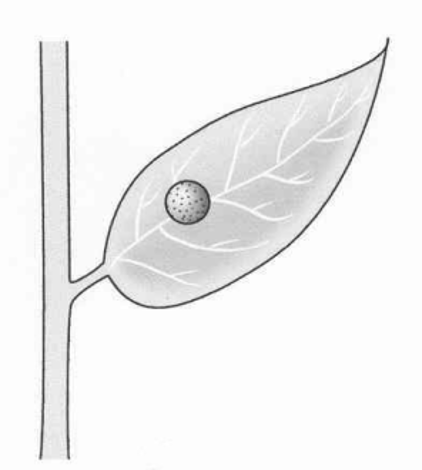
Identify the type of fungicide based on mobility in a plant: contact or systemic
Contact
True or false. Contact fungicides have after-infection activity.
False. Contact fungicides have no after-infection activity.
Repeated applications of contact fungicides are needed for what 2 things?
New growth
Replace material
Systemic fungicides are also called “___________”
penetrants
Describe systemic fungicides
They are penetrants that are arbosrbed into plants
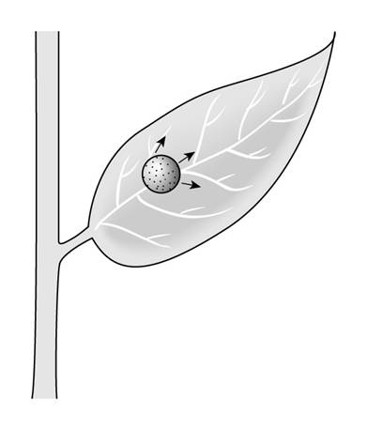
Identify the type of fungicide based on mobility in a plant: contact or systemic
Systemic (local)
Identify the type of fungicide: Some move very short distances from application site such as across a leaf blade from one surface to the other
Systemic
Some systemic fungicides move very _____ distances from application site, such as across a leaf blade from one surface to the other (local systemic).
short
Some systemic fungicides are _______ systemic and can move further than local systemics
weakly
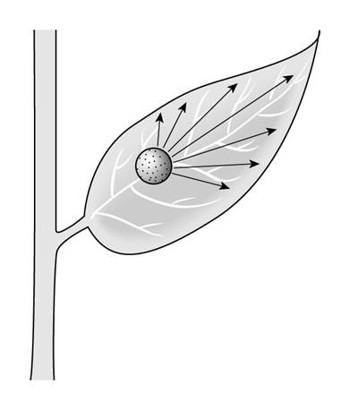
Identify the type of fungicide based on mobility in a plant: contact or systemic
Systemic (weakly)
Most systemics move extensively because they are mobile in _____ tissue.
xylem
Most systemics move extensively because they are mobile in xylem tissue. These are applied to the root zone, absorbed and then move upward through the plant with ________ stream.
transpiration