32 General Evaluation of the Equine Upper Respiratory Tract
 Call Kai
 Learn
Learn Practice Test
 Spaced Repetition
 Match
Match Flashcards
 Knowt Play
1/60

There's no tags or description
Looks like no tags are added yet.
Name | Mastery | Learn | Test | Matching | Spaced | Call with Kai | Chat |
|---|
No analytics yet
Send a link to your students to track their progress
61 Terms
Obligate nasal breathers
Where do horses have to breathe out of?
osce throwback
FYI Guttural pouch from the outside.
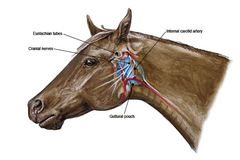
Horses must have efficient gas exchange for speed
Horses are built for speed. How is this related to the respiratory tract?
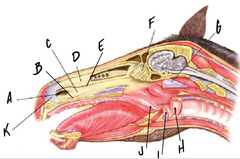
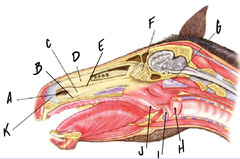
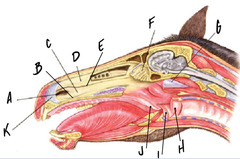
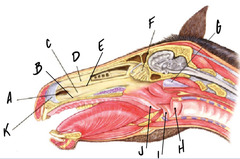
Nostril
What is A?
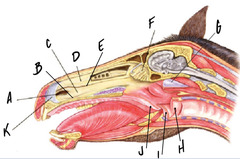
Ventral nasal meatus
What is B?
Ventral conchae
What is C?
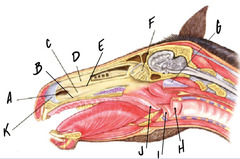
Dorsal conchae
What is D?
Middle nasal meatus
What is E?
Ethmoidal conchae
What is F?
Septum to guttural pouch
What is G?
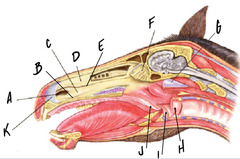
Arytenoid cartilage
What is H?
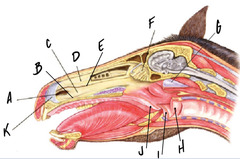
Epiglottis
What is I?
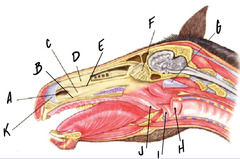
Soft palate
What is J?
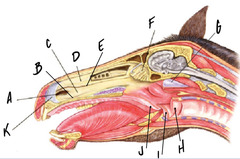
Nasal septum
What is K?
Right arytenoid cartilage
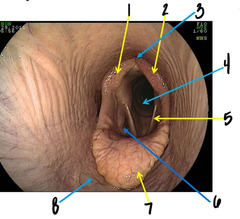
What is 1?
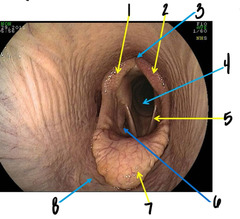
Left arytenoid cartilage
What is 2?
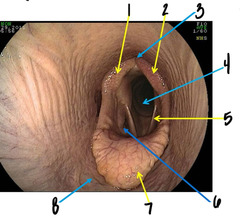
Opening to esophagus
What is 3?
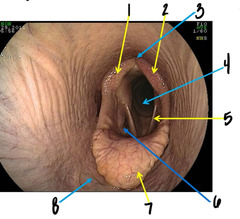
Opening to airway
What is 4?
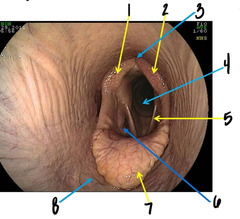
Vocal cord (fold)
What is 5?
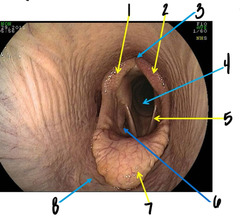
Laryngeal saccule (ventricle)
What is 6?
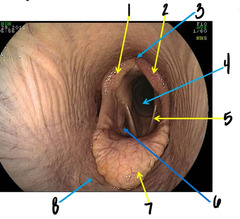
Epiglottis
What is 7?
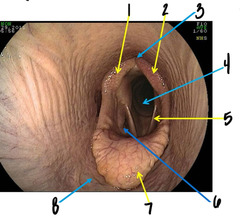
Soft palate
What is 8?
8-10 bpm
What is typical resting respiration rate in horses
80-100 bpm with 1500 L
What is MAX exercising respiration rate? How many liters in minute ventilation?
GATHER PHASE: Gut contents move back, hindlegs engage, lungs expand = inhalation
EXTENDED PHASE: Gut contents move forward against diaphragm, hindlegs extend = exhalation
basically, they exhale as the forehand contacts the ground
Talk about when a horse breathes in versus out in the gallop stride?
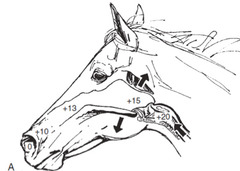
Exhalation = positive pressure
Is this showing *inhalation or exhalation*
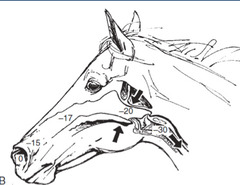
Inhalation = negative pressure
Is this showing *inhalation or exhalation*
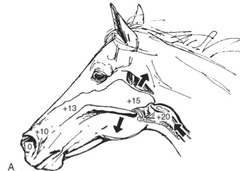
Laryngeal area
Where is this showing you is the place of most resistance?
Inhalation
Are there often more issues on *inhalation or exhalation* in horses?
Airway diameter (aka LUMEN SIZE)
What is the primary determinant of airway resistance in horses, where even cutting this in half increases the resistance by a factor of 16?
External nares, nasal mucosa, pharynx like soft palate, larynx like epiglottis and arytenoids (most common)
Name the areas of airway resistance in the horse
a. left laryngeal hemiplegia
What is your diagnosis:
a. left laryngeal hemiplegia
b. right laryngeal hemiplegia
c. dorsal displacement of the soft palate
d. pharyngeal collapse
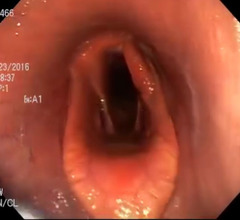
d. pharyngeal collapse
What is your diagnosis:
a. left laryngeal hemiplegia
b. right laryngeal hemiplegia
c. dorsal displacement of the soft palate
d. pharyngeal collapse
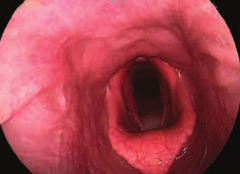
c. dorsal displacement of the soft palate
What is your diagnosis:
a. left laryngeal hemiplegia
b. right laryngeal hemiplegia
c. dorsal displacement of the soft palate
d. pharyngeal collapse
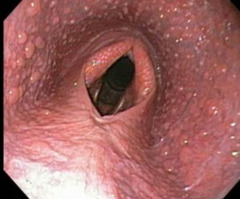
Inspiration
Horses have more airway resistance on *inspiration or expiration*
Muscular tone
What is the major contributor of upper airway stabilization?
Horses who need to keep their heads round will struggle to breathe if they have nerve innervation problems
What is important to note about horses who need to be collected for work (like dressage) but have nerve innervation problems?
FALSE = they are not
TRUE OR FALSE: respiratory noise and exercise intolerance are synonymous
1:1
What is the inspiration to expiration ratio in horses
cricoarytenoideus dorsalis muscle
When palpating the upper respiratory tract in horses, you feel the laryngeal cartilage. What muscles should you feel for around here?
paranasal sinuses
What should you percuss in a physical exam of the respiratory tract in horses
Ethmoid turbinates = healthy
What is this on an endoscope?
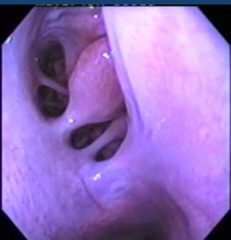
Medially, and aspect of ventral meatus
Where do you place the scope when doing endoscopy on a horses nasal cavity?
At rest
You should always start your nasal cavity endoscopy when a horse in *in motion or at rest*
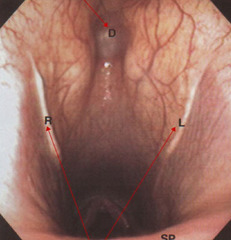
The L and R openings of the guttural pouch
What are the L and R letters showing you?
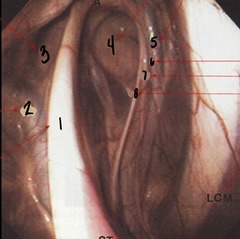
Stylohyoid bone
What is 1?
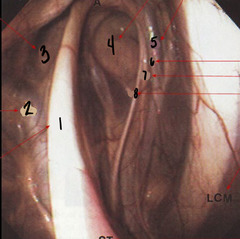
external carotid artery
What is 2?
lateral compartment
What is 3?
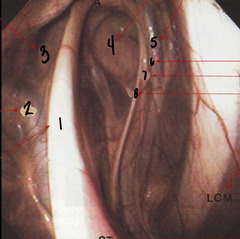
medial compartment
What is 4?
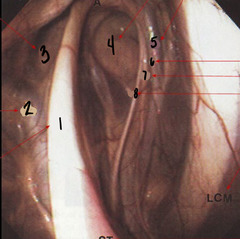
internal carotid artery
What is 5?
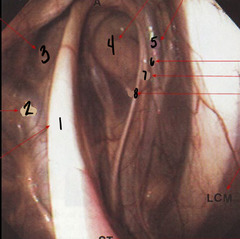
cranial nerve 10 (X, vagus)
What is 6?
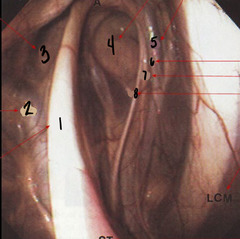
cranial nerve 12 (XII, hypoglossal)
What is 7?
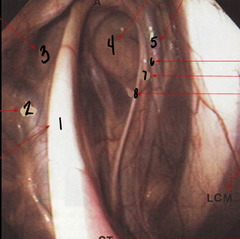
cranial nerve 9 (XI, glossopharyngeal)
What is 8?
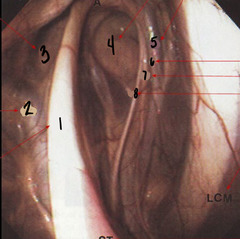
Most people sedate on the left side. This is where the L. recurrent laryngeal nerve is, and this may cause a false positive effect on the endoscopy if looking for collapse
Why should you never use sedation for an endoscopy at rest?
Nasal occlusion (will it open with a higher negative pressure with nasal occlusion?)
What can you do to evaluate an endoscopy at rest? What can you do to the horse's nose to watch the structures move?
Swallowing
Arytenoid abduction is better correlated with *swallowing or nasal occlusion*
Dynamic endoscopy
What is this?
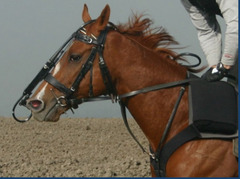
Dorsal displacement of soft palate
What condition are you more likely to see in dynamic endoscopy than at rest?
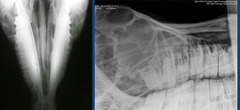
Hard to interpret (here there is an occluded sinus around a root abnormality in the tooth third from the back M1. in front of that, the sinus is air filled and normal)
What is the problem with radiograph diagnostic for nasal problems??
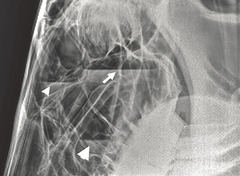
Fluid lines
What are these?
CT
What is the best option for sinuses but is VERY EXPNESIVE