Anatomy Lecture 3 : histology
 Call Kai
 Learn
Learn Practice Test
 Spaced Repetition
 Match
Match Flashcards
 Knowt Play
1/50

There's no tags or description
Looks like no tags are added yet.
Name | Mastery | Learn | Test | Matching | Spaced | Call with Kai | Chat |
|---|
No analytics yet
Send a link to your students to track their progress
51 Terms
What are the common characteristics of a cell?
All organisms are formed from cells
cells create tissues and organs
Goes through cell division to replicate
What are the functions of a cell?
Form layers to cover surfaces
Store nutrients and energy
Produce movement
Create connections
Protect the body from pathogens
Communicate information
Reproduction
Identify and describe the mitochondria
Produces energy (ATP) for the cell

Identify and describe the smooth endoplasmic reticulum
Makes lipids
helps detoxify substances
stores calcium

Identify and describe the rough endoplasmic reticulum
Has ribosomes attached to it and makes/processes proteins

Identify and describe ribosomes
Small structures that make proteins.

Identify and describe the golgi apparatus
Modifies, sorts, and packages proteins and other materials for transport.

Identify and describe the lysosome
Breaks down waste, damaged cell parts, and other materials using digestive enzymes.

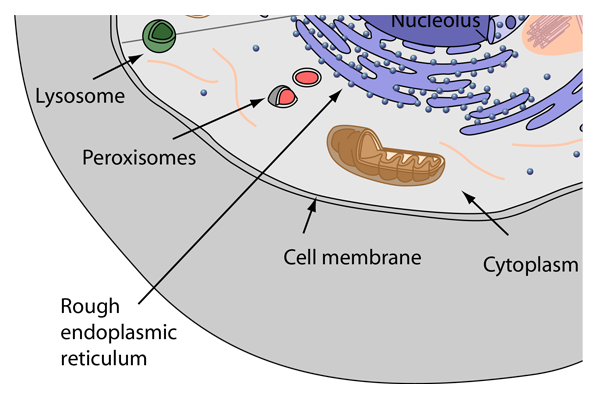
Identify and describe the peroxisome
Breaks down fatty acids and detoxifies harmful substances.
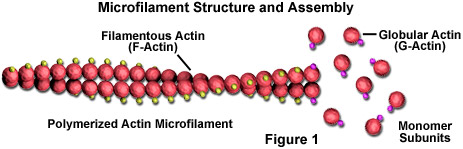
Identify and describe microfilament
Thin protein fibers that help maintain cell shape and allow the cell to move.
Name the 4 basic tissue types
nervous tissue
muscle tissue
epithelial tissue
connective tissue
Where is the epithelial tissue located?
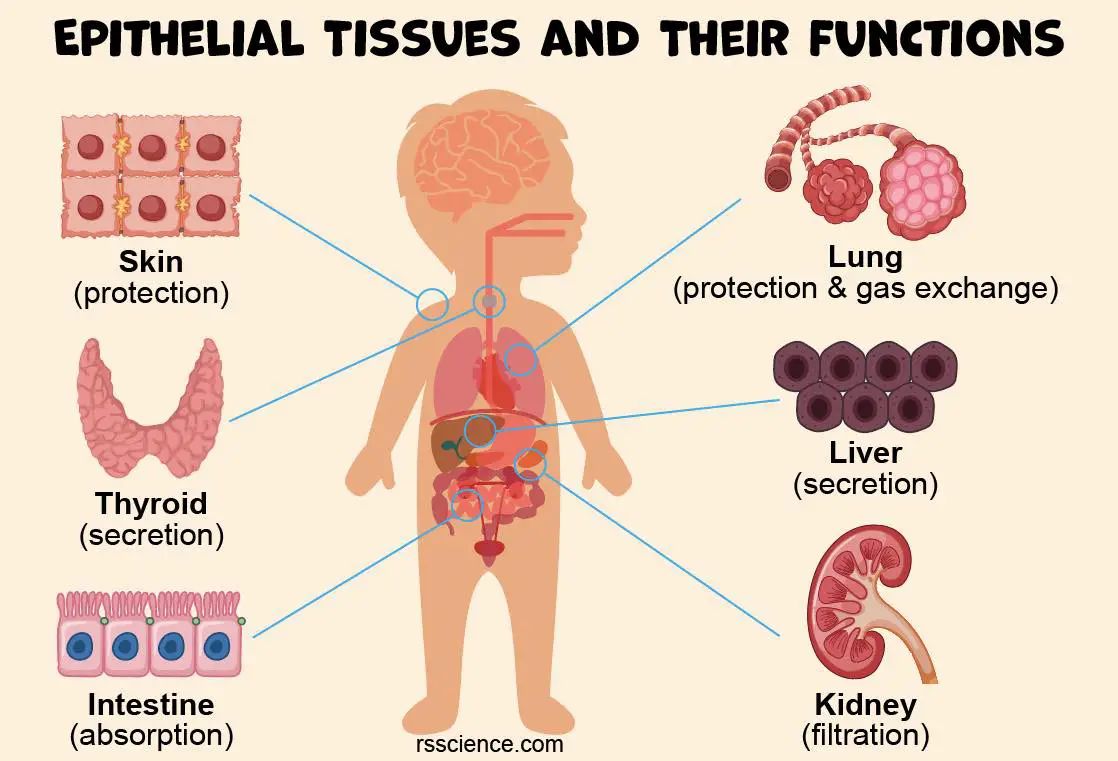
lining of the GI tract organs and other hollow organs
skin surface (epidermis)
What are characteristics of epithelial tissue?
cell-dense, not much extracellular matrix
Has an apical and basal surface
Attaches to a basement membrane
Avascular (does not have its own direct blood supply) (blood vessels are in the underlying connective tissue)
Has high regenerative capacity
How does the structure of epithelial tissue relate to its location in the body?
Functions:
physical protection: epithelial tissue is made of tightly packed cells. Our skin needs many layers of cells to be protected from injury and germs
selective permeability: The lining of our intestines allows nutrients to pass into the blood while blocking other substances
secretion: Epithelial cells in glands secrete hormones, mucus, sweat, or digestive enzymes.
What are the 3 kinds of intercellular junctions in epithelial tissue?
Tight junctions, gap junctions, and anchoring junctions
what are tight junctions?
Structure: Proteins connect the membranes of neighboring cells tightly, leaving little to no space between them.
Function: Prevent substances from passing between cells and help control what moves through a layer of cells.

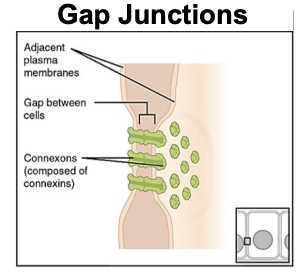
what are gap junctions?
Structure: Small channels connect the cytoplasm of neighboring cells.
Function: Allow ions and small molecules to pass directly between cells, helping cells communicate and coordinate their activities
what are the 3 kinds of anchoring junctions?
Desmosomes, adherens, hemidesmosomes
what are desmosomes? (anchoring junction)
Structure: Strong protein attachments that connect the cytoskeletons of neighboring cells.
Function: Provide strong cell-to-cell attachment and help tissues resist stretching and pulling

what are adherens?
Structure: Proteins connect neighboring cells to actin filaments inside the cells.
Function: Hold cells together and help cells change shape and move as a group.

what are hemidesmosomes?
Structure: Protein attachments connect the cell’s cytoskeleton to the basement membrane.
Function: Anchor cells to the underlying tissue and prevent them from being pulled away


what epithelial tissue is this? what are its functions? What distinguishes it structurally? where is it in the body?
simple squamous
diffusion and filtration
just one single layer of very flat, thin cells
lung air sacs (alveoli) lining of blood vessels, serous membranes

what epithelial tissue is this? what are its functions? What distinguishes it structurally? where is it in the body?
simple cuboidal
absorption and secretion
one layer of cube-shaped cells
kidney tubules, glands
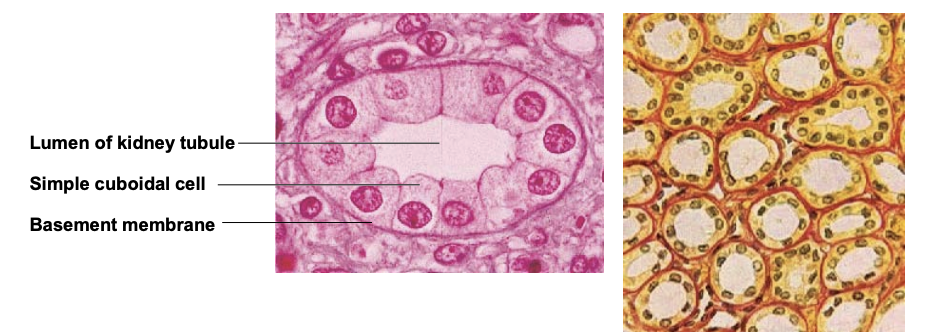
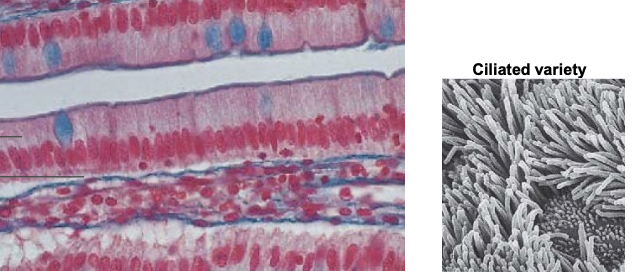
what epithelial tissue is this? what are its functions? What distinguishes it structurally? where is it in the body?
simple columnar
absorption, secretion, movement (if cilliated)
one layer of tall, rectangular cells
lining of stomach, small intestine, and large intestine (non cilliated) and lining of uterine tubes (cilliated)
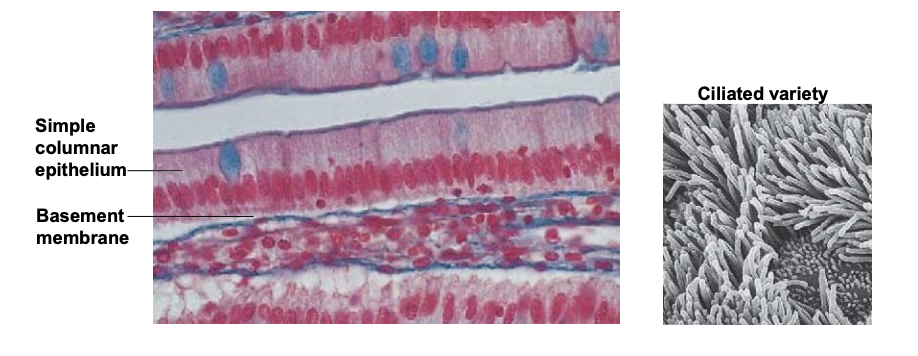

what epithelial tissue is this? what are its functions? What distinguishes it structurally? where is it in the body?
pseudostratified columnar
protection, movement (if cilliated)
1 layer of tall cells, but they are different heights, making it look multilayered
lining of respiratory tracts
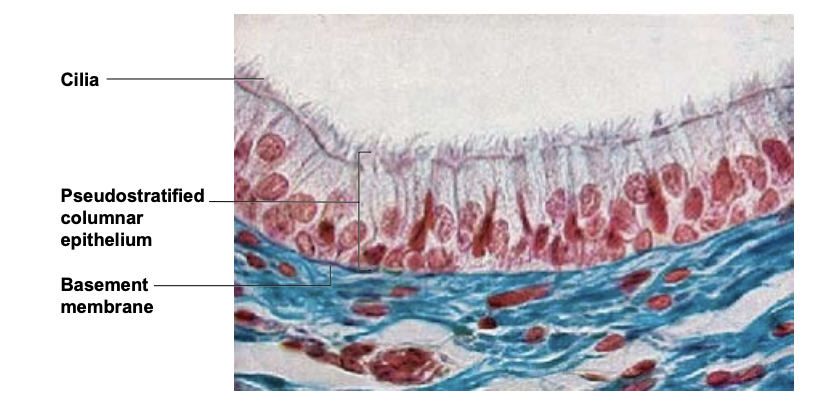

what epithelial tissue is this? what are its functions? What distinguishes it structurally? where is it in the body?
stratified squamous
protection
multi-layered; cells at the surface are flat/squamous
epidermis of skin, lining of oral cavity, pharynx, esophagus, anus, and vagina
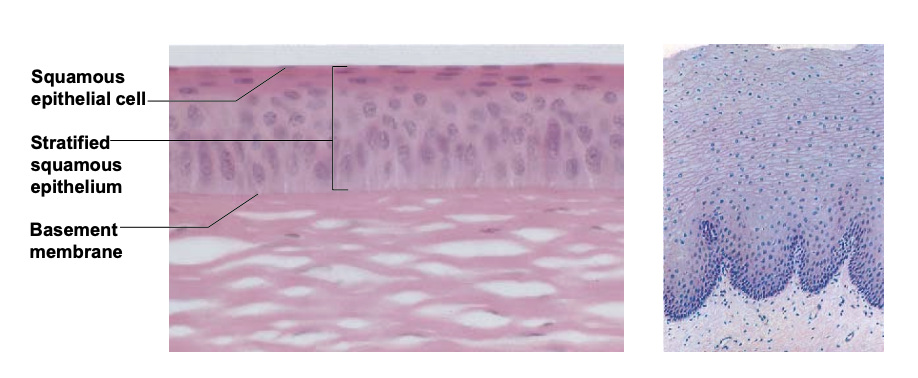
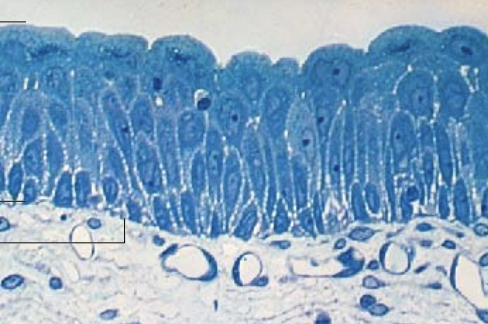
what epithelial tissue is this? what are its functions? What distinguishes it structurally? where is it in the body?
transitional
distention and relaxation of urinary structures
Multiple layers; surface cells can change shape (rounder when relaxed, flatter when stretched)
lining of ureters, bladder, and urethra

Describe the differences between endocrine glands and exocrine glands
Exocrine: Ducts secrete products onto an epithelial surface
Endocrine: – Ductless – Cells secrete products into interstitial fluid and bloodstream – Form the endocrine system
what are the 3 forms of exocrine secretion?
merocrine, holocrine, and apocrine
what is merocrine secretion?
Secretion is released by exocytosis; the cell stays intact.
Example: sweat glands, salivary glands
what is holocrine secretion?
The entire cell breaks apart and becomes part of the secretion.
Example: sebaceous (oil) glands
what is apocrine secretion?
The top part of the cell pinches off and is released with the secretion.
Example: mammary glands
Describe the basic structural characteristics and functions of connective tissue.
Structure: sparse cells in an extracellular matrix (protein fibers and ground substance)
Functions:
Physical protection - Support and structural framework • Binding of structures • Storage • Transport (blood) • Immune protection

What are the types of connective tissue, and what is their common origin?
→ Connective tissue proper: loose (areolar, adipose, reticular) and dense (regular, irregular, elastic)
→ Supporting connective tissue: cartilage (hyaline, fibrocartilage, elastic) and bone (compact, spongy)
→ Fluid connective tissue: blood and lymph
→ All connective tissues have a common origin from mesenchyme.
What are the extracellular matrix and ground substance?
→ Extracellular matrix: material outside the cells; in connective tissue it contains protein fibers and ground substance.
→ Ground substance: the non-fiber component of the extracellular matrix.
What are the 3 fiber types found in connective tissue proper?
Collagen fibers, elastic fibers, and reticular fibers.
What cells are found in connective tissue proper?
fibroblasts and white blood cells
What are the structure, function, and locations of areolar tissue?
→ Structure: Fibroblasts, collagen and elastic fibers, abundant ground substance
→ Function: Surrounds and protects organs; loosely binds epithelia to deeper tissues
→ Location: Subcutaneous tissue and dermis of skin
What are the structure, functions, and locations of adipose tissue?
→ Structure: Adipocytes in a loose extracellular matrix
→ Functions: Stores energy, protects, cushions, and insulates
→ Location: Surrounds organs and in subcutaneous tissue
What are the structure, function, and locations of reticular tissue?
→ Structure: White blood cells and fibroblasts, reticular fibers, ground substance
→ Function: Provides a supportive framework
→ Locations: Lymph nodes, spleen, and bone marrow
What are the structure, function, and locations of dense regular connective tissue?
→ Structure: Dense, parallel collagen fibers, fibroblasts, sparse ground substance
→ Function: Resists stress in one direction
→ Locations: Tendons and ligaments
What are the structure, function, and locations of dense irregular connective tissue?
→ Structure: Collagen fibers randomly arranged, fibroblasts, sparse ground substance
→ Function: Resists stresses in all directions
→ Locations: Dermis of skin and organ capsules
What are the structure, function, and locations of dense elastic tissue?
→ Structure: Dense elastic fibers and fibroblasts
→ Function: Allows stretching
→ Locations: Walls of large arteries and airways
What are the structure, functions, and locations of cartilage?
→ Structure: Semisolid matrix containing chondrocytes
→ Functions: Provides support and flexibility; absorbs compression
→ Locations: Ends of long bones, trachea, intervertebral discs, and external ear
→ Cells: Chondrocytes
What are the structure, functions, and cells of bone?
→ Structure: Calcified, solid matrix containing osteocytes
→ Functions: Protection, support, movement with the muscular system, and calcium storage
→ Cells: Osteocytes
What are the structure, functions, locations, and cells of blood?
→ Structure: Contains red blood cells, white blood cells, and platelets; its water-based ground substance is called plasma
→ Functions: Transports oxygen and carbon dioxide, nutrients, and waste; participates in immune response and blood clotting
→ Location: Blood vessels and heart
→ Cells/components: Red blood cells, white blood cells, and platelets
What are the types of fluid connective tissue?
→ Blood and lymph.
What causes scurvy and what are its symptoms?
→ Cause: Vitamin C deficiency, which prevents normal collagen fibers from forming
→ Symptoms: Weakening of gums, teeth, bones, and internal mucosa; wounds and fractures don't heal well
→ It was prevalent among sailors.
What causes Marfan syndrome and what are its symptoms/effects?
→ Cause: Genetic abnormalities in fibrillin, a protein that builds elastic fibers
→ Effects: Skeletal, cardiovascular, vision, and connective tissue abnormalities
→ Physical characteristics: Tall and thin with long legs, arms, fingers, and toes
→ Typically results in death by age 50 because of heart weakness.
What causes gangrene and what areas does it commonly affect?
→ Cause: Lack of blood flow, which may be due to mechanical injury, bacterial infection, or diabetes
→ Commonly affects: Limbs, fingers, and toes