Unit 2 Biology AOS 1

0.0(0)
Studied by 0 people
call kaiCall Kai
Locked
learnLearn
examPractice Test
spaced repetitionSpaced Repetition
heart puzzleMatch
flashcardsFlashcards
GameKnowt Play
Card Sorting

1/184

encourage image

There's no tags or description

Looks like no tags are added yet.

Last updated 11:48 AM on 8/23/26
Name
Mastery
Learn
Test
Matching
Spaced
Call with Kai
Chat

No analytics yet

Send a link to your students to track their progress

185 Terms

1
New cards

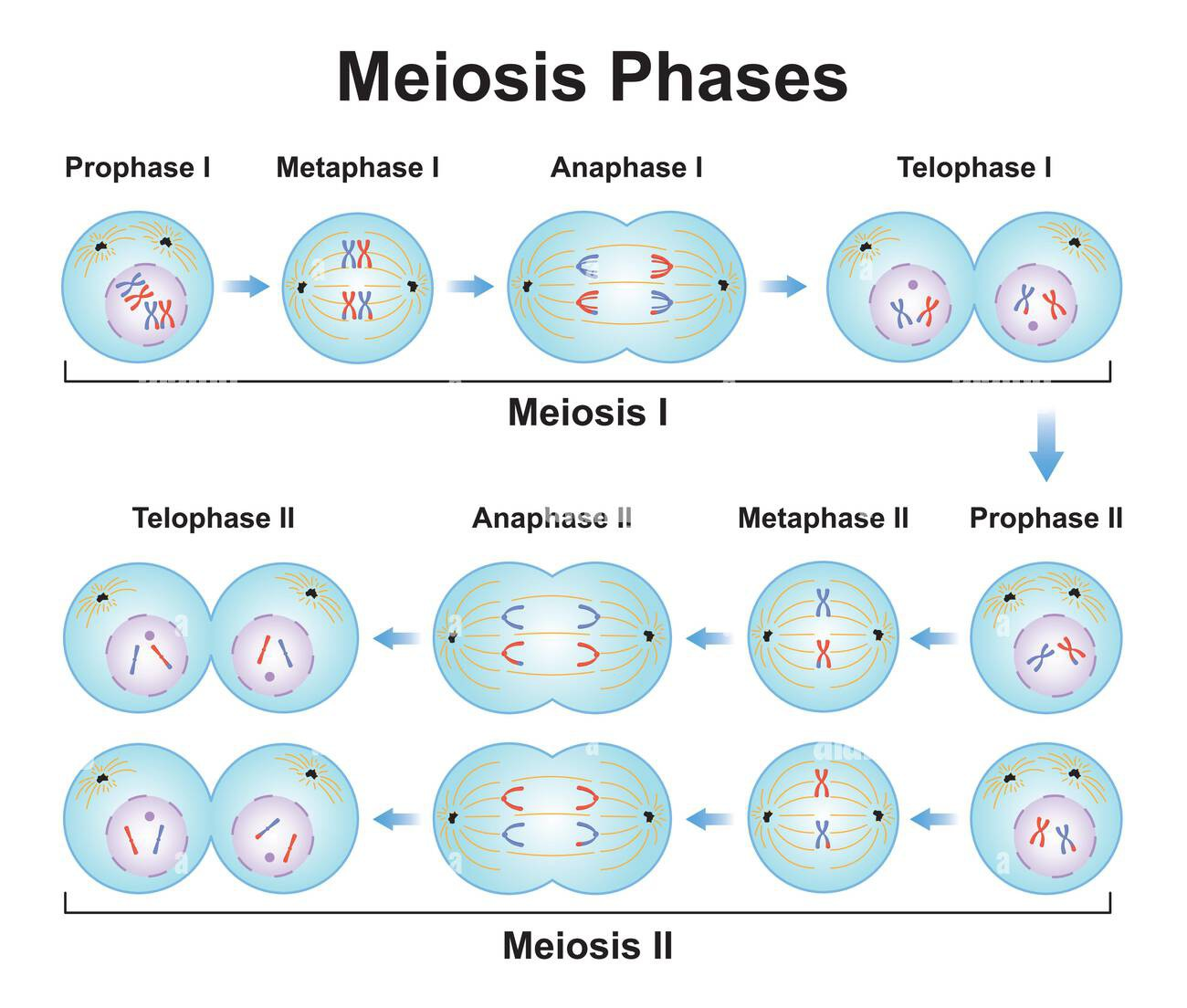
What are the phases of Meiosis?

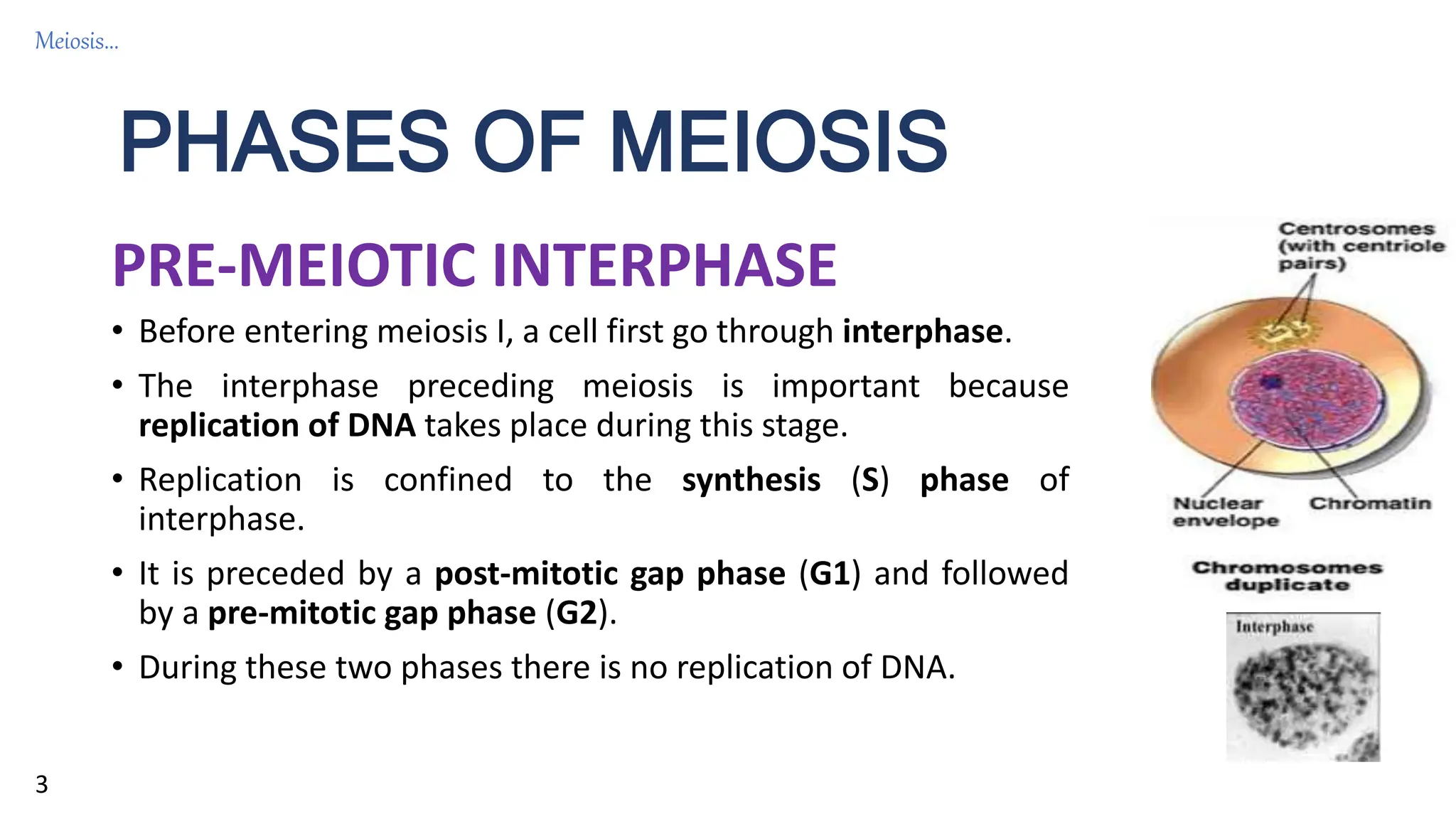
  • Premeiotic interphase

  • Meiosis I

  • Cytokinesis

  • Interkensis

  • Meiosis II
    Cytokinesis


<ul><li><p>Premeiotic interphase </p></li><li><p>Meiosis I </p></li><li><p>Cytokinesis </p></li><li><p>Interkensis </p></li><li><p>Meiosis II<br>Cytokinesis </p></li></ul><p></p>
2
New cards

What occurs during premiotic interphase?

Chromosomes replicate and the centriole replicates

  • Replicated in S phase


<p>Chromosomes replicate and the centriole replicates</p><ul><li><p>Replicated in S phase</p></li></ul><p></p>
3
New cards

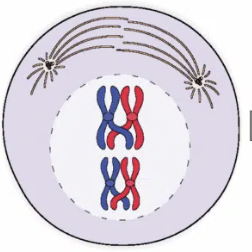
What occurs during Meiosis I?

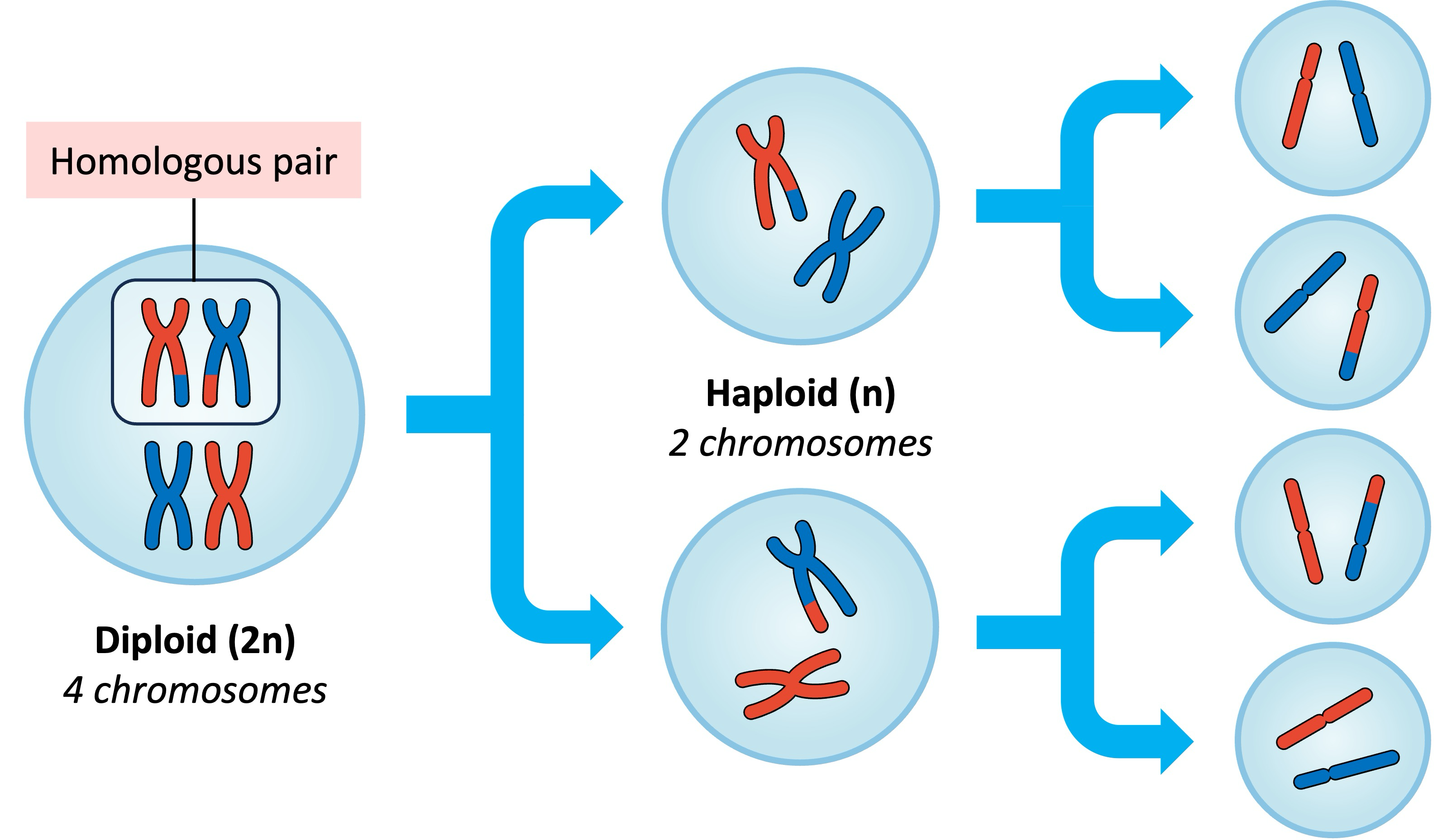
The nucleus divides to form 2 haploid nuclei (still sister chromatids)

  • Crossing over and independent assortment of homologous chromosomes occurs to increase genetic variation of gametes

<p><span>The nucleus divides to form 2 haploid nuclei (still sister chromatids)</span></p><ul><li><p><span>Crossing over and independent assortment of homologous chromosomes occurs to increase genetic variation of gametes</span></p></li></ul><p></p>
4
New cards

What occurs during interkinesis?

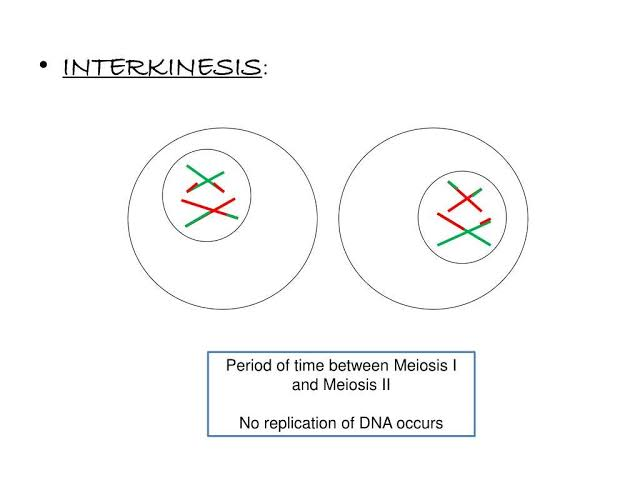
Interkinesis: The period of rest between Meiosis I and II that some species enter

  • No DNA replication occurs

  • Cells reorganises and grows

  • The nuclear membrane may reform around the chromosomes

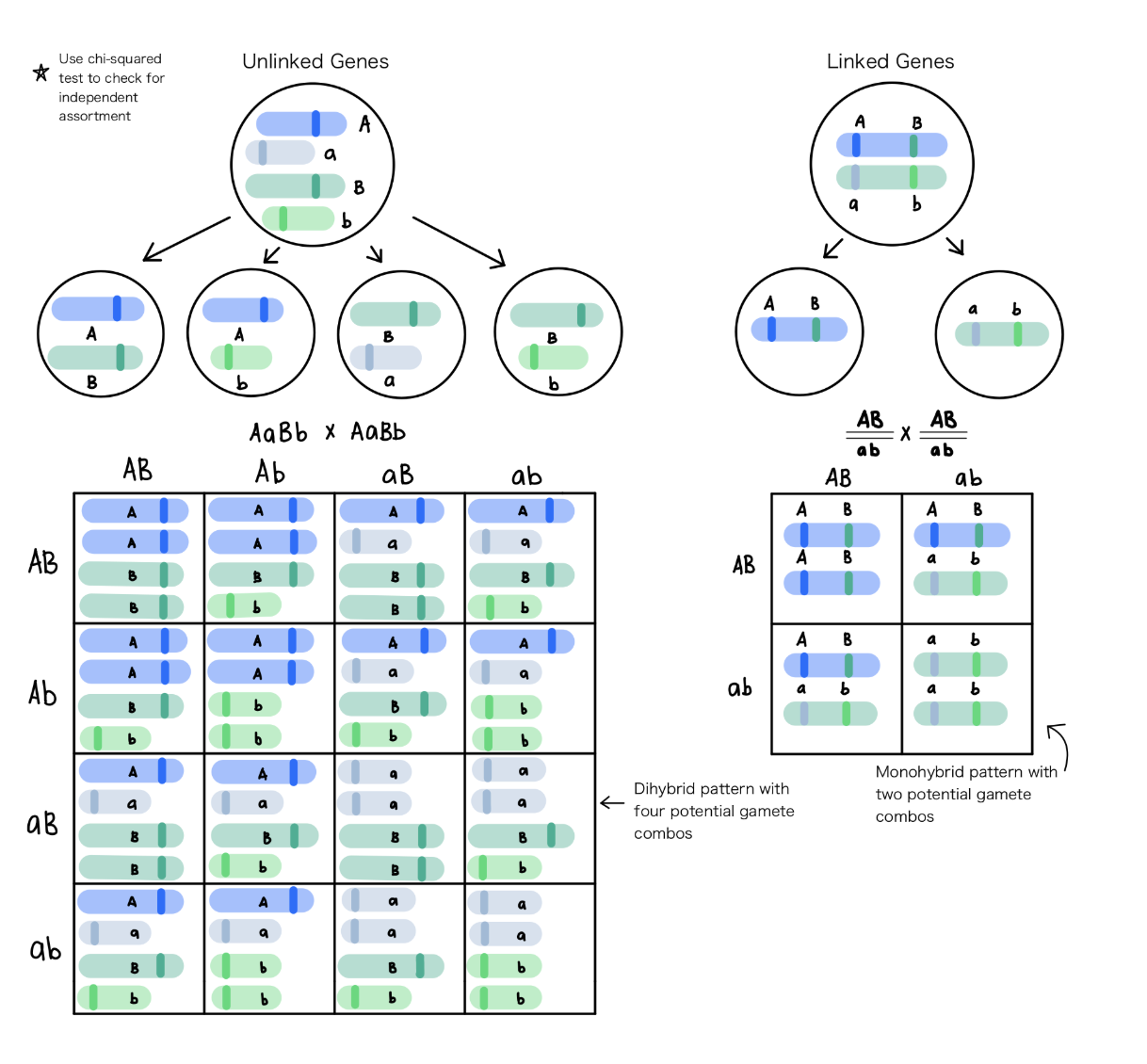
  • Spindle fibers disassemble and reassemble to prepare for Meiosis II

<p>Interkinesis: The period of rest between Meiosis I and II that some species enter</p><ul><li><p><span>No DNA replication occurs</span></p></li><li><p><span>Cells reorganises and grows</span></p></li><li><p><span>The nuclear membrane may reform around the chromosomes</span></p></li><li><p><span>Spindle fibers disassemble and reassemble to prepare for Meiosis II</span></p></li></ul><p></p>
5
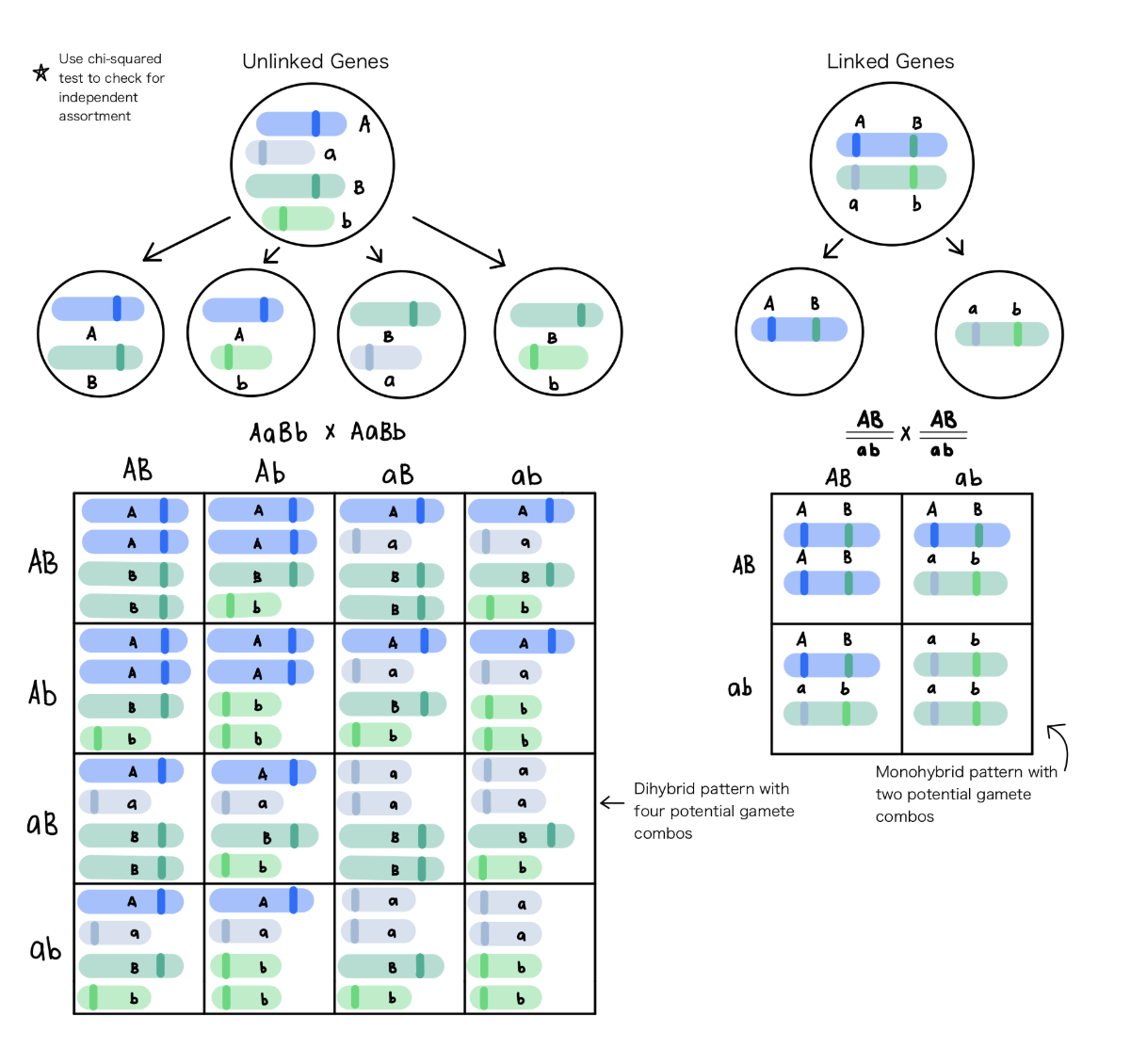
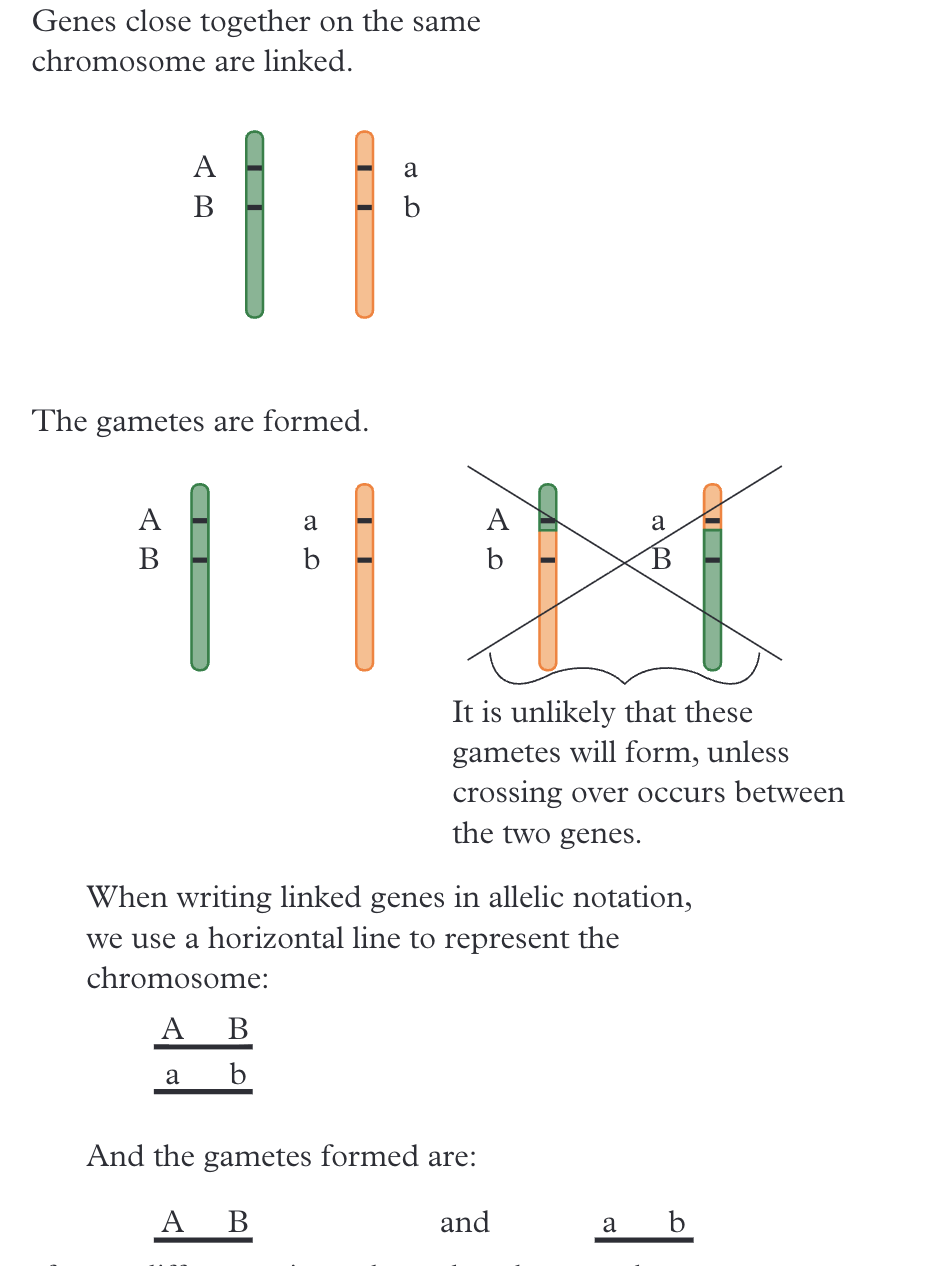
New cards

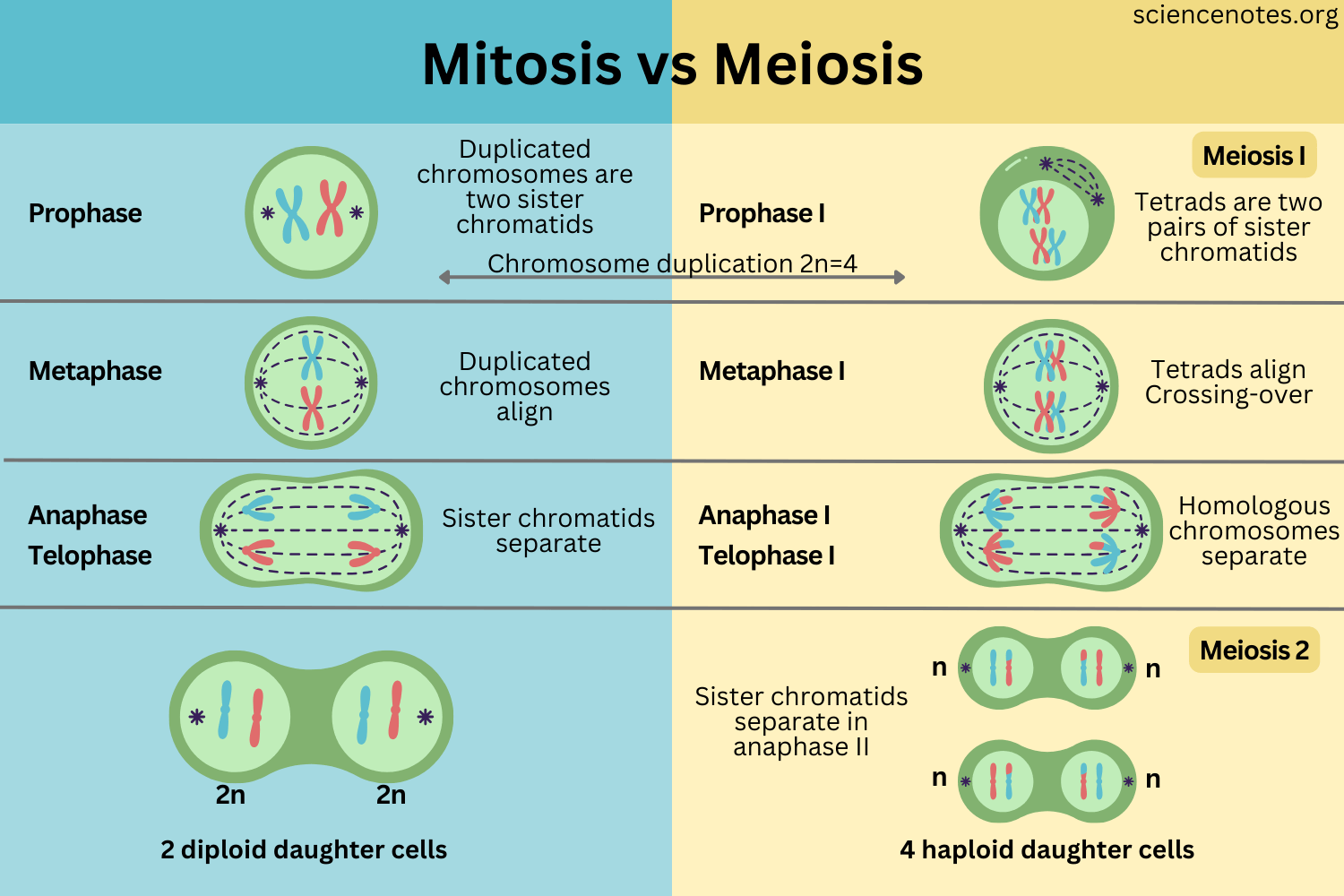
How is mitosis different to meiosis in animals?

Feature

Mitosis

Meiosis

Purpose

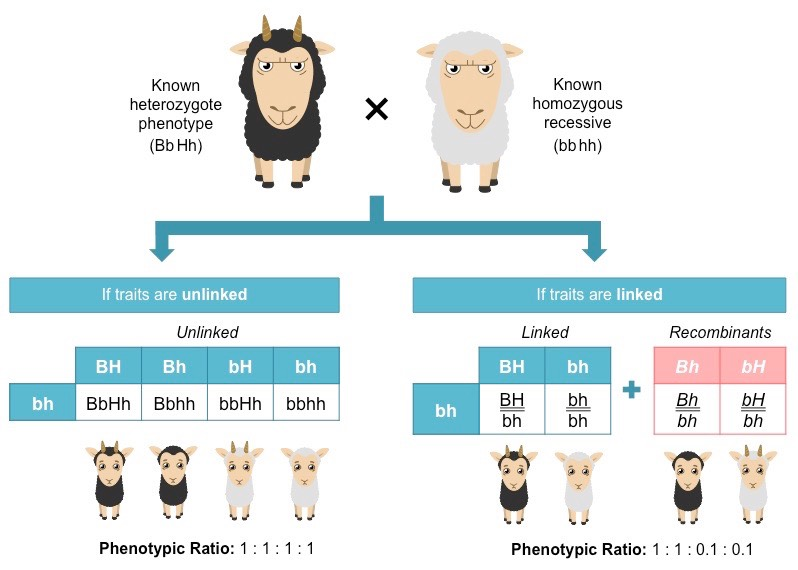
Growth, repair and replacement of body cells

Production of gametes

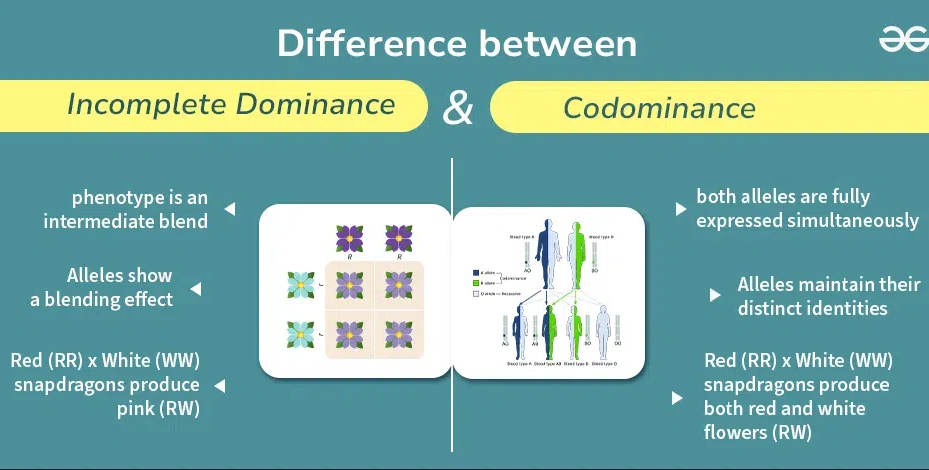
Where it occurs

Somatic (body) cells

Gonads (testes and ovaries)

No. divisions

1

2 (Meiosis I and II)

No. daughter cells

2

4

Chromosome no.

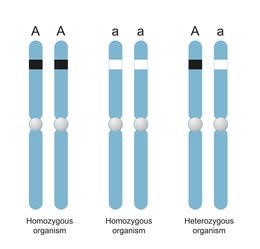
Same (2n → 2n)

Halved (2n → n)

Genetic similarity

Genetically identical

Genetically different

First separation

Sister chromatids

Homologous chromosomes

Final cells

Diploid body cells

Haploid gametes


<table style="min-width: 75px;"><colgroup><col style="min-width: 25px;"><col style="min-width: 25px;"><col style="min-width: 25px;"></colgroup><tbody><tr><td colspan="1" rowspan="1" style="border-style: solid; vertical-align: top; width: 1.477in; padding: 4pt;"><p><span><strong>Feature</strong></span></p></td><td colspan="1" rowspan="1" style="border-style: solid; vertical-align: top; width: 1.8729in; padding: 4pt;"><p><span><strong>Mitosis</strong></span></p></td><td colspan="1" rowspan="1" style="border-style: solid; vertical-align: top; width: 1.727in; padding: 4pt;"><p><span><strong>Meiosis</strong></span></p></td></tr><tr><td colspan="1" rowspan="1" style="border-style: solid; vertical-align: top; width: 1.477in; padding: 4pt;"><p><span><strong>Purpose</strong></span></p></td><td colspan="1" rowspan="1" style="border-style: solid; vertical-align: top; width: 1.8729in; padding: 4pt;"><p>Growth, repair and replacement of body cells</p></td><td colspan="1" rowspan="1" style="border-style: solid; vertical-align: top; width: 1.7555in; padding: 4pt;"><p>Production of gametes</p></td></tr><tr><td colspan="1" rowspan="1" style="border-style: solid; vertical-align: top; width: 1.477in; padding: 4pt;"><p><span><strong>Where it occurs</strong></span></p></td><td colspan="1" rowspan="1" style="border-style: solid; vertical-align: top; width: 1.8729in; padding: 4pt;"><p>Somatic (body) cells</p></td><td colspan="1" rowspan="1" style="border-style: solid; vertical-align: top; width: 1.859in; padding: 4pt;"><p>Gonads (testes and ovaries)</p></td></tr><tr><td colspan="1" rowspan="1" style="border-style: solid; vertical-align: top; width: 1.477in; padding: 4pt;"><p><span><strong>No. divisions</strong></span></p></td><td colspan="1" rowspan="1" style="border-style: solid; vertical-align: top; width: 1.8729in; padding: 4pt;"><p>1</p></td><td colspan="1" rowspan="1" style="border-style: solid; vertical-align: top; width: 1.727in; padding: 4pt;"><p>2 (Meiosis I and II)</p></td></tr><tr><td colspan="1" rowspan="1" style="border-style: solid; vertical-align: top; width: 1.477in; padding: 4pt;"><p><span><strong>No. daughter cells</strong></span></p></td><td colspan="1" rowspan="1" style="border-style: solid; vertical-align: top; width: 1.8729in; padding: 4pt;"><p>2</p></td><td colspan="1" rowspan="1" style="border-style: solid; vertical-align: top; width: 1.727in; padding: 4pt;"><p>4</p></td></tr><tr><td colspan="1" rowspan="1" style="border-style: solid; vertical-align: top; width: 1.477in; padding: 4pt;"><p><span><strong>Chromosome no.</strong></span></p></td><td colspan="1" rowspan="1" style="border-style: solid; vertical-align: top; width: 1.8729in; padding: 4pt;"><p>Same (2n → 2n)</p></td><td colspan="1" rowspan="1" style="border-style: solid; vertical-align: top; width: 1.727in; padding: 4pt;"><p>Halved (2n → n)</p></td></tr><tr><td colspan="1" rowspan="1" style="border-style: solid; vertical-align: top; width: 1.477in; padding: 4pt;"><p><span><strong>Genetic similarity</strong></span></p></td><td colspan="1" rowspan="1" style="border-style: solid; vertical-align: top; width: 1.8729in; padding: 4pt;"><p>Genetically identical</p></td><td colspan="1" rowspan="1" style="border-style: solid; vertical-align: top; width: 1.7555in; padding: 4pt;"><p>Genetically different</p></td></tr><tr><td colspan="1" rowspan="1" style="border-style: solid; vertical-align: top; width: 1.477in; padding: 4pt;"><p><span><strong>First separation</strong></span></p></td><td colspan="1" rowspan="1" style="border-style: solid; vertical-align: top; width: 1.8729in; padding: 4pt;"><p>Sister chromatids</p></td><td colspan="1" rowspan="1" style="border-style: solid; vertical-align: top; width: 1.8562in; padding: 4pt;"><p>Homologous chromosomes</p></td></tr><tr><td colspan="1" rowspan="1" style="border-style: solid; vertical-align: top; width: 1.477in; padding: 4pt;"><p><span><strong>Final cells</strong></span></p></td><td colspan="1" rowspan="1" style="border-style: solid; vertical-align: top; width: 1.8729in; padding: 4pt;"><p>Diploid body cells</p></td><td colspan="1" rowspan="1" style="border-style: solid; vertical-align: top; width: 1.727in; padding: 4pt;"><p>Haploid gametes</p></td></tr></tbody></table><p></p>
6
New cards

How do the functions of Meiosis I and II differ?

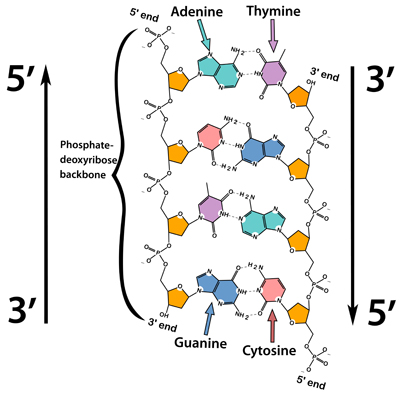
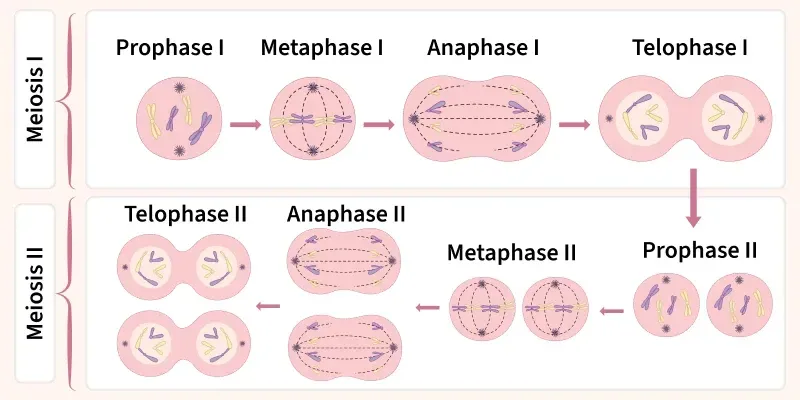
Meiosis I: Separate homologous chromosome pairs, reducing chromosome number from diploid to haploid

Meiosis I: Separate sister chromatids, similar to mitosis
<p><span>Meiosis I: </span> Separate homologous chromosome pairs, reducing chromosome number from diploid to haploid</p><p>Meiosis I: Separate sister chromatids, similar to mitosis</p>
7
New cards

What is crossing over and how does it occur?

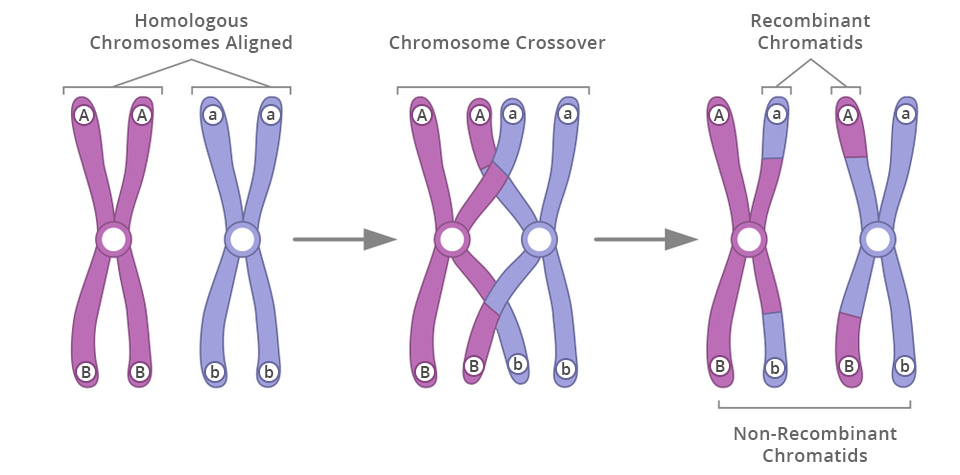
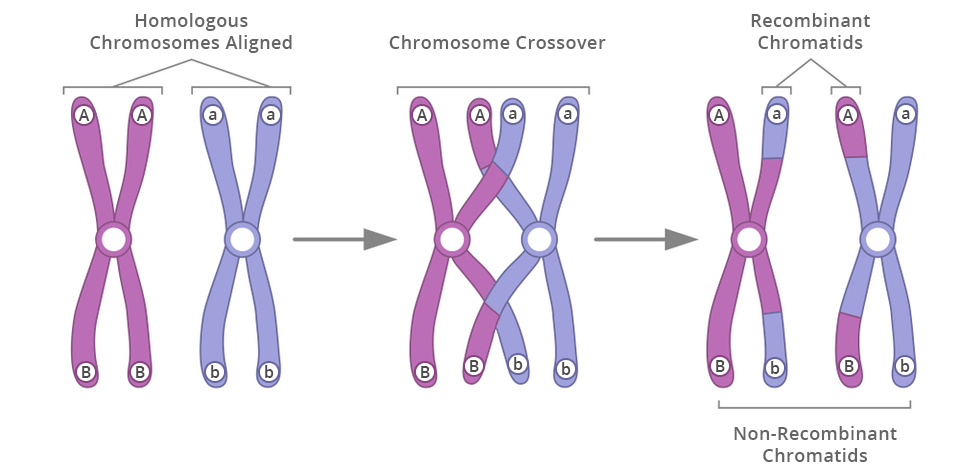
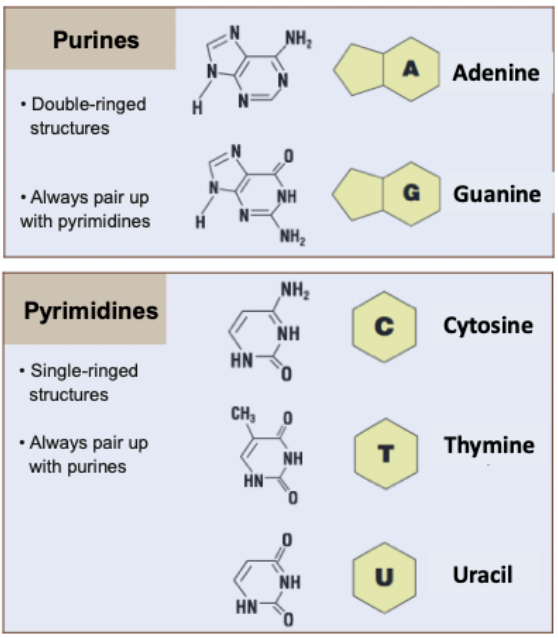
Crossing over: The exchange of DNA between non-sister chromatids of homologous chromosomes during Prophase I, producing recombinant chromosomes and increasing genetic variation

  • Occurs in Prophase I

  • Homologous chromosomes pair up (synapsis) to form a tetrad

  • Non-sister chromatids exchange corresponding DNA segments

  • Results in recombinant chromosomes


<p><span style="background-color: yellow;"><mark data-color="#ffffff" style="background-color: rgb(255, 255, 255); color: inherit;">Crossing over: The exchange of DNA between non-sister chromatids of homologous chromosomes during Prophase I, producing recombinant chromosomes and increasing genetic variation</mark></span></p><ul><li><p>Occurs in Prophase I</p></li></ul><ul><li><p>Homologous chromosomes pair up (synapsis) to form a tetrad</p></li><li><p>Non-sister chromatids exchange corresponding DNA segments</p></li><li><p>Results in recombinant chromosomes</p></li></ul><p></p>
8
New cards

How does the process that occurs in Prophase I produce genetic variation

  • Homologous chromosomes pair up (synapsis) to form a bivalent

  • Non-sister chromatids exchange corresponding DNA segments

  • Results in recombinant chromosomes

Function: Produces genetic variation by creating new allele combos in gametes
<ul><li><p>Homologous chromosomes pair up (synapsis) to form a bivalent</p></li><li><p>Non-sister chromatids exchange corresponding DNA segments</p></li><li><p>Results in recombinant chromosomes</p></li></ul><p><span style="background-color: yellow;"><mark data-color="#ffffff" style="background-color: rgb(255, 255, 255); color: inherit;">Function: Produces genetic variation by creating new allele combos in gametes</mark></span></p>
9
New cards

What phase follows premeiotic interphase and what occurs during this phase?

  • Prophase I

  • Chromosomes condense to become visible

  • Homologous chromosomes pair up (synapsis) to form a tetrads

  • Crossing over occurs to increase genetic variation

  • Duplicated centrosomes migrate to opposite cell poles and begin to form spindles

  • Nuclear membrane breaks down


<ul><li><p>Prophase I</p></li><li><p>Chromosomes condense to become visible</p></li><li><p>Homologous chromosomes pair up (synapsis) to form a tetrads</p></li><li><p>Crossing over occurs to increase genetic variation</p></li><li><p>Duplicated centrosomes migrate to opposite cell poles and begin to form spindles</p></li><li><p>Nuclear membrane breaks down</p></li></ul><p></p>
10
New cards

What occurs during Metaphase i?

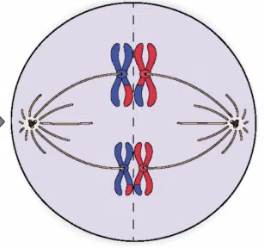
  • Spindle fibres attach to centromere of chromosomes

  • Homologous chromosomes line up at the cell equator/metaphase plate

  • independent assortment occurs to increase genetic variation

<ul><li><p>Spindle fibres attach to centromere of chromosomes</p></li><li><p>Homologous chromosomes line up at the cell equator/metaphase plate</p></li><li><p> independent assortment occurs to increase genetic variation</p></li></ul><p></p>
11
New cards

What process occurs during metaphase I that increases genetic variation in gametes?

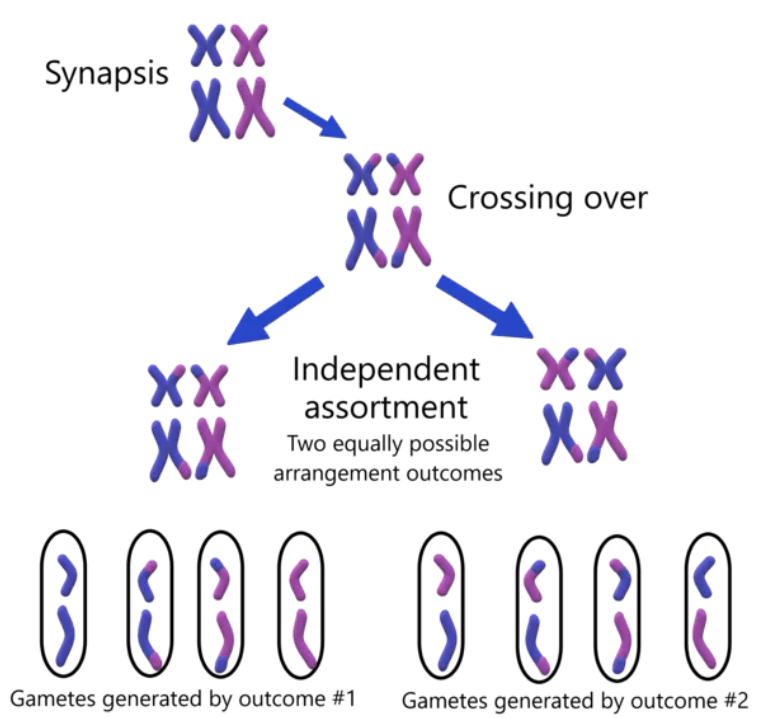
  • Independent assortment

  • Homologous chromosome pairs randomly line up at the cell equator

  • Random whether maternal/paternal chromosome faces either cell pole

  • The orientation of one homologous pair doesn’t affect another pair

  • Alleles carried on each chromosome are independently distributed into different secondary spermatocytes or secondary oocytes

<ul><li><p>Independent assortment </p></li><li><p><span>Homologous chromosome pairs randomly line up at the cell equator</span></p></li><li><p><span>Random whether maternal/paternal chromosome faces either cell pole</span></p></li><li><p><span>The orientation of one homologous pair doesn’t affect another pair</span></p></li><li><p><span>Alleles carried on each chromosome are independently distributed into different secondary spermatocytes or secondary oocytes</span></p></li></ul><p></p>
12
New cards

Why is independent assortment essential?

Independent assortment: The random distribution of maternal and paternal chromosomes into gametes during meiosis which produces genetic variation

Function: Produces genetic variation by creating different combos of maternal and paternal chromosomes in gametes

13
New cards

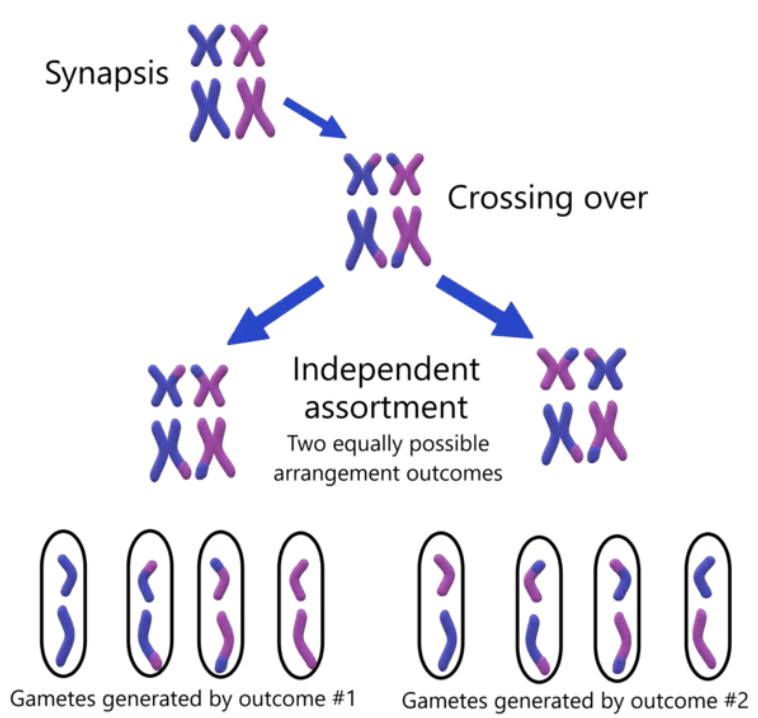
What is the law of independent assortment?

The alleles of two or more different genes are sorted into gametes independently of one another
<p><span style="background-color: rgb(229, 224, 236);"><mark data-color="#ffffff" style="background-color: rgb(255, 255, 255); color: inherit;">The alleles of two or more different genes are sorted into gametes independently of one another</mark></span></p>
14
New cards

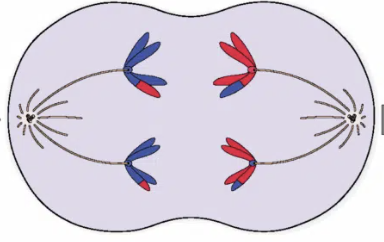
How does anaphase I seperate homologous chromosomes?

  • Spindle fibres contract and homologous chromosomes are separated to opposite cell poles

  • Chromosomes still as sister chromatids

<ul><li><p><span>Spindle fibres contract and homologous chromosomes are separated to opposite cell poles</span></p></li><li><p><span>Chromosomes still as sister chromatids</span></p></li></ul><p></p>
15
New cards

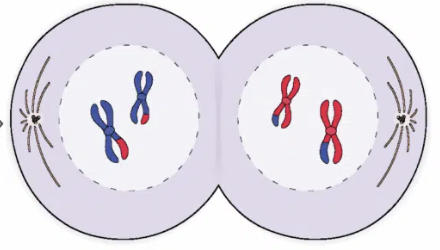
What occurs during telophase I?

  • Nuclear membrane (temporarily forms around the nuclei

  • Spindle fibres begin to break down

  • Chromosomes partially decondense (animals)

<ul><li><p><span>Nuclear membrane&nbsp;(temporarily forms around the nuclei</span></p></li><li><p><span>Spindle fibres begin to break down</span></p></li><li><p><span>Chromosomes partially decondense (animals)</span></p></li></ul><p></p>
16
New cards

How does cytokinesis produce daugher cells after Meiosis i?

  • Ring of actomyosin filaments contracts to divide cytoplasm

  • Two haloid daughter cells are produced

  • Either: 2 secondary spermatocytes or 1 secondary oocyte + 1 polar body

  • Some species enter interkinesis in preparation for meiosis II
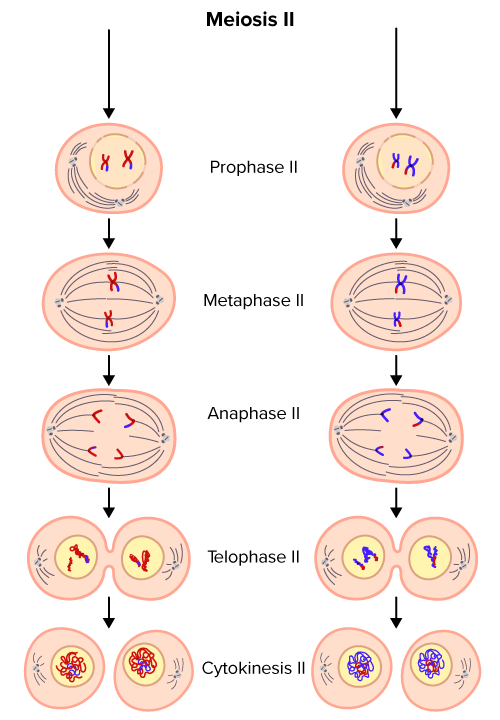

<ul><li><p>Ring of actomyosin filaments contracts to divide cytoplasm</p></li><li><p>Two haloid daughter cells are produced</p></li><li><p>Either: 2 secondary spermatocytes or 1 secondary oocyte + 1 polar body</p></li><li><p>Some species enter interkinesis in preparation for meiosis II</p></li></ul><p></p>
17
New cards

What occurs in the first phase of Meiosis II?

  • Chromosomes  recondense (animals)

  • Nuclear membrane breaks down

  • Centrosome move to opposite poles of the cell

  • Chromosomes begin migrating to the metaphase II plate
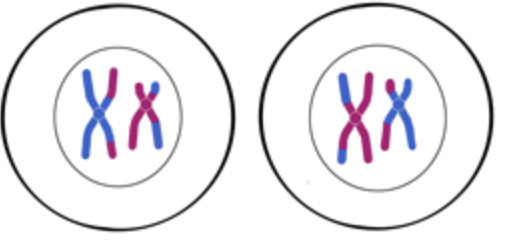

<ul><li><p><span>Chromosomes&nbsp; recondense (animals)</span></p></li><li><p><span>Nuclear membrane breaks down</span></p></li><li><p><span>Centrosome move to opposite poles of the cell</span></p></li><li><p><span>Chromosomes begin migrating to the metaphase II plate</span></p></li></ul><p></p>
18
New cards

What does metaphase II involve?

  • Chromosomes individually line up at the metaphase II plate

  • Spindle fibres attach to chromosomes' centromeres
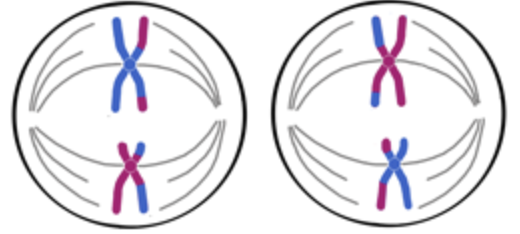

<ul><li><p><span>Chromosomes individually line up at the metaphase II plate</span></p></li><li><p><span>Spindle fibres attach to chromosomes' centromeres</span></p></li></ul><p></p>
19
New cards

How does anaphase II divide sister chromatids?

  • Spindle fibres contract and sister chromatids separate to opposite cell poles

  • Once the duplicated chromosomes separate, each is considered one full chromosome (a daughter chromosome)
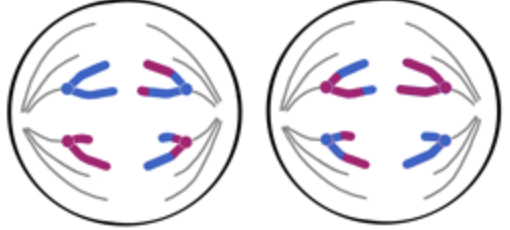

<ul><li><p><span>Spindle fibres contract and sister chromatids separate to opposite cell poles</span></p></li><li><p><span>Once the duplicated chromosomes separate, each is considered one full chromosome (a daughter chromosome)</span></p></li></ul><p></p>
20
New cards

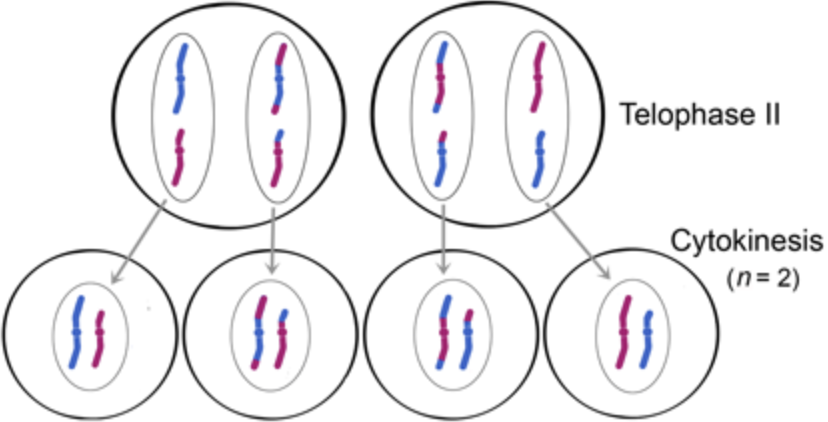
What occurs during telophase II?

  • 4 nuclei form at the opposite poles

  • Nuclear membrane reforms around each

  • Spindle fibres break down

  • Chromosomes decondense into chromatin


<ul><li><p><span>4 nuclei form at the opposite poles</span></p></li><li><p><span>Nuclear membrane reforms around each</span></p></li><li><p><span>Spindle fibres break down</span></p></li><li><p><span>Chromosomes decondense into chromatin</span></p></li></ul><p></p><p></p>
21
New cards

What occurs following telophase II?

  • Cytokinesis

  • Ring of actomyosin filaments contracts to divide cytoplasm

  • 4 haploid daughter cells are produced (potentially 4 gametes)

  • Either 4 spermatids or 1 ovum + 1 polar body

  • Each cell has 1/2 the original number of chromosomes (23) and 1/4 the original DNA amount
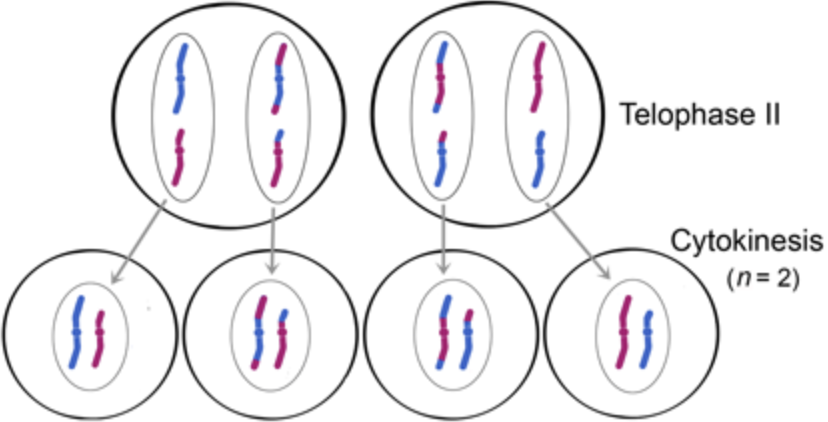

<ul><li><p>Cytokinesis</p></li></ul><ul><li><p><span>Ring of actomyosin filaments contracts to divide cytoplasm</span></p></li><li><p><span>4 haploid daughter cells are produced (potentially 4 gametes)</span></p></li><li><p><span>Either 4 spermatids or 1 ovum + 1 polar body</span></p></li><li><p><span>Each cell has 1/2 the original number of chromosomes (23) and 1/4 the original DNA amount</span></p></li></ul><p></p>
22
New cards

What are the 3 mechanisms by which meiosis increases the genetic variaion of gametes?

Mechanism

Process

Function

Reduction division

Homologous chromosomes separate, reducing the chromosome number from diploid to haploid

  • Daughter cells are genetically different from parent cells as they’re haploid

  • Allows fertilisation: Gametes from parents combine to produce genetically unique offspring

Independent assortment

Homologous chromosome pairs align and separate randomly during Meiosis I

Produces different combinations of maternal and paternal chromosomes in gametes

Crossing over

DNA is exchanged between non-sister chromatids of homologous chromosomes

Produces recombinant chromosomes with new combinations of alleles in gametes


23
New cards

What is the most common cause of anueploidy?

Non-disjunction: Failure of homologous chromosomes (or sister chromatids) to separate during meiosis


24
New cards

How does non-disjunction resullt in aneuploidy’s?

Non-disjunction:

  • Homologous chromosomes (Anaphase I) or sister chromatids (Anaphase II) fail to disjoin

  • Produces gametes with an abnormal number of chromosomes

Outcome: Causes aneuploidy in offspring including trisomy (+1) or monosomy (-1) after fertilisation
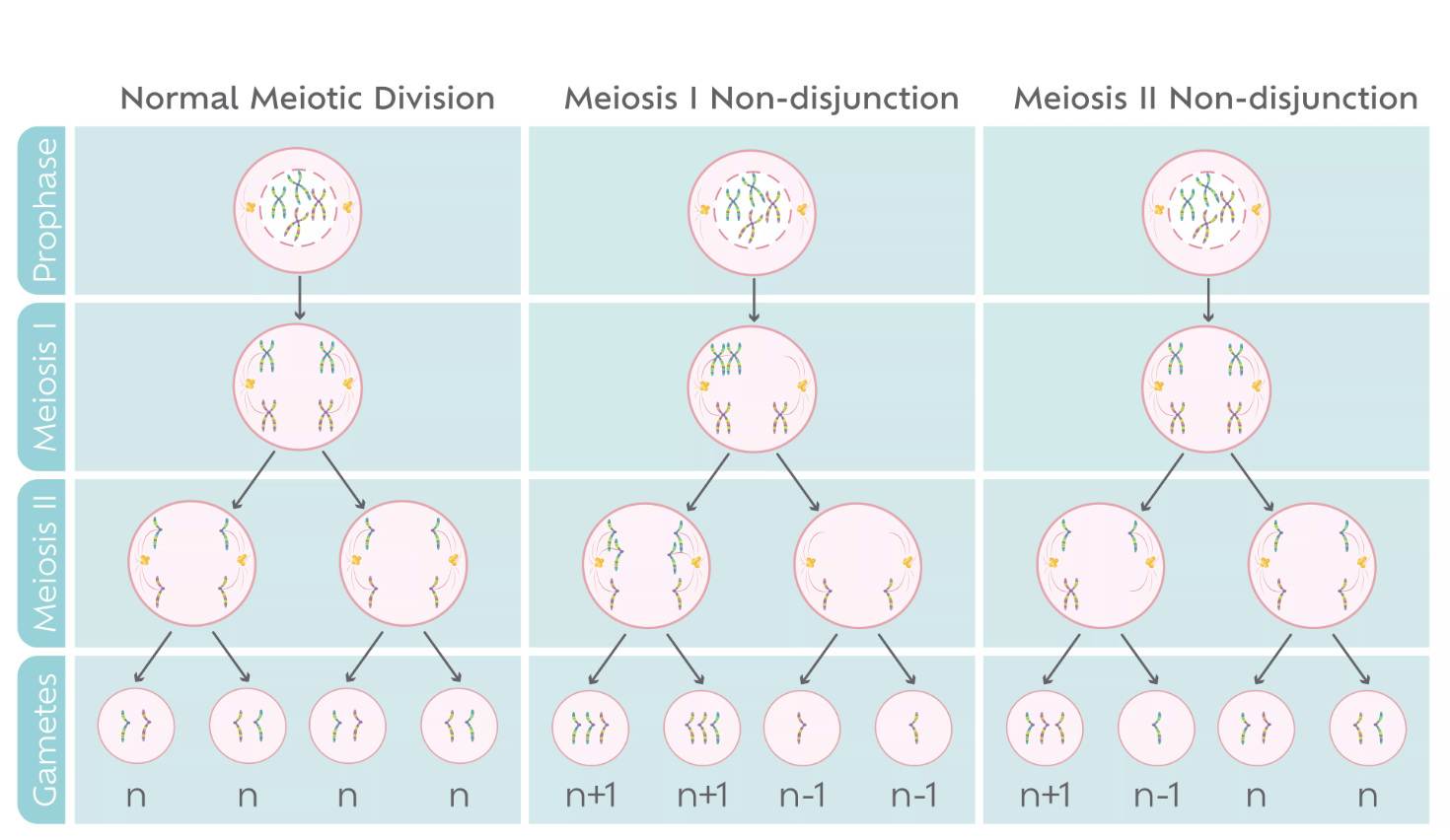

<p>Non-disjunction: </p><ul><li><p>Homologous chromosomes (Anaphase I) or sister chromatids (Anaphase II) fail to disjoin</p></li></ul><ul><li><p>Produces gametes with an abnormal number of chromosomes</p></li></ul><p>Outcome: Causes aneuploidy in offspring including trisomy (+1) or monosomy (-1) after fertilisation</p><p></p>
25
New cards

What is the most common outcome of non-disjunction?

The presence of an abnormal number of chromosomes in a cell
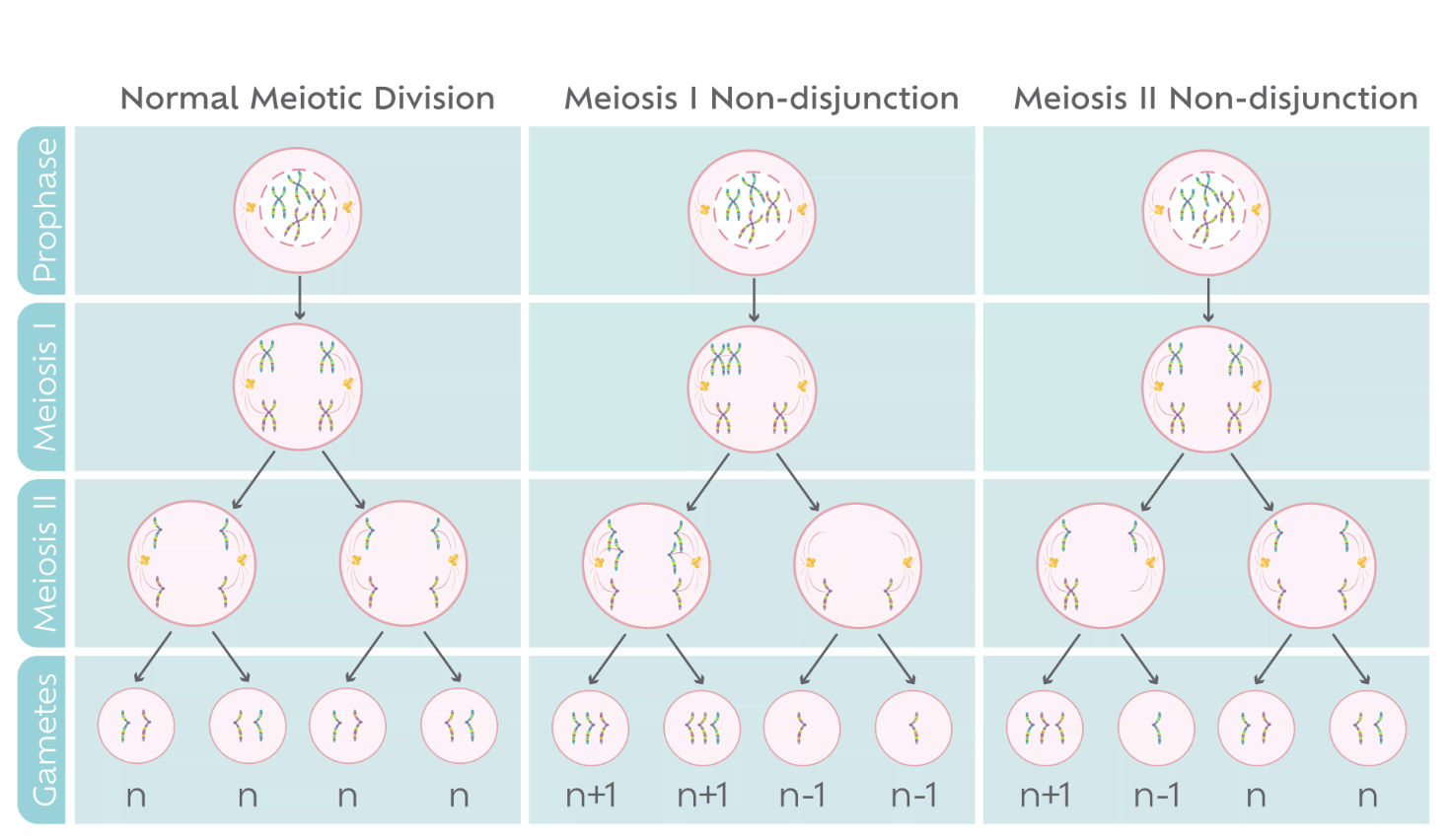
<p>The presence of an abnormal number of chromosomes in a cell </p>
26
New cards

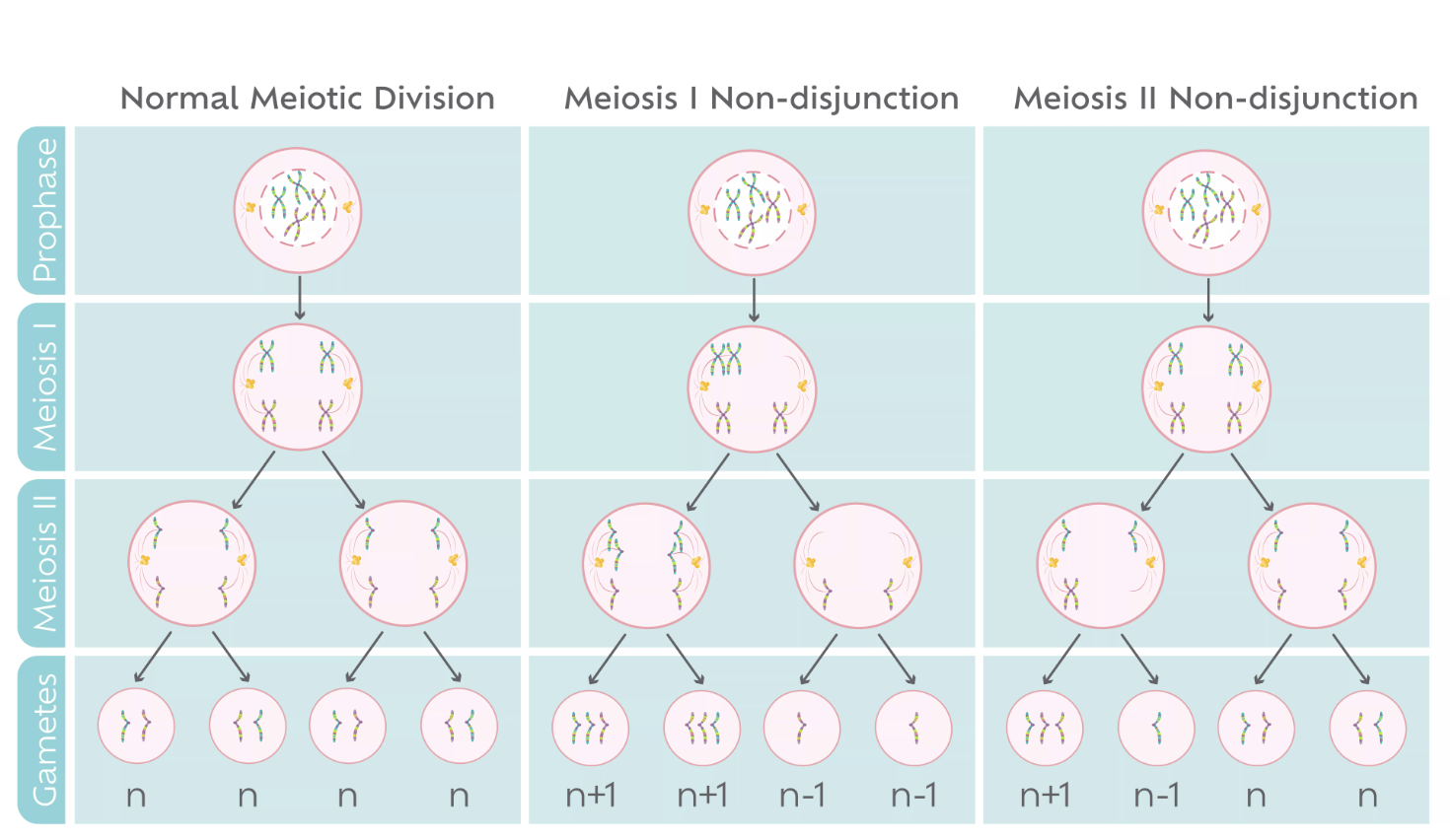
How does non-disjunction in Meiosis I affect gametes?

  • Both chromosomes in a homologous pair go to the same pole during Anaphase I instead of seperating

  • Metaphase II occurs normally, splitting sister chromatids apart

  • Result: all four gametes are abnormal — two are n+1, two are n-1 (2:2)

  • Therefore more disruptive despite both Meiosis I and II causing aneuploidy


27
New cards

How does non-disjunction in Meiosis II affect gametes?

  • Anaphase I is normal — homologous chromosomes separate correctly into two cells

  • In one of those two cells, sister chromatids fail to split during Anaphase II

  • Result: only two gametes are abnormal (one n+1, one n-1); the other cell's Anaphase II proceeds normally, giving two normal (n) gametes (1:1:2)


28
New cards

How does non-disjunction in Meiosis I vs II affect gametes differently?

  • MI error: homologs fail to separate at anaphase I → all 4 gametes abnormal (2× n+1, 2× n-1)

  • MII error: sister chromatids fail to separate at anaphase II, after MI went normally → only 2 of 4 gametes abnormal (1× n+1, 1× n-1, 2× normal)


29
New cards

What are some examples of aneulploidy?

Condition

Chromosome Number

Trisomy 21 (Down syndrome)

Three copies of chromosome 21

Trisomy 18 (Edwards syndrome)

Three copies of chromosome 18


<table style="min-width: 50px;"><colgroup><col style="min-width: 25px;"><col style="min-width: 25px;"></colgroup><tbody><tr><td colspan="1" rowspan="1" style="border-style: solid; vertical-align: top; width: 2.1993in; padding: 4pt;"><p>Condition</p></td><td colspan="1" rowspan="1" style="border-style: solid; vertical-align: top; width: 2.0833in; padding: 4pt;"><p>Chromosome Number</p></td></tr><tr><td colspan="1" rowspan="1" style="border-style: solid; vertical-align: top; width: 2.1993in; padding: 4pt;"><p>Trisomy 21 (Down syndrome)</p></td><td colspan="1" rowspan="1" style="border-style: solid; vertical-align: top; width: 2.152in; padding: 4pt;"><p>Three copies of chromosome 21</p></td></tr><tr><td colspan="1" rowspan="1" style="border-style: solid; vertical-align: top; width: 2.2187in; padding: 4pt;"><p>Trisomy 18 (Edwards syndrome)</p></td><td colspan="1" rowspan="1" style="border-style: solid; vertical-align: top; width: 2.1333in; padding: 4pt;"><p>Three copies of chromosome 18</p></td></tr></tbody></table><p></p>
30
New cards

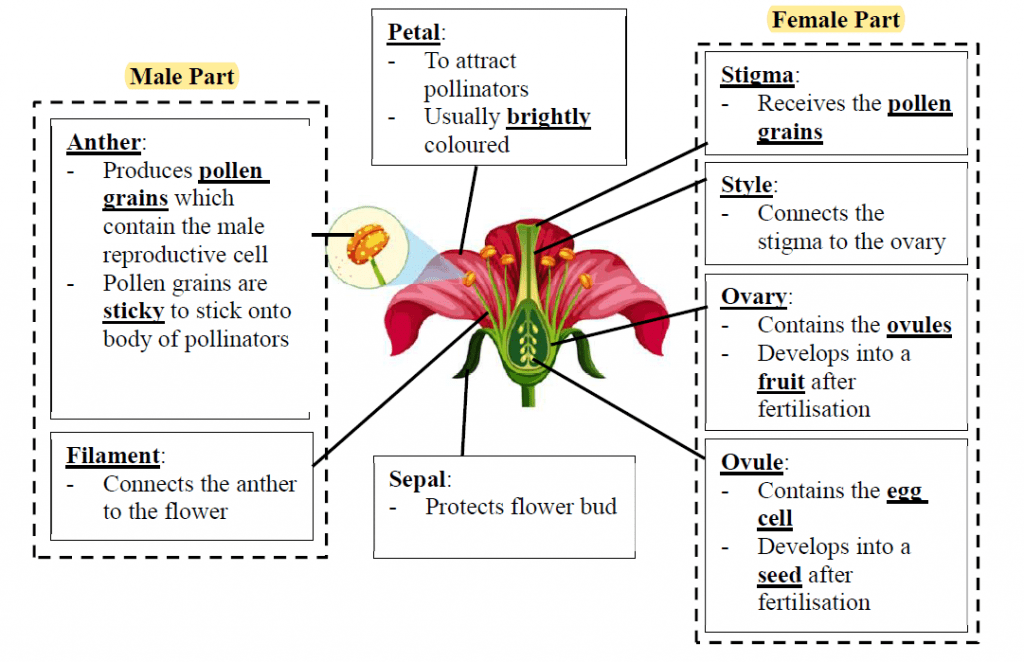
How are male plant gametes produced via meiosis?

Male (Anther)

  1. Meiosis occurs in the anther to produce haploid microspores

  2. Microspores undergo mitosis to form pollen grains

  • Each pollen grain contains the male gametes

  1. The pollen grains are released from the anther

  2. Pollinators transport the pollen grains to a flower of the same species
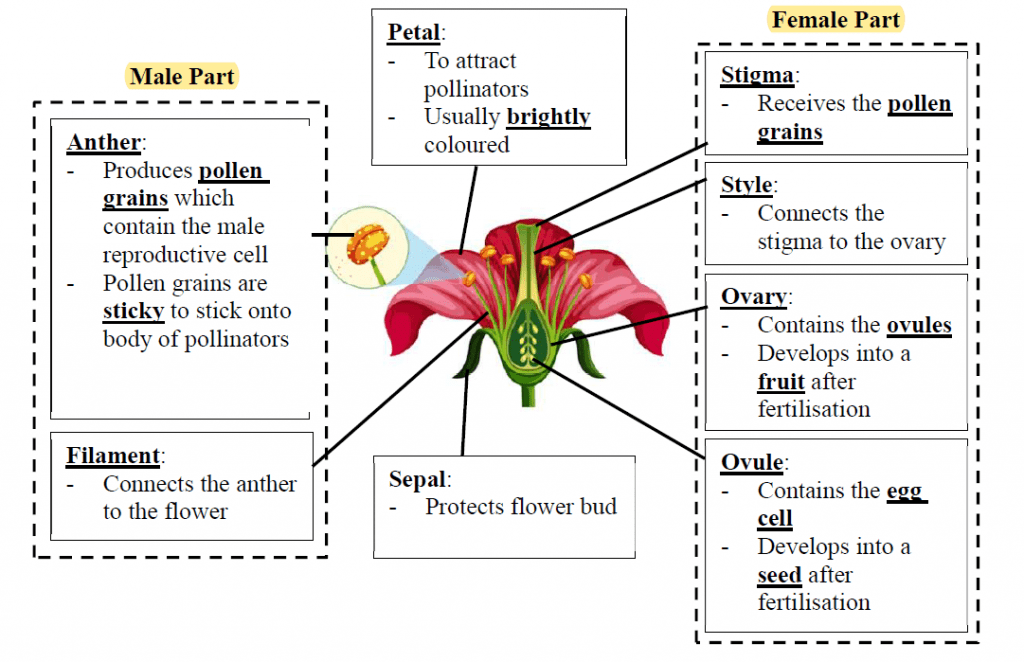

<p><strong>Male (Anther)</strong></p><ol type="1"><li><p>Meiosis occurs in the anther to produce haploid microspores</p></li><li><p>Microspores undergo mitosis to form pollen grains</p></li></ol><ul><li><p>Each pollen grain contains the male gametes</p></li></ul><ol start="3"><li><p>The pollen grains are released from the anther</p></li><li><p>Pollinators transport the pollen grains to a flower of the same species </p></li></ol><p></p>
31
New cards

How are female gametes (eggs) produced via meiosis?

Female (Ovule)

  1. Meiosis occurs in the ovule to produce a haploid megaspore

  2. The megaspore undergoes mitosis to form the embryo which contains the egg cell (ovum)
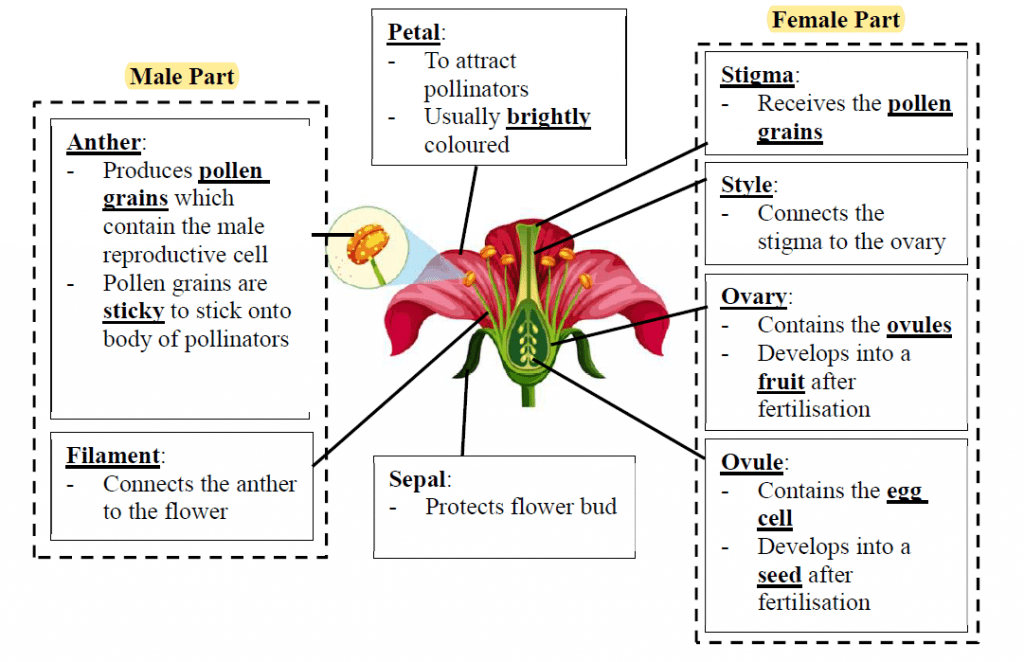

<p><strong>Female (Ovule)</strong></p><ol type="1"><li><p>Meiosis occurs in the ovule to produce a haploid megaspore</p></li><li><p>The megaspore undergoes mitosis to form the embryo which contains the egg cell (ovum)</p></li></ol><p></p>
32
New cards

How does fertilisation occur in plants to produce a gamete?

  • During pollination, a pollen grain lands on a compatible stigma

  • The pollen grain germinates and grows a pollen tube down the style to the ovule

  • A male gamete travels through the pollen tube and fertilises the egg cell, forming a zygote
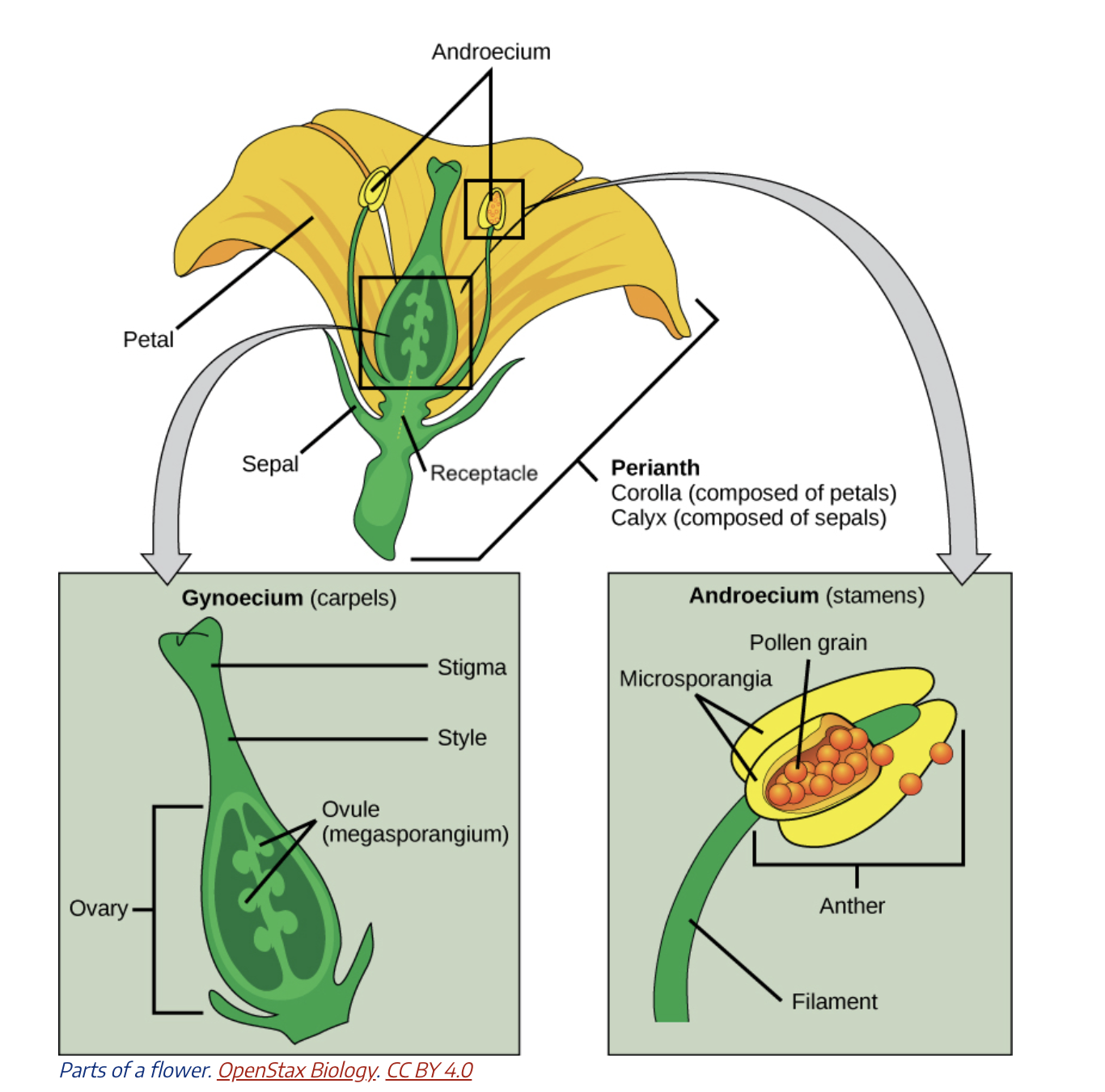

<ul><li><p>During pollination, a pollen grain lands on a compatible stigma</p></li></ul><ul><li><p>The pollen grain germinates and grows a pollen tube down the style to the ovule</p></li><li><p>A male gamete travels through the pollen tube and fertilises the egg cell, forming a zygote</p></li></ul><p></p>
33
New cards

What differs between meiosis in animals and plants?

Feature

Animals

Plants (flowering plants)

Product of meiosis

Gametes (sperm and ova)

Spores (microspores and megaspores)

What happens after meiosis?

Gametes are used directly in fertilisation

Spores undergo mitosis to produce gametes

Male reproductive structure

Testes produce sperm

Anthers produce microspores → pollen grains containing male gametes

Female reproductive structure

Ovaries produce ova

Ovules produce megaspores → embryo sac containing the egg cell

How fertilisation occurs

Sperm swims to and fertilises the ovum

Pollen lands on the stigma, grows a pollen tube down the style, and the male gamete fertilises the egg in the ovule

Relationship between daughter cells after cytokinesis

Daughter cells separate and function independently

Daughter cells remain connected via cell walls and plasmodesmata


<table style="min-width: 782px;"><colgroup><col style="min-width: 25px;"><col style="width: 230px;"><col style="width: 527px;"></colgroup><tbody><tr><td colspan="1" rowspan="1" style="border-style: solid; vertical-align: top; width: 1.7381in; padding: 4pt;"><p><span><strong>Feature</strong></span></p></td><td colspan="1" rowspan="1" colwidth="230" style="border-style: solid; vertical-align: top; width: 1.6916in; padding: 4pt;"><p><span><strong>Animals</strong></span></p></td><td colspan="1" rowspan="1" colwidth="527" style="border-style: solid; vertical-align: top; width: 2.9715in; padding: 4pt;"><p><span><strong>Plants (flowering plants)</strong></span></p></td></tr><tr><td colspan="1" rowspan="1" style="border-style: solid; vertical-align: top; width: 1.7381in; padding: 4pt;"><p>Product of meiosis</p></td><td colspan="1" rowspan="1" colwidth="230" style="border-style: solid; vertical-align: top; width: 1.6916in; padding: 4pt;"><p>Gametes (sperm and ova)</p></td><td colspan="1" rowspan="1" colwidth="527" style="border-style: solid; vertical-align: top; width: 2.9715in; padding: 4pt;"><p>Spores (microspores and megaspores)</p></td></tr><tr><td colspan="1" rowspan="1" style="border-style: solid; vertical-align: top; width: 1.7381in; padding: 4pt;"><p>What happens after meiosis?</p></td><td colspan="1" rowspan="1" colwidth="230" style="border-style: solid; vertical-align: top; width: 1.6916in; padding: 4pt;"><p>Gametes are used directly in fertilisation</p></td><td colspan="1" rowspan="1" colwidth="527" style="border-style: solid; vertical-align: top; width: 2.9993in; padding: 4pt;"><p>Spores undergo mitosis to produce gametes</p></td></tr><tr><td colspan="1" rowspan="1" style="border-style: solid; vertical-align: top; width: 1.7381in; padding: 4pt;"><p>Male reproductive structure</p></td><td colspan="1" rowspan="1" colwidth="230" style="border-style: solid; vertical-align: top; width: 1.6916in; padding: 4pt;"><p>Testes produce sperm</p></td><td colspan="1" rowspan="1" colwidth="527" style="border-style: solid; vertical-align: top; width: 2.9993in; padding: 4pt;"><p>Anthers produce microspores → pollen grains containing male gametes</p></td></tr><tr><td colspan="1" rowspan="1" style="border-style: solid; vertical-align: top; width: 1.7381in; padding: 4pt;"><p>Female reproductive structure</p></td><td colspan="1" rowspan="1" colwidth="230" style="border-style: solid; vertical-align: top; width: 1.6916in; padding: 4pt;"><p>Ovaries produce ova</p></td><td colspan="1" rowspan="1" colwidth="527" style="border-style: solid; vertical-align: top; width: 2.9993in; padding: 4pt;"><p>Ovules produce megaspores → embryo sac containing the egg cell</p></td></tr><tr><td colspan="1" rowspan="1" style="border-style: solid; vertical-align: top; width: 1.7381in; padding: 4pt;"><p>How fertilisation occurs</p></td><td colspan="1" rowspan="1" colwidth="230" style="border-style: solid; vertical-align: top; width: 1.6916in; padding: 4pt;"><p>Sperm swims to and fertilises the ovum</p></td><td colspan="1" rowspan="1" colwidth="527" style="border-style: solid; vertical-align: top; width: 3.0888in; padding: 4pt;"><p>Pollen lands on the stigma, grows a pollen tube down the style, and the male gamete fertilises the egg in the ovule</p></td></tr><tr><td colspan="1" rowspan="1" style="border-style: solid; vertical-align: top; width: 1.7381in; padding: 4pt;"><p>Relationship between daughter cells after cytokinesis</p></td><td colspan="1" rowspan="1" colwidth="230" style="border-style: solid; vertical-align: top; width: 1.7013in; padding: 4pt;"><p>Daughter cells separate and function independently</p></td><td colspan="1" rowspan="1" colwidth="527" style="border-style: solid; vertical-align: top; width: 3.0076in; padding: 4pt;"><p>Daughter cells remain connected via cell walls and plasmodesmata</p></td></tr></tbody></table><p></p>
34
New cards

How do plants know which pollen is from the same species?


  • The stigma (tip of tube) can recognise whether pollen is from the same species through species-specific chemical interactions

  • Only compatible pollen can germinates and grow a pollen tube

  • Matching chromosome numbers allow successful fertilisation and seed formation
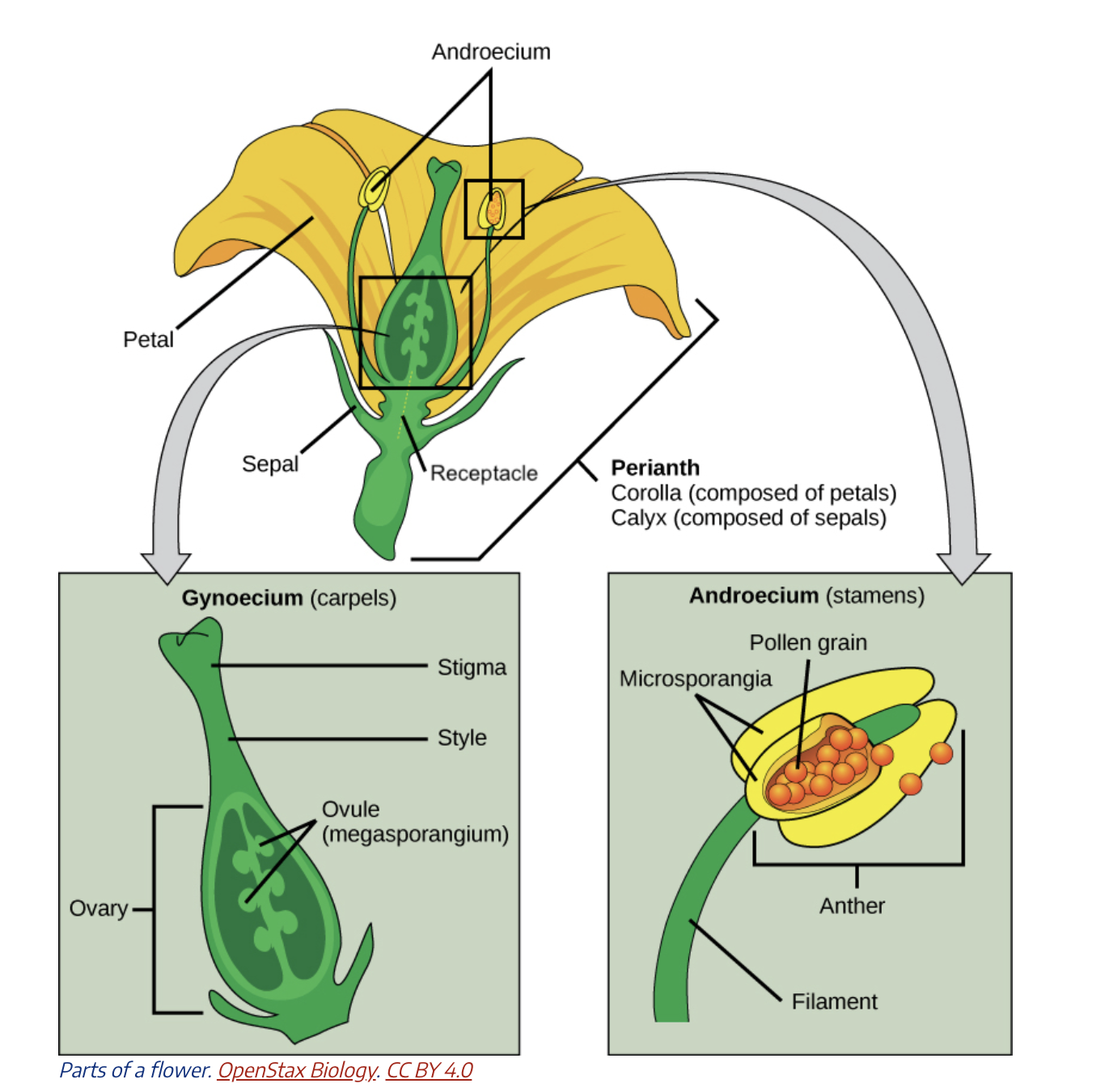

<p></p><ul><li><p>The stigma (tip of tube) can recognise whether pollen is from the same species through species-specific chemical interactions</p></li></ul><ul><li><p>Only compatible pollen can germinates and grow a pollen tube</p></li><li><p>Matching chromosome numbers allow successful fertilisation and seed formation</p></li></ul><p></p>
35
New cards

What is a monohybrid cross?

Monohybrid cross: A cross that tracks the inheritance of one single trait

  • The likelihood of a trait being produced during a monohybrid cross can be mapped out using a punnet square


36
New cards

How is a punnet square useful for geneticists?

Punnet square: A grid used predict the probability of offspring's inheriting certain genotypes and phenotypes

37
New cards

How does a hyrbid individual differ from a true breeding individual?

True breeding: Individuals homozygous for a trait

Hybrid: Individuals heterozygous for the trait
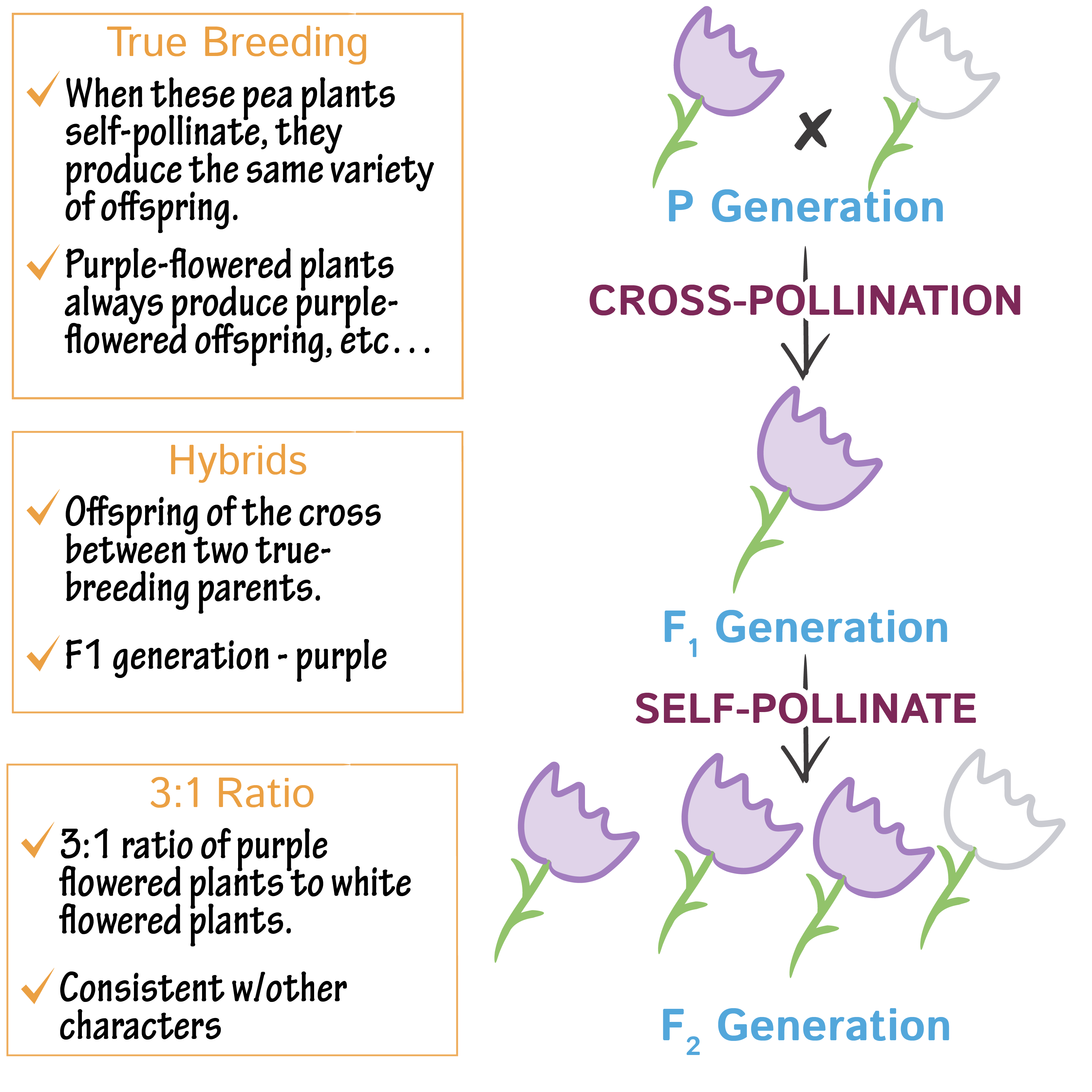


<p>True breeding: Individuals homozygous for a trait</p><p>Hybrid: Individuals heterozygous for the trait</p><p>&nbsp;</p><p></p>
38
New cards

Who discovered modern genetics and by what experiments did they discover it?

  • Gregor Mendel (1822-1884), Austrian monk

  • Studied inheritance patterns in pea plants

  • First experimented by crossing pure-breeding (homozygous) plants

  • Focused on one characteristic at a time (EG stem length) to determine frequency of phenotypes’ → made it easier to understand the laws controlling inheritance

  • Over 7 years, Mendel experimented on more than 28,000 pea plants


39
New cards

Why were Austrian monk Gregor Mendel’s experiments successful?

  • Pea plants grow quickly and are available in pure-breeding (homozygous) strains

  • Many pea plant characteristics show discontinuous variation; they are either one form or another, with no intermediates meaning that their phenotypes are easily distinguishable


40
New cards

What are some common phenotypic and genotypic ratios for monohybrid, dihybrid, test cross and sex-linked genetic crosses?

Type

What you're crossing

Genotype ratio

Phenotype ratio

Monohybrid

2 heterozygous: Aa × Aa

1:2:1

3:1

Monohybrid

Heterozygous × recessive: Aa × aa

1:1

1:1

Monohybrid

Dominant × recessive: AA × aa

100% Aa

100% dominant

Monohybrid

Dominant × heterozygous: AA × Aa

1:1

100% dominant

Monohybrid

2 recessive: aa × aa

100% aa

100% recessive

Dihybrid

2 heterozygous: AaBb × AaBb

1:2:1:2:4:2:1:2:1

9:3:3:1

Dihybrid test cross

Heterozygous × double recessive: AaBb × aabb

1:1:1:1

1:1:1:1

Linked genes

Heterozygous × recessive: AB/ab × ab/ab

Parental > recombinant

Parental > recombinant

Sex-linked recessive

Carrier female × unaffected male: XᴬXᵃ × XᴬY

1:1:1:1

3 unaffected : 1 affected

Sex-linked recessive

Carrier female × affected male: XᴬXᵃ × XᵃY

1:1:1:1

1:1:1:1


41
New cards

How are test crosses used to form pure breeding strains?

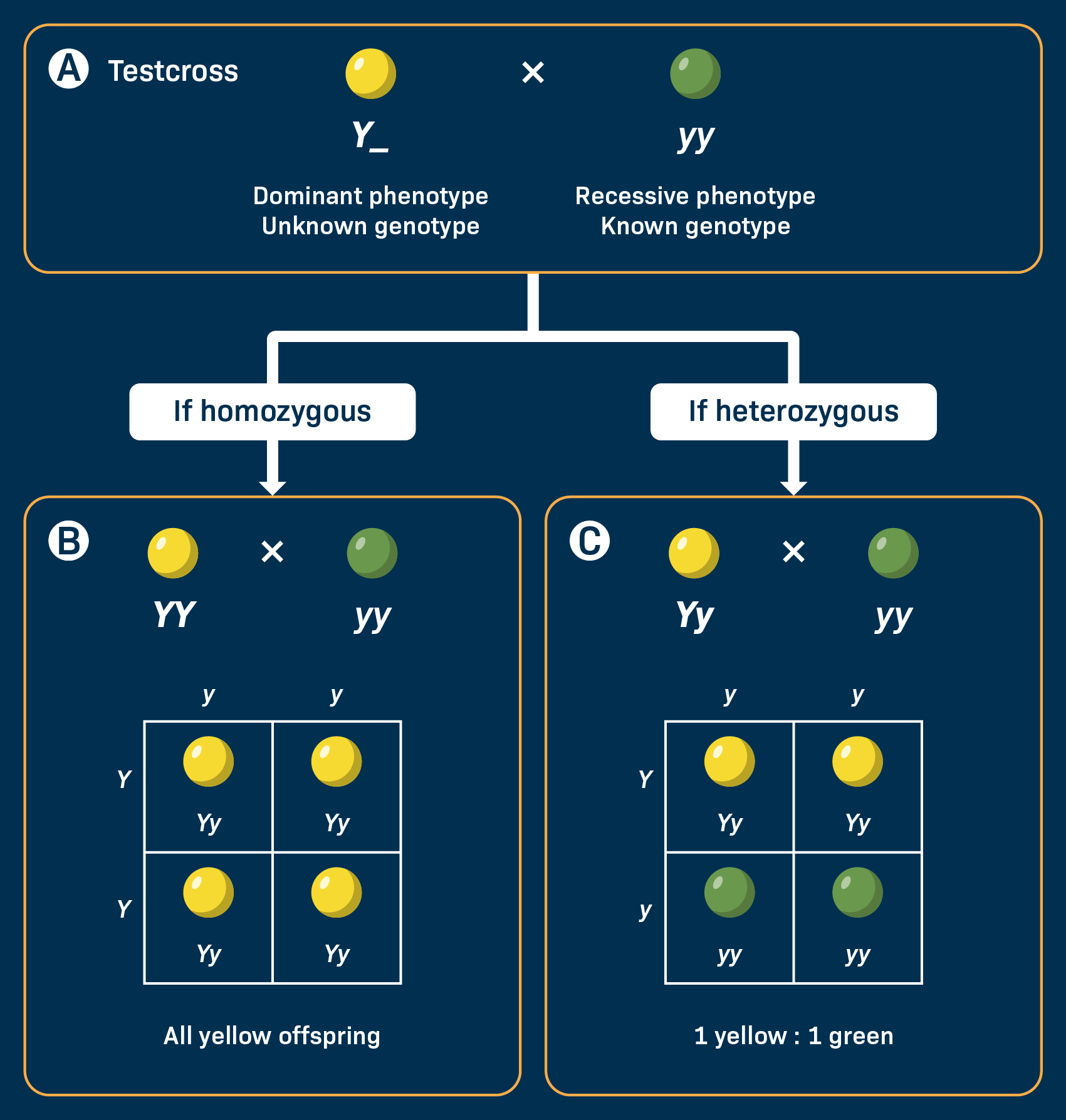
Test cross: A genetic method where the dominant individual with unknown phenotype is crossed with a homozygous recessive individual for the trait to determine their genotype

  • Test cross only confirmed after 16 crosses

  • Offspring phenotype reveal the genotype of the unknown parent

<p><span style="background-color: rgb(204, 193, 217);"><mark data-color="#ffffff" style="background-color: rgb(255, 255, 255); color: inherit;">Test cross: A genetic method where the dominant individual with unknown phenotype is crossed with a homozygous recessive individual for the trait to determine their genotype</mark></span></p><ul><li><p><strong>Test cross only confirmed after 16 crosses</strong></p></li><li><p>Offspring phenotype reveal the genotype of the unknown parent</p></li></ul><p></p>
42
New cards

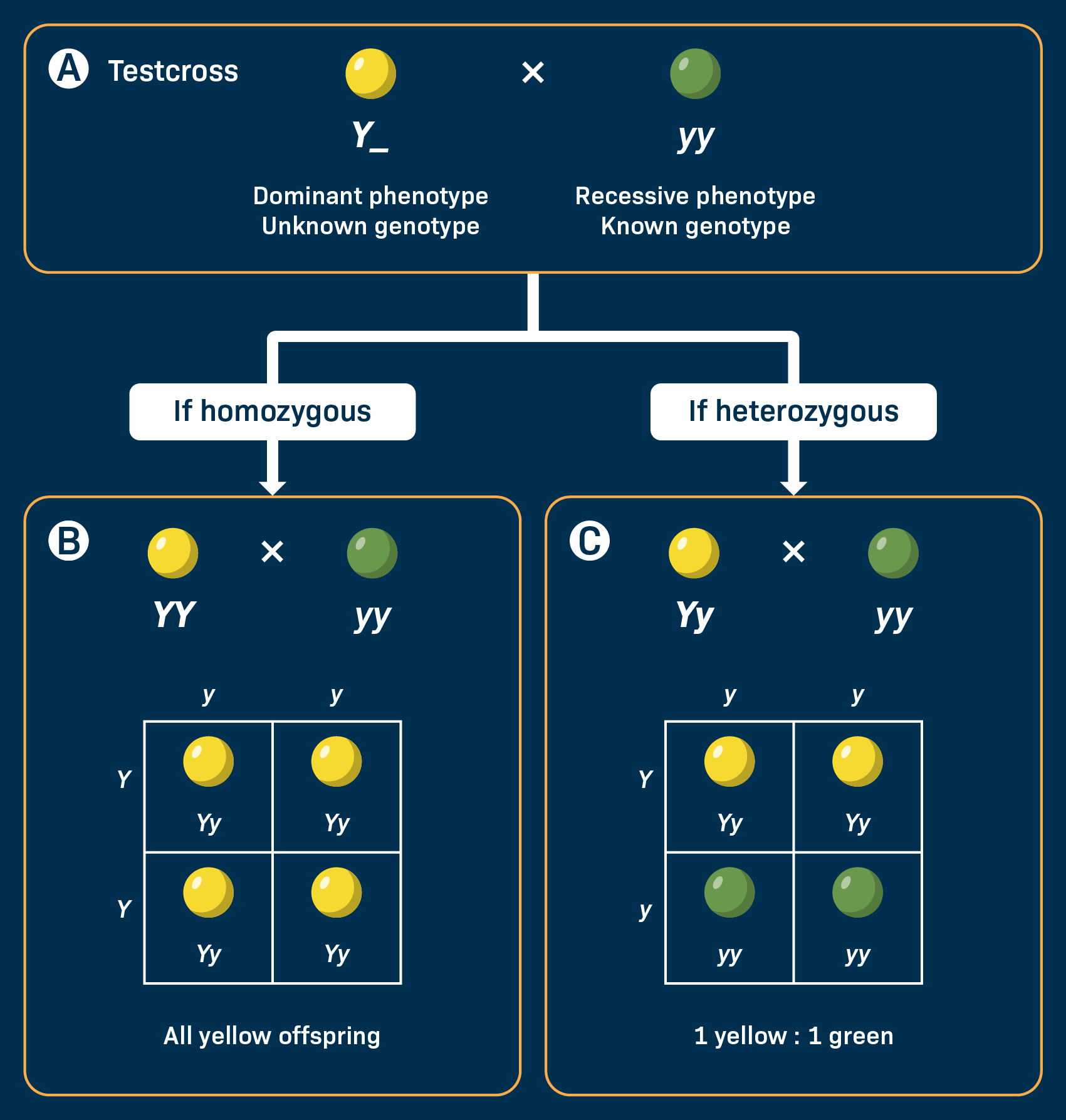
What are the resulting offspring of a test cross where the unknown genotype was homozygous dominant?

Results after 16 crosses:

  • All offspring will have the dominant trai t

  • All offspring possess the heterozygous genotype

<p>Results after 16 crosses: </p><ul><li><p>All offspring will have the dominant trai t</p></li></ul><ul><li><p>All offspring possess the heterozygous genotype </p></li></ul><p></p>
43
New cards

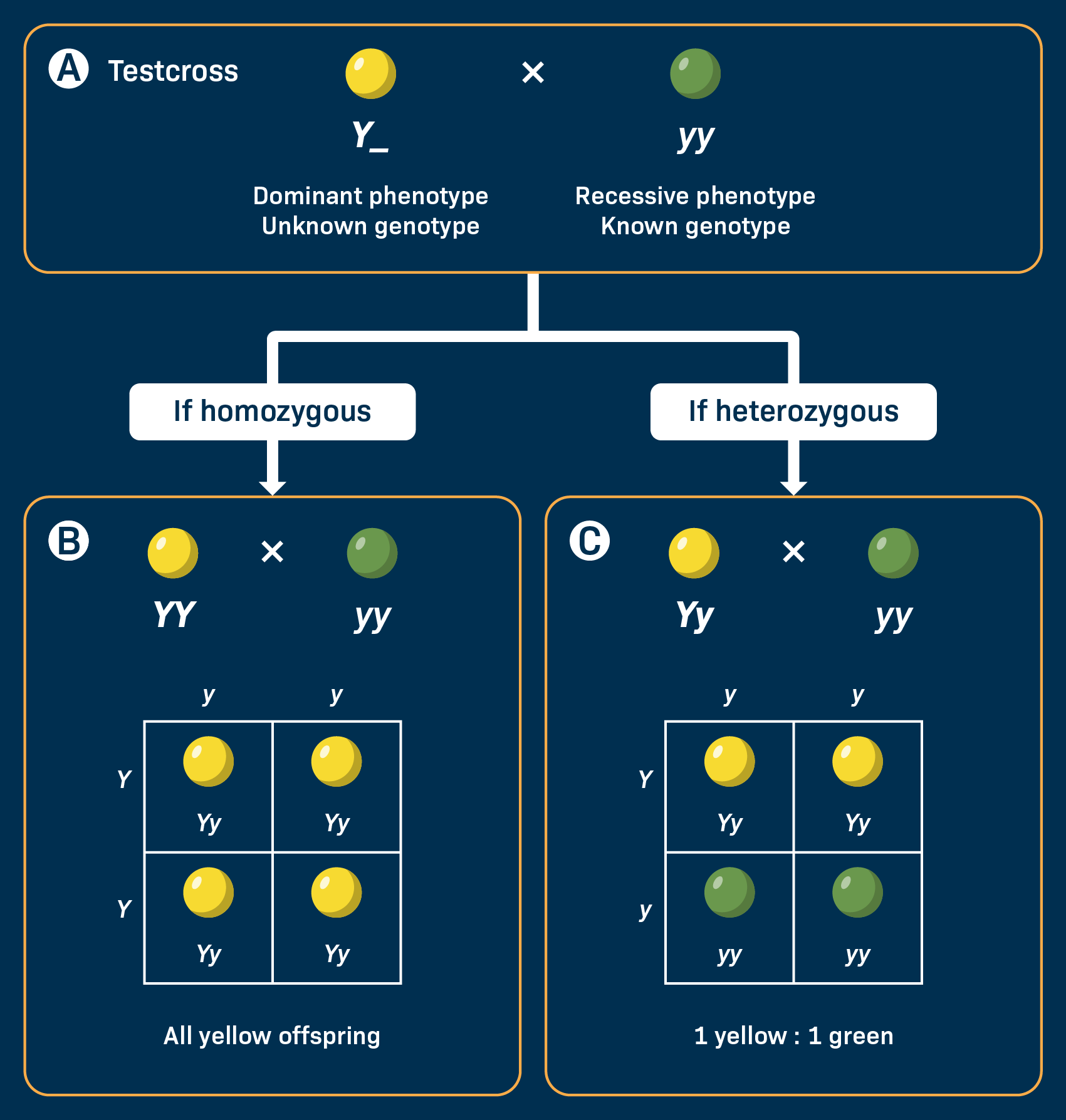
What are the resulting offspring of a test cross where the unknown genotype was heterzygous?

Results after 16 crosses:

  • Half the offspring will have the dominant trait (1:1 ratio)

  •  Those with the trait are heterozygous carriers

  • Those with the recessive trait are homozygous recessive

<p>Results after 16 crosses: </p><ul><li><p><span style="background-color: rgb(229, 224, 236);"><mark data-color="#ffffff" style="background-color: rgb(255, 255, 255); color: inherit;">Half the offspring will have the dominant trait (1:1 ratio)</mark></span></p></li></ul><ul><li><p><span><mark data-color="#ffffff" style="background-color: rgb(255, 255, 255); color: inherit;">&nbsp;Those with the trait are heterozygous carriers</mark></span></p></li><li><p><span><mark data-color="#ffffff" style="background-color: rgb(255, 255, 255); color: inherit;">Those with the recessive trait are homozygous recessive</mark></span></p></li></ul><p></p>
44
New cards

Despite test crosses being confirmed after 16 offspring are produced, are the results 100% accurate?

  • Test crosses only show the theoretical probability which often differs from the experimental probability

  • Despite the ratio being 3:1, every 1 out of 4 offspring may not express the recessive trait

  • Therefore test crosses only work accurately with large sample sizes


45
New cards

What relationships can dihybrid crosses determine?

Dihybrid cross: Involves crossing 2 different genes to determine the relationship between the alleles for each gene and the relationship between those genes

46
New cards

What can dihybrid crosses be used to determine?

Used to determine:

  • Te relationship between the alleles for 2 genes

  • Whether genes are linked or unlinked

  • The inheritance of two different genes controlling different phenotypes


47
New cards

What are 3 commonly conducted dihyrbid crosses?

  1. Crossing 2 heterozygotes

  2. Crossing homozgyous dominant individuals (true-breeding pairs)

  3. Crossing homzygous dominant with heterozygous


48
New cards

What genotype and phenotype ratios does a dihybrid cross of 2 heterozygotes produce?

  • BbRr x BbRr = Phenotype Ratio: 9:3:3:1

  • Genotype Ratio: 1:2:1:2:4:2:1:2:1 (9 different genotypes)

    • 9 dominant for both traits

    • 3 dominant for B, recessive for R

    • 3 recessive for B, dominant for R

    • 1 recessive for both traits


49
New cards

What genotype and phenotype ratios does a dihybrid cross of 2 true-breeding pairs (homzygous dominant individuals) produce?

  • BBRR x bbrr = Phenotype Ratio: 1:0 (100% express both dominant traits)

  • Genotype Ratio: 1:0 (100% BbRr)

  • All offspring heterozygous for both traits


50
New cards

What genotype and phenotype ratios does a dihybrid cross of a homzygous dominant individual x heterozygous individual produce?

  • BBRR x BbRr Phenotype Ratio: 1:0 (100% express both dominant traits)

  • Genotype Ratio: 1:1:1:1

    • 1 BBRR

    • 1 BBRr

    • 1 BbRR

    • 1 BbRr


51
New cards

How does independent assortment affect linked and unlinked genes differently?

52
New cards

What are the steps for conducting a dihyrbid cross?

  1. Determine allele combos for the parental genotypes

  2. Draw the dihybrid cross, with parental allele combinations on the top and down the side. Combine the alleles in the boxes to determine the potential genotypes of the offspring

  3. Determine the phenotypes of offspring

  4. Address the question, which may involve determining the phenotypic ratio of the offspring or probability of certain phenotypes

<ol type="1"><li><p><span>Determine allele combos for the parental genotypes</span></p></li><li><p><span>Draw the dihybrid cross, with parental allele combinations on the top and down the side. Combine the alleles in the boxes to determine the potential genotypes of the offspring</span></p></li><li><p><span>Determine the phenotypes of offspring</span></p></li><li><p><span>Address the question, which may involve determining the phenotypic ratio of the offspring or probability of certain phenotypes</span></p></li></ol><p></p>
53
New cards

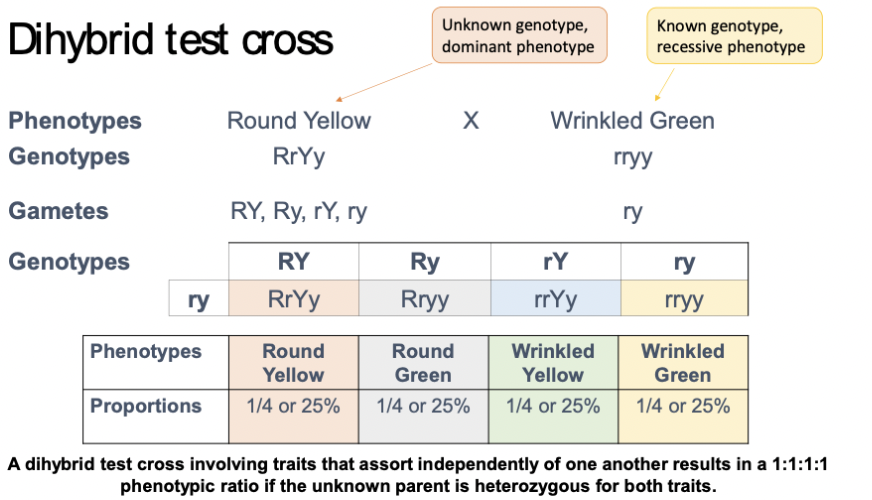
What is a dihybrid test cross?


Dihybrid test cross: A genetic cross where an individual with the dominant phenotype for two traits (but an unknown genotype) is bred with a double homozygous recessive individual


54
New cards

How do dihybrid test cross outcomes differ between heterozygous and homozygous dominant genotypes?

Heterozygous (AaBb): produces 4 equal gamete types (AB, Ab, aB, ab) → 1:1:1:1 offspring ratio, showing a mix of dominant and recessive traits

Homozygous dominant (AABB): produces only one gamete type (AB) → all offspring are AaBb, 100% dominant phenotype, no recessive traits appear
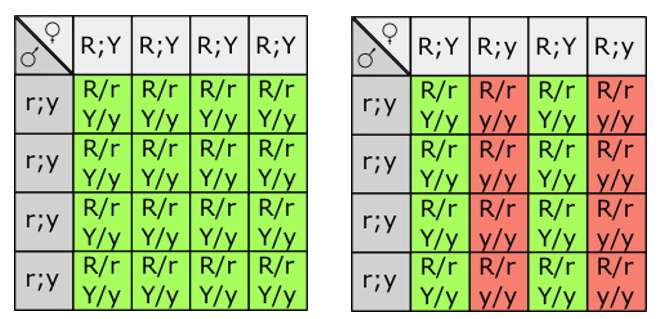

<p><strong>Heterozygous (AaBb): </strong>produces 4 equal gamete types (AB, Ab, aB, ab) → 1:1:1:1 offspring ratio, showing a mix of dominant and recessive traits</p><p><strong>Homozygous dominant (AABB):</strong> produces only one gamete type (AB) → all offspring are AaBb, 100% dominant phenotype, no recessive traits appear</p><p></p>
55
New cards

What is the dihybrid test cross outcome if the unknown dominant genotype is homzygous dominant?

If homozygous dominant (AABB)

  • Only one gamete type is produced: AB

  • All offspring are AaBb, showing 100% dominant phenotype for both traits — no variation

  • ow do dihybrid test cross outcomes differ between heterozygous and homozygous dominant genotypes?No recessive phenotypes appear at all
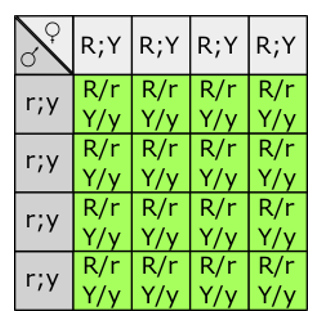

<p><strong>If homozygous dominant (AABB)</strong></p><ul><li><p>Only one gamete type is produced: AB</p></li><li><p>All offspring are AaBb, showing 100% dominant phenotype for both traits — no variation</p></li><li><p>ow do dihybrid test cross outcomes differ between heterozygous and homozygous dominant genotypes?No recessive phenotypes appear at all</p></li></ul><p></p>
56
New cards

What is the dihybrid test cross outcome if the unknown dominant genotype is heterozygous?

If heterozygous (AaBb)

  • Independent assortment produces 4 gamete types in equal proportions: AB, Ab, aB, ab

  • Offspring ratio: 1:1:1:1 across four phenotype combinations

  • Shows a mix of dominant and recessive traits in the offspring
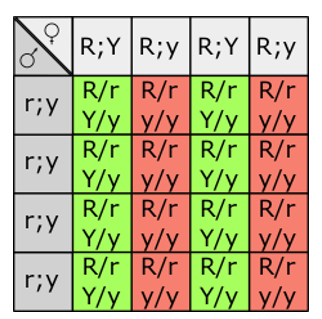

<p><strong>If heterozygous (AaBb)</strong></p><ul><li><p>Independent assortment produces 4 gamete types in equal proportions: AB, Ab, aB, ab</p></li><li><p>Offspring ratio: 1:1:1:1 across four phenotype combinations</p></li><li><p>Shows a mix of dominant and recessive traits in the offspring</p></li></ul><p></p>
57
New cards

What is independent assortment, and how does it relate to linked vs unlinked genes?

Independent assortment: Random alignment and separation of homologous chromosome pairs at metaphase I, which sorts the alleles of two or more different genes into gametes independently of one another (law)

  • Relies on genes being on separate homologous pairs, since it's the random orientation of different pairs at the metaphase plate that shuffles them independently

  • Law applies fully to unlinked genes, but not to linked genes, which travel together on the same chromosome instead of assorting independently
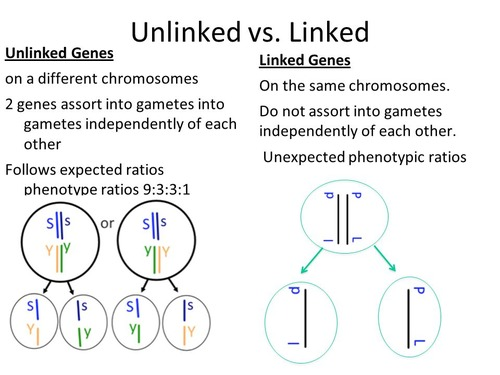

<p>Independent assortment: Random alignment and separation of homologous chromosome pairs at metaphase I, <strong>which sorts the alleles of two or more different genes into gametes independently of one another (law)</strong></p><ul><li><p>Relies on genes being on separate homologous pairs, since it's the random orientation of different pairs at the metaphase plate that shuffles them independently</p></li><li><p>Law applies fully to unlinked genes, but not to linked genes, which travel together on the same chromosome instead of assorting independently</p></li></ul><p></p>
58
New cards

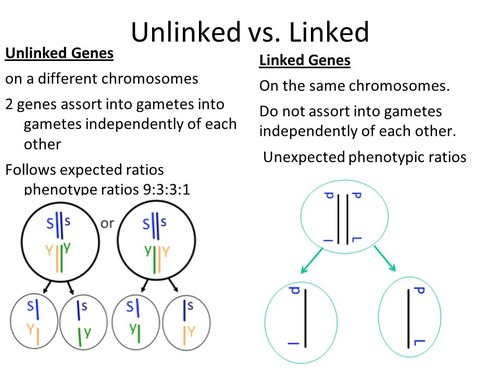
What are unlinked genes and how do they align and seperate during meisois I?

Unlinked genes: Genes located on separate chromosomes that independently assort during meiosis

  • Unlinked genes follow independent assortment fully

  • Their alleles combine randomly, producing all possible allele combinations in roughly equal proportions

<p><span style="background-color: yellow;"><mark data-color="#ffffff" style="background-color: rgb(255, 255, 255); color: inherit;">Unlinked genes: Genes located on separate chromosomes that independently assort during meiosis</mark></span></p><ul><li><p><span>Unlinked genes follow independent assortment fully</span></p></li><li><p><span>Their alleles combine randomly, producing all possible allele combinations in roughly equal proportions</span></p></li></ul><p></p>
59
New cards

How are unlinked genes different to linked genes?

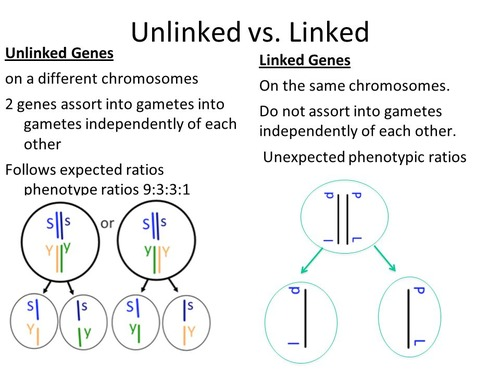
Unlinked genes: Genes located on separate chromosomes that independently assort during meiosis

Linked genes: Genes located on the same chromosome that tend to be inherited together rather than assorting independently
<p><span style="background-color: yellow;"><mark data-color="#ffffff" style="background-color: rgb(255, 255, 255); color: inherit;">Unlinked genes: Genes located on separate chromosomes that independently assort during meiosis</mark></span></p><p>Linked genes: Genes located on the same chromosome that tend to be inherited together rather than assorting independently</p>
60
New cards

What are linked genes and how do they align and seperate during meiosis I?

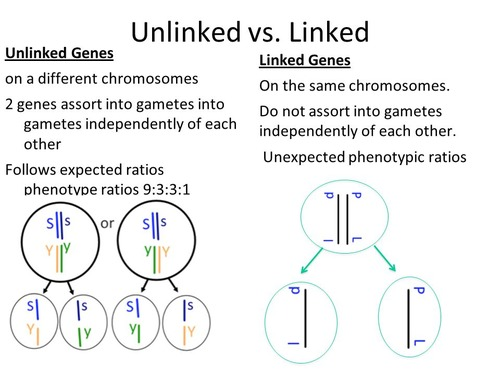
Linked genes: Genes located on the same chromosome that tend to be inherited together rather than assorting independently

  • Not assorted independently because they’re physically joined and travel to the same pole during Anaphase I

  • Therefore the only way linked genes are separated is by crossing over during prophase I, but the closer together they are, the less likely recombination is to occur between them

<p>Linked genes: Genes located on the same chromosome that tend to be inherited together rather than assorting independently</p><ul><li><p><span> Not assorted independently because they’re physically joined and travel to the same pole during Anaphase I</span></p></li></ul><ul><li><p><span>Therefore the only way linked genes are separated is by crossing over during prophase I, but the closer together they are, the less likely recombination is to occur between them</span></p></li></ul><p></p>
61
New cards

How do the allele combination outcomes differ between linked and unlinked genes?

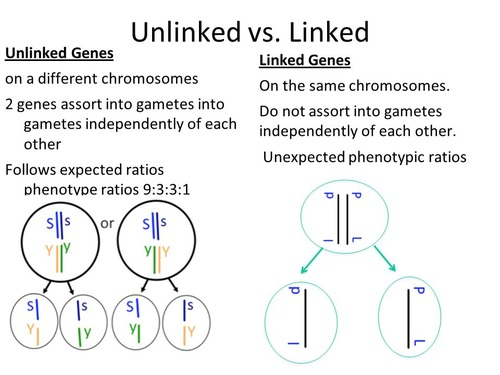
  • Linked genes show a higher proportion of parental (non-recombinant) allele combinations

  • Unlinked genes show an even, equal mix of all possible allele combinations

<ul><li><p>Linked genes show a higher proportion of parental (non-recombinant) allele combinations</p></li><li><p>Unlinked genes show an even, equal mix of all possible allele combinations</p></li></ul><p></p>
62
New cards

Why are linked genes more likely to be inherited together?

  • Because they don't sort independently during meiosis

  • Crossing over can occur between genes on the same chromosome but this is unlikely particularly if they are close together

  • Therefore, the closer the genes are to each other on the same chromosome, they more likely they will be inherited together

<ul><li><p><span>Because they don't sort independently during meiosis</span></p></li><li><p><span>Crossing over can occur between genes on the same chromosome but this is unlikely particularly if they are close together</span></p></li><li><p><span>Therefore, the closer the genes are to each other on the same chromosome, they more likely they will be inherited together</span></p></li></ul><p></p>
63
New cards

How do the phenotypic ratios differ in a dihybrid cross of two heterozygotes for linked, unlinked, and incompletely linked genes?

Unlinked genes: Normal phenotypic ratio  9:3:3:1

Linked genes (inherited together): Phenotypic ratio is 3:1 as no recombinant genotypes are produced

Incompletely linked genes (same chromosome, but far enough apart for occasional crossing over) produces:

  • Parental gametes: high freq. and recombinant gametes: low freq. therefore offspring are mostly parental phenotypes, with few recombinant phenotypes

  • Ratio: Deviates significantly from 9:3:3:1 and 3:1

<p><span>Unlinked genes: Normal phenotypic ratio&nbsp; 9:3:3:1</span></p><p><span>Linked genes (inherited together): Phenotypic ratio is 3:1 as no recombinant genotypes&nbsp;are produced</span></p><p><span>Incompletely linked genes (same chromosome, but far enough apart for occasional crossing over) produces:</span></p><ul><li><p><span>Parental gametes: high freq. and recombinant gametes: low freq. therefore offspring are mostly parental phenotypes, with few recombinant phenotypes</span></p></li><li><p><span>Ratio: Deviates significantly from 9:3:3:1 and 3:1</span></p></li></ul><p></p>
64
New cards

How does linkage affect genetic variation, and how is it identified?

  • Reduces genetic variation in offspring because fewer phenotypes are produced

  • Identified when more offspring than expected have the phenotype of the parent

  • Large sample sizes used to work out how close linked genes are together

  • The closer the two genes are on the chromosome, the more likely the offspring will have the parental genotypes and phenotypes

  • Therefore, the recombination frequency is roughly proportional to the physical distance between the genes on the chromosome


65
New cards

How are linked gene alleles written in notation?

  • Written together (grouped) to show they sit on the same chromosome

  • A slash separates the two homologous chromosomes, e.g. AB/ab — showing one chromosome carries A and B together, and its homolog carries a and b together

  • The arrangement of alleles determines which allele combinations count as "parental" (more common, matching the original arrangement) vs "recombinant" (rarer, arising from crossing over)

<ul><li><p><span>Written together (grouped) to show they sit on the same chromosome</span></p></li></ul><ul><li><p><span>A slash separates the two homologous chromosomes, e.g. <strong>AB/ab</strong> — showing one chromosome carries A and B together, and its homolog carries a and b together</span></p></li><li><p><span>The arrangement of alleles determines which allele combinations count as "parental" (more common, matching the original arrangement) vs "recombinant" (rarer, arising from crossing over)</span></p></li></ul><p></p>
66
New cards

How is a dihybrid test cross used to determine if genes are linked?

  • A test cross (heterozygous AaBb × homozygous recessive aabb) can determine whether two genes are linked, and whether crossing over occurred

  • Unlinked genes: offspring show a 1:1:1:1 ratio across all four phenotypes

  • Linked genes: Offspring show an excess of parental phenotypes and fewer recombinant phenotypes

  • Recombinant offspring indicate crossing over occurred; the closer the ratio is to 1:1:1:1, the further apart (or less linked) the genes are

<ul><li><p>A test cross (heterozygous AaBb × homozygous recessive aabb) can determine whether two genes are linked, and whether crossing over occurred</p></li><li><p>Unlinked genes: offspring show a 1:1:1:1 ratio across all four phenotypes</p></li><li><p>Linked genes: Offspring show an excess of parental phenotypes and fewer recombinant phenotypes</p></li><li><p>Recombinant offspring indicate crossing over occurred; the closer the ratio is to 1:1:1:1, the further apart (or less linked) the genes are</p></li></ul><p></p>
67
New cards

What are the 2 outcomes of a dihybrid test cross for linked genes?

1. Complete linkage (no crossing over)

  • Only the 2 parental phenotypes appear, in a 1:1 ratio (1:0:0:1) — no recombinants at all

  • Alleles on the same chromosome always stay together since no genetic material is exchanged

2. Incomplete linkage (with crossing over)

  • All 4 phenotypes appear, in a 1:few:few:1 ratio — 2 common parental types, 2 rare recombinant types

  • Parental types dominate since crossing over only happens in a fraction of meioses; the recombinants are the gametes where it actually occurred
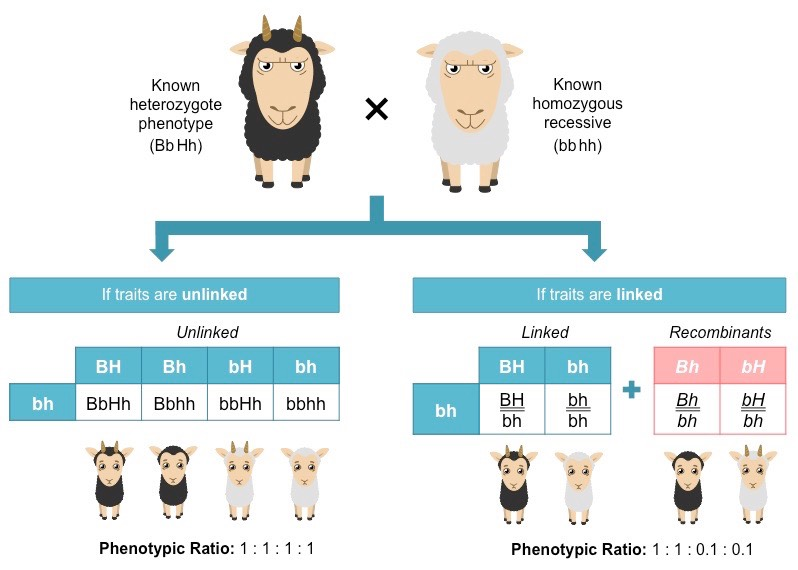

<p><span><strong>1. Complete linkage (no crossing over)</strong></span></p><ul><li><p><span>Only the 2 parental phenotypes appear, in a 1:1 ratio (1:0:0:1) — no recombinants at all</span></p></li><li><p><span>Alleles on the same chromosome always stay together since no genetic material is exchanged</span></p></li></ul><p><span><strong>2. Incomplete linkage (with crossing over)</strong></span></p><ul><li><p><span>All 4 phenotypes appear, in a 1:few:few:1 ratio — 2 common parental types, 2 rare recombinant types</span></p></li><li><p><span>Parental types dominate since crossing over only happens in a fraction of meioses; the recombinants are the gametes where it actually occurred</span></p></li></ul><p></p>
68
New cards

How do you define dominance? What are the 3 main types of dominance?

Dominance: The relationship between the alleles of a gene and the observable phenotype

  • The dominance of a trait determines the phenotype

3 main types of dominance:

  • Complete dominance

  • Codominance

  • Incomplete dominance


69
New cards

What is complete dominance? What phenotype does this produce in which individuals?

Complete dominance: A pattern of dominance in which the recessive trait is completely masked by the dominant trait in heterozygotes


  • Describes the phenotype that always appears when there is at least one allele for the trait

  • Dominant phenotypes: phenotype seem in homozygous dominant and heterozygous individuals
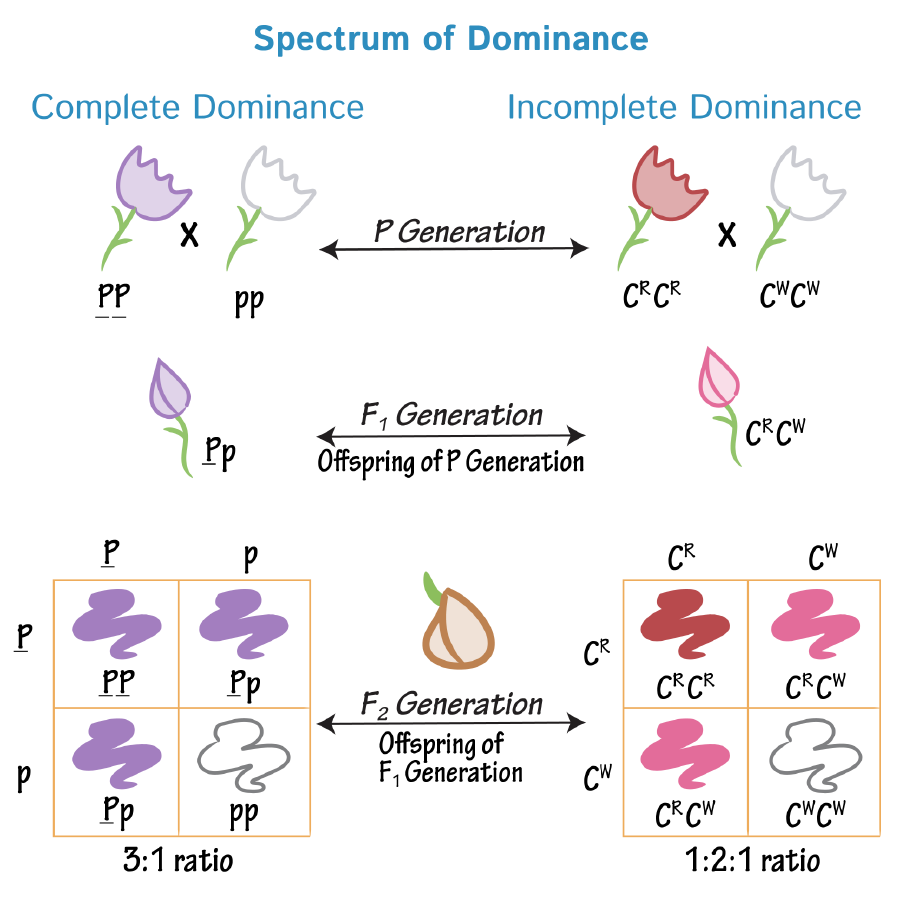


<p><span style="background-color: rgb(229, 224, 236);"><mark data-color="#ffffff" style="background-color: rgb(255, 255, 255); color: inherit;">Complete dominance: A pattern of dominance in which the recessive trait is completely masked by the dominant trait in heterozygotes</mark></span></p><p><mark data-color="#ffffff" style="background-color: rgb(255, 255, 255); color: inherit;">&nbsp;</mark></p><ul><li><p><span><mark data-color="#ffffff" style="background-color: rgb(255, 255, 255); color: inherit;">Describes the phenotype that always appears when there is at least one allele for the trait</mark></span></p></li><li><p><span style="background-color: rgb(229, 224, 236);"><mark data-color="#ffffff" style="background-color: rgb(255, 255, 255); color: inherit;">Dominant phenotypes: phenotype seem in homozygous dominant and heterozygous individuals</mark></span></p></li></ul><p></p><p></p>
70
New cards

What is the pattern of dominance where there is an intermediate phenotype produced?

Incomplete dominance: A pattern of dominance in which a heterozygous individual displays an intermediate phenotype that is combination of the two alleles

  • The heterozygote presents an intermediate because both alleles are dominant and therefore neither is completely dominant

EG Red and White are equally dominant and produce pink flowers 
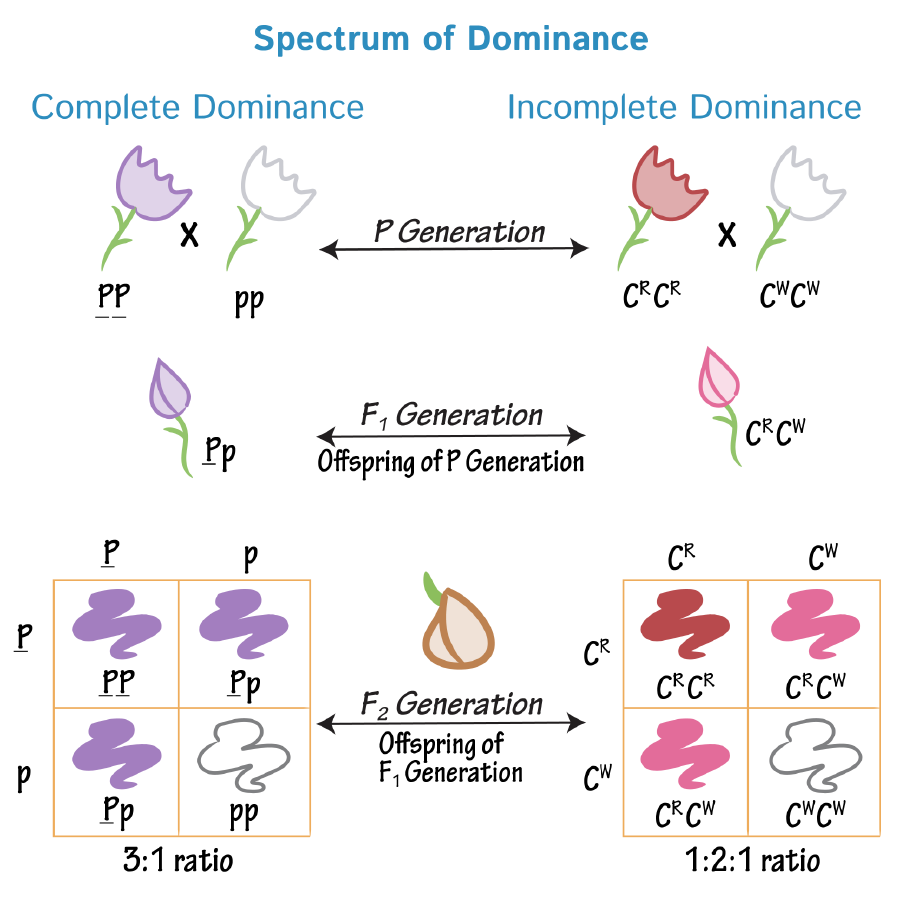
<p><span style="background-color: rgb(229, 224, 236);"><mark data-color="#ffffff" style="background-color: rgb(255, 255, 255); color: inherit;">Incomplete dominance: A pattern of dominance in which a heterozygous individual displays an intermediate phenotype that is combination of the two alleles</mark></span></p><ul><li><p><span><mark data-color="#ffffff" style="background-color: rgb(255, 255, 255); color: inherit;">The heterozygote presents an intermediate because both alleles are dominant and therefore neither is completely dominant</mark></span></p></li></ul><p><mark data-color="#ffffff" style="background-color: rgb(255, 255, 255); color: inherit;">EG Red and White are equally dominant and produce pink flowers</mark><span><mark data-color="#ffffff" style="background-color: rgb(255, 255, 255); color: inherit;">&nbsp;</mark></span></p>
71
New cards

What is the allelic notation in incomplete dominance?

  • A capital letter is used for the gene as neither gene is completely dominant

EG C for Colour of flowers

  • The alleles are written as capital superscripts
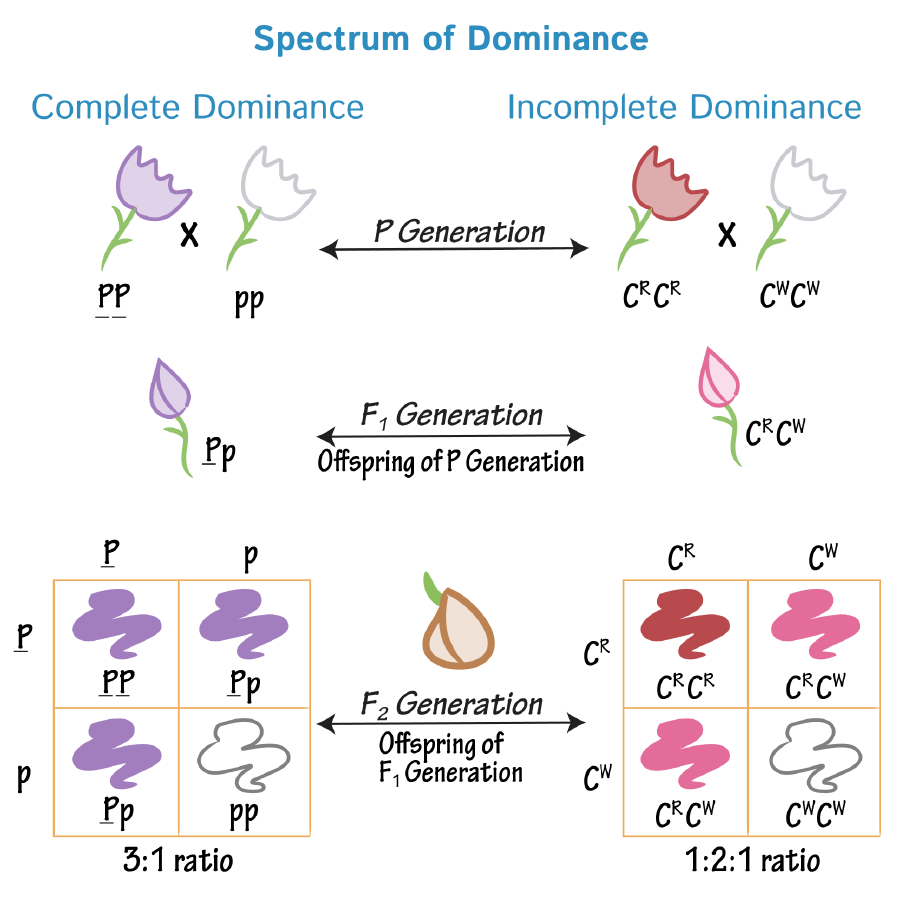

<ul><li><p><span>A capital letter is used for the gene as neither gene is completely dominant</span></p></li></ul><p>EG C for Colour of flowers</p><ul><li><p><span>The alleles are written as capital superscripts</span></p></li></ul><p></p>
72
New cards

How do you define codominance? What is the phenotype of individuals with codominant traits?

Codominance: A pattern of inheritance in which two traits are equally dominant and the heterozygote displays both traits

  • The heterozygote displays both phenotypes simultaneously as both alleles are fully expressed

  • The conventions for writing genotypes are the same as for incomplete dominance 
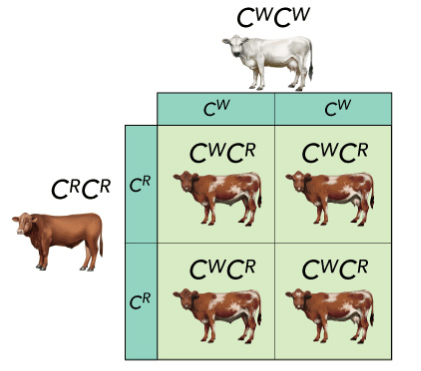

<p><span style="background-color: rgb(229, 224, 236);"><mark data-color="#ffffff" style="background-color: rgb(255, 255, 255); color: inherit;">Codominance: A pattern of inheritance in which two traits are equally dominant and the heterozygote displays both traits</mark></span></p><ul><li><p><span><mark data-color="#ffffff" style="background-color: rgb(255, 255, 255); color: inherit;">The heterozygote displays both phenotypes simultaneously as both alleles are fully expressed</mark></span></p></li></ul><ul><li><p><span style="background-color: yellow;"><mark data-color="#ffffff" style="background-color: rgb(255, 255, 255); color: inherit;">The conventions for writing genotypes are the same as for incomplete dominance&nbsp;</mark></span></p></li></ul><p></p>
73
New cards

What are the key differences between incomplete and codominance?

Feature

Incomplete Dominance

Codominance

Heterozygous phenotype

Blend/intermediate phenotype

Both traits shown together

Allele expression

Neither allele completely dominant

Both alleles fully expressed

Appearance

Traits mix

Traits remain separate


<table style="min-width: 75px;"><colgroup><col style="min-width: 25px;"><col style="min-width: 25px;"><col style="min-width: 25px;"></colgroup><tbody><tr><td colspan="1" rowspan="1" style="border-style: solid; vertical-align: top; width: 1.7645in; padding: 4pt;"><p>Feature</p></td><td colspan="1" rowspan="1" style="border-style: solid; vertical-align: top; width: 2.3993in; padding: 4pt;"><p>Incomplete Dominance</p></td><td colspan="1" rowspan="1" style="border-style: solid; vertical-align: top; width: 1.6888in; padding: 4pt;"><p>Codominance</p></td></tr><tr><td colspan="1" rowspan="1" style="border-style: solid; vertical-align: top; width: 1.784in; padding: 4pt;"><p>Heterozygous phenotype</p></td><td colspan="1" rowspan="1" style="border-style: solid; vertical-align: top; width: 2.3993in; padding: 4pt;"><p>Blend/intermediate phenotype</p></td><td colspan="1" rowspan="1" style="border-style: solid; vertical-align: top; width: 1.8208in; padding: 4pt;"><p>Both traits shown together</p></td></tr><tr><td colspan="1" rowspan="1" style="border-style: solid; vertical-align: top; width: 1.7645in; padding: 4pt;"><p>Allele expression</p></td><td colspan="1" rowspan="1" style="border-style: solid; vertical-align: top; width: 2.4187in; padding: 4pt;"><p>Neither allele completely dominant</p></td><td colspan="1" rowspan="1" style="border-style: solid; vertical-align: top; width: 1.8208in; padding: 4pt;"><p>Both alleles fully expressed</p></td></tr><tr><td colspan="1" rowspan="1" style="border-style: solid; vertical-align: top; width: 1.7645in; padding: 4pt;"><p>Appearance</p></td><td colspan="1" rowspan="1" style="border-style: solid; vertical-align: top; width: 2.3993in; padding: 4pt;"><p>Traits mix</p></td><td colspan="1" rowspan="1" style="border-style: solid; vertical-align: top; width: 1.7166in; padding: 4pt;"><p>Traits remain separate</p></td></tr></tbody></table><p></p>
74
New cards

What is the ABO blood grouping system? Does it display only one mode of inheritance?

  • Humans have 4 blood group phenotypes: A,B,AB or O

  • Blood type is determined by three possible alleles: IA, IB, i

  •  IA and IB are codominant

  • Both IA and IB  are completely dominant over i

  • Therefore, the ABO system demonstrates both codominance and complete dominance


75
New cards

What are the types of inheritance in the ABO blood grouping system?

Codominance

  •   Iᴬ and Iᴮ are both fully expressed together

  • IᴬIᴮ = Blood type AB

Complete dominance

  •  i is recessive and is masked when paired with Iᴬ or Iᴮ

  •   Iᴬi→ blood type A  and Iᴮi→ blood type B
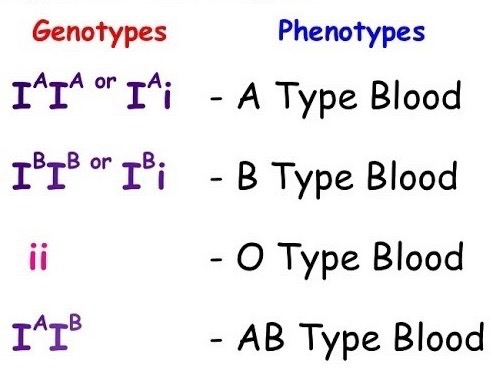

<p>Codominance</p><ul><li><p>&nbsp;<span>&nbsp;</span>Iᴬ and Iᴮ are both fully expressed together</p></li><li><p> IᴬIᴮ = Blood type AB</p></li></ul><p>Complete dominance</p><ul><li><p>&nbsp;i is recessive and is masked when paired with Iᴬ or Iᴮ</p></li><li><p>&nbsp; Iᴬi→ blood type A&nbsp; and Iᴮi→ blood type B</p></li></ul><p></p>
76
New cards

What are the key concepts of the ABO blood grouping system?

  • Humans have 4 blood group phenotypes: A,B,AB or O

  • Blood type is determined by three possible alleles:

  •  and Iᴬ, Iᴮ and i

  •  Iᴬ and Iᴮ are codominant

  • Both  Iᴬ and Iᴮ and are completely dominant over i

  • Therefore, the ABO system demonstrates both codominance and complete dominance
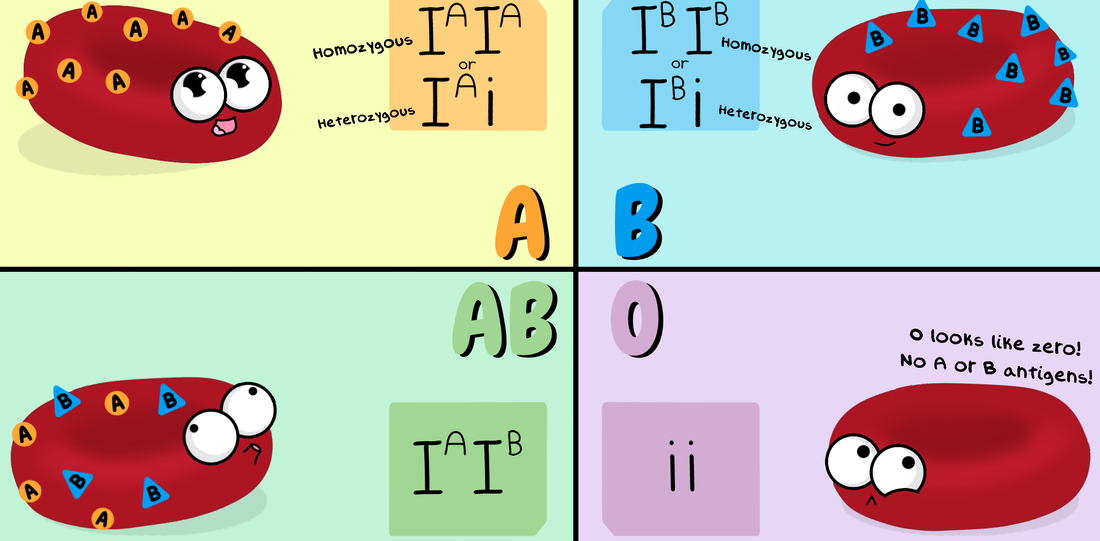

<ul><li><p><span>Humans have 4 blood group phenotypes: A,B,AB or O</span></p></li><li><p><span>Blood type is determined by three possible alleles:</span></p></li><li><p><span>&nbsp;and </span>Iᴬ, Iᴮ and i </p></li><li><p><span>&nbsp;</span>Iᴬ and Iᴮ<span style="font-family: &quot;Cambria Math&quot;;">&nbsp;</span><span>are codominant</span></p></li><li><p><span>Both &nbsp;</span>Iᴬ and Iᴮ <span>and are completely dominant over i</span></p></li><li><p><span>Therefore, the ABO system demonstrates both codominance and complete dominance</span></p></li></ul><p></p>
77
New cards

What does the overall appearance or phenotype of an organism depend on? Hence, what is the phenotype?

  1. It's genes (genotype)

  2. The effects of the environment in which it lives

Phenotype: The observable characteristics of an organism

  • Determined by genotype + environmental effects


<ol type="1"><li><p><span>It's genes (genotype)</span></p></li><li><p><span>The effects of the environment in which it lives</span></p></li></ol><p>Phenotype: The observable characteristics of an organism </p><ul><li><p>Determined by genotype + environmental effects</p></li></ul><p></p>
78
New cards

How do you define genotype? What are the two main forms of genotype?

Genotype: The combination of alleles an individual possesses for a particular gene 

  • Two main forms of genotypes:

  • Homozygous: Two identical allele

  • Heterozygous: Two different alleles


<p><span style="background-color: rgb(204, 193, 217);"><mark data-color="#ffffff" style="background-color: rgb(255, 255, 255); color: inherit;">Genotype: The combination of alleles an individual possesses for a particular gene&nbsp;</mark></span></p><ul><li><p><span><mark data-color="#ffffff" style="background-color: rgb(255, 255, 255); color: inherit;">Two main forms of genotypes:</mark></span></p></li><li><p><span style="background-color: yellow;"><mark data-color="#ffffff" style="background-color: rgb(255, 255, 255); color: inherit;">Homozygous: Two identical allele</mark></span></p></li><li><p><span style="background-color: yellow;"><mark data-color="#ffffff" style="background-color: rgb(255, 255, 255); color: inherit;">Heterozygous: Two different alleles</mark></span></p></li></ul><p></p>
79
New cards

What are the specific types of genotypes?

  • Homozygous dominant: Two alleles for the dominant trait

  • Homozygous recessive: Two alleles for the recessive trait

  • Heterozygous: One dominant and one recessive allele, 2 different

Hemizygous: Having only one allele for a particular gene instead of two
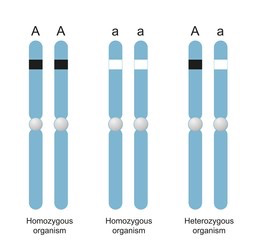

<ul><li><p><span style="background-color: yellow;"><mark data-color="#ffffff" style="background-color: rgb(255, 255, 255); color: inherit;">Homozygous dominant: Two alleles for the dominant trait</mark></span></p></li></ul><ul><li><p><span style="background-color: yellow;"><mark data-color="#ffffff" style="background-color: rgb(255, 255, 255); color: inherit;">Homozygous recessive: Two alleles for the recessive trait</mark></span></p></li><li><p><span style="background-color: yellow;"><mark data-color="#ffffff" style="background-color: rgb(255, 255, 255); color: inherit;">Heterozygous: One dominant and one recessive allele, 2 different</mark></span></p></li></ul><p><span style="background-color: rgb(229, 224, 236);"><mark data-color="#ffffff" style="background-color: rgb(255, 255, 255); color: inherit;">Hemizygous: Having only one allele for a particular gene instead of two</mark></span></p><p></p>
80
New cards

What are some examples of hemizygosity?

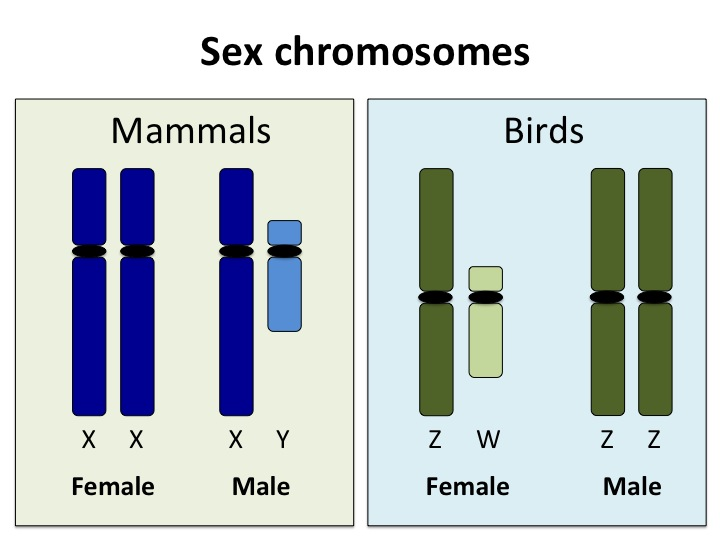
  • Human males (XY) are hemizygous for most genes on the X chromosome the case for sex-linked traits

  • Female birds (ZW) are hemizygous for many genes on the Z chromosome

  • Can also occur due to chromosomal abnormalities such as aneuploidy or chromosome deletions, where one copy of a gene or chromosome region is missing

<ul><li><p><span>Human males (XY) are hemizygous for most genes on the X chromosome </span>the case for sex-linked traits</p></li></ul><ul><li><p><span>Female birds (ZW) are hemizygous for many genes on the Z chromosome</span></p></li><li><p><span>Can also occur due to chromosomal abnormalities such as aneuploidy or chromosome deletions, where one copy of a gene or chromosome region is missing</span></p></li></ul><p></p>
81
New cards

How do dominant and recessive traits differ?

Feature

Dominant Allele/Trait

Recessive Allele/Trait

Expression in phenotype

Always expressed in the phenotype

Only expressed when two recessive alleles are present

Number of copies needed

One copy of the allele inherited to be expressed

Two copies of the allele

Effect of another allele

Masks the effect of a recessive allele in a heterozygous individual.

Its effect is masked if a dominant allele is present

Symbol used

Represented by an uppercase letter

Represented by a lowercase letter


82
New cards

What are the defining features of dominant traits?

  • Always expressed in the phenotype

  • Only one copy of the allele needs to be inherited for the trait to be expressed

  • They mask the effect of recessive alleles in heterzygous individuals

  • Represented by an uppercase letter


83
New cards

What are the defining features of recessive traits?

  • Only expressed in homozygous recessive individuals (when two recessive alleles are present)

  • Two copies of the allele need to be inherited for the trait to be expressed

  • Its effect is masked if a dominant allele is present

  • Represented by a lowercase


84
New cards

Describe the 3 rules of assigning allele symbols. Why are they important?

  1. Use a single letter relevant to the gene

  • Taken from the dominant traits’ name

  1. Avoid letters that are hard to tell upper and lowercase apart (C/c, S/s, O/o)

  • Underline lowercase letters if using letters hard to tell apart

  1. Never use two unrelated letters

  • Keeps it clear they are alleles of the same gene


85
New cards

How does assigning allele symbols differ between autosomal traits and sex-linked traits?

Autosomal traits: The allele letter alone is the symbol

  • Dominant trait: Uppercase and Recessive trait: Lowercase of same letter

Sex-linked traits: The allele letter is superscript on the relevant sex chromosome

  • Shows that the gene is carried on that chromosome and not separate from it


86
New cards

What are the possible genotype types for both genders in sex-linked traits?

  • Females (XX): Can be homozygous dominant, heterozygous (carrier), or homozygous recessive for X-linked traits

  • Males (XY): Are hemizygous for X-linked traits because they only have one X chromosome and therefore only one allele for the gene


87
New cards

Why are males more likely to experience sex-linked disorders?

  • Males only have one X chromosome while females have two (XX)

  • Any faulty genes/mutations on his X chromosome will be expressed in the phenotype

  • Whereas females generally require 2 copies of the alleles to be affected (as most sex-linked disorders are recessive)


88
New cards

What is an example of a recessive x-linked disorder? What are the genotypes for each gender?

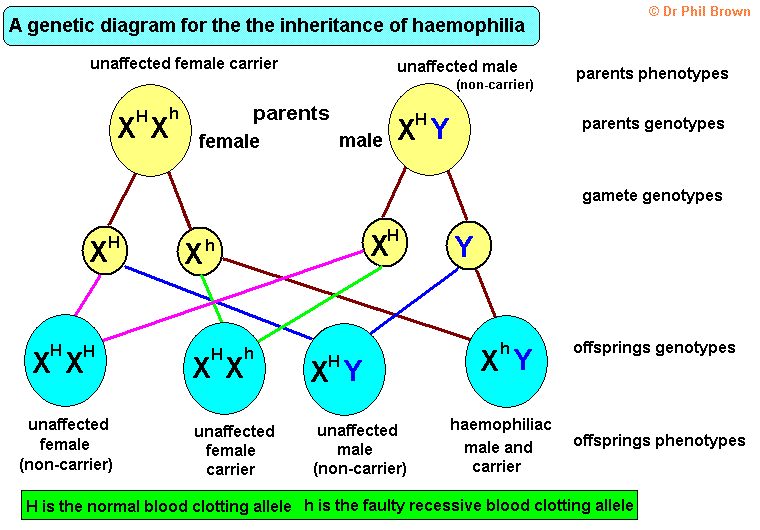
Haemophilia: Condition where blood lacks enough clotting factors
3 possible genotypes for females (XX):
1. XᴴXᴴ = unaffected (healthy)
2. XᴴXʰ = unaffected (healthy) carrier
3. Xʰxʰ affected (disease)

2 possible genotypes for males (XY):
1. XᴴY= unaffected (healthy)
2. XʰY = affected (disease)
<p>Haemophilia: Condition where blood lacks enough clotting factors <br><strong>3 possible genotypes for females (XX):</strong><br>1. XᴴXᴴ = unaffected (healthy)<br>2. XᴴXʰ = unaffected (healthy) carrier<br>3. Xʰxʰ affected (disease)</p><p><strong>2 possible genotypes for males (XY):</strong><br>1. XᴴY= unaffected (healthy)<br>2. XʰY = affected (disease)</p>
89
New cards

What is an example of a dominant x-linked disorder? What are the genotypes for each gender?

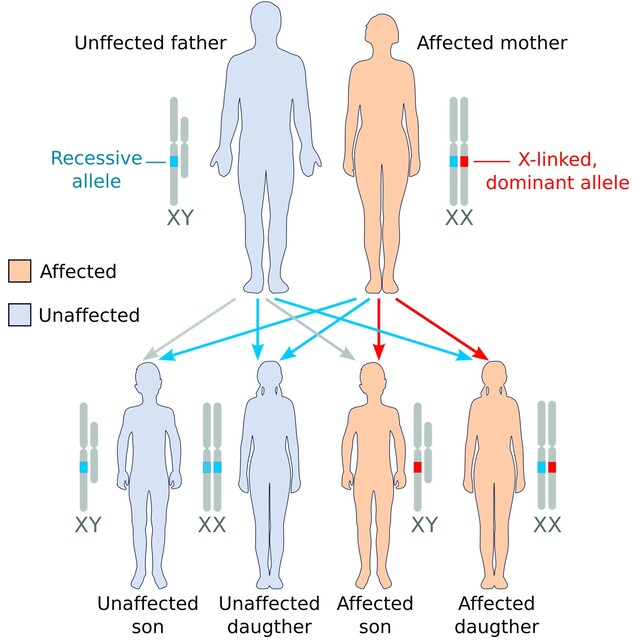
Rett syndrome: A rare genetic neurological disorder primarily affecting girls
3 possible genotypes for females (XX):

XᴿXᴿ-affected (disease)
XᴿXʳ-affected (disease)
XʳXʳ- unaffected (healthy)
2 possible genotypes for males (XY):
XᴿY-affected (disease)
XʳY-unaffected (healthy)
<p>Rett syndrome: A rare genetic neurological disorder primarily affecting girls<strong><br>3 possible genotypes for females (XX):</strong><br>XᴿXᴿ-affected (disease)<br>XᴿXʳ-affected (disease)<br>XʳXʳ- unaffected (healthy)<br><strong>2 possible genotypes for males (XY):</strong><br>XᴿY-affected (disease)<br>XʳY-unaffected (healthy)</p>
90
New cards

What are the features of recessive X-linked disrders? Who do they predominatly affect?

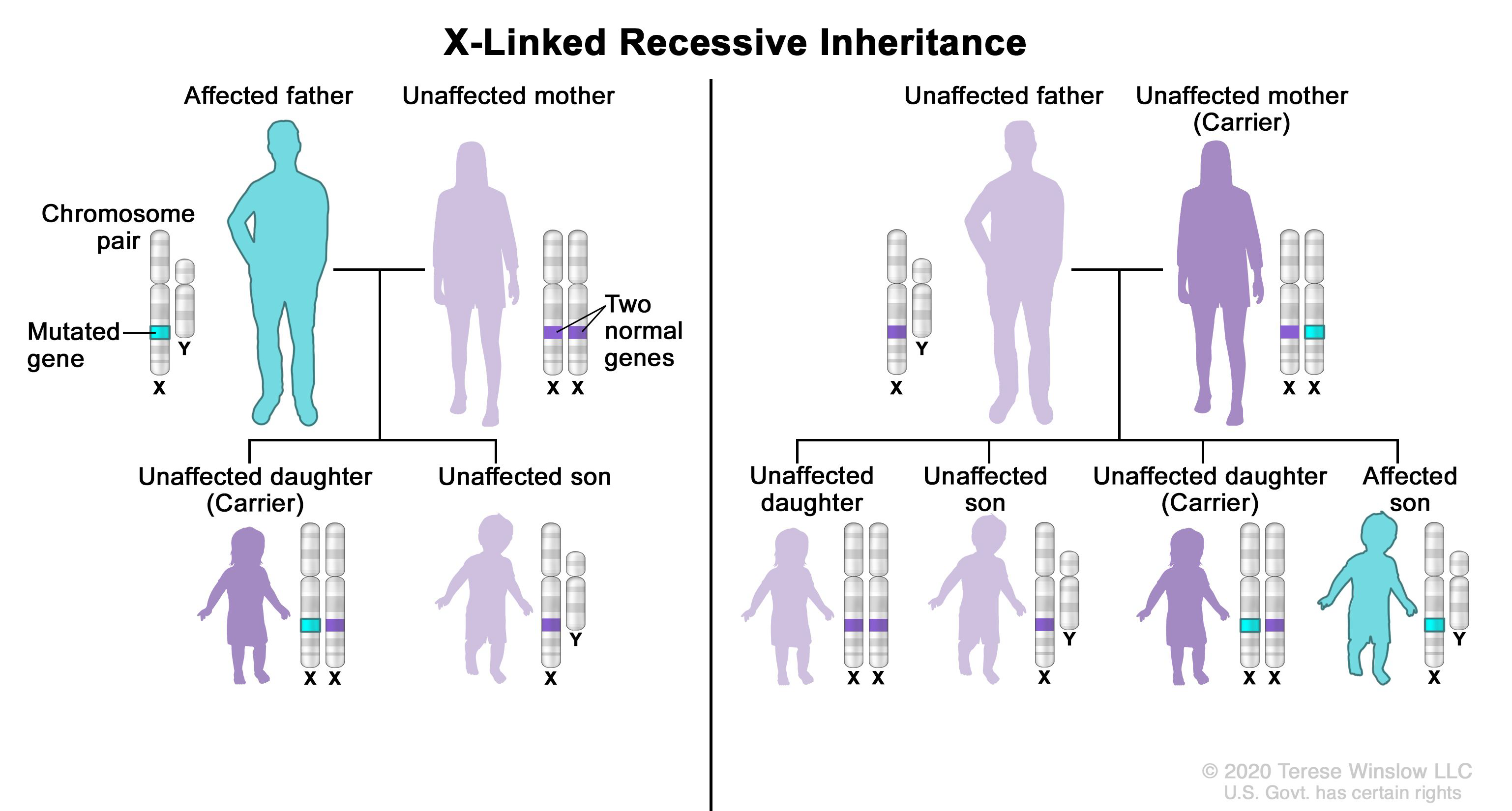
  • Individuals require 2 copies of the alleles in order to be affected

  • Predominantly affect men as possessing the allele for the gene will cause the disease despite being recessive

  • Women with turner syndrome experience these disorders at similar rates to men due to their single X chromosome

<ul><li><p><span>Individuals require 2 copies of the alleles in order to be affected</span></p></li><li><p><span>Predominantly affect men as possessing the allele for the gene&nbsp;will cause the disease despite being recessive</span></p></li><li><p><span>Women with turner syndrome experience these disorders at similar rates to men due to their single X chromosome</span></p></li></ul><p></p>
91
New cards

What are the features of dominant X-linked disrders? Who do they predominatly affect?

  • Individuals only require one copy of the allele to be affected

  • Much less common than X-linked recessive

  • Predominatly in females as males with X-linked dominant traits experience more severe/lethal symptoms without the compensation of another X chromosome

  • There are no carriers as the heterozygote female expresses the trait (and men can't be carriers)
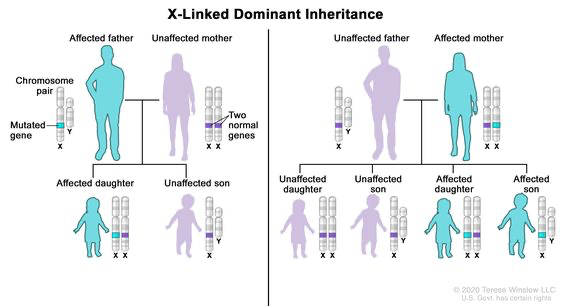

<ul><li><p><span>Individuals only require one copy of the allele to be affected</span></p></li><li><p><span>Much less common than X-linked recessive</span></p></li><li><p><span>Predominatly in females as males with X-linked dominant traits experience more severe/lethal symptoms without the compensation of another X chromosome </span></p></li><li><p><span>There are no carriers as the heterozygote female expresses the trait (and men can't be carriers)</span></p></li></ul><p></p>
92
New cards

What are the main nucleic acids and what are they made up of?

DNA: Deoxyribonucleic acid

RNA: Ribonucleic acid

  • These are polymers made up of nucleotides (monomers)


93
New cards

What do the monomers of DNA consist of?

Nucleotides composed of a deoxyribose sugar, a phosphate group, and a nitrogenous base (adenine, thymine, cytosine, guanine)

94
New cards

What is the chemical structure and role of the phosphate group?

  • 1 central phosphorus atom bonded to 4 oxygen atoms

  • Connects the 5' -carbon of one sugar to the 3' - carbon of the next sugar
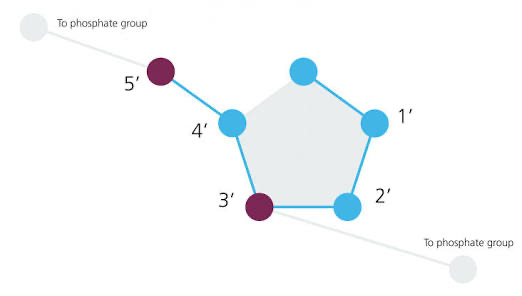

<ul><li><p><span>1 central phosphorus atom bonded to 4 oxygen atoms</span></p></li><li><p><span>Connects the 5' -carbon of one sugar to the 3' - carbon of the next sugar</span></p></li></ul><p></p>
95
New cards

How does the deoxyriboses’ chemical structure allow DNA to form?

  • A 5 sided, 5-carbon ring

  • Carbons numbered 1 to 5 going clockwise from the 1'-carbon connected to the nitrogenous base

  • Deoxygenated because it lacks 1 oxygen atom at the 2'-carbon position compared to ribose sugar


96
New cards

What is the 5 prime end of the deoxyribose sugar?

  • The end of a DNA strand where the 5'-carbon of the deoxyribose sugar is free

  • The carbon only binds to the phosphate group without connecting to another sugar
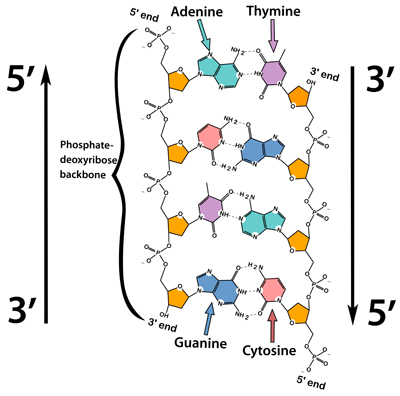

<ul><li><p>The end of a DNA strand where the 5'-carbon of the deoxyribose sugar is free </p></li><li><p>The carbon only binds to the phosphate group without connecting to another sugar </p></li></ul><p></p>
97
New cards

What is the 3 prime end of the deoxyribose sugar?

  • The end of the deoxyribose sugar that has a free hydroxyl group (-OH) at the 3'-carbon position

  • Essential for DNA synthesis and pairing with the phosphate group of the next nucleotide

  • Called the growing/tail end


<ul><li><p>The end of the deoxyribose sugar that has a free hydroxyl group (-OH) at the 3'-carbon position</p></li><li><p>Essential for DNA synthesis and pairing with the phosphate group of the next nucleotide </p></li><li><p>Called the growing/tail end </p></li></ul><p></p>
98
New cards

What are some key differences between DNA and RNA?

Nitrogenous bases: RNA has Uracil, DNA has Thymine

Pentose sugar: Sugar of RNA is oxygenated (ribose), DNA is deoxygenated (deoxyribose)

Structure: RNA generally single strand, DNA double helix
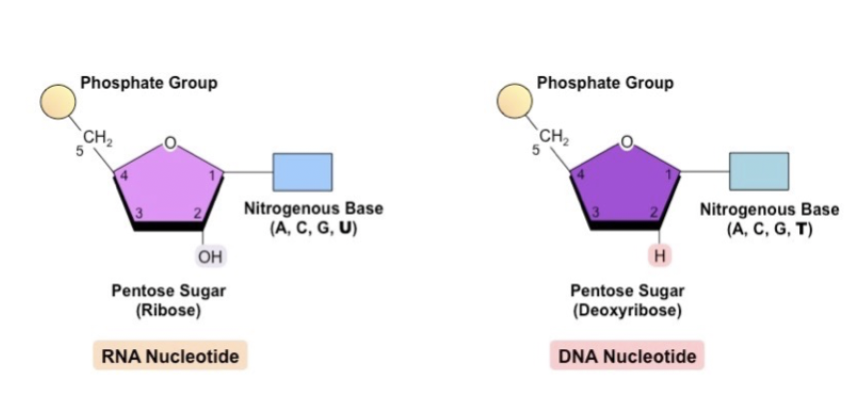
<p><span><strong>Nitrogenous bases: </strong></span>RNA has Uracil, DNA has Thymine</p><p><span><strong>Pentose sugar: </strong></span>Sugar of RNA is oxygenated (ribose), DNA is deoxygenated (deoxyribose)</p><p><span><strong>Structure: </strong></span>RNA generally single strand, DNA double helix</p>
99
New cards

What is the chemical structure and location of the nitrogenous bases?

  • Attached to the 1'-carbon of the deoxyribose sugar

  • Each contains: Nitrogen, carbon, hydrogen and oxygen

  •  Come in two types: Purines and Pyrimidines

  • Connected to each other via weak hydrogen bondds


100
New cards

What are purines and which bases are classified as these?

Purines: Adenine and Guanine

  • Double-ringed

  • Tip: Purines are pure, angles have halo rings that are pure

<p><span><strong>Purines: Adenine and Guanine</strong></span></p><ul><li><p><span>Double-ringed</span></p></li><li><p><span>Tip: Purines are pure, angles have halo rings that are pure</span></p></li></ul><p></p>