L1: Sudden Cardio Death
 Call Kai
 Learn
Learn Practice Test
 Spaced Repetition
 Match
Match Flashcards
 Knowt Play
1/62

There's no tags or description
Looks like no tags are added yet.
Name | Mastery | Learn | Test | Matching | Spaced | Call with Kai | Chat |
|---|
No analytics yet
Send a link to your students to track their progress
63 Terms
general:
ABC approach
-anatomical classification
-botanical classification
-chemical classification
ABC approach:
Anatomical classification (A)
– Organ systems affected
– MOA of toxin
– Pathological changes, and clinical signs
ABC approach:
Botanical classification (B)
– Based on toxic plants
ABC approach:
Chemical classification (C)
– Toxin
– origin
– chemical group
– Use
Chemical classification/toxins:
Biological/origin
-Phytotoxins (toxins of plants)
-Mycotoxins (toxins of fungi)
-Phycotoxins (toxins of ‘algae’: incl cyanobacteria)
-Zootoxins (toxins of animals)
-Bacterial toxins (ingested pre-formed toxins)
Chemical classification/toxins:
Industrial/origin
-Metals, metaloids, halogens, other
-Pesticides
-Feed components, additives
-Other household, farm or industrial chemicals
-Pharmaceuticals
-Drugs of abuse
Which of the following statements is NOT true:
A. Australia uses 1080/ fluoroacetate baits because many of our native animals are resistant to the toxin
B. Fluoroacetate containing plants only cause toxicity in droughts because they are unpalatable
C. Fluoroacetate blocks the Kreb’s citric acid cycle resulting in energy starvation of cells
D. Cardiac, GIT and neurologic signs predominate depending on species
B
Poisoning does not occur only during droughts.
While drought, overgrazing, feed shortages, or movement into unfamiliar paddocks can increase risk because animals are more likely to eat normally avoided plants, poisoning can occur whenever susceptible livestock consume sufficient quantities.
Some plants are more toxic during certain growth stages, and palatability varies between species.
symptoms:
acute HF syndrome
-intermittent weakness, syncope, sudden death
-change HR/rhythm → reduced CO
-minimal lesions
symptoms:
chronic HR syndrome
- 'congestive heart failure'
−vascular congestion and edema fluid in tissues and body cavities
−well recognised left and right presentations
general:
L HF
-blood back up: pulmonary vv
-pulmonary congestion and edema
-resp signs
general:
R HF
-blood back up: systematic vv
-systematic venous congestion
-body edema
symptoms:
R CHF
Ascites (most common in dogs)
Jugular vein distension
Positive jugular pulse
Hepatomegaly
Splenomegaly
Peripheral oedema (less common in small animals)
Pleural effusion (especially in cats)
Weight gain from fluid accumulation
Exercise intolerance
symptoms:
L CHF
Tachypnoea (often earliest sign)
Dyspnoea
Cough (common in dogs; uncommon in cats)
Exercise intolerance
Orthopnoea (standing with elbows abducted)
Pulmonary crackles (from oedema)
Cyanosis (severe)
Syncope (occasionally)
Poor peripheral perfusion if cardiac output is reduced
LCHF:
gross indications
-L atrial dilation
-pulmonary congestion & edema
-brown lungs
LCHF:
histo
-heart failure cells
haemosiderin laden macrophages in alveoli of the lungs
-low protein pulmonary edema
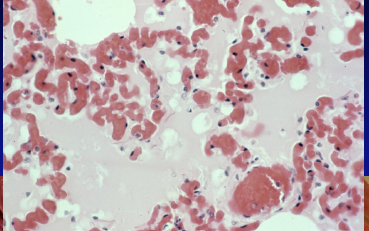
-LCHF
What system exasperates RCHF?
– Renal compensation
Affected systems:
RCHF
-systematic circulation
-liver
RCHF:
histo
-chronic passive congestion 'nutmeg liver' = dilated sinusoids
-atrophy or loss of hepatocytes around central veins
Why are central hepatocytes lost, not periportal?
-receive blood last and therefore have the lowest oxygen tension, even under normal conditions
-general movt: Zone 1 (periportal - closest to hepatic a) → Zone 2 → Zone 3 (central)
pathophysiology:
cardiac changes due to toxicants
-ion movement (poison dart frog, avocado)
-membrane function (halothane)
-contractile function (monensin)
-energy producing systems (fluoroacetate)
pathophysiology:
cardiac responses to xenobiotics
-developmental anomalies (corticosteroids in dogs)
-acquired alterations in function of the conduction system (tetrodotoxin) , myocardium (cocaine), heart valves (fenfluramine), endo/ pericardium
-inflammation (Blister beetle) and hypersensitivity (penicillin)
-often no lesions
morphological responses to toxicants
-hypertrophy (dexamethosonein infants, clenbuterol)
-dilation (anabolic steroids)
-‘scarring’ myocardial fibrosis (glucocorticoids)
-myocardial degeneration (vacuolationetc), necrosis and apoptosis (cardiac glycosides)
Vioxx, Bextra
(human Cox-2 inhibitors)
-cause prolongation of QT interval potentially triggering fatal arrhythmias, heart attack and stroke and were withdrawn from the market
-linked to 1000s of deaths
toxicants:
chronic HF
-irritant diterpenoidsof Pimeleaspp.
-gossypol (in cotton seed)
-persin (in avocardo)
other:
sudden death/HF toxicants
-unsaturated fatty acids (ruminants)
-Ageratinaspp. (horses)
-Sennaspp. (ruminants)
-Xanthine alkaloids (dogs)
-Erythrophleum chlorostachys alkaloids
-Taxine
-Fumonisins (pigs)
-Grayanotoxins (formerly andromedotoxins)
(for info, NE)
what is another term for fluoroacetate?
-1080
-monofluoroacetic acid
⭐️
moa:
fluoroacetate
-blocks the Krebs (citric acid/TCA) cycle, causing failure of cellular energy (ATP) production
fluoroacetate ingestion → conversion of fluoroacetyl CoA → combination with oxaloacetate → fluorocitrate → enzyme aconitase (converts citrate to isocitrate) → ⬇ Krebs cycle
geographical location:
Fluoroacetate
-Africa
-S. America
-Australia
primary sources:
Fluoroacetate
-plant sources (shrubs, trees)
-1080 bait used for feral animals
what is the compound in 1080?
-sodium monofluoroacetate
(compound 1080)
uses:
compound 1080
poison:
-dingoes
-feral pigs
-rabbits
-brush tail possums (NZ)
secondary sources:
fluoroacetate
-Animal carcasses contaminated from exposure to toxic plants or 1080 baits
-live marsupials, birds exposed to tolerating toxic plants
in which spp does fluoroacetate have a high LD50 value?
-poultry (10)
(ie not effective)
summary:
Gastrolobium spp
-high fluoracetate in West. Aust.
-local marsupials utilize this high protein food source because they have evolved high fluoracetate-specific defluorinaseactivity
which kangaroo sp is resistance to Gastrolobium sp?
-Western Greys
(note: Easterns do not have same resistance, will die)
which pests have the highest LD50 for fluoroacetate?
Trichosurus vulpecula (125-WA) - brushtail possum
Western Grey (40-WA) - western greys
in which region is fluoroacetate effective?
-East Aus
poisoning conditions
-highly toxic plantst are palatablehow
how are herbivores exposed?
-1080 baits laid for feral vertebrate control (eg. carrots for rabbits)
-baits can remain toxic for 10-20 weeks
how are dogs exposed?
-1080 baits: deliberate or accidental (eg in meat for feral dog, pig control )
-secondary poisoning: scavenging carcasses poisoned by 1080
secondary poisoning: eating non-affected marsupials or birds that had ingested Gastrolobium spp
⭐️
latent period:
fluoroactetate
0.5 - 2.0 hours from ingestion to clinical signs
CSx fluoroacetate:
dogs
restlessness and irritability →
hyperactivity → GI symptoms →
dyspnoea and frothing at mouth
→ neuro: wild running, hysteria, vocal →
severe neuro: seizures → ⬆T
how quickly can death occur? dogs
fluoroacetate
2 - 12 hours
CSx - fluoroacetate:
herbivores
-SUDDEN DEATH W/ NO SIGNS OF STRUGGLE
-tachy, arrhythmia
-polypnoea
-loss of bowel and urine
-pain
-rapid neuro collapse
-depression
Fluroacetate:
tx - dog
-v poor prognosis
-provide acetate ions to prevent conversion of fluoroacetate → fluorocitrate
-barbiturate anaesthesia + ‘antidotes’ like glyceryl monoacetin
-acetate ions in electrolyte solution + sodium bicarbonate
Fluroacetate:
tx - livestock
-no practical effective therapy
summary:
cardiac glycosides
-not palatable so ingestion due to hunger
-retains toxicity when dried
-flowering is more toxic
cardiac glycosides:
organs affected
-cardio
-alimentary
-resp
-neuro
cardiac glycosides:
tx - ruminants
-Activated charcoal
-Electrolyte replacement solution
-Antiarrhythmic drugs
cardiac glycosides:
tx - horses
-Activated charcoal
-abdominal pain- analgesics, antispasmodics
-antiarrhythmic drugs
bufo toads:
toxicity - who is susceptible
-mammals
-birds
-reptiles
-small terrier breeds
-generally young small dogs
bufo toads:
toxicity summary
-death can follow one exposure
-dead toads can cause poisoning
-most cases seen in Nov, Dec, March (warmer months)
bufo toads:
tx
-good prognosis in mild cases
-remove venom from the mouth: o flush bucket and scrub (with garden hose) for 10 minutes prior to driving to vets
-atropine: control salivation and bronchoconstriction
-diazepam: sedation (many need to anaesthetise and intubate if severe)
-support and monitor heart fx; pharmacological control of arrhythmias
-activated charcoal
Polyether Ionophore Antibiotics:
sources
-compounded feeds
-feedlot ruminants: growth promotants, inhibitors of ruminal acidosis
-poultry: coccidiostats
-dairy cattle: antibloat agents
-Medicaments in slow-release capsules for intra-ruminal dosing
-Poultry litter
Polyether Ionophore Antibiotics:
pathogenesis
interfere with ion flux across biological membranes → hydropic swelling of striated muscle cells → striated muscle damage → heart failure, paresis
Polyether Ionophore Antibiotics
main damage - horses, fowl
-heart
Polyether Ionophore Antibiotics
main damage - sheep, dogs, pigs, ostriches, turkeys
-skeletal m
Polyether Ionophore Antibiotics
main damage - cattle
-heart, skeletal m
Polyether Ionophore Antibiotics
pathogenesis in cats
→ peripheral polyneuropathy + myocardial degeneration in cats ingesting salinomycin
Polyether Ionophore Antibiotics
toxicity - who is most susceptible?
-horses
who is least susceptible to PIAs?
-fowls, turkeys
CSx - horses:
PIAs
-edema of face
-masseter mm swelling