Medical Microbiology - SLOs for 2.1 The Microbial World and You
 Call Kai
 Learn
Learn Practice Test
 Spaced Repetition
 Match
Match Flashcards
 Knowt Play
1/5

There's no tags or description
Looks like no tags are added yet.
Name | Mastery | Learn | Test | Matching | Spaced | Call with Kai | Chat |
|---|
No analytics yet
Send a link to your students to track their progress
6 Terms

1A. Describe several ways in which microbes affect our lives
Preventing food spoilage
Aseptic techniques to prevent contamination
Replaces bad stuff with good stuff
1B. Recognize the current system of classification and scientific nomenclature that uses 2 names: a Genus/ Specific epithet
In other words, what rules do these two names have to follow?
Genus has to be capitalized
Specific epithet has to be lowercase
Both names either have to be underlined (if we are hand writing it) or italicized
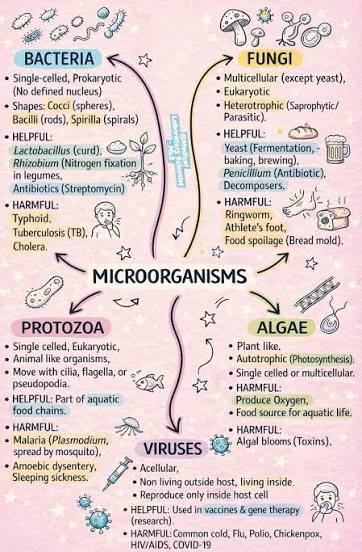
IC. Differentiate the major characteristics of each group of microorganisms including from classification.
Archaea
Prokaryote (no nucleus)
Has no cell walls
Live in extreme environments
Unicellular
Energy: Organic
Reproduction: Binary Fission (asexual)
Bacteria
Prokaryotes (no nucleus)
Has cell walls
Live everywhere
Unicellular
Energy: Organic/Inorganic
Reproduction: Binary Fission (asexual)
Protozoa
Eukaryotes (nucleus!)
Have/ have no cell walls
Live in water
Unicellular
Energy: Organic
Reproduction: A/S
Algae
Eukaryotes (nucleus!)
Have cell walls
Live in water
Unicellular
Energy: Inorganic decay
Reproduction: A/S
Viruses
Not eukaryotes or prokaryotes
No cell walls
Live in their host
Acellular
Energy: Organic
Reproduction: Replication
Multicellular Animal Parasites
Eukaryotes (with DNA inside the nucleus)
No cell walls
Live in living organisms
Multicellular
Energy: Organic
Reproduction: A/S
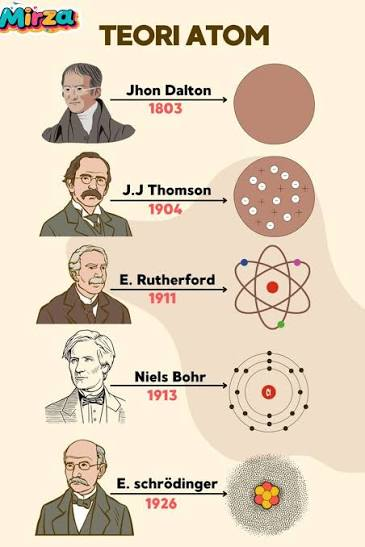
1D. Understand the contributions made by key scientists
Cell theory: all living things are made of cells
Microscopes
Vaccines
Biogenesis
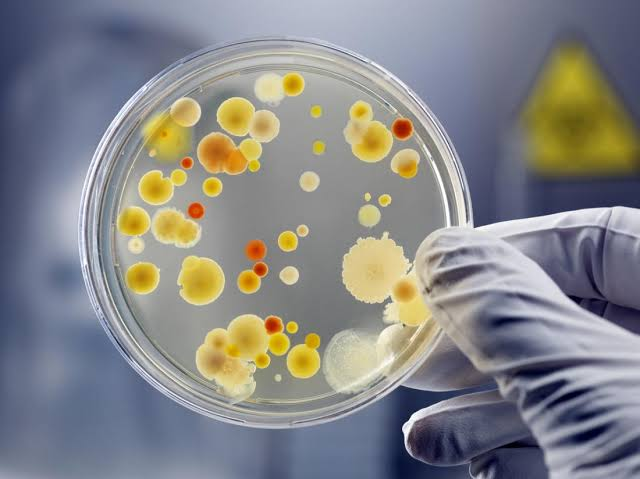
IE. Understand the contributions made by Bacteria
Recycling of carbon, nutrients, sulfur and phosphorus
Human health
Planet’s environment
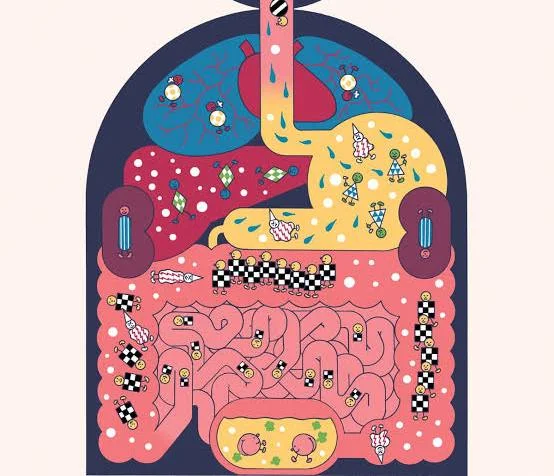
IF. Understand concepts of normal microbial / resistance, and biofilms
EID: Emerging Infectious Disease
When a pathogen overcomes the host’s resistance and diseases and increase in incidence
Biofilms
Attach to solid surfaces and grow in masses (LIKE PLAGUE)
Resistance
The body’s ability to ward off disease
Normal Microbial
Prevent growth of pathogens