Alternative treatments
 Call Kai
 Learn
Learn Practice Test
 Spaced Repetition
 Match
Match Flashcards
 Knowt Play
1/21

There's no tags or description
Looks like no tags are added yet.
Name | Mastery | Learn | Test | Matching | Spaced | Call with Kai | Chat |
|---|
No analytics yet
Send a link to your students to track their progress
22 Terms
Allergic rhinitis and associated symptoms
avoid 1st G Antihistamines
Oral - Loratadine, Ceterizine, Levoceterizine, Fexofenadine
Nasal - sprays (Azelastine or olopatadine, which are absorbed less than oral agents and have fewer adverse effects)
Nasal corticosteroids - fluticasone, budesonide, trimacinolone
Masal mast cell stabilizers - cromolyn
Pruitis
avoid 1st G antihistamines
Dry skin - hydrating emollients BID, short showers (< 3 min) in lukewarm water, humidifers, address underlying condition
Localized pruitis, consider topical agents:
Topical anesthetics (lidocaine, pramoxine)
Cooling agents (Menthol)
Topical steroids (Hydrocortisone, Triamcinolone)
Topical antihistamines (Topical doxepin)
Capsaicin
If using oral antihistamine, use 2nd or 3rd G oral antihistamine
Pain
Avoid: TCAs, NSAIDs, Meperidine, Skeletal muscle relaxants, Combination of Gabapentinoids
non-pharm
educational intervention
exercise therapy
physical therapy
needling therapies (acupuncture)
psychological interventions
peripheral electric and/or magnetic stimulation, repetitive transcranial magnetic stimulation (rTMS)
pharm
short term use of NSAIDs
Topical NSAIDs
COX-2 inhibitors
Other topicals - capsaicin, rubefacients, lidocaine, menthol
acetaminophen
intra-articular corticosteroids
neuropathic pain
SNRIs
gabapentinoids
other topicals (listed above)
Diabetes
Sliding scale insulin
Sulfonylureas
sliding scale alternatives
addition of basal insulin = safe d/c
if glucose level uncontrolled on basal insulin, add pre-prandial bolus insulin
up-titration of basal insulin and d/c sliding scale
sulfonylureas alternatives
metformin
SLGT2-i, GLP-1RA’s. DPP4-i
Weigh loss (involuntary or undesired)
Avoid Megestrol
feeding assistance
addressing underlying factors
appealing foods provided
social support
access to food
Atrial fibrillation/flutter and venous thromboembolism (anticoagulation)
Warfarin
Rivaroxaban
consider other DOACs - apixaban, edoxaban)
AF pts - full dose preferred; reduced doses for renal dysfunction
long term VTE tx - reduce dose after 6 months
apixaban - reduce dose to 2.5 mg bid
consider non-pharm alternative - percutaneous left atrial appendage occlusion and surgical left atrial appendage ligation or removal
NVAF pts at mod-high stroke or major bleeding risk
Atrial fibrillation/flutter (rate/rhythm control)
amiodarone
dronedarone
digoxin
rhythm
preferred therapy depends on presence/absence of structual heart disease and HF
dofetilide and sotalol preferred - initiation requires hospitalization and referral
pt has normal LV, no CAD or prior MI, and no significant structural HD - other options - dronedarone, flecainide, propafenone
rate
beta blockers
If LVEF > 40% - non-DHP CCBs - diltiazem, verapamil
non-pharm - AV nodal ablation w permanent pacemaker
HF
Avoid digoxin
initiate GDMT for HFrEF before considering digoxin
1st line - Entresto (or ACE-i/ARB), BB, MRA, and SGLT2-i
hydralazine-nitrates may be used for Black patients with NYHA class III-IV HFrEF
diuretics for fluid retention
non-pharm adjuncts for HFrEF - cardiac resynchronization therapy (CRT)
Hypertension
non-selective peripheral alpha-1 blockers
doxazosin, prazosin, terazosin
central alpha-1 agonists
guafnfacine, clonidine
IR nifedipine
non-pharm
DASH diet, exercise and weight loss, treatment of obstructive sleep apnea
First-line drug therapies for HTN include thiazide diuretics, calcium channel blockers, ACEIs, and ARBs. Beta blockers may be indicated in some cases (e.g., recent MI or acute coronary syndrome, HFrEF, AF, or angina)
nifedipine alternatives
other CCBs - amlodipine, felodipine, nifedipine ER
resistant HTN - spironolactone and hydralazine
Insomnia
BZDs, Z-drugs, 1st G antihistamines, TCAs, Barbiturates
cognitive behavioral therapy (CBT), sleep hygiene
lower risk meds
digoxin < 6 mg
dual orexin receptor antagonists - daridorexant, lemborexant, suvorexant
ramelteon
trazadone, mirtazepine, melatonin (not recommended for insomnia disorder in adults of any other age)
Anxiety symptoms
BZDs, 1st G antihistamines, TCAs, Barbiturates, Meprobamate
SNRIs
GAD - escitalopram, sertraline, venlafaxine, duloxetine, buspirone, pregabalin
PD - sertraline, escitalopram, venlafaxine
SAD - sertraline, venlafaxine, escitalopram (also: BB’s: propranolol)
PTSD, global symptoms - sertraline, venlafaxine
PTSD, nightmaires - prazosin
Delirium
Antipsycotics
1st line - interventions - AGS CoCare: HELP Program
No pharmacological treatment is recommended as a routine response to delirium in all populations
antipsychotics and sedatives considered for short terms (hours to days)
Agitation and/or aggression in people with dementia
Avoid antipsychotics
address potential contributing factors - pain, constipation, urinary retention, acute illness
non-pharm strategies are first line
if non-pharm intervention fail, antipsychotics may be considered when the patient is at risk of harming themselves or others and risks are discussed with surrogate decision makers
Parkinson’s disease
avoid benztropine and trihexyphenidyl
optimize exercise/strengthening, balance, and physical therapy
1st line meds - levodopa (often combine with carbidopa) and dopamine agonists (pramipexole, ropinirole, and rotigotine) are typically preferred
if mild symptoms or daily dosing preferred - MOA-B-i (rasagiline)
Amantadine - manage levodopa induced dyskinesia
surgical therapies - deep brain stimulation
Tardive dyskinesia
avoid bentropine and trihexyphenidyl
reversible causes should be identified and addressed
if not resolved - FDA approved meds - valbenazine, deutetrabenazine
GERD and associated sypmtoms
Avoid PPI’s
non-pharm (1st line)
lifestyle changes, dietary, relaxation, weight management, not eating within 2-3 hours of bedtime
elevating of the bed
awareness of the connection between the gut and brain
breakthrough symptoms
acid containing products with alginate
nocturnal symtoms
nighttime H2-RA’s
Gastroparesis
Avoid metoclopramide
1st line dietary changes
foods that are soft and easy to chew, avoid spicy/acidic, high fiber meals
treatment of symptomatic relief
ginger 1 mg bid or ondansetron for nausea
short course erythromycin 50-100 mg 4 times a day
for DM, control glucose
Intestinal cramping and diarrhea
Avoid GI antispasmodics
identify and address underlying etiology
encourage dietary changes - avoid triggering foods
gut directed psychotherapies
for diarrhea
antidiarrheal such as loperamide for short-term use
Constipaion
avoid mineral oil
identify and address underlying cause
1st line - lifestyle (scheduled toileting after meals, increased fluids, fiber, exercise and ambulation)
stimulant laxatives (senna) and/or osmotic laxatives (polyethylene glycol, magnesium-containing laxatives)
still no response - secretagogies (lubipostone, linaclotide, plecanitide) and seretotnin type 4 agonist (prucalopride)
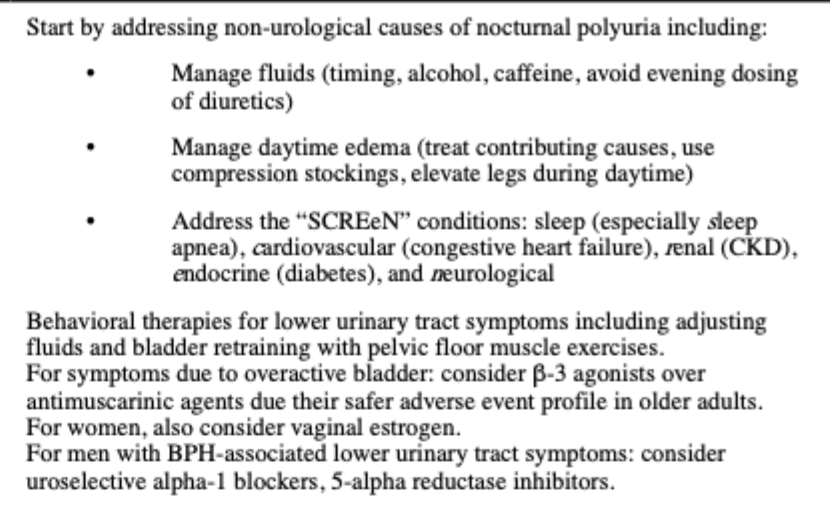
Nocturia and nocturnal polyuria
avoid desmopressin
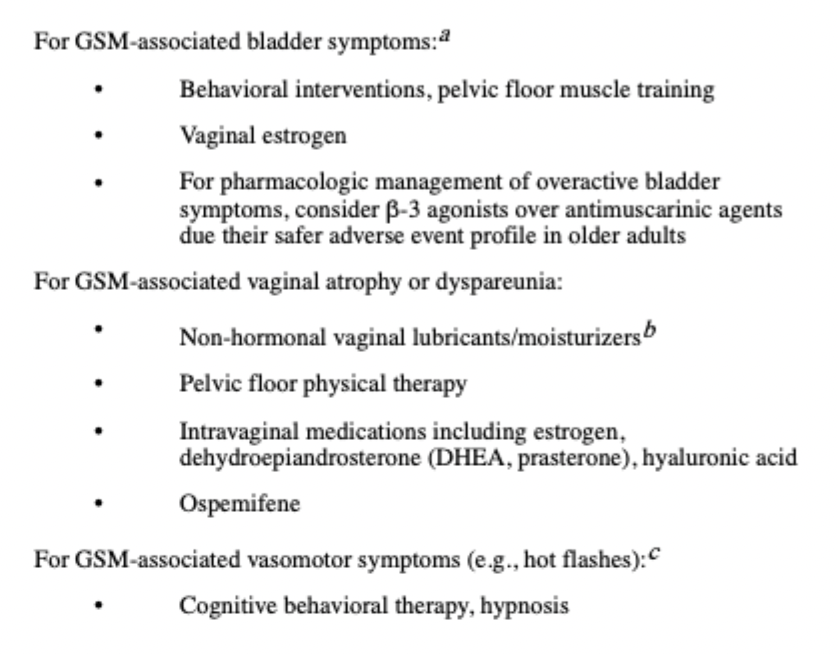
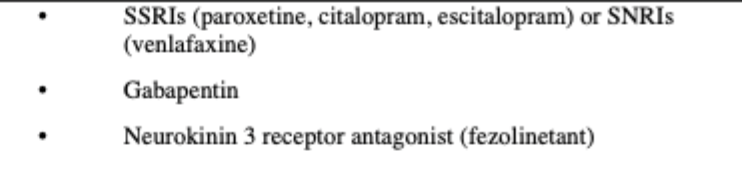
Genitourinary syndrome of menopause (GSM)
avoid systemic estrogens
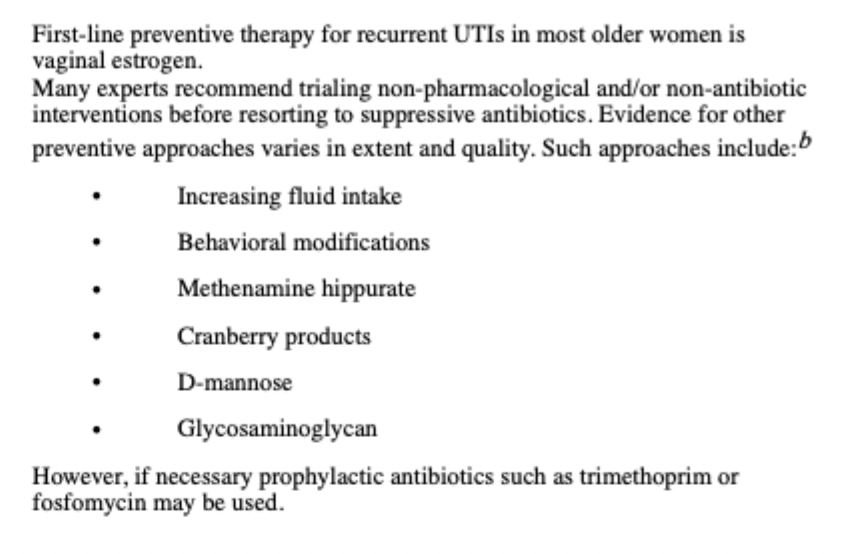
Recurrent UTIs in women
avoid systemic estrogens