Vital Signs & Laboratory Data
 Call Kai
 Learn
Learn Practice Test
 Spaced Repetition
 Match
Match Flashcards
 Knowt Play
1/53

There's no tags or description
Looks like no tags are added yet.
Name | Mastery | Learn | Test | Matching | Spaced | Call with Kai | Chat |
|---|
No analytics yet
Send a link to your students to track their progress
54 Terms
Vital Signs
Temperature, Pulse, Pulse Oximetry, Respiration, Blood Pressure, ECG/EKG
Temperature: Tells Us
Cellular activity, metabolism, possible infection, stress, etc.
Temperature
varies by time of day and location. (older people may run colder).
Oral - 98.6 ,
Rectal - 99.8 ,
Axillary 97.6
Temperature Abnormalities
Higher than 99.5 (hyperthermia) is a mild fever, Over 100.4 is considered having a fever, Under 97.6 is hypothermia
Pulse: What it Tells us:
Indicator of general heartbeat, cardiac output, and arterial blood supply.
Pulse Points
Radial (wrist) and Carotid Arter (neck) are most common.
Adult Normal Pulse Value
70-90 or 60-100
Child Normal Pulse Value
70-120
Tachycardia
>100bpm
Bradycardia
<60bpm
Lifestyle considerations for pulse
athletes, thin, or cold people tend to have a lower pulse rate
Pulse Oximetry: What it Tells Us
Assessment of hemoglobin oxygen saturation of arterial blood
Pule Oximetery
95-100%, below 95% is hypoxemia and may indicate a breathing or circulation problem. Consider chronic lung conditions that may have a low pulse ox but a patient has adapted to.
Respiration: What it Tells us & Tricks
Tells us respiratory distress, obstruction, anxiety, etc. Be descreate to avoid the patient changing their breath.
Normal Values respirations per min
Adult: 12- 20.
Child: 20-30
Tachypnea
>20 breaths per min
Bradypnea
<12 breaths per min
dypnea
difficulty breathing
apnea
period of absence of breathing
Orthopnea
difficulty breathing while lying down
Blood Pressure: What it tells us
The force exerted by blood on the arterial walls during contraction an relaxation of the heart
Blood Pressure: To Measure
Use sphygmomanometer and stethoscope
Systolic/diastolic Normal Values
<120/<80
Hypertension
>140/90
Hypotension
<95/60
P-Wave
depolarization of atrial muscle
QRS Complex
Depolarization of ventricular muscle
T-Wave
Repolarization of the ventricular muscle
Electrocardiogram
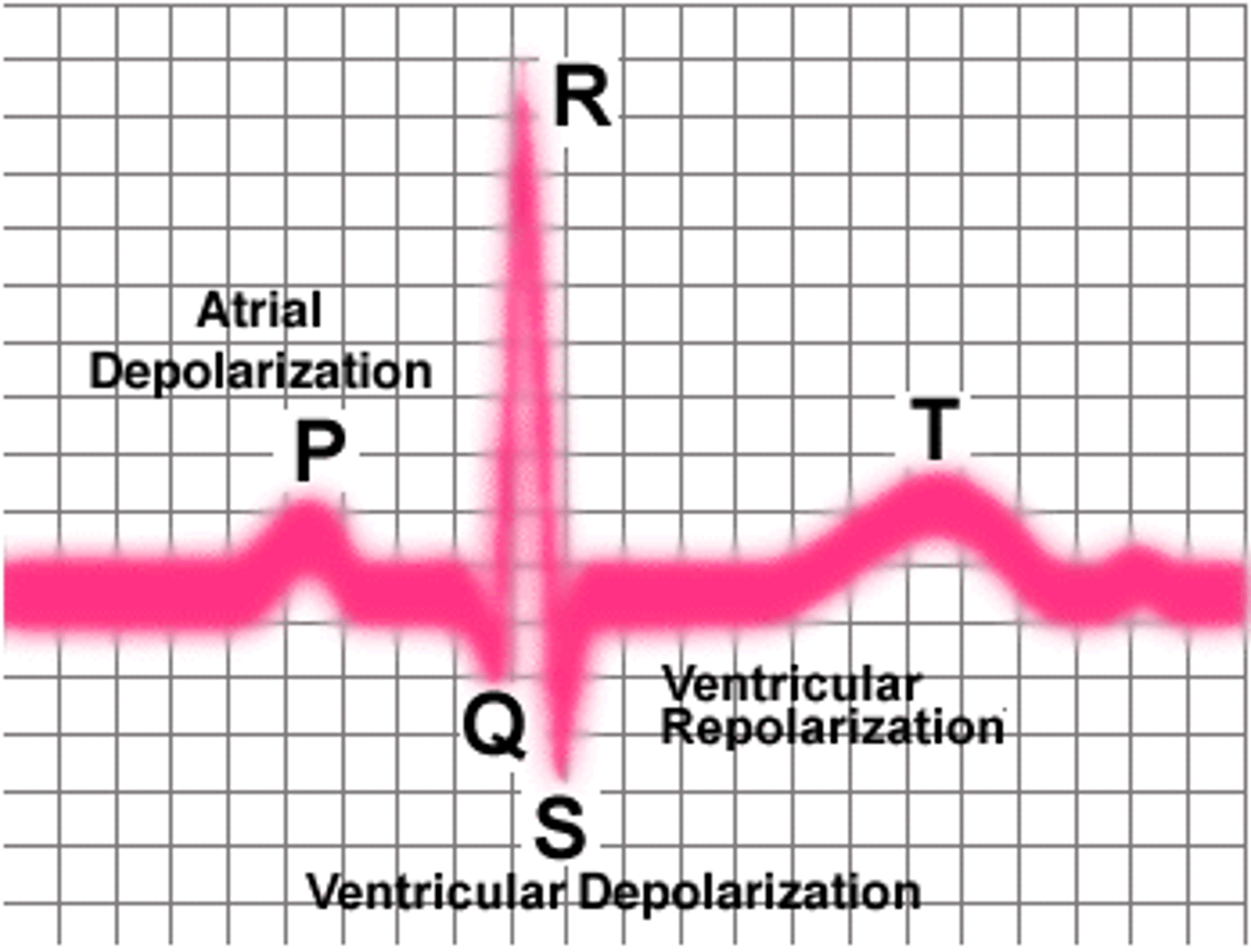
Normal ECG
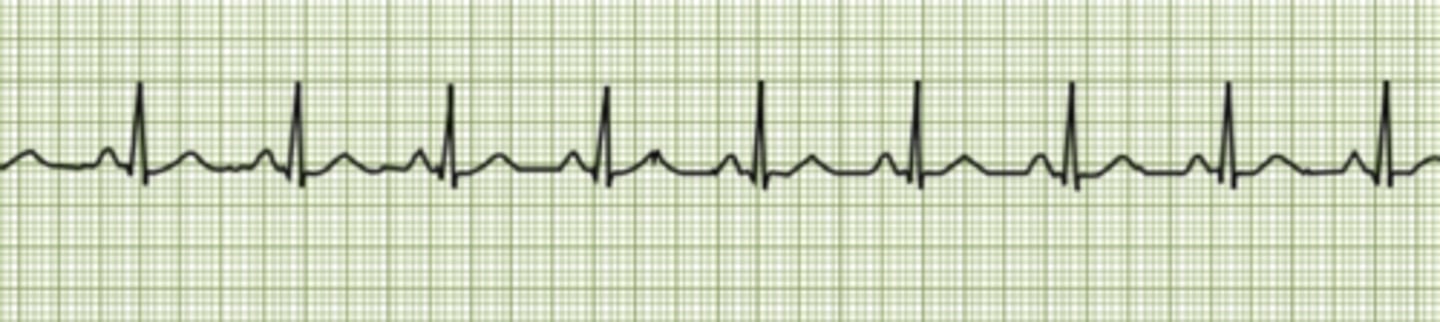
Bradycardia (image)
QRS complexes are farther apart otherwise looks normal
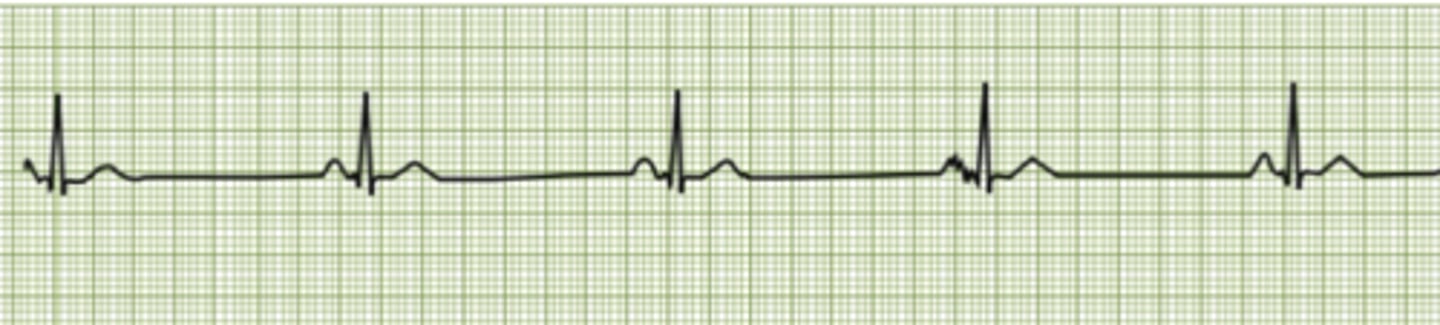
Tachycardia (image)
looks normal everything is just closer together

Atrial Fibrillation
can cause blood clots but not immediately life threatening. Looks like a squiggle before each QRS complex

Premature Ventricular Contractions
"flutter" the QRS complex may randomly change length or orientation going upside down.
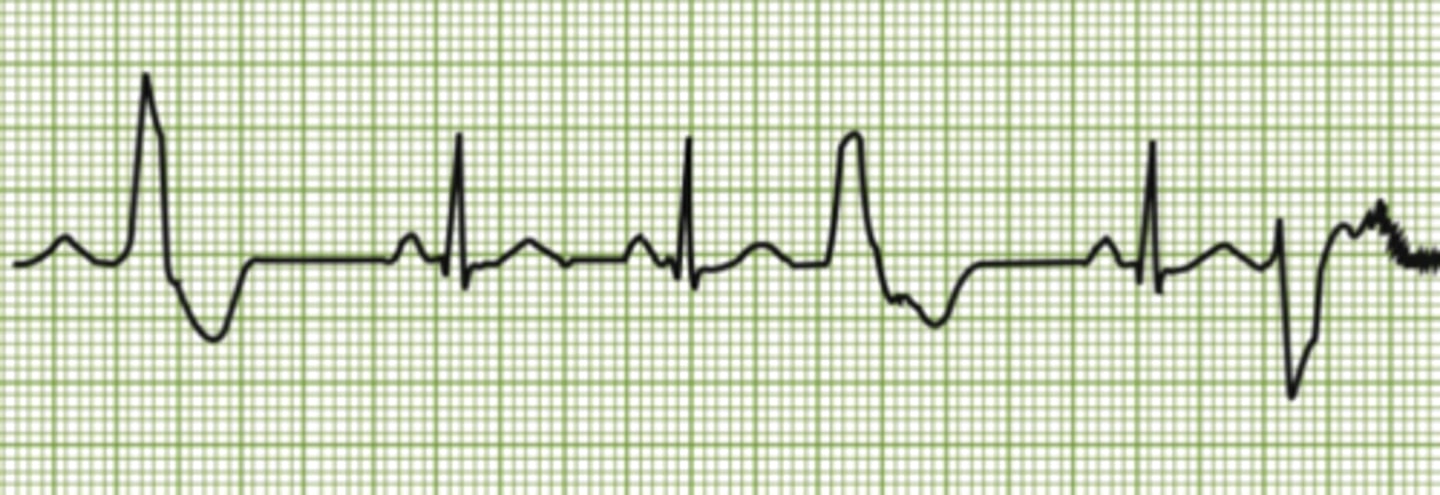
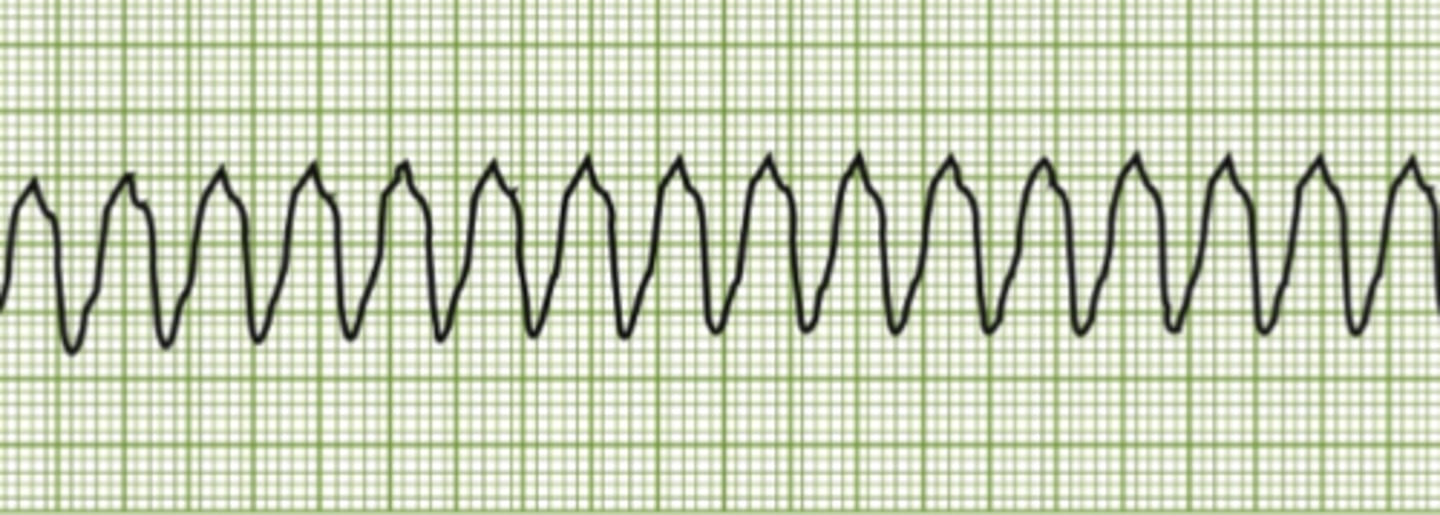
Ventricular Tachycardia
Ventricle keeps contracting too early no P or T wave
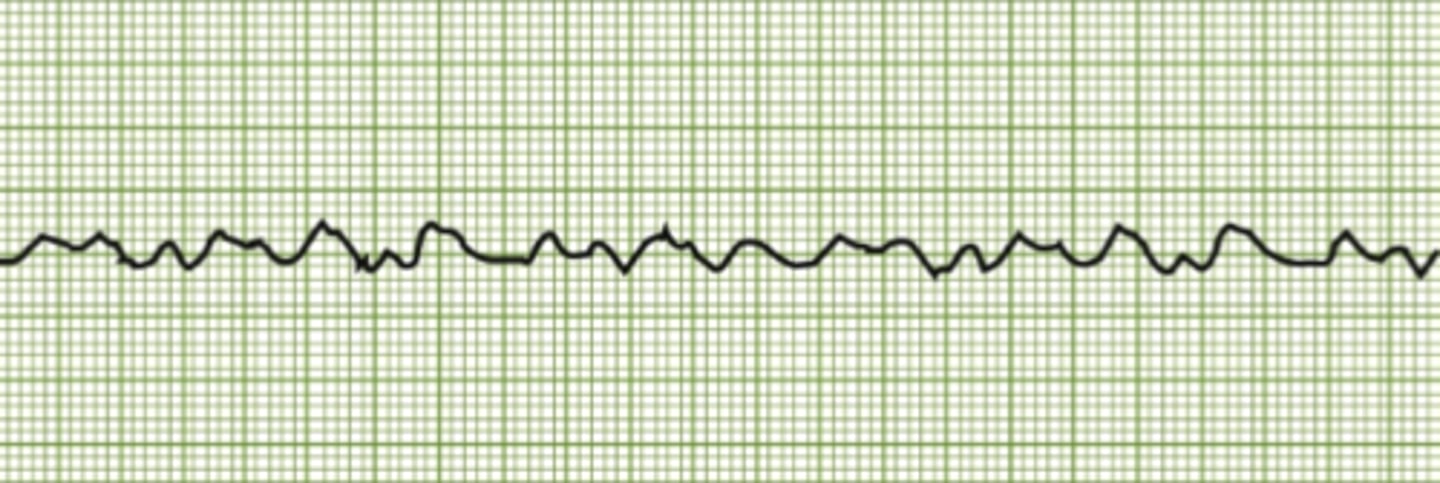
Ventricular fibrillation
No true forceful contraction but uncoordinated quivering. LIFE THREATENING. Just a scribbly line
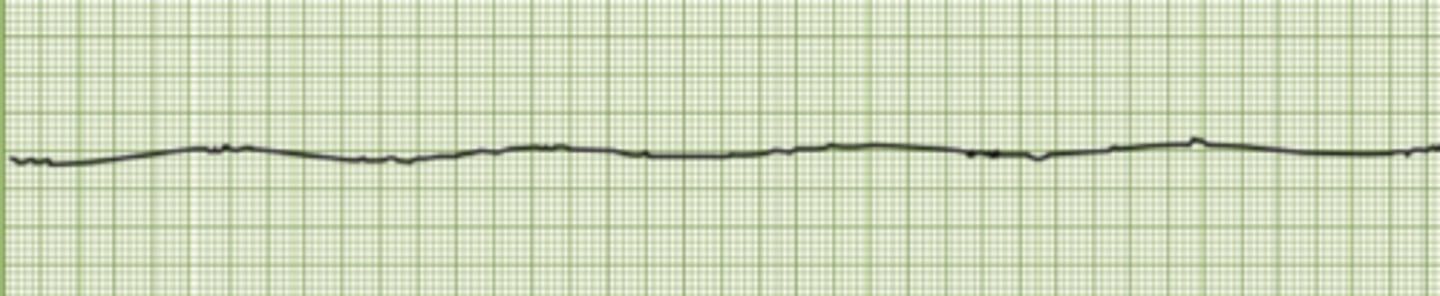
Asystole
No contraction, mostly strait line
BUN (lab)
measures amount of bilirubin, urea, and nitrogen levels in the blood. Indicator of kidney function, important before giving IV contrast. Normal Values: 7-20 mg/dL
Creatinine (lab)
Measures amount of creatinine (waste product from muscles) in blood. Creatinine is removed by the kidneys. Indicator of kidney function, important before giving IV contrast. 0.5-1.2 mg/dL
GFR (lab)
Measures hwo well kidneys are filtering blood, Indicator of kidney function, important before giving IV contrast
Hemoglobin (lab)
Measures amount of hemoglobin. Important because o2 uses hemoglobin for transport in the blood
RBCs (lab)
Measures number of RBCs, important because oxygen uses hemoglobin, which is a part of the RBC for transport in the blood
Platelets (lab)
Measures ability of blood to clot, important for patients undergoing percutaneous procedures
O2 Saturation (lab)
Measures oxygen saturation of blood, important because hypoxemia can lead to emergency adverse effects. 95-100%
Prothrombin Time (PT) (lab)
Measures how long it takes blood to clot, important for patients undergoing percutaneous procedures
Partial Thrombin Time (PTT) (lab)
Measures how long it takes blood to clot, important for patients undergoing percutaneous procedures
Prothrombin/international normalized ration (PT/INR) (lab)
Measures how long it takes blood to clot, important for patients undergoing percutaneous procedures
Vital Signs: Conscious Effort
Notice, measure, document changes in patient condition. Respond to changes in patient condition
Vital Signs: Prudent practice
What would a safe professional practitioner do in this situation? (code!). Anticipate complications and prepare
Vital Signs: Communication
Discuss observations/situations with other healthcare providers, appropriate supervisors, physicians (near miss)
Vital Signs :Documentation
Include specific details, time/date, entry into official record, and signature or initials.
Assessing a patients mobility
look for yellow armband or socks. Can you stand? Have you fallen in the past year? Has a doctor recommended you use a cane? When was the last time you went to the bathroom by yourself? TRUST YOUR GUT
Why is Fall Prevention so Important?
#1 unintentional injury deaths among older adults, 1/4 older adults report falling, can lead to loss of independence, 32,000 die each year from these falls, 95% of hip fractures in older adults are from falls. Cost 50billion each year.
Still learning (17)
You've started learning these terms. Keep it up!