Maxillary Molars
 Call Kai
 Learn
Learn Practice Test
 Spaced Repetition
 Match
Match Flashcards
 Knowt Play
1/36

There's no tags or description
Looks like no tags are added yet.
Name | Mastery | Learn | Test | Matching | Spaced | Call with Kai |
|---|
No analytics yet
Send a link to your students to track their progress
37 Terms
Molar generalities
Largest teeth in the mouth
First permanent teeth to erupt
Non succedaneous teeth (don’t replace any primary teeth)
Form from 4 or 5 lobes, some 2nd and 3rd molars have 4
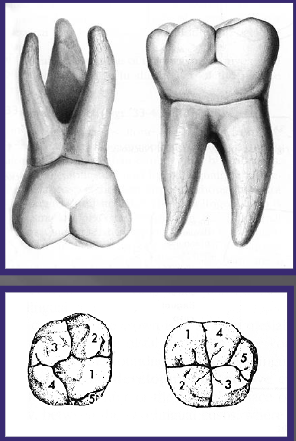
Maxillary 1st molars generalities
Largest maxillary teeth
Form from 5 lobes
Crown is broad MD and just slightly wider BP
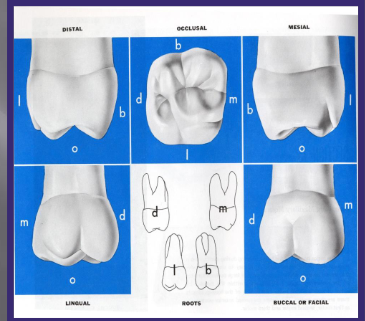
Where do the 5 cusps of maxillary first molars form
1st to 3rd lobe form from 3 major cusps
4th forms from minor cusp
5th forms from supplementary cusp (Cusp of Carabelli)
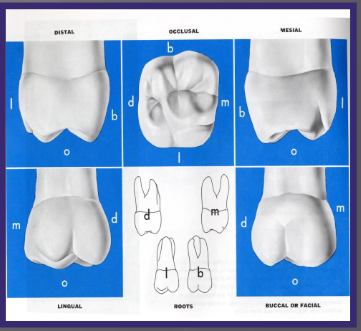
What are the locations of the 5 cusps
2 buccal
2 palatal
1 Carabelli’s cusp
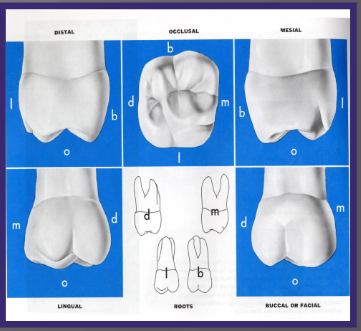
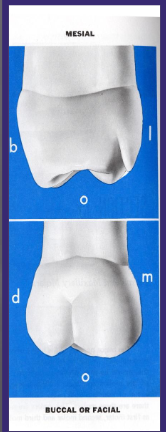
Maxillary first molars buccal aspect
2 cups seen here, MB and DB
2 buccal cusps are divided by a buccal developmental groove
The groove is not very deep, but at its end it splits into a buccal pit
Maxillary first molars palatal aspect
2 cusps seen here, MP and DP (these cusp are distal to the buccal cusps)
Mp cusp is larger/longer than buccal cusps
The cusp of carabelli is present in different % depending on population/ethnic groups
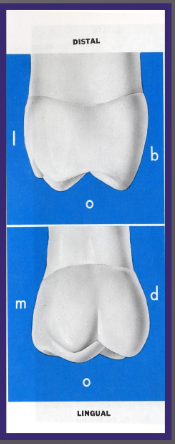
How are the Cusp of carabelli and MP cusp separated
A fifth developmental groove, the mesiopalatal groove seperates them
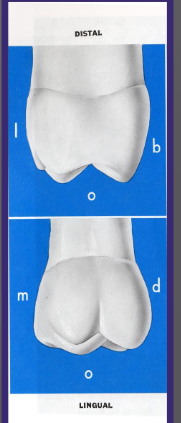
What other grooves are on the maxillary 1st molars palatally and also distally
Palatal developmental groove, extends from the centre of the palatal surface between 2 palatal cusps
Distal oblique groove, as the palatal developmental groove curves distally, it becomes this
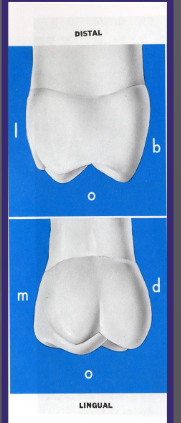
Maxillary 1st molars palatal aspect (grooves and cusp explanation)
Palatal and distal oblique grooves are sometimes considered as one:
Distopalatal developmental groove
Distopalatal cusp is small (occupies around 40 percent of palatal surface)
Maxillary 1st molar mesial aspect
can very easily see the cusp of carabelli from this view
Buccopalatal measurement of the crown is greater than when measured distally
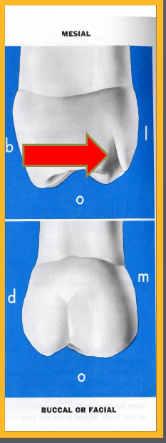
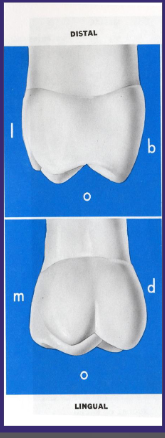
maxillary first molar distal aspect
Crown tends to taper distally
Distal marginal ridge is shorter, less prominent than mesial
Maxillary first molar occlusal aspect (shape and functional cusps)
Has a rhomboidal occlusal outline, wider crown mesially than distally
4 functional cusps and 1 afunctional cusp (carabelli)
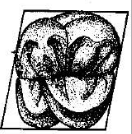
Major fossae found on maxillary 1st molar occlusal aspect
Central fossa (mesial to oblique ridge)
Distal fossa (distal to oblique ridge)
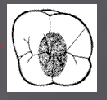
Minor fossae found on maxillary 1st molar occlusal aspect
Located on the inside of the respective marginal ridges:
Mesial and distal fossa

Maxillary 1st molars occlusal aspect transverse ridge
Formed by two triangular ridges joining and crossing the surface of a posterior tooth diagonally rather than straight across buccopalatally
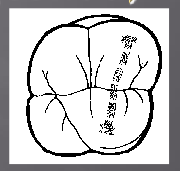
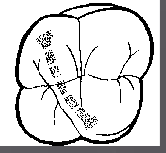
Maxillary 1st molars occlusal aspect oblique ridge
Oblique ridge: transverse ridge, characteristics of maxillary molars
Formed by the triangular ridges of the mesiopalatal and distobuccal cusp
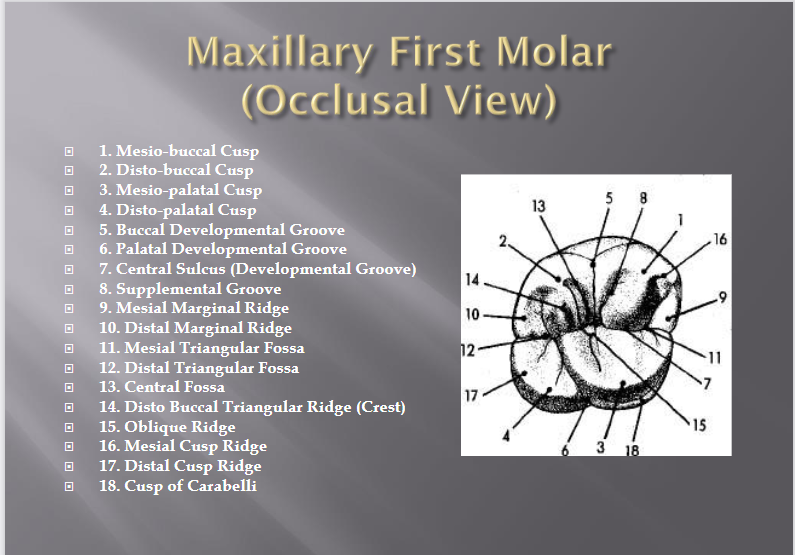
Maxillary first molar occlusal view labelled (image)
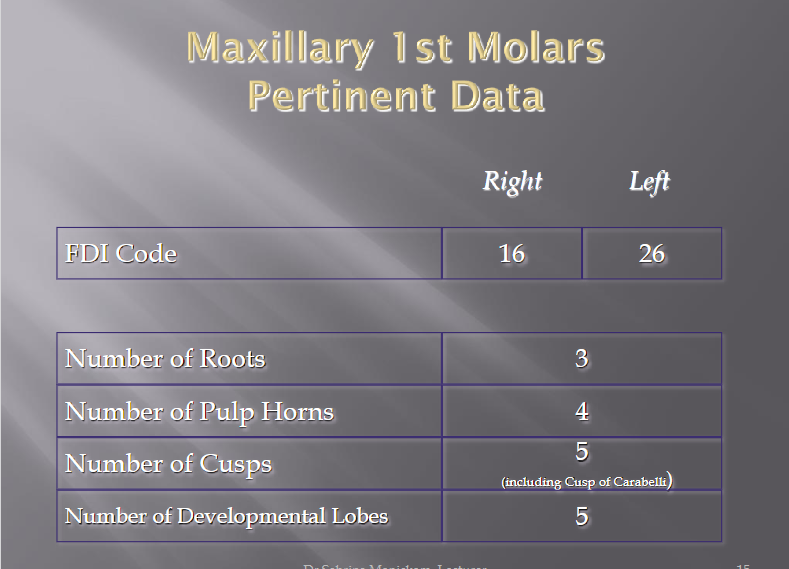
Maxillary first molars data (name fdi, number of roots, pulp horns, cusps and developmental lobes
How can maxillary first molars be identified (6 characteristics)
Might have cusp of carabelli
Square/rhomboidal occlusal outline (not triangular)
Well developed mesiopalatal cusp
Prominent oblique ridge and distal buccal and palatal grooves
Crown similar width MB and BP
3 widely separated roots
Maxillary 1st molars (image)
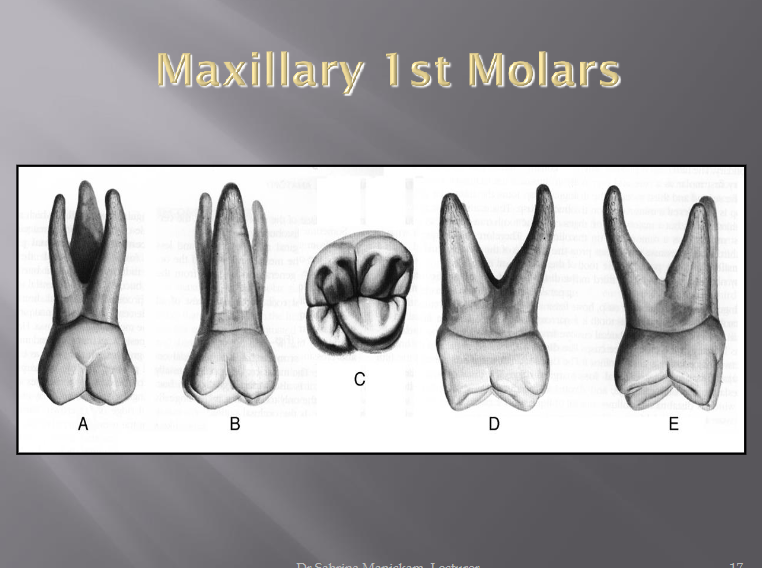
Maxillary 2nd molars generalities (function and comparison)
Supplement first molars function, similar but less accentuated features
Shorter occlusocervically
Narrower mesiodistally
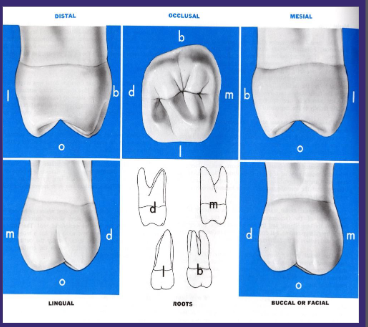
Maxillary second molar grooves, ridges, and cusps (also comparison)
Have more supplemental (secondary grooves and pits)
Less prominent oblique ridge
Usually no cusp of carabelli (fifth lobe)
Less developed distopalatal cusp
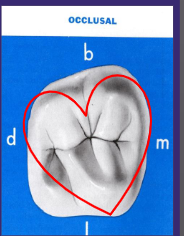
Maxillary 2nd molars shape
Less rhomboidal compared to 1st, more heart shaped (not imo tho)
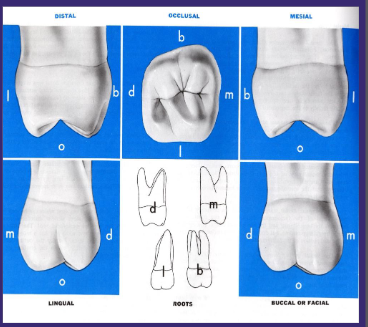
Maxillary 2nd molars roots
Tend to be closer together, may even be fused
Mesiobuccal root tends to curve distally in the apical third, straighter distal root
Root is almost as long, sometimes longer than first molars
More variety in crown and roots than first molars
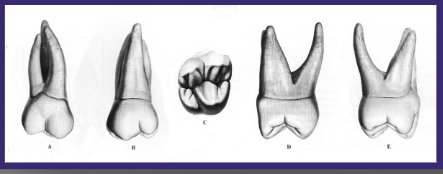
Maxillary 2nd molar buccal aspect
Crown:
Shorter C - O (cervicoocclusally)
Narrower M- D
Distobuccal cusp smaller compared to first molars
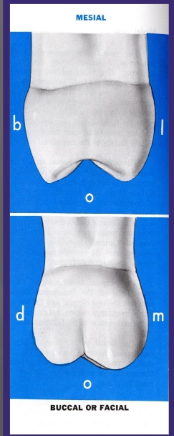
Maxillary second molars palatal aspect
No cusp of carabelli (usually)
Smaller distopalatal cusp than firsts
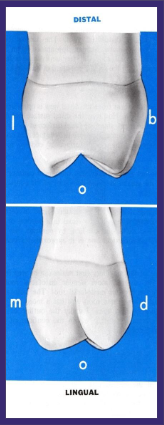
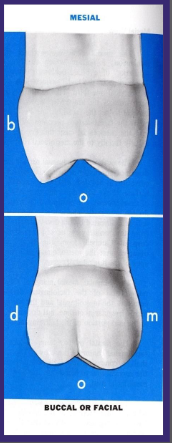
Maxillary second molars proximal aspects
Crown is shorter, buccopalatal measurement is about the same
Roots are closer together
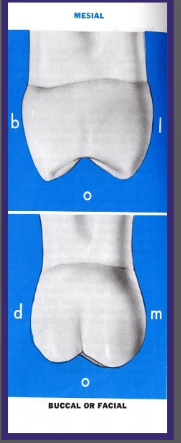
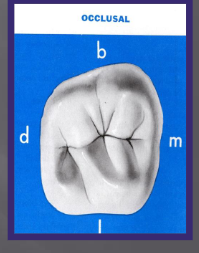
Maxillary second molars occlusal aspect
Smaller M-D diameter
Same BP diameter
More supplemental grooves/pits
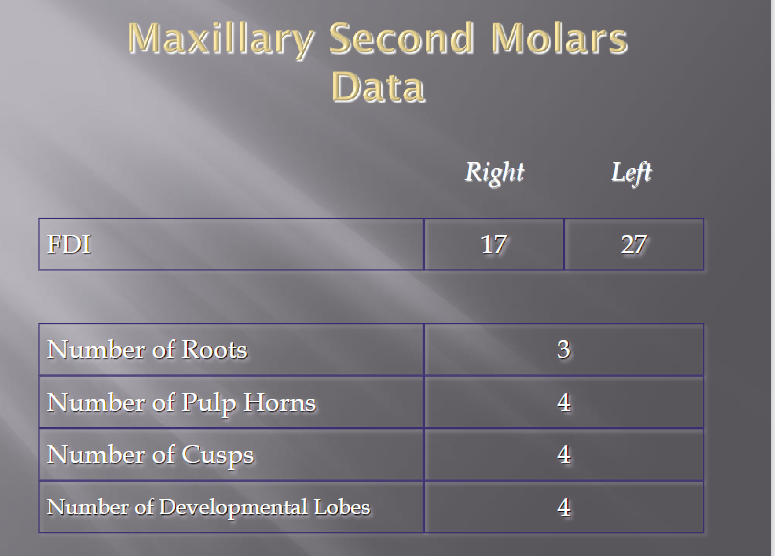
Maxillary second molar data (name FDI, number of roots, pulp horns, cusps, developmental lobes)
Maxillary second molars identifying characteristics (5)
Fifth cusp usually absent
Less developed DP cusp
Less prominent oblique ridge
Crown:
Shorter cervicoocclusally
Narrower MD
Just as wide BP
More heart shaped occlusal outline (less rhomboidal)
3 roots are less separated
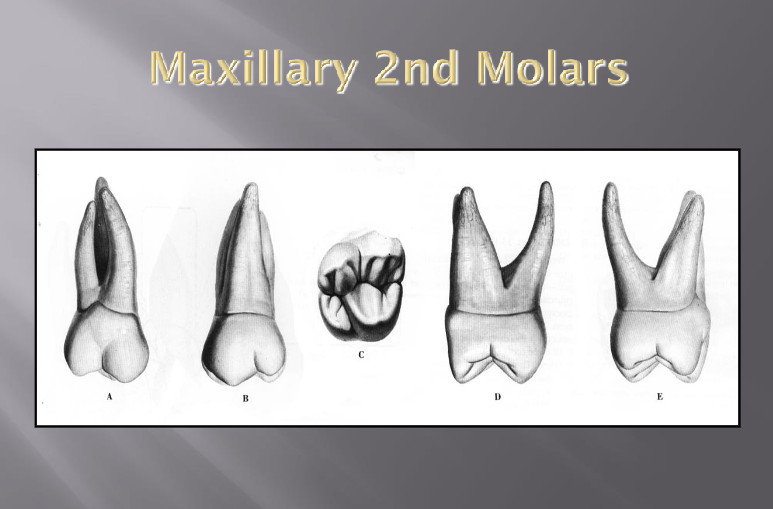
Maxillary second molars image
Maxillary 3rd molars generalities
Most variation of all molars in size, shape, and relative position to other teeth
Often a developmental anomaly or doesn’t form at all
Crown is shorter than second, roots tend to fuse (one fused root)
Occlusal outline is more heart shaped
Poorly developed or absent distopalatal cusp
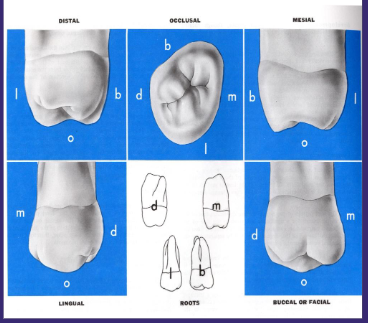
What tends to happen to maxillary 3rd molars (obvious answer)
High tendency to become impacted (no eruption due to obstruction by bone, other teeth, or angle that it sits in the bone)
Also congenitally (meaning at or before birth) missing
Maxillary third molars data (name FDI, number of roots, pulp horns, cusps, and developmental lobes)
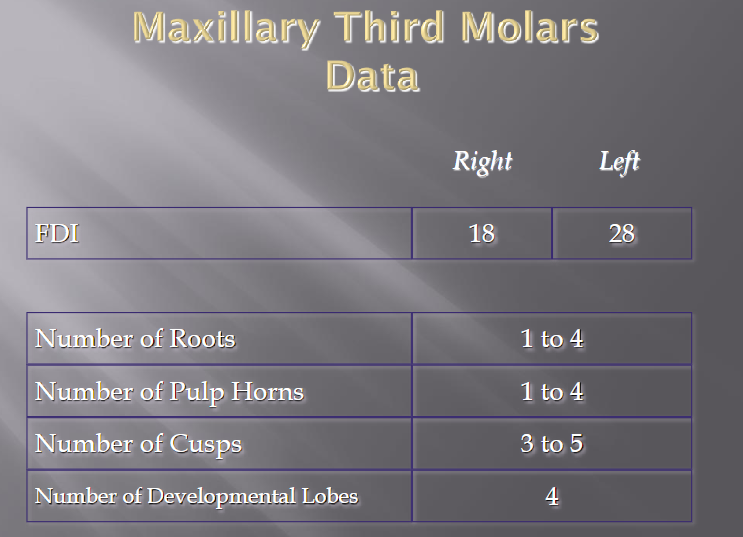
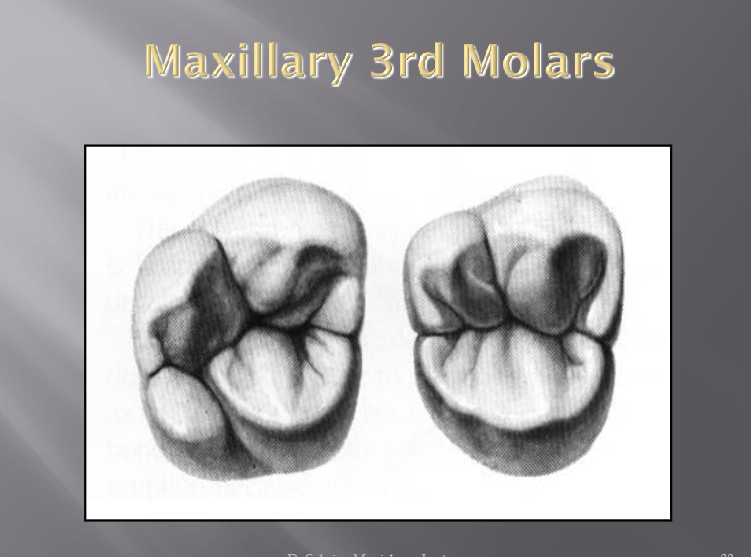
Maxillary third molar identifying characteristics (4)
Varies in form more than any others
Usually has no DP cusp
Occlusal outline is heart shaped with 3 cusps
Usually 3 very close together or fused roots with extreme distal inclination
Maxillary third molars roots
3 roots, MB, DB, and P
Trifurcated (meaning single root trunk divides into 3 separate roots
Palatal root is longest, distobuccal is shortest
Buccal roots incline distally
MB starts to curve at middle thirds
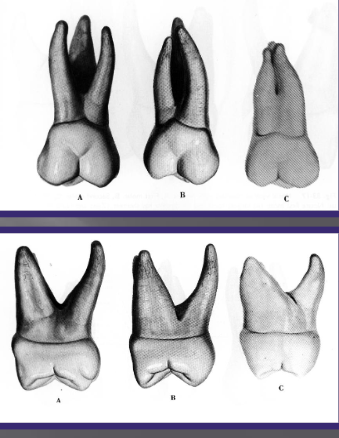
Maxillary molar root characteristics
Roots are shorter the farther posterior (maxillary 1st molar longest)
Roots are less divided the farther posterior the maxillary molar
Roots vary more in shape, size, and direction of curvature the more posterior the molars

