Lecture Notes on Feeder Livestock Selection
 Call Kai
 Learn
Learn Practice Test
 Spaced Repetition
 Match
Match Flashcards
 Knowt Play
1/45

Earn XP
Description and Tags
This set of flashcards covers the key concepts related to the selection of feeder livestock, focusing on the principles, characteristics, classifications, and factors affecting success in the feeder cattle market.
Name | Mastery | Learn | Test | Matching | Spaced | Call with Kai | Chat |
|---|
No analytics yet
Send a link to your students to track their progress
46 Terms
Feeder Animal Requirements
A feeder animal must grow rapidly, grow efficiently, and produce an acceptable carcass.
Characteristics of Feeder Livestock
Adequate frame, adequate body capacity, acceptable structural correctness, potential to maintain a high lean-to-fat ratio, and potential to deposit sufficient marbling.
Key Factors for Feedlot Success
Age, weight, sex, frame size, and body condition.
Cattle Age Classifications
Calves, yearlings, cull cows.
Benefits of Yearlings
Higher average daily gain (ADG), fewer days on feed, quicker turnover, and rapid return on investment.
Light vs. Heavy Cattle Prices
Light cattle have higher prices per cwt but usually lower total value, while heavy cattle have lower prices per cwt but higher total value.
USDA Feeder Grade
Implemented in 1979 to categorize cattle based on thriftiness, frame size, and thickness.
Thriftiness Definition
Health and wellbeing of the animal, indicating its potential for normal growth and fattening.
Importance of Frame Size
Determines potential weight gain and efficiency; larger framed cattle require longer feeding periods.
Animal Maturity Indicators
Larger, longer head, smaller ears, wider muzzle, coarser switch, and larger feet indicate maturity.
Thickness in Cattle
Degree of muscling in relation to skeleton; thicker cattle have a higher ratio of muscle-to-bone.
Body Condition Influence on Gain
At constant weight, thin cattle generally gain faster and more efficiently than fat cattle.
Cull Cattle
• Under certain economic conditions, may be profitable
• Can out gain calves
• Add value
• Require a lot of feed/lb. of gain…putting on fat
• Usually fed for short period
Heiferetts
heifers that have calved for the first time and then fed for slaughter
Bullocks
Intact males under 2 years of age
Bulls
intact males over 2 years of age
Frame size
Determine what weight an animal will reach USDA Choice (0.5 in. BF)
• Large framed cattle will gain more efficiently, but will need to be fed longer
• Important: Feed to a degree of finish, not same weight
This is why it is important to sort cattle in the feedyard
Producer
genetic improvement based on premiums; discovery of value
Feeder
ability to sort and market like-cattle
Packer
demand type of cattle
Priorities in market steer
Muscle (REA), Finish/Composition (backfat), and practicaity (rib and structure)
fat refered to as
finish, not condition
Areas of finish evaluation
Brisket, Rib cage, topline, tailhead/pones, flank, and cod/udder
Yield grade
The estimation of boneless, closely trimmed (½ inch fat or less) retail cuts that are expected to come from the major wholesale cuts
USDA quality grade
Quality Grades are assigned based on subjective evaluations of
two traits:
– Maturity (physiological vs. chronological age)
– Marbling (intramuscular fat)
Maturity
A-E
Ossification
As an animal gets older, the cartilage in an animal’s body starts to
ossify (turn to bone)
Live pricing
Producer/seller takes on little risk
buyer takes on higher risk
In the beef
Carcass weight matters
dressing percentage matters
producer/seller and buyer takes on some risk
Grid
carcass weight matters
carcass traits/performance matters
Purebred/seedstock
Maintains seed stock to provide bulls and, occasionally,
females for the commercial producer
Typically more utilization of EPD’s
Commercial operation
Provides feeder calves and yearlings to the stocker operator
Stocker
Develops cattle cheaply to grow for feedyards
Cattle Feeder
Provides the packer with finished cattle ready for slaughter
Packer
Slaughters the cattle and provides the retailer with either dressed carcasses or wholesale cuts from these carcasses
Retailer
cuts, trims and packages the beef for the consumer
1969
Most influential year in cattle breeding
Population increases and beef demand on the rise
Cattle needed to get bigger to stay profitable
Begin to stress the importance of Yield Grad
British Breeds
Imported from british isles in late 1700s
higher quality grades, lower yield grades, easier fleshing, reach mature size at earlier age, less growth potential
Angus
Scotland
Fantastic quality grade and carcass quality
More than 80% of Angus cattle make CAB
maternal breed (#1 in regstry and crossbreeding
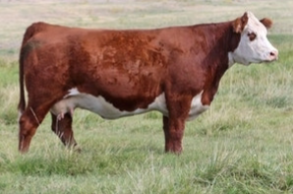
Hereford
England
Average to below average marbling and yielding
maternal breed (low maintenance and gentle)
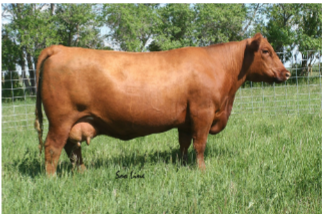
Red angus
England
similar to angus cattle
above average marbling
average yielding
smaller mature frame size
calving ease
Continental breeds
imported in late 60s and 70s
produce carcasses with less fat and higher percentage of saleable product; lower quality grades
more growth and muscle and larger size
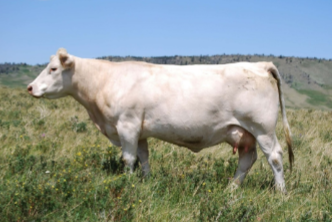
Charolais
French
high growth, late maturing
heavily muscled
high yielding cattle
average to below average marbling
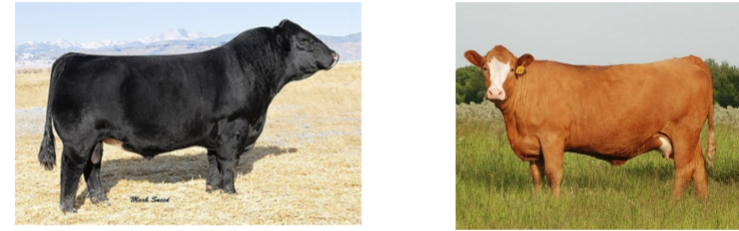
Simmental
Swiss
One of the mostly widely distributed breeds of cattle worldwide
High growth, heavy muscled
High milk
High yielding
Marbling is improving with the use of Angus genetics to make SimAngus cattle
Bos Indicus
High yielding cattle, typically don’t grade
Lack of marbling
Why such heavy use?
Heat tolerant
Insect tolerant
Longevity
Performance and size
Later maturing
Have a hump, longer ear, typically a bigger sheath
most prominant Bos Indicus breed in the US
Brahman