Julia All Cardio Combined
 Call Kai
 Learn
Learn Practice Test
 Spaced Repetition
 Match
Match Flashcards
 Knowt Play
1/2457

There's no tags or description
Looks like no tags are added yet.
Name | Mastery | Learn | Test | Matching | Spaced | Call with Kai | Chat |
|---|
No analytics yet
Send a link to your students to track their progress
2458 Terms
What are the names of the 4 lipoproteins we covered in class?
chylomicrons, very low-density lipoproteins, low-density lipoproteins, high-density lipoproteins
Why are lipoproteins necessary and what is their general function?
They are necessary for transporting lipids through the systemic circulation because they are water ___.
insoluble
What is the general structure of a lipoprotein?
-hydrophobic core is made up of ___ and __ ___
triglycerides, cholesterol ester
What is the general structure of a lipoprotein?
-hydrophilic surface has ___, free __, and __
phospholipids, cholesterol, apolipoprotein
Dietary triglycerides and fat are digested by pancreatic lipase and co-lipase, and formed into ___ with the aid of bile salts.
micelles
Dietary triglycerides and fat are able to move through GIF towards enterocytes where they can be passively absorbed or actively transported across the ___ into enterocytes
NPC1L1
Inside the enterocytes of the small intestine, what vesicular-like structure are these dietary lipids (cholesterol and tg) packaged in?
chylomicrons
What apolipoprotein are these dietary lipids (cholesterol and tg) tagged with?
B48
Through what system do chylomicrons travel through prior to making their way to the systemic
circulation?
lymphatic
Through what structure do chylomicrons enter the blood stream?
thoracic duct
What proteins do chylomicrons receive from HDL once they are in the bloodstream?
Apo-E, Apo-Cii
What is the function of Apo-Cii in relation to chylomicrons?
It activates __ __ (LPL) to breakdown TG-->glycerol+FFA
lipoprotein lipase
Once the function of Apo-Cii is carried out, what happens to it?
it is returned to HDL
Do chylomicrons change in size after interaction with lipoprotein lipase?
Yes
What are the remaining molecules called after chylomicrons decrease in size?
chylomicron remnant
What is the function of ApoE?
allows for high affinity binding of chylomicron remnants to __ __
LDL receptor
What happens to chylomicrons once they bind to the LDL receptor?
-They are __ into liver, where they are broken down and their contents can be recycled in further lipoprotein metabolism
endocytosed
What lipoprotein does the liver package mainly triglycerides into and release into the circulation?
VLDL
What apolipoproteins do VLDL carry?
B100, Apo-Cii, Apo-E
the apolipoprotein B100 is added to VLDL in the __
liver
the apolipoproteins Apo-Cii and Apo-E come from __
HDL
What is the function of Apo-Cii in relation to VLDL?
-Binds to and activates __ for hydrolysis of triglycerides
LPL
Following interaction with lipoprotein lipase, what happens to VLDL lipoproteins?
-they decrease in size, and are termed either VLDL remnants or ___-__ ___ (IDL)
intermediate density lipoproteins
What are the two possible fates of IDL lipoproteins?
1) ___ by hepatocytes
endocytosis
What are the two possible fates of IDL lipoproteins?
2) further removal of triglycerides by __ ___ __ (HTGL)
hepatic triglyceride lipase
The IDL that remain in the bloodstream give back Apo-E to HDL. These particles are now called __ and carry only B100, low levels of TG, Ch, and Che.
LDL
What is the function of LDL?
-Deliver __ to various tissues for use in the biosynthesis of hormones and cell membrane maintenance, among other processes
cholesterol
What percentage of LDL is returned to the liver?
60
60% of LDL is returned to the liver. Where does the rest go, and why?
-the rest (40%) delivers cholesterol to to other __ (hormones, etc)
tissues
What happens to LDL particles when they make their way into the tunica intima and are exposed
to reactive oxygen species?
they are oxidized (now Ox-LDL)
What cell engulf these Ox-LDL particles?
macrophages
across what receptor are the Ox-LDL taken in?
fatty acid translocase (FAT/CD36)
Overaccumulation of Ox-LDL can convert macrophages to __ ___
foam cells
Accumulation of foam cells causes __ ___ (one of the earliest signs of atherosclerosis)
fatty streaks
What is the purpose of HDL lipoproteins?
reverse cholesterol transport
What is the initial apolipoprotein for HDL?
Apo-A1
Where does the initial apolipoprotein for HDL come
from?
-Apo-A1 is synthesized both in __ and by the ___
liver, intestine
Where do the phospholipids come from that make up HDL?
-they come from the surface layers of __ and __ during lipolysis
chylomicrons, VLDL
What is free cholesterol transported into and how?
-it is transported into immature HDL particle called prebeta-1 HDL through __ and __
ABCA1, ABCG1
How is cholesterol stored?
in cholesteryl ester
What enzyme is responsible for conversion of free cholesterol into cholesteryl ester?
-by Lecithin:cholesterol acetyl transferase (___)
LCAT
What protein allows for the transfer of stored cholesterol to VLDL, IDL, LDL, and chylomicron
particles?
cholesterol ester transfer protein (CETP)
What receptor do HDL lipoproteins bind to in order to deliver cholesterol to various targets?
SR-B1
Does HDL lipoproteins binding to SR-B1 in order to deliver cholesterol to various targets cause degredation of the HDL particles?
no
List the three categories of ___ dyslipidemias
1) hypertriglyceridemia
2) hypercholesterolemia
3) mixed hypercholesterolemia + hypertriglyceridemia
primary
1) hypertriglyceridemia is caused by elevated TG, secondary to increase in what 2 triglyceride rich lipoproteins?
VLDL, chylomicrons
1) hypertriglyceridemia
-can be caused by deficiency of ___-__ or __
apo-Cii, LPL
1) hypertriglyceridemia
c) can have unknown cause, which is then called __ ___
familial hypertriglyceridemia
2) hypercholesterolemias is characterized by elevated cholesterol and involves mutations in either the genes for the __ __ or for __-__
LDL receptor, apo-B100
2) hypercholesterolemias
a) can be ____ ___, which is when the cause is unknown
familial hypercholesterolemia
3) mixed hypercholesterolemia + hypertriglyceridemia
-familial dysbetalipoproteinemia or familial combined hyperlipidemia
-caused by mutation in ___ gene
ApoE
Causes of __ dyslipidemia:
-obesity
-diabetes
-hypothyroidism
-nephrotic syndrome
-alcohol, smoking
-meds (corticosteroids, thiazide diuretics, beta blockers, oral contraceptives)
secondary
How do the causes of secondary dyslipidemia impact lipoprotein metabolism?
-obesity increases serum levels of __ and ___
VLDL, chylomicrons
How do the causes of secondary dyslipidemia impact lipoprotein metabolism?
-the decreased insulin/insulin-resistance for patients with diabetes decreases efficiency of ____, which increases TG and VLDL/LDL
LPL
How do the causes of secondary dyslipidemia impact lipoprotein metabolism?
-hypothyroidism causes decreased T3/T4, which increases ___
LDL
How do the causes of secondary dyslipidemia impact lipoprotein metabolism?
-nephrotic syndrome- ____ increases VLDL and LDL
hypoalbuminemia
What are the main complications of uncontrolled hyperlipidemia?
1) atherosclerosis
2) pancreatitis
3) ___ ("fatty liver")
4) other complications like xanthomas, xanthelasma, corneal arcus, etc
steatosis
Cholesterol is an important structural component of ___ ___
cell membranes
Cholesterol is the starting material to synthesize ___ hormones
steroid
Cholesterol is the starting material to synthesize steroid hormones like glucocorticoids, which suppress ___
inflammation
Cholesterol is the starting material to synthesize steroid hormones like mineralocorticoids (eg aldosterone), which control __ __
blood pressure
Cholesterol is also the starting material to synthesize __ __
bile acids
Bile acids/bile salts play a key role in the digestion/absorption of __ and fat-soluble vitamins (from the diet) in the small intestine
fats
the bile acid cycle, also called enterohepatic circulation, involves bile acids being ___ into the ileum, returning to the liver via the portal vein, and being re-secreted into bile
reabsorbed
Bile acids help regulate ___ blood levels!
cholesterol
Bile acids help regulate cholesterol blood levels! namely by promoting the breakdown of cholesterol, which is eliminates from the body either as free __ or as __ __
cholesterol, bile acid
5% of bile salts are __ in the feces-- this is cholesterol disguised as a bile salt
lost
elevated blood levels of cholesterol increase risk of ____ (formation of plaque in arteries)
atherosclerosis
atherosclerosis is asymptomatic, but leads to ASCVD, which includes:
1) myocardial infarction (heart attack)
2) stroke
3) ___ ischemic attack (mini stroke)
transient
atherosclerosis is asymptomatic, but leads to ASCVD, which includes:
4) stable ___
5) peripheral artery disease
angina
2 main sources of cholesterol
1) our __
2) de novo/from scratch biosynthesis of cholesterol in the ___ by hepatocytes
diet, liver
How can we lower blood levels of cholesterol?
1) block absorption of cholesterol from diet into the blood stream by using ___
ezetimibe
How can we lower blood levels of cholesterol?
2) inhibit de novo synthesis of cholesterol by using __
statins
How can we lower blood levels of cholesterol?
3) block the enterohepatic circulation of bile acids to increase removal of cholesterol by using ____ ___ ___ (BAS)
bile acid sequestrants
VLDL are composed primarily of ____ and ultimately become LDL
triglycerides
LDL (bad cholesterol) are the number one driver of ___
atherosclerosis
HDL (good cholesterol) removes excess ___ from the tissues and arteries and returns it to liver for disposal
cholesterol
statins are grouped by ___ based on their LDL-lowering ability. Patients are categorized into statin benefit groups to determine the appropriate statin intensity
intensity
what is the enzyme that catalyzes the rate-limiting step in synthesis of cholesterol?
HMG CoA reductase
statins bind tightly to, and strongly ___ HMG-CoA reductase
inhibit
HMG-CoA reductase normally breaks the carbon-___ bond in the synthesis of cholesterol
sulfur
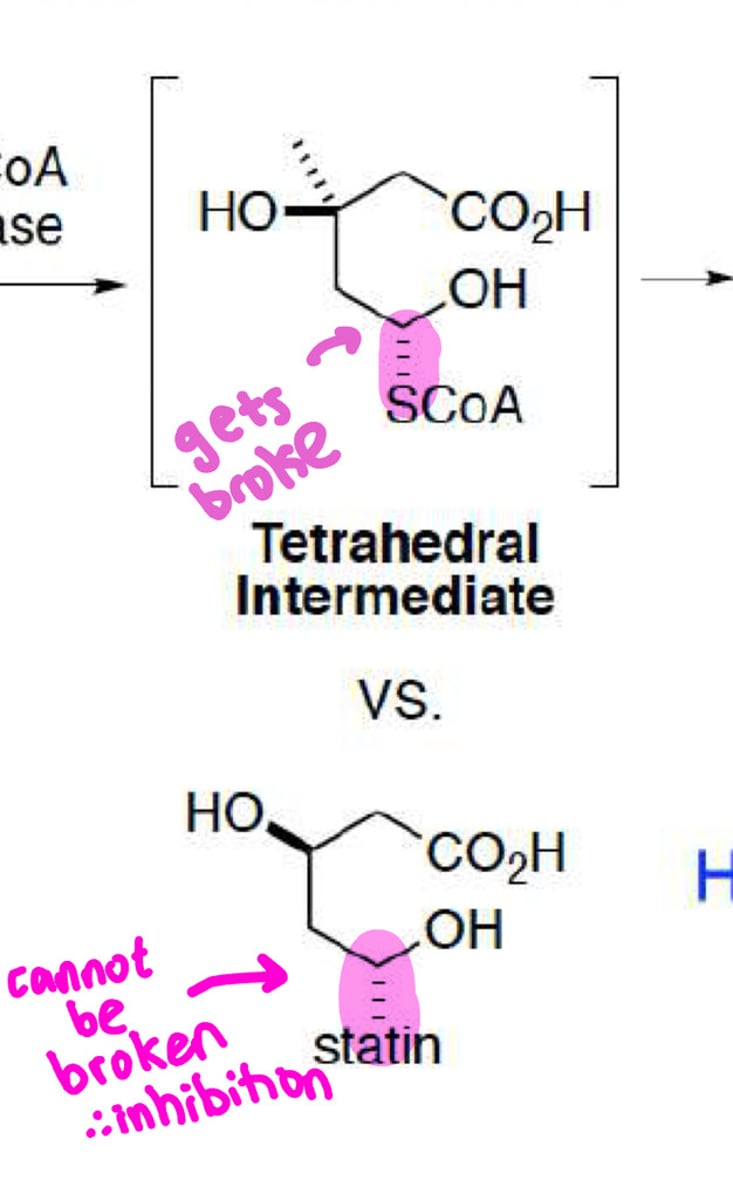
all HMG-CoA reductase inhibitors (including statins) are able inhibit the enzyme because their carbon-___ bond cannot be broken
carbon
statins all have an ionized ___ ___
carboxylic acid
Prodrugs are not active inhibitors of HMG CoA reductase until their lactone ring undergos in vivo hydrolysis to ionize the carboxylic acid. What statins are prodrugs?
lovastatin, simvastatin
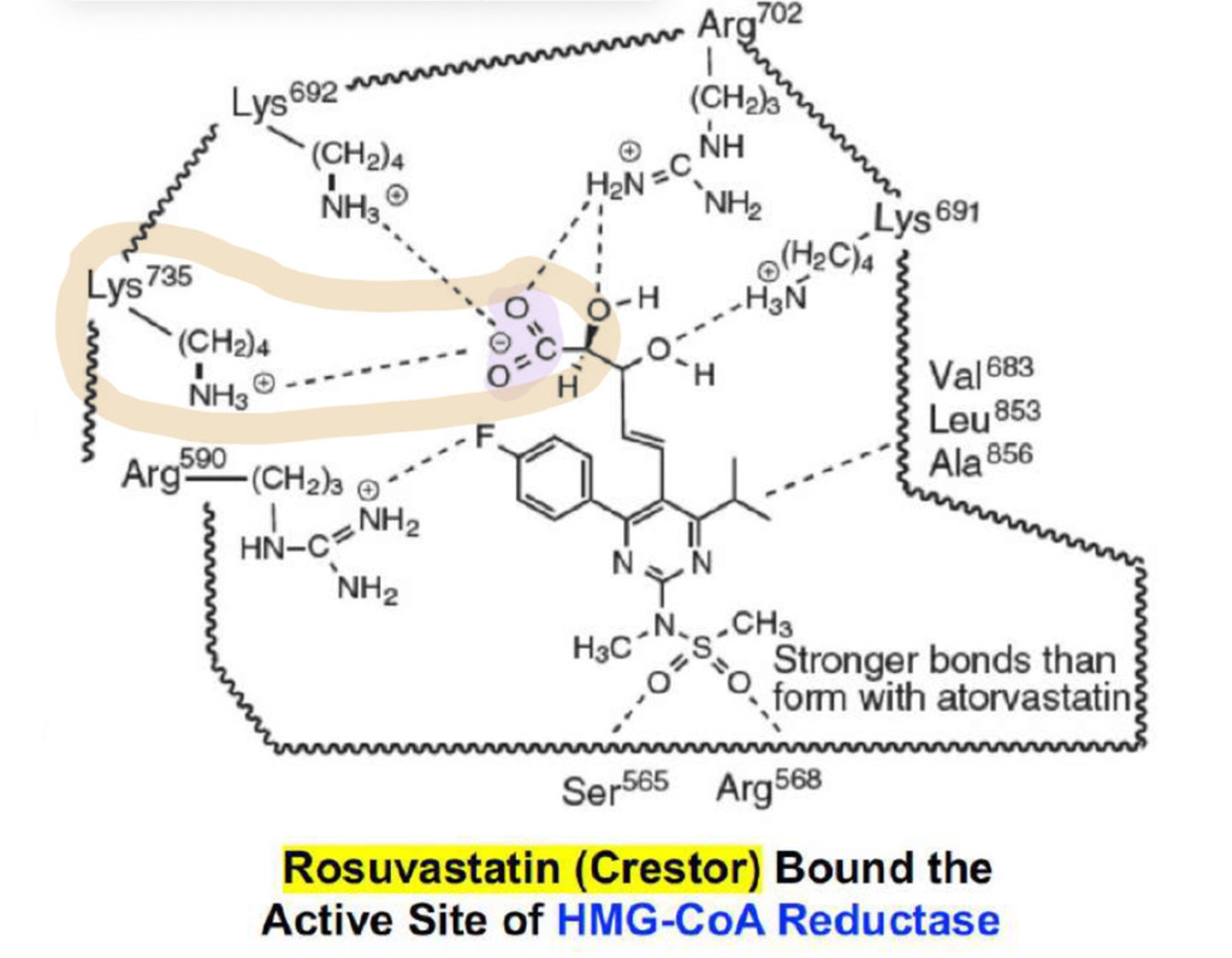
the ionized carboxylic acid on statins forms a key __ anchoring interaction with positively charged ions within the active site of HMG CoA reductase
ionic
in addition to inhibiting cholesterol synthesis, statins will upregulate the number of ___ ___ on hepatocytes
LDL receptors
statins upregulate the number of LDL receptors on hepatocytes, which ultimately increases ___ of LDL from the blood into the liver
clearance
what are the statins going from most potent--> least potent (pharmacists rock at saving lives and preventing flu)
pitavastatin, rosuvastatin, atorvastatin, simvastatin, lovastatin, pravastatin, fluvastatin
since simvastatin and lovastatin are lactone prodrugs, they have very ___ half lives
short
due to the short half-lives of simvastatin and lovastatin, they should be taken at ___ because maximum de novo cholesterol synthesis happens between 12Am-2Am
bedtime
pitavastatin, rosuvastatin, atorvastatin, pravastatin, fluvastatin are active HMG-CoA reductase inhibitors (ie not prodrugs) and have ___ half lives
longer
in general, the statins with longer half lives can be taken at __ time of day
any
important patient counseling for statins includes describing symptoms of ___ __ (#1 adverse effect)
muscle damage
What does SAMS stand for?
statin associated muscle symptoms
SAMS usually presents as muscle soreness, tiredness, or weakness that is ___ (on both sides of body) in __ muscle groups (legs, back, arms)
symmetrical, large
SAMS can develop at ANY time during statin use, but are usually within __ weeks of starting treatment
6
there is increased risk of muscle effects with statins when used with
1) ____
2) more than 1g of __
fibrates, niacin
what is the term for muscle soreness and tenderness?
myalgia
___ ___ (CPK): a marker of damage of creatinine kinase-rich tissue, such as heart muscle tissue in myocardial infarction
creatinine phosphokinase
what is the term for muscle weakness with or without increased CPK?
myopathy