3.3.6 Organic analysis
 Call Kai
 Learn
Learn Practice Test
 Spaced Repetition
 Match
Match Flashcards
 Knowt Play
1/15

There's no tags or description
Looks like no tags are added yet.
Name | Mastery | Learn | Test | Matching | Spaced | Call with Kai | Chat |
|---|
No analytics yet
Send a link to your students to track their progress
16 Terms
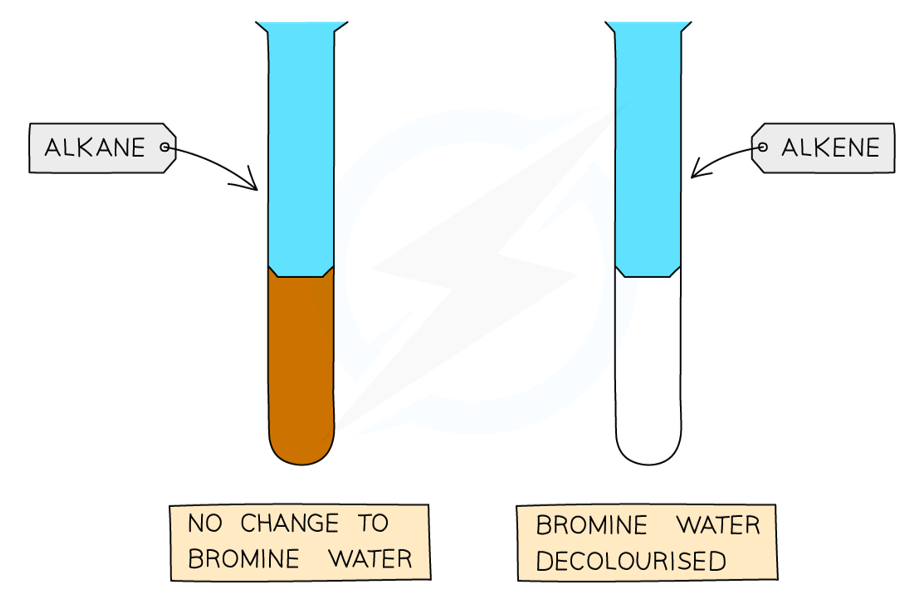
How do you test for alkenes & what is the result?
Shake with bromine water → the result is bromine water is decolourised (orange to colourless)
How do you test for halogenoalkanes & what is the result?
Add 5 drops of halogenoalkane to 1cm³ of NaOH solution in a test tube & warm at 60°C for a few minutes
Add 2cm³ of dilute nitric acid & 1cm³ of silver nitrate solution
If a halogenoalkane is present, a precipitate should form:
AgCl = white
AgBr = cream
AgI = yellow
How do you test for alcohols & what is the result?
Add acidified potassium dichromate (K2Cr2O7):
colour change from orange to green for primary & secondary alcohols
no colour change for tertiary alcohols

How do you test for aldehydes & what is the result?
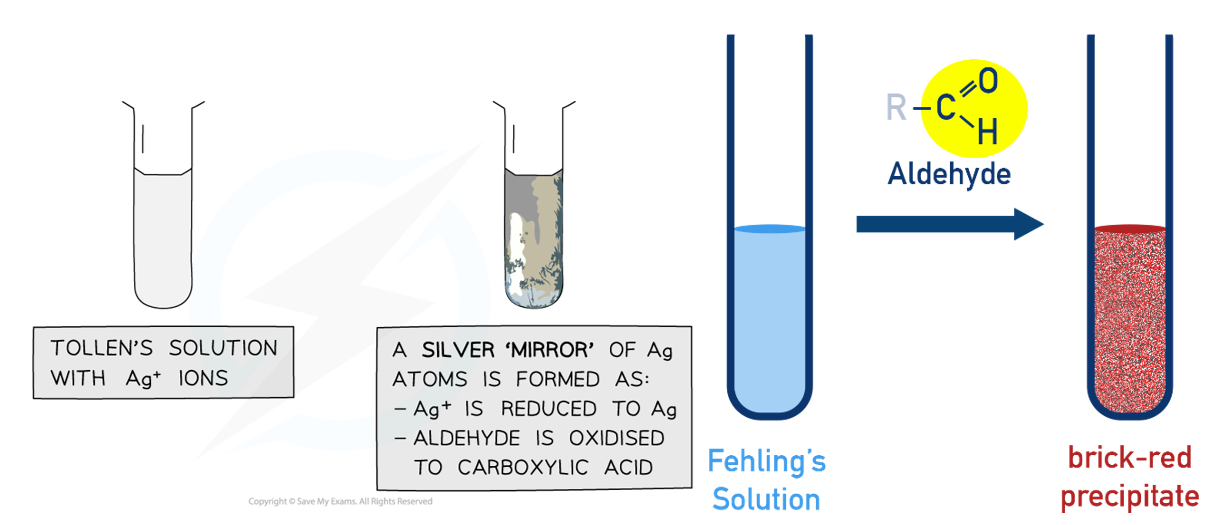
Warm with Fehling’s solution: colour change from blue solution to brick red precipitate
Warm with Tollens’ reagent: colour change from colourless to silver mirror
How do you test for carboxylic acids & what is the result?
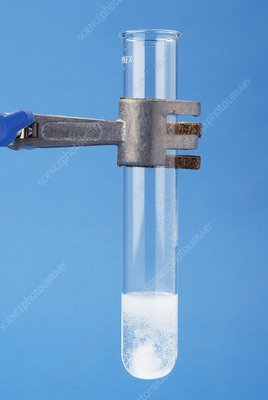
Add sodium hydrogencarbonate → if carboxylic acid is present, carbon dioxide gas is produced (effervescence)
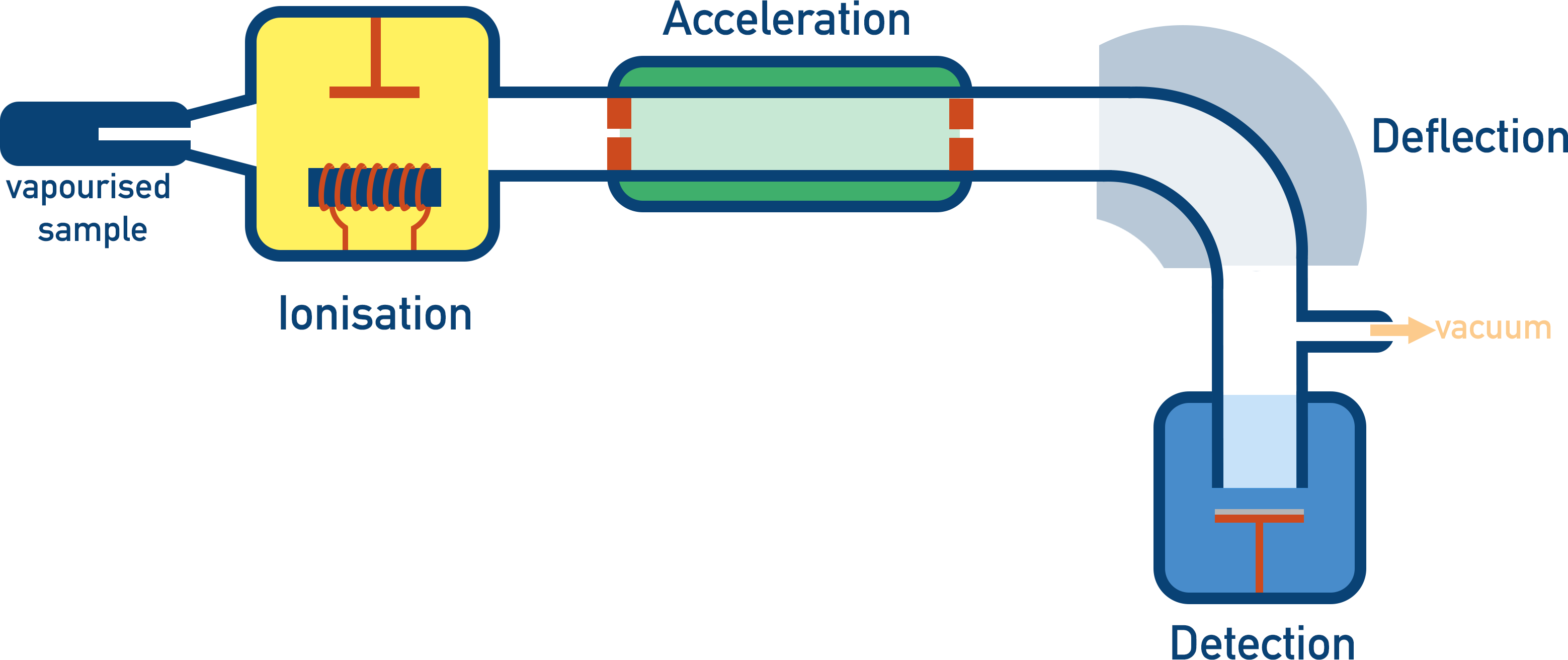
What is mass spectrometry & how does it work?
Used for find the Mr of organic compounds:
compound is dissolved in solution
ionised by a high voltage supply (+1 ions)
accelerated by a negatively charged plate
reaches detector, picks up an electron & produces an electric current
(TOF used to work out m/z value & plot graph)
What does the x axis show on a mass spectrum & what does this effectively show & why?
Shows m/z value
Since most ions are +1, this effectively shows Mr
Why are there multiple peaks when molecules are put into a mass spectrometer?
The molecular ions are shown as a peak, but it will also fragment into smaller molecules, so these peaks are shown as well
Also due to isotopes, different peaks may be seen
What is high resolution mass spectrometry?
Gives the Mr to 3.d.p. or 4.d.p. (compared to standard low resolution, which is to nearest whole number)
Why is high resolution mass spectrometry useful?
Allows you to identify compounds that appear to have the same Mr, when they’re rounded to the nearest whole number
How does infrared spectroscopy differ from mass spectrometry?
It uses the fact that bonds in different functional groups absorb different frequencies of infrared light
Can also be used to assess how pure a compound is → impurities are indicated by extra peaks in fingerprint region
How does infrared spectroscopy work?
A beam of IR radiation is passed through a sample of a chemical
The IR radiation is absorbed by the covalent bonds in the molecules → increases vibrational energy
What do the peaks on an infrared spectrum show?
The frequencies where radiation has been absorbed
What is the fingerprint region?
Lies between 500cm-1 to 1550cm-1
Unique to a particular compound
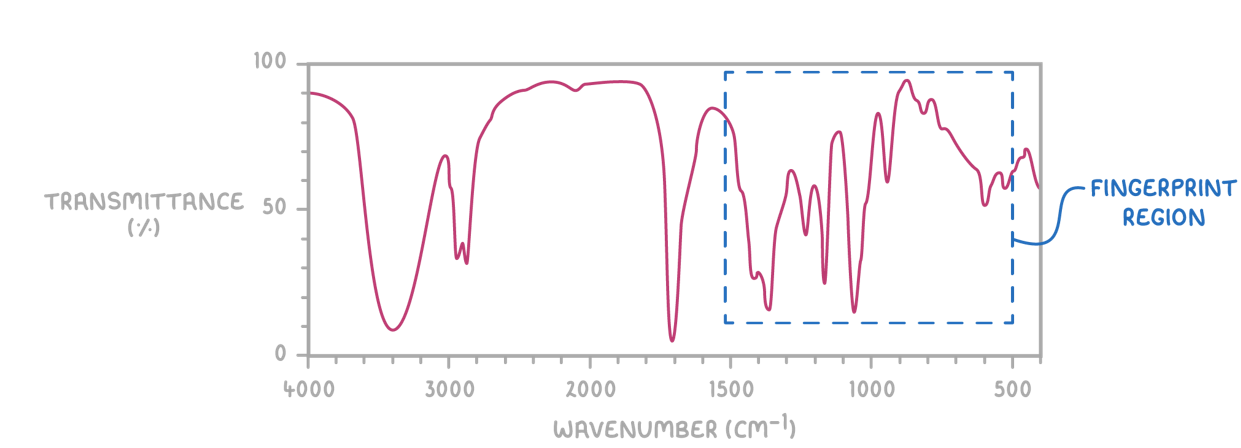
How is the fingerprint region used to identify compounds?
The fingerprint region’s pattern is matched to a database on a computer to identify the compound accurately
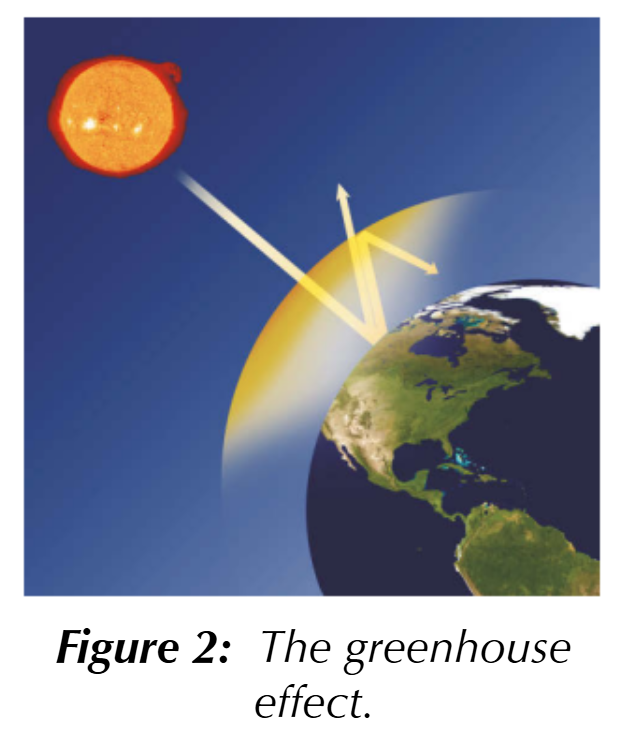
What is the relationship between infrared absorption & global warming?
Molecules of greenhouse gases (e.g. CO2, methane & water vapour) have bonds that are really good at absorbing infrared energy
If the amounts of these gases in the atmosphere increase, more IR radiation is absorbed → leads to global warming