Immunology (EXAM 1- BIOMED)
 Call Kai
 Learn
Learn Practice Test
 Spaced Repetition
 Match
Match Flashcards
 Knowt Play
1/63

There's no tags or description
Looks like no tags are added yet.
Name | Mastery | Learn | Test | Matching | Spaced | Call with Kai | Chat |
|---|
No analytics yet
Send a link to your students to track their progress
64 Terms
Describe innate immunity
First line of defense
Killing invaders and activating adaptive immunity
Rapidly mobilized
NONSPECIFC
Lacks immunological memory
Describe adaptive immunity
Second line of defense
SPECIFIC for individual agents
prevents reinfection by creating antibodies
Immunologic memory
Innate immunity arise from ___________ in the bone marrow
Myeloid progenitors
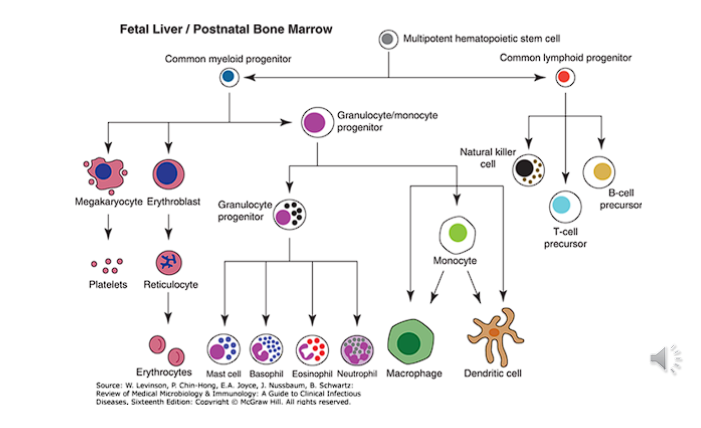
Adaptive immunity arise form _________ in the bone marrow
lymphoid progenitors
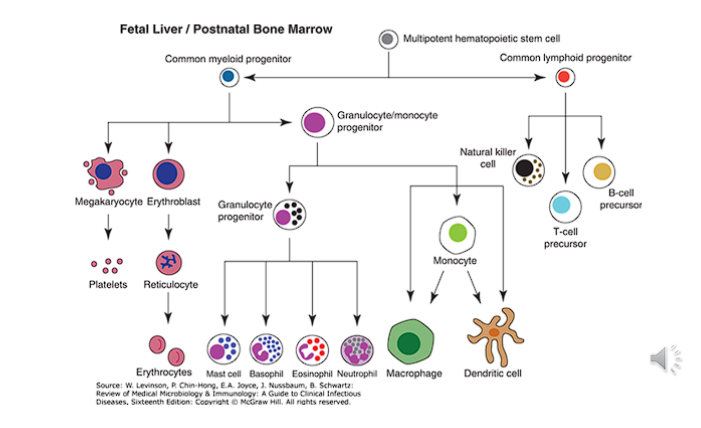
What are the cells involved in the innate immune system?
Monocytes (macrophages and dendritic cells)
Macrophages
Polymorphonuclear cells (Granulocytes)
NK cells
Platelets
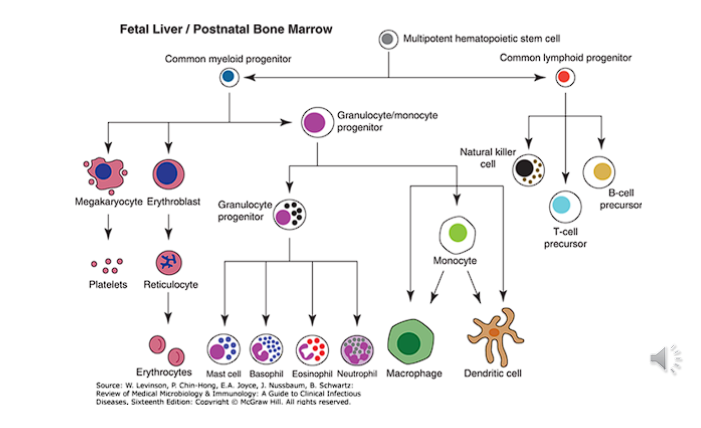
Describe monocytes in the innate immune system
Arise from precursor cells within the bone marrow
Migrate into peripheral circulation and then into tissue
REACT TO INFLAMMATION
differentiate into macrophages or dendritic cells on demand
Describe Macrophages in the innate immune system
Derived from Monocytes
Professional APCs (antigen presenting cells)
Three main functions:
Phagocytosis
Antigen presentation
Cytokine production
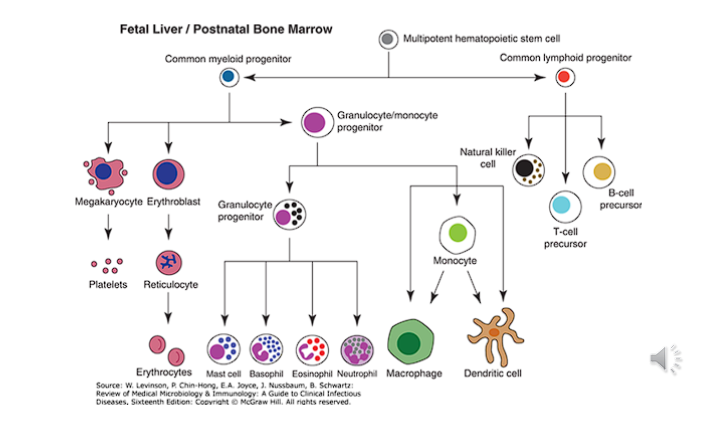
Describe granulocytes (Polymorphonuclear cells)
Type of WBC (leukocyte) w/ complexly lobed nucleus and granule-containing cytoplasm
Neutrophils
Eosinophils
Basophils
Mast cells
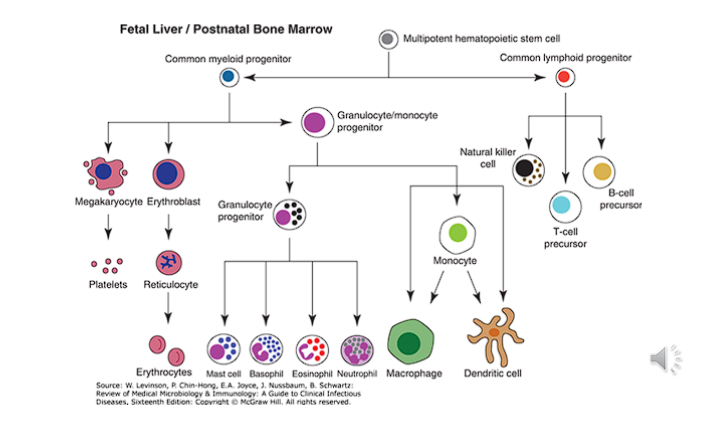
Describe neutrophils in the innate immune system
leukocyte that purses bacterial cells
First WBC to arrive at site of infection
phagocytosis and signaling inflammatory response
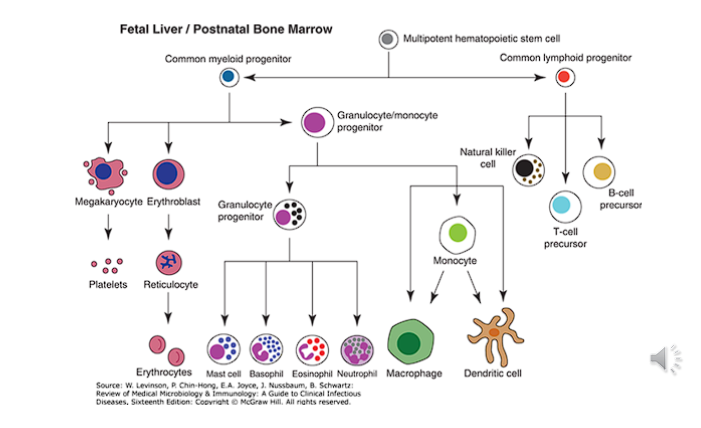
Describe eosinophils in the innate immune system
Triggered by allergies and helminthic (worm) infections
Release chemokines, cytokines, and lipid mediators
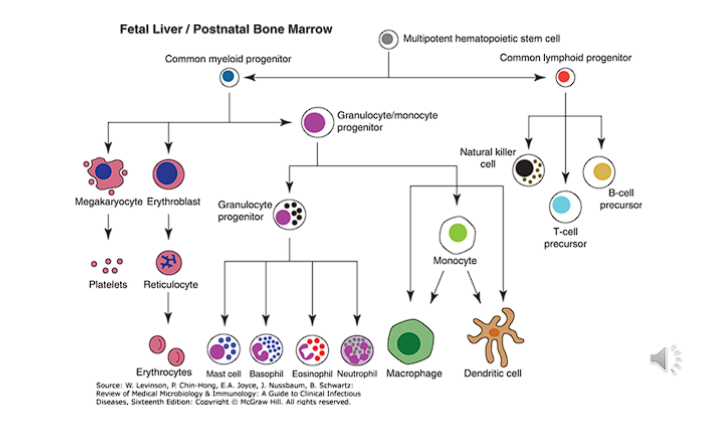
Describe Basophils and mast cells in the innate immune system
contain immunoglobulin E (IgE) ( think of allergy)
Secrete heparin and histamine in response to various antigens and allergens
Basophils supplement the function of mast cells
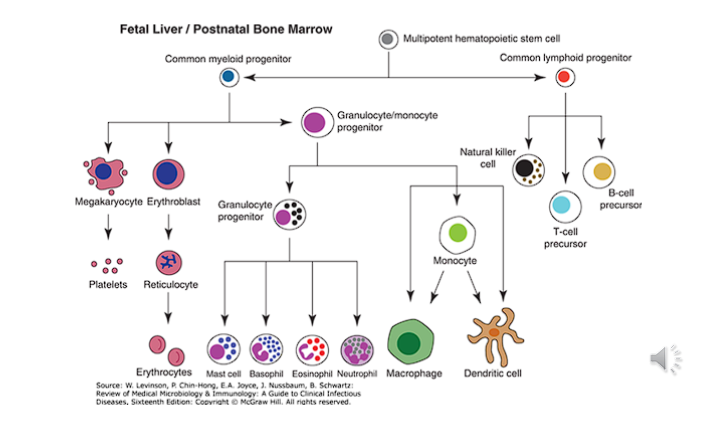
______ circulate in the bloodstream, whereas ____ cells are fixed in tissue under skin and mucosa of GI and respiratory tract
Basophils
Mast cells
Describe NK cells in the innate immune system
respond to virally infected and malignant cells
kill virus-infected cells and tumor cells → secrete cytotoxins
perforins and granzymes
produce gamma interferon (INF-y) → activate macrophages to kill bacteria
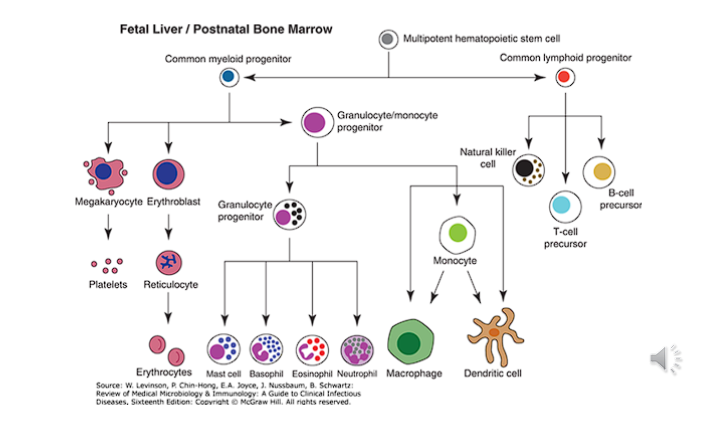
Explain the role Dendritic cells in linking innate and adaptive immune systems
MAIN inducers of adaptive immunity
Located in skin/mucosa
Ingest foreign material and migrate → Process it → Present antigen with either I MHC or II MHC.
produce cytokines to activate the adaptive response (T cells)
Explain the role of macrophages in linking innate and adaptive immune systems
Collect antigens and migrate from barrier tissue
Through draining lymphatic vessels into lymph nodes
Priming naive T cells
Present endosomal antigen
What are the different types of cytokines that help link the innate and adaptive immune system
IFN-Alpha
IL-6
IFN-Beta
Granulocyte colony stimulating factor (G-CSG or CSF1) and Granulocyte-macrophage colony-stimulating factor (GM-CSG or CSF 2)
Interferons
Describe IFN-alpha
Produced by macrophages
Increases synthesis of adhesion molecules
Enhances killing power of phagocytosis
Endogenous pyrogen
Cachectin
Describe IFN-Beta
Proinflammatory cytokine (inactive)
Inflammasomes activate
Primary function increase stickiness of blood vessel
Increases production of chemokines
Describe IL-6
Made by macrophages, mast cells, muscle, fat
Signals liver to produce acute phase proteins
Cachexia and fever
Trigger new neutrophils to be released from bone marrow
Describe Granulocyte colony stimulating factors
stimulate leukocyte migration out of Bone marrow
Boost leukocyte numbers
Prevent infection
Describe Interferons
innate
virus detection and replication
Type II (gamma interferon) activates macrophages
What are chemokines?
Attract leukocytes. produced by macrophages and endothelial cells to promote inflammation, then promote extravasation. Lymphatic tissue produces chemokines to guide dendritic cells.
Class I major histocompatibility complex (I MHC)
All nucleated cells
Intracellular or endogenous antigens
Complexed with antigen peptides to signal cytotoxic T-cells
presents antigens from within the cell
Class II major histocompatibility complex (II MHC)
ONLY found in specialized APCs
Macrophages
Dendritic cells
Endogenous or extracellular antigens
Complexed with antigen peptides to signal helper T-cells
presents antigens from outside of cell
Describe the function of the complement system
Lysis of cells such as bacterial , allografts, and tumor cells
Generation of mediators
participation in inflammation and attract neutrophils
Opsonization: enhancement of phagocytes
Once recognition occurs, innate immunity is activated to increase production of proinflammatory signals that…
Kill invaders and recruit other immune cells to the area
Block infection through local inflammation
Aid in repairing damaged barrier
Describe the activation of the complement system
Initiated by antigen-antibody complexes or nonimmunologic molecules, such as endotoxins
Occurs via 3 pathways:
Classical pathway
Lectin pathway
Alternative pathway
ALL 3 PATHWAYS LEAD TO PRODUCTION OF C3b= creates membrane attack complex (MAC) to lyse cells
What is C3b?
makes c5 convertase, opsonizes bacteria
The alternative pathway of the complement system is activated by……
foreign cell surface substances (endotoxins, fungal cell walls, viral envelopes). Antibody independent and protective before an antibody is formed
The Lectin pathway of the complement system is activated when….
Mannan binding lectin binds to microbes, activates proteases that cleave C2 and C4, important prior to antibody formation
The classical pathway of the complement system is activated by …..
IgM or IgG, forms membrane attack complex (MAC) through antigen-antibody complex
Describe platelets in the innate immune system
originate from common myeloid progenitor→ megakaryocytes
Have Toll-like receptors that start immune response
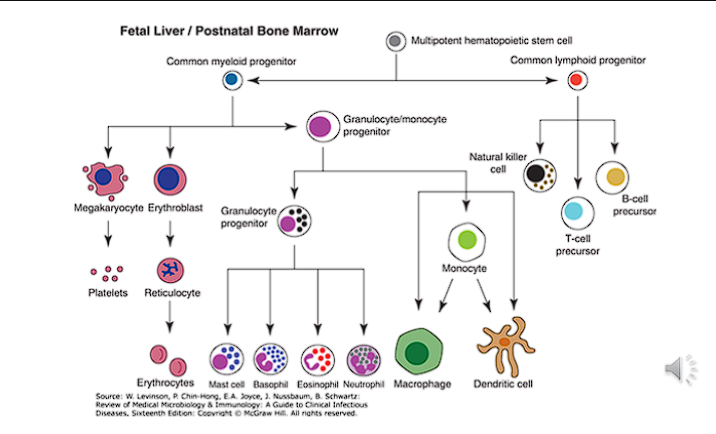
Describe the cells involved in the adaptive immunity system and what are the two components of acquired immunity?
B-cells
T-cells
Plasma cells
components: Humoral immunity (B-cells) and Cellular immunity (T-cells)
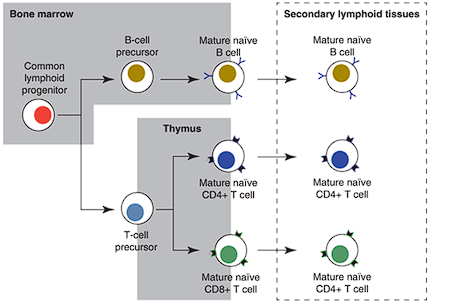
Describe T cell Lymphocytes in the adaptive immune system
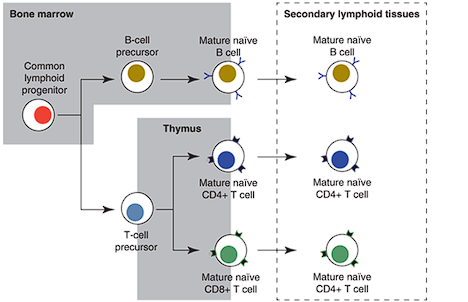
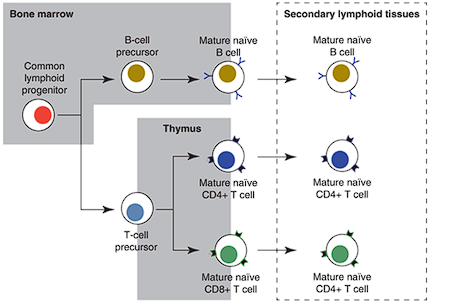
Differentiate into CD4 (helper, MHCII) and CD8 (cytotoxic, MHCI), mature in thymus
TCRs (T cell receptors) in thymus → mature naive T cell upon exiting
derive from Common lymphoid progenitors
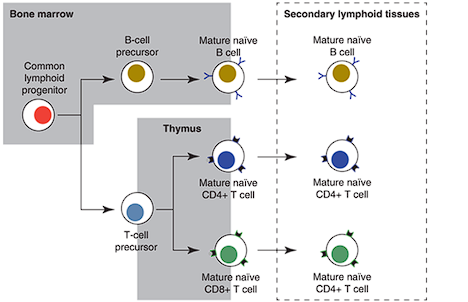
Primary Lymphoid organ
thymus
Secondary lymphoid organ
spleen, MALT, tonsils
Describe the activation of T cell lymphocytes
Primary Lymphoid organs
T cells mature
Develop TCRs
Naive- have not yet encouraged foreign antigen
Secondary Lymphoid organs
T cells travel via blood and lymphatics
Concentrate and filter antigenic material
Sample material and remove it if necessary
Priming of naive T cells
Describe CD4 positive T cells in adaptive immune system
helper T cells
recognize antigens to make cytokines
Utilizes II MHC
Describe CD8 positive T cells in the adaptive immune system
Cytotoxic T-cells
detect and kill infected cells
Utilizes I MHC
Describe B-cell Lymphocytes in the adaptive immune system
Differentiate into plasma cells that produce antibodies (Igs/ immunoglobulins)
PRVENT Reinfection
Differentiate into long-lasting memory cells that respond robustly and rapidly to reinfection
Stages of maturation:
T-cell independent response
T-cell dependent phase
Describe the activation of B cell lymphocytes
Primary response (1st antigen encountered)
Secondary response (Reinfection)
Describe the Primary response
First time antigen is encountered, T cell dependent activation, B-cells→ plasma cells→ IgM production
Describe the Secondary response
Reinfection. memory B cells. IgM and IgG are produced, IgG lasts longer. Rapid response to reinfection (3-5 days)
Describe the T-cell independent response in the adaptive immune system
Allows B-cells to produce antibodies without requiring help from T-cells
2 signals needed for activation
No memory cell production
Describe the T-cell dependent response in the adaptive immune system
Strongest and most specific response
CD4-positive T cells help elicit response
Memory cell production
3 signals
Describe plasma cells in the adaptive immune system
Differentiated B cells that produce and secrete large amounts of immunoglobulin antibodies
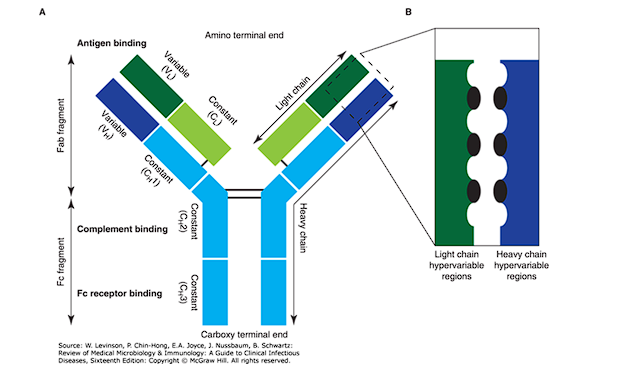
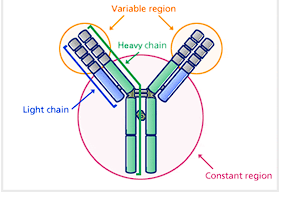
Describe the basic structure of immunoglobulins
Y shaped Glycoproteins consisting of 4 polypeptide chains
2 Identical heavy (H) chains
2 identical light (L) chain
List the 5 classes of immunoglobulins
Man Don’t Get Eaten Alive
IgM
IgD
IgG
IgE
IgA
Describe the function of IgG in the adaptive immune system
Predominant antibody in the secondary response, the only antibody to cross the placenta, most abundant in newborns, and enhances phagocytosis (opsonizes)
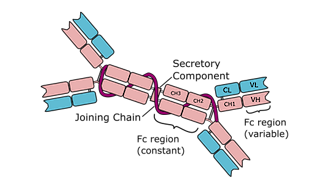
Describe the function of IgA in the adaptive immune system
Main antibody in secretions (colostrum, saliva, tears, respiratory/intestinal tracts, genital tract) that prevents microorganisms from attaching to mucous membranes.
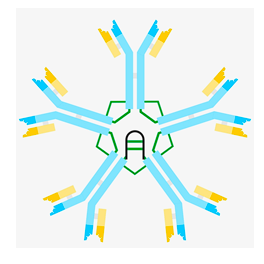
Describe the function of IgM in the adaptive immune system
Main antibody in the primary response, acts as an antigen-binding receptor on B cells, and is highly efficient in complement activation and agglutination. Important in defense against bacteria and viruses.
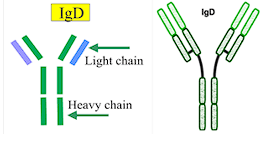
Describe the function of IgD in the adaptive immune system
Present on the surface of B cells and small amounts of serum with no known specific function, though it may be an antigen receptor
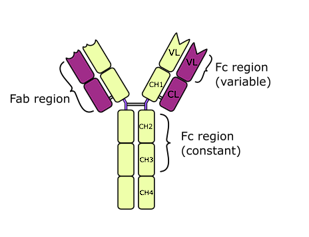
Describe the function of IgE in the adaptive immune system
Mediates hypersensitivity (anaphylaxis) by binding to mast cells and basophils→ becomes receptor for allergens. Host defenses against parasites (helminths)
What are the four stages of antigen presentation?
Adhesion
Antigen Specific recognition
Co-stimulation
Cytokine signaling
Describe adhesion in reference to the stages of antigen presentation
This is part of the extravasation process where inflammatory cells adhere to endothelial surfaces in order to migrate into tissues.
Describe antigen specific recognition in reference to the stages of antigen presentation
Phagocytes ingest foreign material, process it, and present cleaved peptide antigens on Major Histocompatibility Complexes (Class I or II) so that T-cell receptors can uniquely recognize them.
Describe co-stimulation in reference to the stages of antigen presentation
This acts as a required secondary signal during antigen presentation to T-cells.
Describe cytokine signaling in reference to the stages of antigen presentation
serve as cell-cell communication to turn inflammation up or down and direct specific immune responses.
What are the specific mechanisms by which the immune system provides defense against intracellular pathogens such as viruses?
Natural Killer (NK) cells and CD8 Cytotoxic T cells target virally infected cells by inserting perforins to initiate apoptosis, or cell death. Interferons (Alpha and Beta) also aid in virus detection.
What are the specific mechanisms by which the immune system provides defense against intracellular pathogens such as bacteria?
Neutrophils and macrophages directly phagocytize bacterial cells. Additionally, the humoral immune system (antibodies) and the complement system are the major defenses against bacteria.
What are the specific mechanisms by which the immune system provides defense against intracellular pathogens such as parasites?
Eosinophils and IgE antibodies act specifically as host defenses against helminthic infections, or parasites.
What are the various factors that may affect the immune response?
Cytokines: They have the ability to "turn off" inflammation when it is no longer needed, or turn it up during an active response.
Immunological Memory: Reinfection leads to a secondary response where memory B cells produce a much more rapid and robust reaction with higher antibody affinity than the initial encounter.
Evaluate the features of immune responses specific to individual tissues (Localized reaction):
Inflammation happens directly at the site of infection and is characterized by pain, redness, warmth, and swelling due to vasodilation and vascular leak. Cytokines act over very short distances in local tissue and tissue-resident macrophages respond locally.
Evaluate the features of immune responses specific to individual tissues (systemic reaction):
This occurs when chemical signals reach widespread systems. For instance, the cytokine IL-6 signals the liver to produce acute phase proteins (causing fever and cachexia) and triggers the bone marrow to release new neutrophils globally.