bio 2 - lecture 1
 Call Kai
 Learn
Learn Practice Test
 Spaced Repetition
 Match
Match Flashcards
 Knowt Play
1/33

There's no tags or description
Looks like no tags are added yet.
Name | Mastery | Learn | Test | Matching | Spaced | Call with Kai | Chat |
|---|
No analytics yet
Send a link to your students to track their progress
34 Terms
where are protons located and what are their charges?
nucleus
positive
where are neutrons located and what are their charges?
nucleus
neutral
where are electrons located and what are their charges?
orbitals
negative
what are the symbols and names of the 6 core elements in biomolecules?
Carbon (C)
Hydrogen (H)
Oxygen (O)
Nitrogen (N)
Phosphorus (P)
Sulfur (S)
what does r mean in a chemical structure?
rest of the molecule
how many bonds does carbon make?
4
how many bonds does hydrogen make?
1
how many bonds does oxygen make?
2
how many bonds does nitrogen make?
3
how many bonds does phosphorus make?
5
how many bonds does sulfur make?
2
electronegativity
due to specific atomic structures, each element has a tendency to hold on to it’s valence electrons
what is the most electronegative atom & what is it’s value?
fluorine
4.0
carbon EN value
2.5
hydrogen EN value
2.1
oxygen EN value
3.5
nitrogen EN value
3.1
phosphorus EN value
2.1
sulfur EN value
2.4
ionic bonds + change in EN + charge separation?
no electron sharing (one atom has taken the electron from another atom)
1.9 or greater
yes
non-polar covalent bonds + change in EN + charge separation?
electrons are shared equally between 2 atoms
0-0.4
no
polar covalent bonds + change in EN + charge separation?
electrons are shared unequally between 2 atoms
0.5-1.8
partial
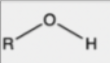
what functional group is this structure and what are it’s properties
hydroxyl
polar

what functional group is this structure and what are it’s properties
methyl
nonpolar
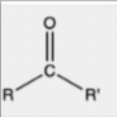
what functional group is this structure and what are it’s properties
carbonyl
polar
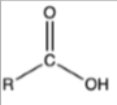
what functional group is this structure and what are it’s properties
carboxyl
charged, ionizes to release H+, acidic
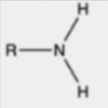
what functional group is this structure and what are it’s properties
amino
charged, accepts H+ to form NH3+, basic
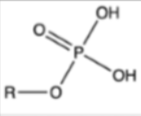
what functional group is this structure and what are it’s properties
phosphate
charged, ionizes to release H+, acidic
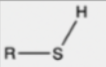
what functional group is this structure and what are it’s properties
sulfanyl
moderately polar
hydrogen bond donor
needs a hydrogen atom bonded to a strong electronegative atom
hydrogen bond acceptor
needs a lone pair of electrons on a strong electronegative atom
which functional groups can have a h-bond interaction with water?
hydroxyl
carbonyl
carboxyl
amino
phosphate
which functional groups cannot have a h-bond interaction with water?
methyl
how do interactions between functional groups occur?
happen within and between molecules that aren’t H2O