MODULE 2: STRATEGIC MANAGEMENT: ACQUISITION AND RETENTION
 Call Kai
 Learn
Learn Practice Test
 Spaced Repetition
 Match
Match Flashcards
 Knowt Play
1/56

There's no tags or description
Looks like no tags are added yet.
Name | Mastery | Learn | Test | Matching | Spaced | Call with Kai | Chat |
|---|
No analytics yet
Send a link to your students to track their progress
57 Terms
TALENT MANAGEMENT
Holistic, integrated, result-oriented, and goal-oriented process of planning, recruiting, selecting, developing, training, and compensating employees
Result-Oriented Action
Interrelated HR Functions
Consistent Job Priorities
Active Coordination
4 parts of Talent Management
(RICA)
Result-Oriented Action
Starts with desired outcomes to determine specific HR actions (recruiting, training, pay) needed to build required competencies.
Interrelated HR Functions
Views activities like recruitment, testing, and training as connected processes that together build employee skills.
Consistent Job Priorities
Uses a single profile of required skills, knowledge, and behaviors across recruitment, selection, training, appraisal, and compensation.
Active Coordination
Integrates talent management functions through regular coordination (or software) to ensure consistent application of skill profiles across all HR stages.
• Characteristics of the firm
• Characteristics of the vacancy itself
• Characteristics of labor markets in which an organization recruits
THREE CONTEXTUAL/ENVIRONMENTAL FEATURES AFFECTING RECRUITMENT EFFORTS
When there is a personnel requisition or when a department requests for a vacancy to be filled up
How will the HR know if there is vacancy within the organization
personnel requisition
“is a formal document that requests the creation of a new position at a company. It explains the organizational need for the new position.”
Talent management
starts with understanding which jobs need to be filled, and the human traits and competencies employees need to perform those jobs effectively (Dessler, 2017).
Job analysis
is the procedure through which you determine the duties of the company’s positions and the characteristics of the people to hire for them.
job descriptions, job specification
Job analysis produces information for writing ___________ (a list of what the job entails) and ____ (or “person”) ________ (what kind of people to hire for the job).
True
Virtually every personnel-related action—interviewing applicants and training and appraising employees, for instance—requires knowing what the job entails and what human traits are needed to do the job well. (True or False)
Position Title
Department
Date of Effectivity
Name of the Incumbent
Level
Salary
Grade or Level
BASIC INFORMATION FOR A JOB ANALYSIS
(PDDNLSG)
Position Title
Describes :
What the employee does
Level of the position within the organization
Department
Describes:
To what Department the job title belongs to
Where the employee is based in the company?
Date of Effectivity of the Job Description
Tell us:
When the Job Description took effect
When the Job Description was written and approved
Line Positions
Staff Positions
Supervisory
Managerial
Executive
LEVEL OF POSITION
(LSSME)
Line positions
refer to workers who are directly involved with creating and delivering a company's products and services.
Manufacturing
Line workers may design and manufacture products.
Service
Line workers may create and deliver services to customers.
Staff positions
• support the line positions
• help managers accomplish their administrative responsibilities
• not usually customer-facing
Supervisory
• oversees the employees and regulates them to perform the work assigned to them
• Reports to the manager
Managerial
• manages the resources of the organization to achieve the ultimate goal
• Reports to the Board of Directors or Executive-level positions
Executive
team of individuals at the highest level of organizational management who have the day-to-day responsibilities of managing a company or corporation.
Salary grade or Level
→ Periodic payment for services rendered, paid on:
Daily, weekly or Monthly basis
Hourly basis
Piece rate
Contract / Project based
Job Summary
One to two sentences about the summary of the job and its purpose or objective.
Job Summary (2)
This will be the last section that you will do because this will be a summary of the data that you got from the analysis.
Duties and responsibilities
→ Written according to importance and frequency and length of time.
→ Detailed account of tasks done on an hourly, daily, weekly, monthly basis.
→ Workflow for each task
Supervision received and exercised
Helps the job analyst create an organizational chart based on the relationships of the job to other positions
Supervision received
(applicable if analyzing line and staff positions)
• What is the position title of the immediate supervisor?
• What tasks are closely monitored by the immediate supervisor?
Supervision exercised
(applicable if analyzing supervisory, managerial and executive positions)
• What positions are under your supervision?
• What departments does the position coordinate with?
• What positions in other departments are under your supervision?
Job result
→ Criteria or Success indicator for the employee to know if JOB IS DONE AND ACCEPTABLE BASED ON COMPANY STANDARDS
→ How job contributed to the products and services of the company
→ Note: This is done PER TASK OF THE JOB BEING ANALYZED
Job Specifications
• Educational Requirements
• Trainings required for the job
• Skills and Level of Skill
• Required License
• KSAO
• Specific knowledge needed for the job
True
Job analysts make a COMMON MISTAKE OF REFLECTING THE QUALIFICATIONS OF THE INCUMBENT and not the ACTUAL SPECIFICATIONS NEEDED FOR THE JOB. (True or False)
Working Conditions
Health and Safety considerations Frequency and degree encountered with conditions such as: Overcrowding, Cramped workspace, Moving objects, Vibration, Noise, Ventilation, Lighting. Heat or cold
Note: consider analyzing health protocols in case of outbreaks or pandemic
Equipment availability
Educational background
Lack of support persons to do the job, etc.
Emotionally draining
Reasons for experiencing difficulty
REQUIRED SIGNATORIES
Prepared by : Job Analyst
Certified Correct: Incumbent Supervisor
Job Analysis
provides a systematic process to gather, document, and analyze information about the content, context, and requirements of jobs.
Core competency mapping
aligns employees' capabilities with strategic business goals by identifying the essential skills, knowledge, and abilities that drive competitive advantage.
Job Analysis and Core competency mapping
together, these tools guide recruitment, training, performance evaluation, and succession planning, ensuring alignment between people strategy and organizational success
Recruitment
Application Form
Initial Interview
Shortlist
Testing & Assessment
Selection
Shortlisting
Application Form
use to verify the CV (of you are telling the truth)
Shortlist
nasala na
Character Investigation
Big help in recruitment, people you put in your CV
a. Credit Check
b. Social Media Check
Realistic Job Interview
ex. Nurse - paano kung hindi dumadaloy yung swero
it is about the job
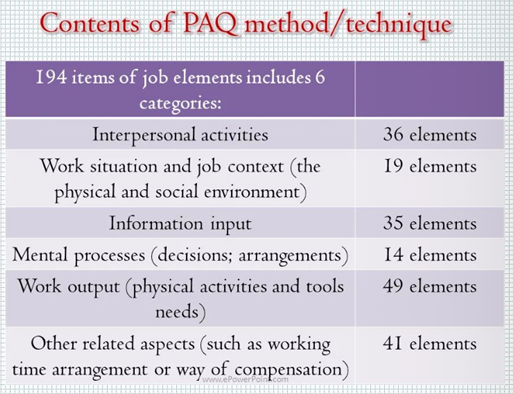
What is the Objective of PAQ Method (Ernest McCornick?
develop a standardized approach and to help the organization job evaluation & compensation
Job Family
cluster of job that interconnected with each other
ex. Medical Professional
Decide how you will use the information
Review background
Select Representative Positions
Analyze the Job
Verify JA
Develop Output Document (Job Description / Job Specification)
Steps in conducting JA
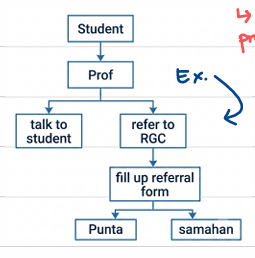
Process Flow
All organization should have this to know how the job run
ex. in the picture
a process chart provides a detailed picture of the workflow
Blue book - Manual of operations, all steps are there
Business process reengineering
Redesigning business processes, usually by combining steps, so that small multifunction process teams using information technology do the jobs formerly done by a sequence of departments.
1. Identify a business process to be redesigned (such as processing an insurance claim)
2. Measure the performance of the existing processes
3. Identify opportunities to improve these processes
4. Redesign and implement a new way of doing the work
5. Assign ownership of sets of formerly separate tasks to an individual or a team who use new computerized systems to support the new arrangement
As at Atlantic American, reengineering usually requires redesigning individual jobs. For example, workers doing date stamping must now know how to use the new date-stamping machine.
Job Redesigning
mas higher na when it comes to position
Job Importance
para hindi sila stagnent and to motivate them and to broaden their knowledge
and to have Business Continuity Plan
includes HR, whenever there is vacancies you have someone that already knows the job
3 ways to redesign specialized job to make it challenging
Job Enrichment
Job Enlargement
Job Rotation
Job Enrichment
means redesigning jobs in a way that increase the opportunities for the worker to experience feeling of responsibility, achievement, growth, and recognition and therefore more motivation.
Job Enlargement
means assigning workers additional same-level activity
the higher your position the more your responsibility
ex. bank teller (10,000 pesos [override] ast to supervisor does not cover responsibility
Job Rotation
means systematically moving worker from one job to another
use also for training in managerial position
ex. jollibee managers