Lecture 1: Basic Principles of Hormonal Regulation
 Call Kai
 Learn
Learn Practice Test
 Spaced Repetition
 Match
Match Flashcards
 Knowt Play
1/55

There's no tags or description
Looks like no tags are added yet.
Name | Mastery | Learn | Test | Matching | Spaced | Call with Kai | Chat |
|---|
No analytics yet
Send a link to your students to track their progress
56 Terms
What is endocrinology?
a discipline concerned with the internal sections of the body
True or False: The term “hormone” evolved from the Greek word hormao—meaning “I arouse to activity” or “I excite”.
true
What are hormones?
chemical signals synthesized and released by signaling cells and produce a specific responses in target cells containing receptors for the hormones
What are some typical hormonal responses?
cellular metabolism
function
development
True or False: Hormones are secreted by “ductless” endocrine glands.
true
What is an endocrine gland?
a gland composed of a prominent mass of secretory cells, as well as connective tissue, blood vessels, and nerves; secrete products directly into the blood stream
What are the 9 classical endocrine glands?
hypothalamus
pineal
pituitary
thyroid
parathyroid
pancreas
adrenal
ovary
testis
True or False: Some hormones are secreted by individual cells or groups of cells found within certain tissues, such as the thymus, heart, gut, liver, kidney, placenta, uterus, and skin.
true
What is homeostasis?
the “desired status quo”; maintain the stability of the internal milieu
What is hormone secretion triggered by?
stress
irregular nutrient status (glucose, fat, amino acids)
minerals (Na, K, Ca)
water fluxes
physical alterations in the environment
True or False: The secreted hormone acts on the target tissue, the change is counteracted, and homeostasis is restored.
true
Malfunctions of endocrine tissues lead to various pathological conditions and diseases such as?
diabetes (pancreas)
hypertension (adrenal cortex)
growth disorders, defects in energy metabolism (pituitary, thyroid)
obesity, abnormal lipid metabolism (adipose tissue)
male and female infertility (gonads)
sexual and behavioral dysfunction (brain)
endocrine-related cancers (breast, prostate)
What are the 3 modes of hormone signaling?
endocrine
paracrine
autocrine
What is endocrine signaling?
hormones are synthesized and released by endocrine cells into the bloodstream; they travel through the blood to act on distant target cells
Give an example of endocrine signaling.
the female steroid hormones, estrogen, and progesterone, are made by the ovary and act on the breast, bone, and uterus
What is paracrine signaling?
signaling molecules released by a cell only affect nearby target cells
Give an example of paracrine signaling.
conduction of electric impulses from one nerve cell to another or from nerve cells to muscle cells is mediated by neurotransmitters released at cell-cell junctions
True or False: Many signaling molecules that regulate development in multicellular organisms also act on nearby target cells.
true
What is autocrine signaling?
cells respond to signaling molecules that they release themselves
Give an example of autocrine signaling.
growth factors secreted by certain cells often stimulate their own growth and proliferation
Which types of hormonal signaling combine to regulate tissue function?
paracrine and endocrine
Give an example of paracrine and endocrine signals combining to regulate tissue function.
GnRH secreted by hypothalamic neurons is released via portal veins to act on pituitary gonadotropins → trigger release of gonadotropins LH and FSH → act on ovaries to control ovulation

Which hormone is this?
progesteron

Which hormone is this?
estradiol

Which hormone is this?
testosterone
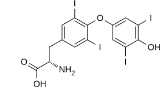
Which hormone is this?
thryoxine

Which hormone is this?
prostaglandin

Which hormone is this?
epinephrine
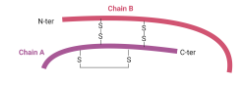
Which hormone is this?
insulin
What are the steps for hormonal signaling?
synthesis of hormones in signaling cells
release of hormones by signaling cells
transport of hormones to target cells
recognition of the hormone by specific receptor proteins on target cells
signal transduction within target cells triggered by the hormone-receptor complex → change in cellular metabolism, function, and development
removal of the hormonal signal → cellular response terminated
True or False: Cellular synthesis, release, and degradation of signals are precisely regulated to produce either rapid, short-term effects or slower-acting but longer-lasting effects.
true
Which hormones produce rapid, short-term responses terminated by their own degradation?
peptide hormones and catecholamines
Where are short-lasting signals stored?
secretory vesicles
What does stimulation of short-lasting signals cause?
immediate release via exocytosis of stored signals into the surrounding medium or blood
True or False: Released short-lasting signals persist in the blood for only seconds or minutes before being degraded by blood and tissue factors.
true
Which types of hormones produce slower-acting but longer-lasting responses?
steroid hormones
thyroid hormones
retinoic acids
True or False: Signaling cells that produce steroid and thyroid hormones store little of the active hormone.
true
What happens when long-lasting signals are stimulated?
the cells convert precursors into active forms of hormones and the release can take from hours to days
True or False: Long-lasting hormones are transported by carrier proteins and are not rapidly degraded; the hormone action persists for hours to days.
true
What are the principal features of hormonal signaling?
specificity
amplification of signal
desensitization/adaptation
integration
feedback and homeostasis
True or False: Hormones bind specifically and tightly to their protein receptors on or in target cells; other signals don’t fit.
true
What is hormone binding mediated by?
noncovalent interactions such as hydrogen bonds and hydrophobic and electrostatic interactions between complementary surfaces of the ligand and receptor
Which equation describes receptor-ligand binding?
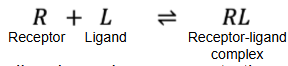
What does hormone binding depend on?
concentrations of interacting receptors and ligands
True or False: Hormone-receptor interactions are characterized by Kd values 10-9 - 10-10 M, corresponding to very tight ligand-receptor binding.
true
True or False: Hormonal signals often activate enzyme cascades such as kinases. When enzymes activate other enzymes, the number of affected molecules increases geometrically leading to dramatic amplification of the original signal.
true
What is densitization/adapation?
receptor activation triggers a feedback circuit that shuts off the receptor or removes it from the cell surface
What is integration?
when two signals have opposing effects on a metabolic characteristic, the regulatory outcome results from integrated output of both receptors
True or False: In each endocrine tissue along a hormonal pathway, a signal from the level above is received, amplified, and transduced—releasing the next hormone in the cascade. The cascade is sensitive to regulation at several levels by feedback inhibition from the ultimate hormone.
true
What do hydrophilic molecules signal via?
cell-surface receptors
What do hydrophobic molecules signal via?
intracellular receptors
True or False: Lipid-soluble hormones diffuse across the plasma membrane to interact with receptors in the cytosol or nucleus. Signal-receptor complexes mediate transcription of specific target genes.
true
What are hydrophobic hormones bound to in the blood?
carriers
Signaling molecules that cannot diffuse across the plasma membrane transmit their signals by binding to what?
specific cell-surface receptors
What type of hormones utilize cell-surface receptors?
peptide hormones (insulin, glucagon, growth factors)
small charged molecules (epinephrine, histamine)
eicosanoid hormones (prostaglandins, leukotrienes)
What is the signaling pathway for cell-surface receptors?
hormones bind to receptors embedded into the plasma membrane
activate intracellular signaling pathway mediated by a series of signaling proteins
final proteins in the cascade interacts with a target protein
target protein changed
altered cell function