D3.1 Reproduction
 Call Kai
 Learn
Learn Practice Test
 Spaced Repetition
 Match
Match Flashcards
 Knowt Play
1/16

There's no tags or description
Looks like no tags are added yet.
Name | Mastery | Learn | Test | Matching | Spaced | Call with Kai | Chat |
|---|
No analytics yet
Send a link to your students to track their progress
17 Terms
describe angiosperms
flowering plants, category in the plant kingdom
have flowers as reproductive structures
either unisexual or hermaphroditic
describe flowers
reproductive organs used by sperms
to produce and transfer gametes between members of a species
draw and annotate structuers of a hermaphroditic flower
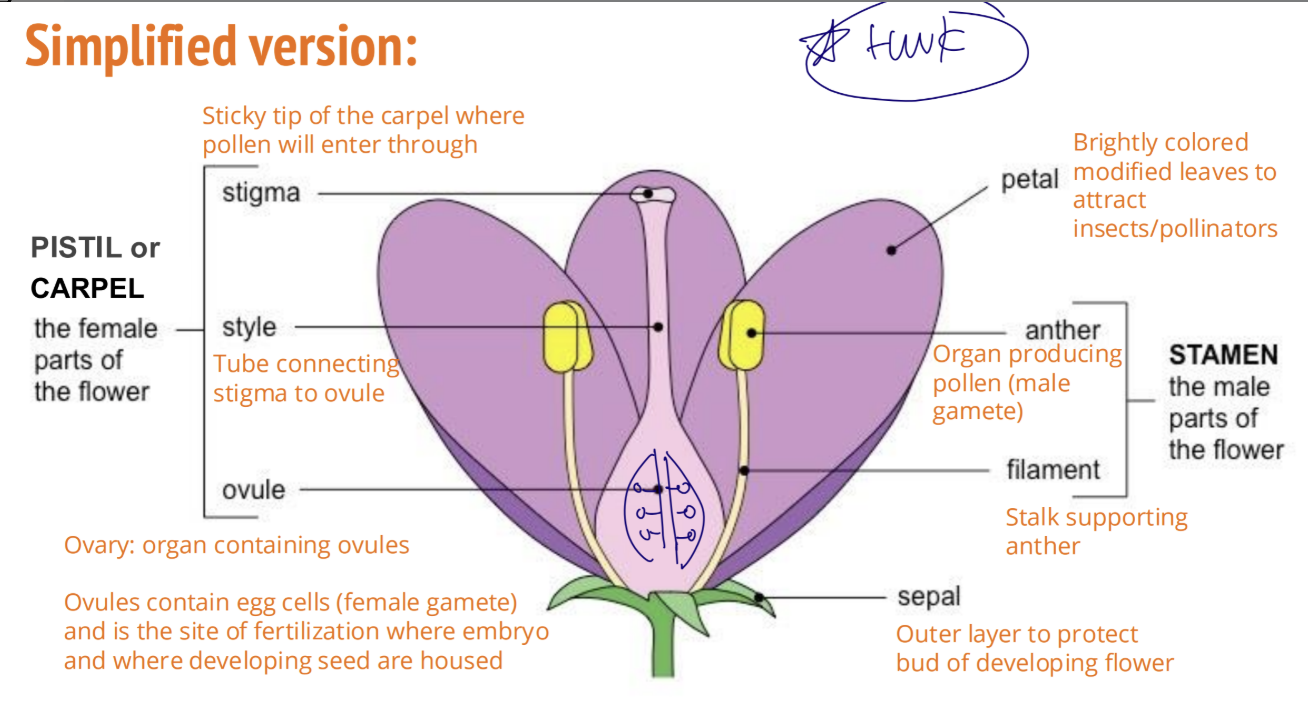
Outline pollination to gamete production in the flower
pollen grain carried by wind or pollinators attack to the stigma
pollen grain elngates a pollen tube down the style
the male gamete travel down the pollen tube into hte ovary and ovule
male gamete fertilise with female gamete in the ovary
pollination is a form of ___ ___
pollination is a form of sexual reproduction
gametes are produced through ___
gametes are produced through meiosis
state 3 basic steps of fertilisation
fetilisation
develops into embryo
within a seed
describe pollen transfer thorugh animals
attract pollinators as flower are brightly clored, rich with nectar or emit a sweet aroma
describe pollen trnasfer through wind
common for flowers of grasses or cereal crops
common for small, unscented and nectar-lless flowers
usually of dull apperance
why is self fertilisation not favoured?
reduce genetic variability of hte population
bree
state 3 mathods to prevent self fertilisation
stamens and stigma mature at diff times
anthers and stigma are anatomically distanced
only accept pollen from another individual in the species
describe self incompatibility
inability of hermaphroditic flowers to produce zygotes after self pollination
may occur during pollen germination, growth of the pollen tube, fertilisation
aloe plants have incompatible genes → doesn’t recognise its own pollen → doesn’t allow fertilisation to occur
why must dispersion of seeds occur
the seed would otherwise compete with the parent plant for resources
describe 3 methods of seed dispersion
wind
seeds are light, with adaptation such as wings or hair
e.g. dandelion, maple
water
seeds have buoyancy
specialised structures or husks to help seeds float
e.g. coconuts can survive 120 days afloat at sea
animals
animals ingest fruits ahve seeds, then discard it
or they consume the food and discard the seed in their faeces
seeds can be stored and hidden over winter
animal adaptations allow seeds to hitch a ride
seeds may have burrs or velcro to stick to animal bodies
Outline 3 WOW conditions required for germination
water
water absorbed by the micropyle
cotyldon secretes plant growth substances (hormones and enzymes)
water rehydrates seed during germination for metabolic processes to occur
oxygen
for aerobic resp → for ATP
ATP used for most metabolic events in germination
warmth
25-30 C
enzymes optimal range, enzymes need for metabolism
warmth required for SPRINGTIME germination as it warms up the seed after cold in the winter
Describe germination
resumption of growth by an embryonic plant in seed or fruit
only in ideal WOW conditions or else it is dormant
state 5 steps of germination
uptake of water
activation of hormones and enzymes
breakdown of starch to maltose in cotyledons
transport of maltose to embryo
maltose used to build structures and to provide E for aerobic resp
complete when the radicle (primary root) emerges