Effective Communication Q1 L1
 Call Kai
 Learn
Learn Practice Test
 Spaced Repetition
 Match
Match Flashcards
 Knowt Play
1/38

There's no tags or description
Looks like no tags are added yet.
Name | Mastery | Learn | Test | Matching | Spaced | Call with Kai | Chat |
|---|
No analytics yet
Send a link to your students to track their progress
39 Terms
Communication
Transmission of ideas and emotions between people using verbal (spoken/written) and non-verbal cues
Nature of Communication: Communication is a process
Continuous process; it follows steps
Nature of Communication: Communication happens between 2 or more people
Social Process; people interact with one another
Nature of Communication: Communication may be done through words/actions or both at the same time
Involves the use of symbol that represent meaning
Words have meaning, and so do our non-verbal symbols
Functions of Communication: Regulatory Function
Control behavior
Functions of Communication: Personal Function
Express feelings & emotions
Functions of Communication Informative Function
Shares ideas/opinions
Functions of Communication: Transactional Function
Exchange communication/messages between people
Communication Process: Source
inner urge, idea, or need that motivates a perso
Communication Process: Encoding
Process of choosing the right words, symbols, tone, or gestures to express and idea
Communication Process: Message
The actual content being sent from the sender to the reciever
Communication Process: Channel
the medium/method used to send the message
can be verbal, written, or visual
Communication Process: Decoding
Process of interpreting/making sense of the message given by the reciever
Communication Process: Feedback
Reciever’s response
tells the sender if message was understood
Elements of Communication: Source
Refers to the speaker
Elements of Communication: Channel
The medium/the means
Elements of Communication: Reciever
Recipient of the message
Elements of Communication: Feedback
Reaction, response/reply
Elements of Communication: Context
Situation/environment
Elements of Communication: Barrier
Any factors that negatively affect the flow of communication
Types of Noise in Communication: Physical Noise
Distractions in the environment
Physical Noise Example
Meeting disrupted by construction noise outside the office
Types of Noise in Communication: Psychological Noise
Mental/emotional interference
Psychological Noise Example
A team member is too anxious/upset to focus on the conversation
Types of Noise in Communication: Physiological Noise
Body-related Issues
Physiological Noise Example
Someone is hungry, tired, or has a headache and struggles to listen
Communication Model
Conceptual diagram
Helps explain how people exchange messages
Linear Model
1-way communication
From sender to reciever
No feedback
Linear Model Example
Student delivering valedictory speech
Interactive Model
2-way communication
With feedback
Sender & reciever take turns
interactive Model Example
Teacher calls a student during a graded recitation
Transactional Model
Simultaneous communication
With ongoing feedback
Includes non-verbal cues
Transactional Model Example
Club officers discussing solutions to school problems
Shannon-Weaver Model
Source → Transaction → Channel → Receiver → Destination, with noise affecting the channel
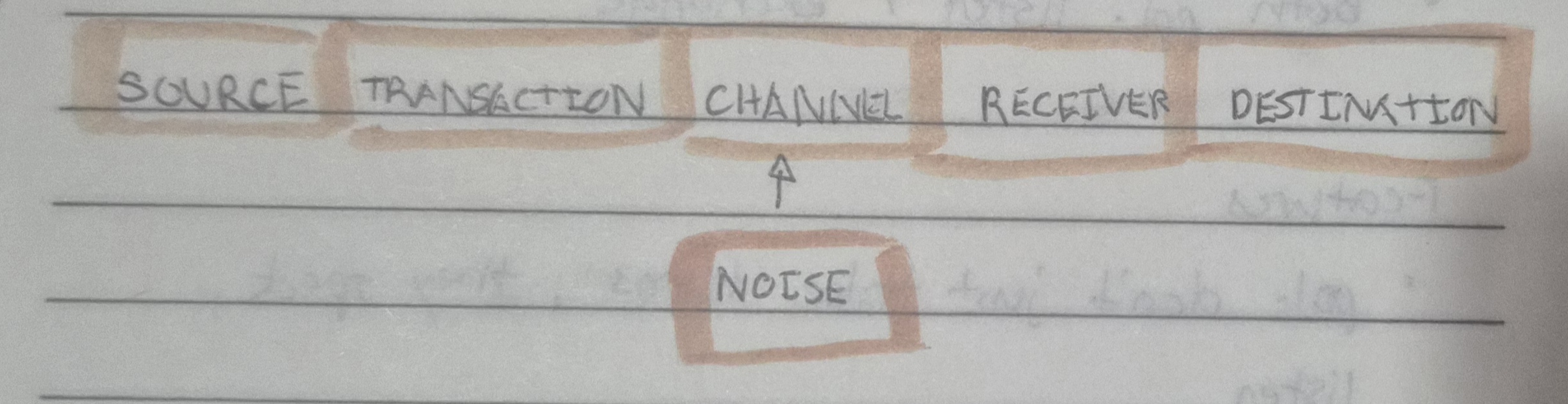
Shannon-Weaver Model
Created by Claude Shannon & Warren Weaver (1949)
Known as mother of all
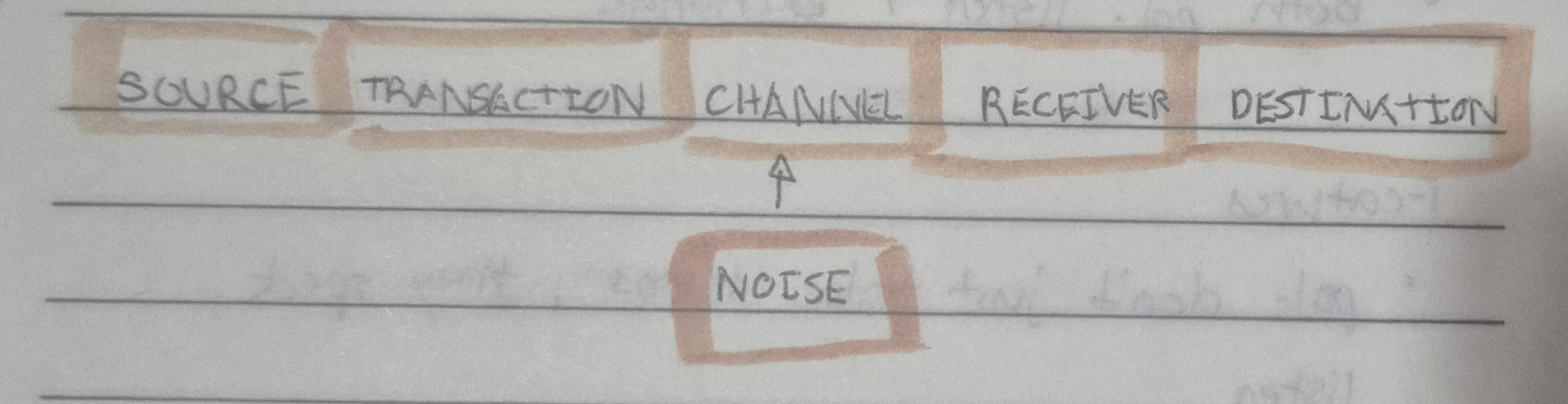
Interactive Model
Examples: Noise (Possible Interference)
A weak phone signal
Background Noise
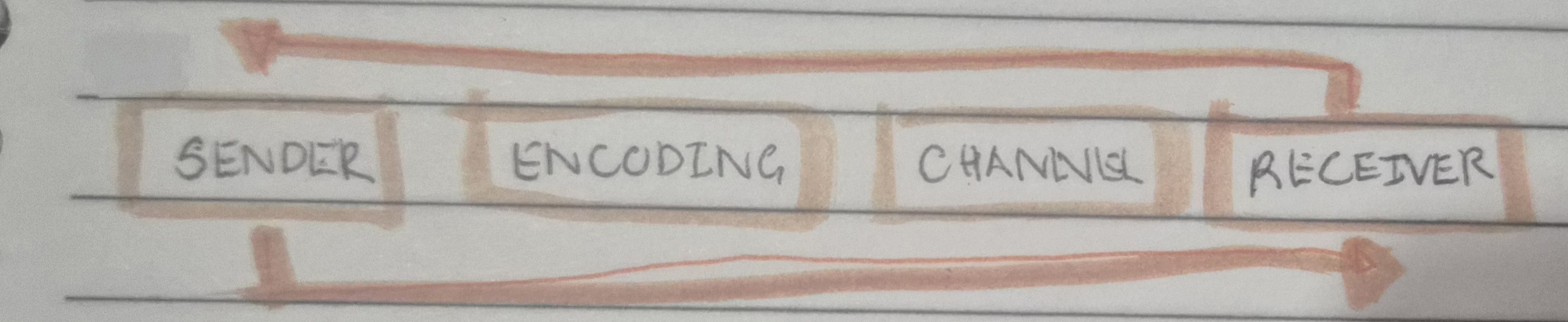
Transactional Model
views communication as simultaneous process
both people listen & exchange
Features: People don’t just take turns, they speak, listen
Transactional Model Example
Teacher explains a lesson while students ask questions, nod, or show confusion through facial expressions
Schramm Model
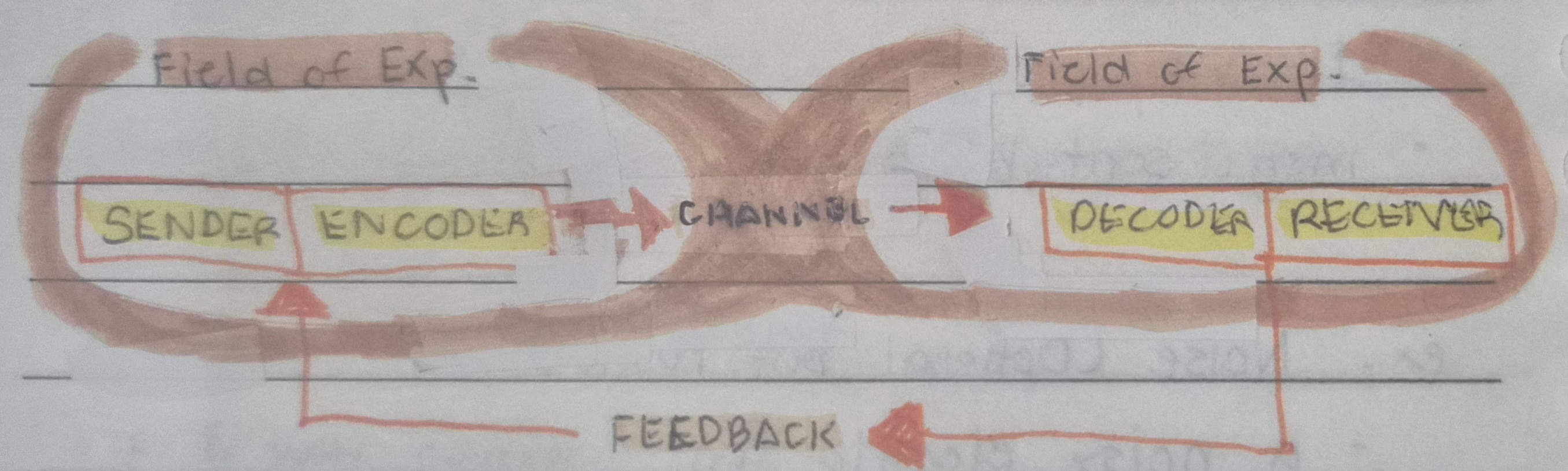
Field of experience of the sender and receiver