Indirect Statements & Indirect Questions
 Studied by 0 people
 Call Kai
 Learn
Learn Practice Test
 Spaced Repetition
 Match
Match Flashcards
 Knowt Play
1/11

There's no tags or description
Looks like no tags are added yet.
Name | Mastery | Learn | Test | Matching | Spaced |
|---|
No study sessions yet.
12 Terms
Indirect Statement
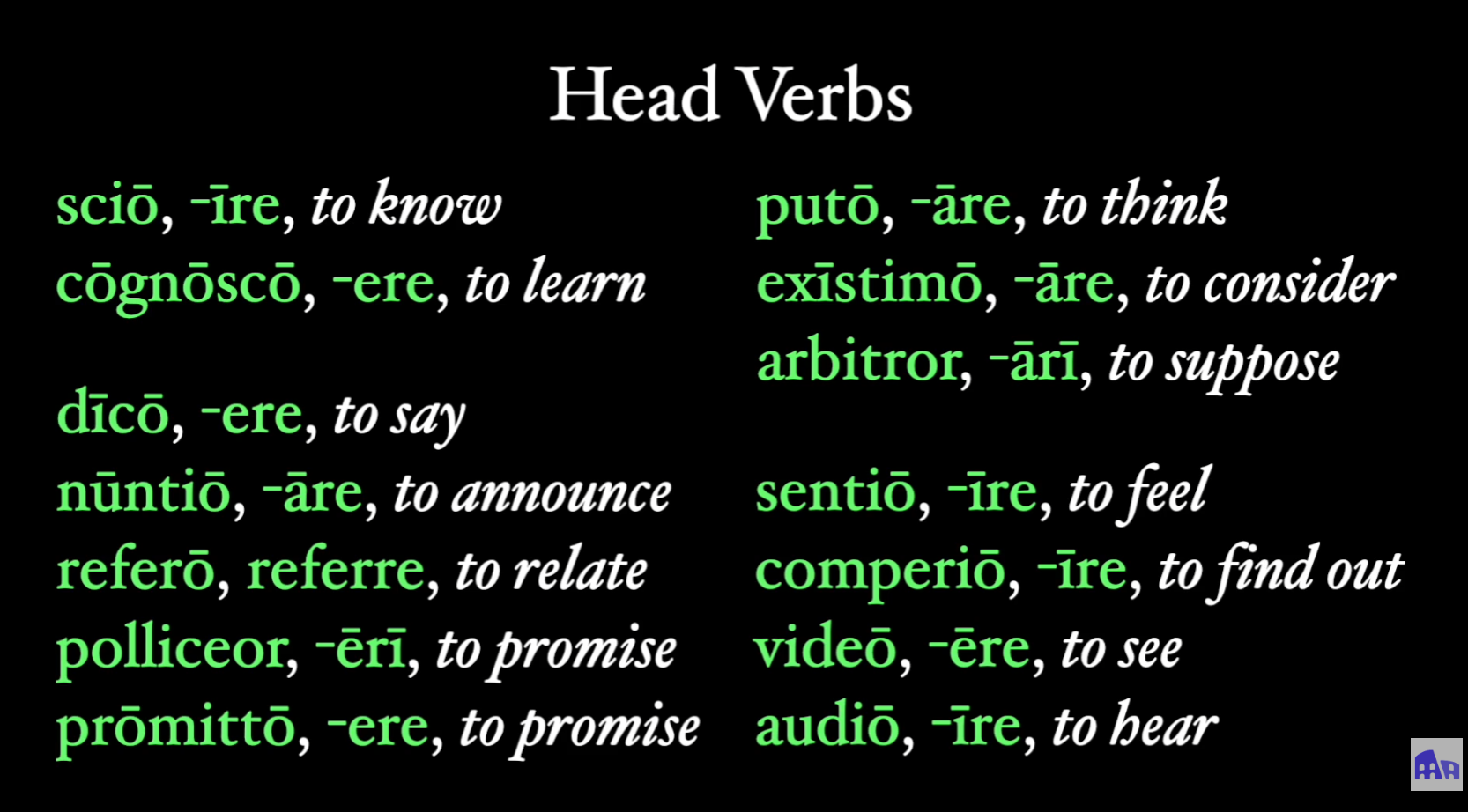
Is introduced by a thinking/perception verb, and is used with a subject accusative and a verb (infinitive) which modifies it
Verb used - expresses knowing, thinking, telling, perceiving
Passive verb + accusative
The noun that is being addressed is in accusative
Passive verb
Esse is used (to be)
Negation Of Indirect Statemtent
Using “nego”
e.g. “negant quidquam esse bonum”
They deny that anything was to be good - They deny that anything was good
Indirect Question
Verb + question word (related to asking) + verb in subjunctive
Tense of subjunctive
The tense changes as per the sequence of tenses (please refer to sequence of tenses)
Example
Scio eum faceret
I know what he is doing.
Example (Imperfect)
Sciebam eum faciebamus
I knew what we were doing
Sequence Of Tenses
Present leads to present; past leads to past.
Indirect Commands
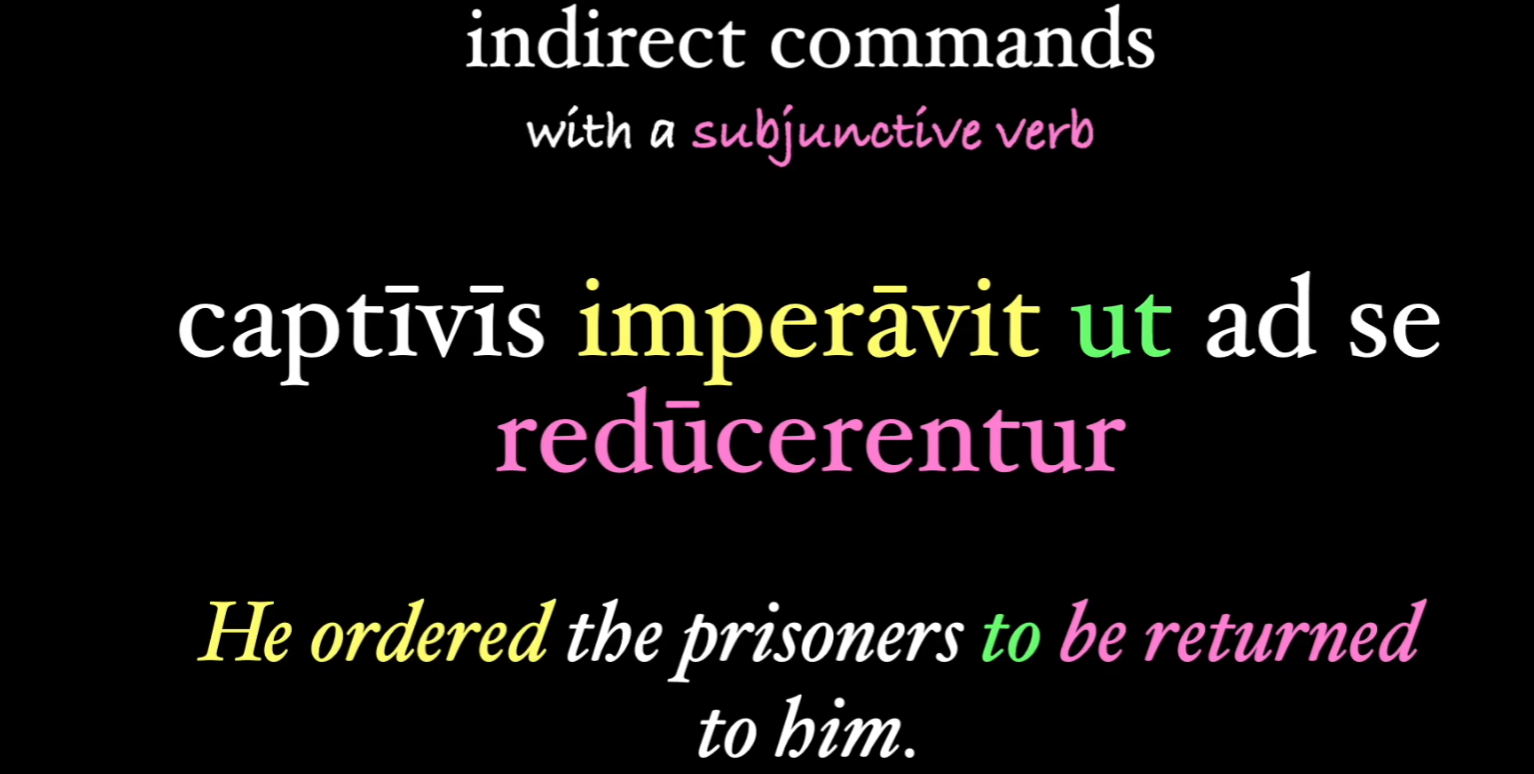
Has verb + ut + subjunctive verb
Purpose Clauses
Have ut/ne, but there is no one being commanded
In indirect commands, there is someone/something being commanded
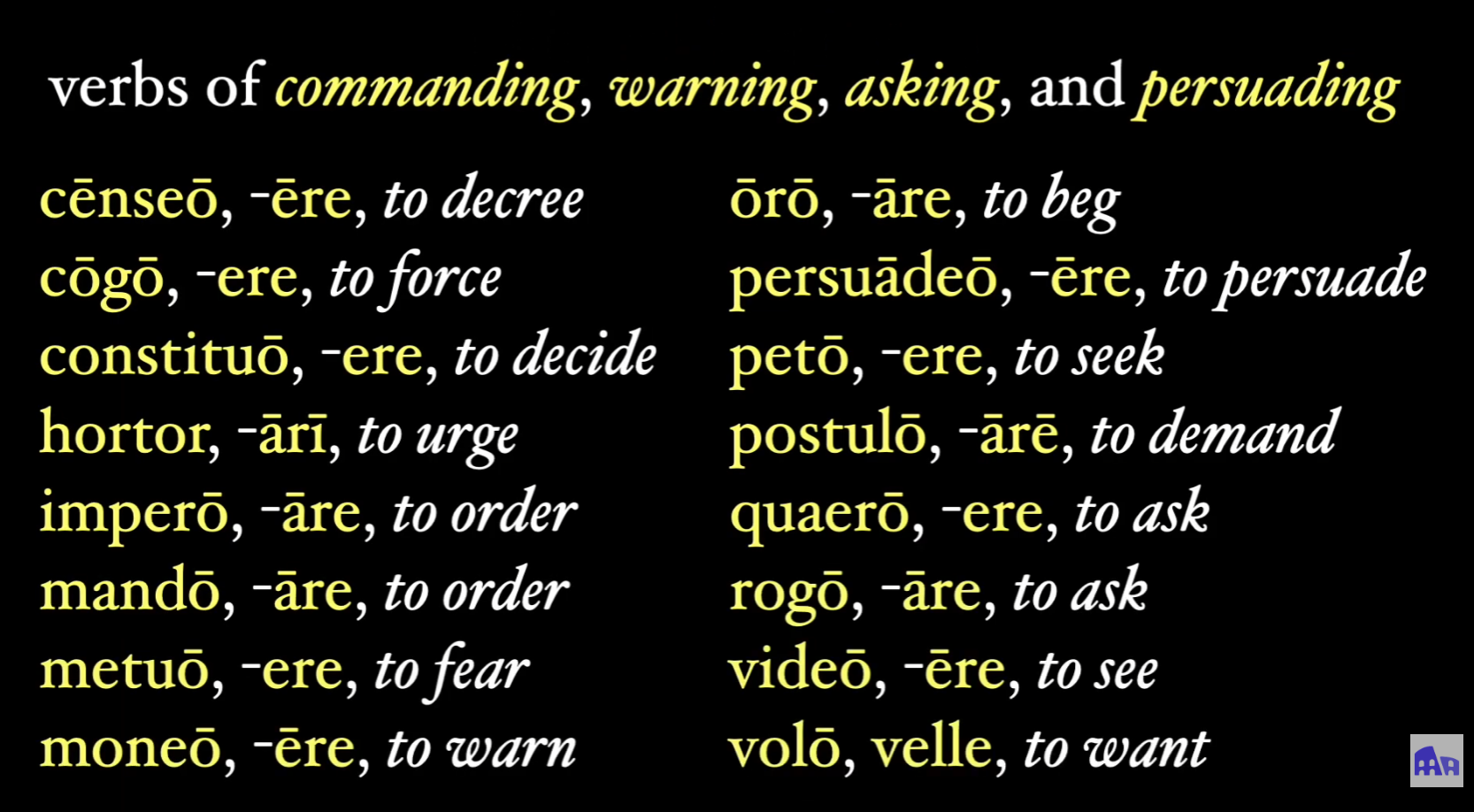
Words used to start of indirect commands