AAHHHHH (AP Art History Questions)
 Studied by 3 people
 Call Kai
 Learn
Learn Practice Test
 Spaced Repetition
 Match
Match Flashcards
 Knowt Play
1/66

Earn XP
Description and Tags
ABCDEFGHIJKLMNOPQSTUVWXYZ (11th 14th 19th Letter)
Name | Mastery | Learn | Test | Matching | Spaced |
|---|
No study sessions yet.
67 Terms
Song Su-nam's Summer Trees references the
A. Asian tradition of painting with ink
B. Chinese tradition of painting on the scroll format
C. Korean tradition of painting screens that separate rooms
D. Japanese tradition of wood-block prints popular to Europe
A. Asian tradition of painting with ink
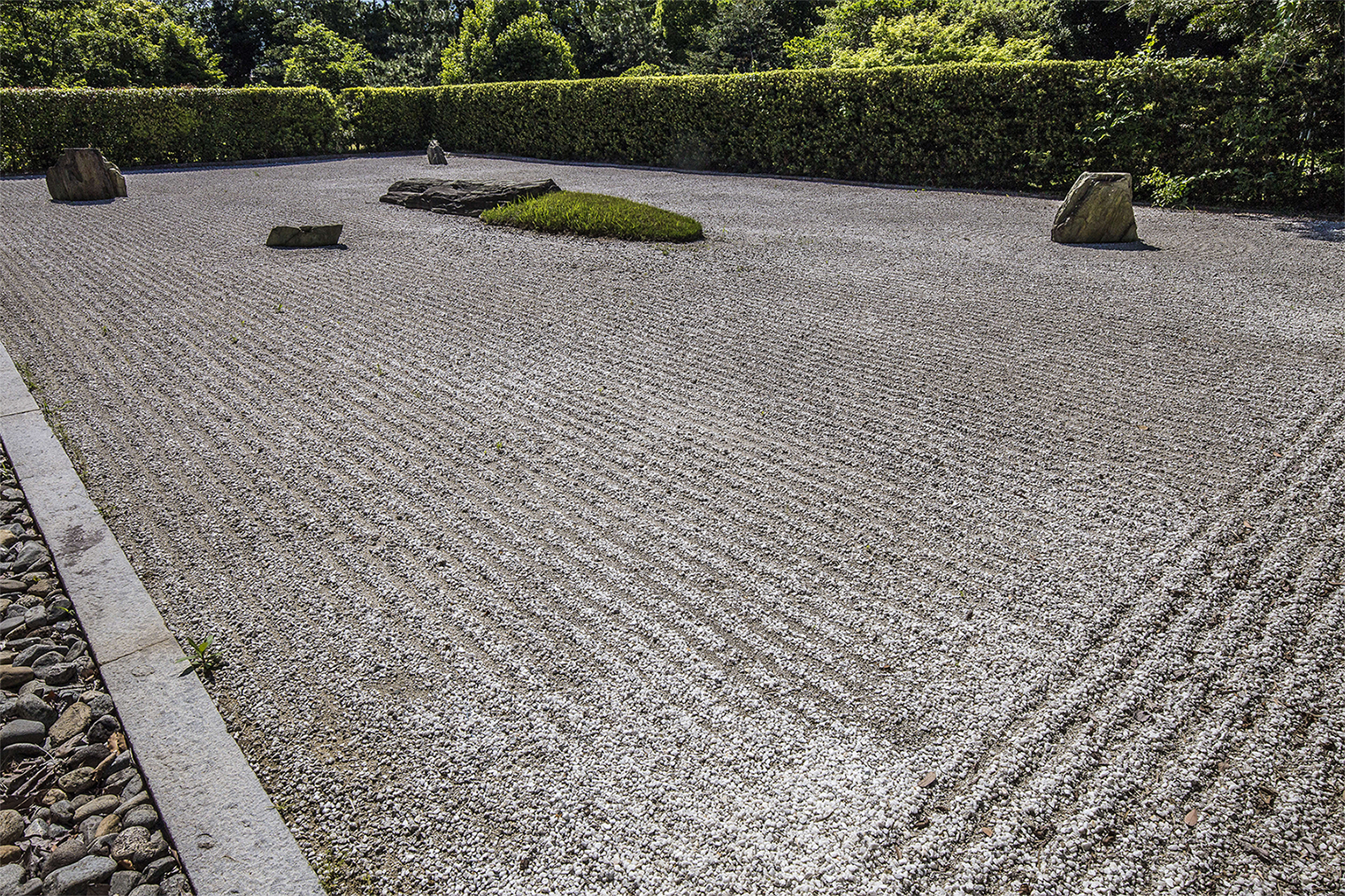
The dry garden at Ryoan-ji through its hundreds of years of existence demonstrates continuity with the Zen Buddhist practice of
A. commemorating ancestral death
B. enforcing order to keep society safe
C. increasing status by accumulating wealth
D. meditating to reach enlightenment
D. meditating to reach enlightenment
The arrangement of stones and raked white sand in the dry garden of Ryoan-ji is intended to
A. promote study and meditation
B. protect and guide the spirits of the dead
C. represent a typical Japanese landscape
D. encourage circumambulation
A. promote study and meditation
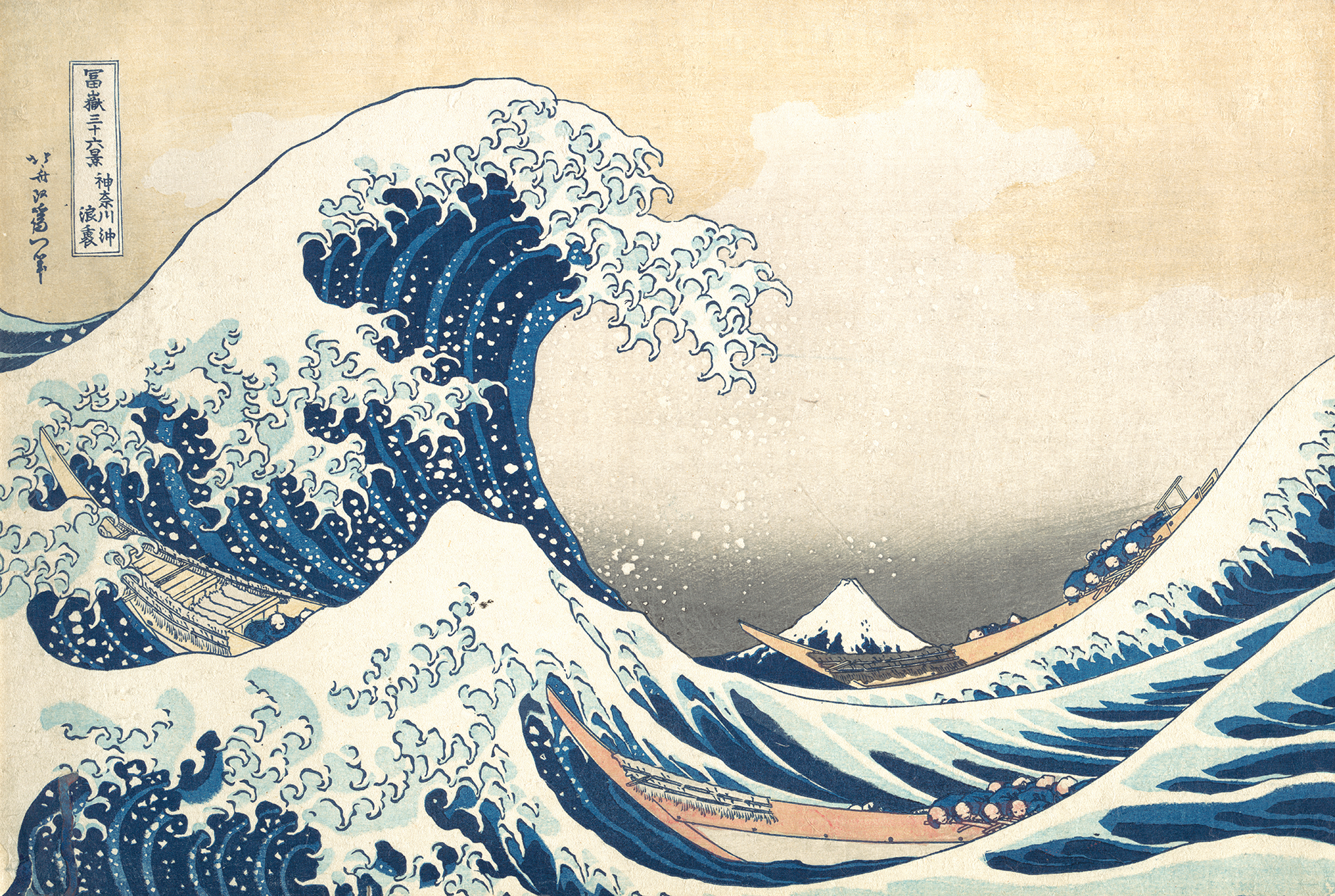
Hokusai's inclusion of Mount Fuji in this print series may have been intended to
A. raise awareness of emerging environmental issues, such as increasing deforestation
B. attract the interest of Japanese tourists, since the mountain was a popular travel destination
C. win favor among Buddhist monks, who desired more pilgrims at Fuji monasteries
D. please government officials, who encouraged foreign tourists to visit sites such as Fuji
B. attract the interest of Japanese tourists, since the mountain was a popular travel destination
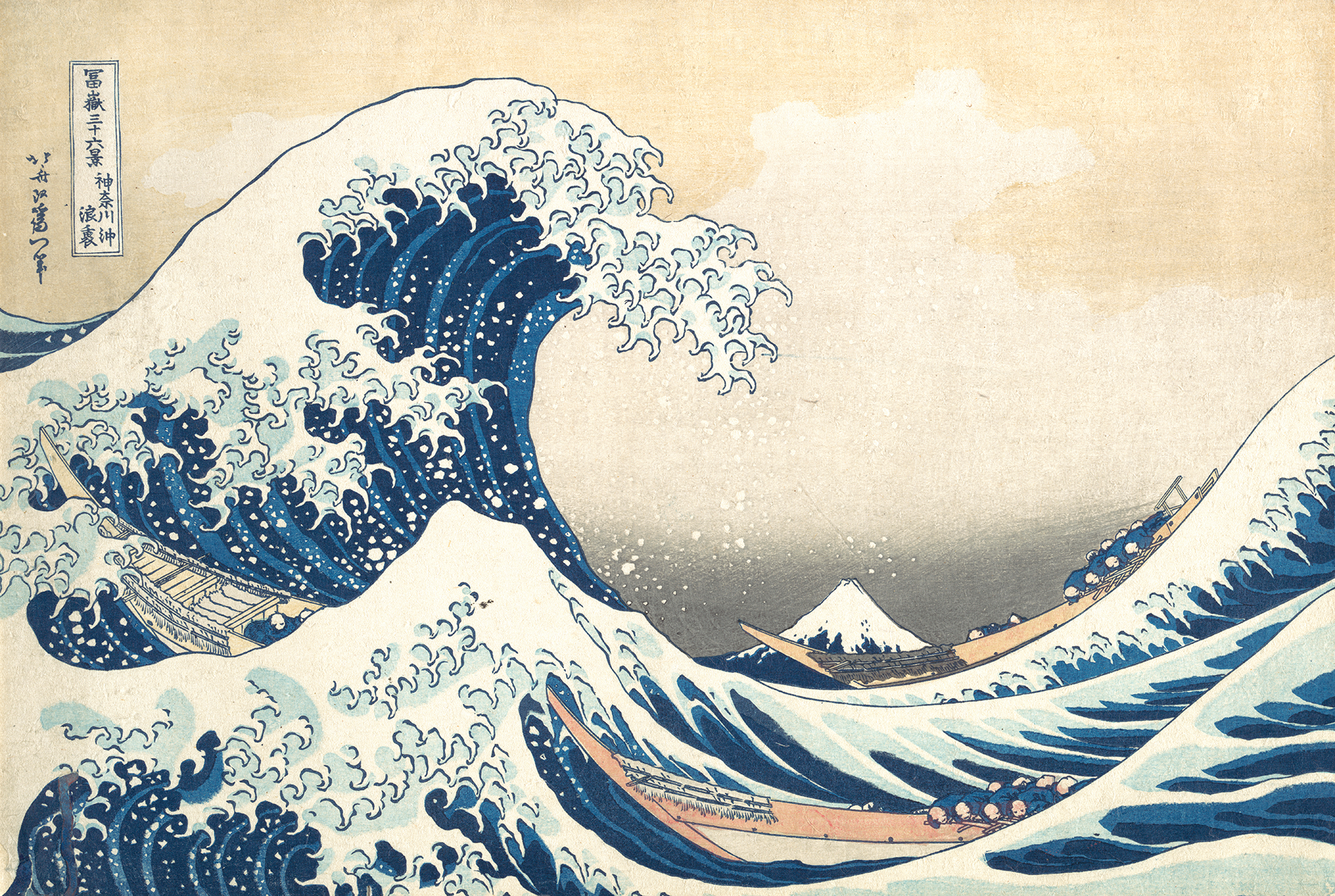
By breaking from Japanese artistic traditions with his use of perspective and a low horizon line, Hokusai was responding to
A. the influence of European art brought to Japan by Dutch traders
B. the influence of photographs due to their greater availability in Japan
C. an influx of Chinese paintings due to Japanese military expansion
D. a surge of religious conversions resulting from missionary activity
A. the influence of European art brought to Japan by Dutch traders
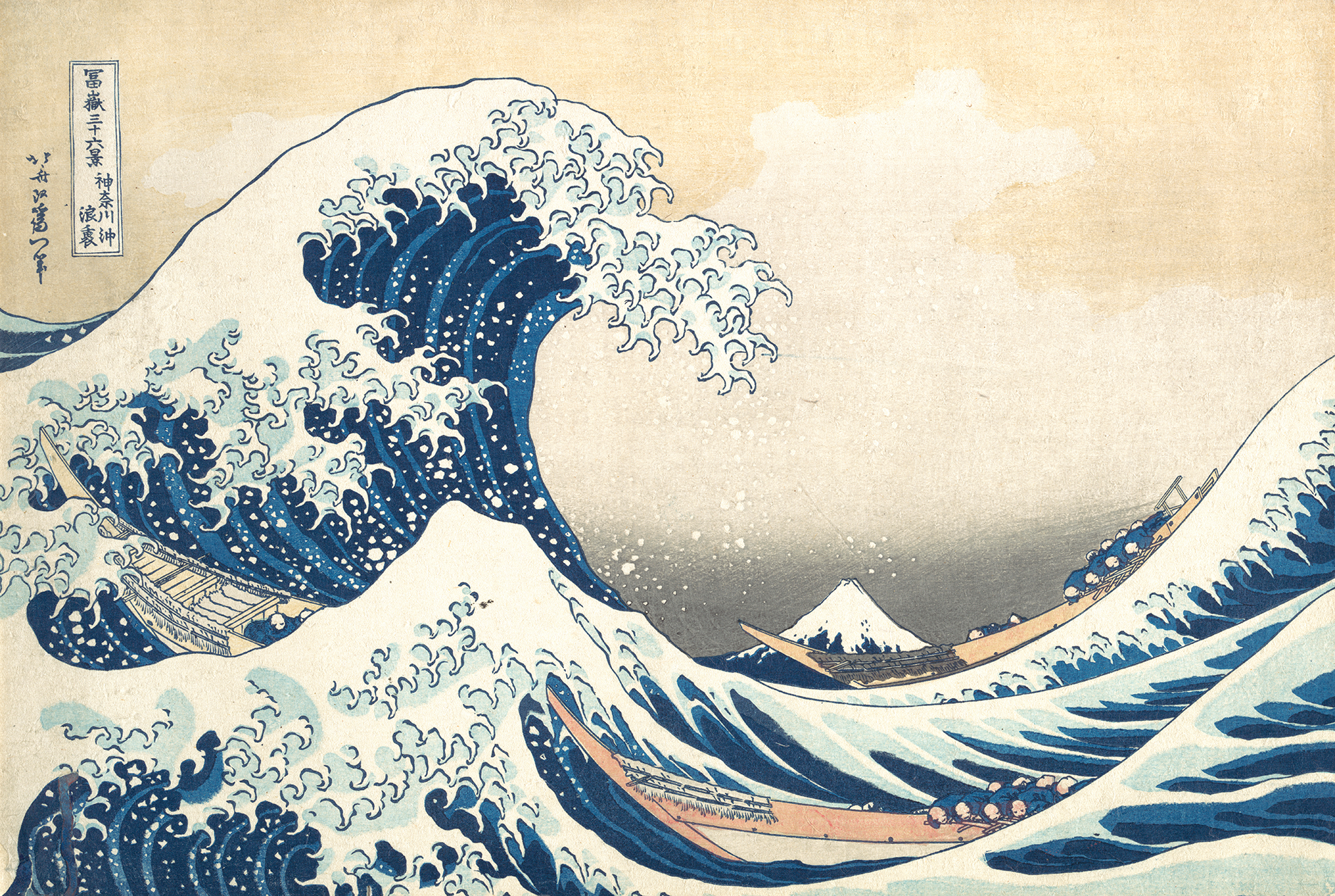
Which of the work's elements contributes most to the illusion of spatial depth in the image?
A. The top of the wave, because of its placement at the top of the composition
B. The mountain, because of its small size in relation to the other objects
C. The blue color, because of its contrast with the other, more neutral colors
D. The fishing boats, because of the way they echo the shape of the wave
B. The mountain, because of its small size in relation to the other objects
The work shown above can be attributed to the artistic tradition of
A. Japan
B. China
C. India
D. Indonesia
D. Indonesia
In White and Red Plum Blossoms, the artist Ogata Korin used abstracted organic forms, monumental scale, and lavish gold surfaces in order to
A. appeal to the luxurious tastes of aristocrats
B. demonstrate the depth of his religious devotion
C. create a work influenced by Byzantine icons
D. facilitate meditation for its purchaser
A. appeal to the luxurious tastes of aristocrats
Elements of White and Red Plum Blossoms such as the ambiguous setting, the flat planes and patterning, and the combination of abstraction and naturalism had a profound influence on early-twentieth-century painters such as
A.Gustav Klimt
B. Ernst Ludwig Kirchner
C. Varvara Stepanova
D. Georges Braque
A.Gustav Klimt
Despite its visual links to Western abstract painting, Song Su-nam's Summer Trees demonstrates a clear connection with traditional Korean art through the artist's
A. use of brushes, rather than a pouring technique, to create the image
B. choice of a relatively small size for the work
C. use of oil paint to create black and gray tonal variations
D. inclusion of drips rather than consistently clean edges
A. use of brushes, rather than a pouring technique, to create the image
The David Vases are significant in the history of Chinese art primarily because
A. the elephant-head handles document the derivation of their forms from bronze objects
B. their blue color suggests that the vases were intended to serve as gifts to the Mughal court
C. their inscriptions make them one of the earliest dated examples of blue-and-white porcelain
D. the use of cobalt for the blue glaze provides evidence of trade between China and the Middle East
C. their inscriptions make them one of the earliest dated examples of blue-and-white porcelain
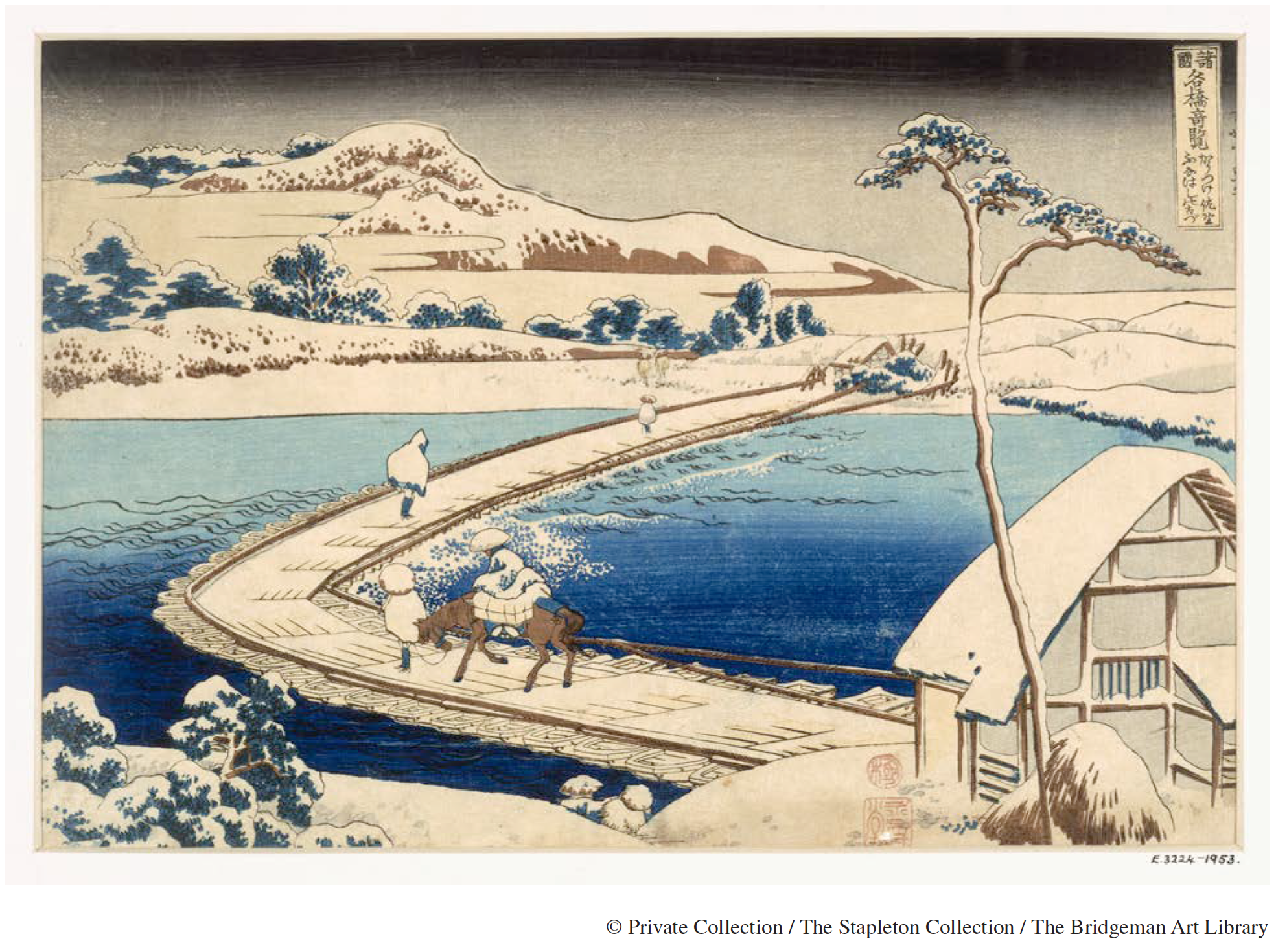
The work, like others by the same artist, was created primarily for the purpose of
A. hanging in a household niche as an object of private meditation
B.fulfilling a special commission for a wealthy patron
C. mass production for purchase by a wide audience
D. personal artistic experimentation with new media
C. mass production for purchase by a wide audience
In Travelers among Mountains and Streams, Fan Kuan makes the few human and animal figures very small in comparison to the massive mountains in order to remind viewers that
A.people should choose to live simply
B. people are insignificant in relation to nature
C. the bond between people and animals is important
D. people should not attempt to scale the heights of a mountain
B. people are insignificant in relation to nature
Ogata Korin's pair of screens titled White and Red Plum Blossoms exemplifies the style of the Japanese Rinpa school because it
A. was created as a luxurious object, intended to appeal to the tastes of a wealthy patron
B. features calligraphic inscriptions of historical texts, inspired by a rise in patriotic awareness
C. features imagery with deep religious symbolism, inspired by the rise of new Buddhist teachings
D. was designed as the model for woodblock prints, intended to be widely distributed
A. was created as a luxurious object, intended to appeal to the tastes of a wealthy patron
The mortuary temple of Hatshepsut originally included which of the following features as part of the complex?
A. A pylon entryway flanked by large obelisks
B. Outer courtyards with heavily ornamented fountains
C. Grand stairways decorated with reliefs of important battles
D. Terraces filled with exotic trees and plants
D. Terraces filled with exotic trees and plants
In its original context, the interaction between the god Shamash and Hammurabi on the Code of Hammurabi was intended to cause in viewers a sense of
A. fear of punishment by showing them the results of unlawful actions
B. empathy with their ruler by showing him as a mere mortal opposite a god
C. respect for the laws recorded on the stele by suggesting their divine origin
D. loyalty for their ruler by showing him making personal sacrifices for his people
C. respect for the laws recorded on the stele by suggesting their divine origin
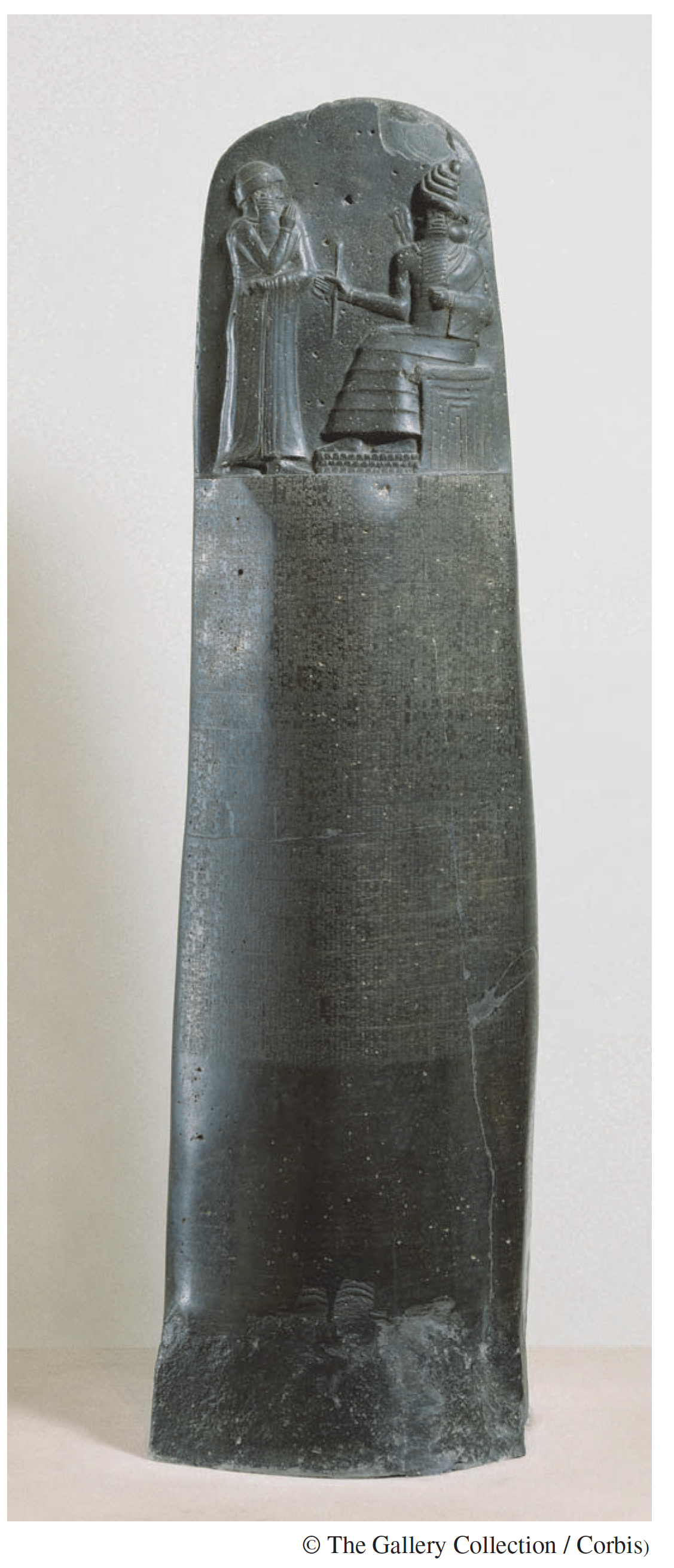
The work serves to legitimize the
A. invasion of neighboring city-states
B. king's right to rule
C. institution of monotheism
D. authority of the priests
B. king's right to rule
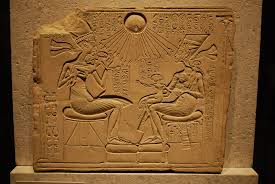
In the work shown from the Amarna period, the use of sunken-relief carving creates strong contours that accentuate the figure's
A. curvilinear form and elongated features
B. rectilinear form and rigid, frontal pose
C. formal balance and naturalistic proportions
D. conventional pose and archaic smile
A. curvilinear form and elongated features
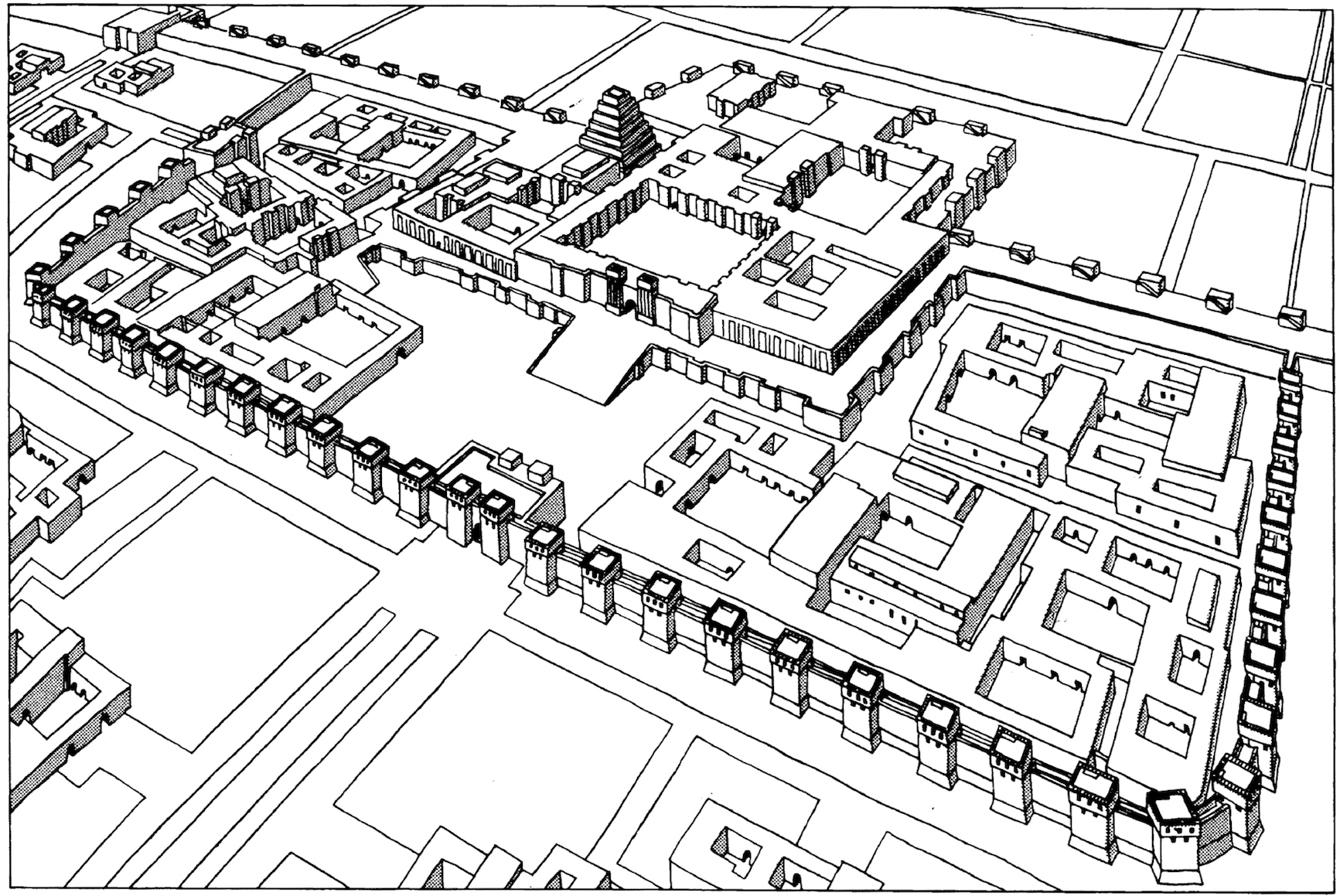
The building complex was built by the
A. Minoans
B. Spartans
C. Assyrians
D. Copts
C. Assyrians
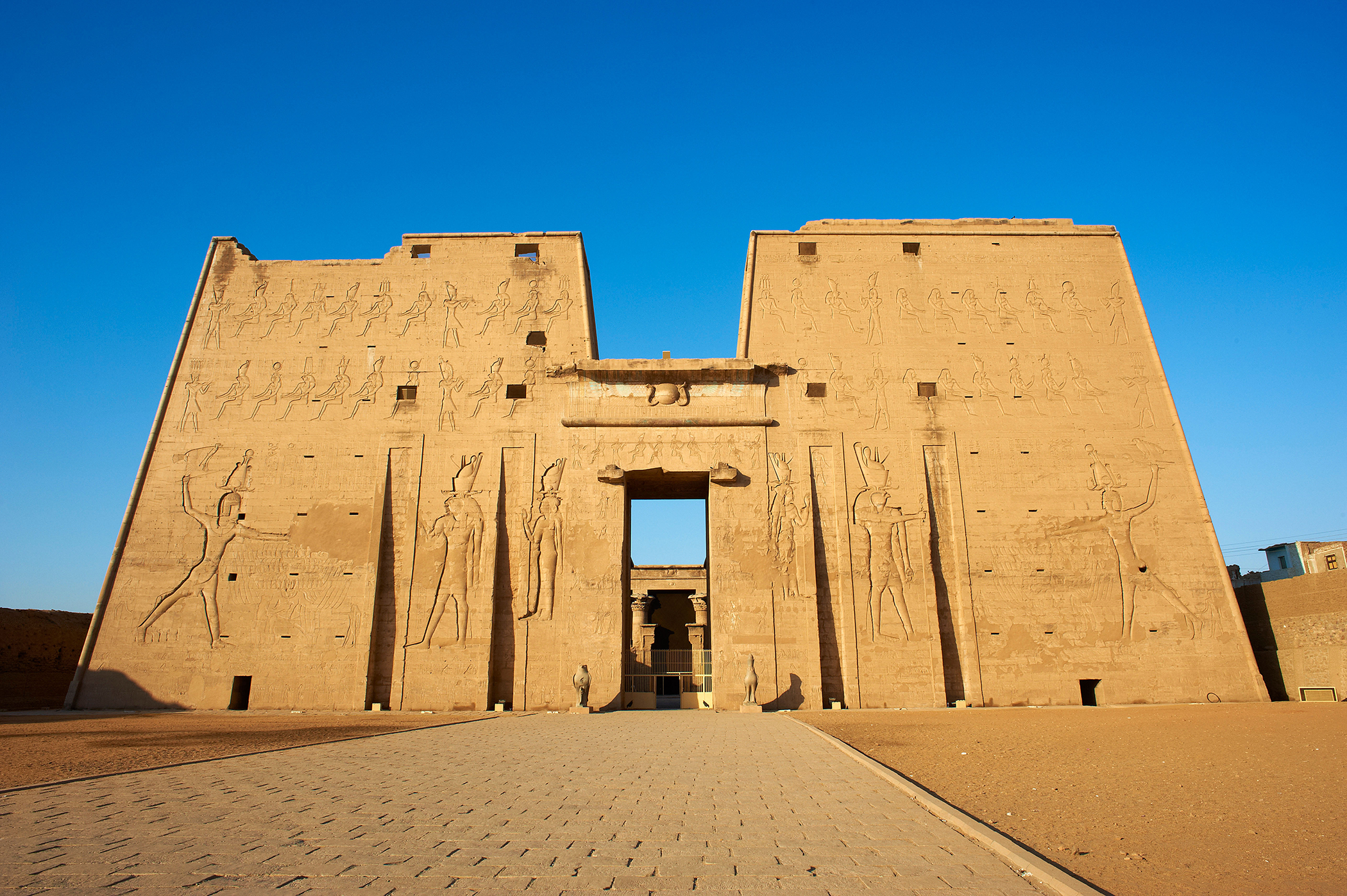
The image shows which of the following features of ancient Egyptian architecture?
A. An obelisk
B. A clerestory
C. A hypostyle hall
D. A pylon gate
D. A pylon gate
The Standard of Ur and the Palette of King Narmer are similar in that both works
A. use complex mythological stories as allegories of historic military battles
B. were created for the commemoration of powerful rulers long after their deaths
C. differentiate between men and women through the application of different colors
D. employ hierarchical scale to distinguish between figures of varying degrees of importance
D. employ hierarchical scale to distinguish between figures of varying degrees of importance
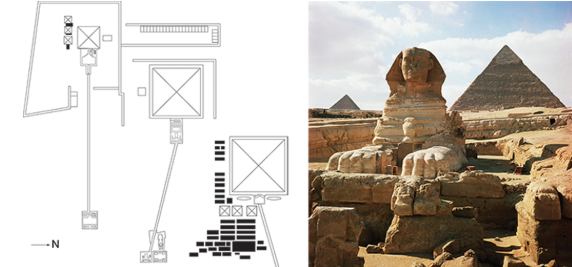
The plan shows processional routes and secondary structures that were primarily intended to
A. facilitate priestly offerings of food and drink to the deceased
B. expedite the embalming process for the body of the deceased
C. mark the beginning and ending points for ritual circumambulation
D. aid large crowds of devotees during seasonal pilgrimages
A. facilitate priestly offerings of food and drink to the deceased
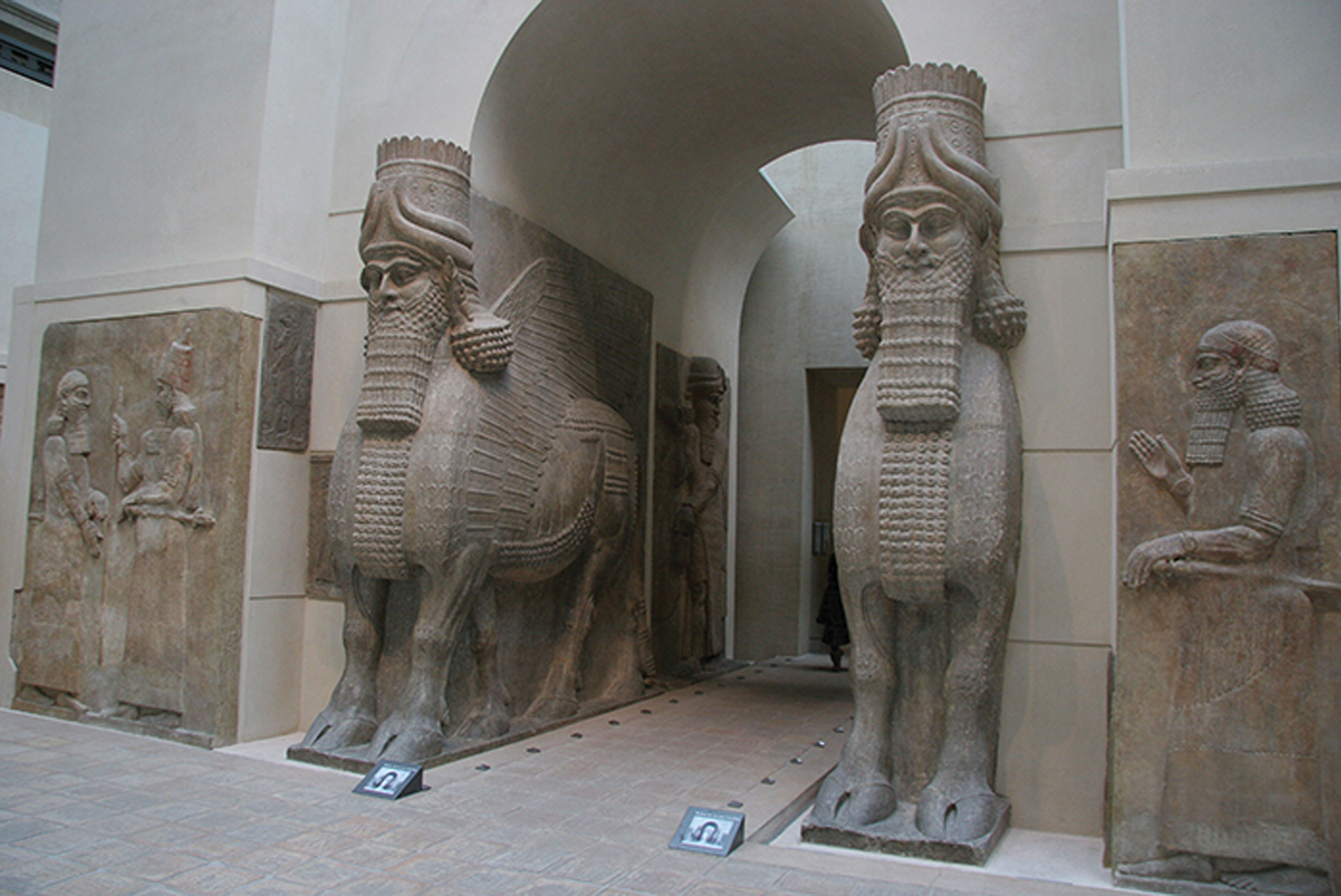
In the work shown, features of different animals were combined for the purpose of creating
A. a symbolic representation of a kingdom that was made through uniting separate realms
B. an imposing mythical creature that was meant to safeguard the entrance to a royal complex
C. the personification of a multifaceted deity to be placed inside the shrine of a temple complex
D. the symbolic portrait of a king as protector and defender of stability in the realm
B. an imposing mythical creature that was meant to safeguard the entrance to a royal complex
Which of the following architectural innovations provided an enhanced religious experience for visitors walking through the Hypostyle Hall at the Temple of Amun-Re at Karnak?
A. The clerestory, which allowed for the illumination of the central aisle
B. The causeway, which provided an elevated space for approaching the ka statue
C. The proscenium, which facilitated the performance of elaborate rituals
D. The apse, which housed a cult statue of the sun god Amun-Re
A. The clerestory, which allowed for the illumination of the central aisle
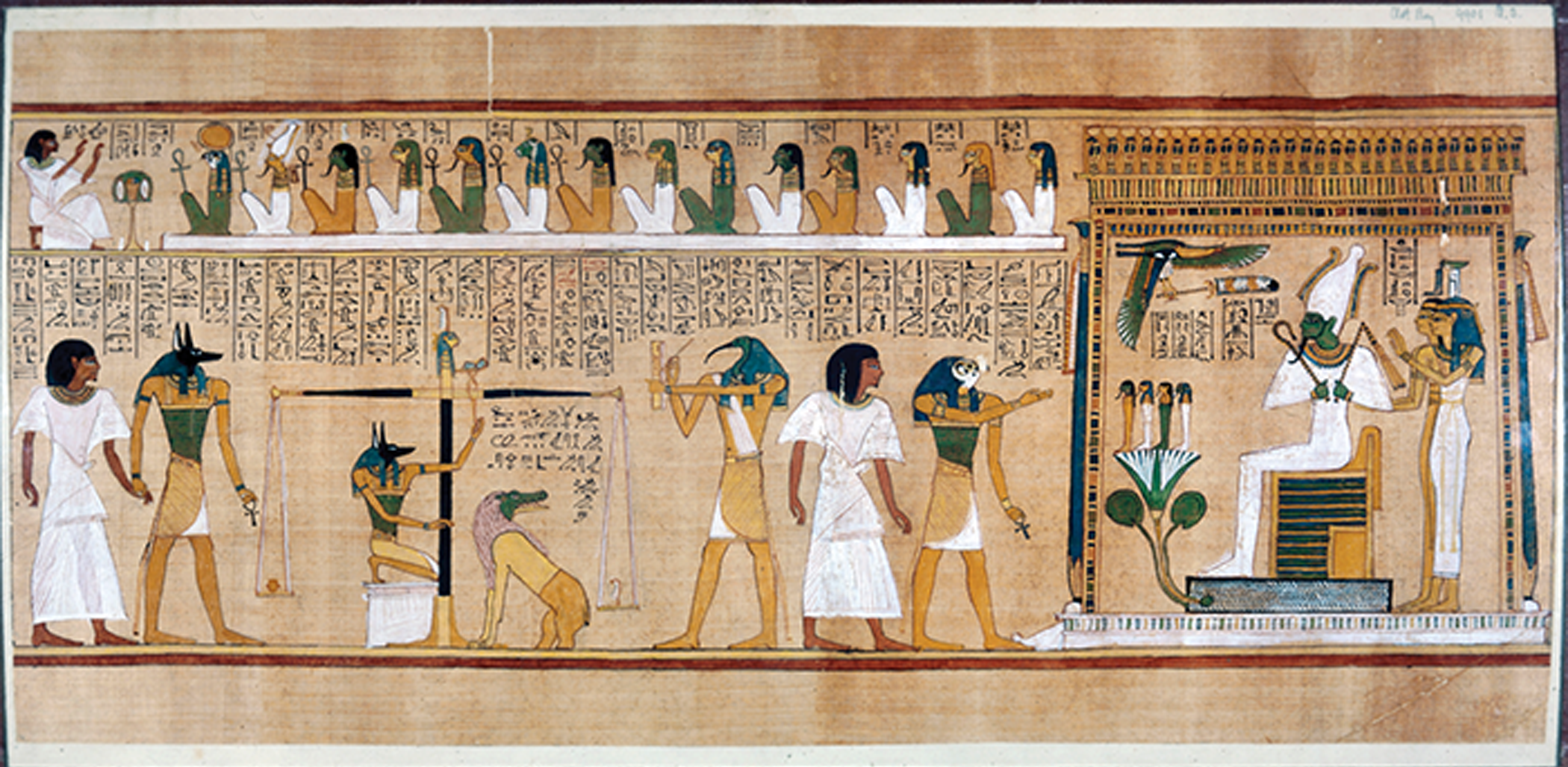
The work shown is painted on
A. terra cotta
B. papyrus
C. limestone
D. plaster
B. papyrus
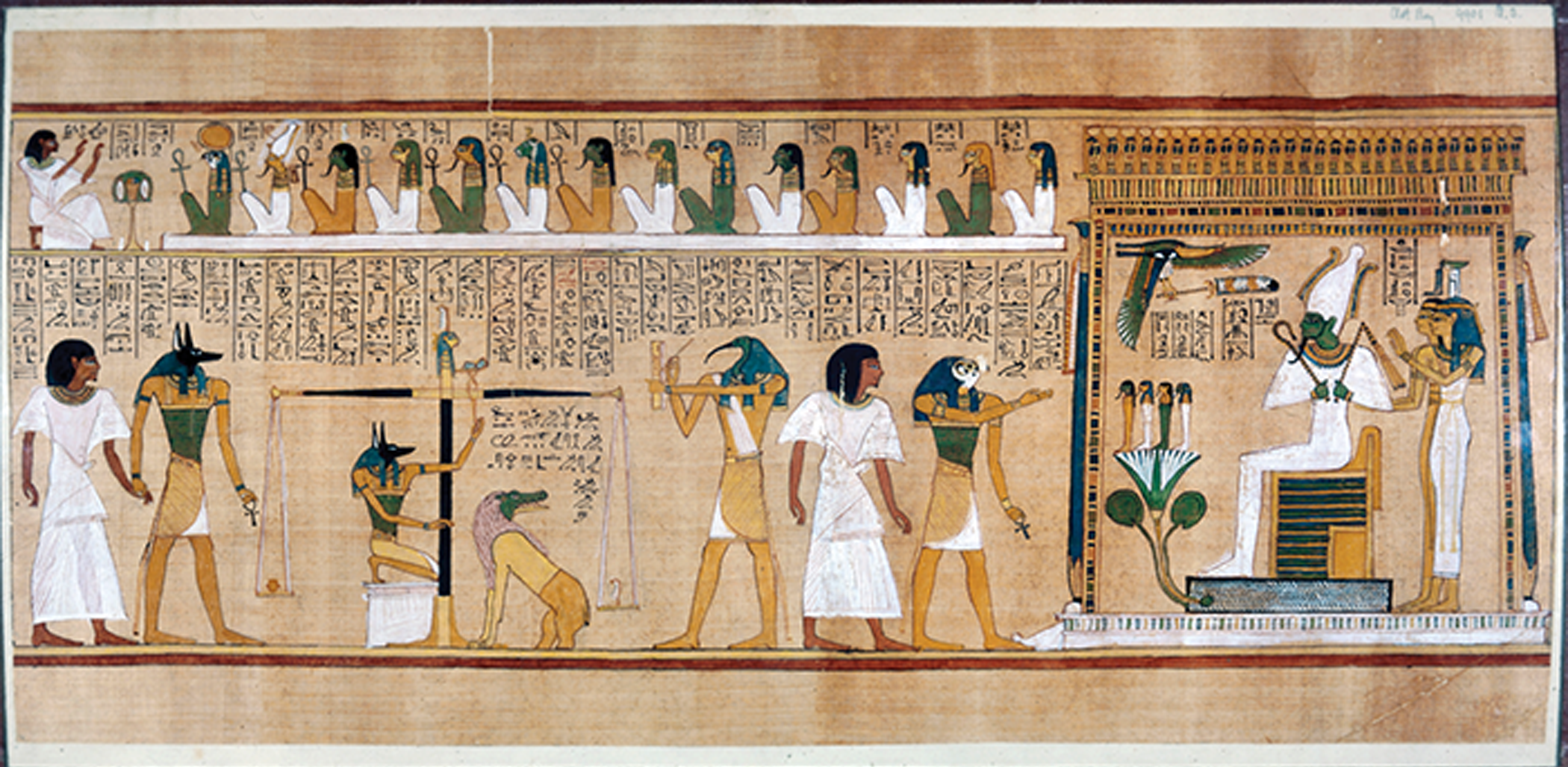
In its original context, the work would have been placed
A. on a wall to adorn a royal palace
B. in the inner sanctum of a temple to promote worship
C. on the house altar of a private residence to be used for personal devotion
D. in a tomb to guide a deceased person in the afterlife
D. in a tomb to guide a deceased person in the afterlife
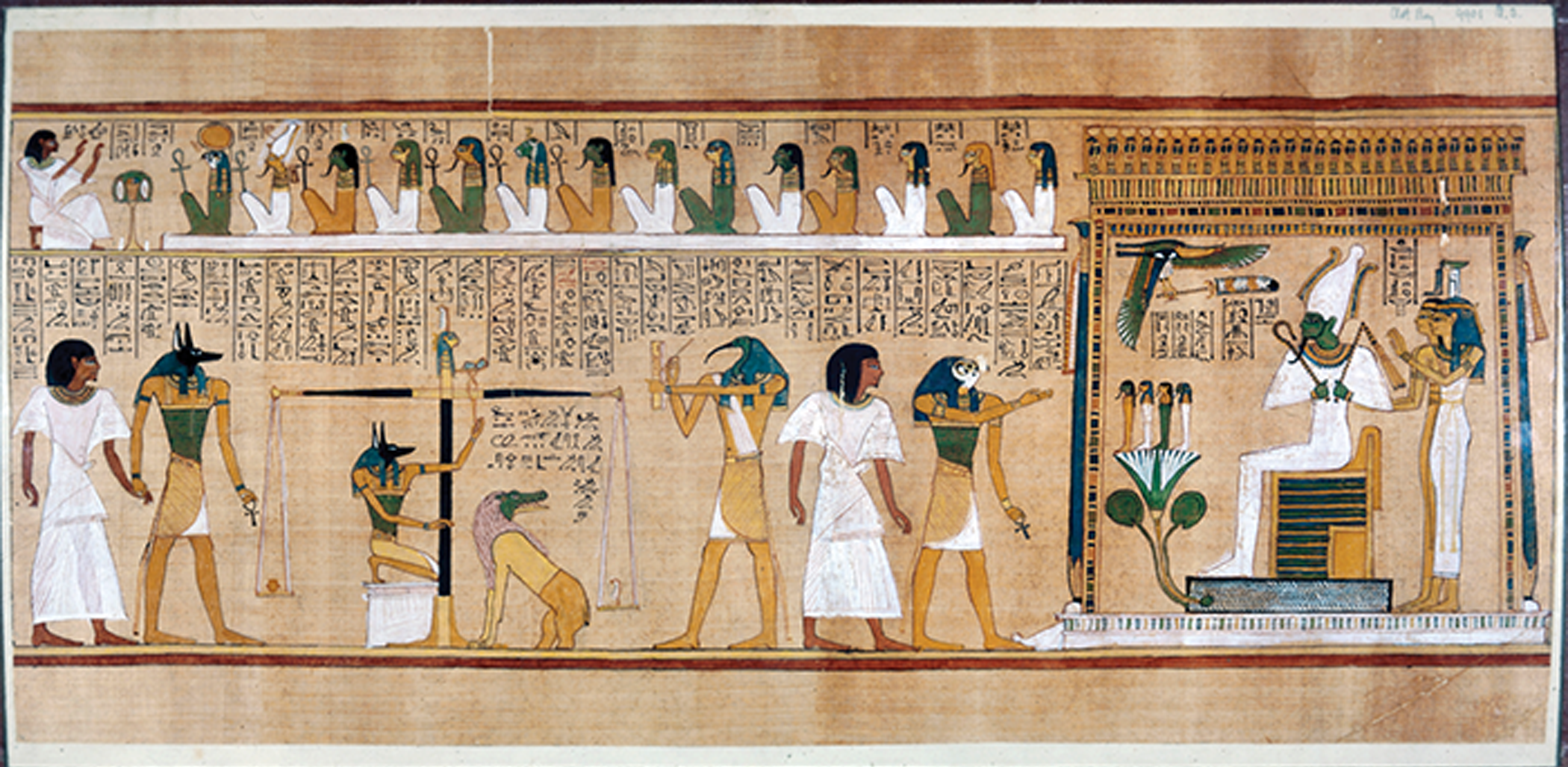
The visual organization of the work is meant to suggest a
A. solemn procession as part of a civic ceremony
B. sequence of successive events in an important narrative
C. contrast between orderly control and chaotic drama
D. strict hierarchy between the relative importance of the figures
B. sequence of successive events in an important narrative
The stylistic innovations that are evident in the relief sculpture of Akhenaton, Nefertiti, and three daughters are a result of
A. the introduction of a new monotheistic religion under the Pharaoh Akhenaton
B. the introduction of Asian art to New Kingdom Egypt through the Silk Road
C. the rise of a wealthy Egyptian merchant class who created a demand for new types of luxury objects
D. the shift of the political system during the Amarna period from a kingdom to an oligarchy
A. the introduction of a new monotheistic religion under the Pharaoh Akhenaton
Which of the following statements is true of both the Standard of Ur from the Royal Tombs at Ur and the Palette of King Narmer?
A. They portray dynastic succession.
B. They celebrate military victory.
C. They designate the king as a sun god.
D. They depict an enemy's military banner.
B. They celebrate military victory.
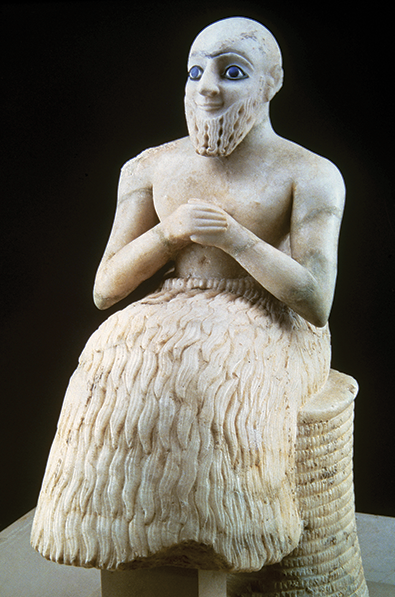
The sculpture shown can be attributed to the same culture that produced the
A. Peplos Kore from the Acropolis in Athens
B. votive figures from the Sumerian Square Temple at Eshnunna
C. seated scribe from the Egyptian tomb at Saqqara
D. sculpture of Apollo from the Etruscan temple at Veii
B. votive figures from the Sumerian Square Temple at Eshnunna
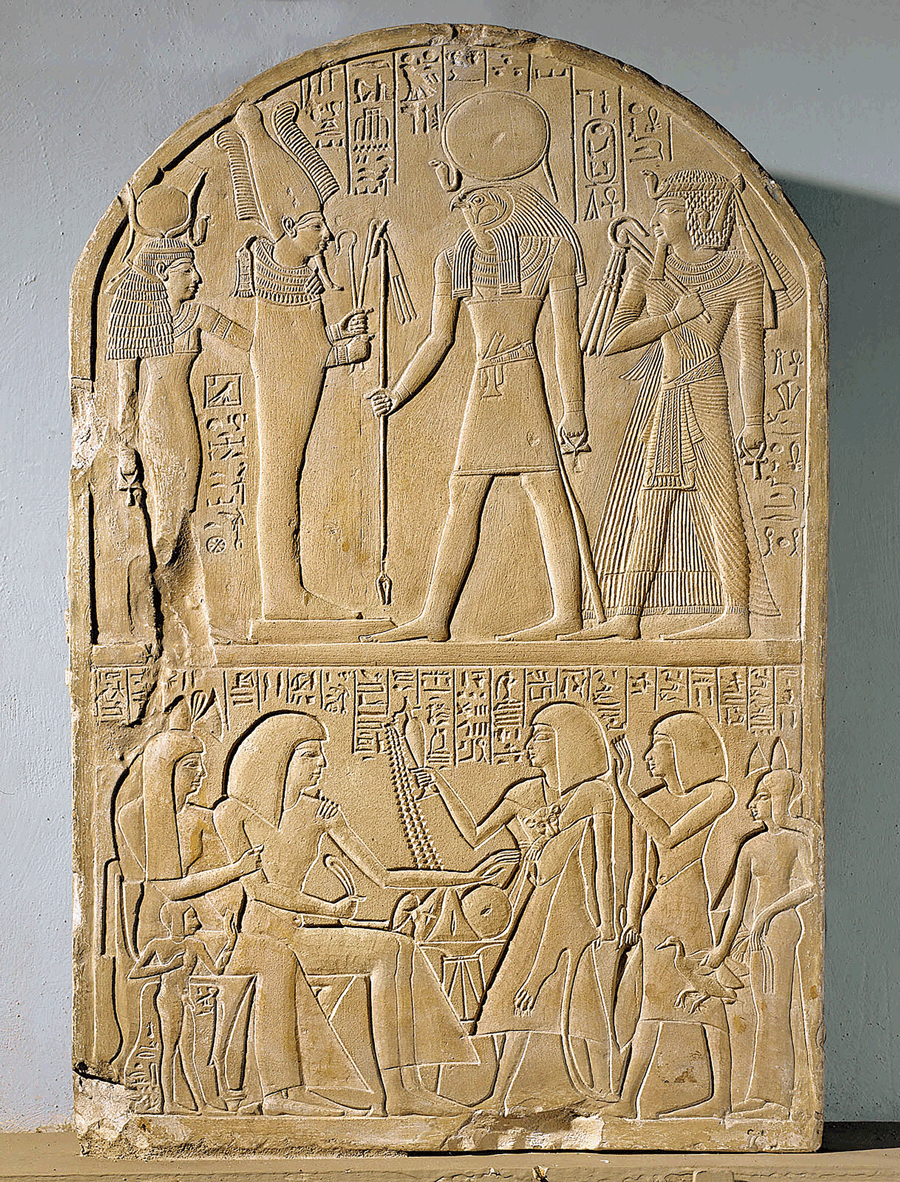
In the Egyptian stele shown, the imagery is organized in which of the following ways?
A. As a diptych framed by an outline
B. As composite figures placed in registers
C. As a continuous narrative displayed in columns
D. As multiple scenes presented in one-point perspective
B. As composite figures placed in registers
How do the visual characteristics of the statues of votive figures from the Square Temple at Eshnunna reflect the religious context in which they were originally intended to function?
A. They are depicted with obvious signs of extreme aging to emphasize their mortal status in contrast with the eternal nature of the deity to whom they were given as offerings.
B. They are depicted with large eyes and prayerful gestures to illustrate their eternal attendance and devotion to the deity on a donor's behalf.
C. They are depicted with joyful expressions and raised hands to show believers the rewards in the afterlife that await those who lead a moral and pious life.
D. They are depicted with male and female attributes to illustrate for believers how the divine concept of duality can be represented in mortal beings.
B. They are depicted with large eyes and prayerful gestures to illustrate their eternal attendance and devotion to the deity on a donor's behalf.
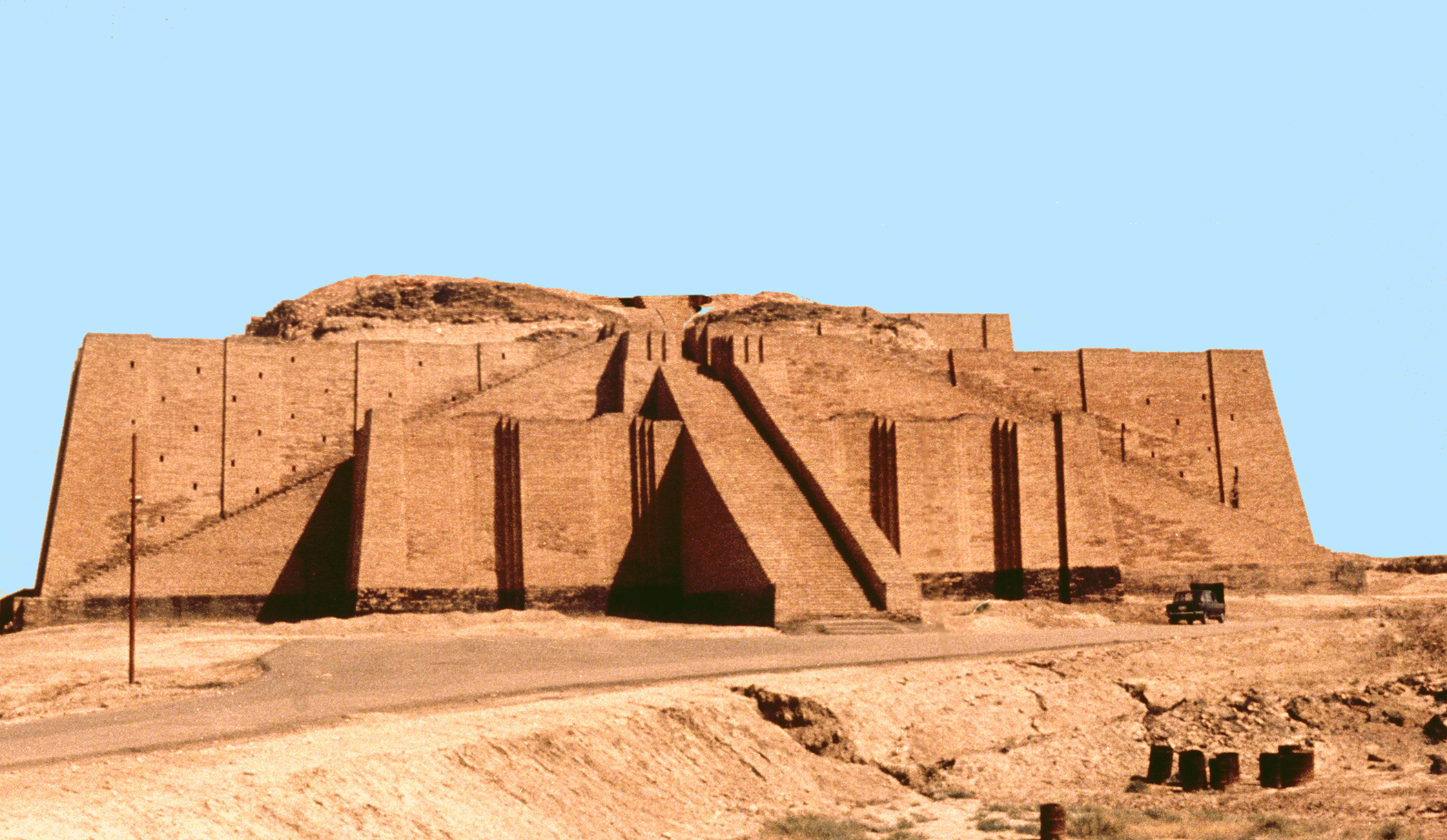
The structure shown can be identified as a
A. pyramid from Old Kingdom Egypt that served as a tomb for deceased rulers
B. pylon from New Kingdom Egypt that served as entrance to a sacred complex
C. Sumerian ziggurat that served as platform for a temple
D. Persian apadana that served as a royal audience hall
C. Sumerian ziggurat that served as platform for a temple
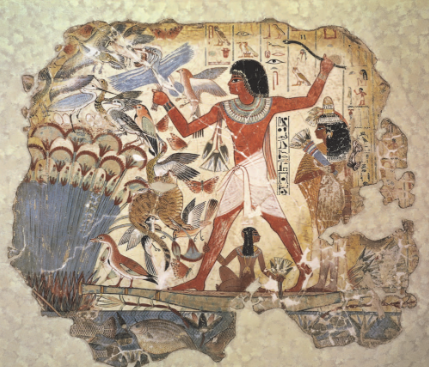
The work is part of a larger program intended to
A. illustrate a historical narrative
B. provide for the afterlife
C. demonstrate the power of the ruler
D. teach hunting techniques
B. provide for the afterlife
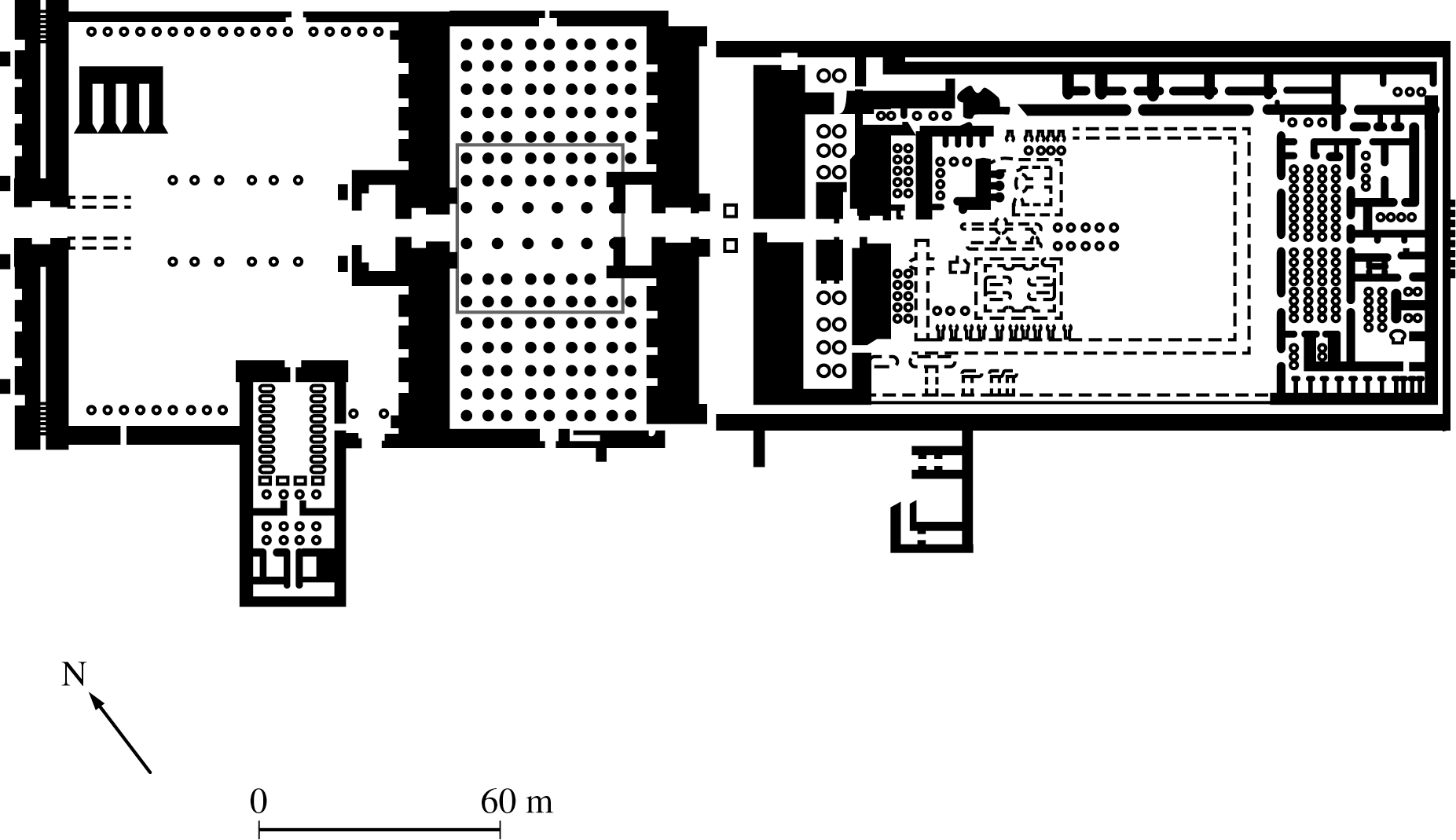
The progression of distinct spaces along the axial plan of the temple of Amun-Re at Karnak reflects the
A. increasing restriction of access as one moved toward the inner sanctum
B. separation of spaces according to their mortuary, religious, and secular functions
C. beliefs about the different stages a soul must pass through to reach the afterlife
D. stages of enlightenment that a worshipper would experience during prayer
A. increasing restriction of access as one moved toward the inner sanctum
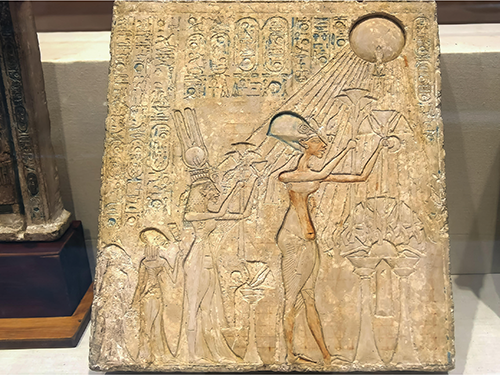
The relief carving shown can be attributed to the Amarna style because it depicts the
A. veneration of the sun god Aten by the pharaoh and his family
B. judgment of the pharaoh's soul before Osiris, the god of the underworld
C. pharaoh and his wife receiving a law code from the god Shamash
D. pharaoh's celebration of the unification of Upper and Lower Egypt
A. veneration of the sun god Aten by the pharaoh and his family
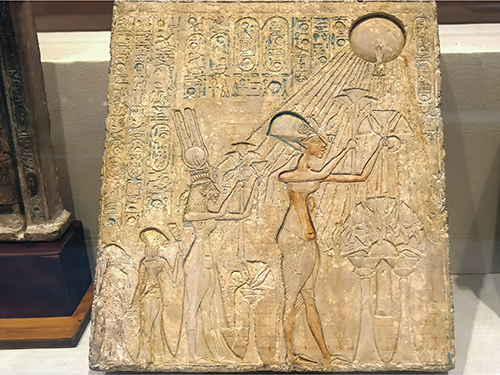
Akhenaton, Nefertiti, and three daughters demonstrates continuity within ancient Egyptian artistic traditions through its
A. depiction of figures in composite poses
B. dynamic, asymmetrical composition
C. organization of images in stacked registers
D. emphasis on surface texture through high-relief carving
A. depiction of figures in composite poses
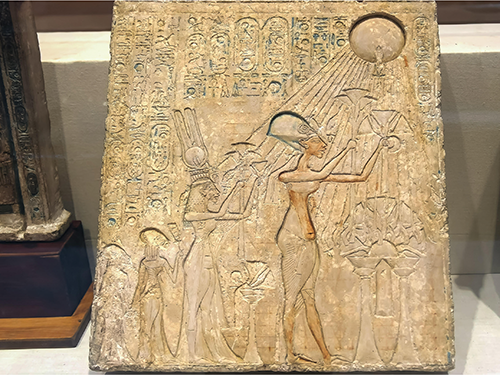
The portrayal of Akhenaton and Nefertiti would have been viewed in its original cultural context as unconventional by its ancient Egyptian audience because it shows
A. a royal couple depicted as rulers in the afterlife
B. an Egyptian queen alongside her husband, the pharaoh
C. the pharaoh and his family worshiping the gods
D. the pharaoh and his family in an affectionate scene
D. the pharaoh and his family in an affectionate scene
Which of the following is a feature of the Standard of Ur that provides evidence of a vast trade network with foreign lands?
A. Inscriptions written in different languages
B. The use of luxury materials acquired from other cultures
C. The depiction of foreign dignitaries bringing tribute
D. Imagery of a ruler's travels to exotic lands
B. The use of luxury materials acquired from other cultures
Roman Republican portraiture is characterized primarily by its
A. rejection of Etruscan portrait conventions
B. unidealized realism
C. use of bronze
D. use of polychrome finishes
B. unidealized realism
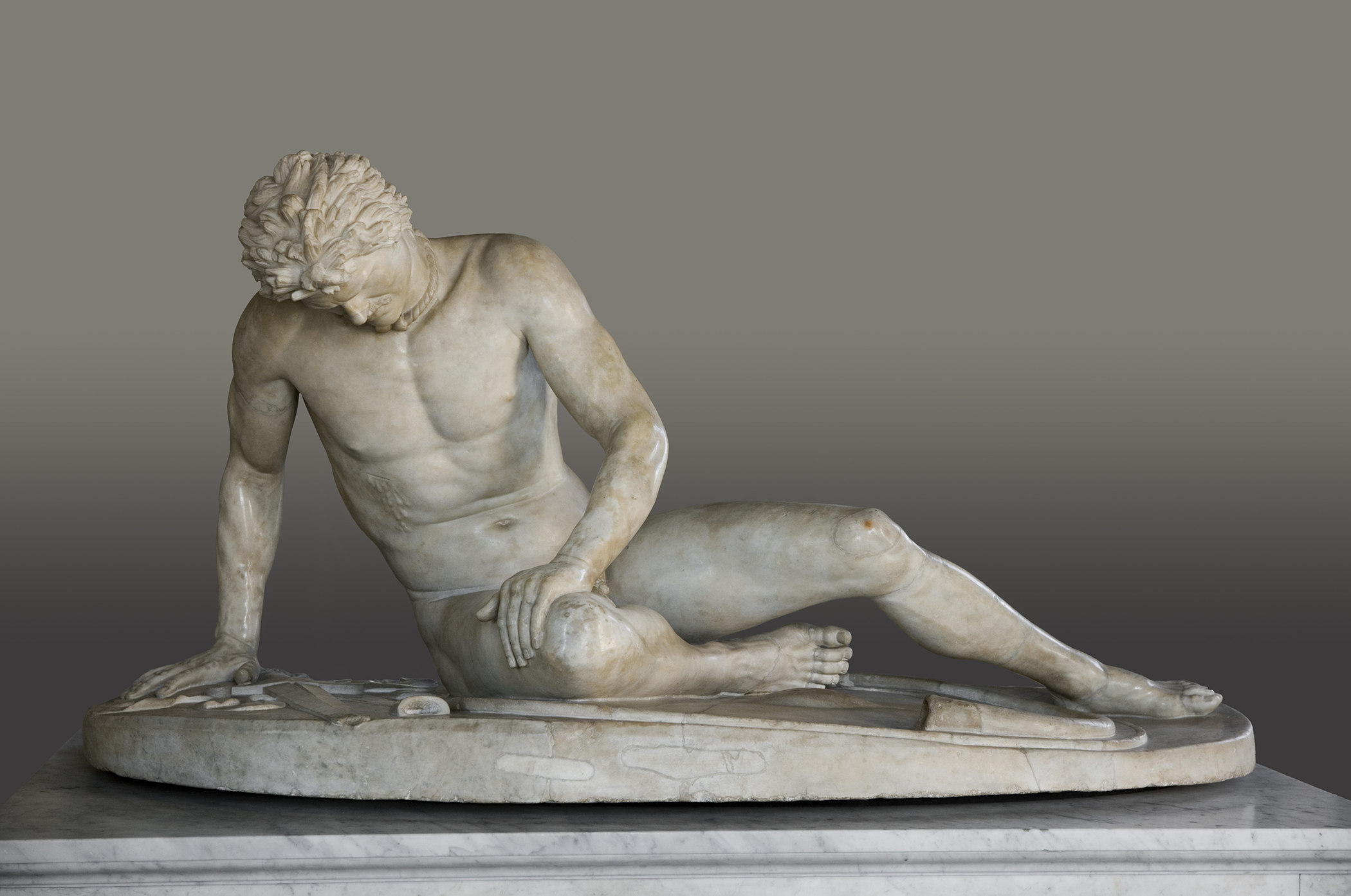
The work shown can be attributed to the style of Hellenistic Greece because of which of the following characteristics?
A. The use of a canon of proportions to produce a perfected male form
B. The depiction of the psychological effects of defeat to elicit an emotional response from the viewer
C. The stylized treatment of the body to make it appropriate for use in a timeless funerary context
D. The inclusion of exaggerated signs of intense aging to foster respect for wisdom and experience
B. The depiction of the psychological effects of defeat to elicit an emotional response from the viewer
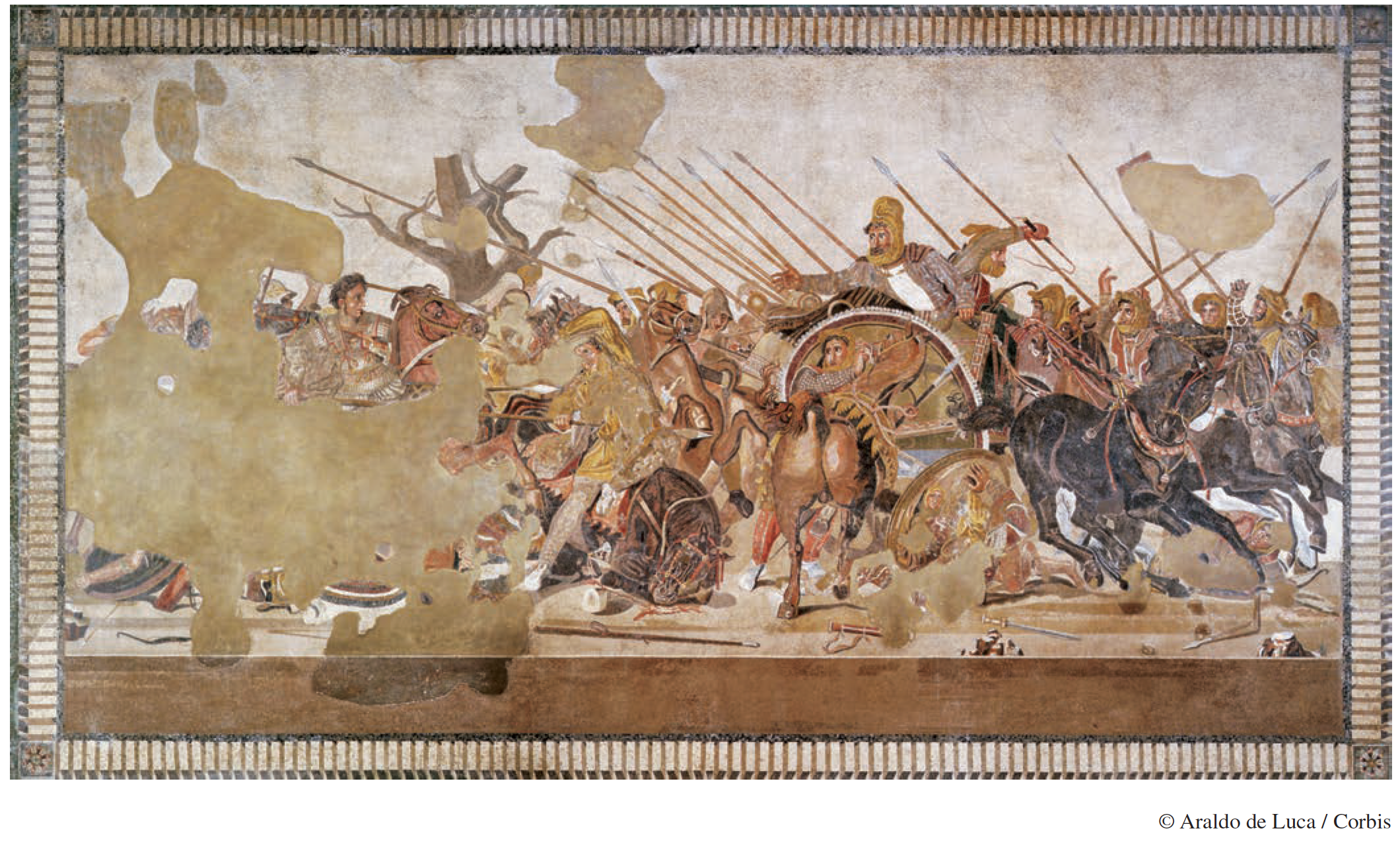
The foreshortening of figures in the Alexander Mosaic likely affected viewers in which of the following ways?
A. It reminded viewers of the chaos of everyday life.
B. It conveyed the climactic moment of a narrative.
C. It resulted in a detached scene that appeared to occur in the past.
D. It divided the narrative into a sequence of scenes.
B. It conveyed the climactic moment of a narrative.
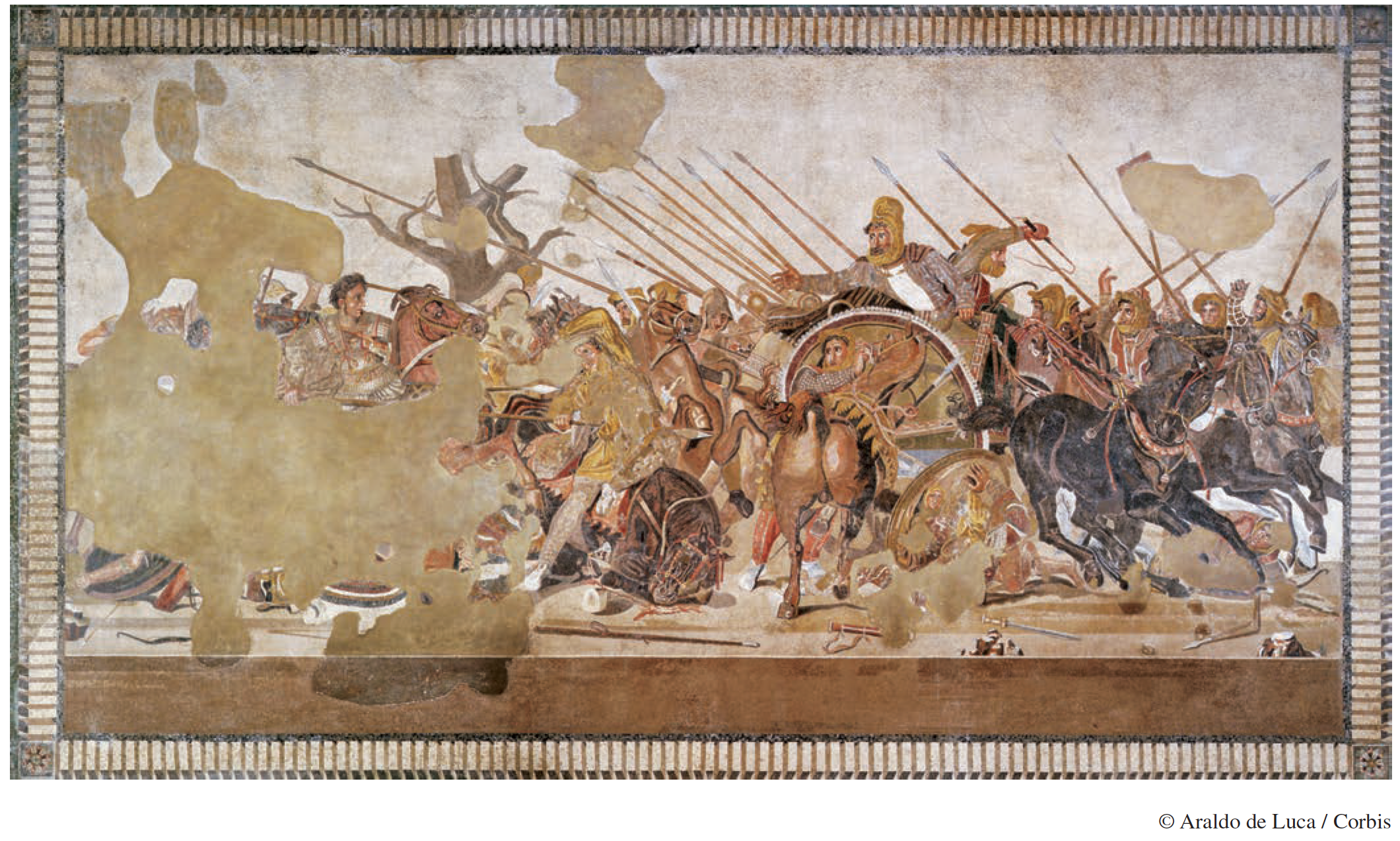
The artist of the Alexander Mosaic likely intended to celebrate ancient Greek art by
A. reproducing a sculpted relief from a temple frieze
B. creating a monumental artwork intended to be hung on a wall
C. emulating an earlier painting described in ancient texts
D. depicting Athens' triumph over Rome in battle
C. emulating an earlier painting described in ancient texts
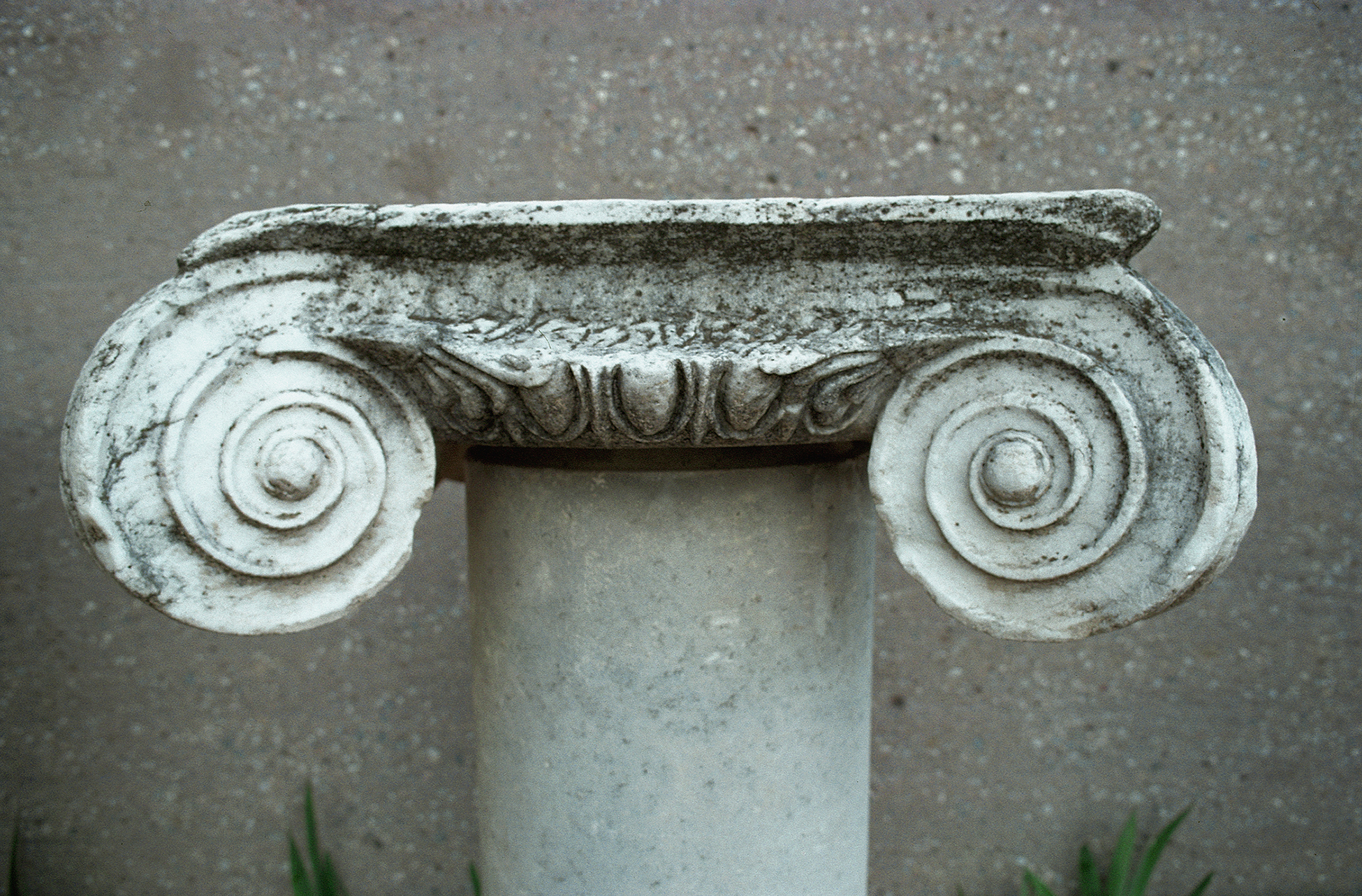
The column shown demonstrates the style of which of the following orders?
A. Doric
B. Ionic
C. Corinthian
D. Composite
B. Ionic
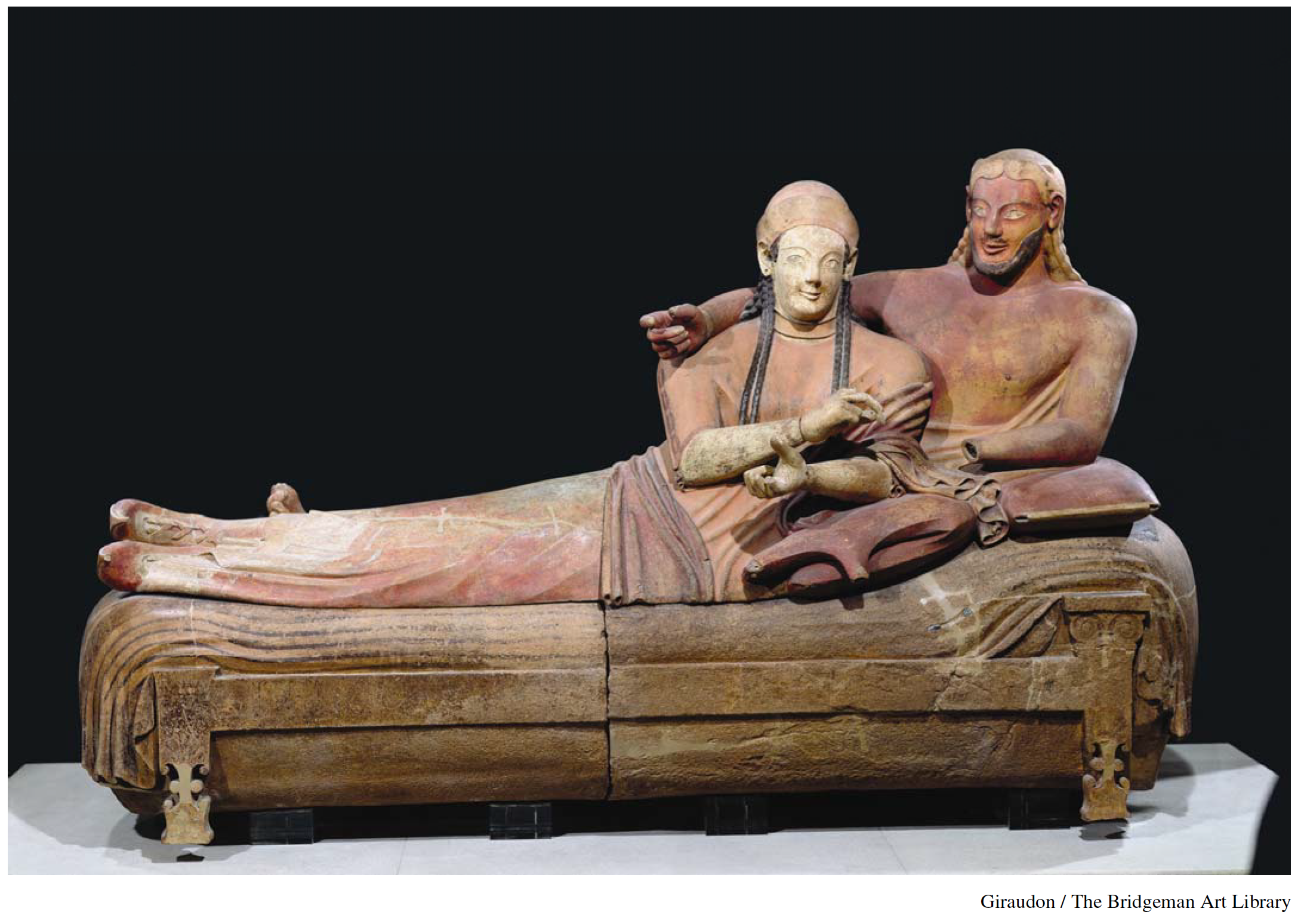
The culture in which the work was produced is known for
A. the relative equality of women
B. the centralization of political authority
C. its emphasis on military victories
D. human sacrifices
A. the relative equality of women
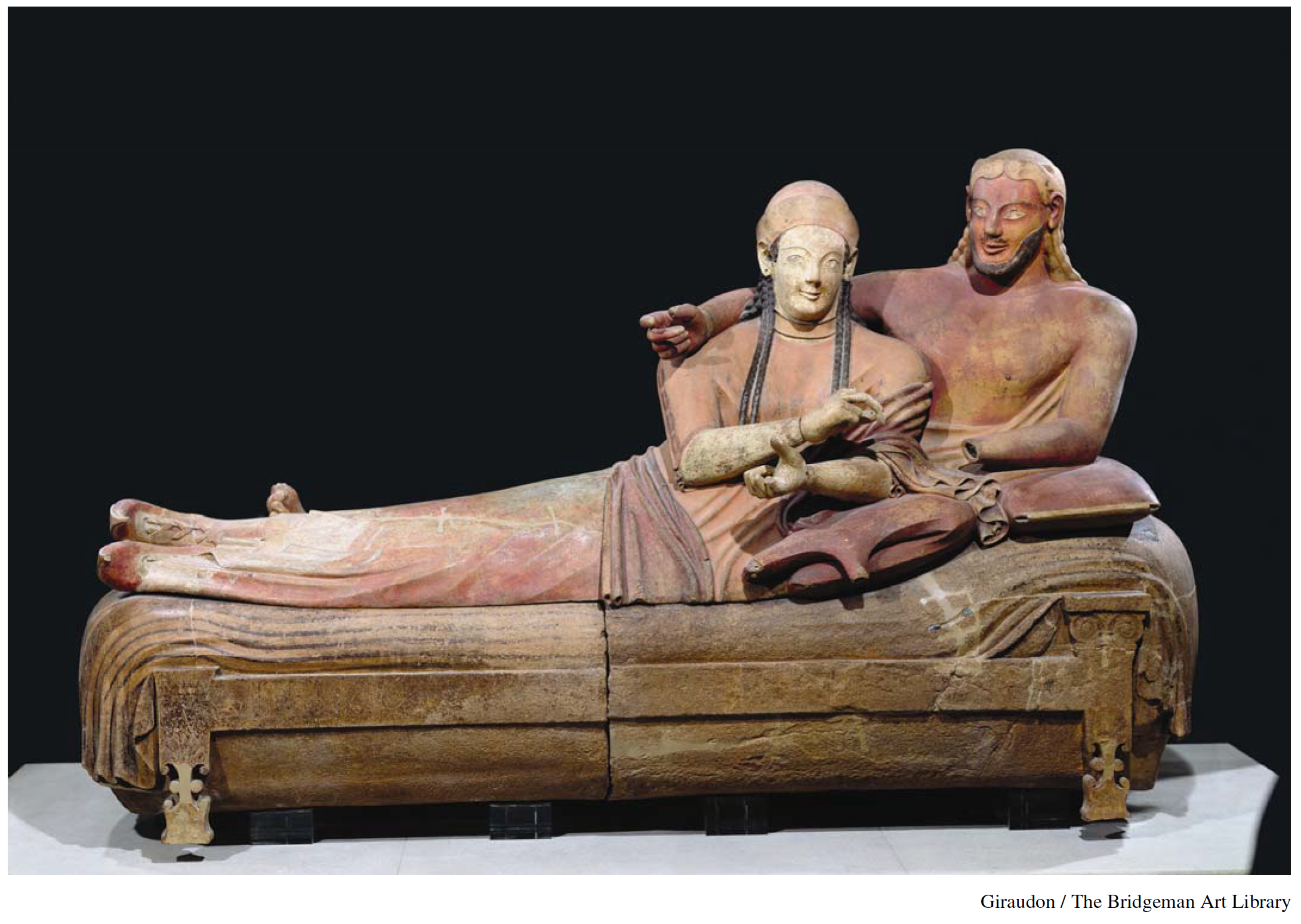
The pose of the figures suggests that they are
A. sleeping
B. banqueting
C. praying
D. grieving
B. banqueting
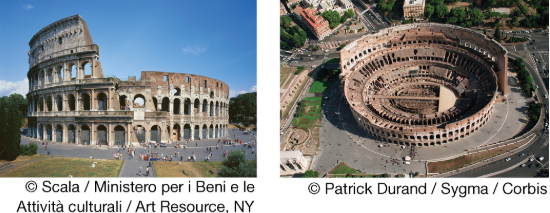
The images show two views of the Colosseum (Flavian Amphitheater).
The facade decorations of the Colosseum were notable in that
A. statues of famous athletes were originally displayed in the niches to attract crowds
B. spolia was included to celebrate the victories of the Roman army
C. different architectural orders of columns were used to distinguish each level
D. fences were incorporated as an early form of crowd control
C. different architectural orders of columns were used to distinguish each level
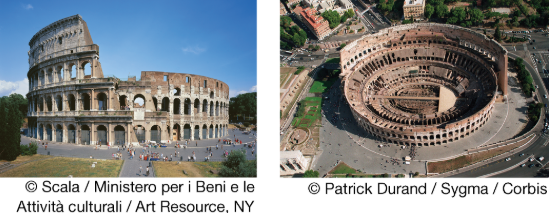
The images show two views of the Colosseum (Flavian Amphitheater).
In the work shown, the influence of earlier architecture styles can be seen in the
A. oval shape that allows for expansive viewing from all sides
B. arches that are framed by engaged columns and a lintel
C. engaged columns that distribute the weight evenly on all sides
D. oculus that provides natural lighting for the events
B. arches that are framed by engaged columns and a lintel
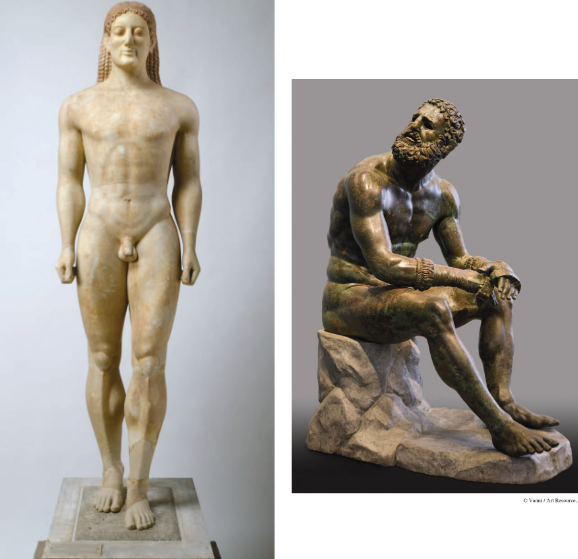
Precedents for works such as the one on the left have been found primarily in which of the following cultures?
A. Minoan
B. Assyrian
C. Egyptian
D. Mycenaean
C. Egyptian
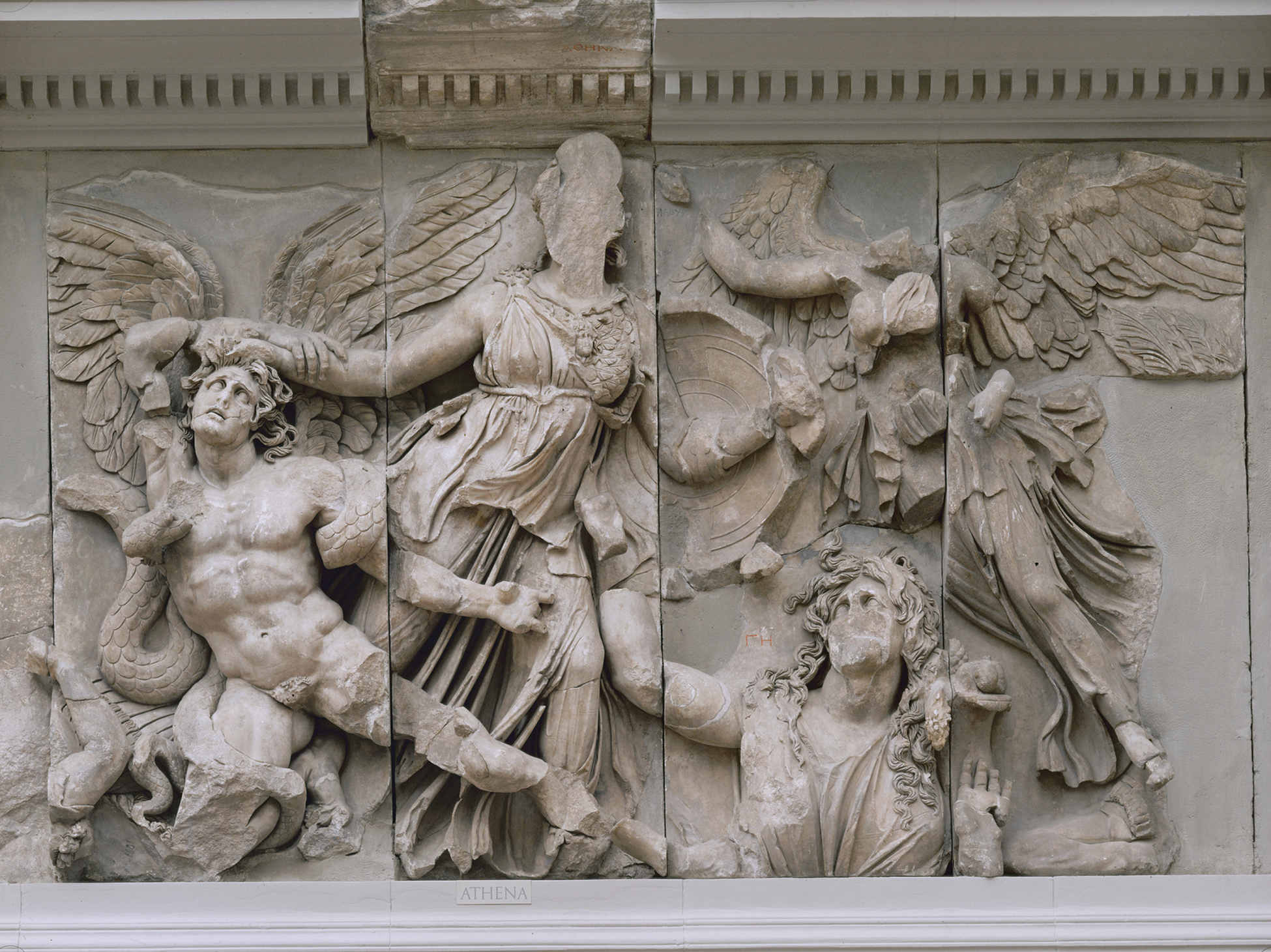
The image shows a detail from a larger sculptural frieze found on the
A. Audience Hall (apadana) of Darius and Xerxes at Persepolis
B. Parthenon on the Acropolis in Athens
C. Great Altar of Zeus and Athena at Pergamon
D. Ludovisi Battle Sarcophagus in Rome
C. Great Altar of Zeus and Athena at Pergamon
In designing the Basilica Ulpia for the Forum of Trajan, Apollodorus of Damascus drew upon ancient Egyptian traditions of the clerestory most likely because a clerestory provided
A. an efficient way to illuminate the interior
B. an open space that could accommodate large crowds
C. tiered seating for spectators and scribes
D. niches for the display of statues of the emperor
A. an efficient way to illuminate the interior
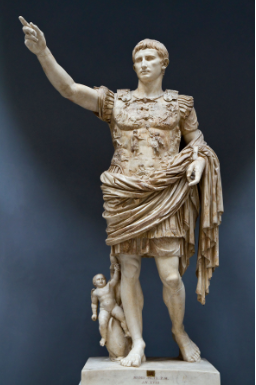
The sculpture shown appears life-like and natural as a result of the
A. sense of balance provided by the contrapposto stance
B. emotional expressiveness captured by the Archaic smile
C. realistic depiction of an individual including physical flaws
D. sense of calm achieved through its compactness of form
A. sense of balance provided by the contrapposto stance
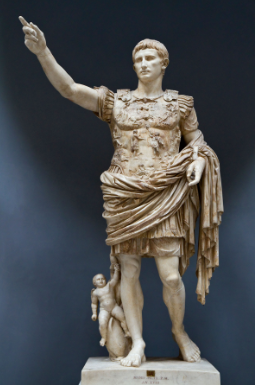
The formal qualities of the sculpture shown suggest a strong influence by which of the following earlier works?
A. King Menkaura and queen
B. Anavysos Kouros
C. Doryphoros (Spear Bearer)
D. Head of a Roman patrician
C. Doryphoros (Spear Bearer)
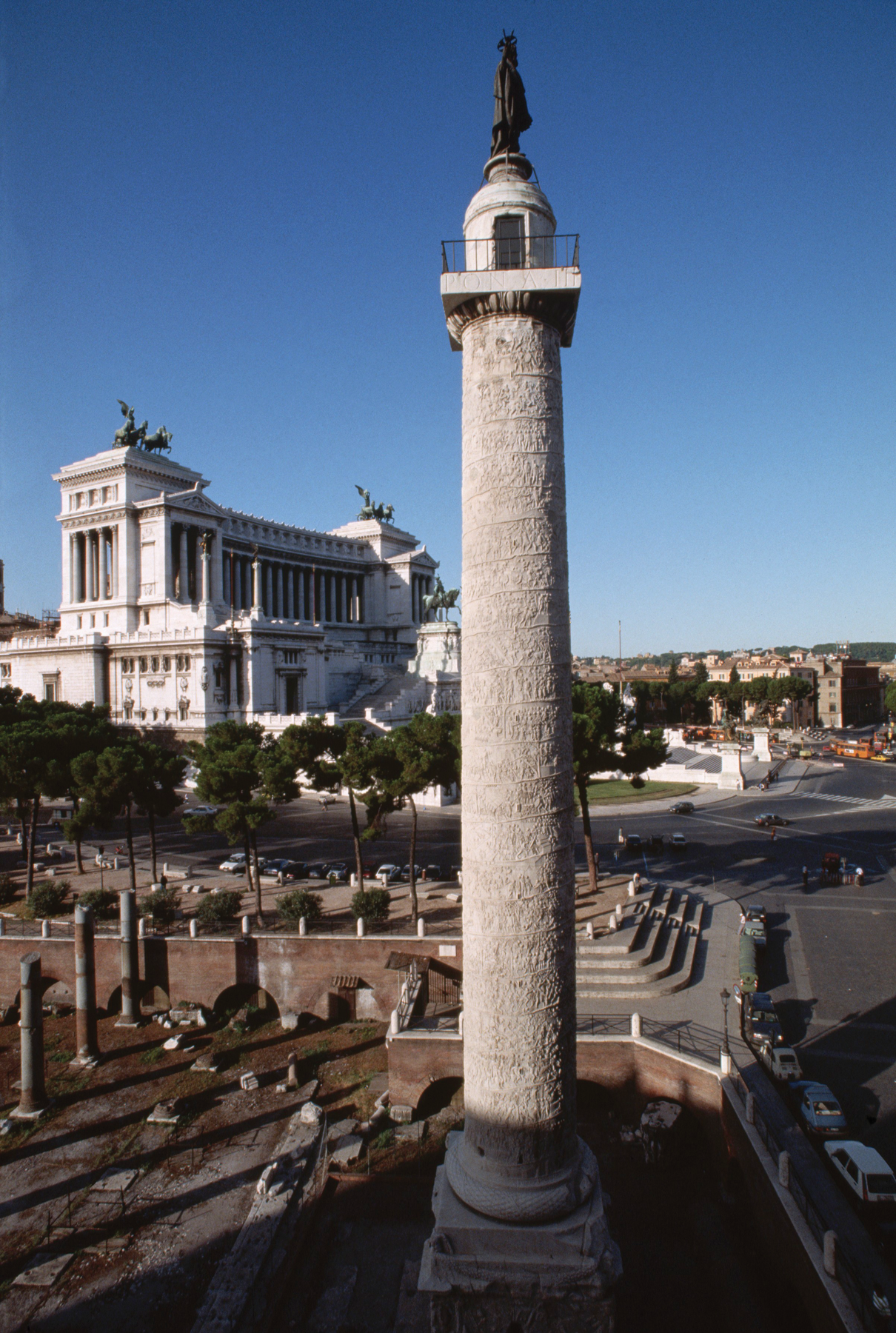
The Column of Trajan was built mainly for the purpose of
A. commemorating Trajan's victories in recent military campaigns
B. marking the entrance to the Trajan markets to make them easy to locate
C. serving as a military lookout tower on the edge of the city of Rome
D. providing a platform for town criers for important news and announcements
A. commemorating Trajan's victories in recent military campaigns
Winged Victory of Samothrace exemplifies the art of the Hellenistic period through its
A. dramatic movement and fluid drapery
B. frontal stance and contrapposto pose
C. animated gestures and enigmatic smile
D. hierarchical scale and idealized form
A. dramatic movement and fluid drapery
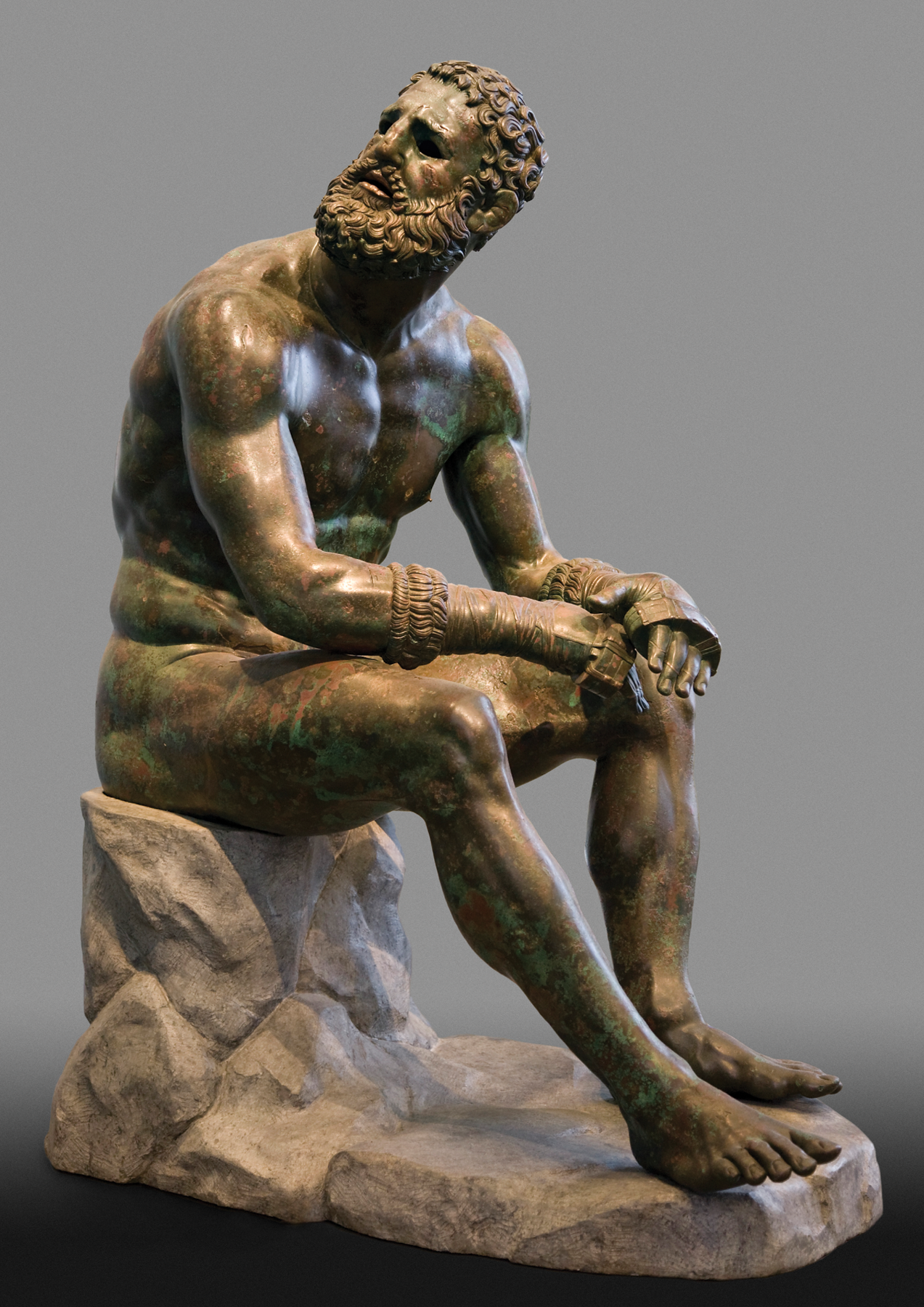
The seated boxer was created in the style associated with which of the following cultures?
A. Archaic Greece
B. Hellenistic Greece
C. Republican Rome
D. Imperial Rome
A. Archaic Greece
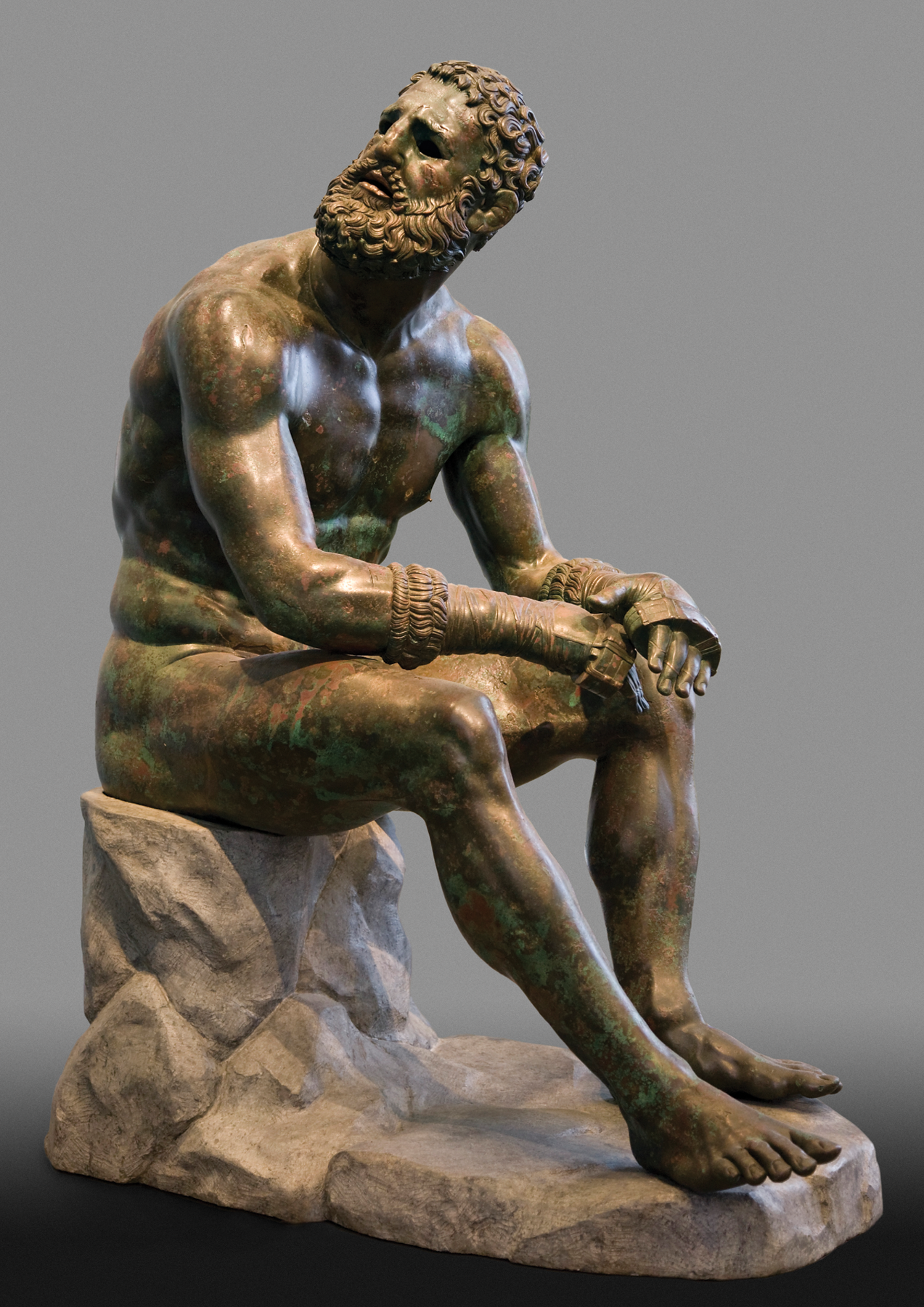
The seated boxer was created using which of the following techniques?
A. Lost-wax casting to mold bronze into a hollow form of the figure
B. Applying thin sheets of metal to a wooden core carved in the shape of the figure
C. Molding metal into a solid form in the shape of the figure, then adding enamel
D. Hammering a sheet of bronze into the shape of the figure, then inlaying gold details
A. Lost-wax casting to mold bronze into a hollow form of the figure
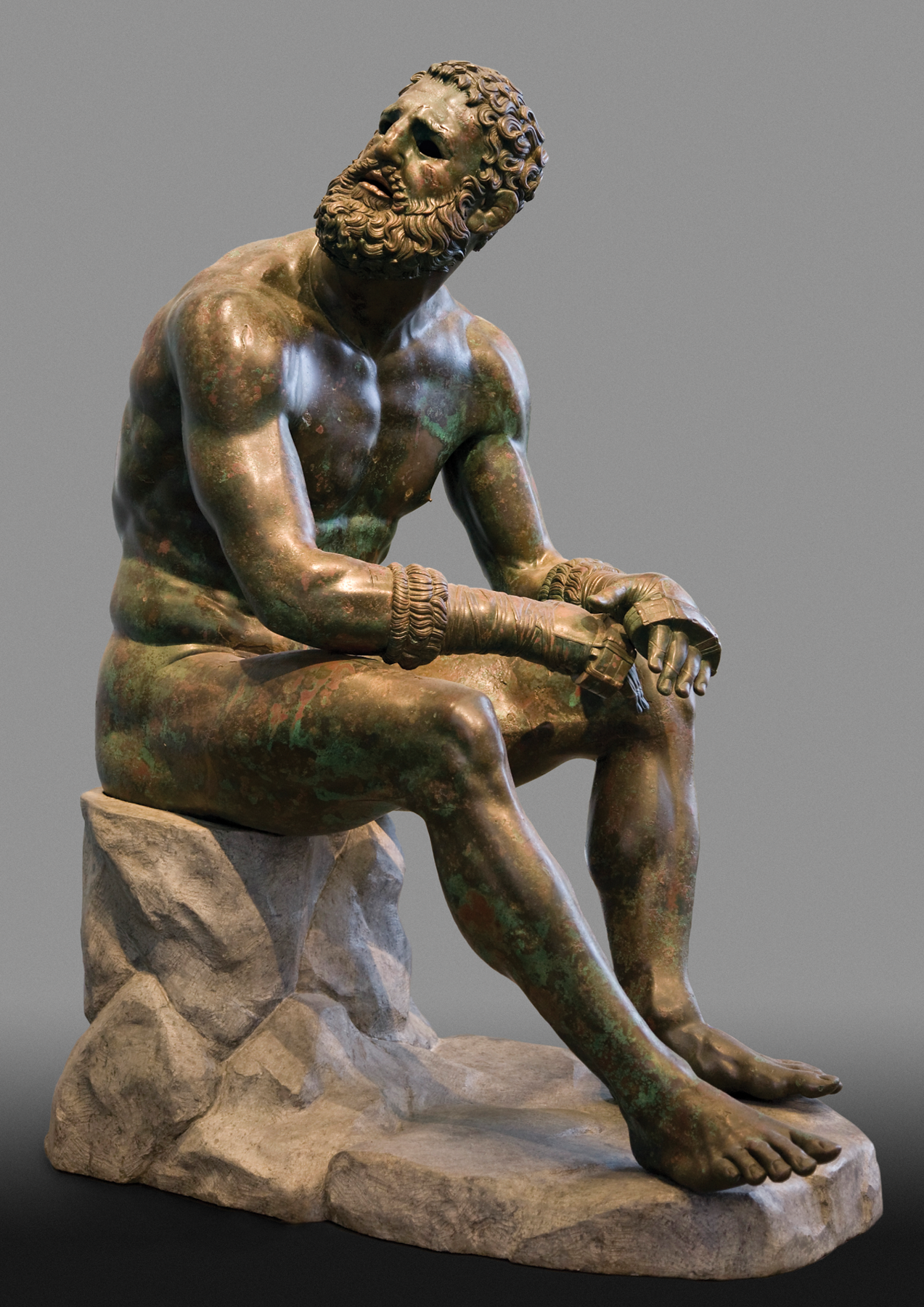
Unlike earlier depictions of athletes from the culture in which it was produced, the seated boxer features wounds, scars, and a broken nose due to the period's increased interest in
A. trade and cultural exchange across Central and Southeast Asia
B. access to bronze and materials used to create sculptural detail
C. interest in emotional empathy and individual experience
D. political violence and warfare associated with imperial expansion
C. interest in emotional empathy and individual experience
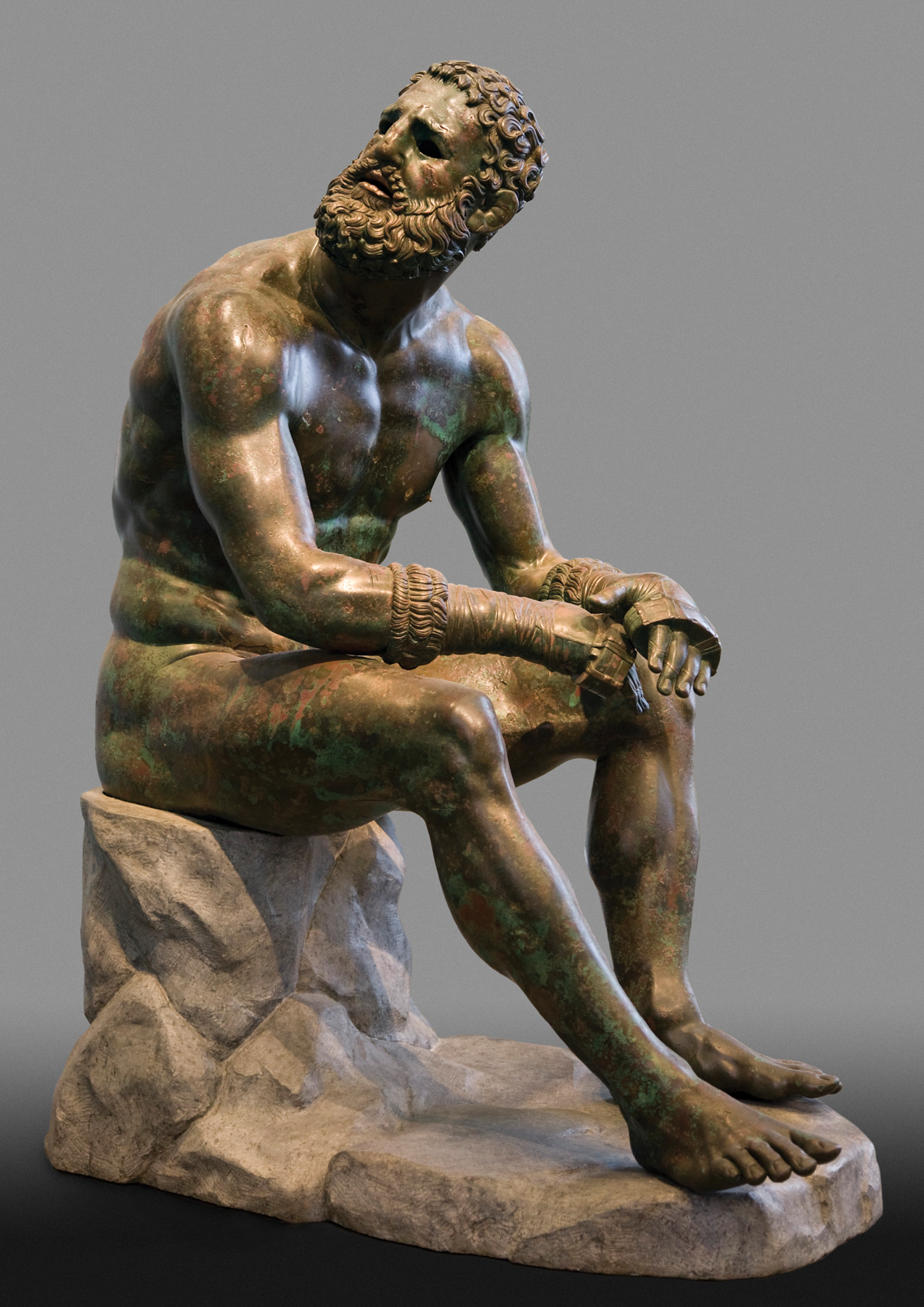
In its naturalistic pose, the seated boxer is most similar to which of the following works?
A. The kneeling statue of Hatshepsut
B. The Peplos Kore from the Acropolis
C. The Doryphoros (Spear Bearer)
D. Victory adjusting her sandal
D. Victory adjusting her sandal
In a Greek temple, the absence of a base on the columns identifies the architectural order as
A. Doric
B. Ionic
C. Corinthian
D. Composite
A. Doric
The Ludovisi Battle Sarcophagus demonstrates a change from earlier Roman relief sculpture in its
A. rejection of perspective to create a crowded scene of chaos
B. use of shallow relief to highlight abstract, geometric forms
C. repetition of important characters to create a scrolling narrative
D. attention to classical proportions to shape idealized figures
A. rejection of perspective to create a crowded scene of chaos
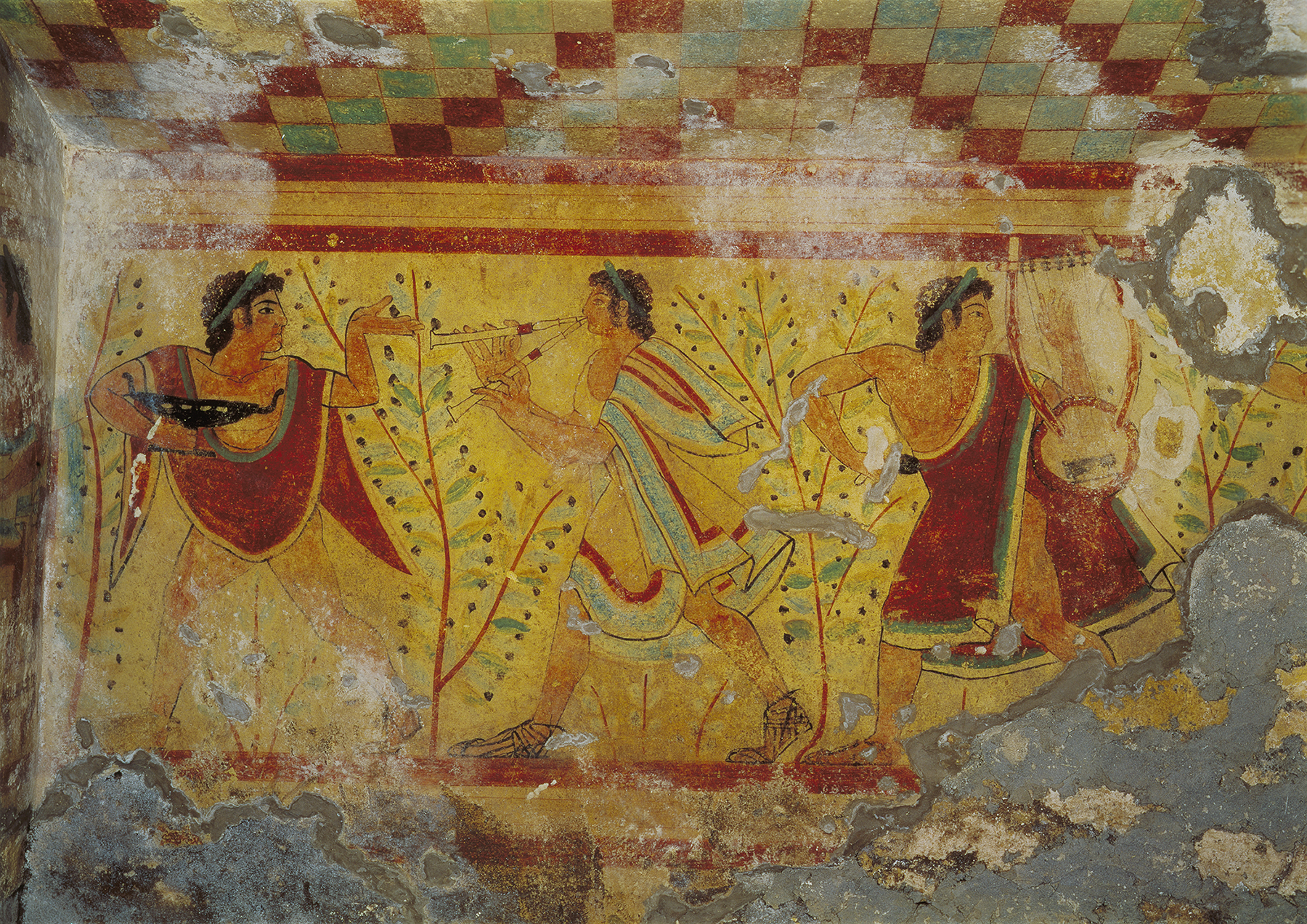
On the basis of style and subject matter, the work shown can be attributed to which of the following cultures?
A. Susian
B. Sumerian
C. Etruscan
D. Classical Greece
C. Etruscan
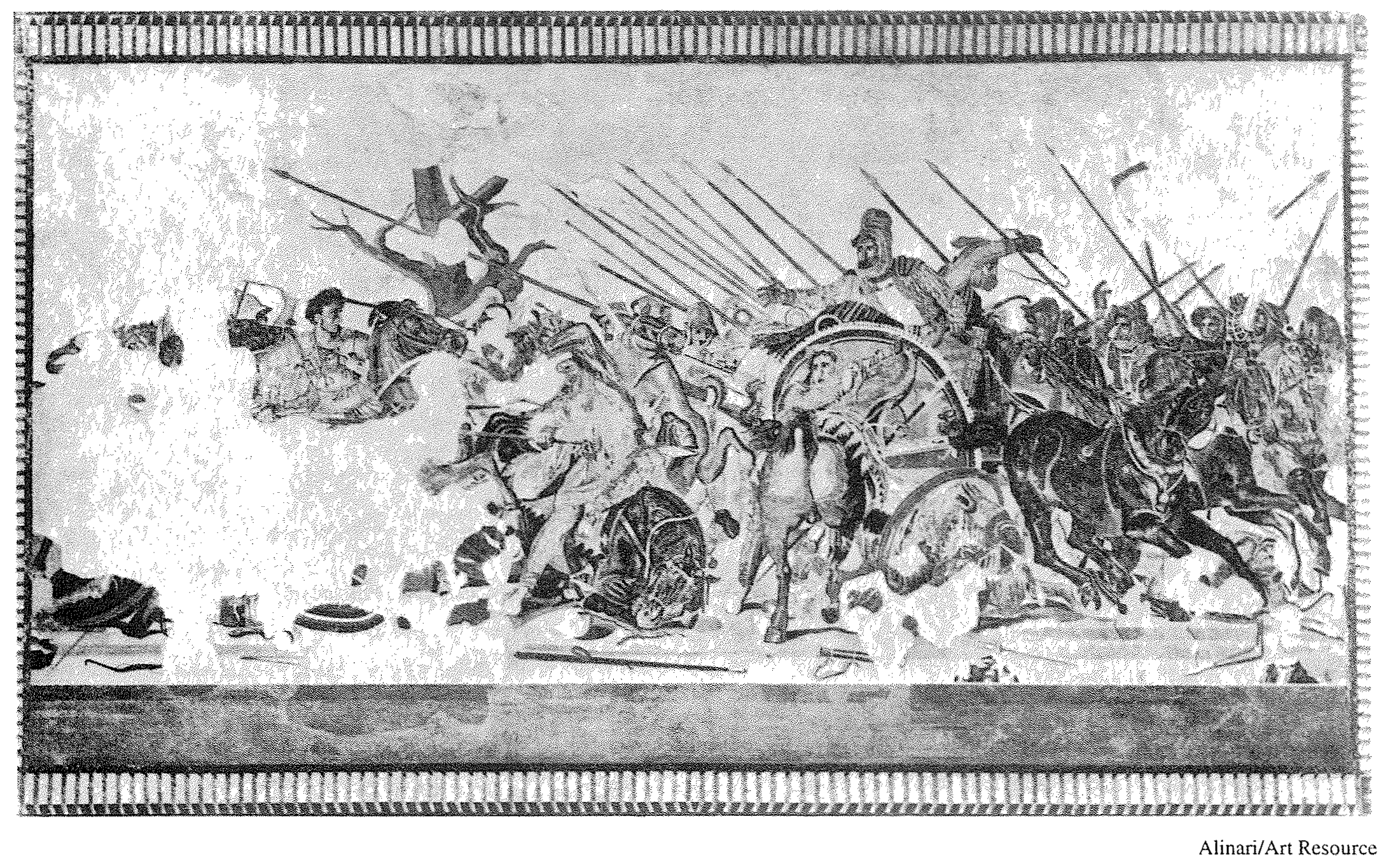
The work depicts a battle in which
A. Anglo-Saxons were defeated by Duke William at Hastings
B. the Greeks won a naval war against the Persians at Salamis
C. Alexander the Great overthrew King Darius III
D. Rome was sacked by the invading Visigoths
C. Alexander the Great overthrew King Darius III
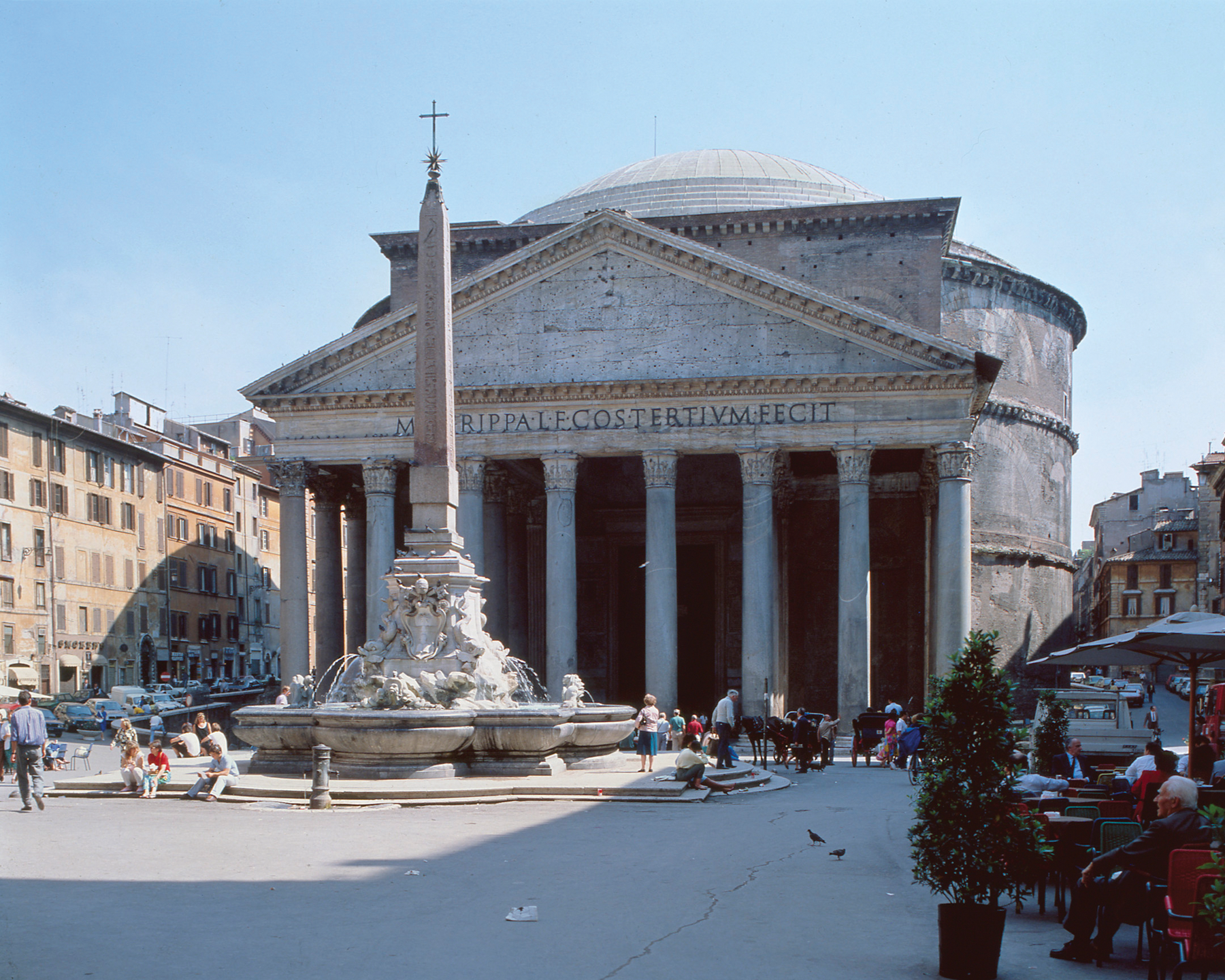
The Pantheon in Rome is believed to have been built as
A. an imperial forum to commemorate military victories
B. a royal audience hall to receive guests and tribute
C. a temple dedicated to the worship of the gods
D. a tomb to house the ashes of the emperor
C. a temple dedicated to the worship of the gods
The citizens of ancient Athens likely responded to the Athenian agora with a sense of
A. enjoyment, because it was primarily a place for elaborate spectacles to entertain the crowds
B. piety, because it was the central place of the city for religious worship and sacrificial ceremonies
C. civic pride, because it represented a place of communal governance and cultural identity
D. solemn respect, because it represented a place where prominent citizens were buried
C. civic pride, because it represented a place of communal governance and cultural identity
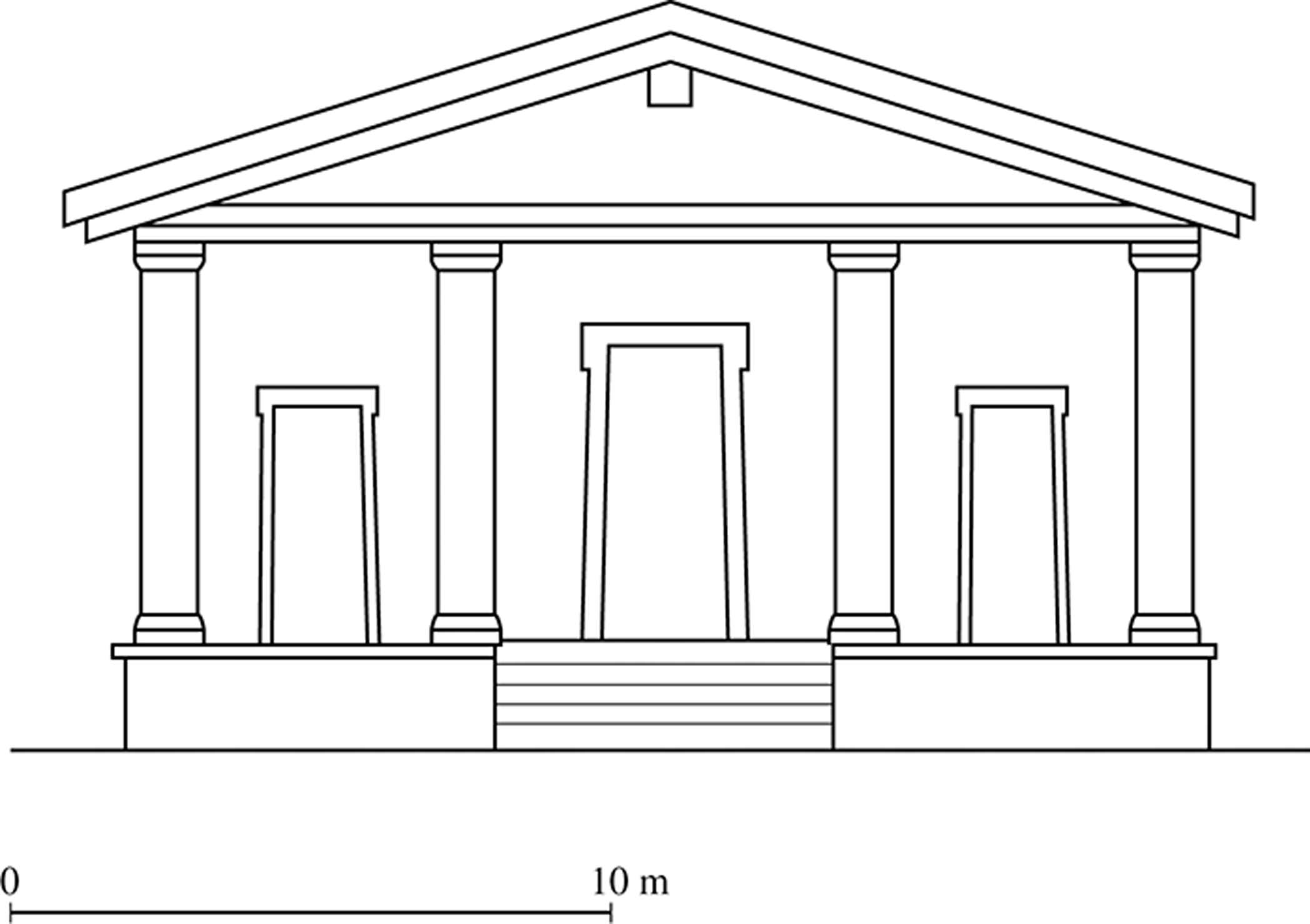
The facade of the Temple of Minerva includes which of the following architectural features?
A. A portico flanked by Corinthian columns
B. A blind arcade
C. A hypostyle hall
D. A pediment supported by Tuscan columns
D. A pediment supported by Tuscan columns
Congrats!
You did it!