Fundamentals in feed manufacture: particles and grinding
 Call Kai
 Learn
Learn Practice Test
 Spaced Repetition
 Match
Match Flashcards
 Knowt Play
1/17

There's no tags or description
Looks like no tags are added yet.
Name | Mastery | Learn | Test | Matching | Spaced | Call with Kai | Chat |
|---|
No analytics yet
Send a link to your students to track their progress
18 Terms
Certainties and uncertainties on a global scale
Changing political corridores
Human population growth
Climate change
Consumers loyality and trust
Food security and scarcity
Shift in markets for feed raw materials → fuel, goods
Whole raw materials to human food; co-products to animal feed
Increased global requiremtn for animal protein
Why milling and mixing
Milling
making smaller particles, increasing SA (surface area) → better access for digestive enzymes
Mixing
obtain a uniform mixture, every portion of animal feed has the same composition, smaller particles makes for better homogeneity
Particle size reduction - state of stress
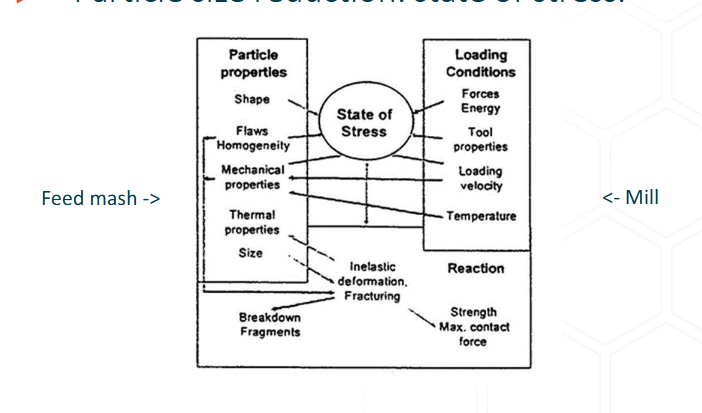
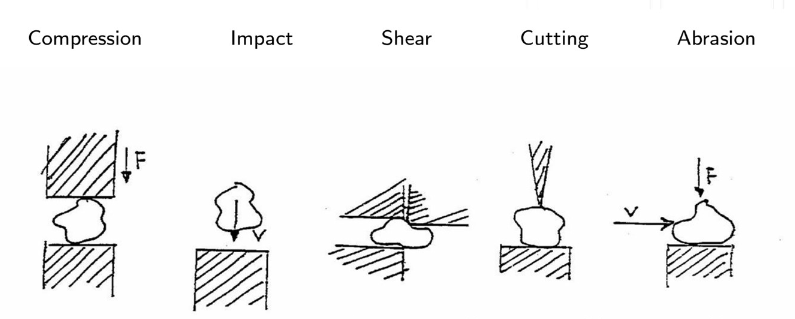
How to make particles smaller - principles
Compression, impact, shear, cutting, abrasion
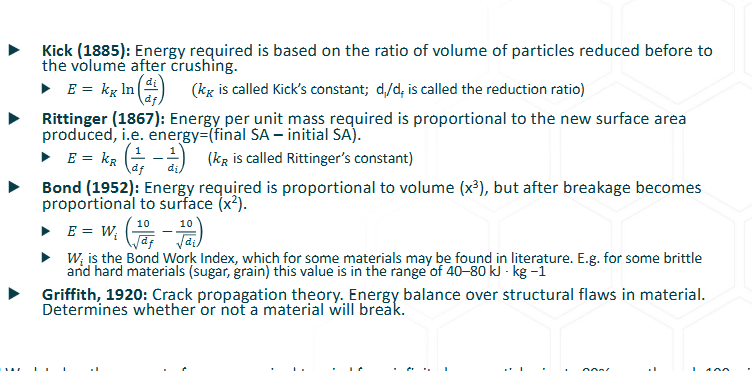
Milling laws (energy involved in grinding)
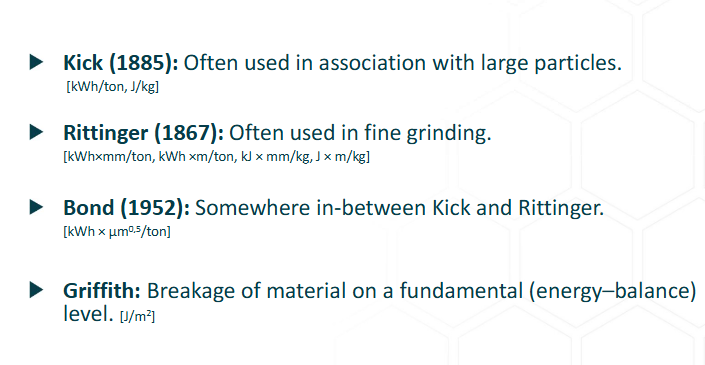
Milling laws - when to use what
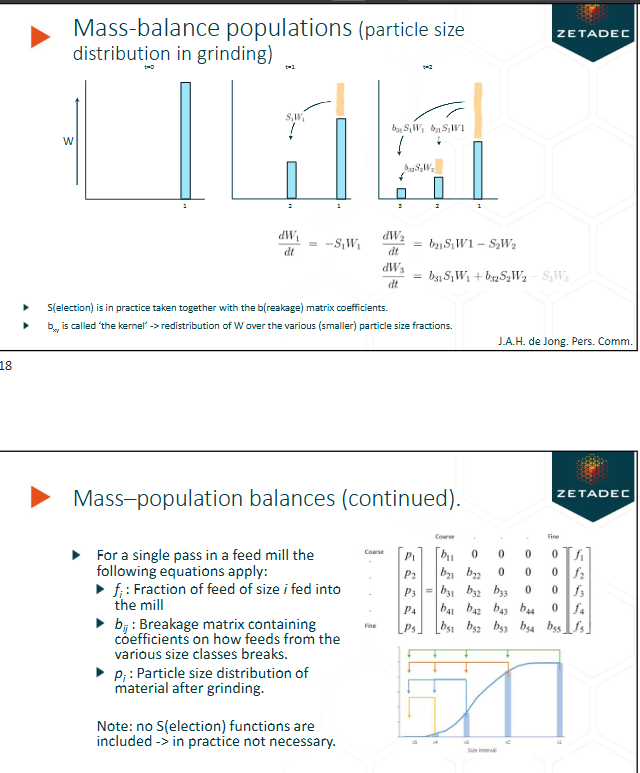
Mass-balance populations (particle size distribution in grinding)
Mill types
Beater mills
comminution based on impact, velocity
Friction mills
0 based on shear, rubbing
Milling in the feed industry
hammer mills
most universally used due to high reduction ratio >50
roller mills
used to obtain narrow-sized particle size distributions, drawback reduction ratio around 10
multicracker
new mill type in feed industry, mainly for structuring (course girnding) of feed
Advantages and disadvantages of the hammer mill
Advantages
Large assortment of raw materials can be ground
both firbours and brittle material can be ground
ease of use
low investment costs compared to roller mill
relative maintenance free
Drawbacks
large spread in particle size distribution (compared to rolelr mill)
production of heat, typical 5 degrees added to feed mash
noisy
dusty (fines produced)
Comparison hammer mill, roller mill and mulicracker
Hammer mill consumes the most specific energy
roller mill and multicracker have comparable energy consumptions
soybeans require more energy for girnding than wheat and maize
in the range of grinding (coarse endproduct), particle size decreases linearly with an increase in energy input
Where to grind int he factory?
Pre-mill
grinding of all raw materials upon entryin the factory
storage of both intake raw materials and ground raw materials
dosing of ground raw mateials in main mixer
controllability of particle size
post-mill
dosing of raw materials
grinding of raw materials per batch
transport ot main mixer
Most common type of grinding process
pre-sieving before grinding
reduces the load on the mill and therefore saves energy
Animal feed
all animal feed starts as ground or milled raw materails,a fter additional processing it is transformed into agglomerates or pellets
Particle size analysis
Properties
weight, sieve analysis
volume, light scattering method
property, e.g. sedimentation in a liquid
in the animal feed indsutry most comon is an analysis based on weigth (sieve) or volume (laser diffractometer)
it follows that for a given sample, when using different methods of analysis, you’ll have different numerical values for the mean or spread of the particle size distribution
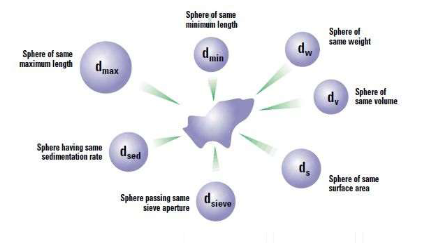
Equivalent particle size (concept of)
Distrubution types
Log-normal, popular for grinding purposes of wide and/or fine particle sizes after grinding
Weiball distriution, very flexible can accomodate a whole range of (cumulative) distributions
Rosin-Rammler, used in grinding
Take home points 0 particle fundamentals
Many different evaluation possibilites for particle size and particle size ensembles
Choose a method of evaluaton that is relevant for you application
most particle size characteristics that are menthioned in relation to feed manufacture are based on weight
particle sizes can also be obtained based on counting lenght, diameter or other characteristics